How to Use a Floor Mirror to Keep Your Baby Happy During Tummy Time
Hello there, mama. If you are reading this, you might be in the thick of the ‘tummy time struggle.’ We’ve all been there—placing our precious little one on their belly, only to be met with immediate grunts, frustrated wiggles, and those heart-wrenching tears. As a doula and a mom who has navigated these early days more times than I can count, I want to give you a big hug and tell you: it gets easier. Tummy time is one of the most vital exercises for your baby’s physical development, but it doesn’t have to be a chore. One of my absolute favorite ‘secret weapons’ for making this daily routine a joy is the humble floor mirror.
Babies are naturally social creatures, and there is nothing they find more fascinating than a human face—especially their own! By strategically placing a floor mirror in your nursery or living space, you aren’t just decorating; you are creating a high-engagement developmental gym. In this guide, we will explore the science of why mirrors work, how to choose the safest options, and the exact setups that will keep your baby happy, curious, and strengthening those neck muscles like a little pro.
The Developmental Magic: Why Reflections Captivate Your Baby
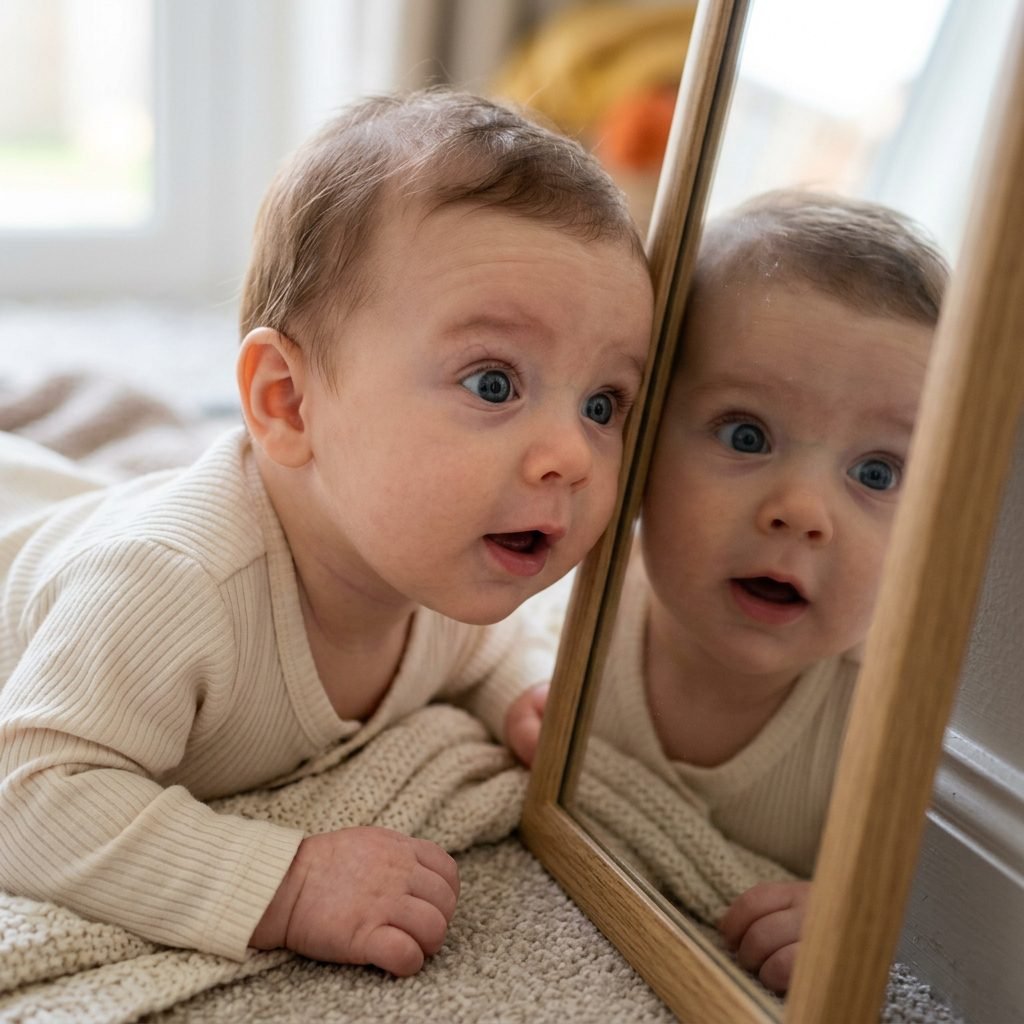
Have you ever noticed how your baby’s eyes light up when you walk past a mirror? To a newborn, that reflection is a mysterious, moving friend. From a developmental perspective, mirrors are goldmines for sensory stimulation. Around 2 to 3 months of age, babies begin to develop a stronger sense of visual tracking. They can follow moving objects, and a mirror provides a dynamic, ever-changing landscape of light and movement.
Social and Emotional Connection
While your baby won’t fully realize the reflection is themselves until they are about 18 to 24 months old (the famous ‘Rouge Test’ milestone), they still perceive the reflection as a ‘playmate.’ This social interaction encourages them to lift their head higher to see their ‘friend’ better. This natural curiosity overrides the physical discomfort of holding up their heavy head.
Visual Tracking and Focus
Tummy time in front of a mirror forces the eyes to focus at a different depth than looking at a flat mat. This helps develop the ocular muscles and depth perception. When they move their arm and see the ‘other’ baby move their arm, it begins the very early foundation of cause-and-effect and body awareness.
Remember, mama: Tummy time isn’t just about neck strength; it’s about brain building. Every second they spend gazing into that mirror is a neuron firing in their beautiful, growing mind.
Choosing the Right Mirror: Safety Essentials for the Nursery
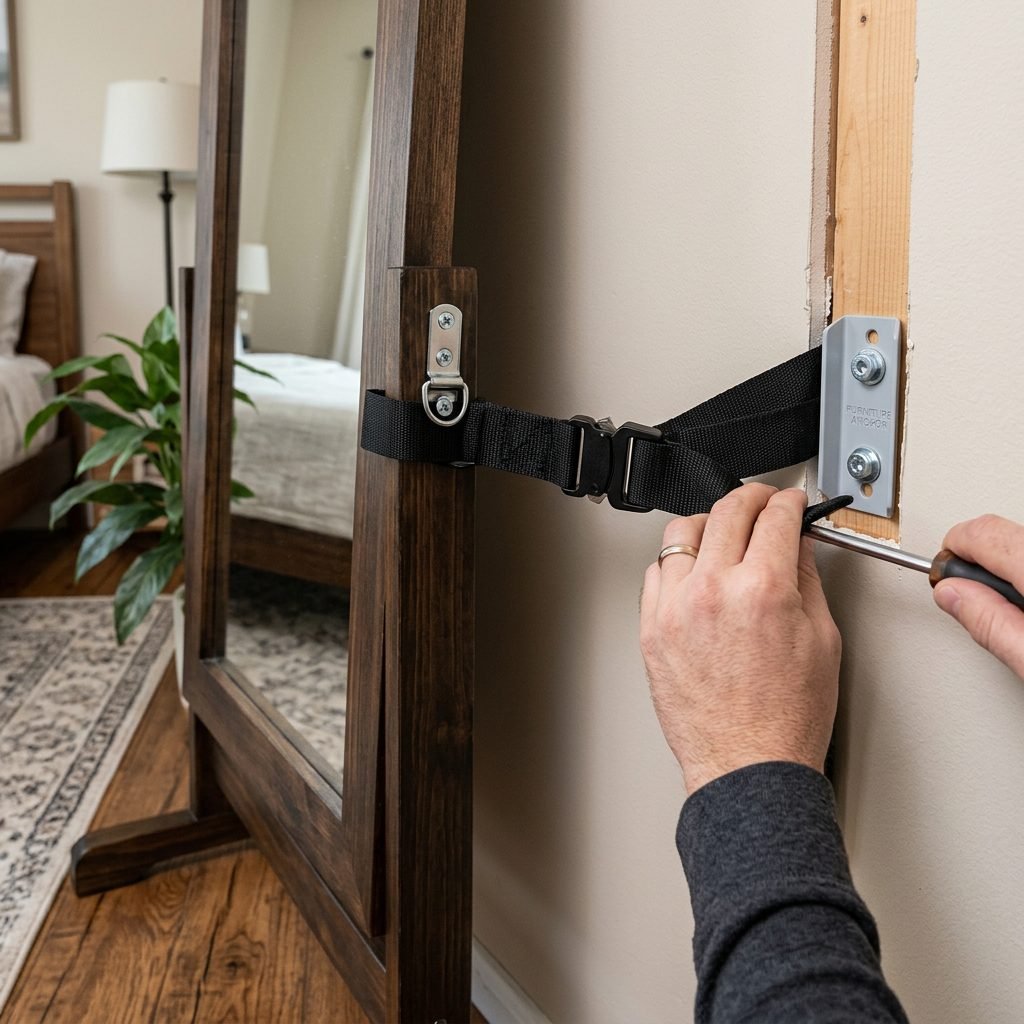
When it comes to baby gear, safety is our absolute priority. You might be tempted to just lean a decorative mirror against the wall, but in a nursery environment, we have to be much more intentional. As your baby grows and starts to grab, pull, and eventually crawl, that mirror needs to be a fortress of safety.
Materials Matter
I always recommend acrylic mirrors for the earliest stages. Unlike traditional glass, acrylic is shatterproof and much lighter. If you prefer the aesthetic of a real glass floor mirror, it must be tempered safety glass and securely anchored to the wall studs. Avoid thin, cheap glass mirrors that could crack if a wooden toy is tossed against them.
| Mirror Type | Pros | Cons | Best For |
|---|---|---|---|
| Acrylic/Plastic | Shatterproof, Lightweight, Portable | Can have slight ‘funhouse’ distortion | Newborns & Mobile Crawlers |
| Tempered Glass | Crystal clear reflection, Stylish | Heavy, risk of breaking if not tempered | Nursery Decor & Supervised Play |
| Soft/Fabric Mirrors | 100% Safe, Washable, Easy to pack | Small size, limited view | Travel & Play Mats |
The ‘Two-Point’ Anchor Rule
If you are using a large floor mirror, do not simply lean it. Use heavy-duty furniture straps or L-brackets to secure the top and bottom to the wall. This prevents the mirror from sliding out at the bottom or being pulled down from the top when your baby eventually reaches the ‘pull-to-stand’ phase. Safety is the ultimate form of self-care for a worried mama!
Setting Up Your Mirror Tummy Time Station
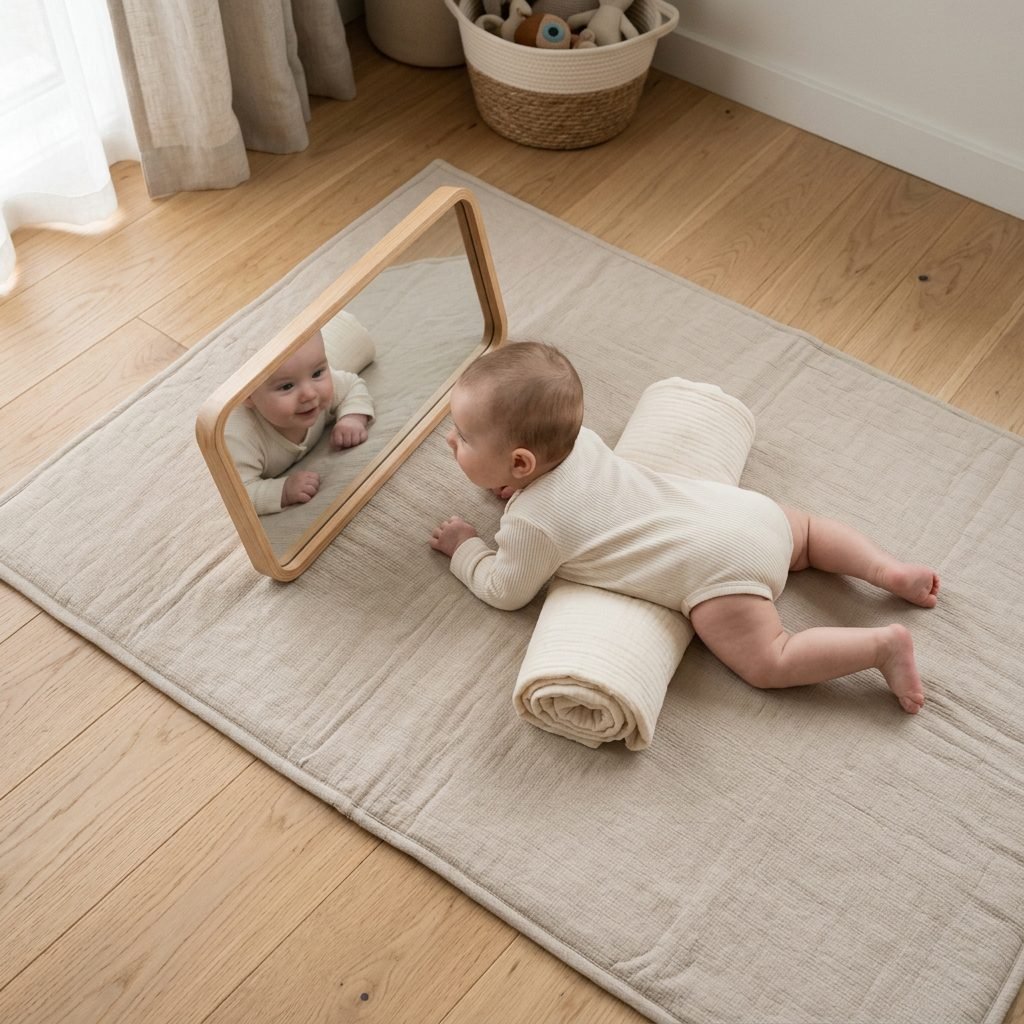
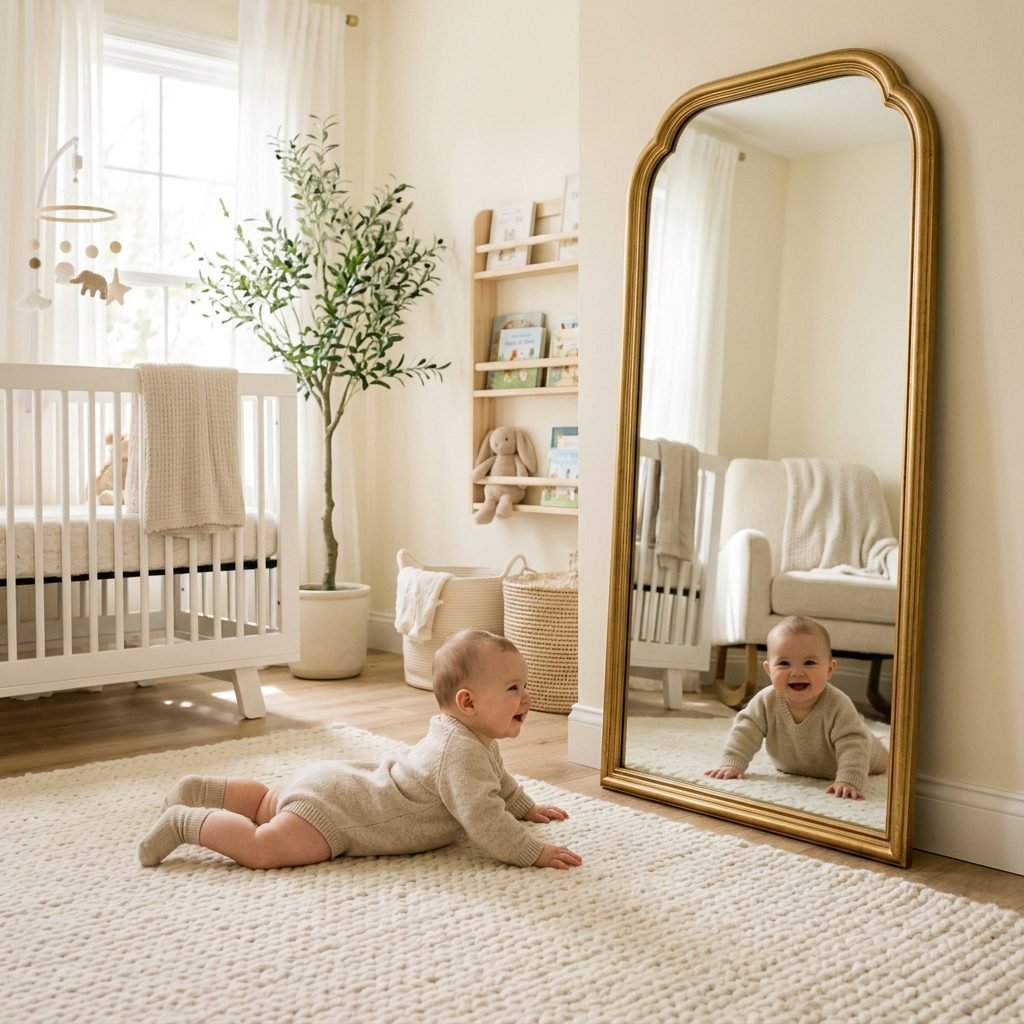
Location is everything. We want to create a ‘Yes Space’—a place where you can place the baby down and feel 100% confident in their environment. Choose a corner of the nursery or your living room that has plenty of soft, natural light but is away from direct drafts or high-traffic walkways.
The Layered Comfort Method
- The Foundation: Start with a firm but cushioned surface. A high-quality play mat or a low-pile rug works best. Avoid overly plush shag rugs as they can be a suffocation hazard and make it hard for the baby to push up.
- The Mirror Angle: Place the mirror horizontally if possible, or use a vertical floor mirror that starts at the baseboard. The goal is for the baby to see their face while their chest is only 2 to 3 inches off the ground.
- The Prop: For newborns who are still struggling, use a small rolled-up receiving towel or a specialized tummy time pillow under their chest. This ‘boost’ gives them a better vantage point of the mirror.
- The Lighting: Ensure the light source is in front of the baby (behind the mirror) or to the side. If the light is behind the baby, they will only see a dark silhouette in the mirror.
Doula Tip: Keep the area around the mirror minimalist. Too many toys can be overstimulating. Let the mirror be the ‘main event’ so they can focus on their own reflection without distraction.
Interactive Mirror Games: From Newborn to 6 Months
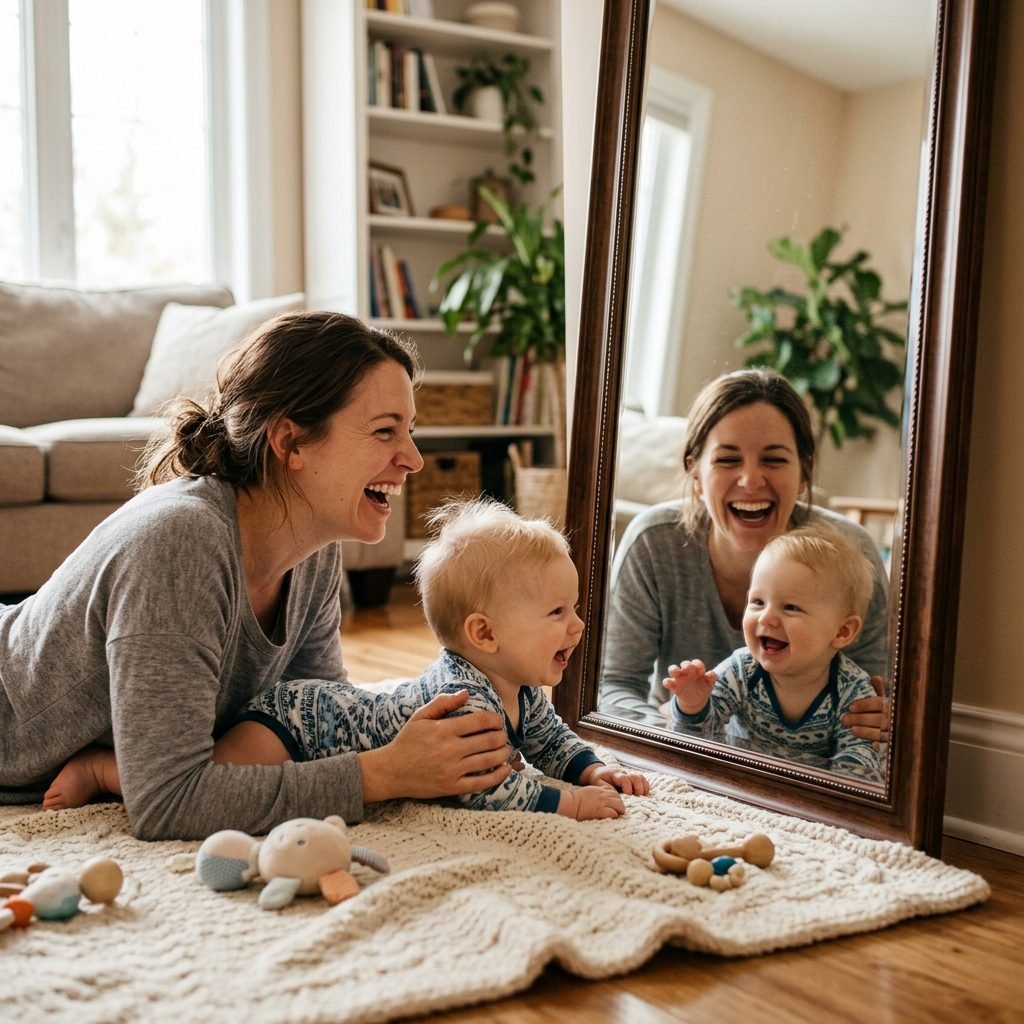
Tummy time doesn’t have to be a static activity. You can use the mirror as a stage for play! Here is a timeline of how to use the mirror as your baby grows:
0-2 Months: The High-Contrast Stage
At this age, babies see best in black and white. Tape high-contrast art cards to the corners of the mirror. They will see the reflection of the cards and the cards themselves, doubling the visual input. Keep sessions short: 3 to 5 minutes, several times a day.
3-4 Months: The ‘Who is That?’ Stage
This is the sweet spot for mirror play. Get down on the floor with them! Position yourself so your reflection is right next to theirs. Make funny faces, stick out your tongue, and call their name. When they see you in the mirror and then feel you kiss their cheek, it helps them connect the 2D reflection with the 3D world.
5-6 Months: The Reaching Stage
As they start to find their balance on one hand, place a soft toy against the mirror. They will reach for the toy’s reflection, which is a fantastic way to build core strength and balance. They might even ‘kiss’ the mirror—don’t worry about the smudges, those are marks of a happy baby!
| Age Range | Daily Goal | Mirror Activity |
|---|---|---|
| 0-1 Month | 10-15 mins total | High-contrast cards taped to mirror |
| 2-3 Months | 20-30 mins total | Mom’s reflection play & tracking |
| 4-6 Months | 60 mins total | Reaching for toys & ‘Mirror Kisses’ |
Troubleshooting the Tummy Time Blues
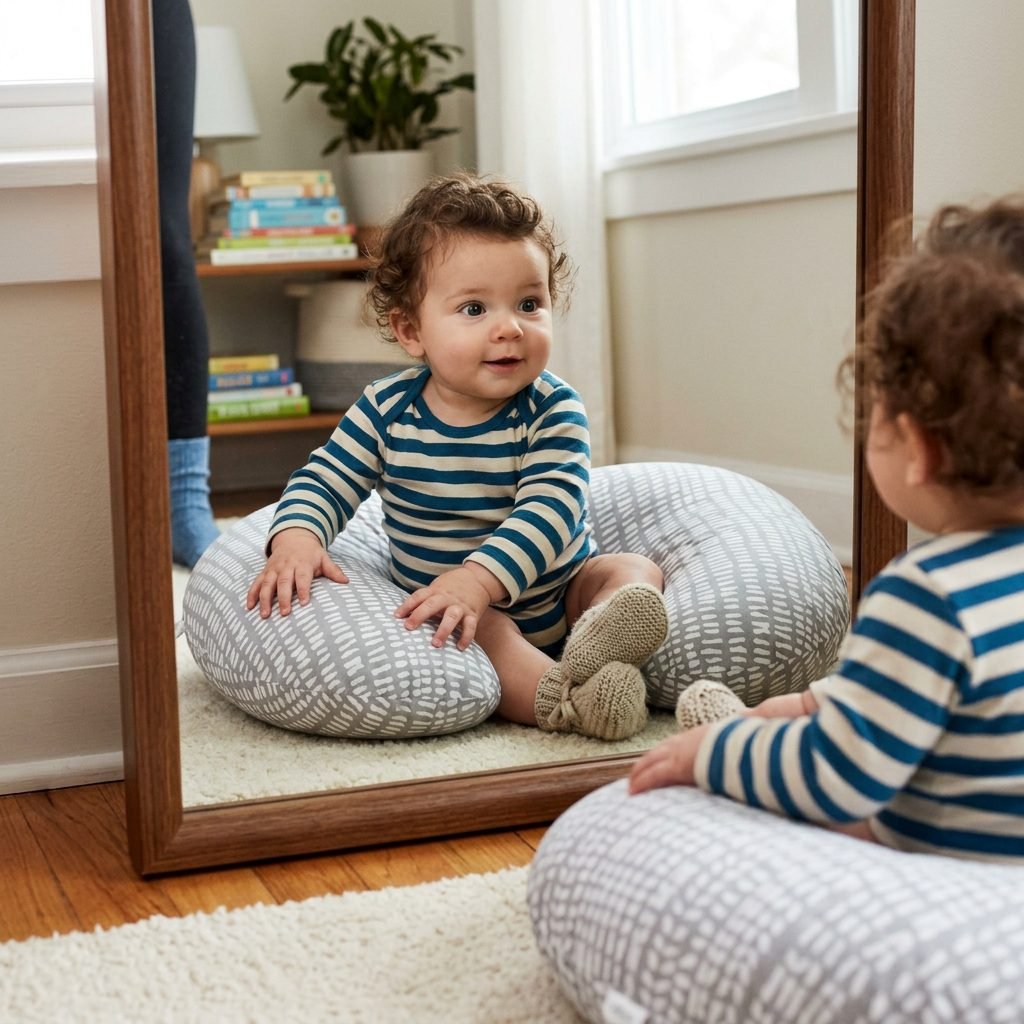
What if you’ve set up the perfect mirror station and your baby still screams the moment their belly hits the mat? First, take a deep breath. You are doing a great job. Some babies simply find the sensation of gravity more intense than others. Here is how to pivot:
- The Gradual Incline: If the floor is too much, try ‘Chest-to-Chest’ tummy time while you are reclining on the couch. Hold a small hand mirror so they can still see themselves while feeling the security of your heartbeat.
- The ‘Side-Lying’ Alternative: If they are truly distressed, try side-lying play in front of the mirror. It still builds core strength but feels less ‘scary’ for some infants.
- The 1-Minute Rule: Don’t force a 10-minute session. Do ten 1-minute sessions instead. Consistency matters more than duration in the early weeks.
- Check the Timing: Never do tummy time immediately after a feeding (hello, spit-up!) or when they are already overtired. The ‘sweet spot’ is usually about 30 minutes after a nap and a diaper change.
Affirmation for the hard days: ‘My baby is learning a hard new skill, and I am their safe space while they practice.’
Longevity and Style: Integrating the Mirror into Your Home
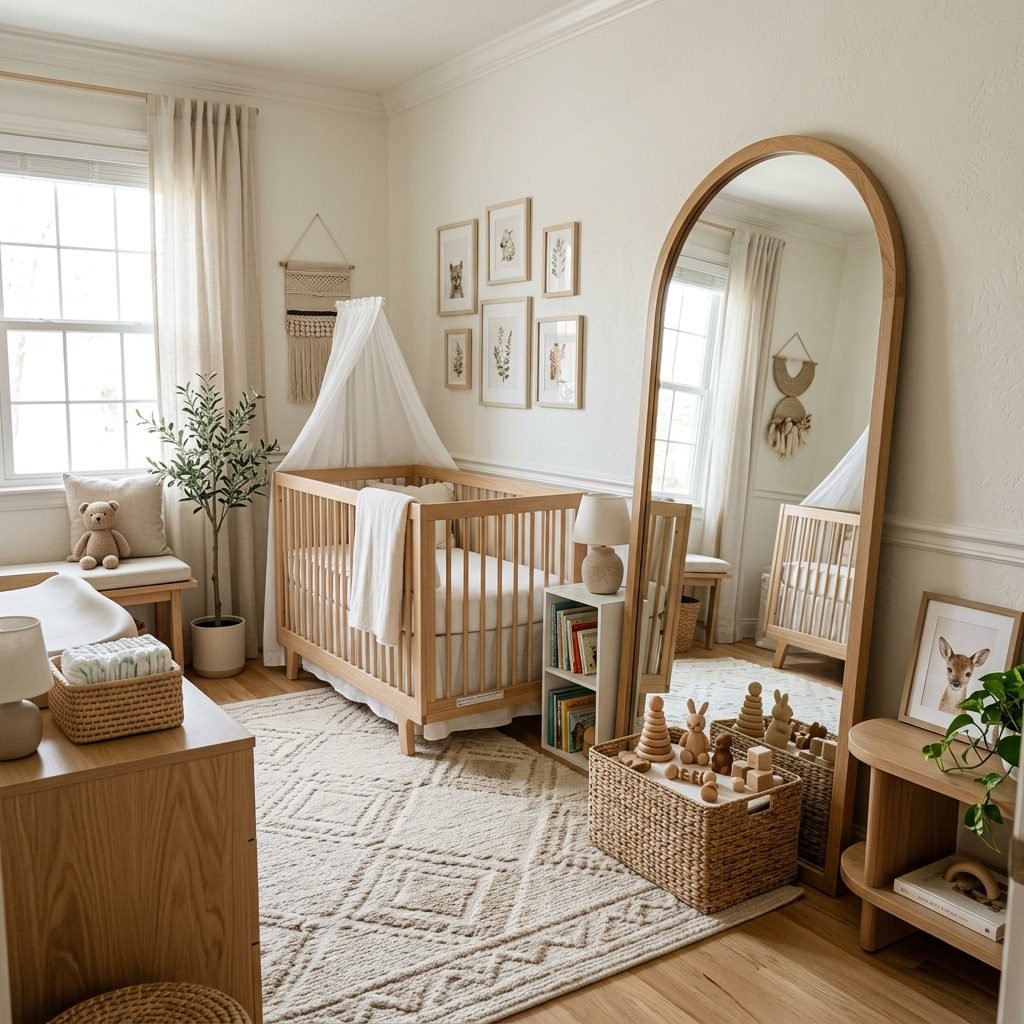
As a maternal stylist and organizer, I want your home to feel like you, not just a plastic-filled playroom. The beauty of using a high-quality floor mirror for tummy time is that it grows with your child and complements your decor. A beautiful brass or light wood frame can look stunning in a nursery and transition perfectly into a ‘big kid’ room later on.
Styling Tips for the Modern Nursery
- Frame Selection: Choose a frame that matches your nursery’s wood tones. For a boho look, go with light oak or rattan. For a modern look, a thin matte black frame is timeless.
- The ‘Gallery’ Effect: Surround the floor mirror with framed prints at varying heights. This creates a visual path for the baby to follow as they learn to sit and eventually stand.
- Keep it Clean: Use a non-toxic, vinegar-based cleaner to wipe away those adorable nose and hand prints. Since babies often lick the mirror during tummy time, avoiding harsh chemicals is a must.
By the time your little one is walking, this mirror will become the place where they play dress-up, practice their first words, and build self-confidence. It’s an investment in their development that truly pays off for years to come.
Conclusion
Mama, you’ve got this. Tummy time might feel like a hurdle right now, but with a little bit of reflection—literally!—it can become the highlight of your day. By using a floor mirror, you are leaning into your baby’s natural instincts to connect and explore. You are giving them a front-row seat to their own growth and milestones. Remember to be patient with yourself and your little one. Some days will be full of smiles and long stretches of lifting that heavy head, and other days will be short and fussy. Both are okay. You are providing the tools, the love, and the environment they need to thrive. Now, go grab that mirror, get down on the floor, and enjoy the view of that beautiful baby looking back at you.