
The Gentle Transition: Moving Baby From Co-Sleeping to a Sidecar Bassinet
Embracing the Shift with Love and Patience
Hello, mama. If you are reading this, you are likely in the thick of the fourth trimester or perhaps emerging from it, looking for a way to reclaim a bit of your own sleep space while keeping your sweet babe within arm’s reach. Co-sleeping—sharing your bed with your little one—is a practice as old as time, often born out of a biological necessity for closeness and the sheer exhaustion of those early weeks. But as your baby grows, or as your own need for restorative sleep becomes more pressing, the transition to a sidecar bassinet offers a beautiful middle ground. It is the ‘bridge’ that allows for proximal parenting while ensuring everyone has their own safe sleep surface.
Transitioning doesn’t have to mean tears or a cold-turkey break from snuggles. As a doula, I’ve seen that the most successful shifts are those handled with empathy, consistency, and a touch of strategy. We are going to walk through this together, looking at the physical setup, the emotional readiness, and the step-by-step techniques to make this transition as smooth as a lullaby. You are doing an incredible job, and wanting a bit more space for your body is not just okay—it’s vital for your long-term wellness.
The Philosophy of Proximal Sleep: Why the Sidecar Works

Understanding the ‘Bridge’ Concept
The sidecar bassinet is more than just a piece of furniture; it is a tool for biological nurturing. It allows you to maintain the physiological benefits of co-sleeping—such as regulated infant heart rates, easier breastfeeding access, and the calming scent of mama—without the safety risks associated with soft adult mattresses and heavy duvets. For a baby who has spent months tucked against your warmth, the sudden move to a standalone crib in another corner can feel like a vast, lonely ocean. The sidecar acts as a shoreline.
Benefits of the Sidecar Transition
- Safety First: It provides a firm, flat surface that meets AAP safety standards while keeping baby only inches away.
- Easier Nursing: You can simply scoop baby over for a feed and slide them back, often without fully waking yourself up.
- Hormonal Regulation: Proximity keeps your oxytocin levels high, which helps with milk supply and postpartum mood stability.
- Gradual Independence: It allows the baby to get used to their own boundaries while still being able to reach out and touch your hand.
“Remember, mama: your baby isn’t ‘clinging’ to you; they are seeking the safety they’ve known for nine months. A sidecar bassinet honors that need while giving you back your physical autonomy.”
Setting the Stage: Choosing and Preparing the Space

The Physical Mechanics of a Safe Sidecar
Before the first night of the transition, we must ensure the environment is both stylish and secure. Not all bassinets are created equal, and when you are attaching one to your bed, precision is your best friend. You want to look for a model that offers adjustable height so that the bassinet mattress is perfectly flush with your own. Any gap between the two is a significant safety hazard.
The Sidecar Setup Checklist
| Feature | What to Look For | Why It Matters |
|---|---|---|
| Height Adjustability | Multi-level settings | Prevents gaps between mattresses. |
| Attachment Straps | Heavy-duty nylon or anchors | Keeps the bassinet from drifting away from the bed. |
| Breathable Mesh | All-around mesh sides | Ensures airflow and allows you to see baby easily. |
| Mattress Firmness | Standard firm infant mattress | Essential for SIDS prevention. |
Creating a Sensory Match
To make the bassinet feel less foreign, we want it to smell and feel like the ‘big bed.’ You can achieve this by sleeping with the bassinet sheet for a night or two before the transition. Your scent is the most powerful soothing tool you have. Additionally, consider the lighting and sound. A low-red-light nightlight and a consistent white noise machine can create a ‘sleep bubble’ that encompasses both your bed and the sidecar, making the transition feel less like a change in location and more like a slight shift in position.
The 7-Day Gentle Transition Plan
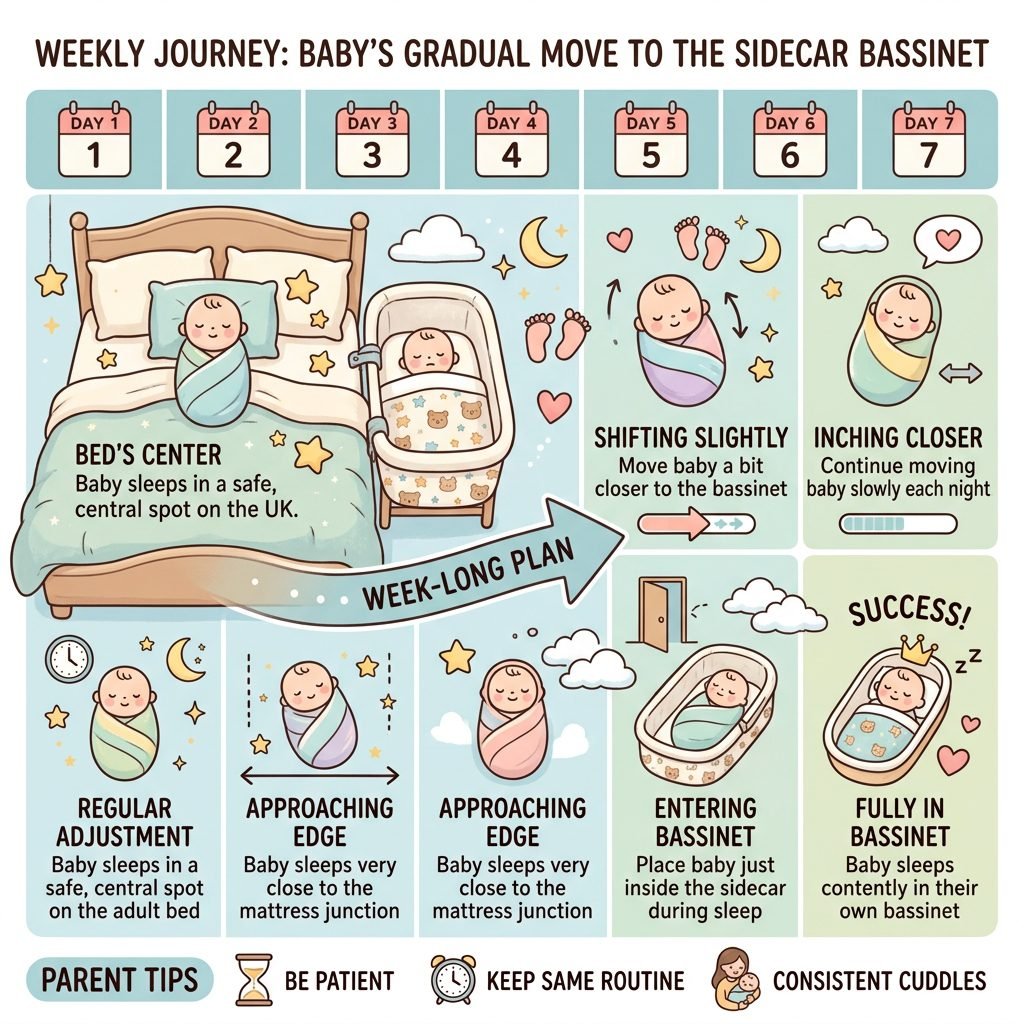
A Step-By-Step Guide to the Shift
We don’t want to rush this, mama. A gradual approach reduces cortisol for both you and the baby. Here is a 7-day roadmap to move from full co-sleeping to the sidecar.
- Days 1-2: The Nap Introduction. Start by placing baby in the sidecar for daytime naps only. You are right there, the room is bright-ish, and the stakes are lower. This builds a positive association with the space.
- Days 3-4: The ‘First Stretch’ Technique. Put baby down in the sidecar for the very first stretch of the night (usually the longest). When they wake for their first feed, you can bring them into the bed for the rest of the night if needed.
- Day 5: The Hand-on-Chest Soothe. On night five, when baby stirs in the sidecar, try to soothe them without picking them up. Place your hand firmly on their chest or hold their hand through the mesh. Let them feel your presence while staying in their space.
- Days 6-7: Full Night Consistency. Aim for the entire night in the sidecar. If they become very distressed, pick them up, calm them, and then place them back down drowsy but awake.
Managing the ‘Velcro’ Moments
If your baby is particularly resistant, try the ‘Layering’ method. Start with them half-on your arm and half-on the bassinet mattress. Slowly, over 20 minutes, slide your arm out. The goal is to minimize the temperature change they feel when you pull away.
Soothing Techniques for the Sidecar

High-Precision Manual Comfort
When baby is in their own space, you need a new toolkit of soothing techniques that don’t involve the ‘all-night buffet’ or constant skin-to-skin. As a doula, I recommend the ‘Four-S’ method tailored for the sidecar:
- Sway: Gently rock the bassinet itself if it has a glide function.
- Shush: Use a loud, rhythmic ‘shh-shh-shh’ sound right near their ear to mimic the sound of blood flow in the womb.
- Stroke: Use long, slow strokes from the forehead to the bridge of the nose. This often forces the eyes to close.
- Side-Pat: If the baby is on their back, you can gently pat their hip or side to provide a rhythmic vibration that is very grounding.
The ‘Pick Up/Put Down’ Variation
If the manual soothing isn’t working, use the Gentle Lift. Pick the baby up just long enough to break the crying cycle. As soon as their body relaxes—even if their eyes are still open—place them back down. This teaches them that the sidecar is a safe place where their needs are met, but it is also where they sleep.
Troubleshooting Common Roadblocks

What to Do When It Gets Tough
Transitions are rarely linear. You might have two great nights followed by a ‘regression’ night. This is normal! Growth spurts, teething, and developmental milestones like rolling can all disrupt sleep. When this happens, don’t view it as a failure of the transition; view it as a temporary need for more support.
Common Challenges and Solutions
| The Problem | The Sisterly Solution |
|---|---|
| The ‘Transfer’ Fail | Wait 20 minutes after they fall asleep (until the ‘limp limb’ stage) before moving them. |
| Early Morning Waking | Keep the room pitch black. Use blackout curtains to prevent the 5 AM sun from signaling ‘playtime.’ |
| Baby Rolls to the Edge | Ensure the sidecar is perfectly level. If they like the edge, it’s often for the ‘nesting’ feel; ensure they are swaddled (if not rolling yet) or in a sleep bag. |
“If you have a rough night and end up co-sleeping again, give yourself grace. Tomorrow is a new opportunity to try the sidecar again. You are not ‘spoiling’ them; you are loving them.”
Safety First: The Golden Rules of Sidecar Sleep
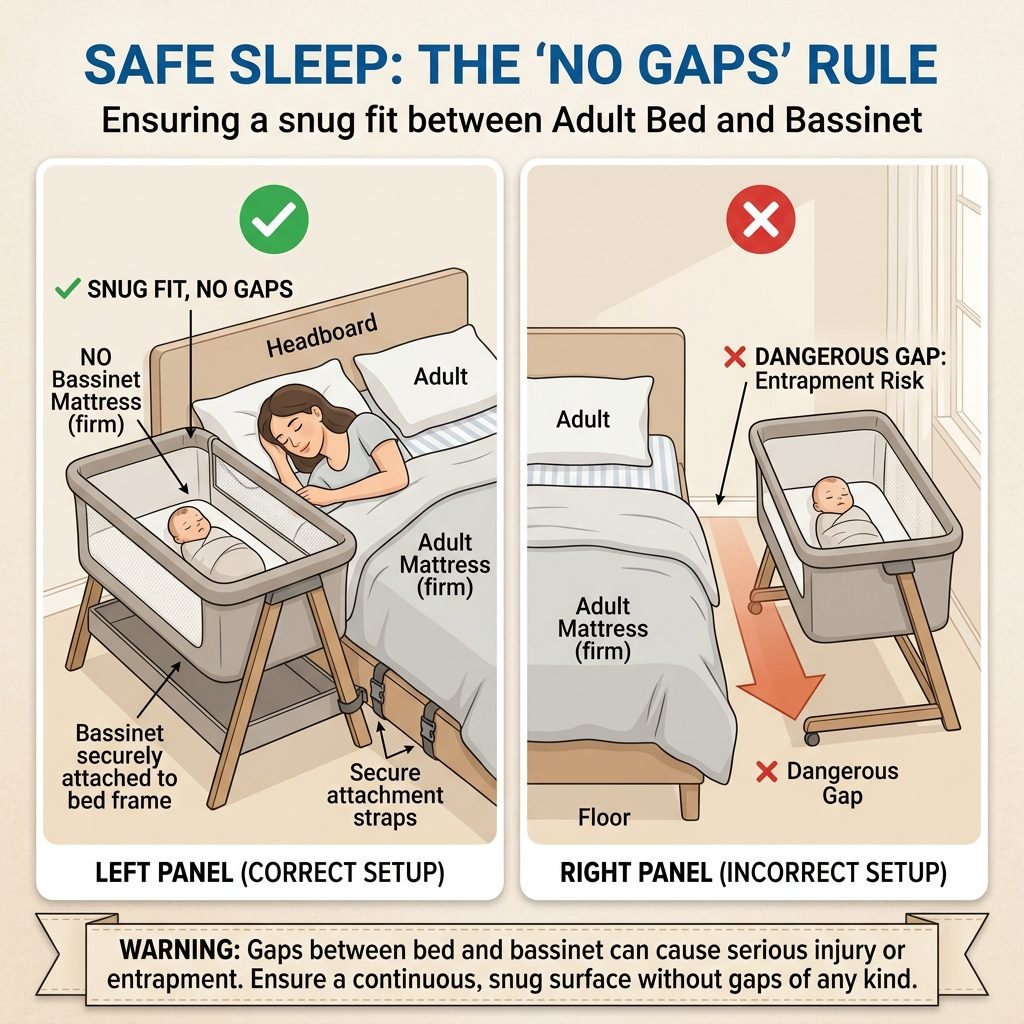
Maintaining a Secure Sanctuary
Safety is the foundation of peace of mind. While the sidecar is much safer than unstructured bed-sharing, there are specific rules we must follow to ensure SIDS prevention and physical safety.
The Non-Negotiables
- No Gaps: I cannot stress this enough. If a 2-finger gap exists between your mattress and the bassinet, it must be adjusted. Use the provided anchor straps to pull the units tight together.
- Flat and Firm: Do not add extra padding, pillows, or ‘nest’ inserts into the bassinet. These are major suffocation risks.
- Clear of Bedding: Your own adult blankets and pillows must stay well away from the bassinet opening. If you use a heavy duvet, ensure it is tucked in or kept at waist height.
- Smoke-Free Environment: Ensure the room is free from any smoke or strong perfumes, which can irritate a newborn’s sensitive respiratory system.
By following these guidelines, you can sleep soundly knowing your baby is in the safest possible environment right next to you.
Conclusion
You’ve Got This, Mama
The transition from co-sleeping to a sidecar bassinet is a significant milestone in your postpartum journey. It marks a shift toward a new rhythm where your needs and your baby’s needs begin to find a harmonious balance. Remember that sleep is a skill, and like any skill, it takes practice, patience, and plenty of grace. You aren’t just moving a baby to a different bed; you are teaching them that they are safe, even when they aren’t physically attached to you. This is the beginning of their confidence and your recovery.
Stay consistent, keep the snuggles high during the day, and trust your instincts. If a night feels too hard, it’s okay to pivot and try again tomorrow. You are a wonderful mother, and this gentle transition is just one more way you are providing the best for your little one. Sweet dreams to you both.