
Surviving the 6-Week Sleep Regression: Schedule Adjustments for Exhausted Parents
Welcome to the Peak of the Storm, Mama
If you are reading this at 3:00 AM with a fussy baby in one arm and a cold cup of coffee in the other, please take a deep breath and know that I am holding space for you. You aren’t doing anything wrong, and your baby isn’t ‘broken.’ At exactly 6 weeks, many parents hit a wall that feels like a total reversal of all the progress made since birth. This isn’t just a random bout of fussiness; it is a profound neurological and physical leap. As a doula and sleep consultant, I call this the ‘Peak of Crying’ phase. Your little one is suddenly more aware of the world, their nervous system is firing in new ways, and they are likely hitting a massive growth spurt. This guide is designed to be your survival manual—a warm, evidence-based hug to help you adjust your schedule, soothe your baby, and protect your own mental health during these intense few weeks.
“This is a season, not a lifetime. You are the exact mother your baby needs, even in the middle of the hardest night.”
Understanding the 6-Week Neurological Leap

At six weeks, your baby’s brain is undergoing a massive transformation. They are beginning to see further, recognize patterns, and realize that they are a separate being from you. This newfound awareness is overstimulating! Imagine suddenly seeing the world in 4K resolution when you were used to blurry shapes—it would be exhausting for you, too. This period often coincides with a physical growth spurt, meaning your baby is hungrier and more prone to ‘cluster feeding.’ Understanding that this is a developmental milestone rather than a ‘bad habit’ can help shift your perspective from frustration to empathy.
Why Sleep Falls Apart Now
- Increased Alertness: Baby is now curious about the shadows on the wall or the sound of the dishwasher, making it harder to drift off.
- The Peak of Crying: Research shows that infant crying typically peaks at 6 weeks before gradually tapering off by month three.
- Digestive Maturation: Their little guts are still learning how to process milk, often leading to increased gas and ‘the witching hour.’
| Developmental Change | Impact on Sleep | ||
|---|---|---|---|
| Growth Spurt | Increased hunger and frequent night wakings for feeding. | Neurological Leap | Difficulty settling due to sensory overstimulation. |
| Social Smiling | Baby may want to ‘practice’ smiling and cooing instead of sleeping. |
The 6-Week Survival Schedule: Adjusting Wake Windows
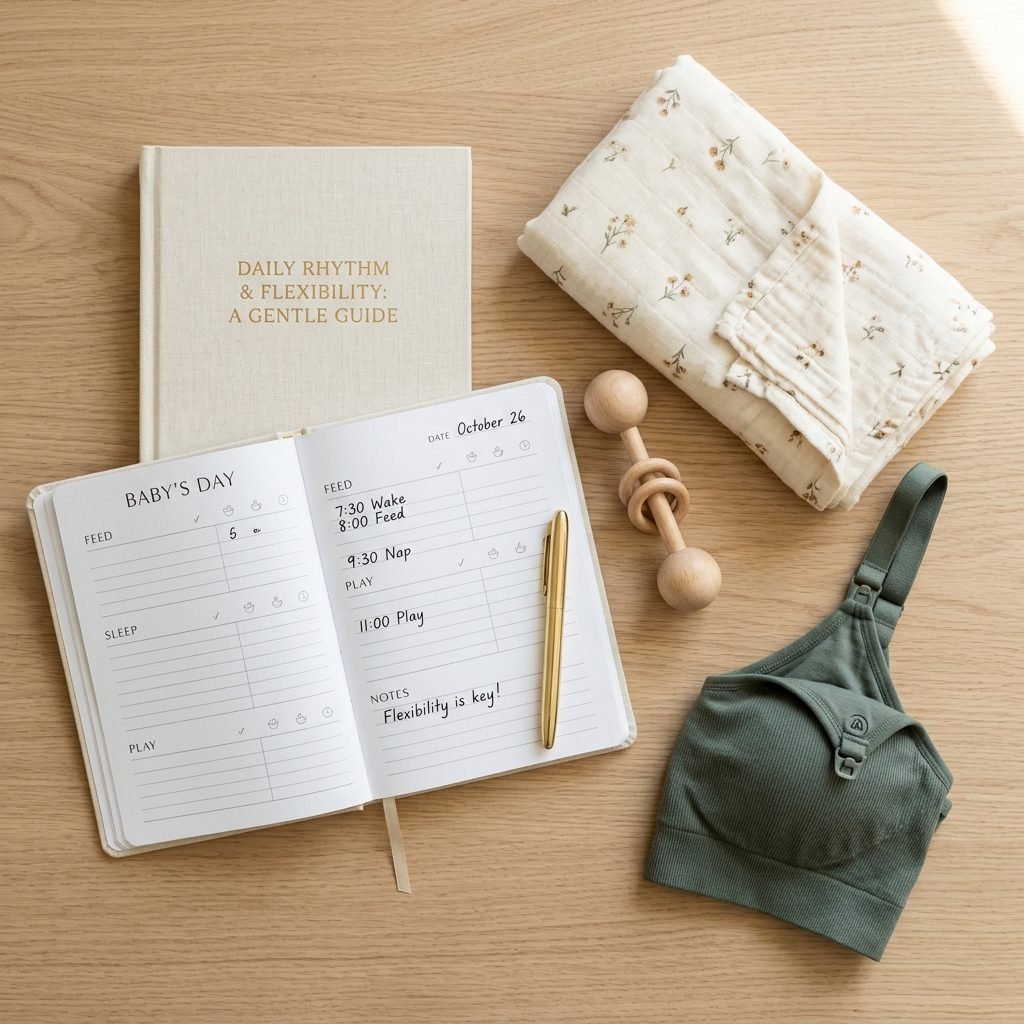
The biggest mistake parents make at 6 weeks is keeping the baby awake too long. Because your baby is more alert, they might seem ‘awake,’ but they are actually becoming overtired. An overtired baby produces cortisol and adrenaline, which makes it nearly impossible for them to fall asleep. At 6 weeks, wake windows are incredibly short—usually between 45 to 90 minutes. If you miss this window, the ‘witching hour’ will be much more intense.
Sample 6-Week Daily Rhythm
Remember, this is a rhythm, not a strict clock-based schedule. Follow your baby’s cues!
| Time Period | Activity | Goal/Focus |
|---|---|---|
| 7:00 AM – 8:30 AM | Wake, Feed, Brief Play | Morning sunlight to set circadian rhythm. |
| 8:30 AM – 10:00 AM | Nap 1 | Usually the easiest nap of the day. |
| 10:00 AM – 11:30 AM | Feed, Tummy Time, Diaper | Keep stimulation low but engaging. |
| 11:30 AM – 1:00 PM | Nap 2 | Contact naps are okay and helpful now! |
| 1:00 PM – 5:00 PM | Afternoon Cycles | Short wake windows (60 mins) and catnaps. |
| 5:00 PM – 9:00 PM | The Witching Hour | Cluster feeding and soothing; baby may be fussy. |
| 9:00 PM | Bedtime Routine | Swaddle, white noise, and final feed. |
Advanced Soothing: The ‘Tiger in the Tree’ and More

When the 6-week regression hits, standard rocking might not cut it. You need a toolkit of physical techniques to help regulate your baby’s nervous system. One of my favorite doula-recommended holds is the ‘Tiger in the Tree.’ This position provides gentle pressure on the abdomen, which helps with gas, and offers a change of scenery that can snap a baby out of a crying spell.
How to Perform the Tiger in the Tree Hold:
- Lay your baby face-down along your forearm, with their head resting near your elbow crease.
- Ensure their legs are straddling your arm, hanging down comfortably.
- Use your other hand to support the baby’s back or gently pat their bottom.
- Walk slowly or use a gentle bouncing motion. The pressure on their tummy helps move gas bubbles along.
The 5 S’s Framework
Developed by Dr. Harvey Karp, these are essential at 6 weeks:
- Swaddle: Snug, but hip-healthy, to prevent the startle reflex.
- Side/Stomach Position: Only for soothing in your arms, never for sleep!
- Shush: Use a white noise machine that is at least as loud as the baby’s crying.
- Swing: Gentle, rhythmic jiggling (supporting the head and neck).
- Suck: A pacifier or clean finger can provide immense comfort.
Optimizing the Sleep Environment & Postpartum Comfort

Since your baby is more easily distracted now, your nursery environment needs to be a ‘sensory vacuum.’ This is also the time to prioritize your own comfort. If you are spending hours rocking a baby, you need to be in a space that feels nourishing to you. Think of your nursery as a sanctuary, not a battleground.
Nursery Check-List for 6-Week Success
- Total Darkness: Use blackout curtains. If you can see your hand in front of your face, it’s too bright.
- White Noise: Continuous, low-frequency sound (like a rainstorm or static) masks household noises.
- Temperature: Keep the room between 68 and 72 degrees Fahrenheit.
Style & Comfort for Mom
You are healing, too! Don’t underestimate the power of ‘nursing-friendly’ fashion that makes you feel human. Look for soft, bamboo-fiber robes, high-waisted postpartum leggings that offer abdominal support, and nursing tanks with easy-clip access. When you feel physically comfortable, your patience for the 6-week fussiness increases ten-fold.
“Your comfort is not a luxury; it is a tool for better parenting. Put on the soft robe, grab the big water bottle, and breathe.”
Managing the ‘Witching Hour’ and Cluster Feeding

Between 5:00 PM and 10:00 PM, many 6-week-olds experience what is known as the ‘witching hour.’ They may cry inconsolably, even if all their needs are met. This is often due to a combination of overstimulation from the day and the need to ‘tank up’ on calories for the night through cluster feeding. Cluster feeding is when a baby wants to nurse or take a bottle every 30 to 60 minutes.
Survival Tips for the Evening Chaos:
- The ‘Reset’ Bath: Sometimes a change of temperature and the sound of running water can stop a crying fit. A warm bath (for baby or a shared bath with you!) works wonders.
- Babywearing: Use a soft wrap or carrier. The proximity to your heartbeat and the upright position helps with digestion and keeps your hands free to grab a snack.
- Tag-Teaming: If you have a partner, use the ‘handoff’ method. When you feel your frustration rising, hand the baby over for 15 minutes while you step outside or put on noise-canceling headphones.
| Strategy | Why it Works |
|---|---|
| Babywearing | Mimics the womb and provides calming vestibular input. |
| Lowering Lights | Reduces sensory input to a frying nervous system. |
| Outdoor Time | The ‘fresh air reset’ helps both mom and baby regulate. |
Conclusion
You’re Doing a Great Job, Mama
The 6-week sleep regression is one of the most challenging hurdles of the first year, but it is also a sign that your baby is growing exactly as they should. By adjusting your expectations, shortening those wake windows, and leaning into soothing techniques like the ‘Tiger in the Tree,’ you will find your way through the fog. Remember to be kind to yourself. If the dishes stay in the sink and the laundry stays in the dryer, it’s okay. Your only job right now is to survive this peak and love your baby through it. Before you know it, those social smiles will become frequent, the crying will subside, and you’ll find a new, more stable rhythm. Hang in there—you’ve got this!