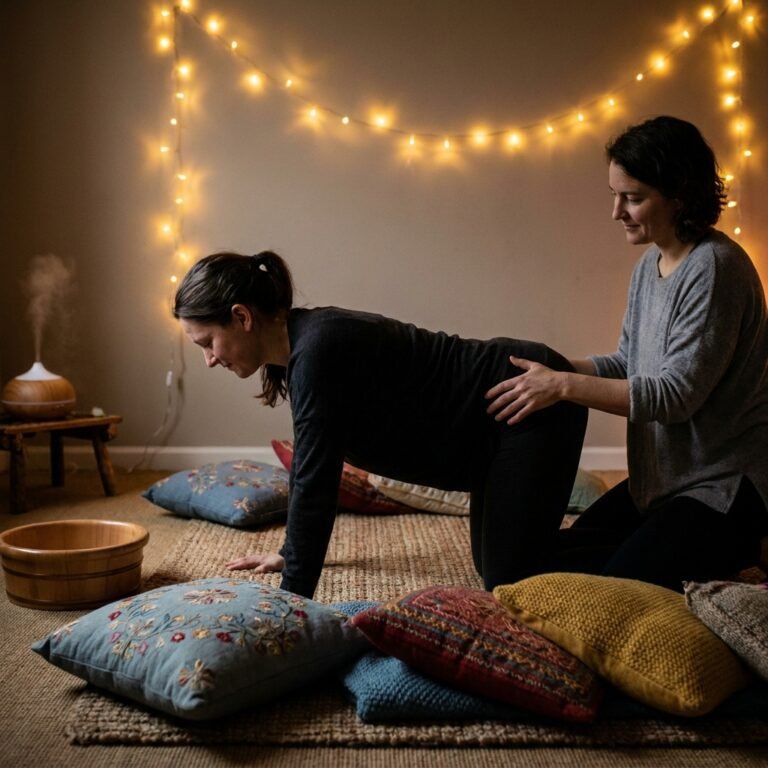

The Best Hot Water Bottle Placements for Relieving Intricate Lower Back Labor Pain
Embracing the Warmth: A Sisterly Guide to Back Labor Relief
Hello, mama. If you are reading this, you might be feeling those first tell-tale signs of back labor, or perhaps you are preparing your birth kit with the wisdom of a woman who knows that labor isn’t just about the belly—it is often about the back, too. As a doula, I have seen firsthand how intricate lower back labor pain can feel overwhelming. It isn’t just a dull ache; it is a deep, pulsating pressure that demands your full attention. But here is the good news: something as simple, humble, and classic as a hot water bottle can become your most powerful ally in the delivery room.
The use of heat therapy, or thermotherapy, during labor is an age-old practice backed by modern science. It works on the ‘Gate Control Theory’ of pain, where the sensation of warmth travels faster to the brain than the sensation of pain, effectively ‘closing the gate’ and reducing the intensity of what you feel. When we strategically place that warmth against the lower back, we aren’t just masking the pain; we are encouraging the muscles to soften, the blood to flow, and the mind to find a moment of peace. In this guide, we are going to walk through the exact placements, safety protocols, and partner techniques to help you navigate back labor with grace and comfort.
Understanding the ‘Why’ Behind Back Labor Pain

Before we dive into the ‘how,’ let’s talk about the ‘why.’ Back labor often occurs when the baby is in an occiput posterior (OP) position—meaning their back is against your back. As they move through the birth canal, their hard skull presses against your sacrum, creating that ‘intricate’ and intense pressure. This is why we focus so heavily on the lower back region.
Heat does more than just feel good. It acts as a vasodilator, opening up blood vessels to increase oxygen delivery to the hardworking muscles of the uterus and lower back. This helps to flush out lactic acid and reduce the ‘cramping’ sensation that often accompanies early and active labor. By relaxing the external muscles of the lower back, you also allow your pelvis to move more freely, which can actually help your baby rotate into a more favorable position.
Remember, mama: your body is not broken, and this pain is not your enemy. It is simply your body’s way of communicating that it is doing the hard, beautiful work of bringing life into the world.
Safety Protocols: Protecting Your Skin and Your Baby
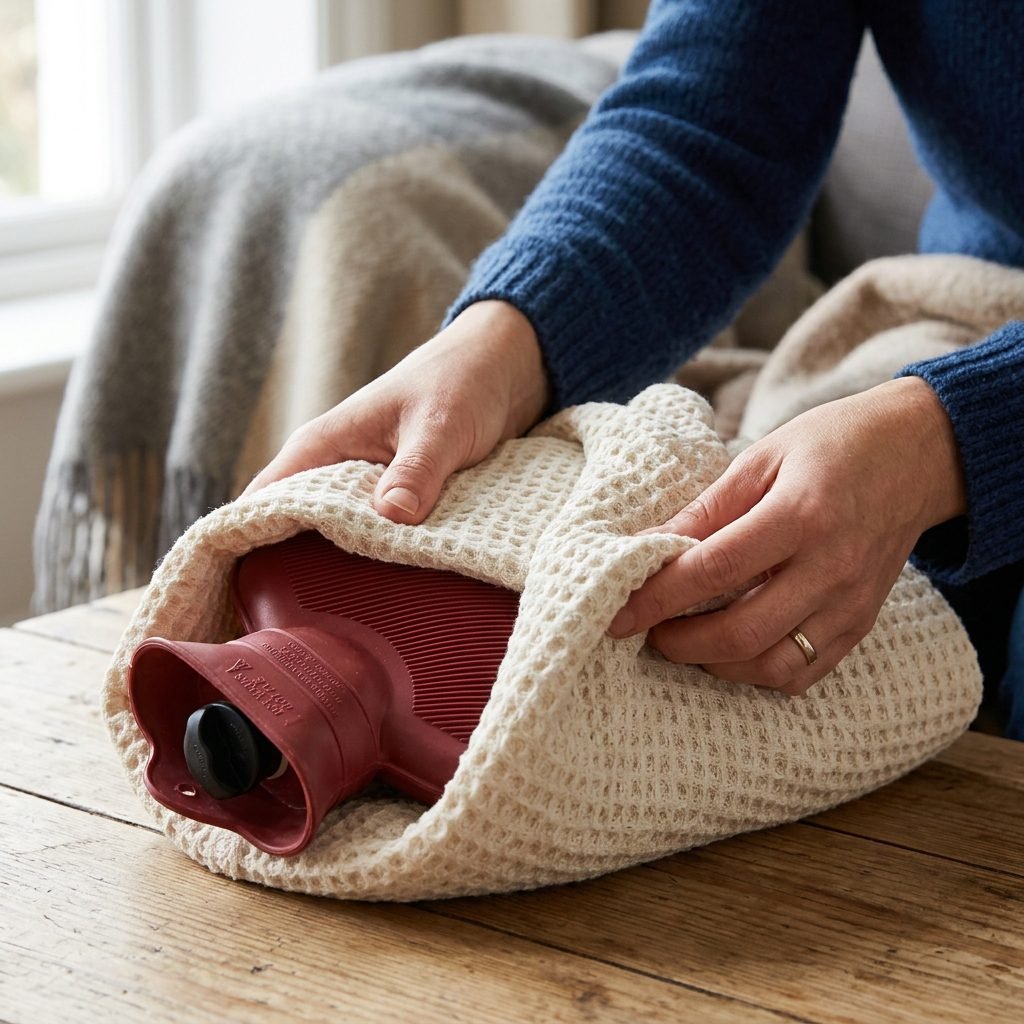
The Golden Rules of Heat Therapy
While heat is a miracle worker, we must use it with intention and care. Your skin can become more sensitive during labor due to hormonal shifts and increased blood flow, so we must prioritize safety to prevent burns or irritation.
First and foremost, never apply a hot water bottle directly to bare skin. Always ensure there is a thick fabric barrier—a knit cover, a soft towel, or even a pillowcase. Secondly, avoid using boiling water. The goal is a deep, penetrating warmth, not a searing heat. Fill your bottle with hot tap water (ideally around 110°F to 120°F) to ensure it stays warm for a long duration without being dangerous.
| Practice | Recommendation | Why It Matters |
|---|---|---|
| Water Temperature | Hot tap water, NOT boiling | Prevents accidental burns if the bottle leaks. |
| Skin Barrier | Cotton towel or knit cover | Protects sensitive skin from direct heat exposure. |
| Duration | 20 minutes on, 20 minutes off | Prevents skin mottling and maintains thermal sensitivity. |
| Placement | Lower back/Sacrum | Targets the nerve center of labor sensations. |
The 4 Strategic Placements for Maximum Relief
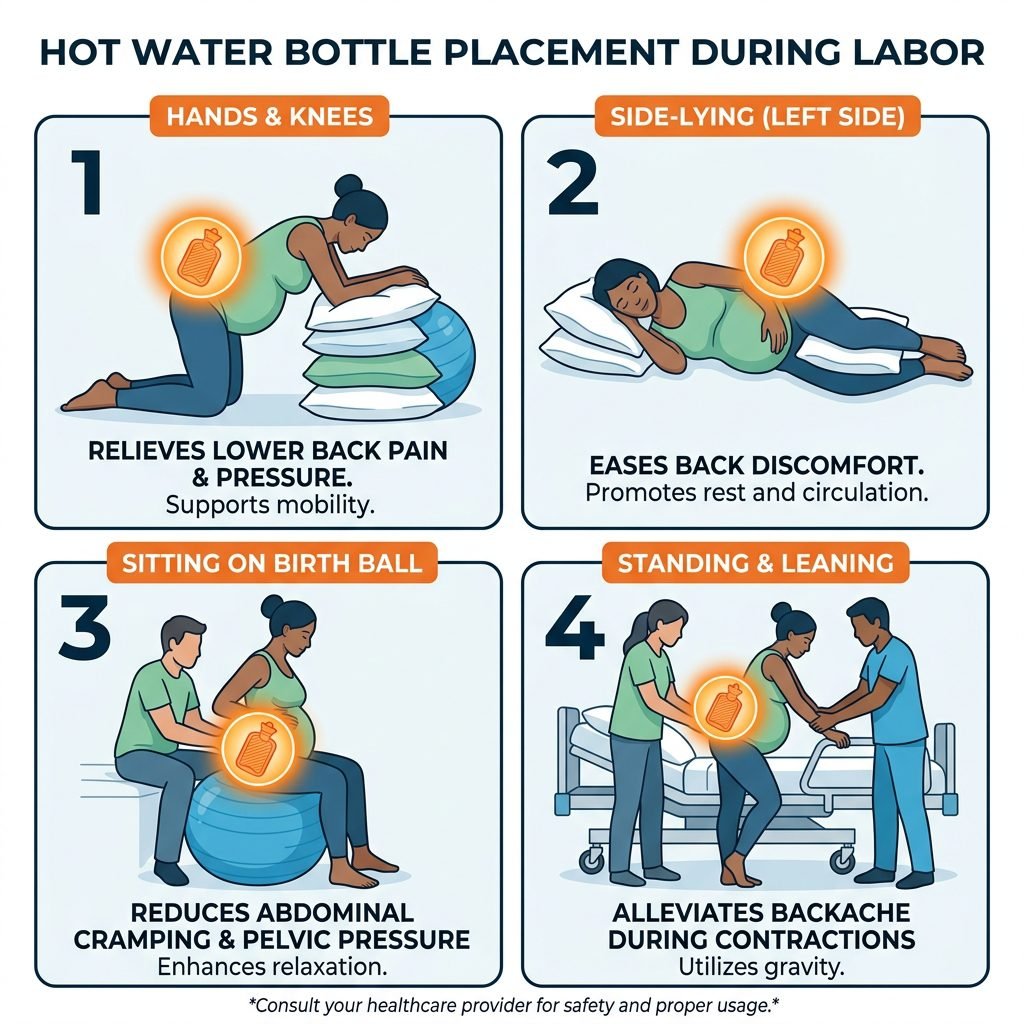
Precision is Everything
When labor intensifies, ‘just putting it on your back’ isn’t enough. You need specific placements that target the nerves and ligaments most affected by the baby’s descent. Here are the four doula-recommended placements:
- The Sacral Press (The Deep Relief): Place the bottle horizontally across the very base of your spine, right where your tailbone meets your glutes. This is the epicenter of back labor. Have your partner apply firm, steady pressure on top of the bottle during a contraction.
- The Lumbar Wrap (The Muscle Soother): Position the bottle vertically along the curve of your lower spine. This targets the erector spinae muscles that often seize up during long labor. This is best used while side-lying with a pillow between your knees.
- The ‘Hip Sandwich’ (The Pelvic Relaxer): If the pain is radiating into your hips, use two bottles. Place one on the lower back and one on the pubic bone (very low on the belly). This ‘sandwiches’ the pelvic bowl in warmth, encouraging the entire pelvic floor to release.
- The Kidney Warm-Up (The Adrenal Support): Place the bottle slightly higher, just below the ribcage on the back. This helps soothe the adrenal glands and can reduce the ‘shivering’ or ‘shaking’ that often happens during transition.
Each of these placements serves a different purpose. I recommend rotating through them to see which one resonates most with your body in the moment. Listen to your intuition—it knows exactly where the warmth needs to go.
Partner Support: How to Use the Bottle as a Tool for Connection

The Power of Your Birth Partner
Birth partners, this is your time to shine. You are not just ‘holding’ the bottle; you are providing counter-pressure and comfort. When a contraction begins, your job is to be the anchor. Use the hot water bottle as an extension of your hands.
Try the ‘Heat-and-Heal’ technique: As the contraction peaks, press the hot water bottle firmly into her sacrum using the heel of your hand. Use your other hand to stroke her shoulder or hold her hand. This dual sensation—the heat from the bottle and the grounding touch of your hand—creates a sensory ‘buffer’ that can make the contraction feel much more manageable.
Partner Script: “I am right here. Let the warmth sink in. With every breath, your body is opening. You are doing this, and you are doing it beautifully.”
Check in frequently. Ask, ‘Is this spot still good?’ or ‘Do you want more pressure?’ Sometimes, what felt amazing ten minutes ago might feel irritating now. Be flexible and stay present.
Integrating Heat with Movement: A Phase-by-Phase Guide
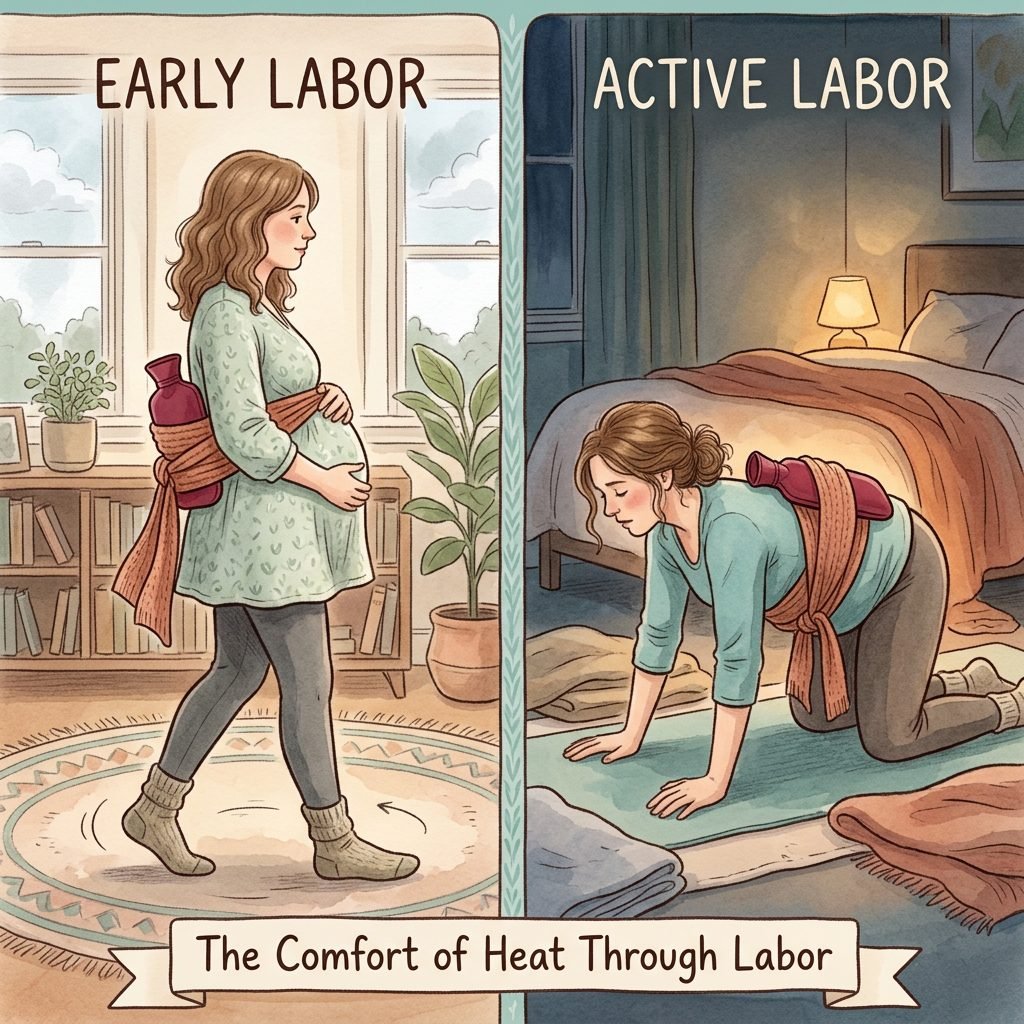
Timing Your Heat Therapy
As labor progresses, your needs will change. What works in early labor may feel cumbersome in transition. Use this table to coordinate your hot water bottle use with your labor phases and movement.
| Labor Phase | Best Placement | Complementary Movement |
|---|---|---|
| Early Labor | Lumbar Wrap | Gentle walking or slow dancing with partner. |
| Active Labor | Sacral Press | Hands and Knees (All fours) with pelvic tilts. |
| Transition | The ‘Hip Sandwich’ | Sitting backward on a chair or toilet (The ‘Dilation Station’). |
| Pushing | Lower Sacrum | Squatting or side-lying to keep the perineum warm and flexible. |
In Active Labor, the goal is to keep the baby moving. If you are using a hot water bottle, don’t let it keep you stationary. You can tuck the bottle into the waistband of maternity leggings or a specialized labor wrap so you can continue to sway, squat, and move. Motion is lotion for the pelvis, and heat is the fuel that keeps those muscles moving smoothly.
Beyond the Bottle: Maintenance and Re-Heating
Keep the Comfort Flowing
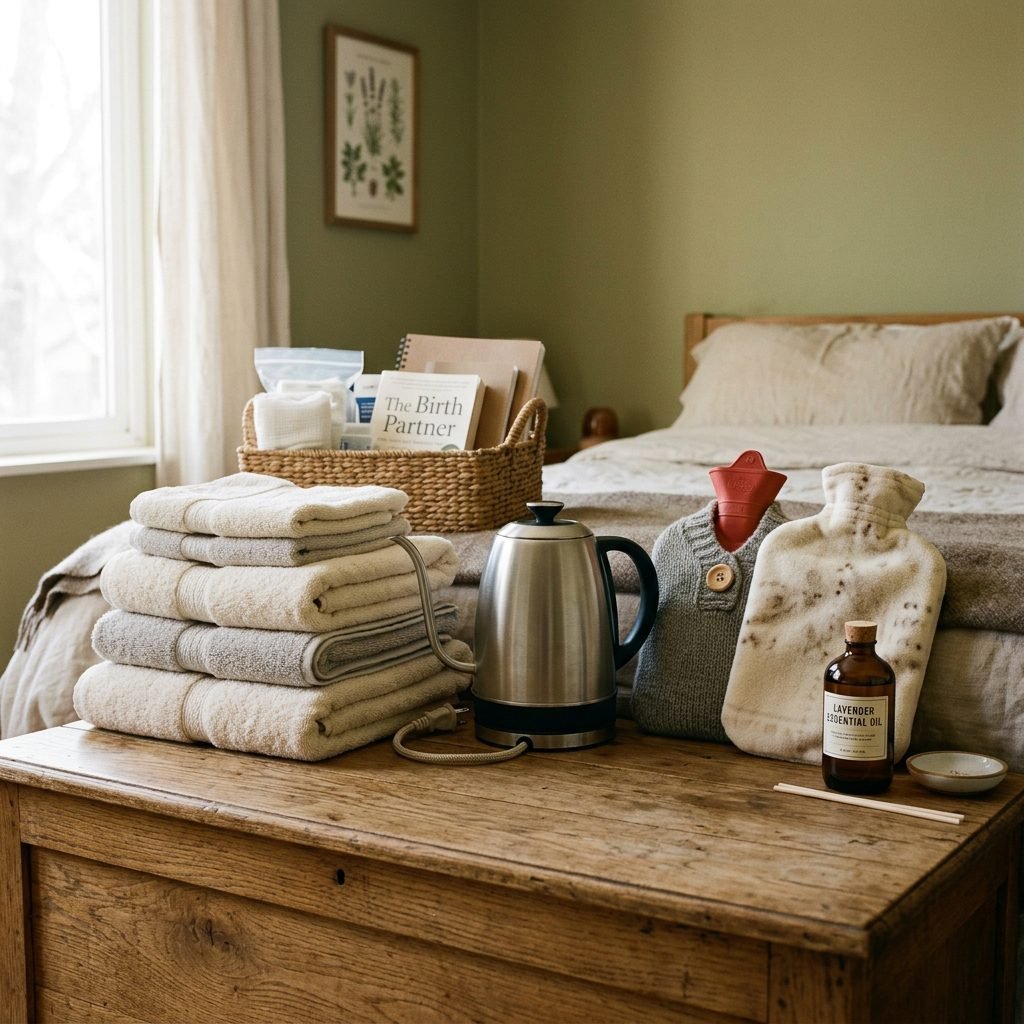
One of the few downsides of a hot water bottle is that it eventually cools down. In the heat of labor (pun intended!), the last thing you want is a lukewarm bottle. To keep the momentum going, have a ‘reheating station’ ready. This could be a dedicated kettle in your birth room or a plan for your partner to swap out bottles every 60 to 90 minutes.
- Pro-Tip: If you are at a hospital, you can ask the nurses for ‘warm packs,’ but they often don’t hold heat as long as a high-quality rubber bottle. Bringing your own ensures consistency.
- Texture Matters: Some moms find that a bottle with a ribbed surface provides a subtle massage effect that further distracts from the pain.
- Aromatherapy Boost: Add a drop of lavender or clary sage essential oil to the cover of the bottle (not the rubber itself) to combine heat therapy with calming scents.
By staying ahead of the cooling process, you ensure that there is never a gap in your pain management strategy. Constant, reliable warmth is key to maintaining your rhythm.
Conclusion
You’ve Got This, Mama
Labor is a marathon, not a sprint, and every tool you bring into that room is a testament to your strength and preparation. The intricate pain of back labor can be daunting, but with the right placements, a warm hot water bottle, and a supportive team, you can transform that intensity into a productive, manageable force. Trust your body, lean into the warmth, and remember that each contraction is bringing you one step closer to holding your baby in your arms. You are powerful, you are prepared, and you are surrounded by warmth.