Yoga Ball Exercises for Labor: How to Safely Induce Labor and Open Your Pelvis at Home
Welcome to Your Empowered Birth Preparation
Oh, mama, you are so close to meeting your little one! As a doula, I know that these final weeks of pregnancy can feel like a marathon where the finish line keeps moving. Your body is doing incredible work right now, and it is completely normal to feel a mix of excitement, exhaustion, and a deep desire to get things moving. That is where our favorite tool—the birth ball—comes into play. It is more than just a piece of gym equipment; it is a gateway to comfort, a tool for pelvic alignment, and a gentle way to encourage your baby into the optimal position for birth.
Using a yoga ball (often called a birth ball in the maternity world) is one of the most effective ways to stay active while remaining supported. It allows gravity to work with you, not against you. In this guide, we are going to walk through exactly how to use this tool to open those pelvic bones, soften the tissues, and create the space your baby needs to descend. Whether you are 38 weeks and looking for relief or 41 weeks and ready to meet your baby, these exercises are designed to be your sisterly companion in the journey toward labor.
Trust your body, mama. It knows how to open. It knows how to yield. You are strong, you are capable, and your baby is listening to your rhythm.
Finding Your Perfect Fit: The Birth Ball Size Guide
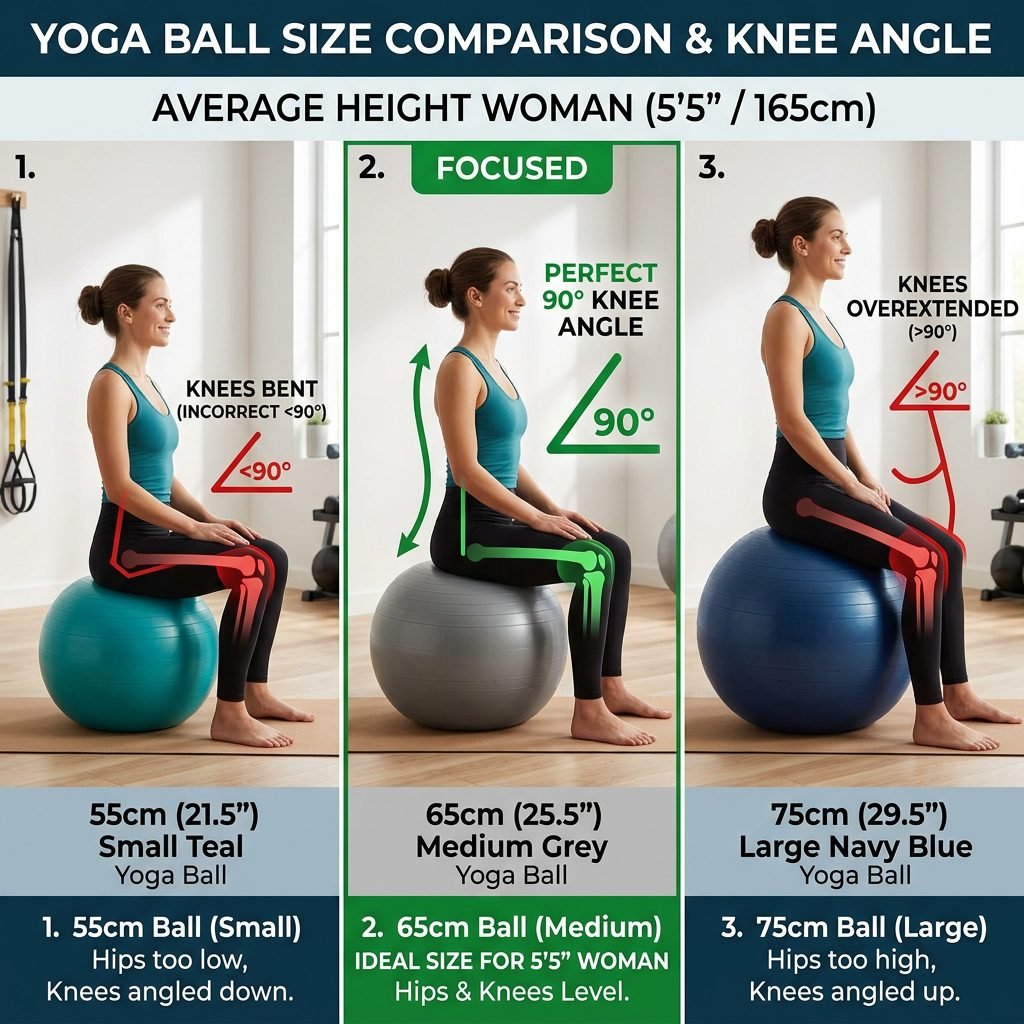
Before we start bouncing, we have to make sure your equipment is safe and tailored to your body. A ball that is too small will put unnecessary strain on your knees, while one that is too large might make you feel unstable. As a doula, I always tell my clients: your hips should always be slightly higher than your knees. This encourages the baby to move forward against your abdominal wall rather than tucking back toward your spine (which can lead to that dreaded back labor).
How to Measure for Safety
When you sit on the ball, your feet should be flat on the floor, and your knees should be at a 90-degree angle or slightly lower. If your knees are pointing up toward your chest, the ball is too small or needs more air.
| Your Height | Recommended Ball Size | Inflation Tip |
|---|---|---|
| Under 5’3″ (160cm) | 55 cm | Inflate until firm but with a slight give. |
| 5’4″ to 5’10” (162-178cm) | 65 cm | Ensure your hips are above your knees. |
| Over 5’10” (178cm) | 75 cm | Use a non-slip mat underneath for stability. |
Gentle Rhythms: Pelvic Tilts and Hip Circles
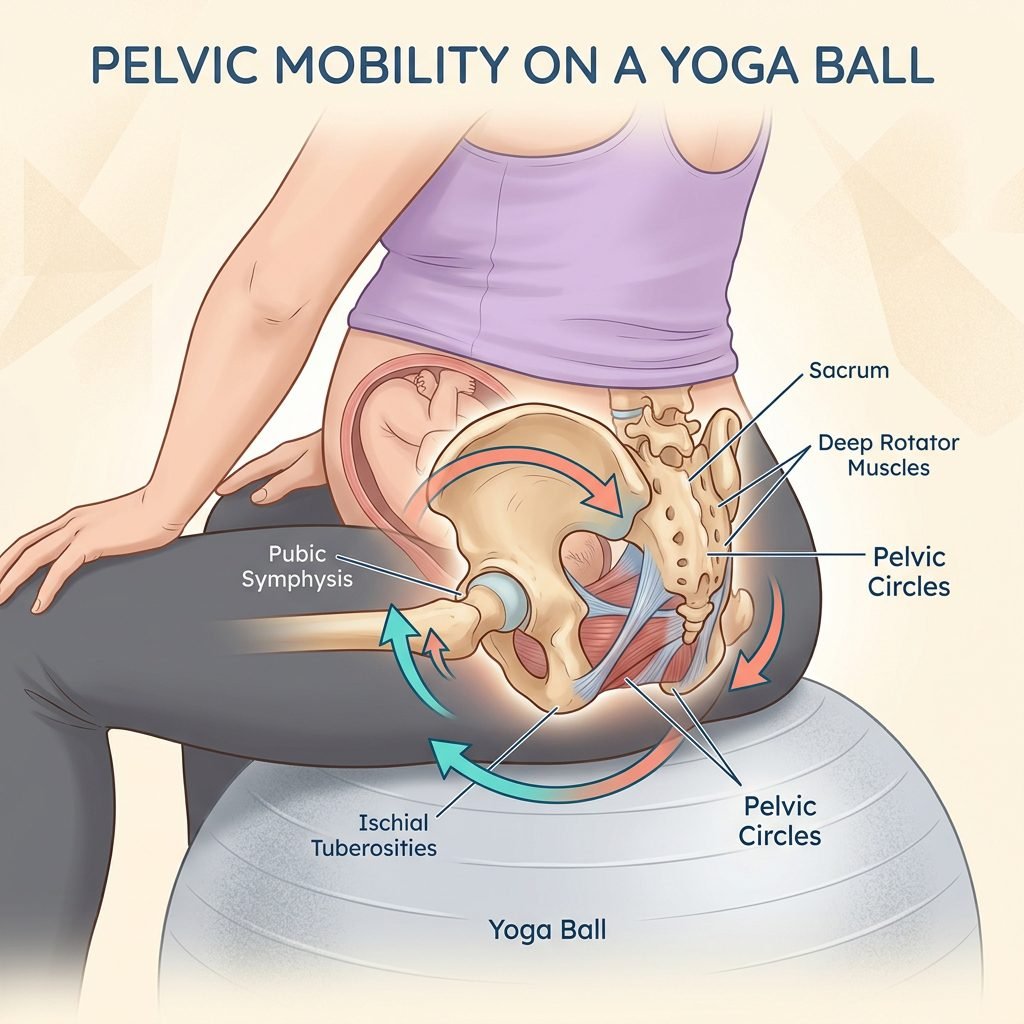
These are the bread and butter of late-pregnancy comfort. These movements help to loosen the ligaments around the pelvis and can help the baby’s head engage more deeply into the pelvic brim. Think of these as a gentle massage for your lower back and pelvic floor.
The Pelvic Tilt (The Rocker)
- Sit squarely on the center of the ball with your feet wide for stability.
- Place your hands on your knees or your hips.
- Slowly tuck your tailbone under, rounding your lower back slightly.
- Then, arch your back gently, tilting your pelvis forward.
- Repeat this 15 to 20 times, breathing deeply into your belly.
The Hula (Hip Circles)
- While seated, imagine you are drawing a circle on the floor with your tailbone.
- Move your hips in a slow, clockwise motion, feeling the stretch in your hip flexors.
- After 10 rotations, switch to counter-clockwise.
- Pro Tip: Visualize the pelvic bones widening with every circle.
Opening the Outlet: Squats and Asymmetric Lunges
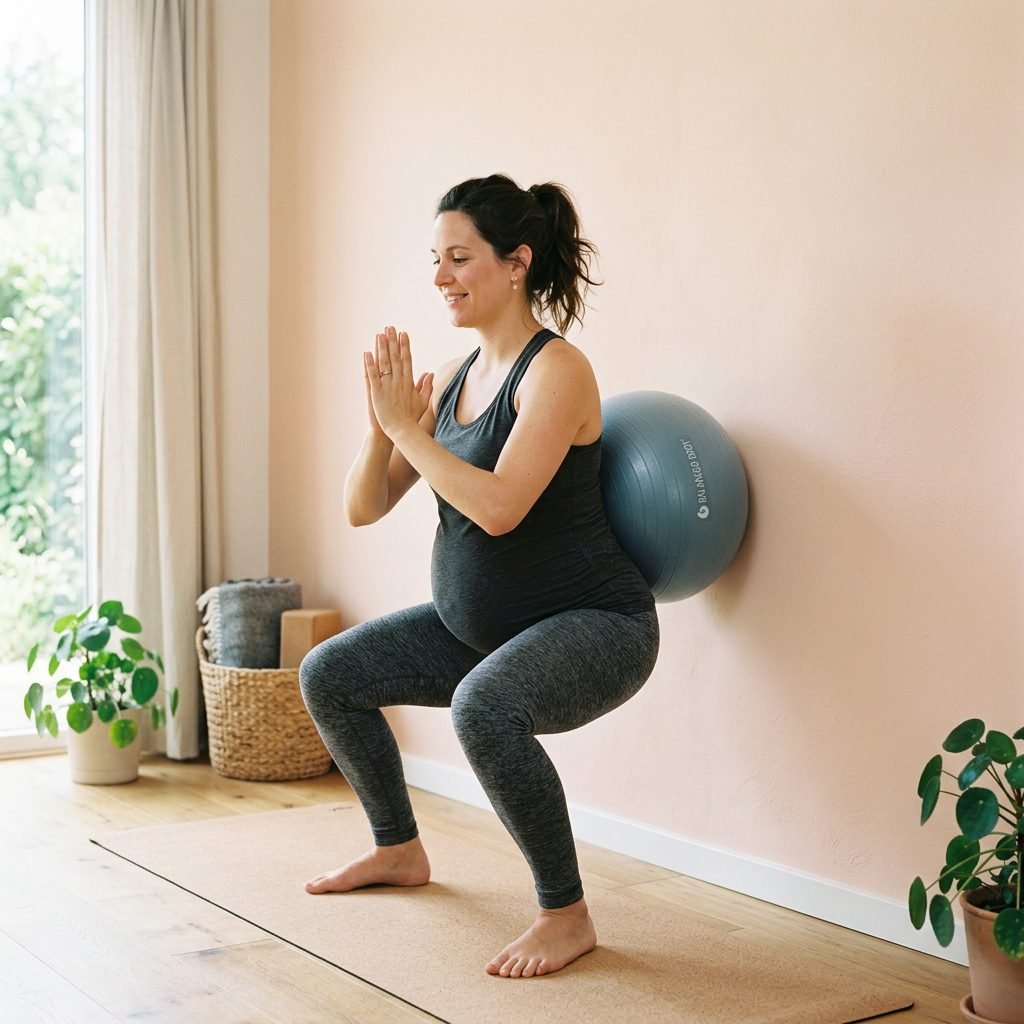
If you are looking to truly open the pelvis to make room for delivery, we need to move beyond simple sitting. These exercises utilize gravity and asymmetry to create maximum space in the pelvic outlet.
Supported Ball Squats
Squatting is one of the oldest and most effective ways to encourage labor. Using the ball against a wall provides support so you don’t exhaust your legs too quickly.
- Place the ball between your lower back and a sturdy wall.
- Walk your feet out slightly and widen your stance.
- Slowly lower your hips into a squat, letting the ball roll up your back.
- Hold for 5 seconds, then slowly rise.
- The ball keeps your spine aligned and takes the pressure off your joints.
The Asymmetric Lunge (The Pelvic Opener)
Asymmetry is the secret weapon of doulas! By keeping one leg higher than the other, you shift the pelvic bones in a way that can help a “stuck” baby rotate.
- Kneel on a soft mat next to the ball.
- Place one foot forward in a lunge position, while resting your arms and chest on the ball for support.
- Lean into the ball, feeling the stretch in the hip of the kneeling leg.
- Rock back and forth gently for 2 to 3 minutes, then switch sides.
The Peanut Ball: Your Best Friend for Rest
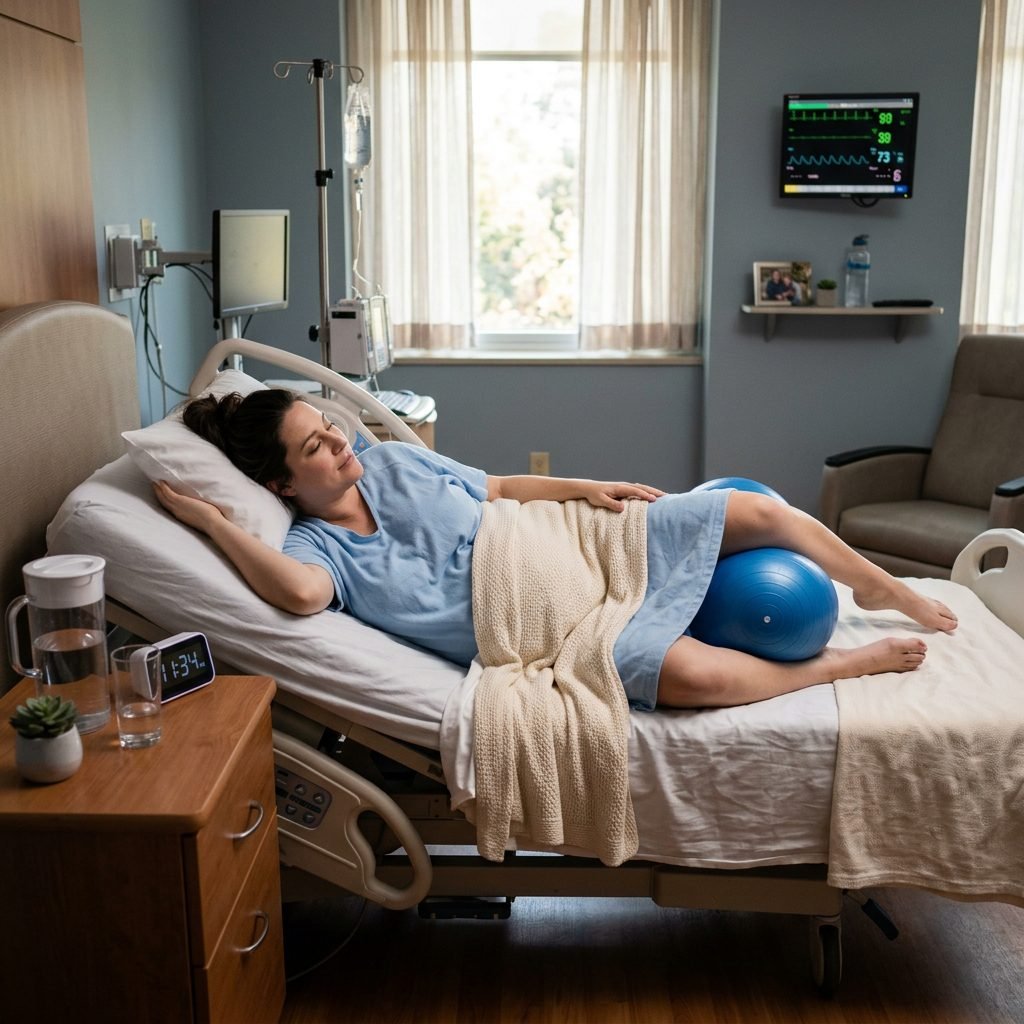
Sometimes, labor requires us to be in bed—whether due to an epidural, exhaustion, or medical necessity. This is where the Peanut Ball (an oblong, peanut-shaped ball) becomes your best friend. It allows you to keep the pelvis open even while lying on your side.
Using the Peanut Ball in Bed
- Side-Lying: Place the peanut ball between your thighs and ankles while lying on your side. This mimics a squatting position and can significantly shorten the first stage of labor.
- The Fire Hydrant: While on your side, lift your top leg high over the peanut ball. This creates an even wider opening in the mid-pelvis.
| Position | Benefit | Best Used When… |
|---|---|---|
| Seated Bouncing | Gravity-assisted descent | Early labor / Active labor |
| Forward Leaning | Relieves back pain | Baby is “sunny-side up” (OP) |
| Peanut Ball (Side) | Opens pelvic outlet | During an Epidural or rest |
Safety First: When to Exercise and When to Pause
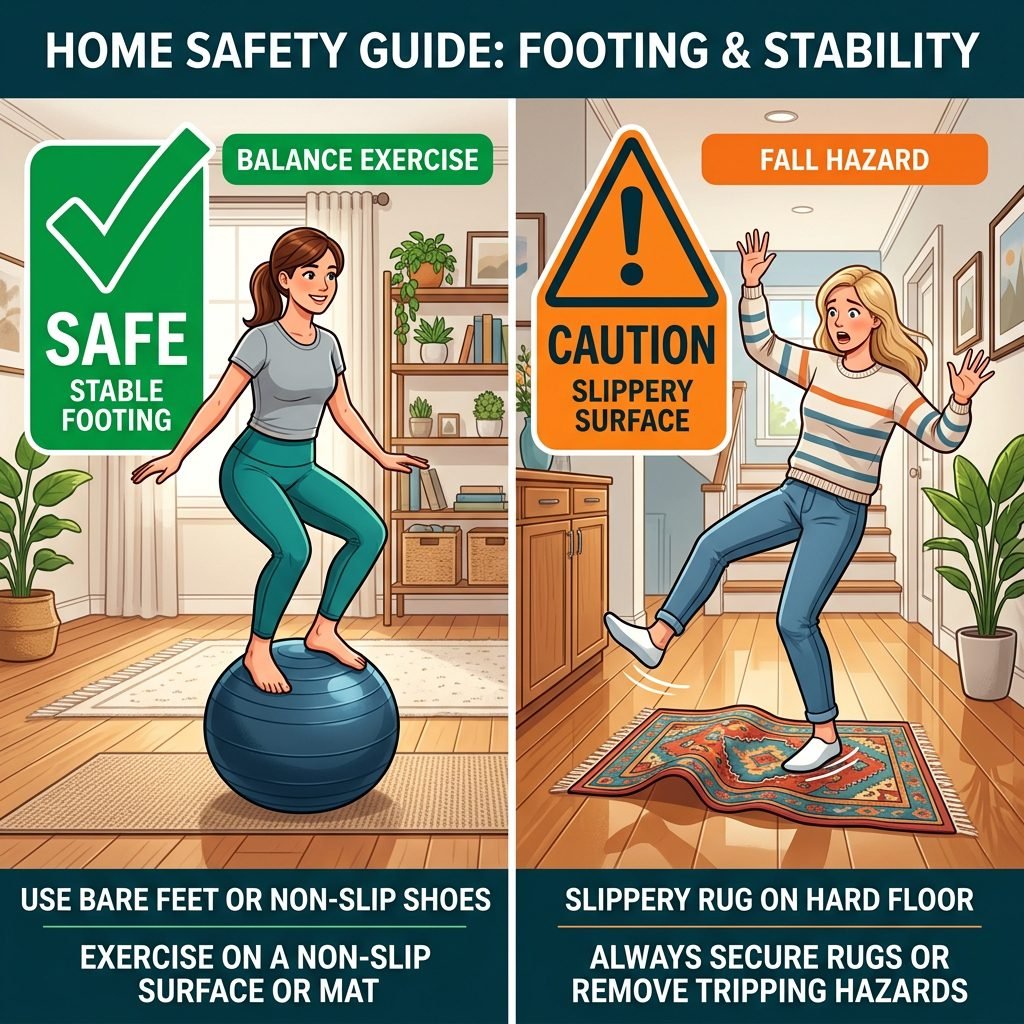
Mama, your safety is the top priority. While yoga ball exercises are generally very safe, there are a few things to keep in mind to ensure you and baby stay healthy.
The Dos and Don’ts of Birth Ball Use
- DO always have a partner nearby if you feel off-balance.
- DO wear non-slip socks or go barefoot to maintain grip on the floor.
- DO stay hydrated; even gentle movements can be a workout for a pregnant body.
- DON’T bounce vigorously if you have been told you have a low-lying placenta or are at risk for preterm labor.
- DON’T hold your breath; constant oxygen flow is vital for you and the baby.
Your breath is the bridge between your mind and your body. If the breath is shallow, the body is tense. Inhale peace, exhale tension.
Creating Your Labor Circuit at Home
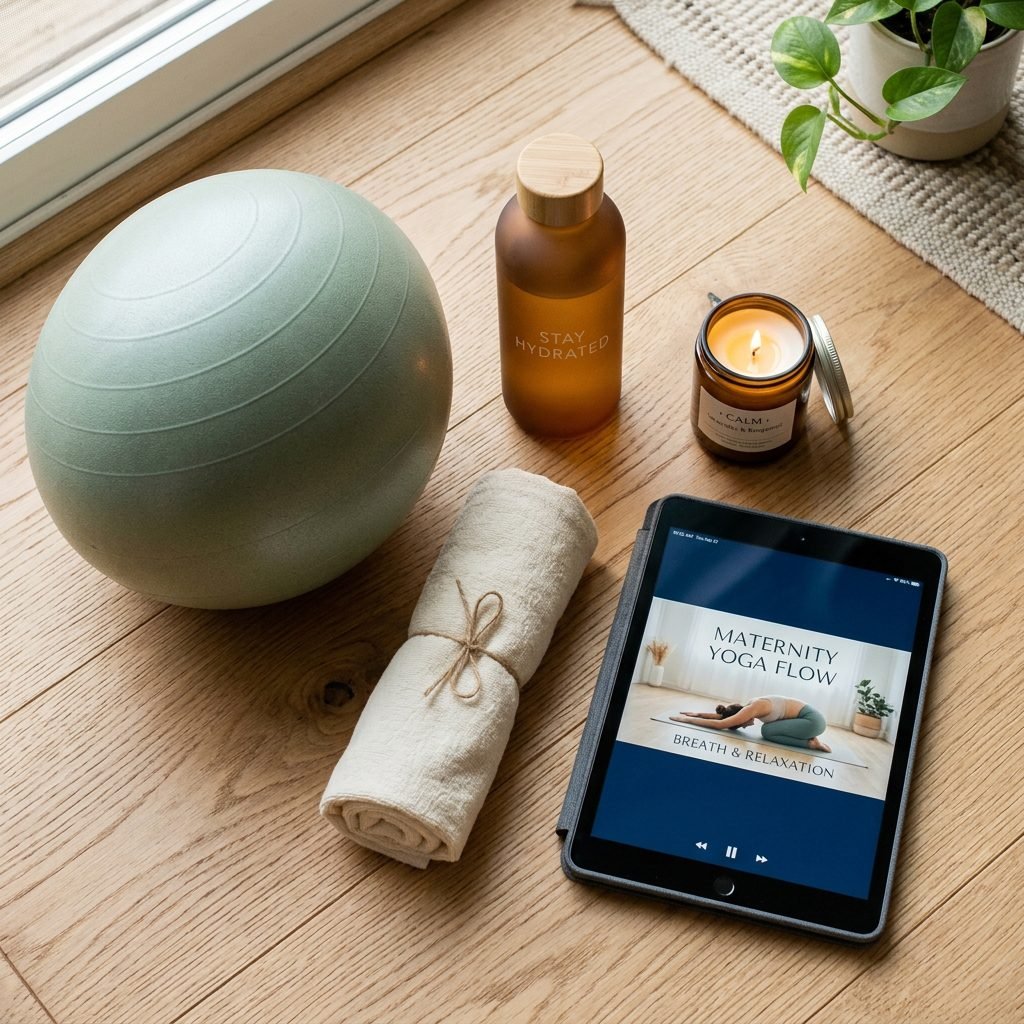
To help “induce” labor naturally (or rather, prepare the body to start), I recommend creating a 20-minute labor circuit that you can do twice a day once you hit 38 or 39 weeks. This keeps the pelvis mobile and the baby’s head pressing on the cervix, which stimulates the release of oxytocin.
Sample 20-Minute Routine
- 5 Minutes: Gentle bouncing while practicing deep diaphragmatic breathing.
- 5 Minutes: Large hip circles (10 each way).
- 5 Minutes: Figure-eight motions with the hips to encourage baby rotation.
- 5 Minutes: Forward leaning over the ball on hands and knees to relieve the lower back.
Combine this routine with a calming playlist, some dim lighting, and perhaps some lavender aromatherapy to create a true birth sanctuary in your living room.
Conclusion
You Are Ready for This Journey
Using a yoga ball is such a beautiful, proactive way to participate in your own birthing process. By staying mobile and opening your pelvis, you are giving your baby the best possible path into your arms. Remember, mama, labor is not just something that happens to you; it is a dance you do with your baby. These exercises are the steps to that dance. Trust the process, listen to your intuition, and don’t forget to rest as much as you move.
You are strong, you are prepared, and you are going to be an amazing mother. Now, go grab that ball and start swaying!