

Why the Seated Forward Lean Burping Method Works Wonders for Trapped Gas
Welcome to the Gassy Baby Survival Guide, Sweet Mama
If you are reading this in the middle of the night while your little one squirmy and uncomfortable, let me first pull up a chair and give you a virtual hug. As a doula, I have sat in many dimly lit nurseries, holding babies who just couldn’t seem to find relief from that stubborn, trapped air. We often think of burping as a simple ‘pat on the back,’ but for many infants—especially those with sensitive tummies or reflux—the standard over-the-shoulder method just doesn’t cut it. That is where the Seated Forward Lean Burping Method comes in. This technique is a game-changer because it uses the natural laws of physics and gentle, targeted pressure to move air bubbles up and out before they cause distress. In this guide, we are going to dive deep into why this works, exactly how to do it safely, and how to turn those fussy evenings into peaceful snuggles.
Remember, mama: a gassy baby isn’t a reflection of your parenting. Their digestive systems are just learning the ropes, and you are doing an incredible job helping them through it.
The Science of the Lean: Why Gravity is Your Best Friend
Why This Method Outshines the Rest
Most of us were taught to put a baby over our shoulder and pat away. While that works for some, it often leaves the baby’s torso elongated, which can actually make it harder for air to escape a tiny, curved stomach. The Seated Forward Lean works wonders because it compresses the abdominal area slightly while keeping the esophagus in a direct, upward path. This ‘compression-and-release’ mechanic mimics the natural movement needed to propel gas upward.
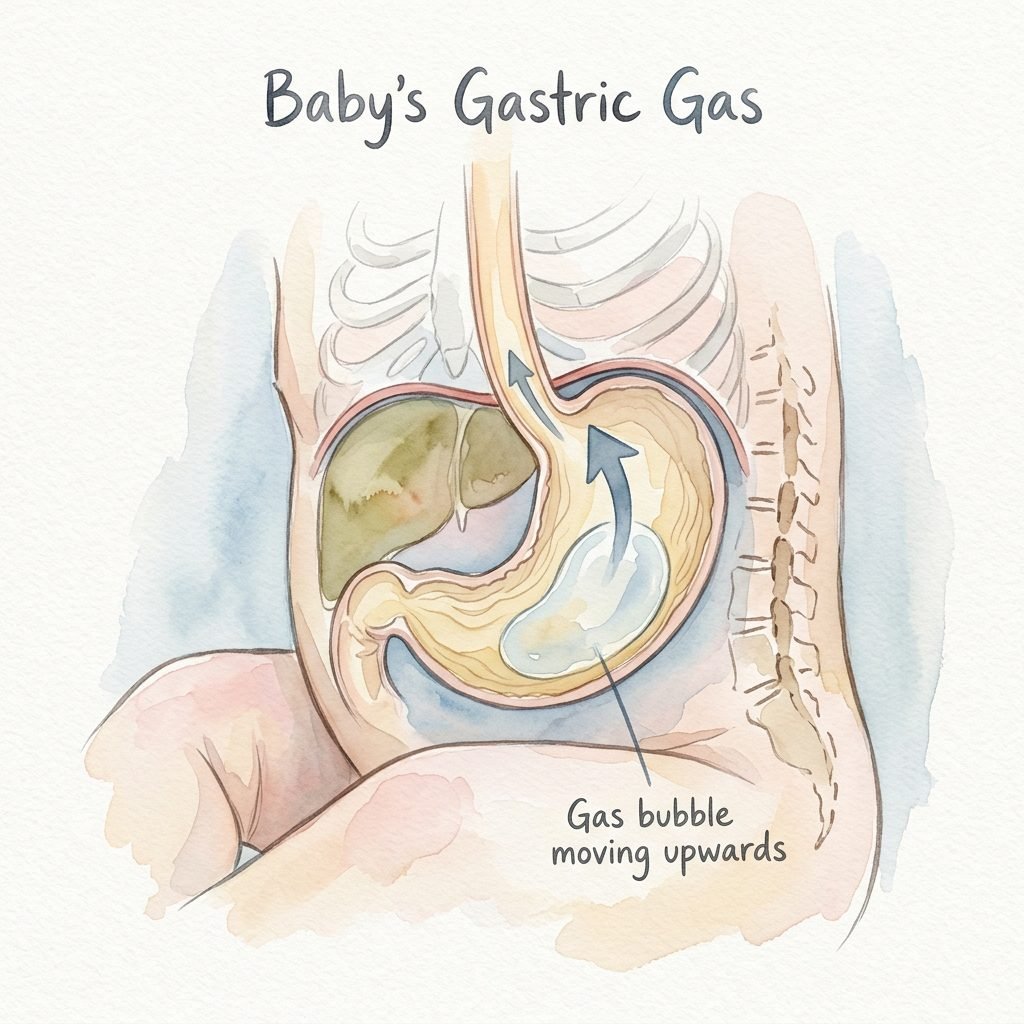
Understanding the Gastric Bubble
When a baby feeds, they often swallow air along with milk. This air can get trapped under a layer of liquid. By leaning the baby forward, you are repositioning that air bubble so it sits at the ‘top’ of the stomach, right near the esophageal opening. Think of it like tilting a bottle to get the last bit of air out. When you add a gentle rhythmic pat or a firm circular rub, you are essentially vibrating that bubble until it breaks free.
Key Benefits for Reflux Babies
For babies struggling with Gastroesophageal Reflux (GERD), the traditional shoulder burp can sometimes put too much pressure on the stomach, causing ‘spit-up’ rather than just a burp. The seated forward lean allows for more control. You can adjust the angle of the lean to find the ‘sweet spot’ where gas escapes but the milk stays down. This method is particularly effective because:
- It provides gentle abdominal pressure that aids digestion.
- It keeps the baby’s airway clear and visible at all times.
- It allows the parent to see the baby’s facial cues immediately.
- It reduces the ‘scrunching’ of the lower intestines that leads to lower gas pain.
Step-by-Step: Mastering the Seated Forward Lean Technique

How to Perform the Move Safely and Effectively
Precision is key when it comes to infant positioning. We want to ensure the baby is fully supported, especially their heavy head and delicate neck. Follow these steps to master the move:
- The Setup: Sit comfortably on a firm chair or the edge of the bed. Place a muslin burp cloth across your lap.
- The Position: Sit your baby sideways on your lap, facing away from you. Ensure their bottom is secure on your thigh.
- The ‘C-Hold’ Support: Use one hand to support the baby’s chest and head. Place the palm of your hand against their chest, and use your thumb and forefinger to gently cradle their jawline. Crucial: Do not put pressure on the throat or the soft area under the chin. You are supporting the bony structure of the jaw.
- The Lean: Gently tilt the baby forward so their weight is resting slightly against your supporting hand. Their torso should be at about a 45-degree angle.
- The Patting: With your free hand, begin patting the baby’s back. Use a cupped hand (which creates a hollow sound) rather than a flat palm. Start from the lower back and move upward toward the shoulders.
- The Circular Rub: If patting doesn’t work after 2-3 minutes, switch to firm, upward circular motions with the heel of your hand.
Affirmation: I am calm, my baby is safe, and we are working together to find comfort.
Burping Method Comparison Matrix
Choosing the Right Technique for the Right Moment
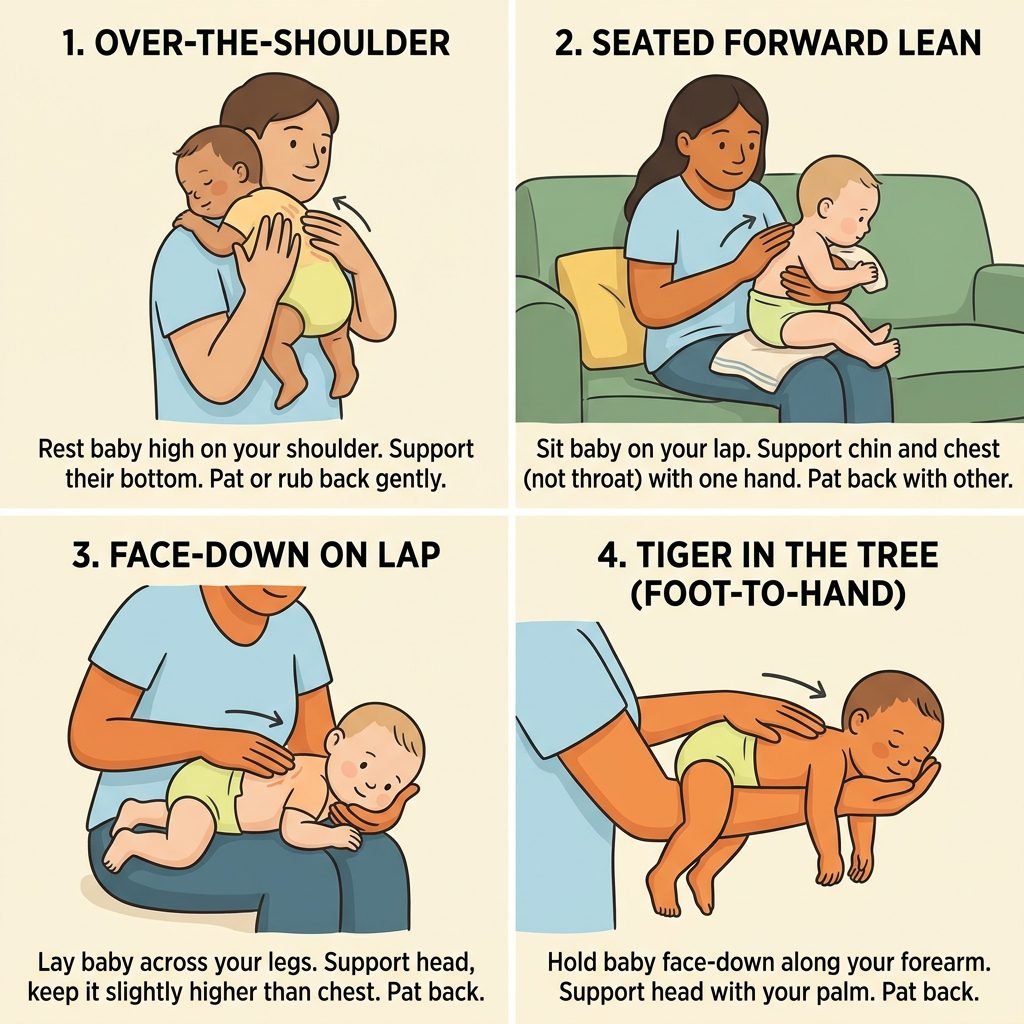
Not every gas bubble is created equal. Sometimes you need a different approach based on how much your baby has eaten or how fussy they are. Use this table to decide when to employ the Seated Forward Lean versus other popular methods.
| Method | Best For… | Gas Severity | Pros/Cons |
|---|---|---|---|
| Over-the-Shoulder | Sleepy babies, light feeders | Low | Easy to do; hard to see baby’s face. |
| Seated Forward Lean | Trapped gas, reflux, active babies | High | Highly effective; requires careful head support. |
| Face-Down on Lap | Stubborn lower gas, colic | Moderate | Great pressure; can cause more spit-up if too full. |
| The ‘Tiger in the Tree’ | Evening fussiness (Purple Crying) | Moderate | Very soothing; physically tiring for the parent. |
As you can see, the Seated Forward Lean is our ‘heavy hitter’ for high-severity gas. If you hear your baby grunting or see them pulling their legs up to their chest, this is the method you should reach for first.
Common Mistakes: Why You Might Not Be Hearing That ‘Burp’
Troubleshooting the Technique
If you’ve been leaning and patting for 10 minutes with no luck, don’t despair! Often, a tiny adjustment can make all the difference. Here are the most common hiccups I see as a doula:
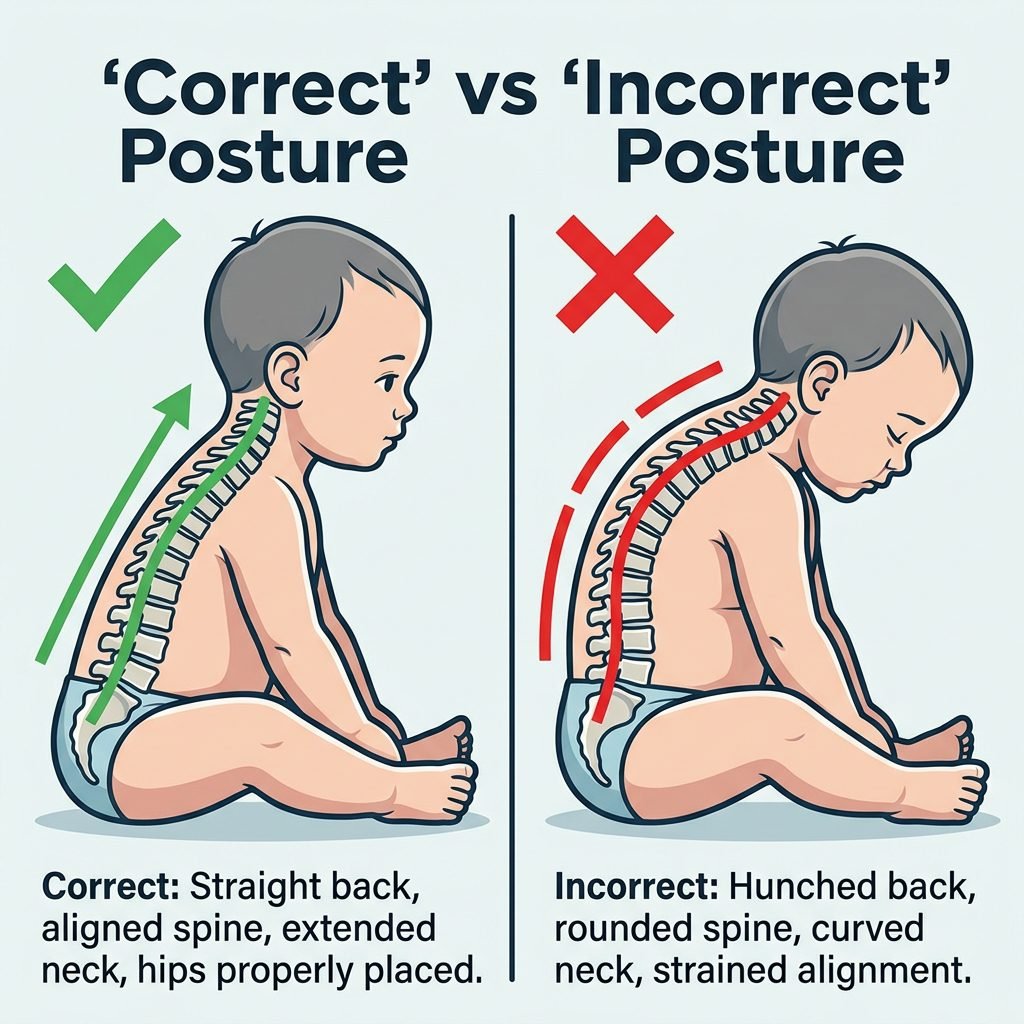
1. The ‘Slumping’ Spine
If the baby is slumped over too far, their airway can become restricted and their stomach gets too compressed. Ensure the baby’s spine is relatively straight, even while leaning. Think of it as a ‘hinge at the hips’ rather than a ‘curl of the back.’
2. The Fear of Firmness
Many new parents are (understandably!) very gentle. However, a light tickle won’t move a deep gas bubble. You want your pats to be firm and rhythmic. A cupped hand creates a vibration that travels through the chest cavity to reach the stomach. If you aren’t hearing a ‘thock-thock’ sound, you might need to increase your pressure slightly.
3. Timing is Everything
Don’t wait until the end of the feed to burp a gassy baby. I recommend the ‘Halfway Rule’: Stop and use the seated forward lean halfway through the bottle or when switching breasts. This prevents gas from being pushed further down into the intestines by the second half of the meal.
4. Ignoring the ‘Wet’ Burp
If your baby frequently has ‘wet burps’ (spit-up) during this method, try reducing the angle of the lean. Keep them more upright (about 60 degrees instead of 45) and focus more on the upward rubbing motion than the patting.
Beyond the Burp: Complementary Soothing Techniques

The Doula’s Secret Toolkit for Digestive Comfort
Sometimes gas gets past the stomach and into the lower intestines. When this happens, no amount of burping will help. You need to move the gas from the ‘other end.’ Combine the Seated Forward Lean with these techniques for a total comfort routine:
- Bicycle Legs: Lay baby on their back and gently cycle their legs toward their tummy. This ‘massages’ the colon and helps move lower gas.
- The I-Love-U Massage: Using baby-safe coconut or sunflower oil, trace the letters I, L, and U on the baby’s abdomen (following the path of the large intestine).
- Warm Compresses: A warm (not hot!) washcloth or a specialized flaxseed baby heating pad can relax the abdominal muscles, making it easier for gas to pass.
- Paced Bottle Feeding: If bottle-feeding, keep the bottle horizontal so the nipple is only partially full of milk. This slows the flow and reduces the amount of air swallowed in the first place.
Pro Tip: If your baby is consistently struggling, check the nipple flow rate. A flow that is too fast often leads to excessive air gulping!
Conclusion
You’ve Got This, Mama
The Seated Forward Lean Burping Method is more than just a technique; it is a tool in your motherhood utility belt that will bring you and your baby much-needed relief. It takes a little practice to get the hand placement just right, but once you hear that first big, satisfying burp, you’ll know it was worth it. Remember that every baby is unique. Some will burp instantly, while others need a good 5 to 10 minutes of ‘the lean’ to get things moving. Be patient with yourself and your little one. You are learning a new language together—the language of comfort and care. Sleep well (hopefully!), and keep up the amazing work.