
The Thigh-Drape Burping Method: How to Release Trapped Gas Instantly
Welcome to the Quiet After the Storm
Oh, mama, I see you. It is 3:00 AM, the house is silent except for those sharp, pained cries coming from your little one, and your heart is breaking right along with your sleep schedule. You’ve tried the traditional over-the-shoulder patting. You’ve tried the upright sit-and-rub. Yet, that stubborn air bubble remains trapped, causing your baby to arch their back and pull their tiny legs to their chest in distress. As a doula, I want you to take a deep breath. You are doing an incredible job, and sometimes, all we need is a different physical approach to help that immature digestive system do its work.
The Thigh-Drape Burping Method is often the ‘secret weapon’ in a postpartum professional’s toolkit. It utilizes the gentle power of gravity and targeted abdominal pressure to move gas through the digestive tract more efficiently than traditional methods. In this guide, we are going to walk through exactly why this method works, how to perform it safely, and how to integrate it into your soothing routine so you—and your baby—can finally get some much-needed rest.
“Your baby isn’t trying to give you a hard time; they are having a hard time. You are the safe harbor where they can release their discomfort.”
The Science of the ‘Bubble’: Why Babies Get So Gassy
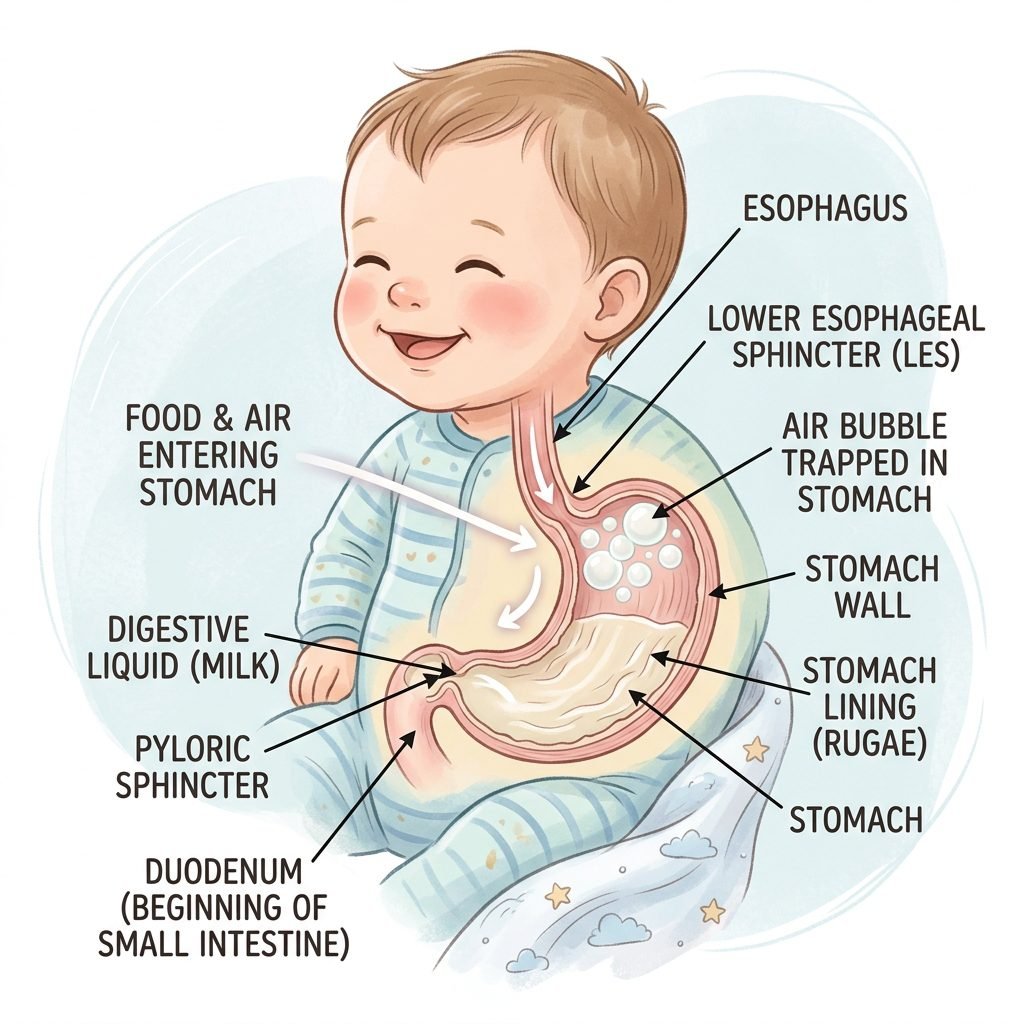
To understand why the Thigh-Drape method is so effective, we first have to look at the anatomy of your precious newborn. A baby’s digestive system is incredibly immature during the first fourth trimester (the first three months of life). The esophageal sphincter—the little ‘trap door’ at the top of the stomach—is often loose, and the muscles that move gas through the intestines are still learning their rhythm.
When a baby feeds, whether by breast or bottle, they inevitably swallow air. This air forms bubbles that can become trapped under the curve of the stomach. If these bubbles aren’t released, they move into the intestines, causing stretching and discomfort known as gas pains. Traditional burping relies on the baby being vertical, but sometimes a vertical position actually ‘pins’ the air bubble under the heavy milk sitting in the stomach. By using the Thigh-Drape, we change the angle of the stomach, allowing the air to rise to the top and escape effortlessly.
Common Signs of Trapped Gas
- Sudden, sharp crying shortly after a feeding.
- Arching of the back and stiffening of the body.
- Pulling legs up toward the tummy.
- A distended or hard belly.
- Clenched fists and a red face during crying spells.
The Thigh-Drape Masterclass: A Step-by-Step Guide
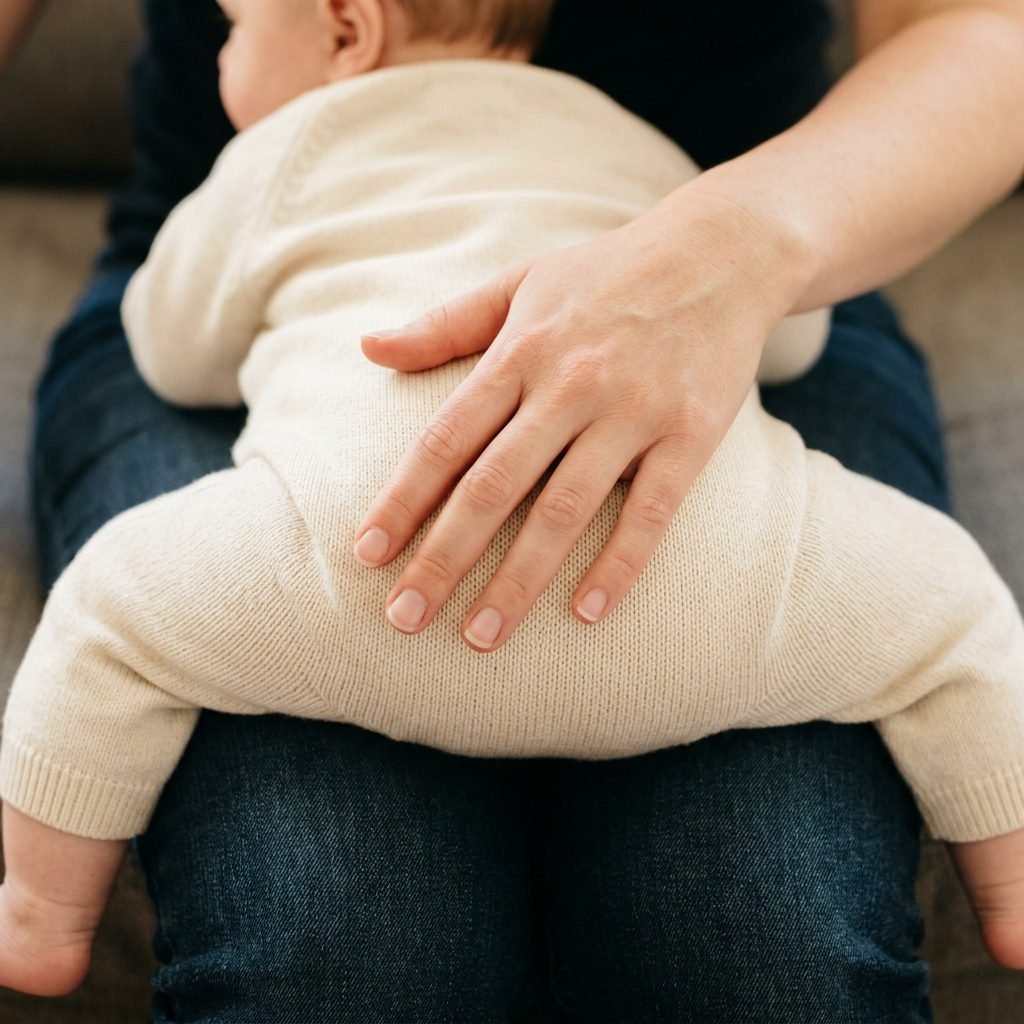
Before we begin, ensure you have a burp cloth draped over your legs, as this position is highly effective at releasing not just gas, but occasionally a little bit of ‘spit-up’ as well. Follow these steps with a calm, steady hand.
- Sit Comfortably: Sit on a firm chair or the edge of your bed with your feet flat on the floor. Your knees should be at a 90-degree angle.
- The Drape: Gently lay your baby face-down across your thighs, perpendicular to your body. Their chest should be resting on one thigh, and their lower belly/hips should be resting on your other thigh.
- Support the Head: Ensure the baby’s head is turned to the side so their airway is completely clear. Use one hand to gently support their jaw and chest—never put pressure on the throat or neck.
- The Angle: Ideally, the baby’s head should be slightly higher than their bottom. You can achieve this by slightly lifting the leg that is supporting their chest.
- The Technique: Instead of high, sharp pats, use a firm, circular rubbing motion starting from the lower back and moving up toward the shoulders. This ‘massages’ the gas bubble upward.
- The ‘Finish’: If the burp doesn’t come within 2 to 3 minutes, gently lift the baby to a sitting position on your lap for a moment, then lay them back down. This change in pressure often triggers the release.
“Focus on the rhythm of your hand. Your calm heartbeat and steady touch tell the baby’s nervous system that it is safe to relax and let the gas go.”
Comparing Burping Methods: Which One to Choose?
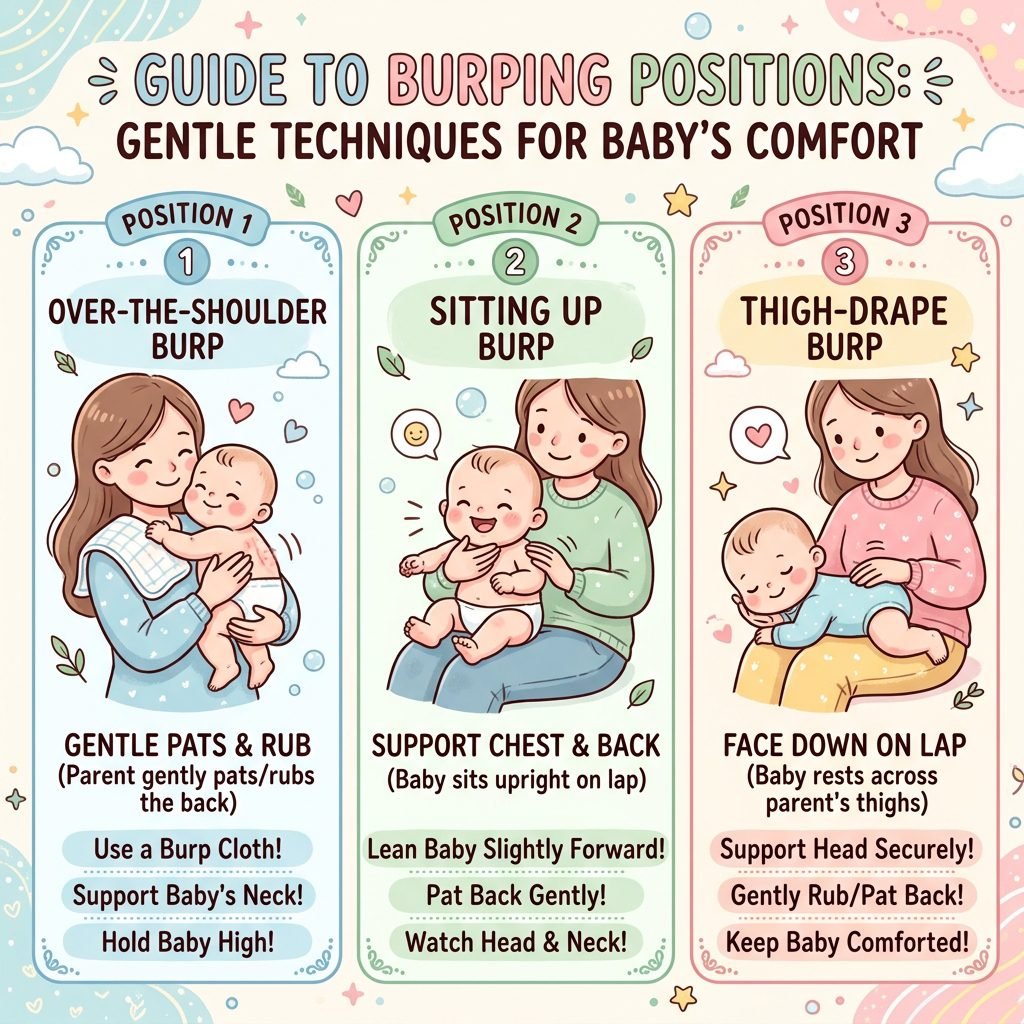
Not every baby responds to the same technique. As a doula, I recommend having a ‘rotation’ of positions. However, the Thigh-Drape is unique because it provides passive abdominal pressure, which acts like a gentle massage for the stomach. Let’s look at how it compares to other common methods.
| Method | Best For… | The Benefit |
|---|---|---|
| Over-the-Shoulder | General burping after a calm feed. | Maximum verticality; familiar and comforting for the baby. |
| Sitting Up (Chin Support) | Babies with mild reflux. | Allows you to see the baby’s face and monitor for spit-up. |
| Thigh-Drape (Across the Lap) | Stubborn, painful gas or ‘Witching Hour’ fussiness. | Uses gravity and leg pressure to compress the abdomen gently. |
| The Football Hold | Gassy babies who also need movement. | Provides pressure while allowing you to walk around. |
If your baby is particularly fussy, I suggest starting with the Thigh-Drape for 5 minutes. If no burp occurs, transition to the ‘Tiger in the Tree’ hold (carrying them face-down along your forearm) to combine pressure with gentle swinging motion.
Timing is Everything: When to Burp Your Baby

One of the biggest mistakes new parents make is waiting until the very end of a feeding to burp. By then, the air bubble might be buried under 4 ounces of milk! To prevent gas from becoming trapped, we need to be proactive. I recommend the ‘Halfway Rule’.
- For Bottle-Fed Babies: Attempt a burp every 1 to 2 ounces of formula or breastmilk.
- For Breastfed Babies: Always burp when switching from one breast to the other.
- For Fast Let-Down: If you have a heavy milk flow, burp more frequently, as the baby is likely gulping air to keep up with the stream.
If your baby falls asleep at the breast or bottle, don’t skip the burp! Use a very gentle version of the Thigh-Drape. The gentle pressure of your legs will often coax a ‘sleepy burp’ out without fully waking the baby.
The ‘Gas Severity Matrix’: Identifying the Need

Sometimes it’s hard to tell if the baby is crying because they are hungry, tired, or just plain gassy. Use this matrix to help you decide when to deploy the Thigh-Drape method with maximum intensity.
| Symptom | Likely Cause | Action Plan |
|---|---|---|
| Rhythmic sucking on hands, rooting. | Hunger | Feed immediately; do not burp yet. |
| Pulling knees to chest, face turning purple. | Severe Gas | Immediate Thigh-Drape for 5-10 minutes. |
| Glazed eyes, yawning, rubbing ears. | Overtired | Gentle burp, then immediate sleep environment. |
| Crying 20 mins after feed, spitting up clear liquid. | Silent Reflux | Keep upright for 30 mins; avoid deep abdominal pressure. |
Remember, consistency is key. The more frequently you release small bubbles, the less likely they are to join together into one large, painful ‘super-bubble’ that keeps everyone awake.
Doula Tips for the ‘Witching Hour’

Every parent knows the dreaded Witching Hour—that period between 5 PM and 11 PM when babies seem inconsolable. Often, this is a combination of sensory overload and accumulated gas from the day. During this time, the Thigh-Drape can be combined with sensory soothing.
The Doula’s ‘Calm-Down’ Protocol
- Lower the Lights: Dim the overhead lights to reduce visual stimulation.
- White Noise: Use a loud, ‘shushing’ white noise machine to mimic the sound of the womb.
- The Warmth Factor: Try warming the burp cloth in the dryer for 30 seconds before laying it across your thighs. The gentle heat on the baby’s tummy works wonders for muscle relaxation.
- Bicycle Legs: If the Thigh-Drape doesn’t produce a burp, flip the baby onto their back and gently ‘cycle’ their legs toward their tummy to help move gas out the other end.
“You are the expert on your baby. If a method doesn’t feel right, or if your baby is fighting it, pivot. Your intuition is your most powerful tool.”
Conclusion
You’ve Got This, Mama
The journey of early motherhood is filled with steep learning curves, and mastering the art of the burp is a major milestone. The Thigh-Drape Burping Method is more than just a physical technique; it’s a way for you to actively support your baby’s comfort and build that deep bond of trust. When you help your baby release that trapped gas, you aren’t just stopping the crying—you are teaching them that when they are in pain, you will be there to help them find relief.
Be patient with yourself and your little one. Some days the burps will come easily, and other days it will feel like a marathon. But with these tools in your pocket, you are better equipped to handle whatever the ‘witching hour’ throws your way. Sleep well (hopefully!), and remember that this phase is temporary. You are doing a beautiful job.