
Why Figure-Eight Hip Rotations on a Birth Stool Can Speed Up Active Labor
Embracing the Rhythm of Birth
Hello, sweet mama. If you are reading this, you are likely preparing for one of the most transformative journeys of your life. As a doula, I’ve sat beside many women in the dim light of labor, and I want to share a secret that has helped so many of my clients find their rhythm: the power of the birth stool combined with the ancient wisdom of the figure-eight rotation. Active labor is intense, beautiful, and demanding, but you don’t have to just ‘endure’ it. You can move through it with intention.
The birth stool is more than just a piece of equipment; it is a tool for empowerment. It allows you to harness the force of gravity while remaining grounded and supported. When we add the specific, rhythmic motion of figure-eight hip rotations, we aren’t just moving for comfort—we are actively helping our babies navigate the complex architecture of the pelvis. In this guide, we’re going to dive deep into why this specific movement is a game-changer for speeding up labor and how you can master it with grace.
“Your body is not a machine that needs to be managed; it is a garden that knows exactly how to bloom. Trust the rhythm, trust the movement, and trust yourself.”
The Anatomy of Efficiency: Why the Birth Stool Works
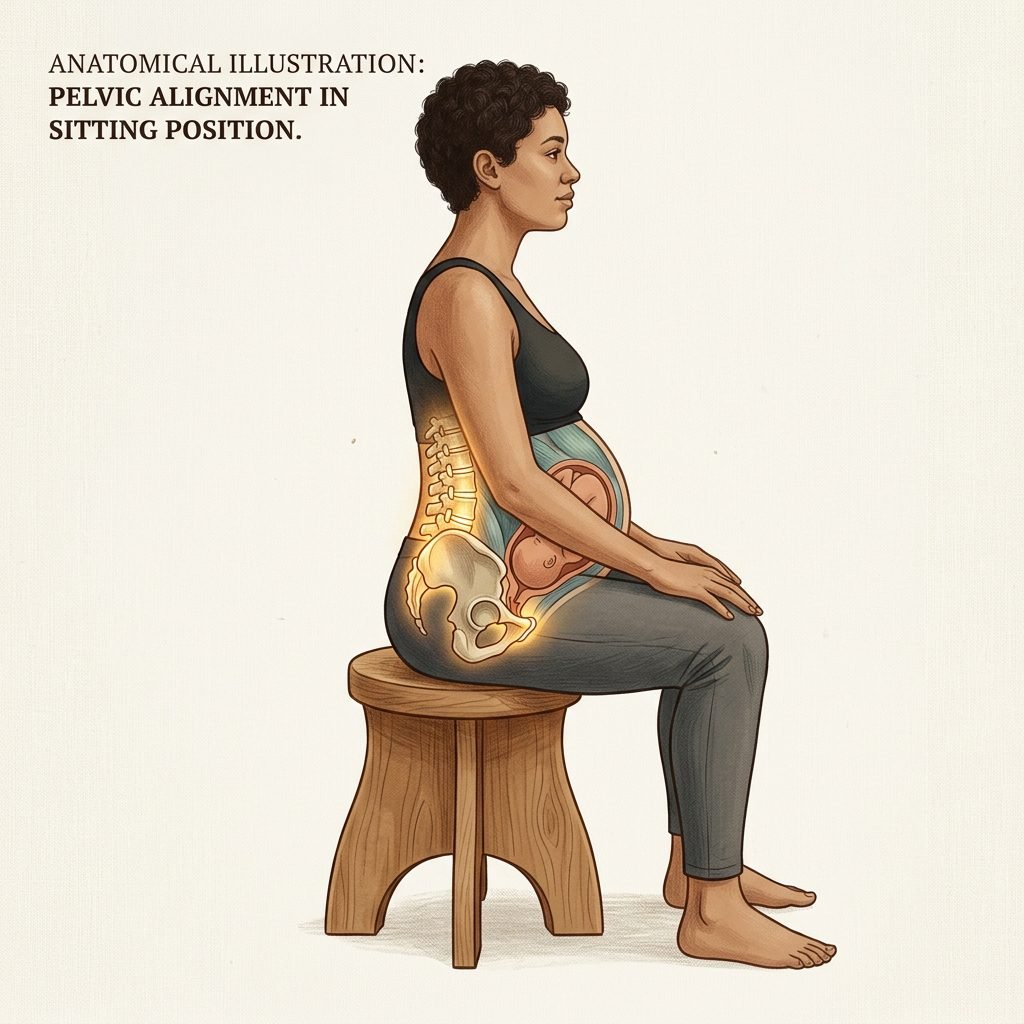
To understand why the birth stool is so effective, we first have to look at how the pelvis works during labor. Unlike a standard chair, a birth stool is low to the ground and usually features a U-shaped or horseshoe-shaped seat. This design is intentional. It keeps your pelvis open and allows your tailbone (the coccyx) to move freely, which is crucial for creating as much space as possible for your baby’s head.
Gravity: Your Silent Labor Partner
When you sit on a birth stool, you are in a supported squat. This position utilizes 100% of gravitational force to help the baby descend. Research suggests that upright positions can actually increase the pelvic diameter by up to 30% compared to lying on your back. By being upright, the baby’s head applies consistent, even pressure to the cervix, which triggers the release of oxytocin—the hormone responsible for effective contractions.
Pelvic Floor Relaxation
On a birth stool, your pelvic floor muscles are encouraged to soften and stretch. Because you aren’t fighting against gravity, your body can focus its energy on the work of the uterus. This is especially helpful during active labor, usually defined as the phase when you are dilated from 6cm to 10cm. This is when the hard work happens, and the stool provides a place of rest that still maintains progress.
The Magic of the Figure-Eight: Creating Space and Flow

Now, let’s talk about the movement itself. Why a figure-eight? While simple circles are great, the figure-eight (or the infinity loop) provides a multi-dimensional opening of the pelvis. As you move your hips in this looping motion, you are tilting the pelvis both laterally and anteriorly-posteriorly.
Encouraging Optimal Fetal Positioning
Your baby doesn’t just drop straight down like an elevator; they have to ‘corkscrew’ their way through the birth canal. This process involves several cardinal movements (engagement, descent, flexion, internal rotation, etc.). The figure-eight rotation mimics this corkscrew motion. By shifting your weight from one sit-bone to the other in a loop, you are giving your baby ‘wiggles’ of space to adjust their head position, moving from a less-than-ideal position (like OP or ‘sunny-side up’) into the optimal Occiput Anterior (OA) position.
Breaking the Pain-Tension-Fear Cycle
Rhythmic movement is a natural form of analgesia. When your brain is focused on the rhythm of the figure-eight, it can help modulate the pain signals being sent from the uterus. It provides a sensory distraction and helps prevent the ‘freezing’ response that many women experience during intense contractions. Stay loose, stay limp, and keep those hips swaying.
Step-by-Step: How to Perform Figure-Eight Rotations
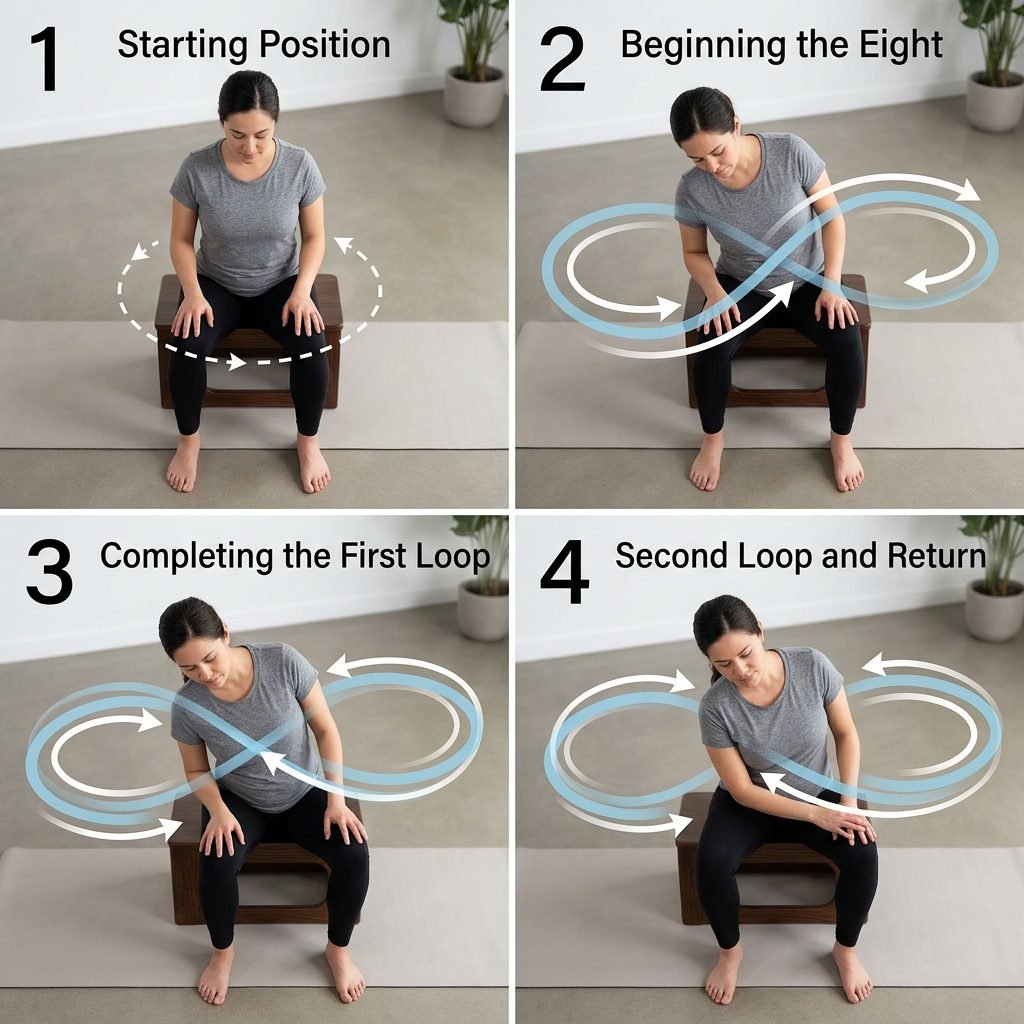
Ready to try it? You can practice this during your third trimester to build muscle memory, but it truly shines during the peaks of active labor. Here is how to do it safely and effectively:
- Position Yourself: Sit firmly on the birth stool with your feet flat on the floor, wider than hip-width apart. Ensure your knees are lower than your hips to keep the pelvis tilted forward.
- Establish Your Anchor: Place your hands on your knees or have your partner stand in front of you so you can lean your weight into their arms.
- Initiate the Move: Imagine there is a pencil attached to your tailbone. You want to draw a horizontal figure-eight on the floor beneath you.
- Shift the Weight: Push your left hip forward and out in a curve, then bring it back toward the center. Then, push your right hip forward and out in a curve, looping it back to the center.
- Breathe with the Loop: Inhale as you swing the hip out, and exhale a deep, low ‘mooing’ sound or a ‘whoosh’ as you bring it back to the center.
- Relax the Jaw: Remember, mama, a loose jaw equals a loose cervix. Keep your mouth soft while your hips do the work.
Pro-Tip: If the stool feels too hard, place a small, thin Chux pad or a folded soft towel on the seat, but ensure it isn’t so thick that it absorbs the movement of your sit-bones.
The Partner’s Role: Support, Pressure, and Presence
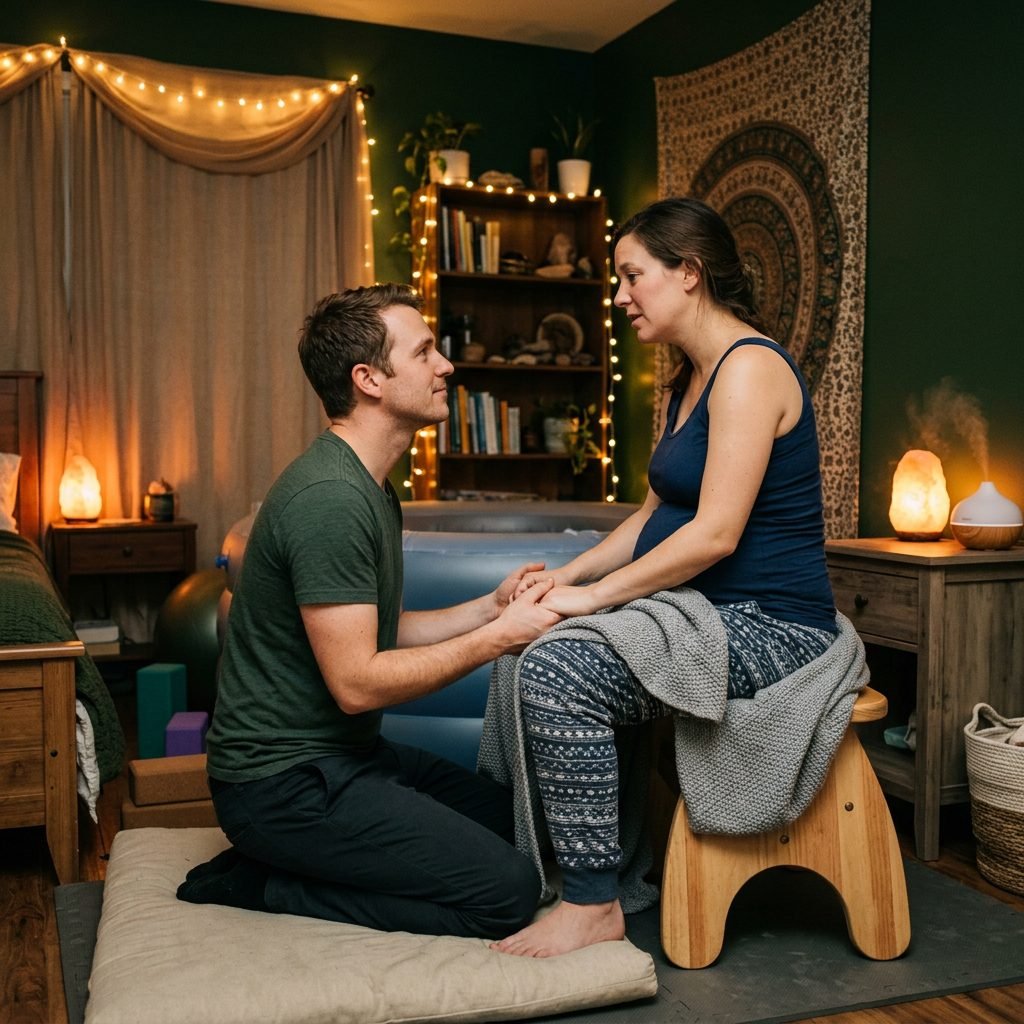
Labor is a team sport, and your birth partner or doula can make the birth stool experience much more comfortable. When you are on the stool, you are in a vulnerable, open position. Your partner’s presence provides the emotional container you need to feel safe enough to let go.
Counter-Pressure and Massage
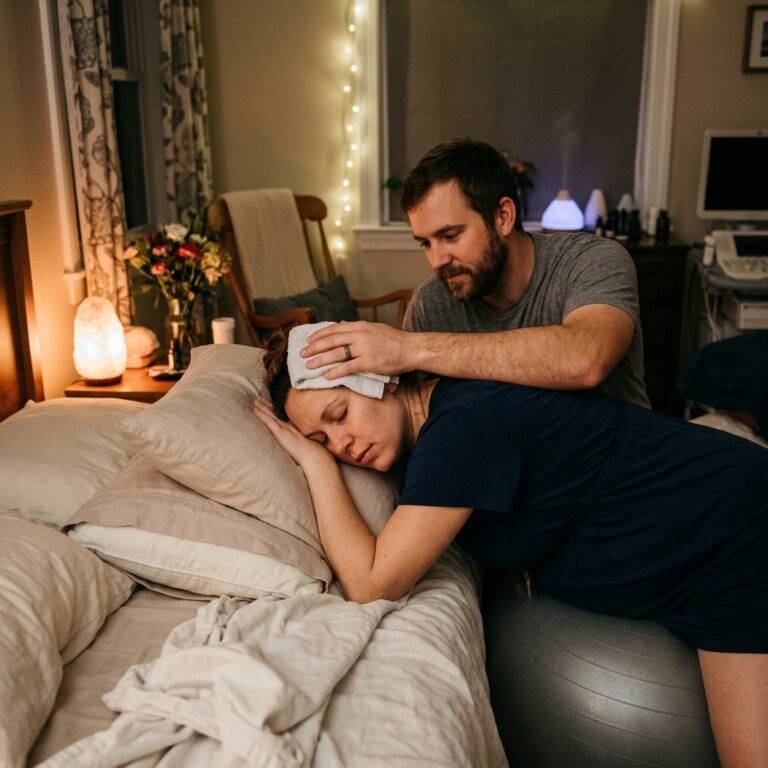
While you are rotating your hips, your partner can apply sacral counter-pressure. As you lean forward, they can use the palms of their hands or a tennis ball to press firmly into your lower back/sacrum during a contraction. This counteracts the internal pressure of the baby’s head and can feel incredibly grounding.
Communication and Affirmations
Sometimes, in the heat of active labor, you might forget to move. Your partner can gently remind you by swaying with you. They can stand behind you, supporting your back, or sit in front of you on a low stool, holding your hands and breathing with you. Use these affirmations together:
- “With every swirl, my baby moves closer.”
- “My pelvis is wide, soft, and open.”
- “I am riding the waves of my body.”
- “Soft jaw, soft hips, soft heart.”
Comparing Labor Positions: Why the Stool Wins for Speed
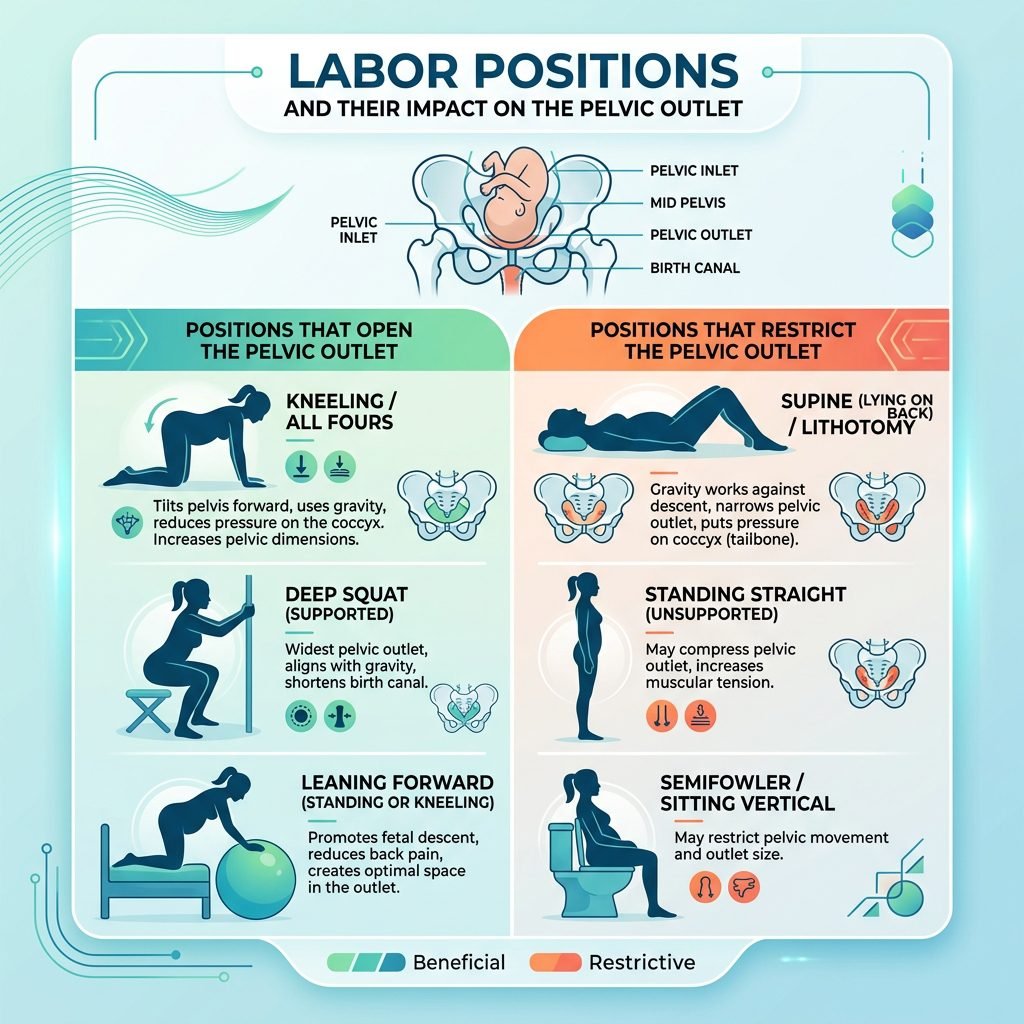
While every labor is unique, some positions are statistically more likely to encourage a faster delivery. Let’s look at how the birth stool stacks up against other common laboring positions.
| Position | Gravity Advantage | Pelvic Opening | Energy Conservation |
|---|---|---|---|
| Lying on Back (Lithotomy) | None (Fighting gravity) | Compressed (Tailbone tucked) | High (Tiring for the heart) |
| Hands and Knees | Moderate | Excellent for back pain | Moderate (Tiring for arms) |
| Birth Stool + Rotations | Maximum | Superior (Dynamic opening) | High (Supported rest) |
| Standing/Walking | High | Good | Low (Very tiring) |
As you can see, the birth stool offers a unique ‘sweet spot.’ It provides the gravity of standing with the rest of sitting, and when you add the figure-eight rotations, you transform a static position into a dynamic, labor-shortening powerhouse.
The Doula’s Hospital Bag: Essentials for Birth Stool Success

If you plan on using a birth stool, especially in a hospital setting, you’ll want to be prepared. Not all hospitals have them readily available, so you may need to request one in your birth plan or bring your own (if allowed).
Comfort and Style
When you’re on the stool, you want to feel covered but mobile. I recommend a soft, jersey-knit labor gown with a slit in the back or a simple, loose-fitting sarong. Avoid tight leggings or anything that restricts your hip movement. Here is a quick checklist for your ‘Stool Session’:
- A High-Quality Birth Stool: Wooden ones are sturdy; plastic ones are easy to sanitize.
- Absorbent Pads: To catch any amniotic fluid or bloody show.
- Fuzzy Socks with Grips: To keep your feet warm and prevent slipping while you rotate.
- A Focal Point: A battery-operated candle or a photo to look at while you find your rhythm.
- Hydration: A straw bottle for quick sips of coconut water between rotations.
Conclusion
You’ve Got This, Mama
Active labor is the bridge between two worlds—the one where you are carrying your baby inside, and the one where you hold them in your arms. Using figure-eight hip rotations on a birth stool is a beautiful way to participate in your own labor, to listen to the cues of your body, and to help your baby on their journey out. Remember that labor isn’t just about the destination; it’s about the strength you discover along the way.
Stay rhythmic, stay hydrated, and most importantly, stay kind to yourself. If you find the stool isn’t working for a moment, move to the tub or the bed, then come back to it. Your body knows the way. You are powerful, you are capable, and you are so close to meeting your little one. Happy birthing!