Fun and Safe Developmental Exercises to Help Your 5-Month-Old Learn to Sit Up
Mama, take a deep breath and look at how far you both have come. Just a few months ago, you were bringing home a tiny, sleepy newborn, and now you have an alert, babbling, and incredibly curious 5-month-old! You are doing an amazing job.
Welcome to the wonderful, wobbly world of the five-month mark! Right now, your little one is likely showing a fierce determination to see the world from a brand-new angle. They are tired of lying on their backs and are eager to join the family action. Sitting up is a monumental milestone—it opens up a whole new realm of sensory play, feeding readiness, and visual exploration. But as any pediatric nurse or experienced doula will tell you, sitting up isn’t just a switch that flips overnight. It requires a beautifully complex coordination of neck control, back strength, core stability, and pelvic balance.
As your sister in motherhood, I want to reassure you: there is absolutely no rush. Every baby develops on their own unique timeline. However, there are so many fun, safe, and deeply bonding developmental exercises we can do at home to help strengthen those tiny muscles. Best of all? These exercises easily double as joyful playtime! In this comprehensive guide, we are going to explore the biomechanics of infant sitting, step-by-step physical exercises you can do on your living room floor, sensory play ideas to encourage balance, and crucial safety tips to protect your wobbly little explorer. We will also touch on how to protect your postpartum back while you get down on the floor to play. Let’s dive into these evidence-based, comfort-first strategies to help your baby master the art of sitting up.
The Foundation: Why Tummy Time is Still Your Best Friend
I know, I know—tummy time can sometimes feel like a battle of wills. But before a baby can master sitting, they need a rock-solid posterior chain. That means strong neck, shoulder, and upper back muscles. When your baby pushes up on their hands during tummy time, they are actually preparing their body for the exact posture they will need to sit upright without toppling over.
Tummy Time 2.0: Elevating the Experience
At 5 months, we want to upgrade tummy time from a passive activity to an active core workout. Here are some engaging ways to make tummy time work harder for their sitting skills:
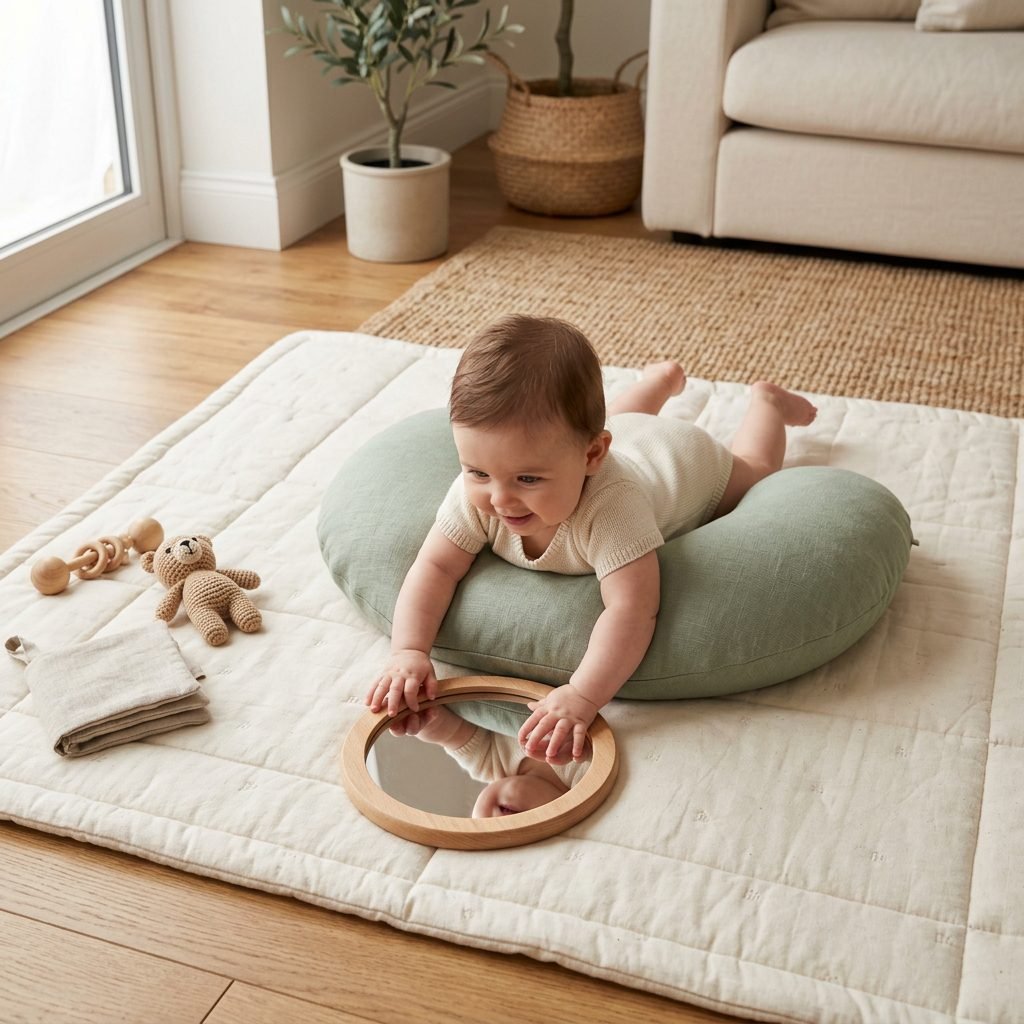
- The Boppy Prop: Place a nursing pillow or a rolled-up receiving blanket firmly under your baby’s chest, with their arms draped forward. This slight elevation encourages them to lift their chest higher and look around, strengthening the upper back.
- Mirror, Mirror: Place an unbreakable baby mirror exactly at eye level. Babies are incredibly vain in the most adorable way—they love looking at themselves! This encourages them to hold their head steady for longer periods, which is vital for sitting balance.
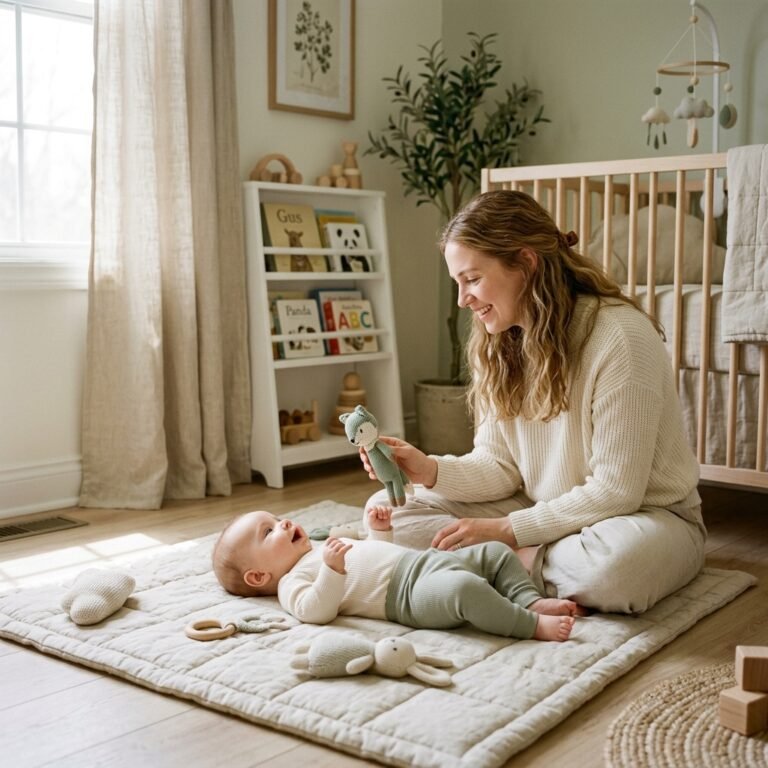
- The Airplane Game: Lay on your back with your knees bent toward your chest. Place your baby tummy-down on your shins and hold their hands. Gently rock your legs back and forth. This not only builds their core as they try to stabilize, but it also gives you a sweet, giggly face-to-face bonding moment.
| Tummy Time Variation | Targeted Muscle Group | Recommended Duration |
|---|---|---|
| Flat on Playmat with Toys | Lower back & Neck extension | 3 to 5 minutes per session |
| Chest-to-Chest on Mama | Core stabilization & Bonding | 10 to 15 minutes |
| Boppy Prop with Mirror | Shoulders & Upper back | 5 to 7 minutes |
Remember, mama: even short bursts count! If your baby only tolerates 2 minutes of tummy time before fussing, scoop them up, offer a cuddle, and try again later. It all adds up throughout the day.
Step-by-Step: The “Pull-to-Sit” and “Tripod” Exercises
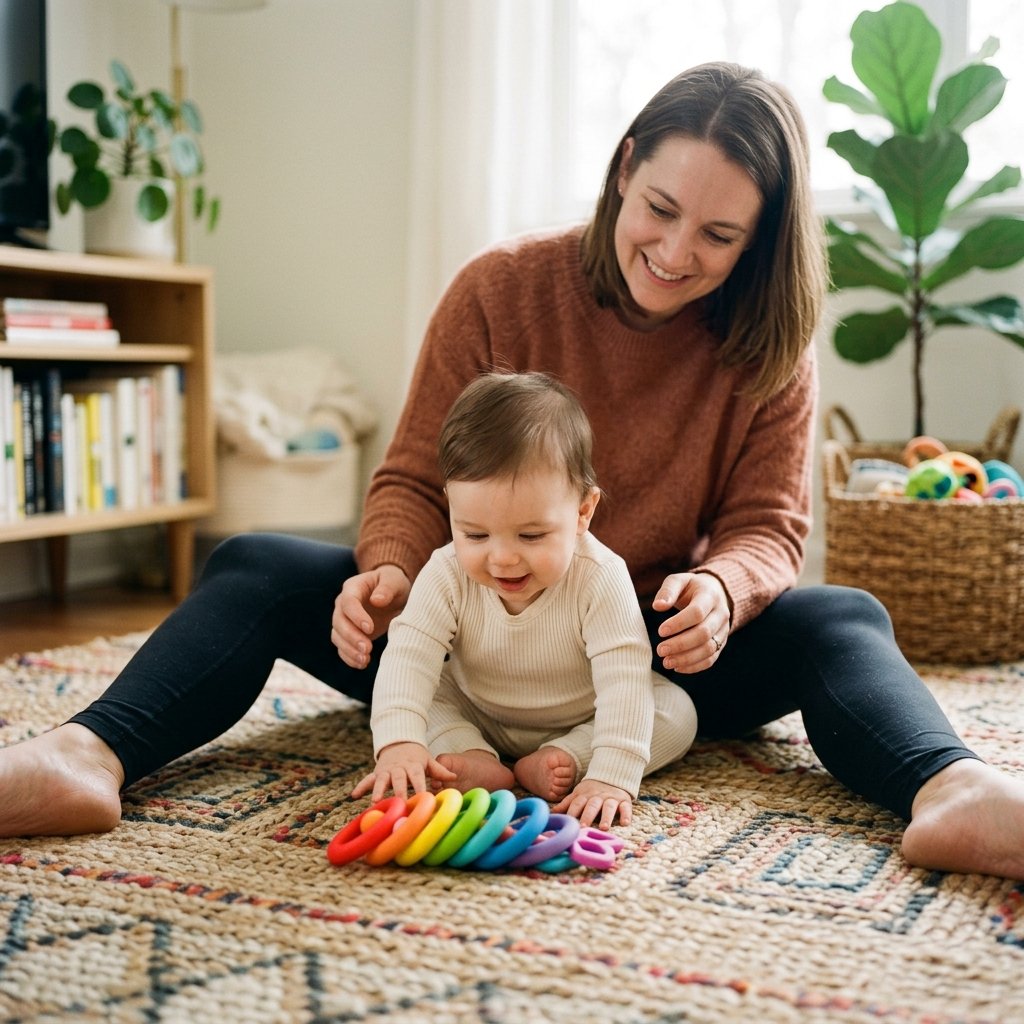
Once your baby has strong head control, you can start introducing exercises that simulate the feeling of sitting. These movements help their brain map out the balance required for an upright posture. Let’s walk through two of the most effective, evidence-based pediatric exercises you can practice at home.
Exercise 1: The Gentle Pull-to-Sit
This is a classic developmental check used by pediatricians, but it’s also a fantastic core exercise. It teaches your baby to tuck their chin and engage their abdominal muscles.
- Lay your baby flat on their back on a soft, supportive surface (like a padded playmat).
- Offer your thumbs to your baby, allowing them to grasp them. Wrap your fingers gently but securely around their wrists and forearms.
- Slowly and smoothly, pull your baby toward a seated position. Do not yank or pull by the hands alone; ensure you are supporting the wrists.
- Watch their head: at 5 months, they should be tucking their chin and helping you pull, with little to no head lag.
- Once they are in a seated position, give them a big smile and a kiss! Hold the seated position for just 2 to 3 seconds, then gently lower them back down.
- Repeat this 3 to 4 times during a play session.
Exercise 2: Mastering the Tripod Sit
The “Tripod Sit” is the first phase of independent sitting. It’s called this because your baby will use their two arms and their bottom to form a three-point base of support.
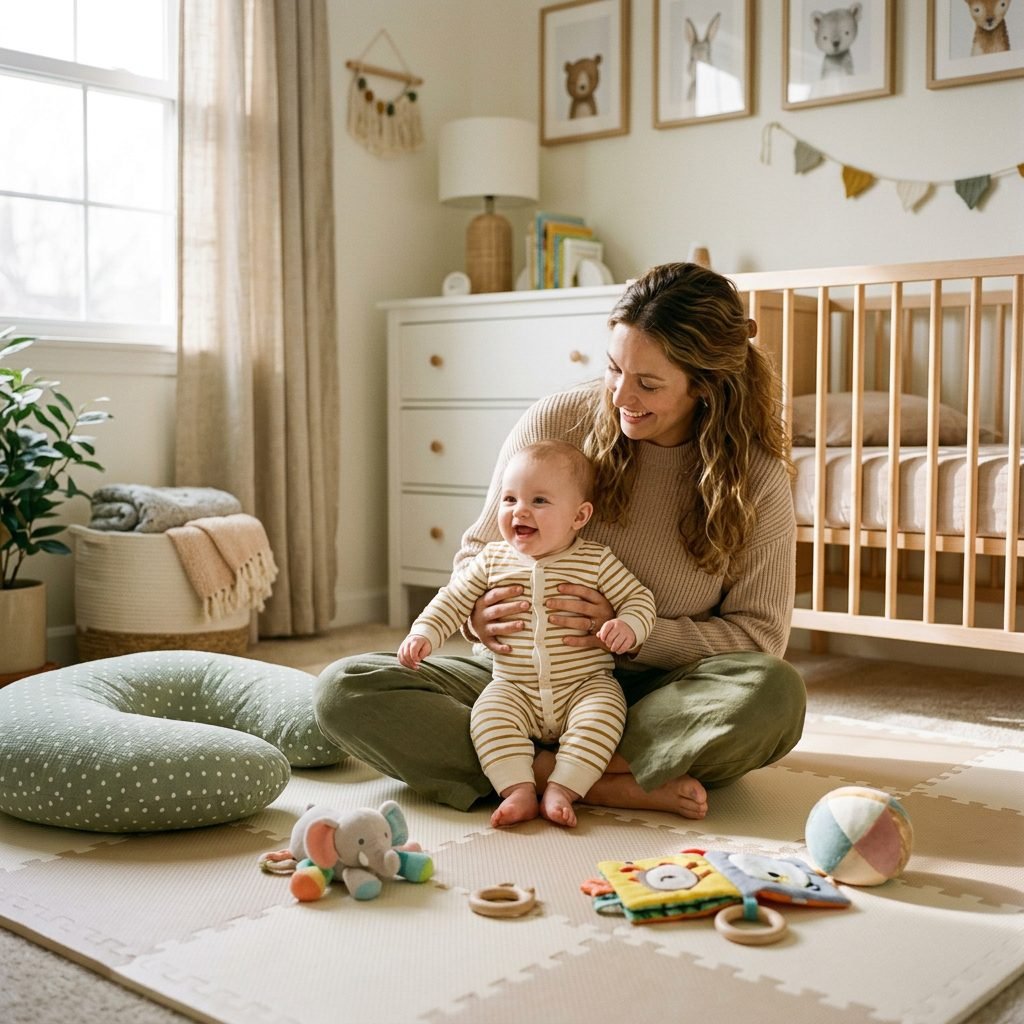
- Sit on the floor with your legs out in a V-shape. Place your baby sitting inside the V, facing away from you. This way, your legs act as a safe, soft barrier if they tip sideways.
- Gently place your baby’s hands on the floor right between their spread legs.
- Place a highly motivating, bright sensory toy just out of reach on the floor between their hands. This encourages them to lean forward and bear weight on their arms.
- Hover your hands just inches from their ribs. Let them feel the wobble! The wobble is actually how their brain learns to fire the micro-muscles needed for balance. Catch them gently if they start to fall.
Practicing the Tripod Sit for just 5 to 10 minutes a day will dramatically improve their confidence and spatial awareness.
Sensory Play: Making Core Work Feel Like a Party
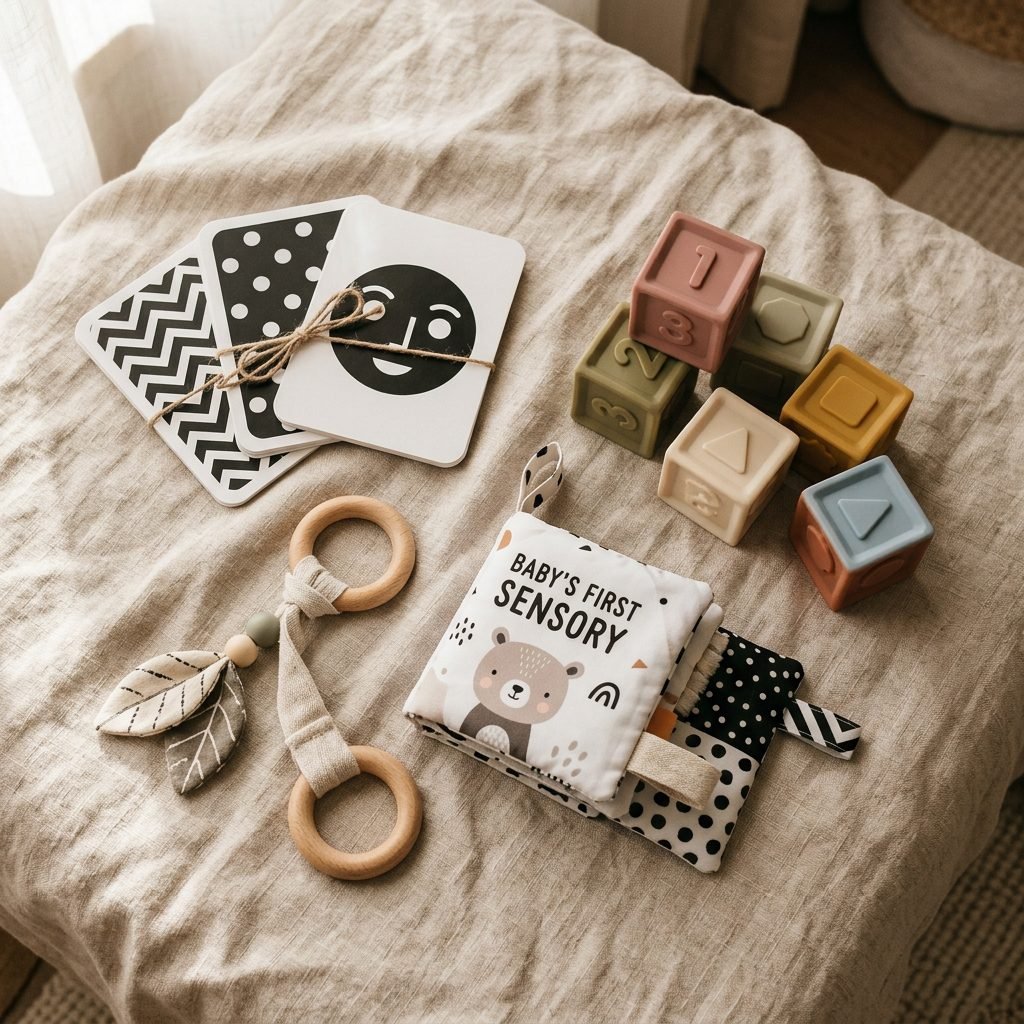
Babies learn best through play. If an exercise feels like work, they will quickly lose interest. Integrating sensory play into your developmental exercises is the secret to keeping your 5-month-old engaged, happy, and working hard without even realizing it. Plus, this is a wonderful excuse to pull out those beautiful, aesthetic toys you were gifted at your baby shower!
The “Bicycle Legs” Core Crunch
You might already know “bicycle legs” as a magical cure for a gassy baby (and it absolutely is!), but it is also a brilliant core strengthener. Lay your baby on their back and gently cycle their legs toward their tummy. As you push their knees gently toward their chest, their lower abdominal muscles engage. To make it a sensory experience, tie a soft, crinkly ribbon or place bright, high-contrast socks on their feet. The visual and auditory feedback will encourage them to lift their legs on their own, which builds the lower core strength necessary for sitting.
The Rolling Reach
Rolling is the precursor to sitting up from a lying position. Encourage rolling by placing your baby on their back and holding a favorite toy—like a soft felt book or an edible-safe silicone teether—just out of reach to one side. As they reach across their midline to grab the toy, they engage their oblique muscles. Once they roll onto their side or tummy to get the toy, praise them enthusiastically! Strong obliques are what will eventually stop your baby from toppling over sideways when they sit.
| Sensory Toy Type | How to Use for Sitting Exercises | Developmental Benefit |
|---|---|---|
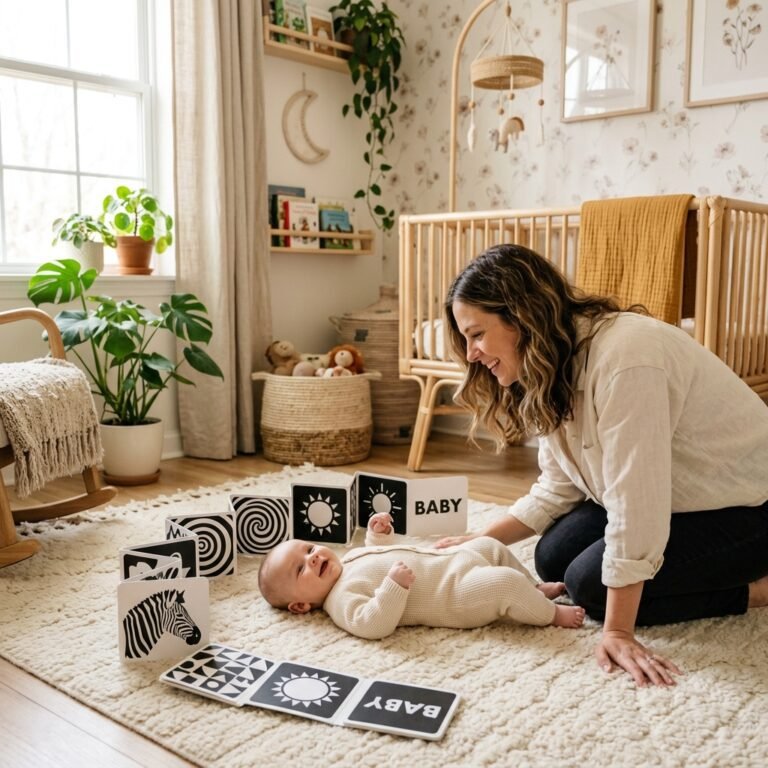
| High-Contrast Flashcards | Place on the floor during Tripod Sit to keep their gaze down and forward. | Encourages weight-bearing on arms and prevents backward falling. |
| Crinkle Toys / Books | Hold slightly above eye level while baby is supported in a seated position. | Encourages neck extension and reaching, building core stability. |
| Textured Teethers | Place just out of reach to encourage rolling from back to side. | Strengthens obliques and lateral core muscles. |
Designing a Safe and Stylish Floor Space
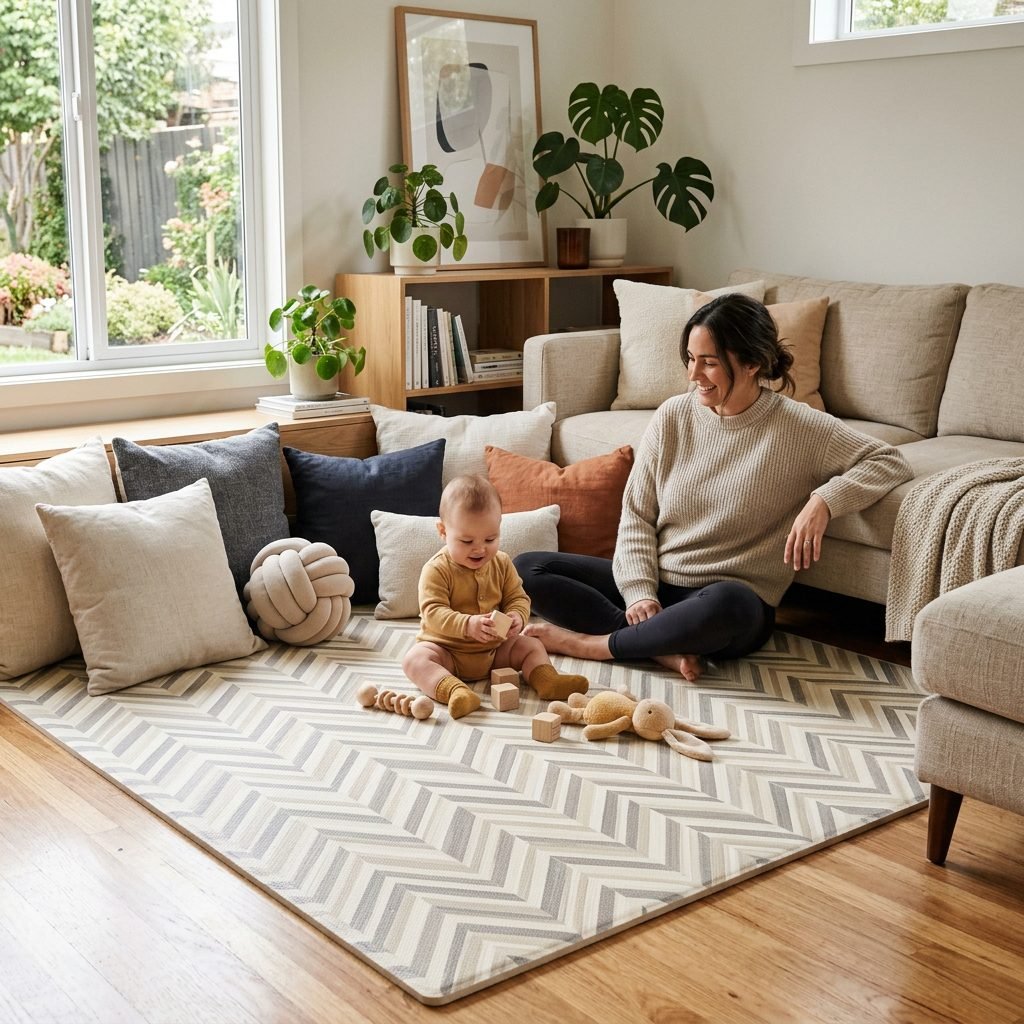
As a mom who loves a beautifully organized home, I know the struggle of wanting a safe play area that doesn’t completely disrupt your interior design. But here is the truth: the best place for your baby to learn to sit is on the floor. Beds and couches are too soft and present a major fall hazard. Creating a dedicated, safe floor space is essential for these wobbly milestones.
Choosing the Right Playmat
You need a surface that offers enough cushion to protect against the inevitable bonks and topples, but is firm enough to provide a stable base for their hands and bottom. Avoid overly plush rugs where their hands might sink, making balance difficult. Instead, opt for a high-quality, non-toxic foam playmat. Today, there are stunning options that look exactly like vintage Persian rugs or minimalist geometric tiles, blending seamlessly into your living room decor.
The “Fall Zone” Setup
When your baby is practicing sitting, they are going to fall. It is a normal, healthy part of learning gravity! To protect them, create a “U-shape” barrier using nursing pillows, firm throw pillows, or rolled blankets behind and beside them. Never leave your baby unattended while they are practicing sitting, even with pillows around them. Babies can easily slump forward and compromise their airway if they get tired.
Safety Mantra: Floor time is the best time. Keep the space firm, clear of small choking hazards, and always stay within an arm’s reach. Let them wobble, let them learn, but be their soft landing.
Also, let’s talk about your posture, mama. Postpartum recovery means your own core and back might still be healing. When you get on the floor with your baby, try to sit on a firm cushion to elevate your hips above your knees, or sit with your back supported against a wall. Avoid hunching over your baby for long periods. Protecting your own body is just as important as nurturing theirs!
What to Avoid: The Truth About “Container Baby Syndrome”
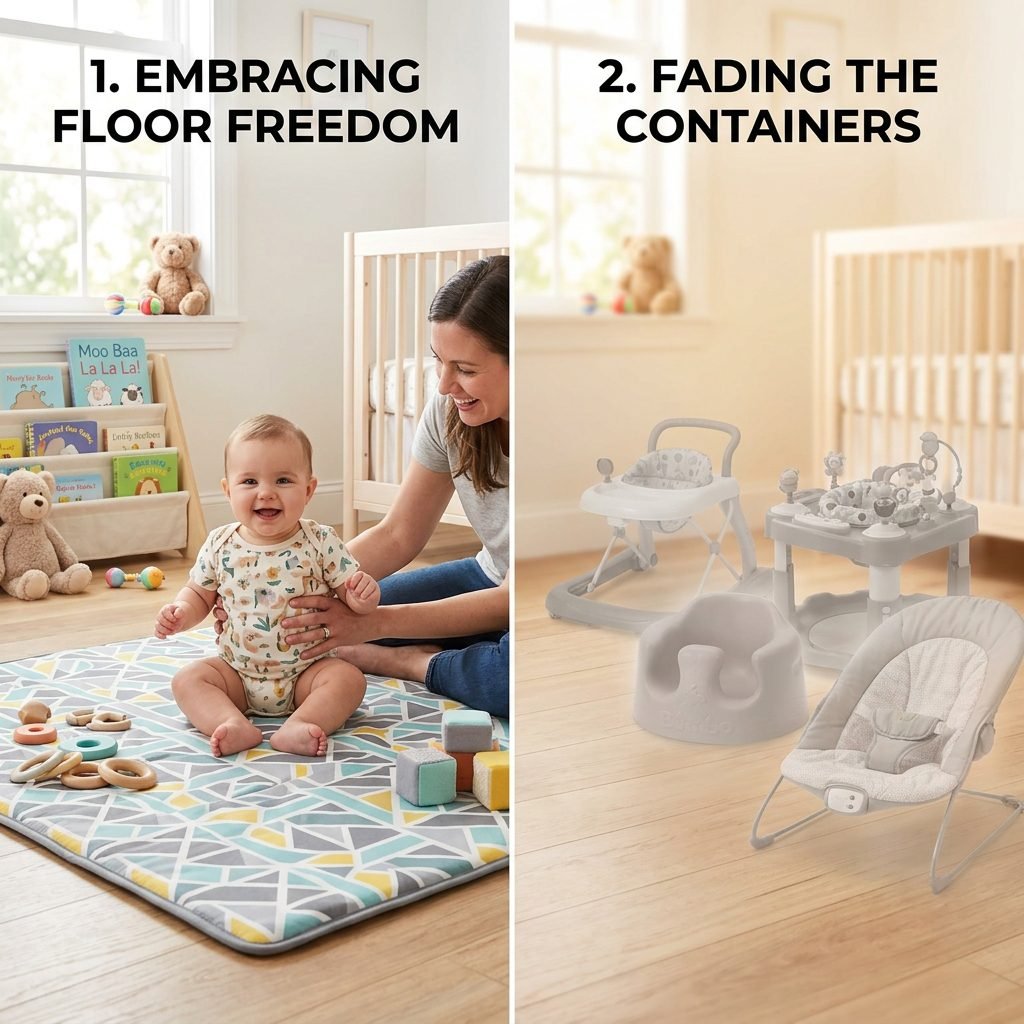
In our modern world, we are blessed with so many baby gadgets. From bouncy seats to baby swings, these tools can be an absolute lifesaver when you just need five minutes to drink a hot cup of coffee or take a shower. However, when it comes to learning to sit up, relying too heavily on supported seating can actually hinder your baby’s development.
Rethinking the Bumbo and Supported Seats
Many parents assume that placing a baby in a rigid, molded floor seat (like a Bumbo) will teach them how to sit. Evidence-based pediatric physical therapy tells us otherwise. These seats lock a baby’s pelvis in a posterior tilt and do all the core work for them. Instead of actively using their muscles to balance, the baby is passively “stuck” in position. Prolonged use of these devices can lead to what pediatricians call “Container Baby Syndrome,” which can delay milestones like rolling, crawling, and independent sitting.
| Gear / Environment | Impact on Sitting Development | Recommendation |
|---|---|---|
| Firm Floor Playmat | Optimal. Allows freedom of movement, micro-adjustments, and natural muscle building. | Maximize! Aim for the majority of awake time here. |
| High Chair (for meals) | Necessary for safe eating. Provides 90/90/90 postural support. | Use as needed for meals and short sensory play. |
| Molded Floor Seats | Restricts pelvic movement and artificially props baby up. | Limit to less than 15-20 minutes a day, if at all. |
| Baby Jumpers / Walkers | Places inappropriate stress on hips and toes before baby is ready to bear weight. | Avoid until baby can sit completely independently. |
When to Consult Your Pediatrician
As a gentle reminder, every baby is beautifully different. Some babies sit unassisted at 5 months, while others take until 7 or 8 months. Both can be completely normal! However, you should always trust your motherly intuition. Reach out to your pediatrician if your 5-month-old:
- Has significant head lag when pulled to a sitting position.
- Feels unusually stiff or incredibly floppy in their muscles.
- Does not reach for toys or bring their hands to their mouth.
- Only uses one side of their body to reach or roll.
Early intervention is a wonderful, supportive tool, so never hesitate to ask your doctor questions. You are your baby’s best advocate!
Conclusion: Celebrating the Wobbles
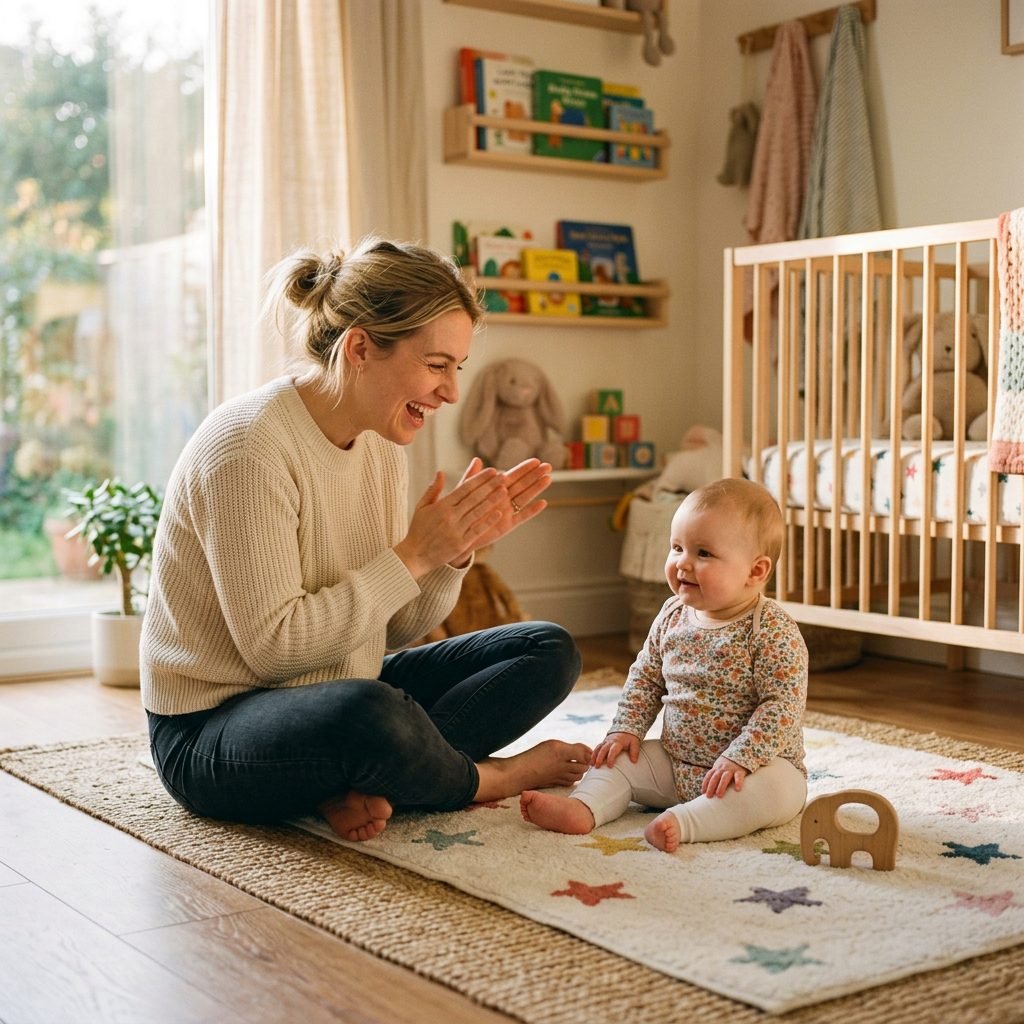
Oh, mama, watching your baby learn to sit up is such a joyful, hilarious, and sometimes nerve-wracking experience. There will be face-plants into the playmat, frustrated grunts when a toy is just out of reach, and eventually, that glorious, beaming smile when they finally balance on their own for ten whole seconds. Remember that these developmental exercises are not a race or a strict curriculum. They are simply tools to help you bond with your baby, support their growing body, and gain confidence in your own parenting journey.
Keep practicing the Tripod Sit, make tummy time a fun sensory experience, and create a beautiful, safe floor space where your little one can explore their limits. Most importantly, give yourself some grace. Whether your baby sits up tomorrow or two months from now, they are perfectly on their own timeline, and they are so deeply loved. You are doing a spectacular job navigating this postpartum and developmental season.
Conclusion
Oh, mama, watching your baby learn to sit up is such a joyful, hilarious, and sometimes nerve-wracking experience. There will be face-plants into the playmat, frustrated grunts when a toy is just out of reach, and eventually, that glorious, beaming smile when they finally balance on their own for ten whole seconds. Remember that these developmental exercises are not a race or a strict curriculum. They are simply tools to help you bond with your baby, support their growing body, and gain confidence in your own parenting journey.
Keep practicing the Tripod Sit, make tummy time a fun sensory experience, and create a beautiful, safe floor space where your little one can explore their limits. Most importantly, give yourself some grace. Whether your baby sits up tomorrow or two months from now, they are perfectly on their own timeline, and they are so deeply loved. You are doing a spectacular job navigating this postpartum and developmental season.