
Foot In Your Ribs? 5 Tricks To Move Baby Down Instantly
Finding Your Breath Again: A Sisterly Guide to Rib Relief
Take a deep breath—or at least, as deep of a breath as you can right now with a tiny, persistent foot wedged firmly into your lungs! Oh, mama. If you are reading this, you are likely in the thick of the third trimester, and I know exactly why you are here. You are trying to enjoy a meal, sit at your desk, or simply relax on the couch, and suddenly, bam. A sharp, breathless jab right under your ribs takes the wind completely out of you.
As a doula and maternal wellness expert, I hear this complaint from expectant mothers constantly. Around the 30 to 36-week mark, your baby is getting beautifully plump and strong, but real estate inside your womb is practically non-existent. If your baby is head-down (which is exactly what we want for birth!), their little feet and knees are right up at the top of your uterus, perfectly positioned to kick your ribcage. While it is a wonderful sign of a strong, active baby, the physical discomfort can range from mildly annoying to downright excruciating.
But you do not have to just grit your teeth and suffer until delivery day. There are practical, gentle, and highly effective techniques we use in the birth world to encourage your little one to shift their position, drop lower into the pelvis, and give your internal organs a much-needed break. Let us dive into five instant tricks to gently coax that sweet little foot out of your ribs so you can finally take a full, glorious breath.
You are doing an incredible job growing this life. Your body is stretching and adapting in miraculous ways. Give yourself grace, and let’s create some comfortable space for both you and your baby.
Understanding the Space Invader: Why Is Baby Lodged in Your Ribs?
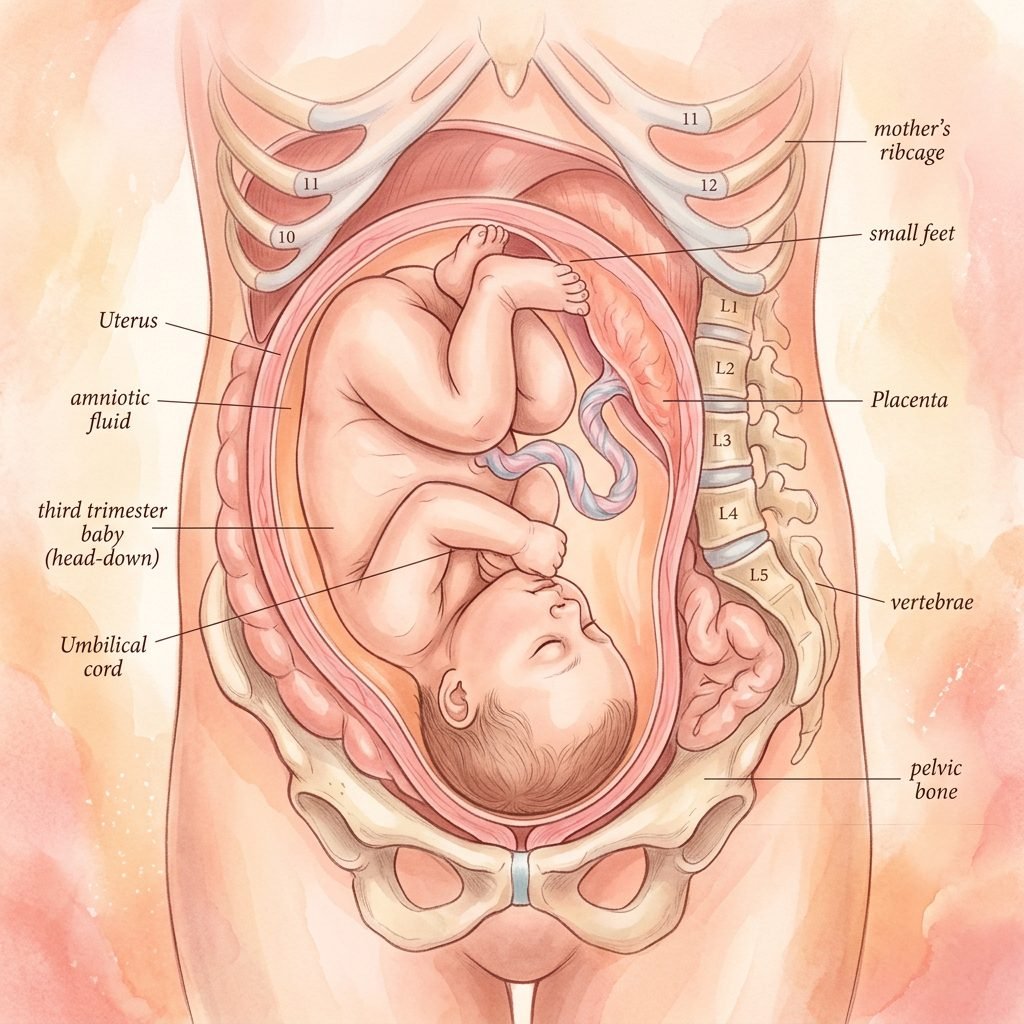
Before we start moving and shifting, it is important to understand what is happening anatomically. By the third trimester, your uterus has expanded all the way up to your ribcage. If your baby is in the optimal cephalic (head-down) position, their strongest limbs—the legs and feet—are pointing directly at your diaphragm and lower ribs. Sometimes, babies find a cozy little pocket under your right or left ribcage and decide to set up camp there.
When is Rib Pain Normal vs. A Red Flag?
While a foot in the ribs is a standard pregnancy grievance, we always want to be vigilant about our health. It is crucial to differentiate between musculoskeletal discomfort from a baby’s kick and something that requires medical attention.
| Symptom Type | What It Likely Means | Recommended Action |
|---|---|---|
| Sharp, localized jab or ache under one side of the ribs that changes when baby moves. | Baby’s foot, knee, or bottom pushing against your intercostal muscles. | Try the 5 movement and temperature tricks below for immediate relief. |
| A dull, constant ache that worsens when sitting hunched over. | Uterine pressure and poor posture compressing the ribcage. | Utilize a birthing ball and practice the rib-stretching techniques. |
| Severe, unrelenting pain in the upper right quadrant, accompanied by visual changes, headache, or swelling. | Potential sign of preeclampsia or a liver issue (HELLP syndrome). | Call your OB or Midwife immediately. Do not wait. This requires urgent medical evaluation. |
Trick #1: The Ice Pack and Warm Bath Maneuver (Temperature Play)

This is one of my absolute favorite doula tricks because it feels like pure magic, and it requires zero physical exertion from a tired mama. Babies in the womb are remarkably responsive to temperature changes on the surface of your skin. They naturally gravitate toward warmth and will actively pull away from anything cold. We can use this biological response to gently herd them down into the pelvis.
How to Execute the Temperature Trick:
- Grab your supplies: You will need a bag of frozen peas (or a flexible gel ice pack) and a warm compress (like a warm wet washcloth or a heating pad set to low).
- Position the cold: Wrap the ice pack in a thin towel so it is not too jarring on your skin. Place it directly over the spot on your ribs where you feel the baby’s foot or bottom.
- Position the warmth: Place the warm compress on your lower belly, just above your pubic bone.
- Wait and relax: Sit back in a semi-reclined position. Within 10 to 15 minutes, you will likely feel your baby squirm, pull their limbs away from the chilly ice pack, and wiggle down toward the inviting warmth of your lower pelvis.
This method is completely safe, highly effective, and gives you a great excuse to put your feet up and rest!
Trick #2: The Pelvic Tilt and Cat-Cow Flow to Create Space
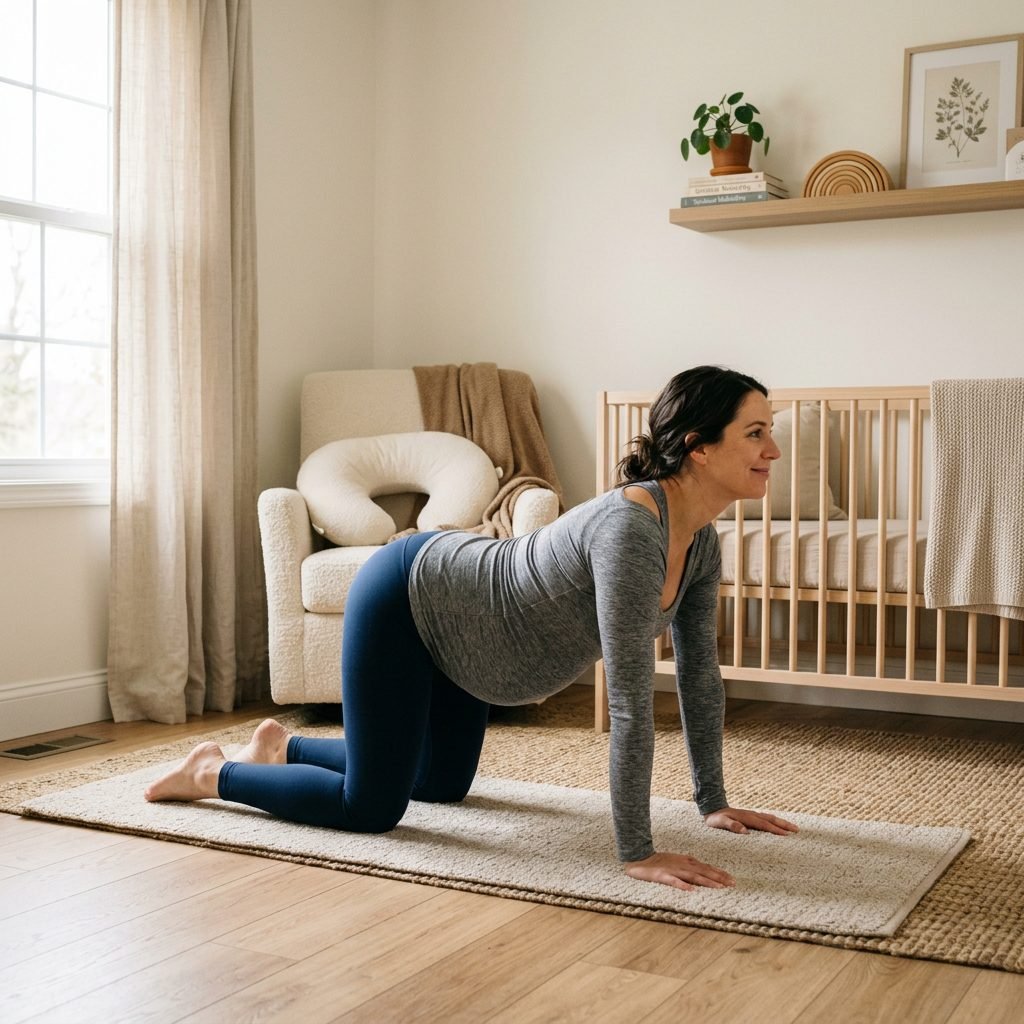
When we sit on couches or in car seats for long periods, we tend to recline backward, tucking our pelvis under. This posture actually closes the top of the pelvis and encourages the baby to float higher up into your chest cavity. To get baby to drop down, we need to utilize gravity and open the pelvic brim. The classic yoga Cat-Cow stretch combined with pelvic tilts is a gentle, phenomenal way to do this.
Step-by-Step Cat-Cow for Rib Relief:
- Get on all fours: Find a soft yoga mat or carpet. Kneel with your knees hip-width apart and your hands directly under your shoulders.
- The Cow Drop: Take a deep breath in. Gently let your belly hang heavy toward the floor. Do not force a deep arch in your lower back; just let the weight of your baby pull down, creating a hammock effect. Lift your head and chest slightly.
- The Cat Tuck: As you exhale, press into the floor, gently round your back up toward the ceiling, and tuck your chin to your chest. Tuck your pelvis slightly.
- Repeat: Flow through this motion 10 to 15 times.
By hanging your belly toward the floor, you are using gravity to pull the baby’s back away from your spine and their feet away from your ribs. It creates a beautiful, spacious hammock for them to settle into.
Birth Affirmation: I am creating space for my baby. My body is open, relaxed, and perfectly designed to accommodate this life.
Trick #3: The Forward-Leaning Inversion (Gravity is Your Best Friend)
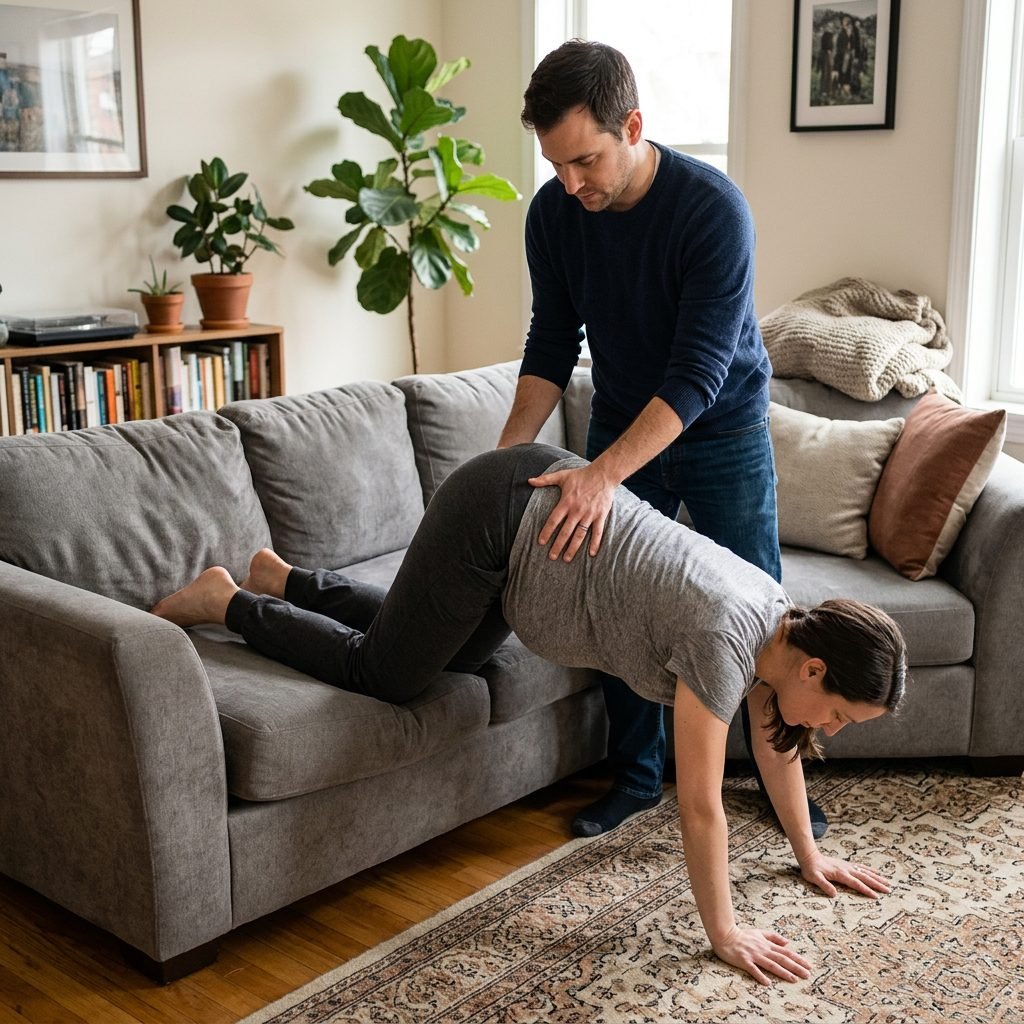
If the baby is truly stubbornly lodged and simple stretches are not cutting it, it is time to bring out the heavy hitters. The Forward-Leaning Inversion is a technique popularized by the brilliant folks at Spinning Babies. It temporarily untwists the ligaments supporting your lower uterus, creating room for the baby’s head to settle deeper into the pelvis, which naturally pulls their feet out of your ribs.
How to Perform the Forward-Leaning Inversion Safely:
- Find a sturdy surface: A couch, a bed, or the top of a staircase works well.
- Kneel near the edge: Carefully kneel near the edge of the surface. Always have a partner spot you the first few times!
- Lower your hands: Slowly lower your hands to the floor (or a sturdy stool if the floor is too far). Walk your hands out until your forearms are resting on the floor.
- Let your head hang: Your knees should be higher than your hips, and your hips higher than your shoulders. Let your belly hang completely loose and let your neck relax.
- Hold for 30-45 seconds: Breathe deeply. Do not hold this for longer than one minute.
- Come up safely: Walk your hands back up to a kneeling position. Take two deep breaths while kneeling to let your blood pressure stabilize before standing.
| Inversion Do’s | Inversion Don’ts |
|---|---|
| Do use a sturdy, non-slip surface and have your partner spot you. | Don’t attempt if you have high blood pressure, glaucoma, or are feeling dizzy. |
| Do hold the position for exactly 30 to 45 seconds. | Don’t stay inverted for longer than one minute, as it can cause lightheadedness. |
| Do practice this daily to encourage optimal fetal positioning. | Don’t do this if your water has already broken or if your provider has advised bed rest. |
Trick #4: Ribcage Stretches and The ‘Reach for the Sky’ Technique

Sometimes the baby isn’t necessarily in the wrong position; they are just running out of room, and your torso has become compressed. Throughout the day, as we get tired, we tend to slouch, which squishes our ribcage right down onto the top of the uterus. Elongating your torso can give your baby that extra inch of space they need to stretch out without bruising your internal organs.
The Birthing Ball Torso Stretch:
- Sit on a birthing ball: Ensure your hips are slightly higher than your knees. This alone opens the pelvis and encourages baby to drop.
- The Side Reach: If the baby is kicking your right rib, plant your feet firmly. Raise your right arm straight up toward the ceiling. Take a deep breath in, and as you exhale, gently lean to your left, opening up the entire right side of your ribcage. Hold for 3 to 5 deep breaths.
- The Doorway Stretch: Stand in a doorway and place your hands on the doorframe above your head (or as high as you can comfortably reach). Gently step one foot forward and lean your weight into the stretch, opening your chest and lifting your ribs away from your uterus.
These stretches help expand the intercostal muscles (the muscles between your ribs), providing instant, deep-breathing relief.
Trick #5: Belly Sifting with a Rebozo (Partner Assisted Relief)

If you have a partner, friend, or doula nearby, it is time to put them to work! Rebozo sifting is a traditional Mexican midwifery technique that has been embraced by doulas worldwide. A Rebozo is a long, woven scarf or shawl. By using the fabric to gently cradle and lift the belly, your partner can take the weight of the baby off your pelvic floor and back, while the gentle “sifting” motion relaxes your abdominal ligaments, allowing baby to shimmy down.
How to Sift the Belly:
- Get on all fours: Kneel on a comfortable mat or lean completely forward over a birthing ball.
- Position the wrap: Have your partner drape a long, sturdy woven wrap (or a flat bedsheet) over your belly, so the fabric acts like a hammock supporting the weight of your baby.
- Lift and hold: Your partner will stand behind you, holding the ends of the fabric. They should gently pull up, taking the weight of the belly into their hands. You should feel an immediate sense of relief in your lower back and ribs.
- The Sift: Your partner will then make small, rhythmic, side-to-side jiggling motions with their hands (think of a gentle vibration, not a vigorous shake). Do this for 2 to 3 minutes.
This gentle vibration relaxes the broad ligament and uterine muscles. When your partner slowly releases the fabric, the baby will often settle deeper into the pelvis, leaving your ribs blissfully empty.
Conclusion
Finding Comfort in the Final Stretch
Dealing with a baby’s foot lodged in your ribs is one of the most uniquely uncomfortable experiences of the third trimester. But remember, mama, this discomfort is temporary, and it means your baby is growing strong and active. By utilizing temperature tricks, gravity, stretches, and partner support, you can actively encourage your little one to move down and give you the space you need to breathe freely again.
As you approach the final weeks of your pregnancy, you will eventually experience something called lightening—the magical moment when your baby finally drops deep into your pelvis in preparation for birth. When that happens, your rib pain will vanish, your lungs will fully expand, and you will feel a renewed sense of energy (even if you suddenly have to pee every ten minutes!). Until then, keep your ice pack handy, bounce on your birthing ball, and know that you are doing an absolutely phenomenal job.
Medical Disclaimer: The information provided in this article is for educational and comforting purposes only and is based on standard doula and maternal wellness practices. It does not substitute for professional medical advice, diagnosis, or treatment. Always consult with your Obstetrician, Midwife, or healthcare provider before attempting new physical exercises or if you experience sudden, severe, or unusual pain during pregnancy.