

How To Prevent Mastitis Naturally Before It Starts
Hello, beautiful mama. First of all, take a deep, grounding breath. Drop your shoulders away from your ears, unclench your jaw, and give yourself a moment of grace. Whether you are holding your brand-new baby on your chest right now, heavily pregnant and nesting, or navigating the tender, vulnerable days of the fourth trimester, I want you to hear this: you are doing an absolutely incredible job.
Breastfeeding is often painted as this perfectly natural, effortlessly beautiful journey. And while it is deeply beautiful, it is also a learned skill for both you and your baby. It requires patience, physical endurance, and a lot of emotional resilience. One of the most common hurdles mothers face—and often fear—is mastitis. If you have ever heard horror stories from friends about the sudden fever, the intense breast pain, and the exhaustion that comes with mastitis, it is completely understandable to feel anxious about it.
But here is the empowering truth: mastitis does not just happen out of nowhere. It is a spectrum of inflammation, and there are so many gentle, natural, and highly effective ways to support your body and stop that inflammation before it ever turns into an infection. As a doula and postpartum care specialist, my goal is to equip you with the knowledge and tools to protect your breasts, nourish your baby, and honor your healing body.
In this comprehensive guide, we are going to demystify breast health. We will explore the root causes of breast inflammation, the most effective natural prevention strategies, the golden rules of milk removal, and the latest evidence-based protocols for breast care. You do not have to live in fear of clogged ducts or infections. Together, we will build a holistic defense system for your body, ensuring your breastfeeding journey is as comfortable, joyful, and healthy as possible.
Understanding the Root: Why Does Mastitis Actually Happen?

For decades, we were taught that mastitis was simply a “plumbing issue”—a clogged duct that got backed up and infected. However, the Academy of Breastfeeding Medicine recently revolutionized how we understand and treat mastitis. We now know that mastitis is primarily an issue of inflammation and dysbiosis (an imbalance of bacteria in the milk microbiome), rather than just a physical blockage.
When milk is not effectively removed, or when there is trauma to the breast tissue from a poor latch or an ill-fitting pump flange, the breast tissue becomes inflamed. This inflammation causes the milk ducts to narrow, which traps the milk. This trapped milk (often called milk stasis) creates an environment where the natural bacteria in your breast can overgrow, eventually leading to an infection.
You are not alone, and this is completely normal. Experiencing breast inflammation, engorgement, or tender spots is not a failure of your body. It is simply your body communicating with you. The early postpartum days are a wild ride of hormonal shifts and fluid retention. If your breasts feel heavy, hot, or lumpy, please give yourself grace. It takes time for your body and your baby to find their perfect rhythm.
Understanding that mastitis starts as inflammation is your secret weapon. It means that our entire prevention strategy should revolve around reducing swelling, honoring your tissue with gentle care, and maintaining a healthy balance of bacteria in your body.
The Spectrum of Inflammation
Mastitis rarely strikes without warning. It typically progresses through a spectrum:
- Engorgement: Generalized swelling, heaviness, and tightness in the breasts, usually occurring when your milk first “comes in” around days 3 to 5 postpartum.
- Ductal Narrowing (formerly “Clogged Ducts”): A localized, tender lump or hard spot in the breast caused by inflammation narrowing the ductal pathway.
- Inflammatory Mastitis: The breast becomes red, hot, and painful. You may feel deeply fatigued, but there is no systemic infection yet.
- Bacterial Mastitis: The inflammation has led to an infection. This is accompanied by flu-like symptoms, a fever of 101°F or higher, chills, and body aches.
By catching the symptoms at the engorgement or ductal narrowing stage, we can naturally reverse the process and prevent the bacterial infection from taking hold.
The Golden Rule of Prevention: Effective Milk Removal and Latch

The absolute most effective way to prevent mastitis naturally is to ensure that milk is moving efficiently out of your breasts. Think of a flowing river versus a stagnant pond; a flowing river stays clear and healthy. To keep your milk flowing, we need to focus on two critical elements: frequency and mechanics.
Feeding on Demand
In the early weeks, throw the clock out the window. Breastfed babies do not follow strict schedules. They feed for hunger, for comfort, for hydration, and for connection. Aim to nurse your baby 8 to 12 times in a 24-hour period. If your breasts feel uncomfortably full, do not wait for the baby to cry—offer the breast. If your baby is sleeping deeply and your breasts are painfully engorged, it is perfectly okay to hand express a little milk into a towel just to relieve the pressure.
Perfecting the Latch
A shallow latch is the enemy of breast health. It causes nipple trauma (which introduces external bacteria into the breast) and prevents the baby from draining the breast effectively. Here is a quick doula-approved checklist for a deep, effective latch:
- Tummy to Tummy: Ensure your baby’s entire body is facing yours. Their head, neck, and spine should be in a straight alignment.
- Nose to Nipple: Start with your nipple pointing toward your baby’s nose, not their mouth. This encourages them to tilt their head back and open wide.
- The Wide Open Mouth: Wait for a big, exaggerated yawn. When their mouth is open like a baby bird, bring the baby to the breast (do not lean your breast into the baby).
- Asymmetrical Latch: Your baby’s chin should deeply indent your breast, and they should take in more of the areola below the nipple than above it.
Pumping Considerations
If you are exclusively pumping or pumping to build a stash, flange size is critical. A flange that is too small will pinch the nipple, causing trauma. A flange that is too large will pull too much areola into the tunnel, causing severe swelling and preventing proper milk drainage. I highly recommend measuring your nipples with a silicone sizing tool or consulting an International Board Certified Lactation Consultant (IBCLC) to ensure your pump is working for you, not against you.
Holistic Defenses: Nutrition, Hydration, and Supplements
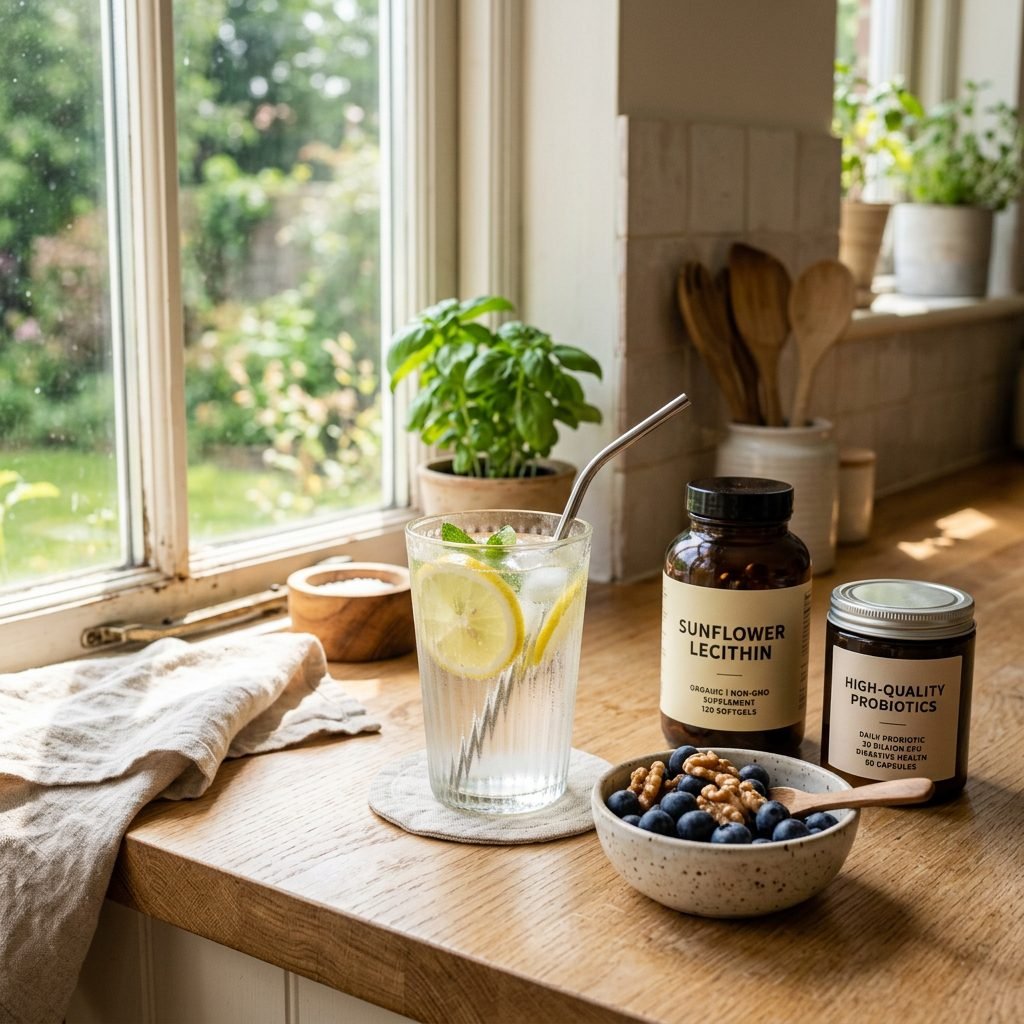
Breastfeeding is a massive metabolic undertaking. Your body is literally manufacturing liquid gold around the clock. To support this process and keep inflammation at bay, we must nourish the body from the inside out. The “gut-breast axis” is a fascinating biological pathway where the beneficial bacteria in your gut actually travel to your mammary glands to protect your breast tissue.
The Power of Probiotics
Not all probiotics are created equal when it comes to breast health. Look specifically for strains like Lactobacillus fermentum and Lactobacillus salivarius. Clinical studies have shown that these specific strains can significantly reduce the bacterial load of Staphylococcus (the bacteria most commonly responsible for mastitis) in breastmilk. Starting a targeted breast-health probiotic in your third trimester and continuing through your breastfeeding journey is a phenomenal natural defense.
Sunflower Lecithin: The Milk Thinner
If you are prone to “clogged ducts” or have very sticky, high-fat milk, sunflower lecithin is a game-changer. Lecithin is a natural fat emulsifier. It works by decreasing the viscosity (stickiness) of your milk, preventing the fat globules from clumping together and sticking to the walls of your milk ducts.
Hydration and Anti-Inflammatory Foods
Dehydration can cause your milk to become thicker, making it harder to express. Aim for at least 100 to 120 ounces of water daily. Pair this with a diet rich in anti-inflammatory foods. Think bone broth, wild-caught salmon (rich in Omega-3s), fresh berries, leafy greens, and garlic, which has natural antimicrobial properties.
Natural Remedies Quick Reference Guide
| Natural Remedy | How It Prevents Mastitis | Recommended Usage |
|---|---|---|
| Sunflower Lecithin | Acts as an emulsifier, preventing milk fat from clumping and causing ductal narrowing. | 1200 mg 3-4 times daily for acute clogs, or 1-2 times daily for maintenance. |
| Targeted Probiotics | Balances the breast microbiome, preventing pathogenic bacteria from overgrowing. | 1 capsule daily (look for L. fermentum or L. salivarius strains). |
| Vitamin C | Boosts the maternal immune system and strengthens tissue integrity. | 1000 mg daily through diet or high-quality supplement. |
| Raw Garlic | Provides natural antimicrobial and anti-inflammatory benefits to fight early infection. | 1-2 cloves crushed and swallowed whole, or added to warm bone broth. |
| Hydration (Electrolytes) | Keeps milk volume stable and prevents milk from becoming overly thick or viscous. | 100+ ounces of water daily, enhanced with natural electrolytes or a pinch of sea salt. |
The New Protocol for Breast Care: Ice, Rest, and Gentle Touch

Mama, please listen closely to this section, because the advice has drastically changed in recent years. If you were told in the past to use aggressive vibrating massagers, deep tissue massage, and piping hot compresses to “bust” a clogged duct, I want you to gently toss that advice out the window. We now know that aggressive massage causes micro-trauma to the breast tissue, creating more swelling and actually making the blockage worse.
Ice is Your Best Friend
Because we now understand that mastitis begins as inflammation, we need to treat it like a sprained ankle. Between feeding sessions, apply cold therapy to the breast. You can use flexible gel ice packs, bags of frozen peas, or even chilled cabbage leaves. Apply the cold for 10 to 15 minutes at a time. This vasoconstriction reduces blood flow to the swollen area, decreasing the painful swelling and allowing the milk ducts to open back up.
Gentle Lymphatic Drainage
Instead of deep tissue massage, we want to perform gentle lymphatic drainage. The goal is to move the excess interstitial fluid (swelling) away from the nipple and back into your body’s lymphatic system. The touch should be incredibly light—no harder than the pressure you would use to pet a cat.
Step-by-Step Lymphatic Drainage Script:
1. Wash your hands and find a comfortable, quiet space.
2. Start by gently massaging the lymph nodes in your armpit and just above your collarbone on the affected side to “open the drains.”
3. Place your hands flat against your breast, near the areola.
4. Using the flats of your fingers, gently stroke the skin upwards and outwards, moving away from the nipple and toward your armpit and collarbone.
5. Imagine you are gently sweeping away a layer of water resting just beneath your skin. Repeat this soothing motion for 3 to 5 minutes.
The Role of Ibuprofen
If you feel a tender lump forming, taking an over-the-counter anti-inflammatory like Ibuprofen (Advil or Motrin) can significantly reduce the swelling in the breast tissue. Always consult with your healthcare provider, but generally, a dose of 600 mg every 6 to 8 hours is considered safe during breastfeeding and is highly effective at stopping the inflammatory cascade before it becomes mastitis.
Listening to Your Body: Early Warning Signs vs. Normal Engorgement

Your body is incredibly wise, and it will always whisper before it screams. Learning to tune into your body’s subtle signals is the key to natural prevention. In the blur of the postpartum period, it is easy to brush off a minor ache as just another part of the recovery process. But when it comes to your breasts, early intervention is everything.
Normal engorgement usually happens in both breasts simultaneously. Your breasts will feel heavy, tight, and perhaps a bit warm, but the milk is still flowing. A ductal narrowing (the precursor to mastitis) typically happens in just one breast. You will notice a specific, localized wedge of tissue that feels tender, hard, or slightly bruised.
If you notice that tender spot, immediately implement the protocol: Nurse on demand, ensure a perfect latch, apply ice between feeds, perform gentle lymphatic drainage, and take an anti-inflammatory. Do not force the baby to nurse exclusively on the affected side, as this can lead to hyperlactation and worsen the issue. Simply feed normally and rest.
Symptom Tracking Matrix
| Symptom Profile | Normal Engorgement | Early Inflammation (Warning Sign) | Bacterial Mastitis (Call Doctor) |
|---|---|---|---|
| Location | Both breasts, generalized. | Usually one breast, localized lump or wedge. | One breast, spreading redness and heat. |
| Pain Level | Uncomfortable, tight, heavy. | Tender to the touch, feels like a bruise. | Intense, throbbing, painful even when not touched. |
| Skin Appearance | Shiny, tight skin. | Slight pinkness over the affected area. | Bright red streaks, hot to the touch, sometimes shiny. |
| Systemic Symptoms | None. You feel generally okay. | Mild fatigue, but no fever. | Fever above 101°F, chills, body aches, exhaustion. |
| Action Required | Nurse frequently, gentle massage, rest. | Ice, lymphatic drainage, Ibuprofen, probiotics. | Contact your OBGYN or Midwife immediately for evaluation. |
Rest is perhaps the most underrated prevention tool. Stress and exhaustion trigger a rise in cortisol, which can actually inhibit your oxytocin (the hormone responsible for your milk letdown). When your letdown is inhibited, milk stays in the breast, leading to stasis. If you feel a clog forming, hand the baby to your partner between feeds, get into bed, and prioritize sleep. Your immune system needs energy to fight off the inflammation.
Conclusion
My dearest mama, navigating the world of breastfeeding and postpartum recovery is a monumental task, and you are navigating it with so much love and resilience. Preventing mastitis naturally is all about honoring your body, listening to its early whispers, and responding with gentle, holistic care. Remember the new golden rules: out with the aggressive massage and heat, and in with gentle lymphatic sweeps, soothing ice, and trusting your baby’s latch.
You do not have to be perfect at this. There will be messy days, cluster-feeding nights, and moments of doubt. But you are equipped with the knowledge to protect your body and advocate for your health. Surround yourself with a supportive village, stay hydrated, take your probiotics, and most importantly, give yourself permission to rest. Your well-being is the foundation of your baby’s well-being.
If you ever feel overwhelmed, or if your symptoms escalate from mild tenderness to fever and chills, please do not hesitate to reach out to your healthcare provider. There is no medal for suffering in silence, and getting medical help when natural remedies aren’t enough is a profound act of self-care. You’ve got this, and I am cheering you on every step of the way.