9 Active Indoor Physical Play Games to Support Your 8-Month-Old’s Milestones
Welcome to the ‘Moving and Grooving’ Phase, Mama!
By the time your sweet little one reaches 8 months old, your home likely feels like a brand-new world. This is such a magical, transformative window in your baby’s first year. As a doula and maternal wellness guide, I’ve seen firsthand the incredible ‘milestone explosion’ that happens right now. Your baby is likely transitioning from being a stationary observer to an active explorer. They are discovering that their limbs can take them places, their fingers can pick up the tiniest crumbs (hello, constant vacuuming!), and their voice can command a room. It is a season of high energy, deep curiosity, and, let’s be honest, a bit of exhaustion for you, mama. You are doing an amazing job navigating these transitions.
At 8 months, physical development is front and center. Most babies are mastering the art of sitting without support, which frees up their hands for sophisticated play. Many are also beginning to rock on their hands and knees—the precursor to that first glorious crawl—or perhaps they are already ‘army crawling’ across the hardwood floors. This stage is about building core strength, bilateral coordination, and fine motor precision. But beyond the physical, it’s about the joy of discovery. Playing games isn’t just about ‘hitting marks’; it’s about the bond you’re building and the confidence your baby gains every time they reach a toy or navigate an obstacle. In this guide, we are going to dive into 9 evidence-based, indoor physical play games that are easy to set up, budget-friendly, and perfectly aligned with your 8-month-old’s developmental needs. Let’s turn your living room into a sanctuary of growth and laughter.
The 8-Month Milestone Landscape: What We Are Building
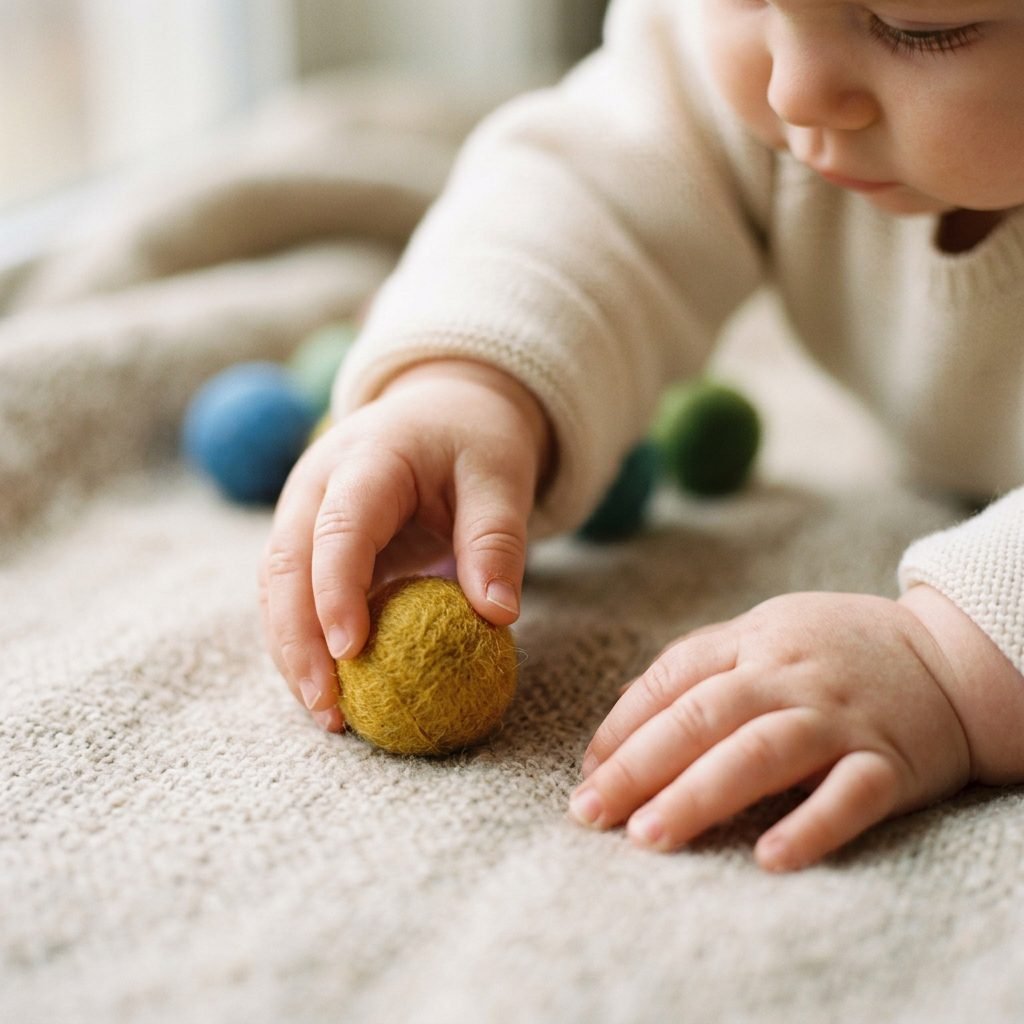
Before we jump into the games, it’s helpful to understand exactly what is happening in your baby’s nervous system and musculature. At 8 months, your baby is working on several key physical pillars. First is trunk stability. A strong core allows them to sit securely and reach for toys without toppling over. Second is cross-lateral movement, which is the ability to move the right arm and left leg (or vice versa) in coordination—this is the foundation of crawling and, eventually, walking. Third is the pincer grasp, where they use the thumb and index finger to pick up small objects.
From a doula’s perspective, I also want to remind you of the vestibular and proprioceptive systems. The vestibular system, located in the inner ear, helps with balance and spatial orientation. Proprioception is the ‘sense of self’ in space—knowing where their hands and feet are without looking at them. The games we’ve selected target all of these areas, ensuring your baby gets a ‘full-body workout’ that feels like nothing but fun. Remember, every baby follows their own unique timeline. If your little one isn’t crawling yet, these games will provide the gentle encouragement they need to build the necessary strength.
Creating Your Indoor ‘Yes Space’ for Safe Exploration
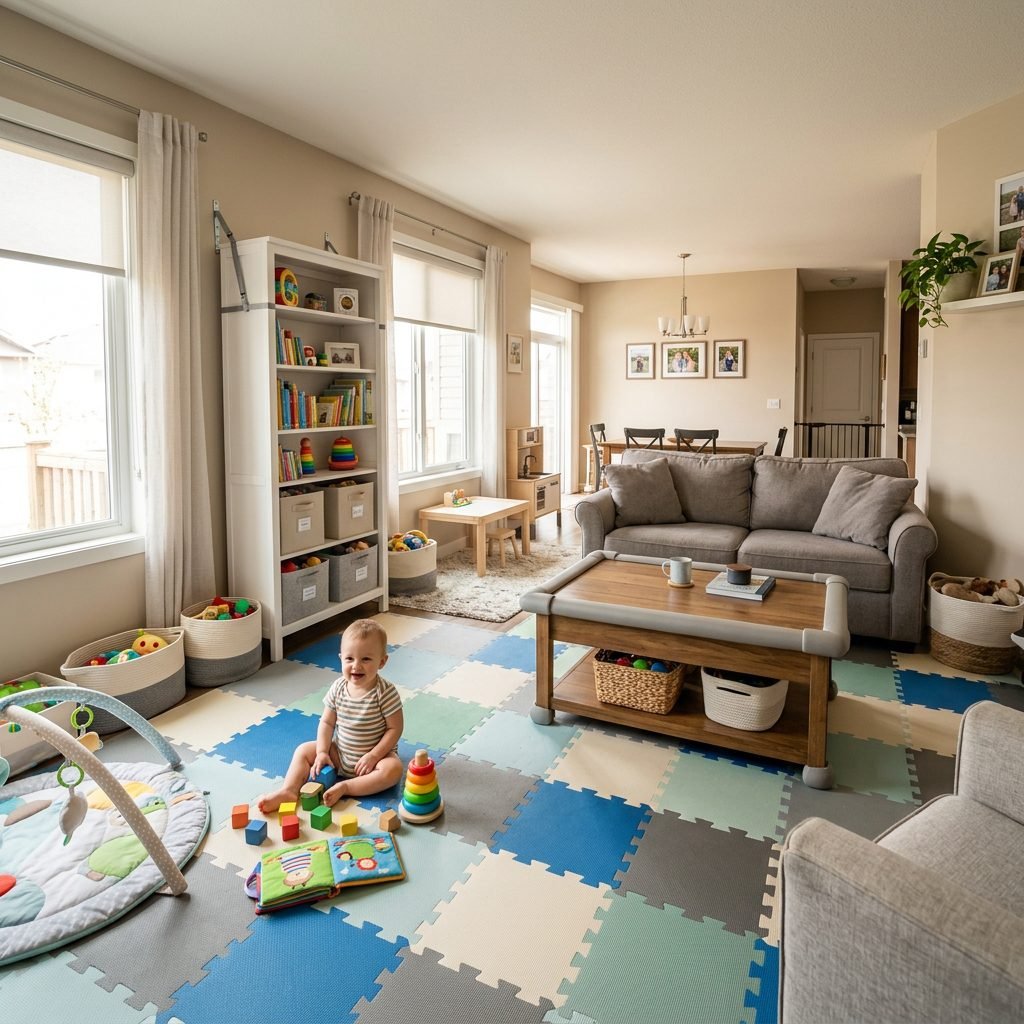
To make physical play successful, you need a ‘Yes Space.’ This is an area where you don’t have to say ‘no’ or ‘don’t touch that’ every two minutes. For an 8-month-old, this means rigorous baby-proofing. At this age, their reach is longer than you think, and their speed is increasing daily. A safe environment allows them to take the physical ‘risks’—like pulling up on a chair or leaning over for a ball—that are essential for development.
Start by getting down on your hands and knees. What do you see? Exposed outlets, sharp furniture corners, or tempting floor lamp cords? Cover those outlets and cushion those corners. Ensure that any heavy furniture, like bookshelves or TV stands, is securely anchored to the wall. Use soft rugs or foam play mats to provide a landing pad for the inevitable ‘toddles’ and tumbles. When your baby feels safe and you feel relaxed, the quality of play improves significantly.
A ‘Yes Space’ isn’t just about safety; it’s about giving your baby the freedom to trust their own body and instincts without constant restriction.
9 Games for Physical & Sensory Mastery
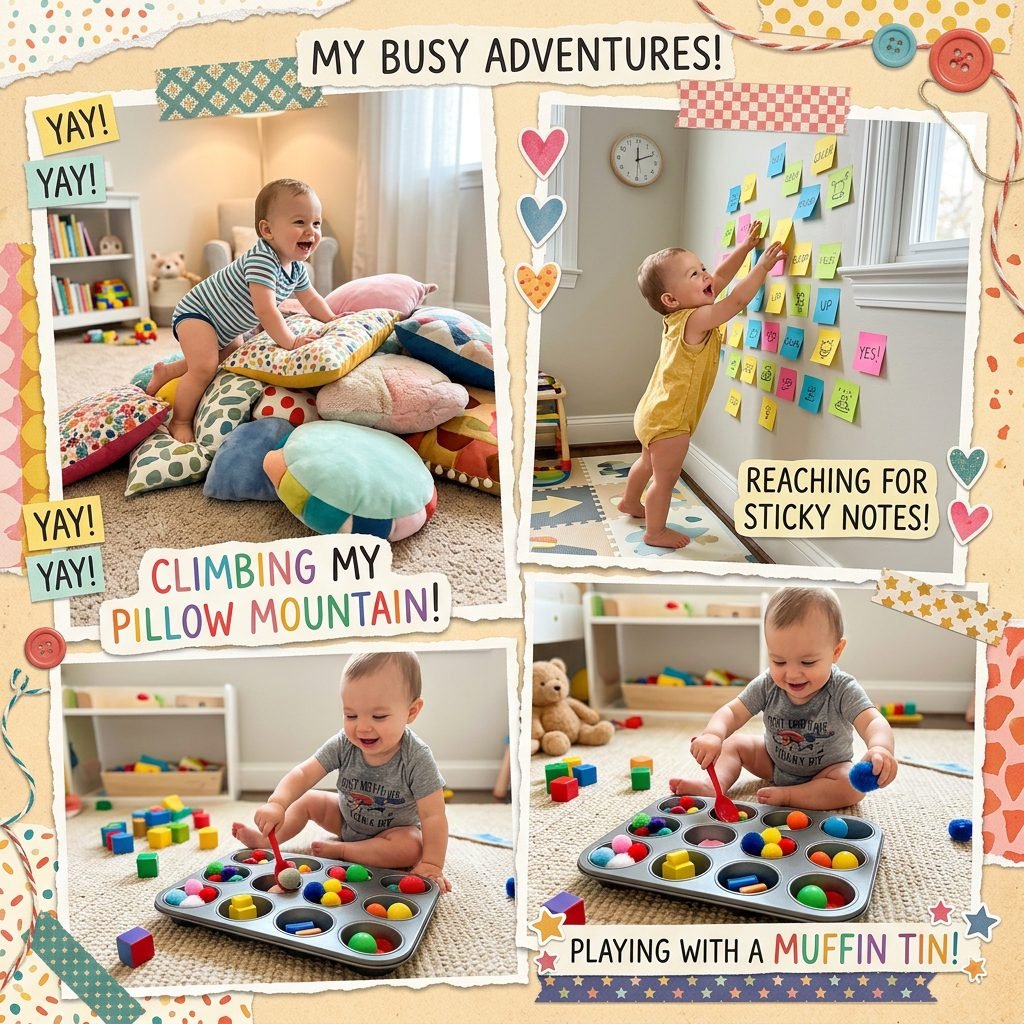
1. The Great Pillow Mountain
This is a classic for a reason! Gather every couch cushion, pillow, and soft blanket you own and create a gentle ‘mountain’ in the center of your play mat. Place a favorite toy at the very top. This game encourages climbing and core engagement. As your baby navigates the uneven surfaces, they are forced to use their stabilizer muscles, which is incredible for balance. Safety Tip: Always stay within arm’s reach to catch them if they lose their balance on the ‘summit.’
2. The Cardboard Tunnel Run
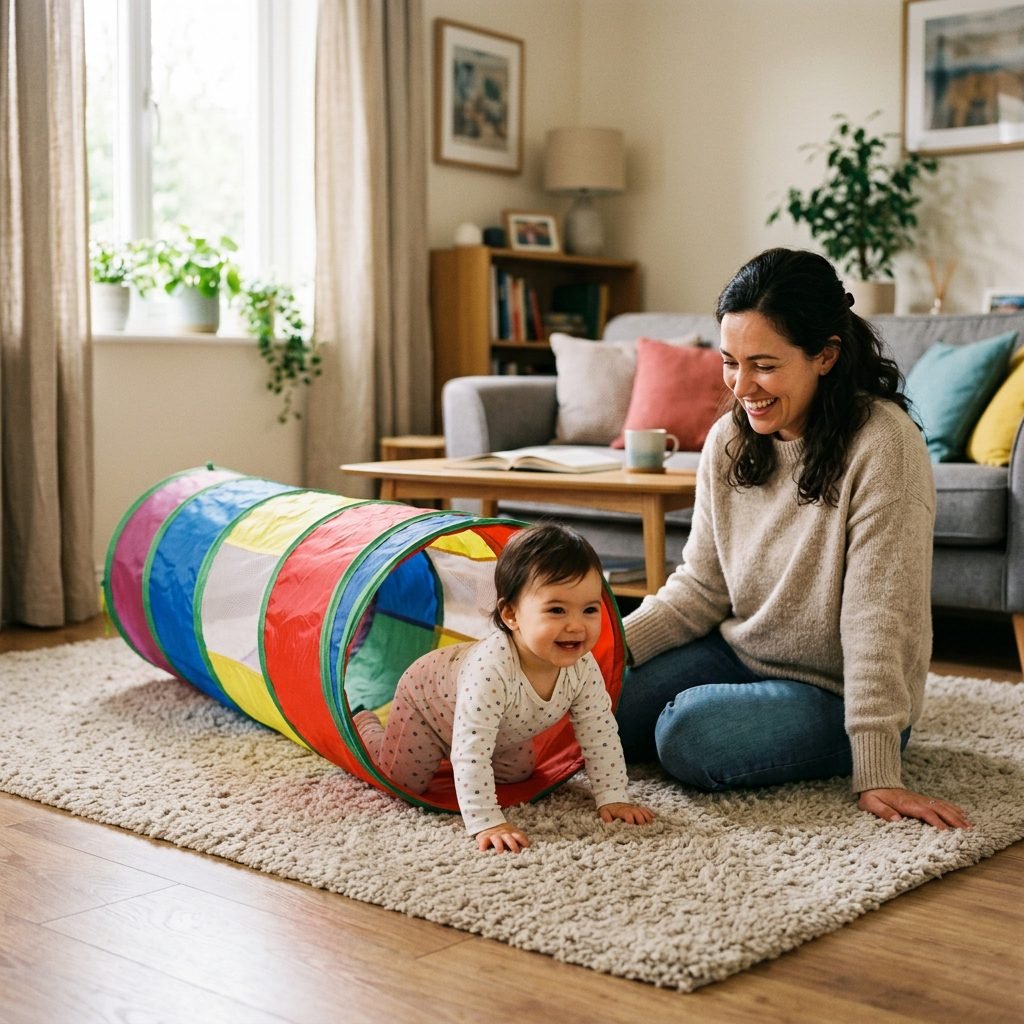
Don’t recycle those shipping boxes just yet! Open both ends of a large box to create a tunnel. Encourage your baby to crawl through by peeking your face in the other side or placing a high-value toy inside. This supports spatial awareness and gross motor coordination. If you don’t have a box, draping a sheet over two chairs works perfectly as a ‘magic cave.’
3. Sticky Note Wall Reach
Place colorful sticky notes on a wall or the side of a stable cabinet, just slightly above your baby’s seated reach. This encourages them to reach, stretch, and even pull to stand. Peeling the notes off the wall is also a fantastic workout for the pincer grasp. It’s a simple, low-mess way to encourage vertical movement.
4. The Muffin Tin Treasure Hunt
Flip a muffin tin upside down or use the holes to hide large, baby-safe items (like silk scarves or large plastic links). Your baby will love the challenge of pulling the items out. This game focuses on fine motor precision and object permanence—the understanding that things still exist even when partially hidden.
5. Floating Scarf Catch
Using lightweight play scarves or even clean tissues, toss them into the air above your baby. As the scarves slowly drift down, your baby will reach up, track them with their eyes, and try to grab them. This builds hand-eye coordination and visual tracking skills while they practice sitting balance.
6. The Laundry Basket ‘Sled’ Ride
Place your baby in a plastic laundry basket with a few blankets for padding. Gently pull the basket across a smooth floor. This is a vestibular system powerhouse. It helps them feel movement and changes in direction, which is vital for developing balance. Keep the ‘ride’ slow and steady, and watch for those big gummy smiles!
7. Mirror Mimicry
Set up a floor-length mirror (securely attached to the wall) or use a small, shatterproof baby mirror. Sit with your baby and make funny faces, clap your hands, or touch your nose. Babies at 8 months are becoming very social and will try to mimic your physical movements, which strengthens their social-emotional and motor connections.
8. The Kitchen Drum Circle
Bring out the wooden spoons and plastic bowls! Let your baby bang away. This isn’t just noisy fun; it’s a lesson in cause and effect and bilateral coordination (using both hands together). It also builds the arm strength needed for the ‘push-up’ phase of crawling.
9. Flashlight Follow-the-Leader
Dim the lights slightly and shine a flashlight on the floor near your baby. Move the light slowly away from them. Many babies will be motivated to crawl or scoot to ‘catch’ the light. This is a great way to encourage movement in babies who are hesitant to start crawling.
Material Checklist & Budget Breakdown
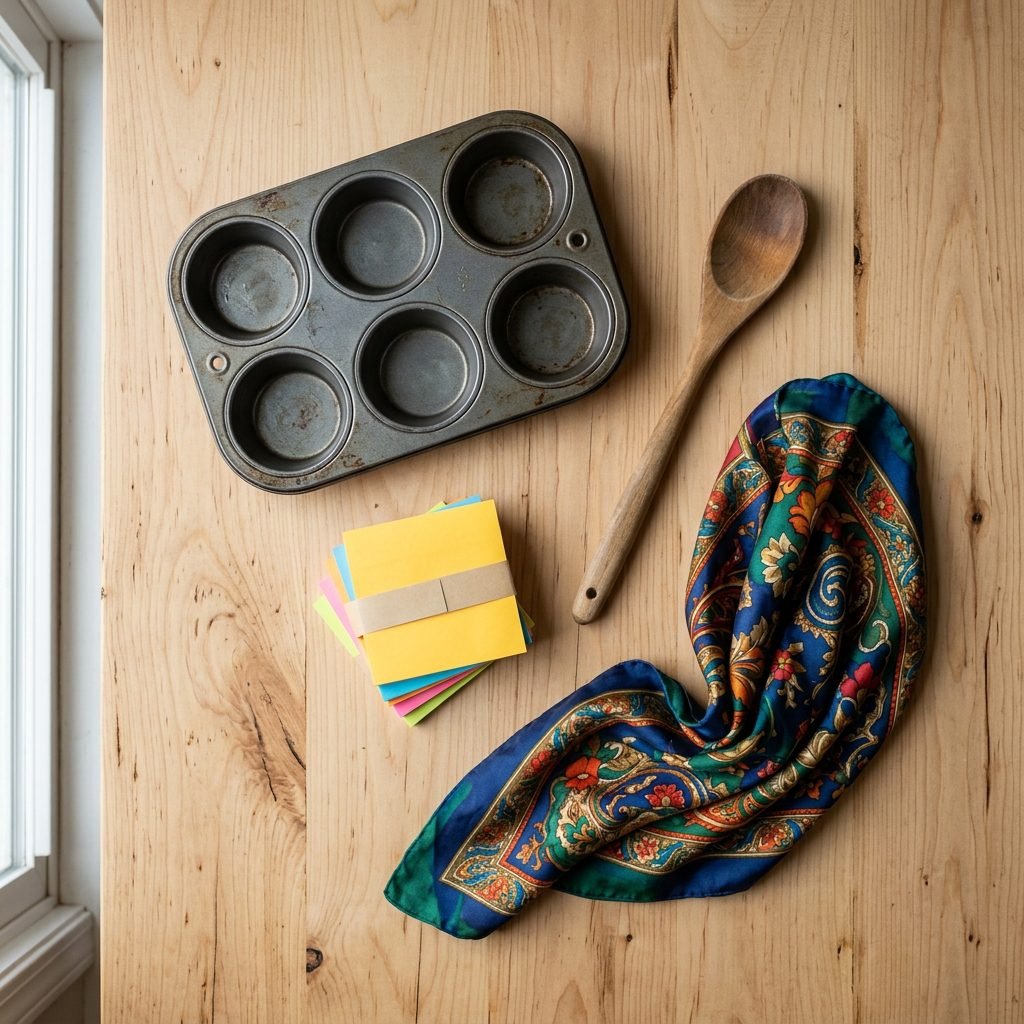
One of the best things about 8-month-old play is that you don’t need expensive, battery-operated toys. In fact, ‘open-ended’ household items often provide better developmental stimulation. Here is a breakdown of what you might need and how little it can cost to create a world-class ‘baby gym’ at home.
| Item | Purpose | Estimated Cost |
|---|---|---|
| Cardboard Boxes | Crawling tunnels and ‘forts’ | $0 (Recycled) |
| Sticky Notes | Pincer grasp and vertical reaching | $2.00 |
| Muffin Tin | Fine motor and sorting | $0 (Kitchen staple) |
| Play Scarves/Silk | Visual tracking and sensory play | $10.00 |
| Laundry Basket | Vestibular ‘sled’ rides | $0 (Household item) |
| Shatterproof Mirror | Social-emotional and mimicry | $15.00 |
As you can see, for less than $30, you can have a full suite of developmental ‘tools.’ The most important ingredient, however, is you. Your voice, your encouragement, and your presence are what truly drive these milestones home.
The Doula’s Minute: Honoring Your Energy
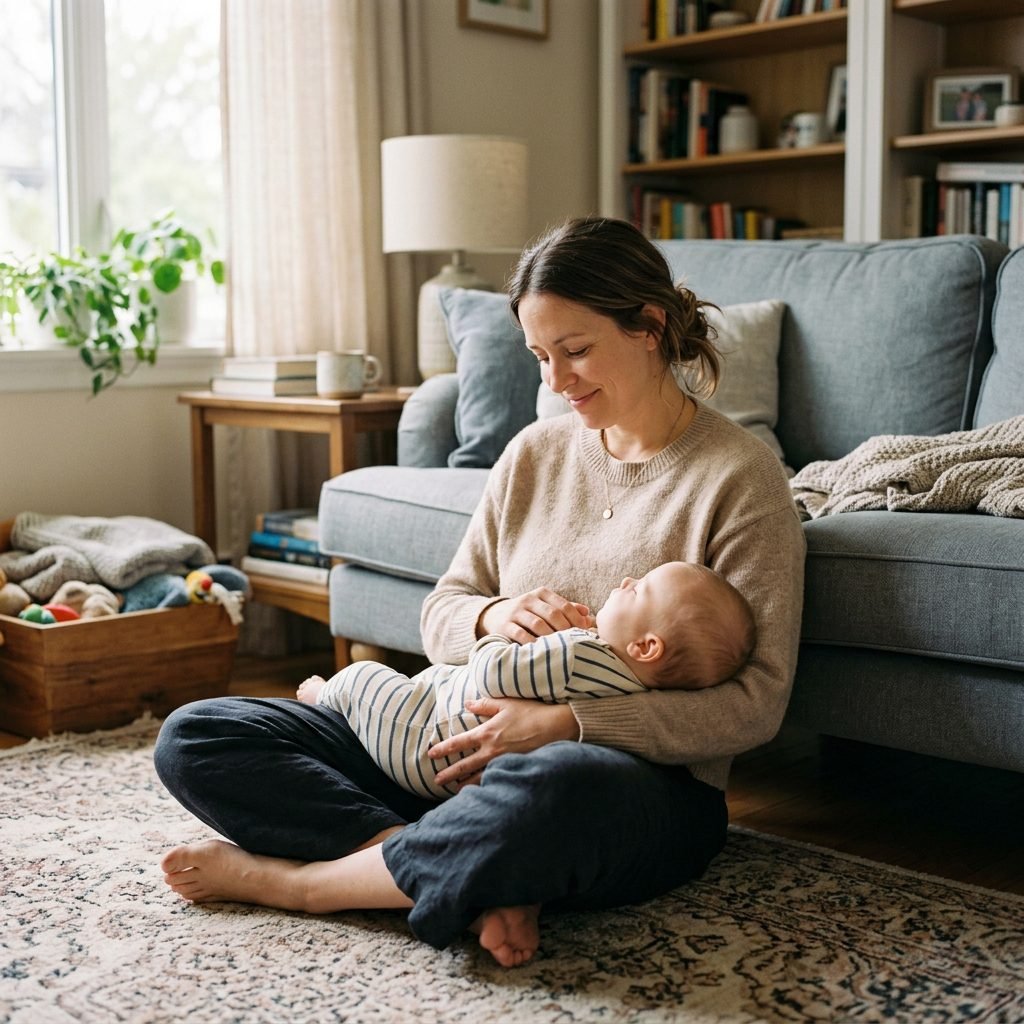
Mama, I want to take a second to talk to you. This stage is physically demanding. You are bending over, lifting a 20-pound baby, and constantly scanning for hazards. It is okay to feel tired. It is okay if some days ‘playtime’ is just sitting on the floor together while you drink a lukewarm coffee and they chew on a silicone ring. You are not a cruise director; you are a mother.
Physical play is wonderful, but it shouldn’t feel like a chore. If you find yourself feeling overwhelmed by the ‘milestone’ pressure, take a deep breath. Your baby’s development is not a race. These games are meant to be a way to connect, not another item on an impossible to-do list. If your baby is fussy or you are drained, it’s perfectly fine to just snuggle. Connection is the ultimate milestone.
Remember: You are the sun in your baby’s universe. When you shine with self-compassion, they feel that warmth too.
Conclusion
Growing Together, One Game at a Time
Watching your 8-month-old discover the world is one of the greatest joys of parenthood. By incorporating these 9 active indoor games, you aren’t just helping them crawl or reach; you are building their confidence and showing them that the world is a safe, exciting place to explore. Whether you are building ‘Pillow Mountains’ or leading a ‘Kitchen Drum Circle,’ remember that the goal is joy and connection. These physical milestones will come in their own time, fueled by the love and environment you provide. You’ve got this, mama! Keep playing, keep cheering, and don’t forget to take a moment to celebrate how far you have come in these eight months too.