

Don’t Just Buy Diapers: How To Set Up Your Bedroom For The Ultimate Postpartum Recovery
Hello, beautiful mama. Take a deep, grounding breath. If you are reading this, you are likely in the final stretches of your pregnancy, mentally checking off lists, folding tiny onesies, and meticulously organizing the baby’s nursery. But as a doula and postpartum recovery expert, I am here to wrap a sisterly arm around your shoulder and gently redirect your attention to the most important room in your home right now: your own bedroom.
We live in a culture that spends months obsessing over the baby’s sleep space, yet completely forgets the mother’s healing space. The truth is, during the first two to three weeks of the fourth trimester, you will likely spend 80% to 90% of your time in your own bed. You will be feeding, sleeping, healing, crying, laughing, and navigating the profound physical and emotional shift of becoming a mother.
You need a sanctuary. You need a command center. You need a space that anticipates your needs before you even realize you have them. Buying a box of newborn diapers is just the beginning. Setting up your bedroom for the ultimate postpartum recovery is about honoring the monumental physical event your body has just endured. Whether you are delivering vaginally or via Cesarean section, your healing requires deep rest, strategic organization, and radical self-compassion.
Let’s walk through exactly how to transform your bedroom into a postpartum oasis, step-by-step, so that when you come home from the hospital or birth center, all you have to do is climb into bed and be nourished.
The Bedside Command Center: Your 3-Tier Rolling Cart
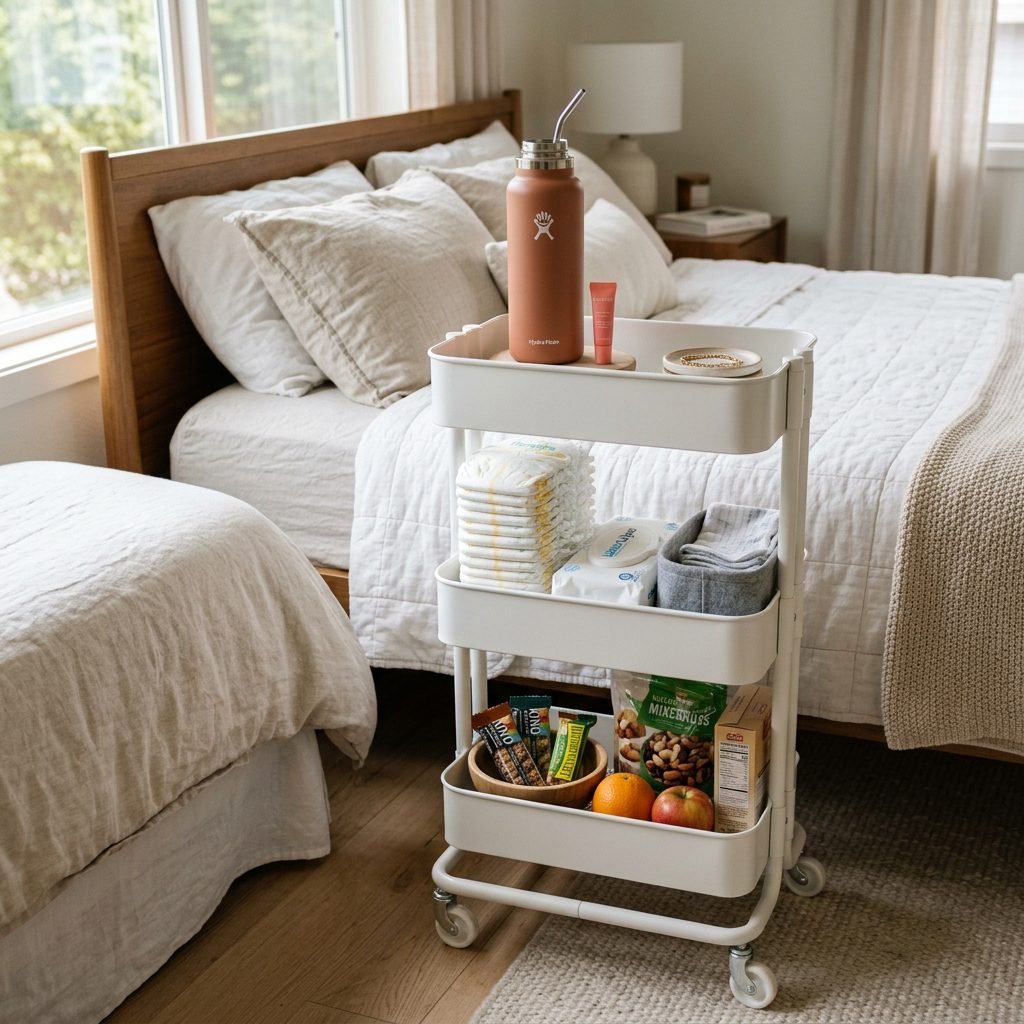
When you have a newborn asleep on your chest, the last thing you want to do is disturb them to reach for a lip balm or a burp cloth. Enter the doula’s best-kept secret: the 3-tier rolling utility cart. This cart will become your lifeline, rolling from the bedside to the living room if needed, and keeping every essential within an arm’s reach.
Why a rolling cart instead of a nightstand? Because nightstands require you to lean over, twist your torso, and open drawers—movements that can be incredibly painful, especially if you are recovering from a C-section or a severe tear. An open-shelf cart allows you to see everything at a glance and grab what you need with one hand.
How to Organize Your Postpartum Cart
Divide your cart into three distinct zones based on urgency and frequency of use.
| Cart Level | Purpose | Essential Items to Include |
|---|---|---|
| Top Tier | Immediate Needs & Feeding | Insulated cup with straw, lip balm, hair ties, nipple cream, nursing pads, 2-3 burp cloths, phone charger, TV remote. |
| Middle Tier | Baby Care & Quick Changes | 10-15 newborn diapers, a pack of wipes, diaper cream, 1 extra swaddle, 1 extra newborn sleeper, hand sanitizer. |
| Bottom Tier | Mother’s Healing & Fuel | One-handed snacks (granola bars, lactation cookies), ibuprofen/acetaminophen, extra mesh panties, a lightweight nursing cover (if desired for visitors). |
Doula Tip: Keep a small, dimmable push-light or a red-light book lamp on the top tier. Red light does not disrupt your or your baby’s circadian rhythm, making it the perfect illumination for 2:00 AM and 4:00 AM feedings.
Layering Your Bed for Night Sweats and Leaks

Let’s have a brutally honest sister-to-sister chat about postpartum bodily fluids. Between breastmilk leaks, lochia (postpartum bleeding), and the infamous postpartum night sweats, your bed is going to go through a lot. Around 72 hours after birth, your body begins a massive hormone dump. As estrogen and progesterone levels plummet, your body sheds the excess fluid it retained during pregnancy. The result? You will likely wake up absolutely drenched in sweat.
Protecting your mattress and minimizing the effort it takes to change your sheets in the middle of the night is crucial for your sanity.
The “Lasagna” Bedding Method
Instead of waking up at 3:00 AM in a puddle of sweat or milk and having to strip the entire bed while exhausted, use the “lasagna” layering method. Here is how you make your bed before you go into labor:
- Place a high-quality, breathable waterproof mattress protector over your bare mattress.
- Put on a fitted sheet (preferably 100% organic cotton or bamboo for maximum breathability).
- Place a second waterproof mattress protector over that sheet.
- Top with a second fitted sheet.
If a leak or sweat-drench happens in the middle of the night, simply strip off the top fitted sheet and the top waterproof layer, throw them in the corner, and fall right back to sleep on the clean, dry layer underneath. It takes 30 seconds and saves you from a middle-of-the-night meltdown.
Additional Bedding Comforts: Invest in a massive V-shaped or U-shaped pregnancy pillow, even for postpartum. It provides excellent back support while nursing or bottle-feeding in bed and acts as a soft bumper to keep the baby safe while you are awake and feeding them.
The En-Suite Healing Station: Managing Your Physical Recovery
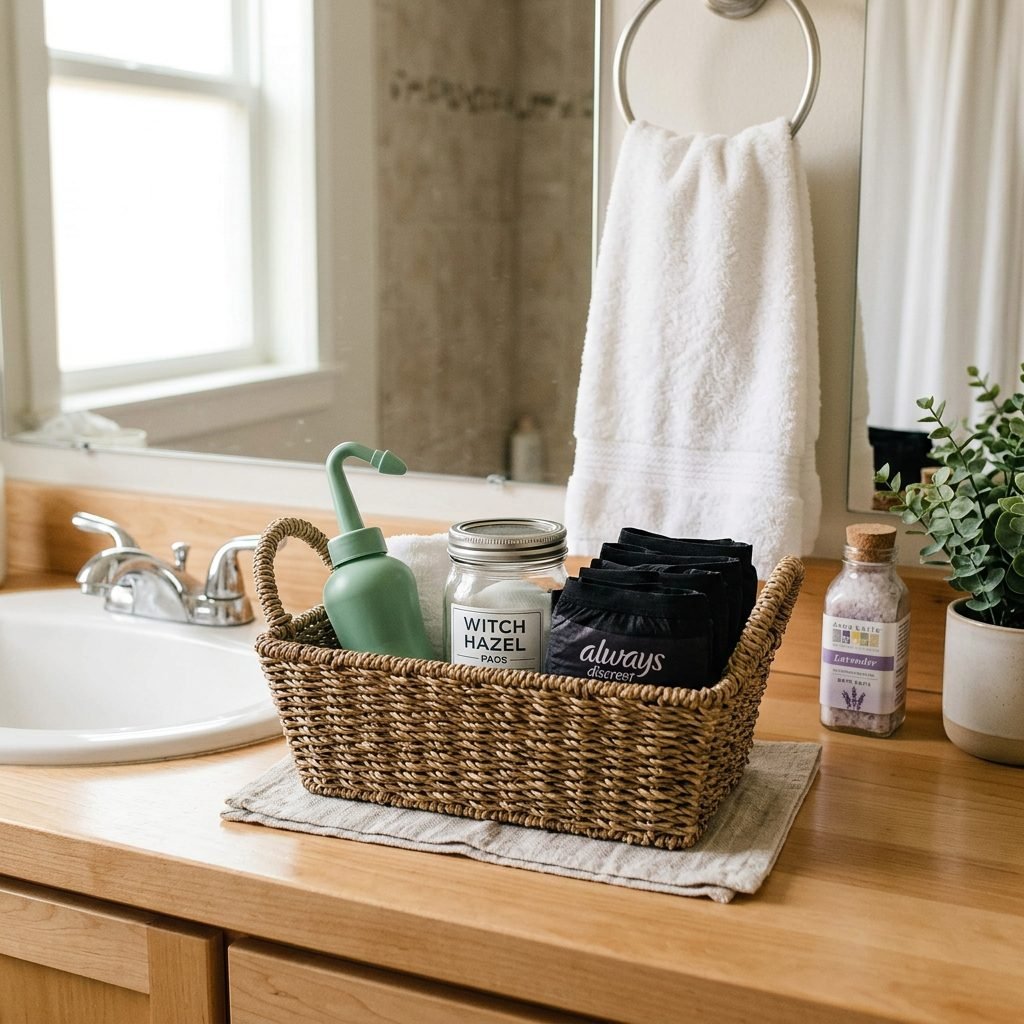
Your primary bathroom (or whichever bathroom is closest to your bed) needs to be transformed into a medical-grade, yet spa-like, healing station. Postpartum bleeding (lochia) can last anywhere from 4 to 6 weeks, and the first two weeks require serious care, whether you delivered vaginally or surgically.
You will not want to bend down to search under the sink for a pad while you are in pain. Everything must be elevated, accessible, and ready to go. I highly recommend placing a beautiful basket right on top of the toilet tank or on the vanity counter.
The Great Debate: Mesh Panties vs. Adult Diapers
One of the most common questions I get from expectant mothers is whether to use the hospital-provided mesh panties or buy adult incontinence underwear (like Depends). Let’s break it down so you can stock your bathroom appropriately.
| Feature | Hospital Mesh Panties + Giant Pads | Disposable Adult Underwear (e.g., Depends) |
|---|---|---|
| Comfort & Fit | Very loose, highly stretchable. Great for avoiding pressure on a C-section incision. | More secure, feels closer to real underwear. Hugs the body, which can feel supportive. |
| Leak Protection | Prone to shifting, which can cause side leaks, especially while sleeping. | Excellent 360-degree leak protection. Highly recommended for the first 3 to 5 days. |
| Ease of Use | Requires layering (panty, giant pad, witch hazel liners, dermoplast spray). | All-in-one pull-up. You simply line the inside with your cooling pads/sprays. |
| Best For… | C-Section mamas (pulls high above the scar) and late-stage light bleeding. | Vaginal deliveries and the initial heavy bleeding phase (Days 1 through 7). |
Must-Haves for Your Bathroom Basket
- The Upside-Down Peri Bottle: Do not rely on the standard hospital peri bottle. Buy an angled, upside-down peri bottle. You will fill this with warm water to spray your perineum while you pee to dilute the acidity of urine and prevent stinging.
- Witch Hazel Pads (Tucks): These are incredibly soothing for perineal tears and hemorrhoids. Layer 3 to 4 of these over your pad.
- Perineal Healing Foam or Spray: Look for natural, herbal-based cooling foams or a lidocaine spray (Dermoplast) to numb the area.
- Padsicles: Keep these in your freezer, but bring one to the bathroom when needed. (A padsicle is a maxi pad soaked in aloe vera and alcohol-free witch hazel, then frozen).
Fueling the Fourth Trimester: Bedside Nutrition and Hydration
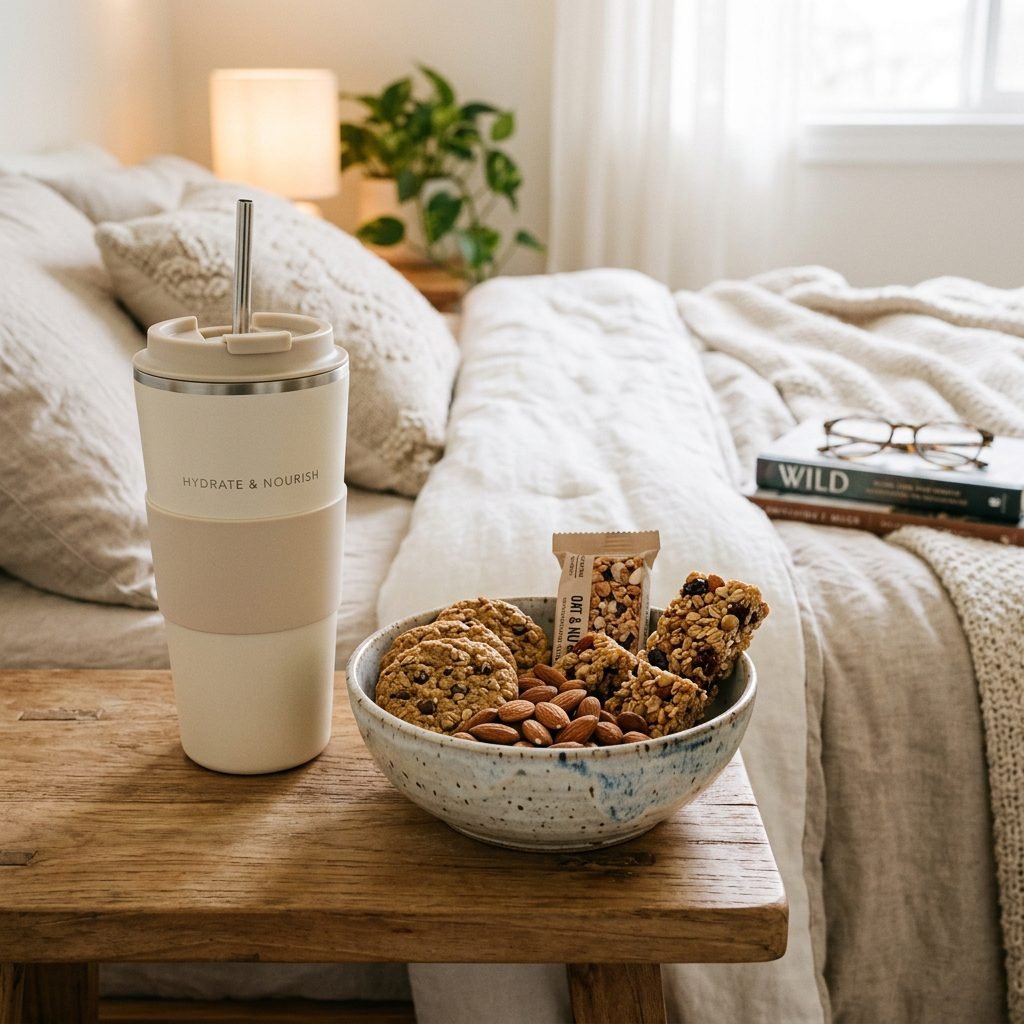
Healing from childbirth is an athletic event. Your body is working overtime to repair tissue, regulate wild hormonal swings, and, if you are nursing, produce milk. Breastfeeding alone burns an extra 300 to 500 calories a day. You are going to experience a level of hunger and thirst that you have never known before.
When the baby finally falls asleep on your chest, you will inevitably realize you are starving and parched, but you will be trapped under a sleeping newborn. This is why your bedroom must be stocked with easily accessible fuel.
The Rule of One-Handed Snacks
Everything you keep in your bedroom must be edible with one hand and require zero preparation. Avoid anything crumbly that will fall onto the baby’s head (sorry, nature valley bars!).
- Protein-Dense Options: Almonds, cashews, beef jerky, or individually wrapped cheese sticks (keep a small cooler bag by the bed if needed).
- Energy Boosters: Medjool dates stuffed with peanut butter, lactation cookies, or soft-baked oatmeal squares.
- Hydration is Non-Negotiable: You need to aim for 100 to 120 ounces of water daily. Buy a massive, insulated tumbler (at least 40 ounces) with a built-in straw. The straw is vital—you cannot tilt a heavy water bottle back while holding a baby.
Doula Tip: Ask your partner or support person to make it their primary job to ensure your water cup is filled with fresh ice water every single time they enter the bedroom. Hydration is the key to maintaining your milk supply, flushing out postpartum swelling, and keeping your energy levels up.
You Are Not Alone, This Is Normal: Preparing Your Emotional Sanctuary

We have talked about the physical setup, but we must also talk about the emotional atmosphere of your bedroom. Around day three or four, your milk will come in, and your hormones will plummet. You may find yourself weeping uncontrollably while looking at your baby, feeling overwhelmed by the sheer weight of motherhood, or mourning your past life.
Listen to me, sister: This is normal. You are not broken. You are not failing.
The “Baby Blues” affect up to 80% of new mothers. Your bedroom needs to be a safe space for these feelings. Do not let visitors into your bedroom unless they are bringing you food, folding your laundry, or holding the baby so you can sleep. Your bedroom is a VIP-only healing zone.
Affirmations for the Hard Nights
When it is 3:00 AM, the baby is crying, your breasts are leaking, and you feel entirely touched-out, I want you to read this. Write it on a sticky note and put it on your bedside lamp:
“I am healing. My body has just performed a miracle and is asking for grace. My baby is safe, and they are learning this new world just as I am learning to be their mother. It does not have to be perfect. Surviving tonight is enough. I am exactly the mother my baby needs.”
Create an environment that soothes your nervous system. Play a white noise machine (which helps both you and the baby sleep). Diffuse a pregnancy-safe essential oil like lavender or chamomile if you enjoy aromatherapy. Keep your phone charger long enough so you can reach out to a friend, a doula, or a lactation consultant without leaving your bed.
Conclusion
Setting up your bedroom for postpartum recovery is one of the most profound acts of self-love you can do during your pregnancy. By organizing your bedside cart, layering your bed, prepping your bathroom, and stocking up on nourishment, you are building a cocoon for your fourth trimester. Motherhood is a beautiful, messy, exhausting, and glorious transition. Allow yourself to be babied while you baby your newborn. Stay in bed, drink your water, ask for help, and remember that your only job right now is to heal and bond.
You are going to do beautifully, mama. We are all cheering you on.