

The Day 3 Weepiness: How To Survive The Massive Postpartum Hormone Drop
Oh, sweet mama. If you are sitting in your bed right now, holding a brand-new baby, and crying because your partner bought the wrong brand of oatmeal—or simply because the sun went behind a cloud—take a deep, slow breath. I see you, I have been you, and as a doula, I have held the hands of countless mothers exactly where you are right now.
Welcome to Day 3. You have survived pregnancy, navigated labor or major abdominal surgery, and brought a beautiful child into this world. But right now, you might feel like you are unraveling. Your breasts might feel like they are made of hot rocks as your milk transitions, you are running on a cumulative four hours of broken sleep, and the tears just will not stop falling.
First and foremost: You are not broken. You are not failing. You are experiencing one of the most massive, abrupt biological shifts a human body can endure.
In the doula and postpartum care world, we call this the “Day 3 Weepiness” or the “Baby Blues.” It is a profound, messy, and entirely normal part of the fourth trimester. Today, we are going to wrap a warm, sisterly blanket around you, explain exactly what is happening to your body, and give you the practical, expert tools to survive this hormonal crash.
The Science of the Crash: What Exactly Happens on Day 3?
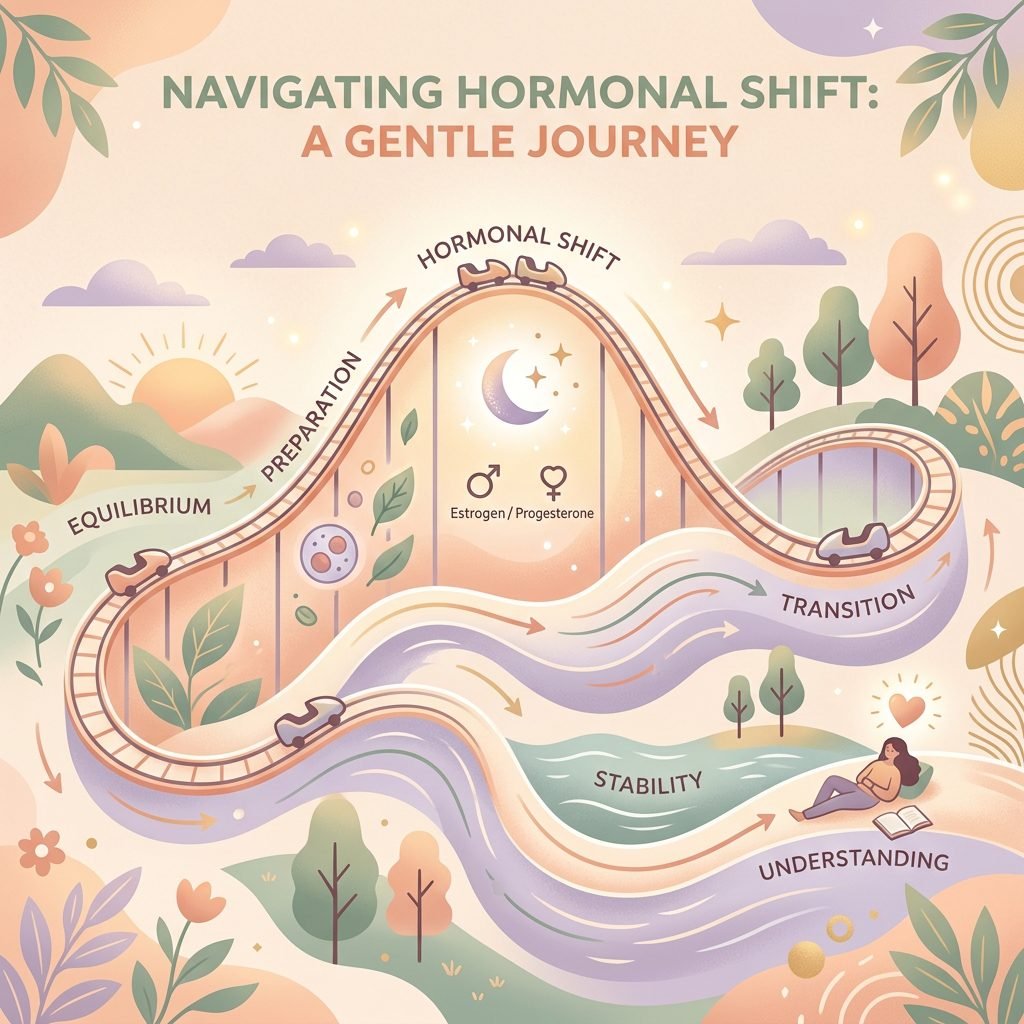
To understand why you feel like you are on an emotional roller coaster with no seatbelt, we have to look at the incredible, invisible work your body is doing right now. When you were pregnant, your placenta was not just your baby’s life support system; it was a massive endocrine organ. It pumped out unprecedented levels of estrogen and progesterone to keep your pregnancy safe and glowing.
The moment you delivered your placenta, that continuous flow of hormones stopped abruptly. In fact, within the first 48 to 72 hours postpartum, your estrogen and progesterone levels plummet back down to their pre-pregnancy levels. This is the single largest and most sudden hormonal drop a human being can experience in their lifetime.
The Hormonal Tug-of-War
While estrogen and progesterone are taking a nosedive, other hormones are suddenly surging. Let’s look at the biological timeline of your postpartum hormones:
- The Prolactin Surge: Around Day 3 or 4, prolactin levels skyrocket. This is the hormone responsible for lactogenesis (your mature milk “coming in”). It brings physical engorgement, which alone is enough to make anyone cry, but it also heavily influences your mood.
- The Oxytocin Rush: Known as the “love hormone,” oxytocin surges when you hold, smell, or feed your baby. It helps your uterus contract back to its normal size (hello, afterbirth pains) and promotes bonding, but it also makes you incredibly emotionally porous and sensitive.
- The Adrenaline Crash: Labor and birth require massive amounts of adrenaline and cortisol. By Day 3, the adrenaline has worn off, leaving you feeling entirely depleted and exhausted.
| Hormone | During Pregnancy | Day 3 Postpartum | Emotional Effect |
|---|---|---|---|
| Estrogen & Progesterone | Highest levels in your lifetime | Sudden, drastic drop to pre-pregnancy levels | Causes mood swings, weepiness, and feelings of vulnerability. |
| Prolactin | Gradually increasing | Massive surge (milk coming in) | Can cause feeling overwhelmed, physical discomfort, and maternal protectiveness. |
| Oxytocin | Low, steady pulses | High surges during let-down and bonding | Intense, overwhelming waves of love mixed with anxiety or tears. |
| Adrenaline | High during labor and delivery | Complete depletion | Extreme fatigue, lethargy, and the “crash” effect. |
When you look at this biological chaos, it is no wonder you are crying at a life insurance commercial. Your brain is trying to recalibrate its entire chemical makeup while you are simultaneously learning to keep a tiny human alive. Give yourself an enormous amount of grace.
Deep Breaths, Mama: You Are Not Alone, and This is Completely Normal

If I were sitting next to you on your bed right now, I would pour you a giant glass of ice water, gently touch your shoulder, and tell you this: Everything you are feeling right now is valid.
As a doula, I have seen mothers cry on Day 3 for a thousand different reasons. I have held mothers who wept because their baby looked too beautiful. I have passed tissues to mothers who sobbed because they missed being pregnant, even though they hated pregnancy. I have comforted moms who cried because their dog looked sad, because the hospital scrambled eggs were cold, or simply because they felt an overwhelming, heavy wave of “What have I done?”
The “You Are Not Alone” Affirmations
When the weepiness hits, I want you to read these affirmations out loud. Copy them, screenshot them, or have your partner read them to you:
“I am doing a massive, difficult thing, and I am allowed to find it hard.”
“My tears are not a sign of weakness; they are a physical release of hormones.”
“I am the exact right mother for this baby, even if I feel lost right now.”
“This overwhelming feeling is temporary. The clouds will part.”
The baby blues affect up to 80% of all new mothers. Let that sink in. Eight out of ten women experience this exact same weepiness, anxiety, and emotional fragility. You are participating in a universal sisterhood of postpartum healing. It does not mean you are ungrateful for your baby, and it certainly does not mean you are failing at motherhood. It simply means your body is doing exactly what it was biologically programmed to do after birth.
Baby Blues vs. Something More: When to Call Your Care Provider

While the Day 3 weepiness is incredibly common and expected, it is also my job as your maternal wellness companion to help you recognize when the storm is not passing. It is vital to know the difference between the transient “Baby Blues” and Postpartum Depression (PPD) or Postpartum Anxiety (PPA).
The defining factor is usually time. The baby blues typically peak between Day 3 and Day 5, and they should start to lift by the time you are 10 to 14 days postpartum. If you hit the two-week mark and you are still feeling swallowed by the darkness, or if your symptoms are so severe that you cannot function, it is time to call your OB-GYN, midwife, or a maternal mental health specialist.
Understanding the Difference
| Indicator | The Baby Blues | Postpartum Depression / Anxiety (PPD/PPA) |
|---|---|---|
| Timeline | Starts around Day 2-3, resolves by Day 14. | Can start anytime in the first year; persists past 2 weeks. |
| Tears & Crying | Frequent, sudden tears, often over small or inexplicable things. | Persistent, heavy crying, or a complete inability to cry (feeling numb/empty). |
| Joy & Bonding | Still able to feel moments of joy, laughter, and connection with baby. | Severe difficulty bonding, feeling disconnected, or finding zero joy in things. |
| Sleep | Exhausted, but able to sleep when the baby sleeps (mostly). | Insomnia (unable to sleep even when baby is asleep) or sleeping excessively. |
| Anxiety Levels | Normal new-mom worries (Is baby breathing? Is baby eating enough?). | Intrusive, terrifying thoughts, panic attacks, or overwhelming dread. |
Please hear this: Needing help is not a failure. Medication, therapy, and professional support are tools, just like a breast pump or a swaddle. If you find yourself in the PPD/PPA column, reach out to your provider immediately. You deserve to enjoy your motherhood, and you do not have to white-knuckle your way through it.
Your Day 3 Survival Kit: Practical Doula Tips to Weather the Storm

Alright, let us get practical. How do we actually survive the next 24 to 48 hours when the hormones are crashing and the tears are flowing? We focus on the absolute basics of human survival: warmth, nourishment, hydration, and radical boundaries.
1. The Postpartum Nourishment Protocol
In many traditional cultures, the immediate postpartum period is treated with warming, easily digestible foods. Cold, raw foods take more energy for your body to process. Right now, your body needs that energy for healing and making milk.
- Drink warm liquids: Bone broth, warm water with lemon, or lactation-friendly herbal teas (like oat straw, red raspberry leaf, or chamomile).
- Eat grounding carbohydrates: Warm oatmeal with ghee and berries, sweet potatoes, or hearty stews. These help stabilize your blood sugar, which in turn helps stabilize your mood.
- Stay aggressively hydrated: Keep a massive tumbler of water with a straw next to you at all times. Dehydration exacerbates fatigue, which exacerbates weepiness.
2. Radical Rest and Lowered Expectations
Your only job right now is to heal, bleed, feed your baby, and rest. That is it. The laundry does not matter. The thank-you notes for baby shower gifts do not matter. If you cannot sleep when the baby sleeps, simply rest. Close your eyes, put on an eye mask, listen to a guided meditation or a gentle podcast, and let your nervous system downshift.
3. Setting Iron-Clad Boundaries with Visitors
Day 3 is notoriously the worst time to host visitors. You might be leaking milk, bleeding into mesh underwear, and crying. If you have visitors scheduled and you are feeling overwhelmed, you have full permission to cancel. Here is a doula-approved script you can copy and paste to send to family or friends:
“Hi everyone! We are so in love with our new baby, but we are deep in the trenches of postpartum recovery right now. I am focusing on healing and establishing feeding, so we are going to pause on all visitors for the next few days. We will let you know as soon as we are ready for company! Thank you for loving us so well.”
For the Partners: How to Support Her Through the Weepiness

If you are the partner, spouse, or support person reading this because the mother of your child is currently sobbing in the bedroom, welcome. Take a deep breath. She is okay, but she needs you to step up as her anchor right now. The Day 3 crash can be scary to witness, but your calm, steady presence is the best medicine she can receive.
Your Action Plan
- Do not try to fix the tears. When she cries, your instinct might be to say, “Don’t cry, everything is fine!” Do not do this. It invalidates her overwhelming physical experience. Instead, validate it. Say, “I know this is so hard. I am right here with you. Let it out.”
- Take over the mental load. Do not ask her, “What do you want for lunch?” Her brain cannot process decisions right now. Instead, bring her a plate of warm food and say, “I made you some soup and toast. I’ll hold the baby while you eat.”
- Be the gatekeeper. It is your job to text the family, intercept the delivery drivers, and ensure her sanctuary remains peaceful. Protect her peace fiercely.
The “Say This, Not That” Guide for Partners
| Instead of saying this… (Avoid) | Say this instead… (Encourage) |
|---|---|
| “Why are you crying? Nothing is wrong!” | “It makes sense that you’re crying. Your body is going through so much. I’ve got you.” |
| “Should I invite my mom over to help?” | “I told everyone we are taking a few days to ourselves so you can rest in peace.” |
| “Let me know if you need anything.” | “I just refilled your water and put some snacks on your nightstand.” |
| “Are you sure the baby is getting enough milk?” | “You are doing such an incredible job feeding our baby. I’m so proud of you.” |
Partners, your role is to build a protective, nourishing cocoon around her so she can focus entirely on the baby and her own physical recovery. Keep the water full, keep the snacks coming, and offer endless, non-judgmental hugs.
Conclusion
To the beautiful, exhausted mama reading this: The Day 3 weepiness is a fierce storm, but it is a fast-moving one. You are currently in the thickest, heaviest part of the fourth-trimester transition. It is messy, it is loud, and it is overwhelmingly emotional, but you are navigating it exactly as you should.
Keep your water close, let the tears flow without judgment, lean heavily on your support system, and remember that with every passing day, your hormones will level out a little bit more. The fog will lift. You will feel like yourself again—a new, transformed version of yourself, but one who is strong, capable, and deeply bonded with her baby.
You are doing a magnificent job. Take it one hour at a time, one feed at a time, and one breath at a time. We are all cheering you on.