
How to Use the Gentle Chest Tap Burping Technique to Relieve Silent Reflux
Embracing the Quiet Struggle of Silent Reflux
Oh, mama, I see you. I see the exhaustion in your eyes and the worry in your heart as you watch your little one struggle. There is something uniquely challenging about silent reflux. Unlike the messy, obvious spit-up of traditional reflux, silent reflux (or Laryngopharyngeal Reflux) happens behind the scenes. It’s the arching of the back, the sudden screams mid-feed, and the sour breath that tells you something isn’t right, even when their clothes stay dry.
As a doula, I’ve sat in many darkened nurseries at 3:00 AM, helping mothers navigate these exact moments. Traditional burping—the firm, rhythmic patting we’re all taught—often isn’t enough for these sensitive babies. In fact, sometimes it can even make the discomfort worse by agitating the stomach acid. That’s why I want to share a technique that has been a game-changer for so many of my families: The Gentle Chest Tap. This method isn’t about force; it’s about vibration, resonance, and patience. It’s a way to gently coax those tiny, trapped bubbles to the surface without triggering the reflux response. Let’s walk through this together, sister-to-sister, and find some relief for your sweet babe.
“You are doing an incredible job. This season is hard, but your touch is the most healing medicine your baby can receive. Take a deep breath—we are going to get through this together.”
Understanding the ‘Silent’ in Silent Reflux
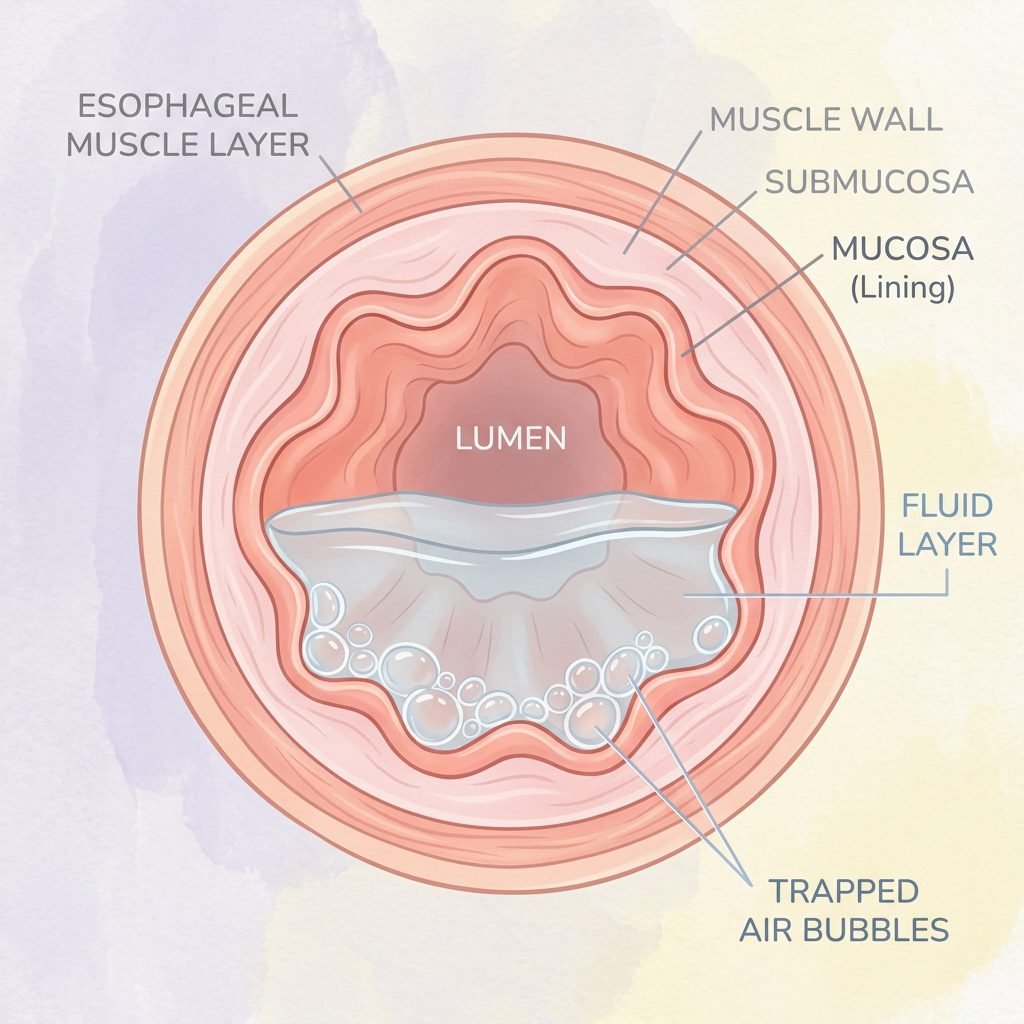
Before we dive into the ‘how,’ we need to understand the ‘why.’ Silent reflux occurs when the contents of the stomach travel back up the esophagus but don’t quite make it out of the mouth. Instead, the acidic contents sit in the throat, causing irritation and a burning sensation. Because there is no ‘release’ through spitting up, the air bubbles get trapped beneath a layer of liquid and acid.
Standard burping techniques focus on upward pressure. While this works for a healthy infant with a strong lower esophageal sphincter, it can be problematic for a reflux baby. Heavy patting can actually push the acid higher. We need a method that uses subtle vibration to break up large air bubbles into smaller ones, or to help those bubbles ‘float’ through the liquid without bringing the liquid up with them.
Common Symptoms of Silent Reflux
- Sudden crying during or immediately after feeding.
- A ‘wet’ sounding cough or frequent throat clearing.
- Arching of the back and neck during sleep or feeds.
- Sour-smelling breath (like vinegar) between feedings.
- Difficulty staying asleep when lying flat on their back.
| Symptom | Traditional Reflux | Silent Reflux | |
|---|---|---|---|
| Spit-up | Frequent and voluminous | Rare or very minimal | |
| Pain Level | Varies, often ‘happy spitters’ | Typically high distress/crying | |
| Weight Gain | Can be an issue if severe | Usually normal, but feeding is a struggle | |
| Breath | Milky | Sour or acidic |
The Preparation: Creating a Sacred Space for Relief

When a baby is in pain from reflux, their nervous system is on high alert. If you are tense, they will feel it. Before you begin the Gentle Chest Tap, we need to lower the ‘static’ in the room. This isn’t just about a physical technique; it’s about co-regulation.
Start by dimming the lights. If you have a white noise machine, set it to a low, brown noise setting (which is deeper and more soothing than high-pitched white noise). Ensure you are sitting in a comfortable, supportive chair where your shoulders can drop away from your ears. Your calm is their anchor.
Setting the Scene
- Temperature Check: Ensure the room is comfortably warm so the baby doesn’t tense up from a chill.
- Skin-to-Skin: If possible, practicing this technique skin-to-skin can release oxytocin for both of you, which naturally reduces pain perception.
- The Vertical Rule: Always keep the baby’s head higher than their tummy during this process. Gravity is your best friend when dealing with reflux.
Step-by-Step: The Gentle Chest Tap Protocol

Now, let’s get into the physical practice. The Gentle Chest Tap is a rhythmic, low-impact technique. Imagine you are trying to vibrate a grain of sand through a sieve—you don’t want to shake the sieve; you want to tap it so the vibration does the work.
The 4-Step Process
- The Position: Sit upright and place your baby in the ‘over-the-shoulder’ position. However, instead of their tummy resting on your shoulder, ensure their chest is resting against your collarbone. Their arms should be draped over your shoulder. This elongated position helps straighten the esophagus.
- The Hand Cup: Cup your hand slightly. You aren’t using a flat palm. The air trapped in your cupped hand creates a hollow sound and a gentle percussive vibration when it hits the baby’s back.
- The Target Zone: Focus your taps on the lower left side of the back (where the stomach is located) and then slowly migrate the taps upward toward the shoulder blades.
- The Rhythm: This is the secret sauce, mama. Tap at a rate of about 60 to 80 beats per minute—this mimics the mother’s resting heart rate. It is incredibly soothing to the infant’s nervous system and provides a consistent vibration that encourages air bubbles to move.
“Focus on the rhythm. It’s not about the strength of the tap; it’s about the consistency of the vibration. Think of it as a heartbeat you are sharing with your baby.”
Why Physics Outperforms Pressure

You might be wondering why we don’t just ‘thump’ the gas out. In silent reflux, the air is often ‘micro-bubbles’ mixed into the milk. Heavy pressure can cause the stomach to contract, forcing the acidic mixture upward. The Gentle Chest Tap uses acoustic resonance.
The vibration travels through the chest wall and into the fluid in the stomach. This vibration encourages the micro-bubbles to coalesce (join together) into one larger bubble. A single large bubble is much easier for the baby to expel than a thousand tiny ones. This is why you might notice that after 5 minutes of gentle tapping, the baby lets out a surprisingly large burp that seems out of proportion to the gentle touch you used.
| Method | Gas Severity | Best For… |
|---|---|---|
| Traditional Patting | Mild | General air swallowing in healthy infants. |
| The Gentle Tap | Moderate to Severe | Silent reflux, trapped micro-bubbles, and sensitive tummies. |
| The Circular Rub | Mild | Moving gas once the air is already in the stomach. |
| The ‘Jiggle’ | Severe | Deeply trapped gas that causes physical arching. |
Beyond the Tap: Complementary Relief Strategies

While the Gentle Chest Tap is a powerful tool, it works best when part of a holistic ‘reflux-friendly’ lifestyle. If your baby is struggling with silent reflux, we need to look at the entire feeding and sleeping cycle.
The ‘Upright for 20’ Rule
After every single feed—even the middle-of-the-night ones—keep your baby in a vertical position for at least 20 to 30 minutes. This allows gravity to keep the stomach contents down while the initial phase of digestion occurs. You can use this time for the Gentle Chest Tap or simply for quiet snuggling.
The ‘Tiger in the Tree’ Hold
If the chest tap isn’t providing immediate relief, try the ‘Tiger in the Tree’ (also known as the Football Hold). Lay your baby face-down along your forearm, with their head in your hand and their legs straddling your elbow. The gentle pressure of your arm on their tummy, combined with the chest tap on their back, can be very effective for stubborn gas.
- Paced Feeding: If bottle-feeding, use a slow-flow nipple to prevent air gulping.
- Small, Frequent Meals: Overfilling the stomach is a primary trigger for reflux.
- Check the Latch: Whether breast or bottle, a poor latch leads to excess air intake.
When to Seek Professional Guidance

As a doula, my goal is to empower you, but I also want you to know when it’s time to call in the medical experts. Silent reflux can sometimes be a symptom of an underlying issue, such as a Cow’s Milk Protein Allergy (CMPA) or a physical obstruction.
Trust your ‘Mama-Gut.’ If you feel like something is wrong, even if everyone tells you ‘it’s just colic,’ keep searching for answers. You are your baby’s best advocate.
Red Flags to Watch For:
- Projectile vomiting: If the spit-up is forceful and travels a distance.
- Poor weight gain: If the baby is crossing percentiles downward on their growth chart.
- Respiratory issues: Wheezing, chronic congestion, or apnea (pauses in breathing).
- Refusal to eat: If the baby begins to associate feeding with pain and stops taking the breast or bottle.
- Blood in the stool: Often a sign of an allergy rather than just reflux.
Conclusion
You’ve Got This, Mama
Dealing with silent reflux is an emotional marathon. It is exhausting to soothe a baby who seems to be in constant discomfort, and it’s okay to feel overwhelmed. Remember that the Gentle Chest Tap is more than just a technique; it’s an act of love and connection. By slowing down, focusing on vibration, and staying present with your baby, you are providing the safety they need to heal.
Be patient with yourself and your little one. Some days the burps will come easily, and other days will feel like an uphill battle. But with these tools in your pocket, you are better equipped to navigate the stormy waters of the fourth trimester. You are doing a beautiful job, and this too shall pass. Until then, keep tapping, keep breathing, and keep holding that sweet babe close.