How to Use a Pegboard to Create a Modern Nursery Book Display
Welcome to Your Nesting Era, Mama
I see you. You are standing in the middle of what will soon be your baby’s sanctuary, holding a stack of adorable, gifted board books, and wondering, Where on earth is all of this going to go? The nesting urge is a powerful, beautiful thing, but it often collides with the reality of limited square footage. When you are preparing for a new baby, maximizing floor space is essential—not just for the aesthetic, but for the countless hours of tummy time, crawling, and playing that are in your near future.
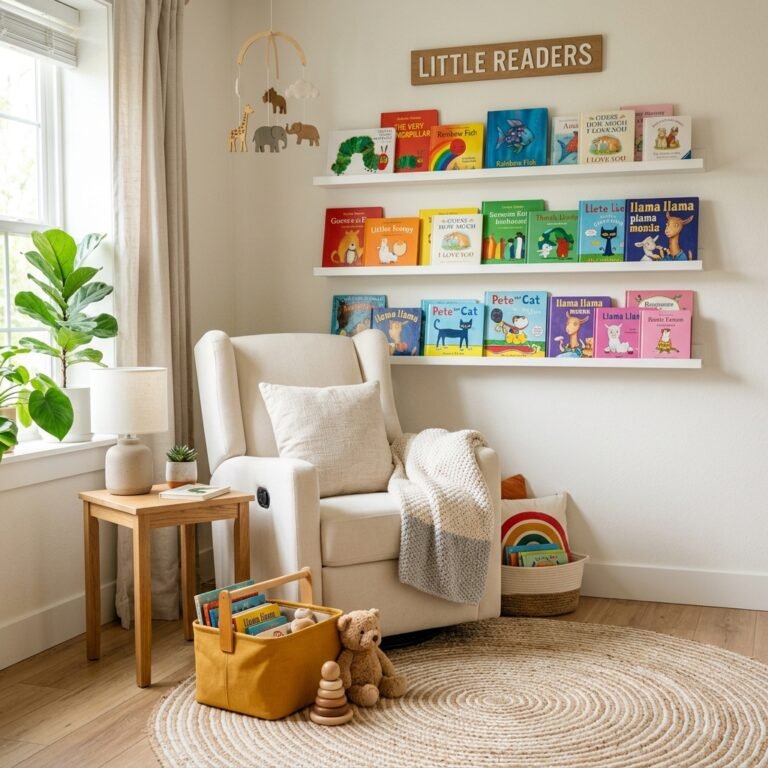
As a postpartum doula and nursery organization enthusiast, I am always looking for ways to blend function with beautiful design. Traditional bulky bookshelves can make a small nursery feel cramped and often hide the gorgeous, colorful covers of children’s books behind tight spines that babies cannot read anyway. Enter: the modern pegboard book display.
“Creating a calm, organized environment for your baby is just as much about soothing your own nervous system as it is about preparing for theirs. A space that breathes, allows you to breathe.”
Using a pegboard to create a modern nursery book display is one of my absolute favorite design hacks. It is modular, grows with your child, keeps books accessible, and acts as a stunning piece of wall art. Whether you are a first-time mom looking for a weekend nesting project or a seasoned parent trying to reclaim your floor space, this guide will walk you through exactly how to create a safe, chic, and incredibly functional pegboard book wall for your little one.
Why a Pegboard is the Ultimate Nursery Storage Hack
When designing a nursery, we want pieces that work as hard as we do. A pegboard is not just for garages or craft rooms anymore; in recent years, it has become a staple of modern, Scandinavian-inspired nursery design. But beyond looking incredibly chic, there are deep, developmental reasons why this storage method is a massive win for your baby.
The Magic of Vertical Storage
First and foremost, pegboards utilize vertical space. By moving storage onto the walls, you free up precious floor area. This means more room for a comfortable nursing chair, a larger play mat, or simply open space for your baby to safely learn to roll and crawl without bumping into sharp bookshelf corners.
Montessori-Aligned Early Literacy
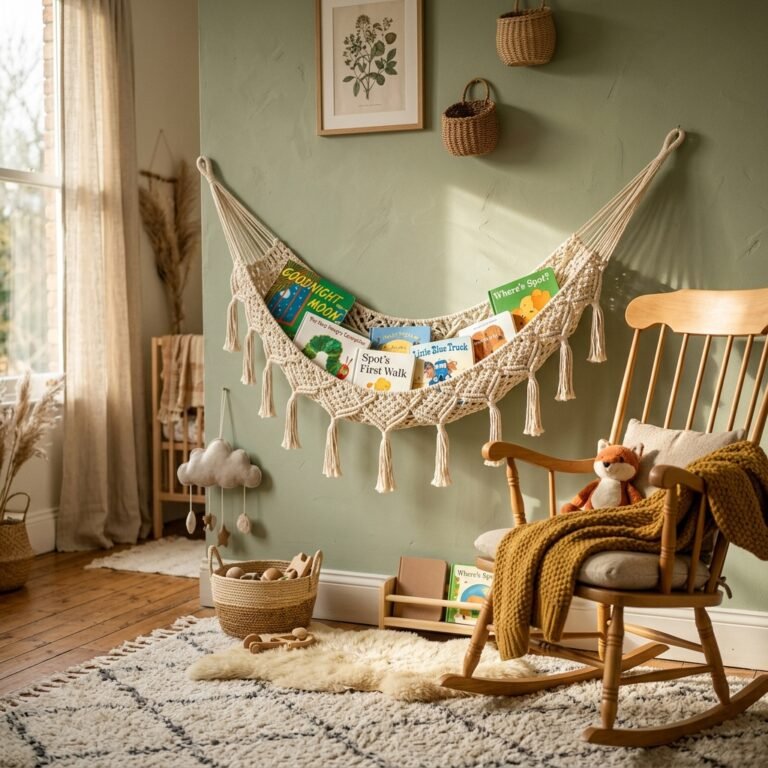
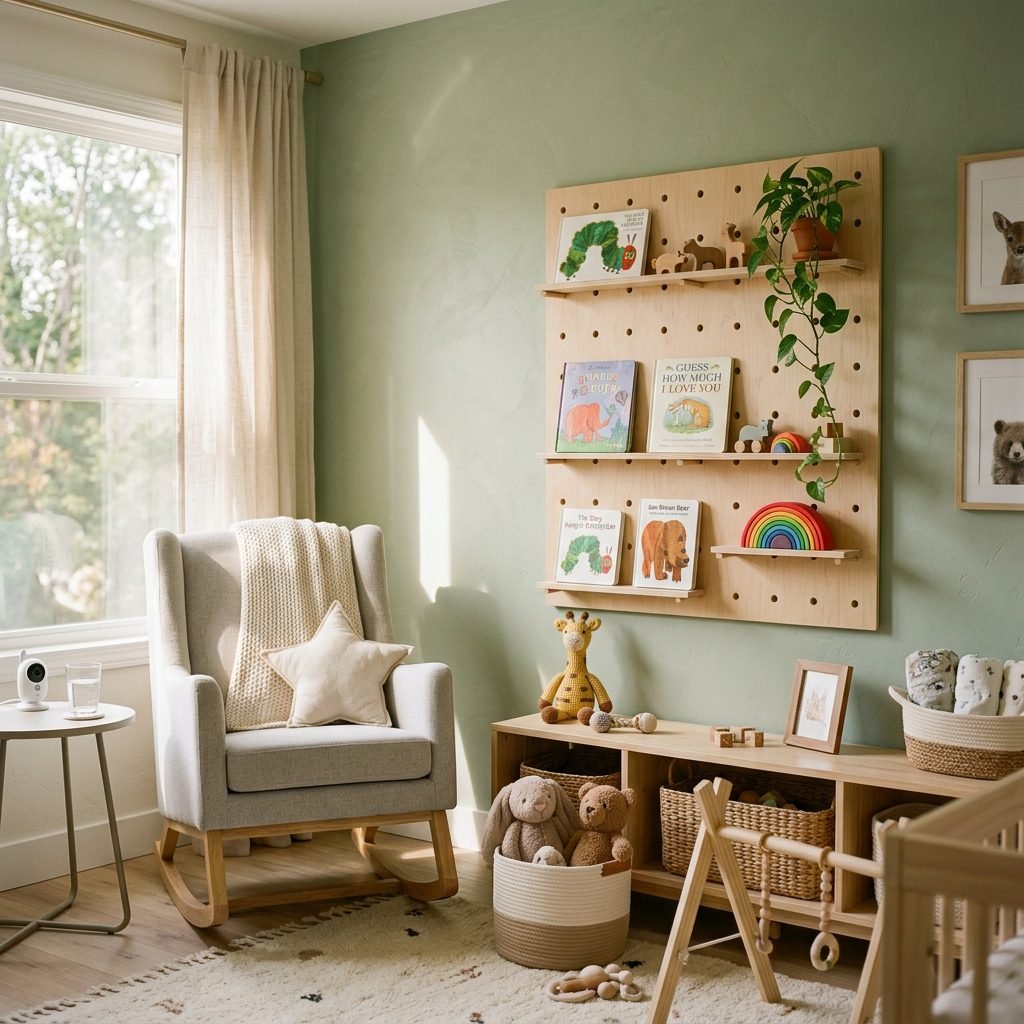
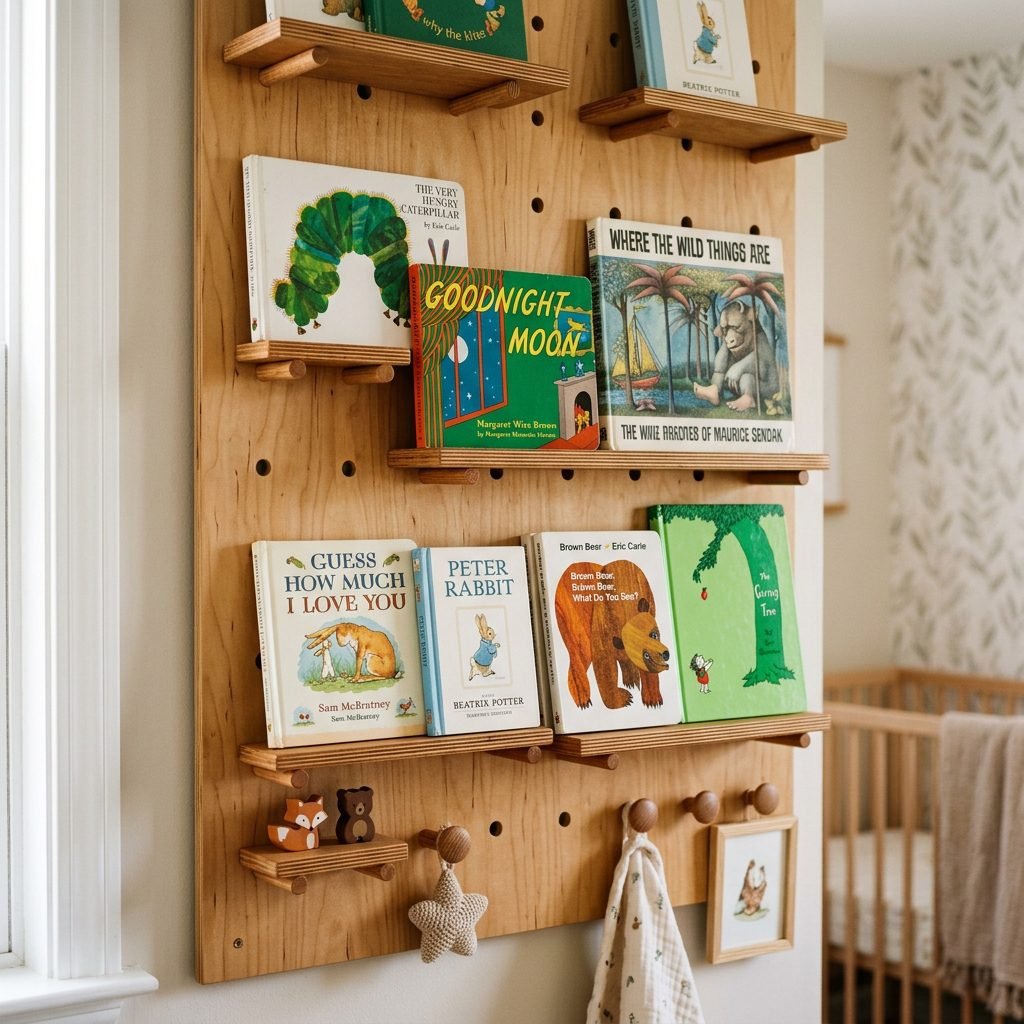
From a developmental perspective, pegboards allow for forward-facing book displays. The Montessori philosophy emphasizes making a child’s environment accessible and engaging. Babies and toddlers cannot read spines; they are drawn to the vibrant illustrations on the covers. When books are displayed facing outward on a pegboard, your baby is far more likely to point to, reach for, and engage with their books, fostering an early love for reading.
| Storage Method | Floor Space Used | Child Accessibility | Visual Appeal |
|---|---|---|---|
| Traditional Bookshelf | High | Low (Spines only) | Cluttered if overfilled |
| Canvas Sling Bookshelf | Medium | Medium (Books overlap) | Casual, soft look |
| Wall Pegboard Display | Zero | High (Full covers visible) | Modern, clean, modular |
Plus, a pegboard is endlessly customizable. As your baby transitions from newborn high-contrast cards to chunky toddler board books, the shelves can be easily rearranged without drilling new holes in your walls.
Gathering Your Materials: The Pegboard Project Checklist
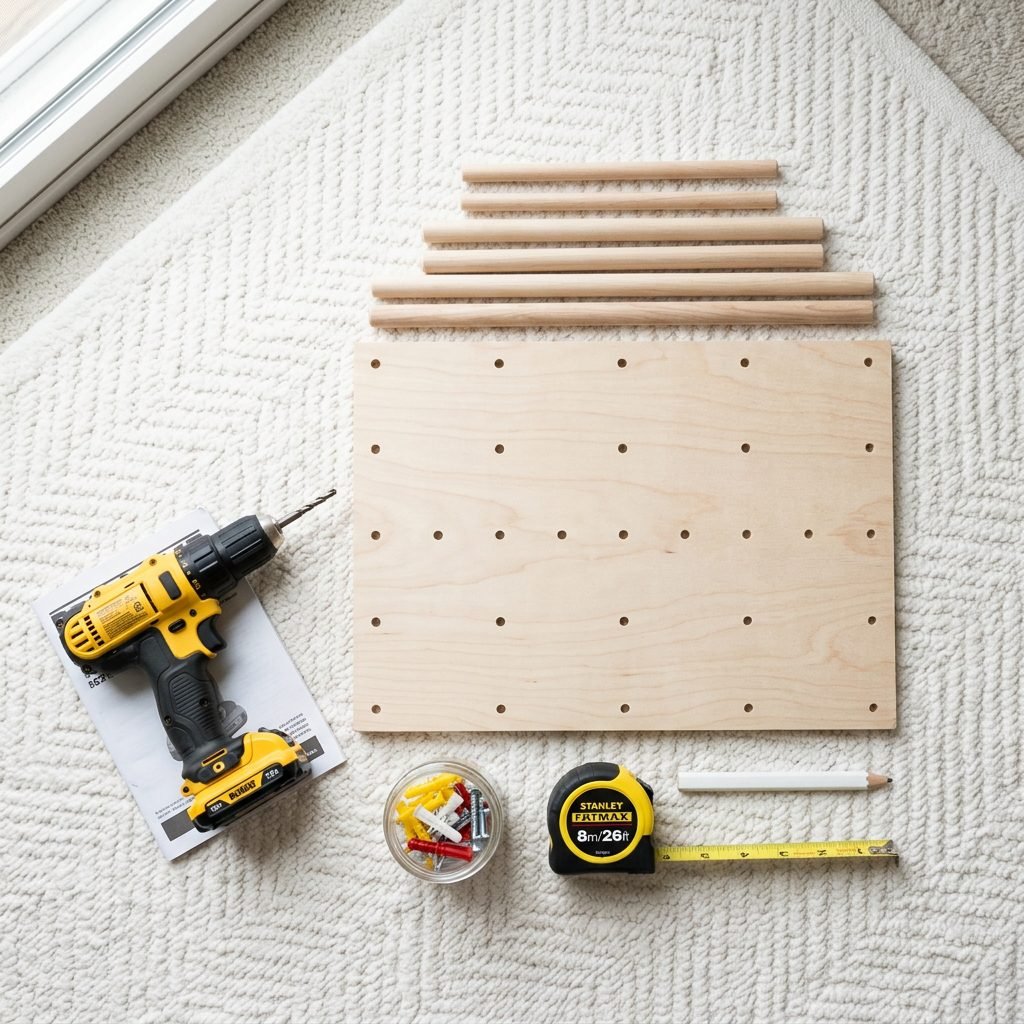
Before we dive into the installation, let us gather our supplies. The beauty of this project is that it can be as DIY or as pre-fabricated as you feel comfortable with. If you are dealing with third-trimester fatigue, there is zero shame in buying a pre-made kit! If you are feeling crafty, you can build one from custom plywood.
Your Shopping List
- The Pegboard: You can use IKEA Skådis boards (budget-friendly and lightweight), standard hardware store MDF pegboards (great for painting), or custom architectural plywood pegboards (for a high-end Scandinavian look).
- Mounting Hardware: Wall anchors (crucial for safety), heavy-duty screws, and spacers (so the pegs can slide behind the board).
- Shelving Elements: Wooden dowels, elastic cords, or custom acrylic shelves that fit into the peg holes.
- Tools: A drill, a stud finder, a level, and a measuring tape.
| Material Option | Estimated Cost | Pros | Cons |
|---|---|---|---|
| IKEA Skådis System | $20 – $50 | Affordable, easy to find, lots of accessories | Standard sizes only, less “custom” look |
| Hardware Store MDF | $15 – $30 | Very cheap, easy to paint to match nursery | Requires framing/spacers, looks industrial if unpainted |
| Custom Plywood Pegboard | $100 – $250 | Stunning aesthetic, heirloom quality, sturdy | Higher price point, heavier to mount |
“Doula Tip: If you are in your third trimester, please let your partner, a friend, or a family member handle the heavy lifting and drilling. Your job right now is to point, direct, and stay hydrated!”
Step-by-Step Guide to Installing Your Pegboard
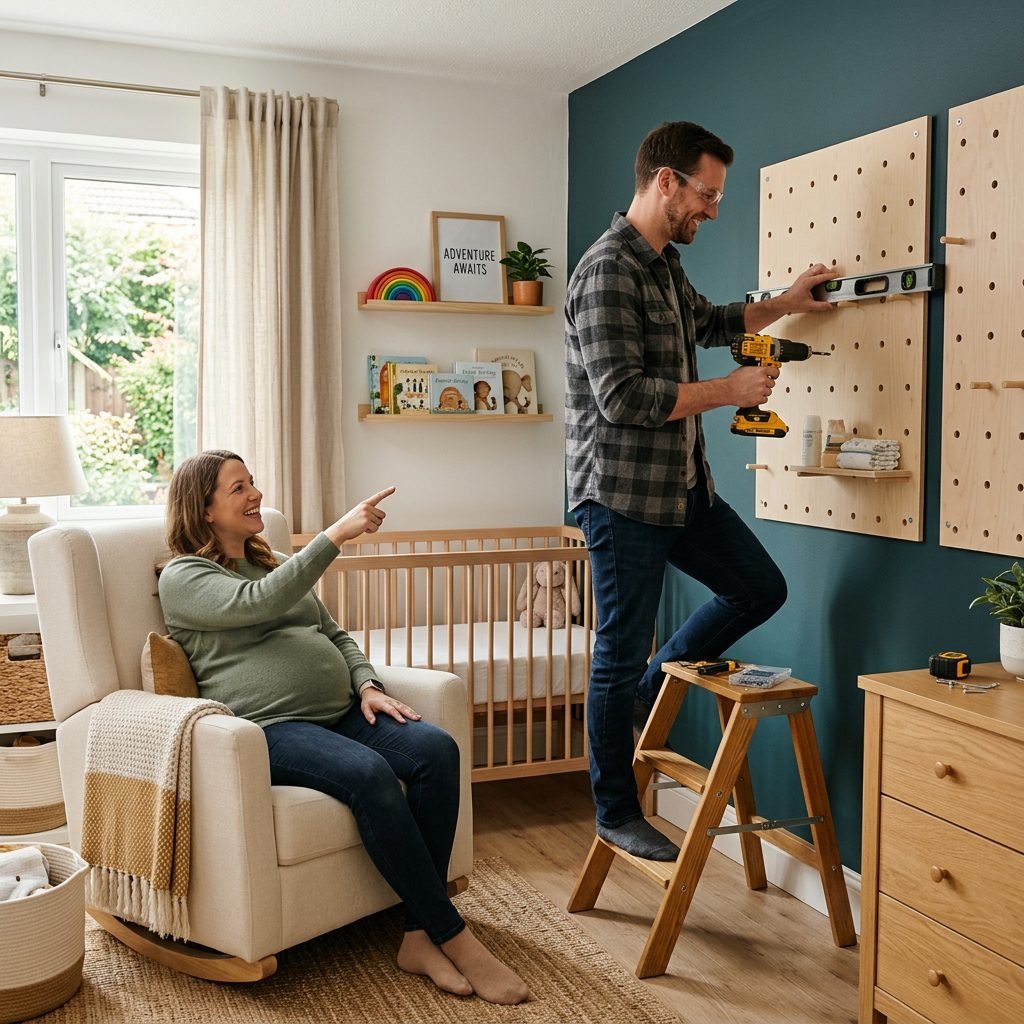
Alright, let us get this beautiful display on the wall. Safety and precision are key here. A loaded book wall can become quite heavy, and we want to ensure it is completely secure for when your little one inevitably tries to pull themselves up on it in a few months.
Installation Instructions
- Determine the Placement: Choose a wall that is easily accessible but not directly above the crib. You want this to be a safe reading nook area. Use a measuring tape to find the ideal height. For a Montessori approach, ensure the lowest shelves are reachable by a sitting toddler (about 12 to 18 inches off the ground).
- Locate the Wall Studs: This is the most critical safety step. Use a stud finder to locate the wooden framing behind your drywall. Mark these spots lightly with a pencil. Always anchor heavy nursery furniture into studs whenever possible.
- Install the Spacers: Pegboards require a gap between the board and the wall so the pegs have room to insert. If your board didn’t come with a mounting bracket, glue small wooden blocks (spacers) to the back corners and middle of your board.
- Level and Mount: Have your helper hold the pegboard against the wall. Place a level on top to ensure it is perfectly straight. Drill your screws through the pegboard, through the spacers, and directly into the wall studs. If you absolutely cannot hit a stud, you must use heavy-duty toggle bolt dry-wall anchors rated for at least 50+ lbs.
- Arrange Your Shelves: Once the board is secure, insert your dowels or shelves. Start with a few shelves for books and maybe a small basket attachment for soft toys.
Take a step back and admire your work! You have just created a gorgeous, functional focal point for your baby’s room.
Styling Your Nursery Book Nook Like a Pro
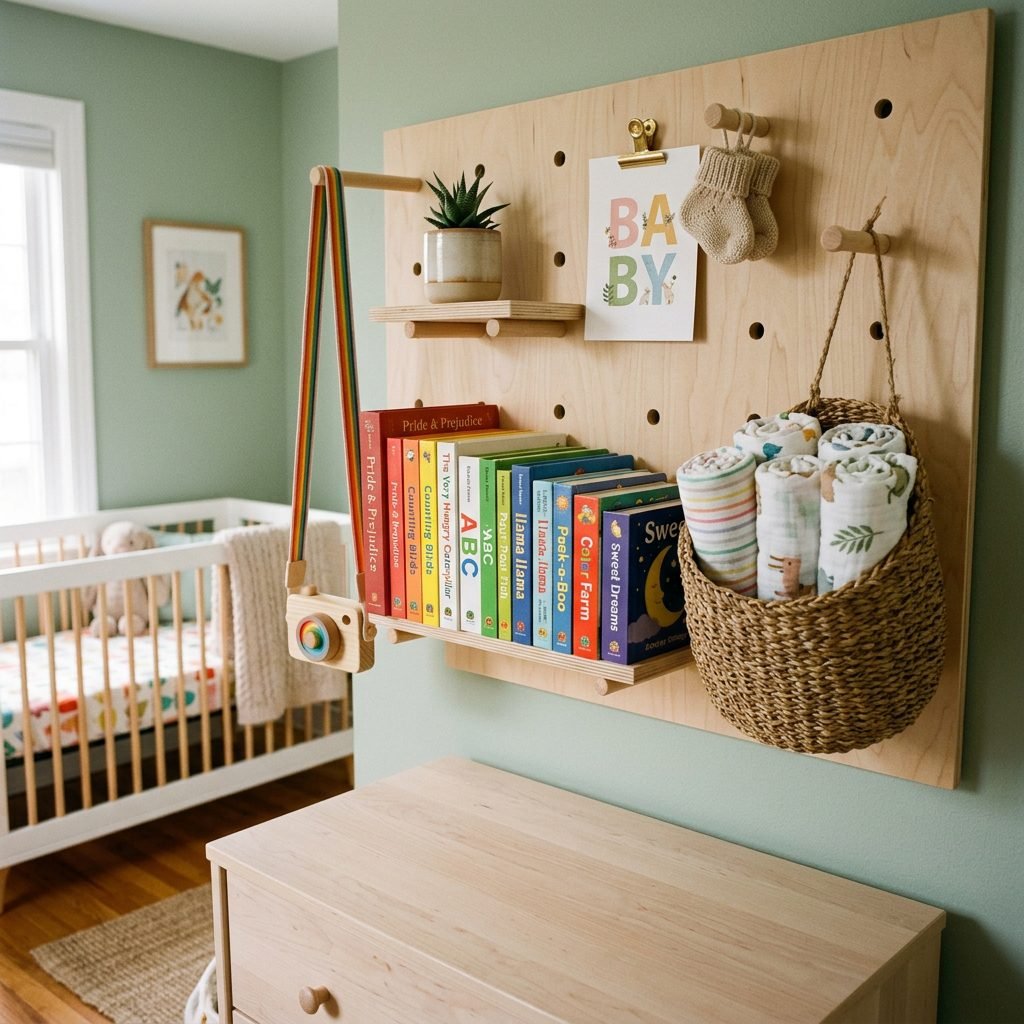
Now comes the fun part—styling! A pegboard book display is essentially a rotating gallery wall for your nursery. It is a wonderful way to introduce color and theme without committing to permanent wallpaper or paint.
Curating the Perfect Display
When styling your pegboard, think about balance. You do not want it to look cluttered, which can be visually overwhelming for both you and your baby. Here are some of my favorite styling formulas:
- Color Blocking: Arrange the books in a rainbow gradient, or stick to a specific color palette that matches your nursery (e.g., all earthy greens, browns, and neutrals).
- Mix Textures: Do not just use books. Hang a wooden teething ring, a soft macrame pacifier clip, or a small woven basket holding extra burp cloths from empty pegs.
- Seasonal Rotation: Keep the display fresh by rotating books based on the season or upcoming holidays. Display cozy winter stories in December and bright, floral books in the spring.
- Heavy on the Bottom: For safety and visual weight, place the largest, heaviest board books on the bottom shelves and lighter, paper-page books or small decor items near the top.
“Styling Tip: Leave at least 20% of your pegboard empty. Negative space allows the eye to rest and prevents the wall from feeling chaotic. It’s a trick interior organizers swear by!”
Remember, this space will evolve. What looks perfectly styled today will soon be joyfully rearranged by tiny toddler hands, and that is exactly what it is meant for.
Adapting the Pegboard as Your Baby Grows
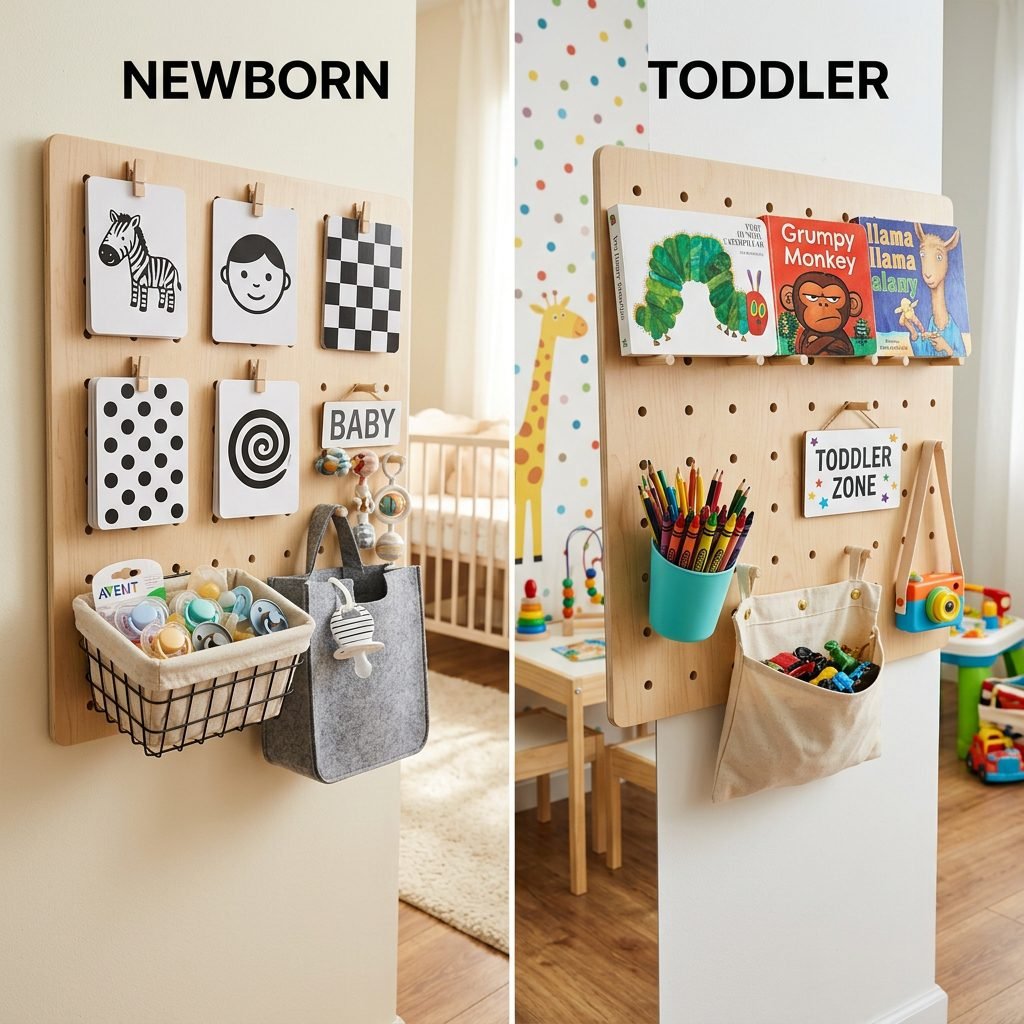
One of the greatest investments you can make in nursery design is choosing items that grow with your child. The pegboard is the undisputed champion of adaptability. Let us look at how this single piece of furniture will serve your family from the newborn days all the way to preschool.
The Developmental Timeline
| Baby’s Age | Developmental Focus | How to Setup the Pegboard |
|---|---|---|
| 0-4 Months | Vision development, neck strength | Hang high-contrast (black & white) art cards on the lowest pegs near the tummy-time mat. |
| 5-12 Months | Grasping, object permanence | Display chunky, indestructible board books and soft cloth books on the lower shelves. |
| 1-2 Years | Independence, vocabulary building | Keep favorites low. Add a small hanging cup for chunky crayons. Introduce interactive flap-books. |
| 3+ Years | Fine motor skills, complex stories | Raise the book shelves higher. Add baskets for art supplies, small puzzles, and dress-up accessories. |
During the postpartum period, you can even use the top section of the pegboard for yourself. Hang a lightweight basket to hold your nipple cream, a spare pacifier, your lip balm, and a burp cloth right next to your nursing chair. Having these tiny essentials visible and within arm’s reach during a 3 AM feed is a game-changer for your postpartum recovery and comfort.
Conclusion
Creating Space for Beautiful Memories
Mama, creating a nursery is about so much more than just decorating a room; it is about physically preparing a space in your life and your home to welcome a new soul. By choosing a pegboard for your modern nursery book display, you are making a brilliant, space-saving choice that will foster a love of reading in your child for years to come.
As you step back and look at those beautiful little books facing outward, ready to be read, take a deep breath. You are doing a wonderful job preparing for this baby. Whether the books are perfectly color-coordinated or slightly askew because a tiny hand just tried to grab one, this wall is going to be the backdrop for hundreds of cozy, sleepy, magical storytimes. Happy nesting, sweet friend!