

The Side-Lying Rib Stroke Method: How to Release Trapped Burps Instantly
The Midnight Struggle: When the ‘Pat-Pat’ Just Isn’t Enough
Oh, mama, I see you. It is 3:14 AM, your eyes are heavy, and your sweet little one is arching their back, face turning a frantic shade of crimson. You have tried the traditional over-the-shoulder patting for twenty minutes. You have tried the sitting-upright bounce. You have even tried the ‘airplane’ walk around the living room. But that stubborn air bubble—that tiny, trapped pocket of gas—refuses to budge, leaving your baby uncomfortable and you feeling utterly helpless. As a doula who has spent countless nights in the trenches of postpartum recovery, I want you to take a deep breath. You are doing a wonderful job, and that gas isn’t your fault; it is simply a matter of physics and immature digestive systems.
Today, I am going to share with you what I call the ‘Secret Weapon’ of infant soothing: The Side-Lying Rib Stroke Method. This technique is not just another way to burp a baby; it is a physiological approach to moving air through the esophagus by utilizing gravity and gentle myofascial release. Unlike traditional burping, which relies on blunt force (the pat), this method uses rhythmic pressure and anatomical alignment to guide the air out effortlessly. By the time we are finished, you will have a master-level understanding of how to release trapped burps instantly, helping your baby—and you—get back to those precious dreams.
“Your baby’s cry is not a critique of your mothering; it is a request for a little help navigating a brand-new body. You are the perfect person to give it.”
The Anatomy of the ‘Trapped’ Burp: Why Traditional Methods Fail

Understanding the Infant Digestive Path
To understand why the Side-Lying Rib Stroke works so effectively, we first have to look at what is happening inside that tiny tummy. A newborn’s esophagus is relatively short, and the lower esophageal sphincter (LES)—the muscle that acts as a ‘trap door’ between the stomach and the throat—is still very loose. When a baby swallows air during feeding (whether from a bottle or the breast), that air can become trapped underneath a layer of milk. This is what we call a ‘wet burp’ or ‘trapped air.’
The Gravity Problem
When you hold a baby vertically over your shoulder, you are essentially asking that air bubble to fight its way through a column of liquid. If the baby is tense or arching, the muscles around the rib cage and diaphragm tighten, effectively locking the air bubble in place. Traditional patting can sometimes just agitate the milk without actually venting the air. This is why you might pat for ten minutes, lay the baby down, and have them scream five minutes later—the bubble was still there, just hiding!
- Immature Sphincters: The LES doesn’t fully mature until 6 to 12 months of age.
- Air Displacement: Air is lighter than milk, but it needs a clear, relaxed path to escape.
- Muscle Tension: A crying baby swallows more air, creating a cycle of gas and discomfort.
The Side-Lying Rib Stroke changes the game by reorienting the stomach. By placing the baby on their side, we allow the air bubble to move to the ‘top’ of the stomach cavity, right next to the exit, while the milk settles safely to the side. It is about working with your baby’s body, not against it.
Step-by-Step: Mastering the Side-Lying Rib Stroke Technique

Preparing the Environment for Success
Before we begin the physical movement, we must ensure the baby is in a ‘parasympathetic state’—that means relaxed and ready to release. If your baby is frantic, spend two minutes doing some ‘shushing’ and gentle swaying. Once they have settled slightly, follow these precise steps:
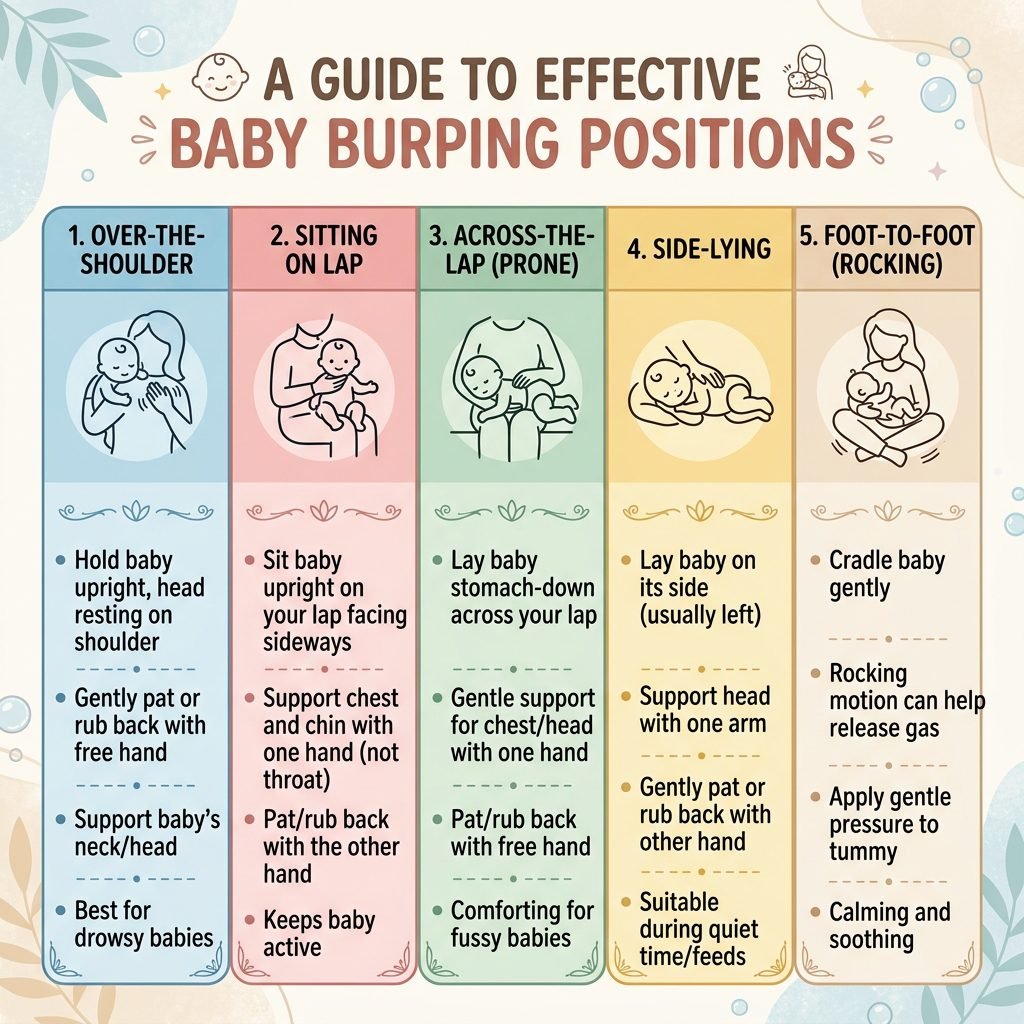
- The Lateral Position: Lay your baby on their left side across your lap or on a firm nursing pillow. The left side is crucial because of the way the stomach is shaped; it allows the esophageal opening to be at the highest point.
- Support the Frame: Place your non-dominant hand firmly but gently on the baby’s hip to keep them stable. Ensure their head is slightly elevated above their hips to prevent reflux.
- The ‘C-Hand’ Placement: With your dominant hand, form a ‘C’ shape with your thumb and fingers. Place your thumb on one side of the rib cage and your fingers on the other, just below the armpit.
- The Upward Stroke: Instead of patting, you are going to perform a firm, slow, upward stroke. Start at the base of the ribs (near the tummy) and slide your hand upward toward the shoulder blades.
- The Rhythmic Pause: After three strokes, stop and apply very gentle, steady pressure to the center of the back for five seconds. This encourages the diaphragm to relax.
Why the Ribs Matter
The ribs house the intercostal muscles. When these muscles are tight, they constrict the chest cavity. By ‘stroking’ the ribs, you are manually encouraging those muscles to lengthen, which creates more space for the lungs to expand and the esophagus to open. It is a form of gentle massage that signals to the baby’s nervous system that it is safe to let go of the tension—and the gas.
“Think of it as ‘milking’ the air out of the body. It is a slow, intentional movement that honors the baby’s delicate structure.”
The Gas Severity Matrix: When to Use Which Method
Matching the Technique to the Trouble
Not all gas is created equal. Sometimes a baby just has a ‘surface burp’ from a quick snack, and other times they have deep, painful ‘colic-style’ gas that has traveled further down. As a mama, you need to know which tool to pull out of your diaper bag. Use this table to determine if the Side-Lying Rib Stroke is the right choice for your current situation.
| Symptom/Behavior | Gas Severity | Recommended Method | Expected Result |
|---|---|---|---|
| Mild fussing after a quick feed | Low | Traditional Over-the-Shoulder Pat | Quick, single burp within 2 mins |
| Arching back, pulling legs to chest | High | Side-Lying Rib Stroke | Deep, productive release; immediate relaxation |
| High-pitched screaming, ‘hard’ tummy | Severe/Colic | Tiger in the Tree + Rib Stroke | Multiple releases; may take 5-10 mins |
| Waking up 20 mins after being put down | Trapped Air | The ‘Sit and Twirl’ + Side-Lying | Releasing ‘hidden’ bubbles that settled |
If you find that your baby is consistently in the ‘High’ or ‘Severe’ categories, it may be time to look at feeding mechanics, such as paced bottle feeding or checking for a tongue tie. But in the moment of crisis, the Side-Lying Rib Stroke is your most reliable ally for instant relief.
Troubleshooting the Stubborn Bubble: Pro-Tips for Doulas and Moms

When the Burp Won’t Budge
Sometimes, even with the perfect technique, that air bubble feels like it is stuck with superglue. Don’t panic! This is where the ‘Doula Magic’ comes in. If you have been doing the rib strokes for a few minutes and nothing has happened, try these advanced adjustments:
1. The ‘Left-to-Right’ Tilt
While the baby is in the side-lying position, gently rock their hips back and forth. This rotational movement helps shift the liquid in the stomach, potentially uncovering a bubble that was trapped in a ‘pocket’ of the stomach lining. Movement creates momentum.
2. The Jaw Release
Did you know that tension in the jaw is directly linked to tension in the pelvic floor and the digestive tract? Gently stroke your baby’s cheeks or the hinge of their jaw. As their face relaxes, you will often find that the throat relaxes, allowing the burp to slide out.
3. The Heat Element
If the baby’s tummy feels particularly hard, place a warm (not hot!) washcloth over their midsection for 60 seconds before starting the rib strokes. The warmth increases blood flow to the digestive organs and helps the smooth muscles of the gut to relax.
- Check your posture: Mama, if you are hunched over and tense, your baby will feel it. Drop your shoulders, take a deep breath, and let your calm be contagious.
- The ‘Wait’ Period: Sometimes the air needs 30-60 seconds of stillness in the side-lying position before it moves. Don’t rush the process.
- Listen for the ‘Gurgle’: Before the burp, you might hear a small internal gurgle. This is your cue that the air is moving!
The Mindful Doula Approach: Calming the Nervous System

Co-Regulation: The Secret Ingredient
In my years as a doula, I have learned that infant care is 90% energy and 10% technique. Your baby’s nervous system is essentially an extension of your own. If you are frantic and stressed about the ‘trapped burp,’ your baby’s body will produce cortisol, which causes the digestive tract to tighten up, making it even harder for gas to pass.
Practicing Co-Regulation During Burping
When you are performing the Side-Lying Rib Stroke, try to sync your breathing with the strokes. Inhale as you bring your hand to the base of the ribs, and exhale a long, slow ‘shhh’ as you stroke upward. This does two things: it keeps you calm, and it provides a rhythmic auditory cue for the baby to regulate their own heart rate.
“You are not just burping a baby; you are teaching a tiny human how to process physical discomfort with the help of a safe, calm partner.”
If you feel your frustration rising, it is okay to safely lay the baby down in their bassinet for five minutes. Go into the kitchen, drink a glass of water, stretch your neck, and come back. A calm mama with a ‘standard’ burping technique will often have more success than a stressed mama with the ‘perfect’ technique. Self-compassion is the most important tool in your postpartum kit.
Post-Burp Success: Preventing Future Gas Buildup

Proactive Steps for a Peaceful Night
Once you have mastered the Side-Lying Rib Stroke and achieved that glorious, deep burp, the goal is to prevent the next one from being quite so stubborn. Here is a quick checklist for your next feeding session:
- Upright Feeding: Try to keep the baby’s head significantly higher than their tummy during feedings. This allows gravity to start the burping process before the feeding is even over.
- The ‘Half-Way’ Burp: Don’t wait until the end of the bottle or the second breast. Stop halfway through for a mini-rib stroke session. This prevents a massive air bubble from forming.
- Tummy Time: Regular, supervised tummy time during the day helps strengthen the core muscles and naturally ‘massages’ the digestive system, making gas easier to pass on its own.
- Check the Latch: Whether breastfeeding or bottle-feeding, ensure a deep, wide latch. If you hear ‘clicking’ sounds, the baby is breaking the seal and swallowing air.
By combining these proactive steps with the Side-Lying Rib Stroke Method, you are creating a comprehensive ‘Gas Management Plan’ that will lead to longer sleep stretches and a much happier, more comfortable baby.
Conclusion
You’ve Got This, Mama
The Side-Lying Rib Stroke Method is more than just a trick; it is a way to deeply connect with your baby’s needs and provide them with the physical relief they cannot achieve on their own. Remember, the newborn stage is a season of intense learning for both of you. There will be nights when the burps come easily and nights when they don’t, but you now have a professional doula’s secret weapon in your toolkit. Trust your hands, trust your intuition, and know that each gentle stroke is a message of love to your little one. Sleep well, sweet mama—you’ve earned it.