
The Pre-Warmed Bassinet Trick: How to Lay Baby Down Without Waking Them
The ‘Ninja Transfer’ Struggle is Real
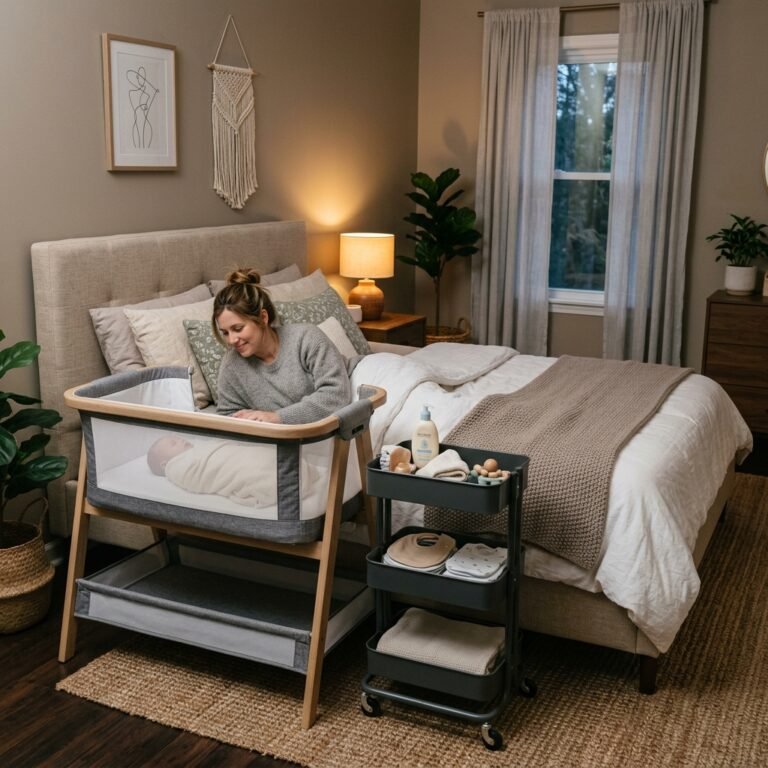
You’ve done it. After 45 minutes of rocking, humming, and swaying, your precious little one has finally drifted into a deep, rhythmic sleep in your arms. You wait for the ‘limp limb’ stage, your heart racing as you prepare for the most high-stakes maneuver in modern parenting: the transfer. But the moment their back touches the bassinet sheets, their eyes fly open, their arms fly out in a startle, and the crying begins again. Sound familiar? Oh, mama, I have been there, and as a doula, I’ve seen this scene play out in countless nurseries.
One of the biggest culprits of the ‘transfer fail’ isn’t just the movement—it’s the temperature. Your body is a cozy 98.6 degrees, while those crisp cotton bassinet sheets are likely sitting at a chilly 68 degrees. That sudden drop in temperature triggers the Moro reflex (the startle reflex), signaling to your baby’s nervous system that they are no longer in a safe, warm spot. Enter the Pre-Warmed Bassinet Trick. This simple, effective method bridges the gap between your warmth and their sleep space, allowing for a seamless transition that preserves everyone’s precious rest.
The Science of the Startle: Why Temperature Matters

To master the transfer, we first have to understand the newborn biology. Babies are born with a highly sensitive nervous system. In the womb, they were constantly enveloped in warmth and gentle pressure. When you hold them, you are recreating that environment. The transition to a flat, cold surface is a shock to their system.
The Moro Reflex and Thermal Regulation
- The Moro Reflex: This is a protective response. When a baby feels a sudden change in position or temperature, they feel like they are falling. Their arms splay out, and they wake up instantly.
- Thermal Shock: A cold sheet acts like a tiny ice bath for a sleeping infant. Their skin receptors detect the drop and send an immediate ‘alert’ signal to the brain.
By pre-warming the sleep surface, we keep the baby’s sensory experience consistent. We are essentially ‘tricking’ their nervous system into thinking they are still being held against your warm chest. It’s not just a trick; it’s a physiological support tool that helps them transition into the next sleep cycle.
Your Pre-Warming Toolkit: Choosing Your Method
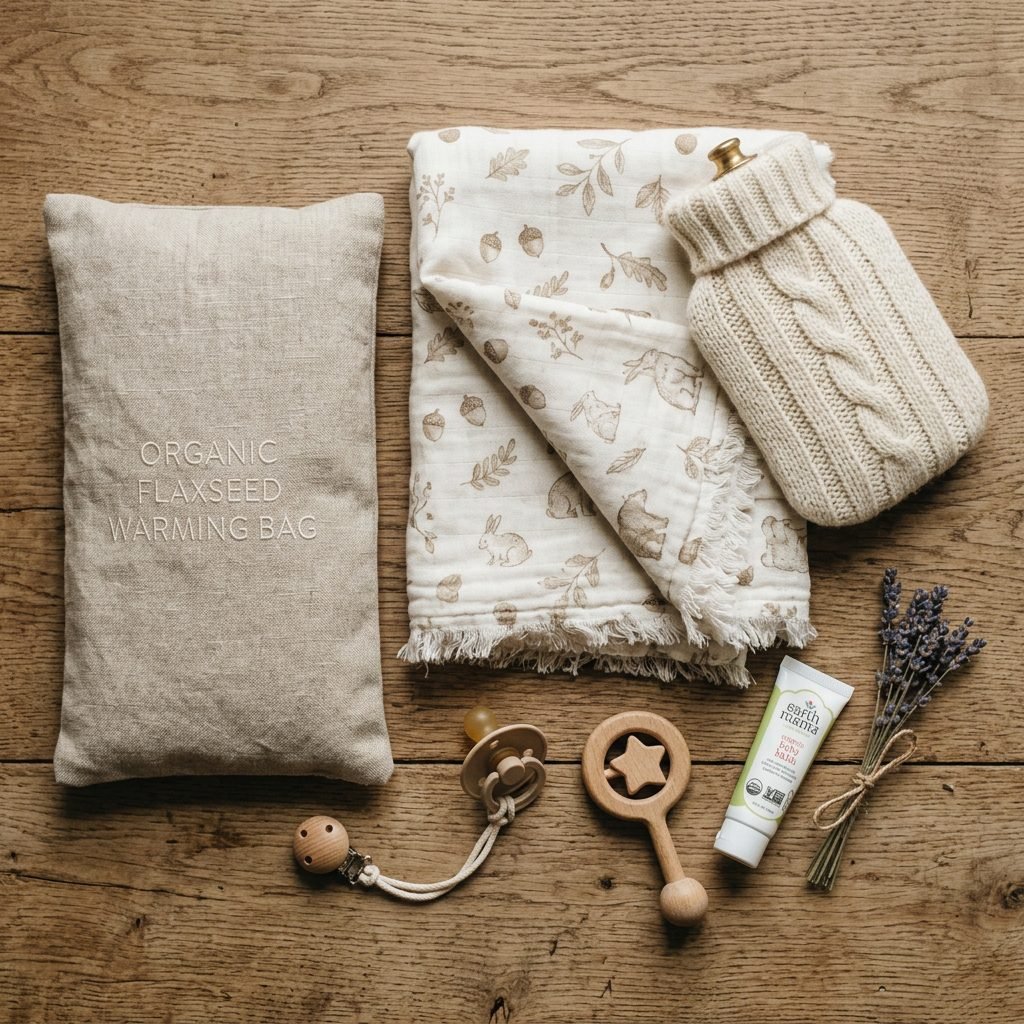
Before you start, you need the right tools. The goal is to warm the mattress—never to leave a heat source in the bassinet with the baby. Safety is our absolute priority. Here is a breakdown of the best methods to get that bassinet ‘just right’ before the transfer.
| Heating Method | Setup Time | Best For… |
|---|---|---|
| Heating Pad (Electric) | 5-10 Minutes | Quick warming; easy to remove. |
| Hot Water Bottle | 15 Minutes | Gentle, long-lasting heat. |
| Flax or Rice Sock | 2 Minutes | Small nurseries; portable and cordless. |
| The ‘Body Heat’ Method | 10 Minutes | When no tools are available (using your own heat). |
“Remember, mama: the goal is to make the sheet feel like a warm hug, not a sauna. Always test the surface with the inside of your wrist before laying baby down.”
Step-by-Step: The Perfect Pre-Warmed Transfer
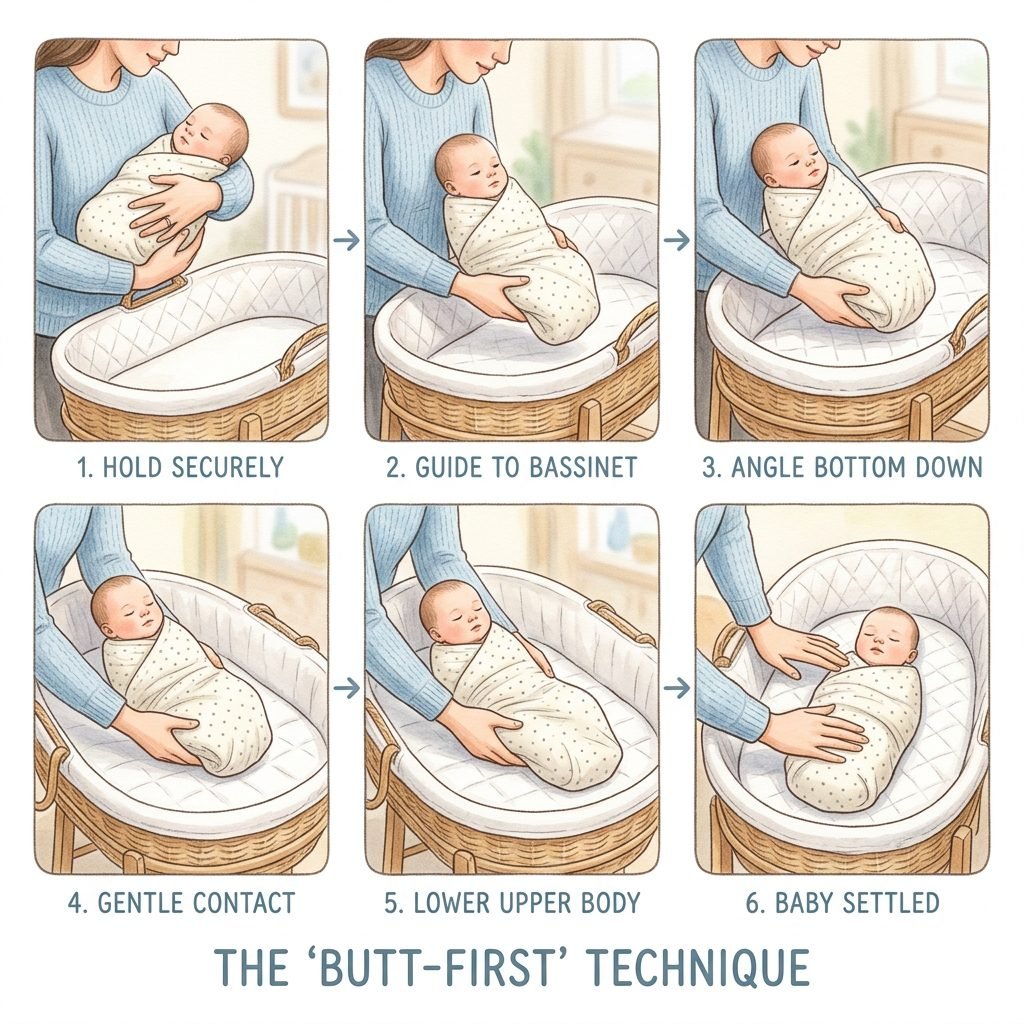
Follow these steps to execute the perfect ‘ninja’ move. Timing is everything!
- Activate the Heat: While you are feeding or rocking your baby to sleep, place your heating pad (on low) or hot water bottle in the center of the bassinet. Cover it with the top sheet or a small blanket to trap the warmth.
- The Deep Sleep Check: Wait until your baby is in a deep sleep. You can check this by lifting an arm; if it falls back down like a wet noodle without resistance, they are ready.
- The Removal: CRITICAL STEP: Move the heating pad or water bottle completely out of the bassinet and place it on a far-away surface. Never leave it in the bed with the baby.
- The Temperature Test: Place your hand or the inside of your wrist on the mattress. It should feel pleasantly warm, like a sun-warmed rock, never hot.
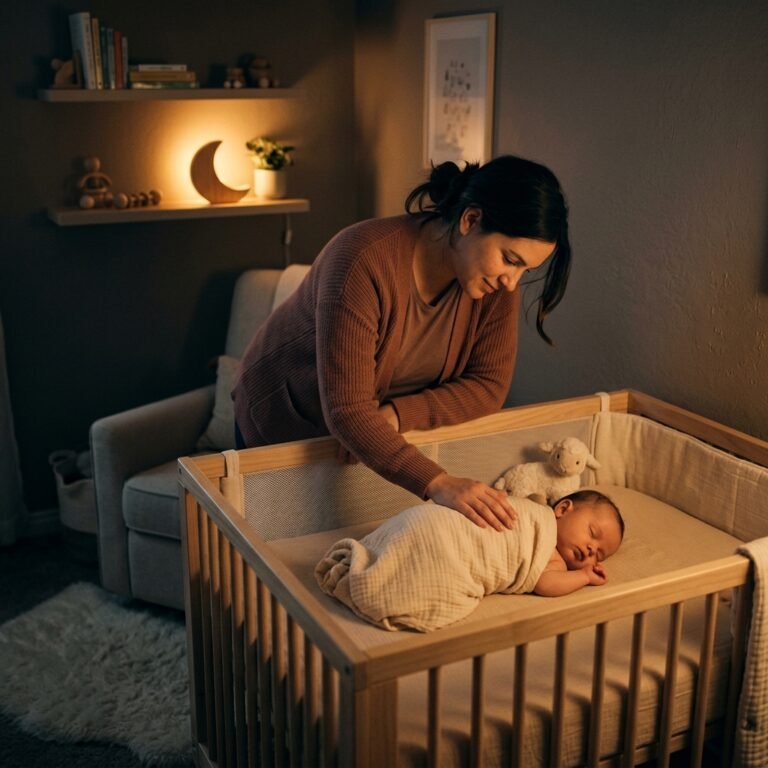
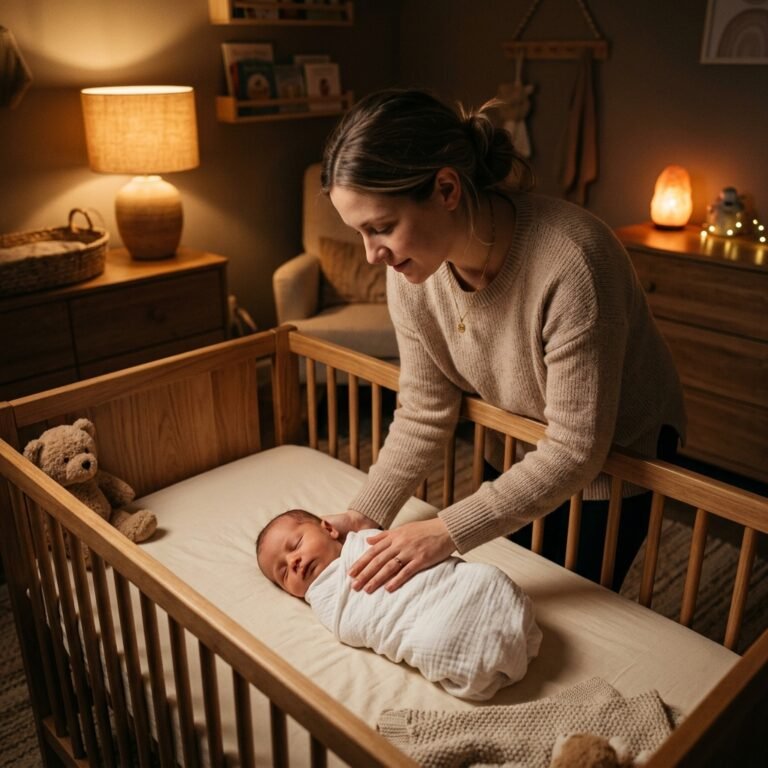
- The ‘Butt-First’ Landing: Slowly lower the baby. Touch their bottom to the mattress first, then their legs, then their back, and finally their head. This sequence minimizes the startle reflex.
- The ‘Heavy Hand’ Pause: Once they are down, don’t pull your hands away immediately. Keep one hand firmly but gently on their chest and the other on their tummy for about 30 to 60 seconds. This mimics the pressure of being held.
Safety First: The Golden Rules of Bassinet Warming
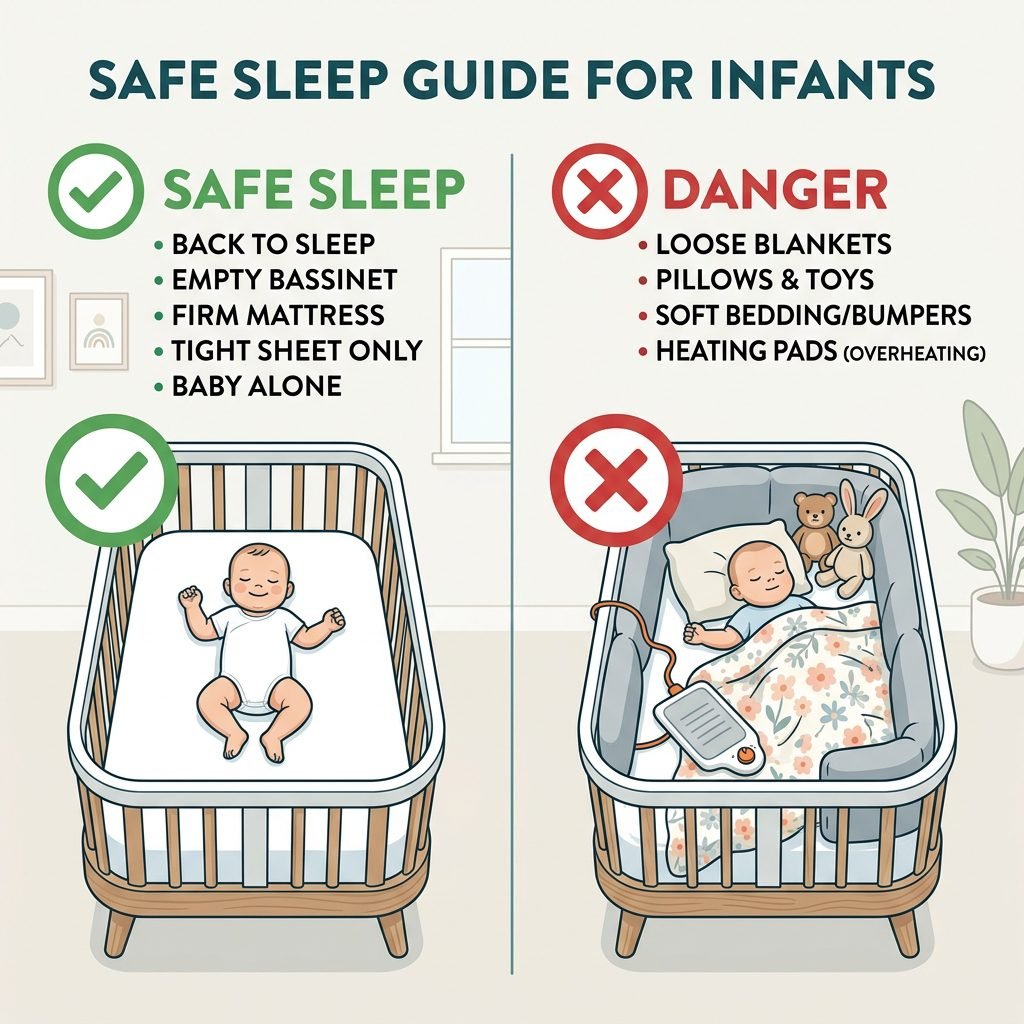
As a doula, I cannot stress safety enough. While this trick is a lifesaver, it must be done with 100% adherence to safe sleep guidelines. The AAP (American Academy of Pediatrics) is very clear about what belongs in a sleep space.
Essential Safety Checklist
- No Hot Spots: Ensure the heating pad didn’t create a localized ‘hot spot’ that could burn delicate skin. Smooth the sheet with your hand to distribute the heat.
- Zero Loose Items: Once the baby is in, the bassinet must be completely empty of everything except the baby and their firm mattress/fitted sheet. No heating pads, no cords, no water bottles.
- Firmness Matters: Ensure that the heating process hasn’t warped the mattress or caused the fitted sheet to become loose. The sheet must remain tight and ‘drum-like.’
- Temperature Monitoring: If the room is already warm (above 72 degrees), be cautious with pre-warming. You don’t want the baby to overheat, which is a risk factor for SIDS.
| Do’s | Don’ts |
|---|---|
| Remove heat source before baby enters. | Leave a heating pad plugged in near the bassinet. |
| Test with your wrist every single time. | Use a ‘High’ setting on electric pads. |
| Use a swaddle or sleep sack for consistency. | Place baby on a sheepskin or loose blanket. |
The ‘Scent’ Factor: Leveling Up Your Sleep Game

If the pre-warmed bassinet trick isn’t quite enough for your little one, we can add another sensory layer: Scent. Babies have an incredible sense of smell, and your scent is their ‘safe signal.’ When you combine the warmth of the mattress with the familiar smell of ‘Mom,’ you create a powerful sleep association.
How to Safely Incorporate Scent
- The Sheet Swap: Take the bassinet’s fitted sheet and sleep with it against your skin for one night (or tuck it into your shirt for a few hours). This transfers your natural pheromones to the fabric.
- The Muslin Trick: During the day, wear a muslin burp cloth inside your shirt. When you lay the baby down (if they are old enough or if you are supervised), you can briefly let them smell it, but always remove it from the sleep space once they are settled.
By combining Warmth + Scent + Gentle Pressure, you are addressing three of the baby’s primary sensory needs simultaneously. It’s the closest thing to a ‘manual override’ for the transition wake-up call.
Troubleshooting the Transfer: When it Doesn’t Work
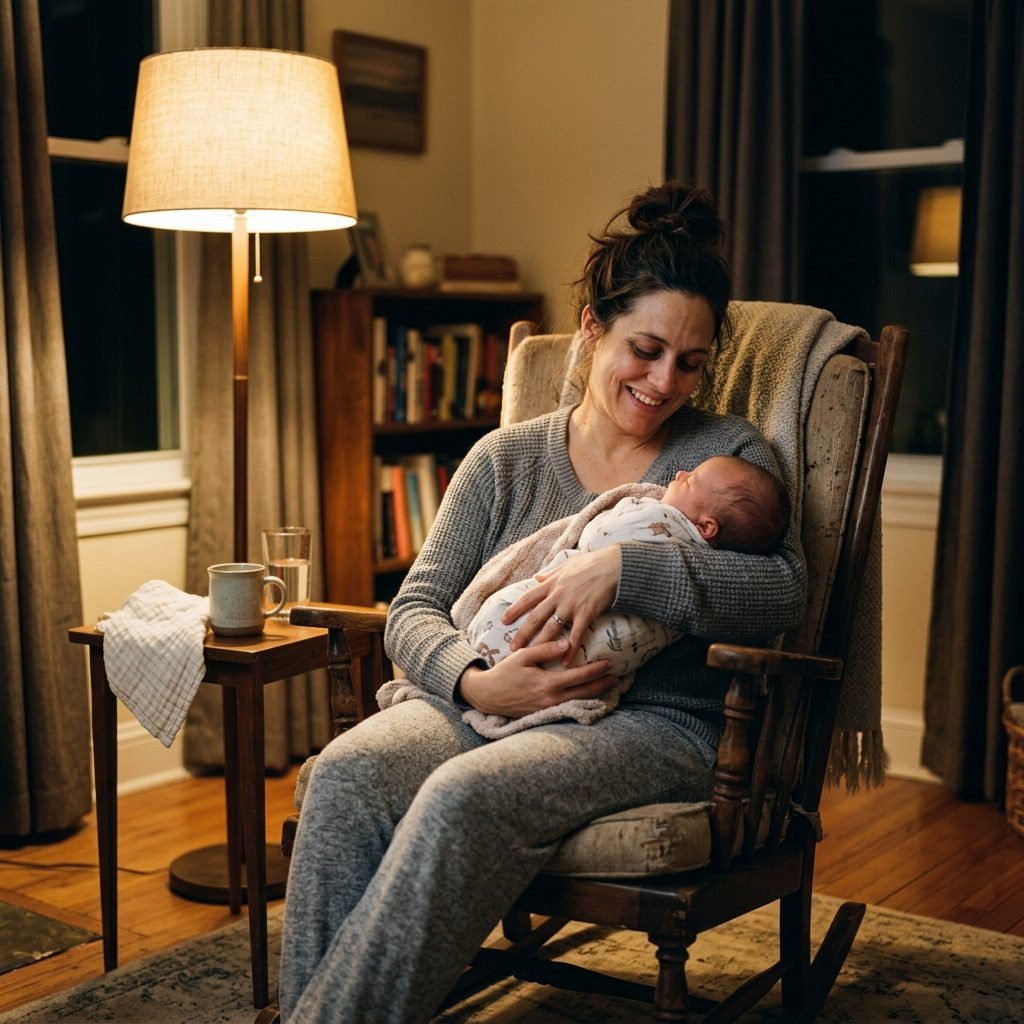
Even with a pre-warmed bed, some nights are just tough. If your baby is still waking up, consider these factors that might be interfering with their ability to settle.
Common Culprits of the Failed Transfer
- Overtiredness: If a baby has passed their ‘sleep window,’ their body produces cortisol and adrenaline, making them ‘wired’ and much harder to transfer.
- Gas and Digestion: If a baby has a bubble trapped in their tummy, the flat position of the bassinet can cause discomfort. Try the ‘Bicycle Legs’ move before the transfer.
- The Startle Reflex (Moro): If your baby isn’t swaddled, their own arms will likely wake them up regardless of the temperature. A snug (but safe) swaddle is the pre-warmed bassinet’s best friend.
If the transfer fails three times in a row, give yourself grace. Sometimes, they just need that extra 20 minutes of contact sleep before their nervous system is ready to let go. It’s not a failure; it’s just the ‘fourth trimester’ in action.
Conclusion
You’ve Got This, Mama
The pre-warmed bassinet trick is more than just a ‘hack’—it’s a way to honor your baby’s transition from the warmth of your arms to the independence of their own sleep space. By softening that transition, you are helping them feel secure and helping yourself get that much-needed rest. Remember, this phase is short, but the sleep you gain back is vital for your recovery and well-being.
Be patient with yourself and your little one. Some nights the ninja transfer will work like magic, and other nights, the ‘cuddle tax’ will be higher. Either way, you are doing an incredible job. Now, go grab that heating pad, warm up those sheets, and may your next transfer be a total success!