5 Gentle and Safe Exercises to Help Your Baby Learn to Roll Over
Welcome to the Beautiful Journey of Movement
Oh, sweet mama, there is nothing quite like those first few months. You are likely still finding your rhythm, perhaps sipping a lukewarm coffee while watching your little one wiggle on the floor. One day soon, that wiggle will turn into a wobble, and that wobble will turn into a full, glorious roll. As a doula and maternal wellness guide, I want you to know that rolling over is more than just a physical feat; it is your baby’s first true taste of independence. It is the moment they realize, ‘Hey, I can change my view of the world all by myself!’
Typically, babies begin to roll from tummy to back around 3 to 4 months, followed by the more complex back to tummy roll around 5 to 6 months. However, every baby is a unique bloom, and some take a little more time to find their strength. If your little one seems content to just lie and look at the ceiling, don’t fret. We are going to work together to gently wake up those core muscles, strengthen that tiny neck, and give them the confidence to take the plunge. These exercises aren’t about ‘training’ your baby; they are about playful connection and supporting their natural physiological development in a way that feels safe and stylish in your home sanctuary.
Remember, mama: your baby isn’t behind; they are simply on their own beautiful timeline. Our job is to provide the floor time and the encouragement.
Creating the Ultimate ‘Rolling Zone’ for Your Little One
Designing for Success and Safety
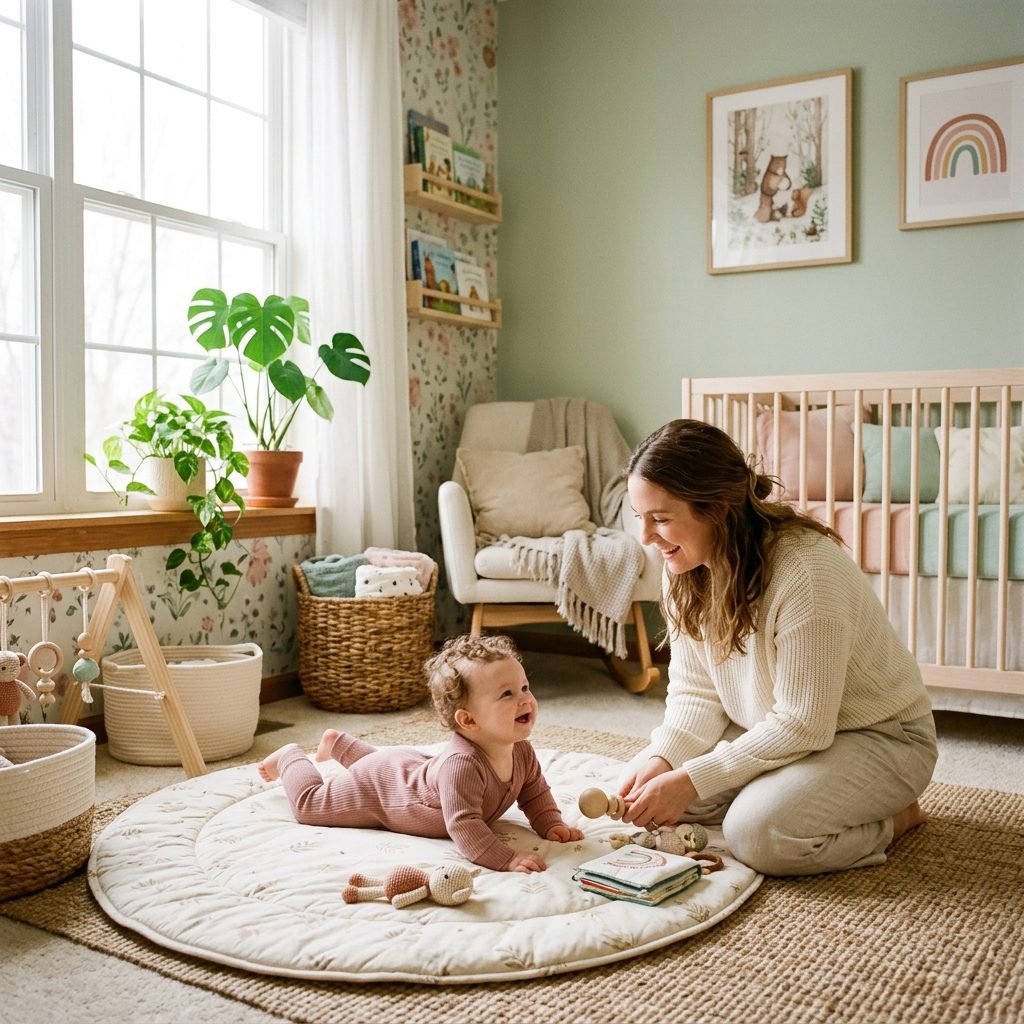
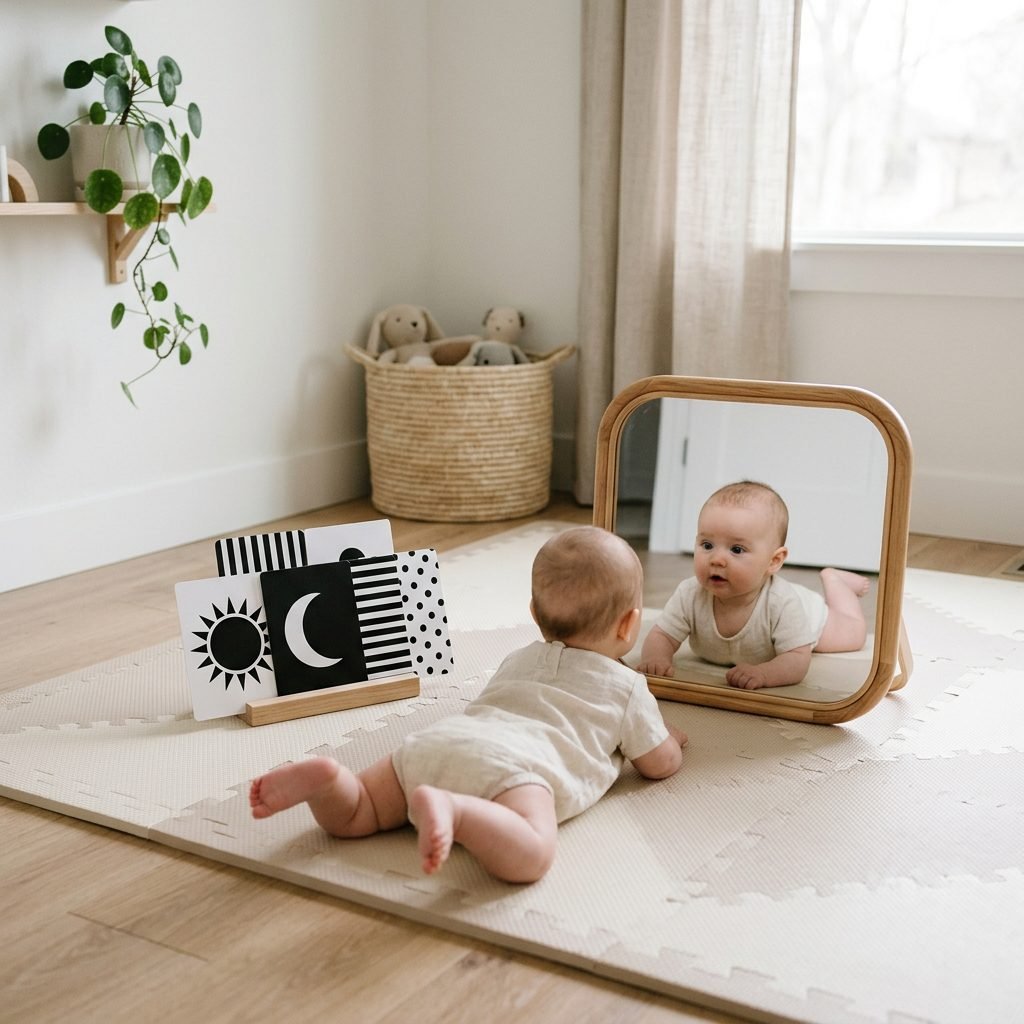
Before we dive into the physical movements, we need to talk about the environment. As an interior organizer and stylist, I believe that the space where your baby plays should be both functional and beautiful. You don’t need a house full of plastic gadgets to encourage rolling. In fact, the simpler the better.
- The Foundation: Choose a firm but cushioned surface. A high-quality, non-toxic foam play mat or a tightly woven organic cotton rug is ideal. If the surface is too plush, like a thick shag carpet, it makes it harder for the baby to get the leverage they need to push off.
- Visual Motivation: Use high-contrast cards or a shatterproof floor mirror. Babies are naturally vain—they love looking at themselves! Placing a mirror to their side can be the ‘carrot’ that encourages them to shift their weight.
- Clothing for Mobility: Skip the stiff denim or the elaborate ruffles for these sessions. Opt for a simple organic cotton bodysuit or even just a diaper. Feeling the air on their skin and having their toes free helps with sensory feedback and grip.
| Feature | Why It Matters | Pro Tip |
|---|---|---|
| Firm Surface | Provides leverage for pushing | Use a non-toxic play mat |
| High-Contrast Toys | Encourages visual tracking | Place toys at 45-degree angles |
| Bare Feet | Better grip and sensory input | Keep the room at a cozy 72°F |
Exercise 1: Tummy Time with a Strategic Twist
Building the Foundation of Strength
You’ve heard it a thousand times, but tummy time really is the gold standard for rolling prep. It strengthens the neck, shoulders, and upper back. But let’s make it more effective for rolling specifically.
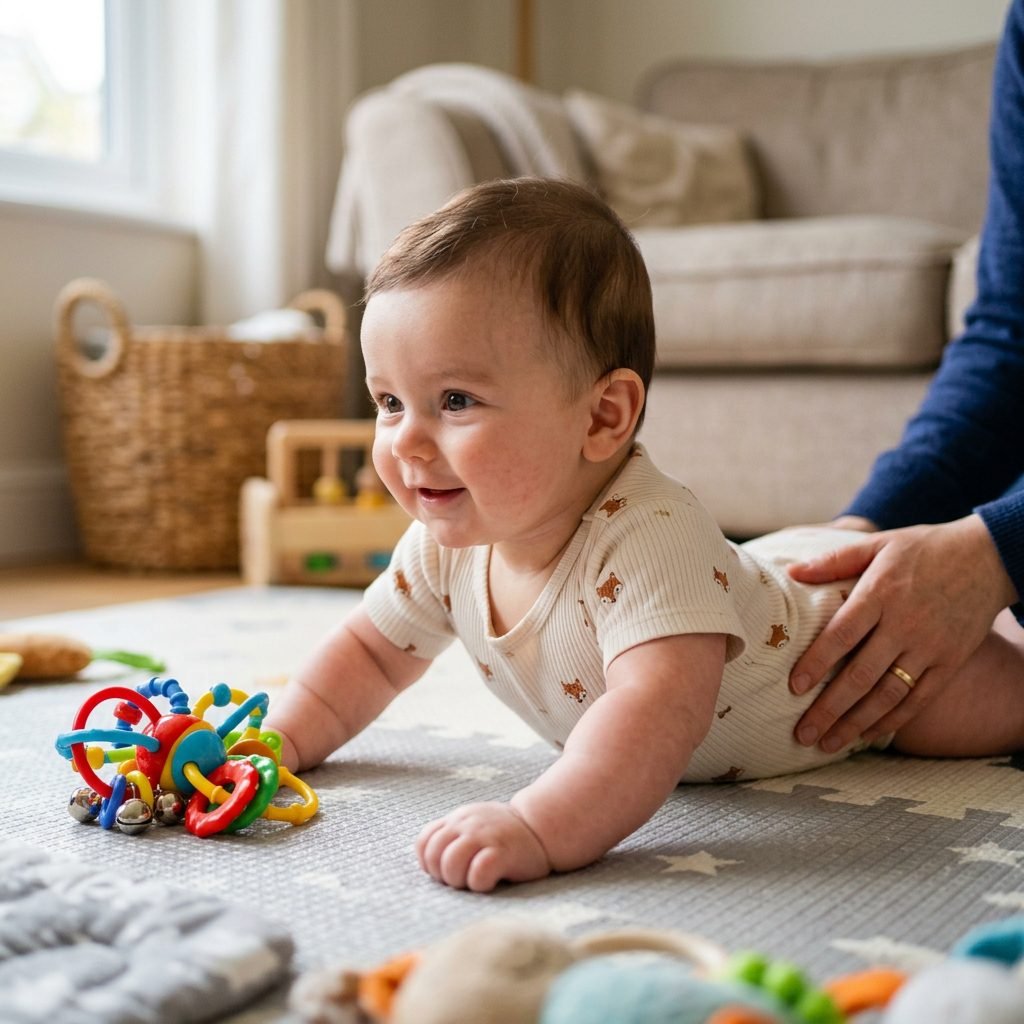
- Place your baby on their tummy on a flat surface.
- Instead of putting toys directly in front of them, place a favorite toy slightly to the upper right or upper left, just out of reach.
- As they lift their head to look at the toy, they will naturally begin to shift their weight onto one arm. This weight shift is the ‘secret sauce’ for the roll.
- The Doula Touch: Get down on the floor with them. Your face is their favorite thing in the world. If you move to the side, they are more likely to try and follow you.
Aim for 3 to 5 minutes of this focused play, several times a day. If they get fussy, it’s okay to stop. We want them to associate this movement with joy, not stress.
Exercise 2: Side-Lying Play (The Bridge to Rolling)
Connecting the Front and Back
Many parents forget about side-lying, but it is the perfect ‘halfway house’ for rolling. It teaches your baby how to balance on their side without the fear of a full tumble.
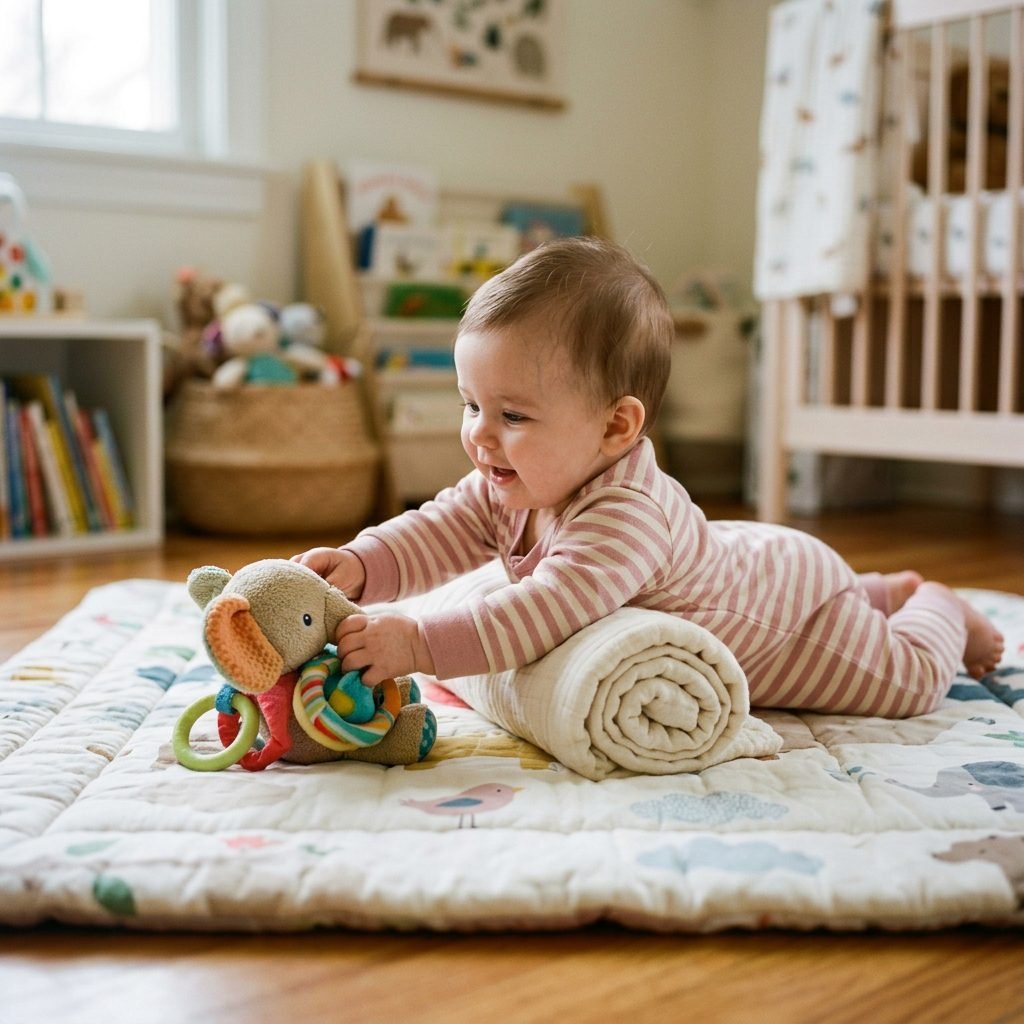
- Gently place your baby on their side. You can use a small rolled-up receiving blanket behind their back for a tiny bit of support if they feel ‘floppy.’
- Place toys directly in front of their chest so they can reach with both hands.
- This position encourages ‘midline play’ (bringing hands together), which is crucial for the brain coordination needed to roll.
- Safety Warning: Never leave a baby unattended in a side-lying position, especially if you are using a blanket prop.
By playing on their side, they will eventually accidentally tip over onto their tummy or back. When they do, celebrate! That ‘accident’ is a huge neural win.
Exercise 3: The ‘Reach and Cross’ Oblique Activator
Engaging the Core Muscles
Rolling requires a cross-body movement. This exercise helps your baby understand how to move their legs and torso in tandem.
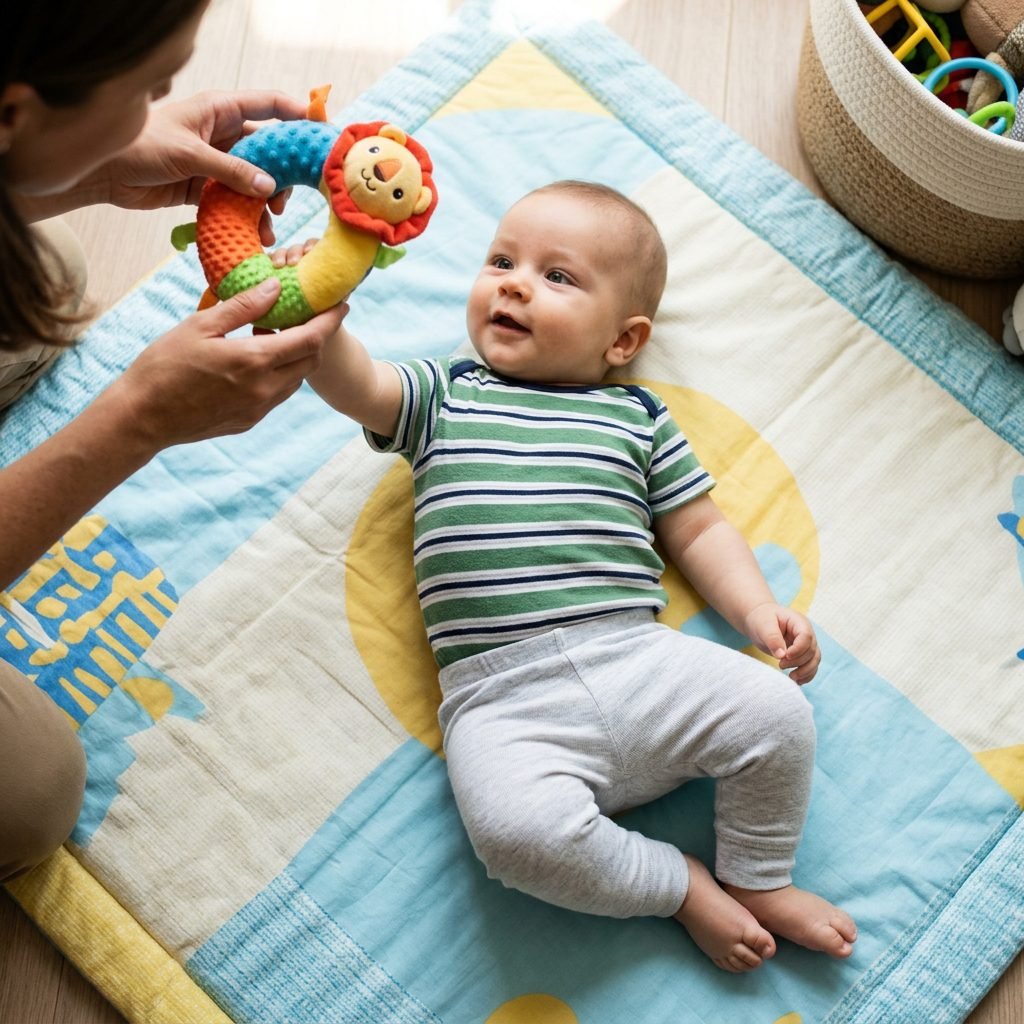
- Lay your baby on their back.
- Take a bright toy and hold it above their chest until they make eye contact.
- Slowly move the toy across their body toward the floor on the opposite side (e.g., move the toy from their right side across to the left floor).
- Encourage them to reach across their midline. As their arm crosses over, their hips will naturally want to follow.
- If they get stuck, you can gently cross one leg over the other at the ankles to help their lower body follow the lead of their upper body.
‘You are doing so well, little love. Look at those strong muscles working!’ Always narrate the movement to help with language development.
Exercise 4: The Diaper Change Roll-n-Go
Practical Integration into Daily Life
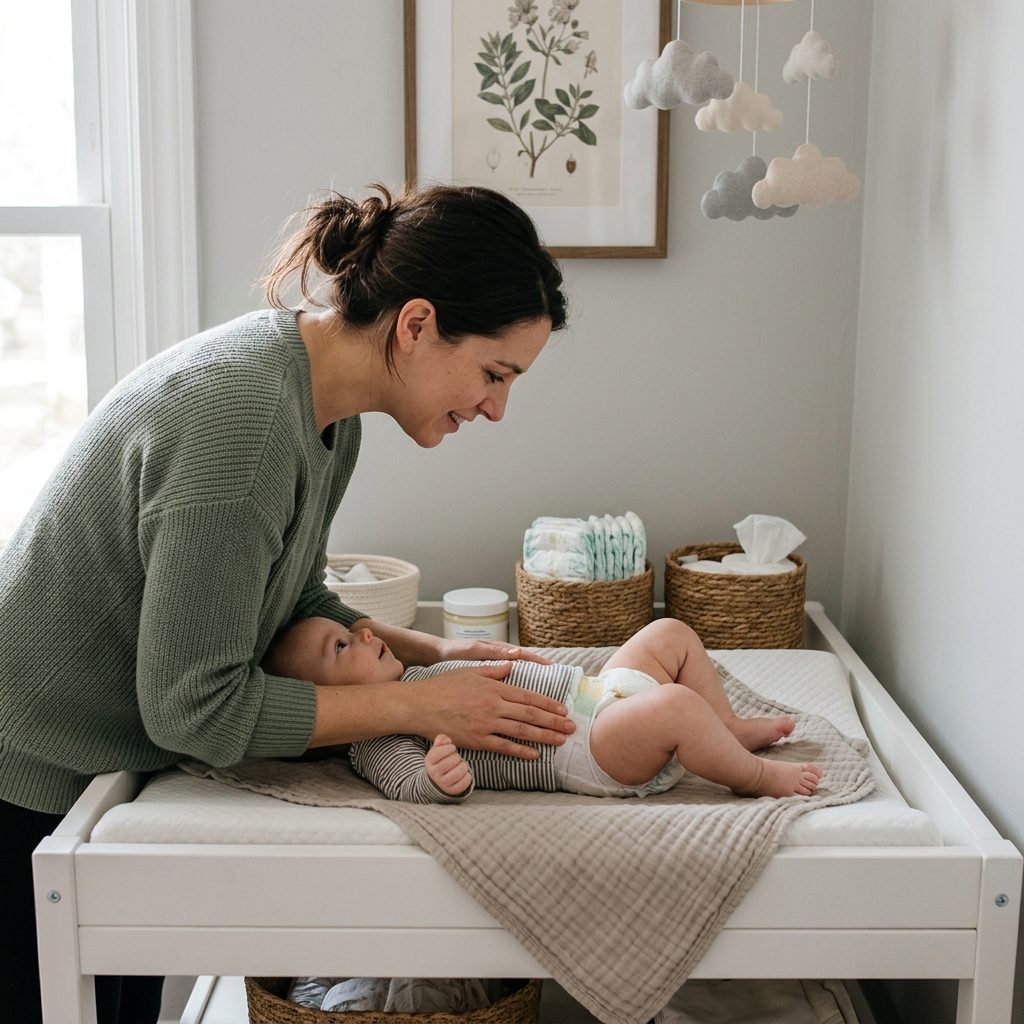
As a busy mama, you might not always have time for a dedicated 30-minute ‘gym session.’ This is where the Diaper Change Roll comes in. We change diapers 8-12 times a day—let’s use that time!
Instead of lifting your baby’s legs straight up to slide the diaper under (which can be hard on their tiny spine), try rolling them from side to side. When the diaper change is finished, don’t just pick them up. Gently guide them into a roll onto their tummy, and then pick them up from the tummy position. This builds muscle memory. Every time they feel that rhythmic side-to-side motion, their brain is mapping out the path to a full roll.
| Traditional Method | The Roll-n-Go Method |
|---|---|
| Lifting legs by ankles | Rolling hips side-to-side |
| Static back position | Dynamic movement practice |
| Fast and functional | Functional and developmental |
Exercise 5: The Blanket ‘Magic Carpet’ Roll
Assisted Movement for Confidence
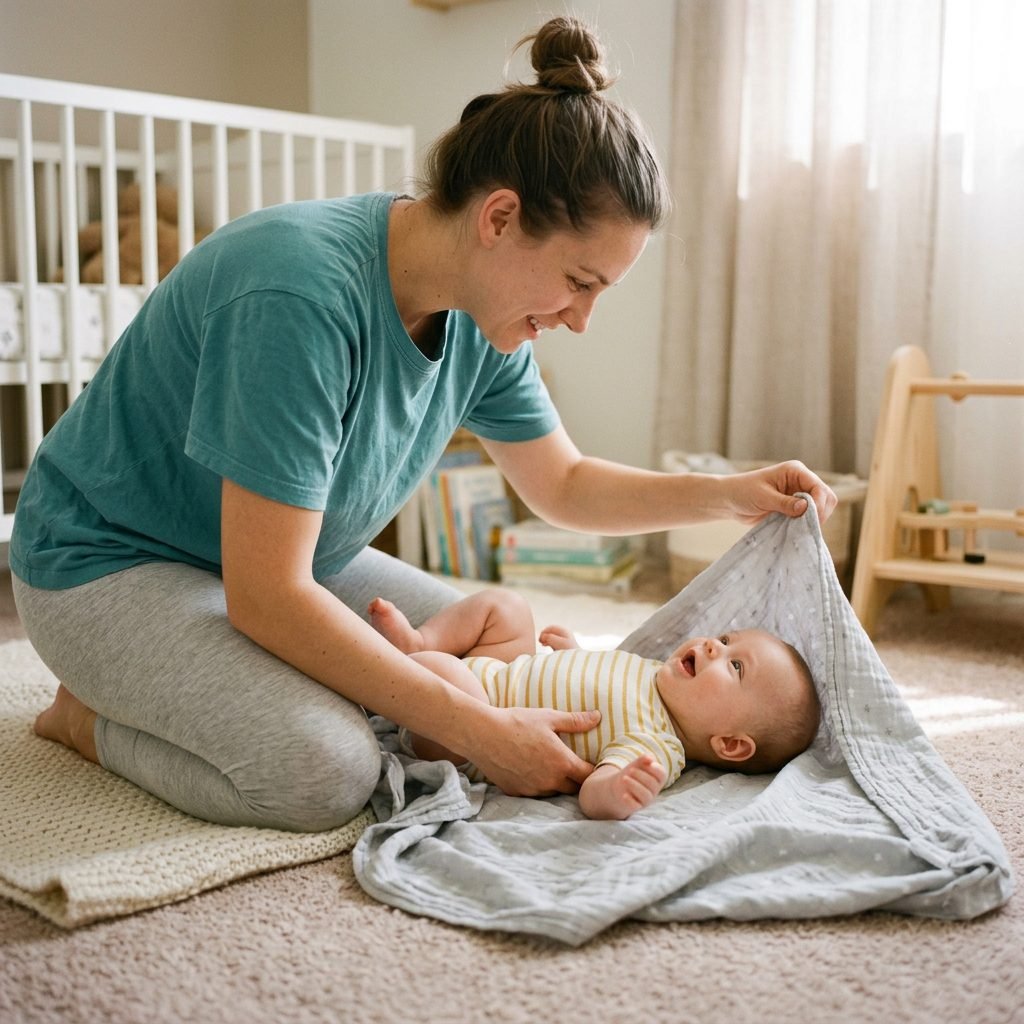
This is a wonderful exercise for babies who are a little bit hesitant. It uses a tool you already have: a small, thin baby blanket.
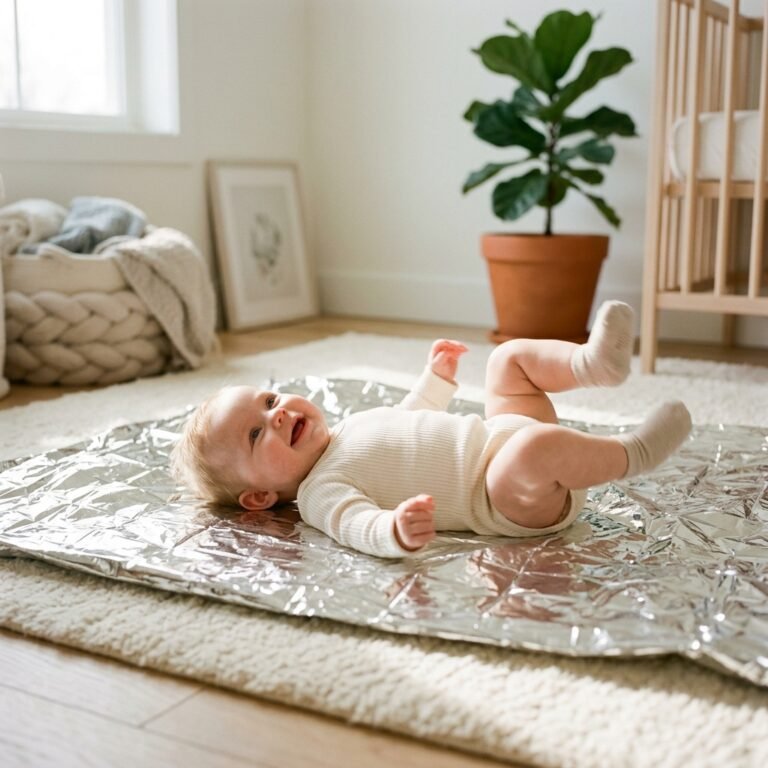
- Lay a thin, non-slip blanket on the floor and place your baby on their back on one side of the blanket.
- Slowly and very gently, lift the edge of the blanket so the baby begins to roll toward the center.
- The goal isn’t to flip them like a pancake! The goal is to let the blanket do 20% of the work while they do 80%.
- As they feel the sensation of ‘tipping,’ they will naturally put their arms out or tuck their chin.
- Stop the lift once they reach their side and see if they can finish the roll on their own.
This exercise provides vestibular input (the sense of balance and spatial orientation), which is vital for all future milestones like sitting and crawling.
Troubleshooting: When the Roll Gets ‘Stuck’
Common Hurdles and How to Help
Is your baby getting halfway there and then screaming in frustration? This is actually a good sign! It means they have the desire, they just haven’t figured out the ‘arm tuck’ yet. When a baby rolls from back to tummy, they often get their bottom arm stuck underneath them. Instead of immediately flipping them back, try this:
- Gently stroke the arm that is tucked under. This brings sensory awareness to that limb.
- Shift their hips back just a tiny bit to take the weight off the arm, allowing them to pull it out themselves.
- Offer plenty of reassurance. A simple, ‘You’re almost there, I see you working so hard!’ goes a long way.
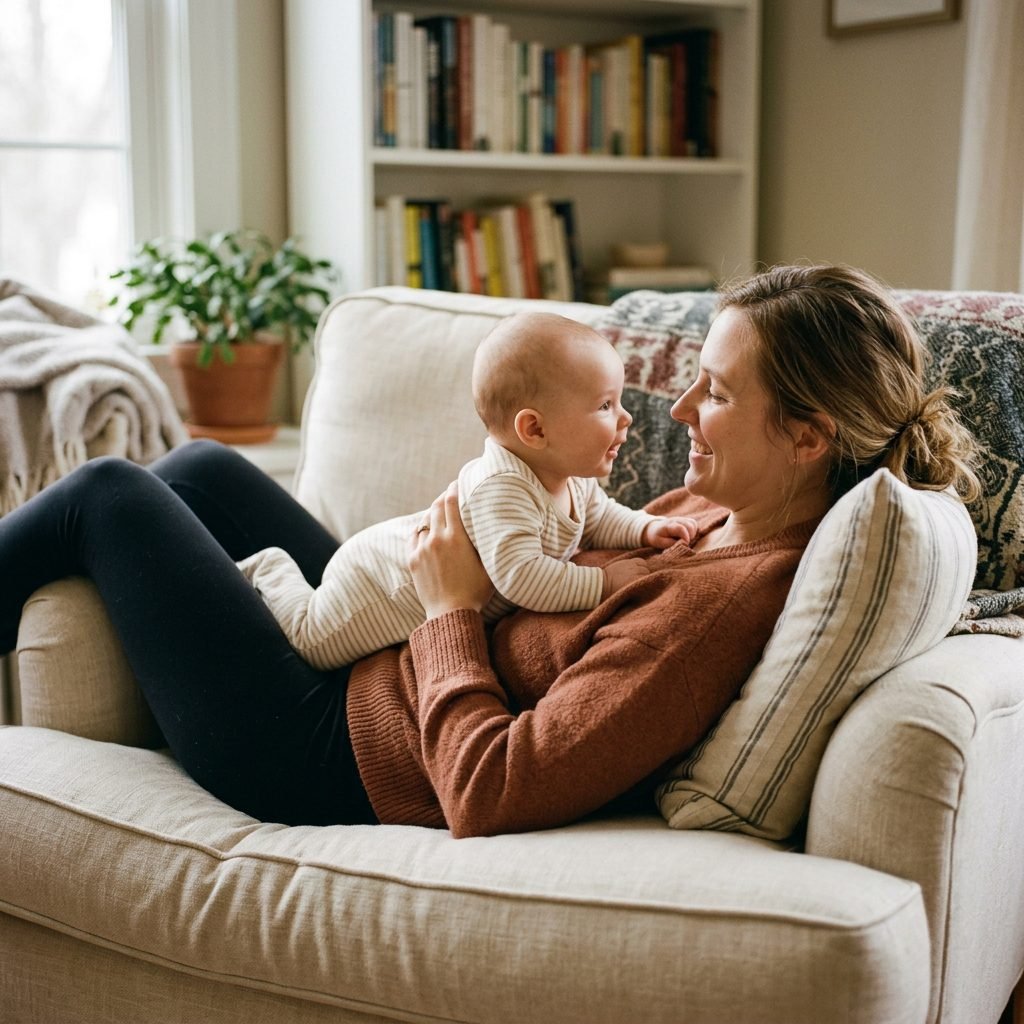
If your baby hates tummy time, try doing it on your chest while you are reclined on the sofa. This ‘human tummy time’ is often much more tolerable for babies with reflux or those who are extra clingy.
Conclusion
Celebrating Every Wiggle
Mama, you are doing an incredible job. Whether your baby rolls today, next week, or next month, know that these moments of play are building a foundation of trust and strength. You are your baby’s first teacher, and your encouragement is the best ‘exercise’ they could ever have. Keep the sessions short, keep them sweet, and don’t forget to capture those wobbly attempts on camera—you’ll want to remember these days! Soon enough, you’ll be chasing a crawler, so soak up these floor-time snuggles while you can. You’ve got this!