
The Exact Sleeping Position That Finally Cured My Pregnancy Back Pain
Oh mama, I see you. It is 3:00 AM, and you are currently staring at the ceiling, trying to figure out how a body that is supposed to be ‘glowing’ can feel so incredibly heavy and sore. You have tried the warm milk, the white noise, and the deep breathing, but that nagging ache in your lower back—the one that feels like a dull toothache radiating through your hips—just won’t quit. As a doula and someone who has walked this path with hundreds of mothers, I want you to know that you are not alone, and more importantly, you don’t have to just ‘tough it out.’ Back pain is one of the most common complaints in pregnancy, affecting nearly 70% of expectant women at some point. But there is a secret to finding relief that often gets overlooked in the flurry of prenatal appointments: the way you align your spine while you sleep. Tonight, we are going to change your sleep game forever. We aren’t just talking about ‘lying on your side’; we are talking about a precision-engineered comfort strategy that will finally let your muscles relax and your body heal.
The Science of the Ache: Why Pregnancy Changes Your Spine
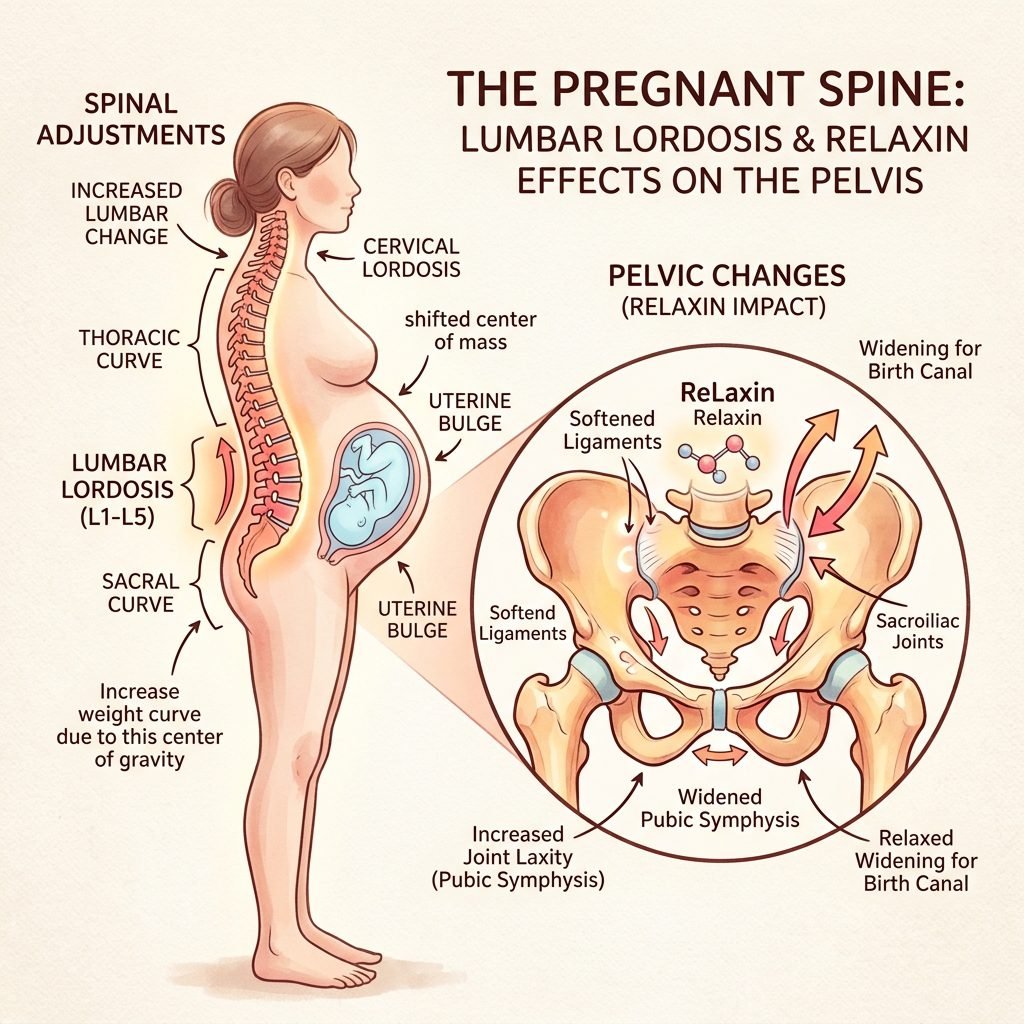
To fix the pain, we first have to understand why your back is staging a protest. During pregnancy, your body produces a hormone called relaxin. Its job is exactly what it sounds like: it relaxes the ligaments in your pelvic area and softens the cervix to prepare for birth. However, relaxin doesn’t just target your pelvis; it affects every joint in your body. This, combined with your shifting center of gravity as your sweet baby grows, puts an immense amount of strain on your lower back and sacroiliac (SI) joints. Your lower spine begins to curve more deeply—a condition called lumbar lordosis—to compensate for the weight in front. By the time you reach the 28th week of pregnancy, your abdominal muscles have also stretched and weakened, leaving your back to do all the heavy lifting. When you lie down at night, if your spine isn’t perfectly neutral, those already-strained ligaments are pulled even further, leading to that sharp, shooting pain or the constant dull throb that keeps you awake. Understanding that this is a physical, structural challenge helps us realize that we need a physical, structural solution.
Remember, mama: Your body isn’t failing you; it is expanding to hold a miracle. The pain is just a signal that your structure needs a little extra support during this massive transformation.
The SOS Method: The Gold Standard for Pregnancy Sleep

The position that finally changed everything for me, and for so many of my clients, is known as SOS (Sleep On Side). But specifically, sleeping on your left side is the gold standard recommended by the American Pregnancy Association. Why the left? It is all about the plumbing. Your inferior vena cava (IVC) is a large vein that runs along the right side of your spine, carrying blood back to your heart from your lower body. When you sleep on your back or your right side, the weight of the uterus can compress this vein, potentially reducing blood flow to the placenta and leaving you feeling dizzy or breathless. Sleeping on the left side keeps the uterus off that vital vein and actually improves kidney function, which helps reduce the swelling (edema) in your feet and hands. To execute the perfect SOS position, you want your knees slightly bent toward your chest—not quite a full fetal position, but enough to take the tension off your lower back. This ‘neutral side-lying’ position is the foundation of your pain-free night.
| Position | Safety Level | Impact on Back Pain | Best For |
|---|---|---|---|
| Left Side (SOS) | Optimal | High Relief | Blood flow and kidney function |
| Right Side | Safe | Moderate Relief | Alternating to prevent hip soreness |
| Back Sleeping | Avoid after 20 weeks | Increases Pain | Short rests only (if propped up) |
| Stomach Sleeping | Safe until uncomfortable | Low Relief | Early pregnancy only |
The Pillow Fortress: A Doula’s Guide to Strategic Propping
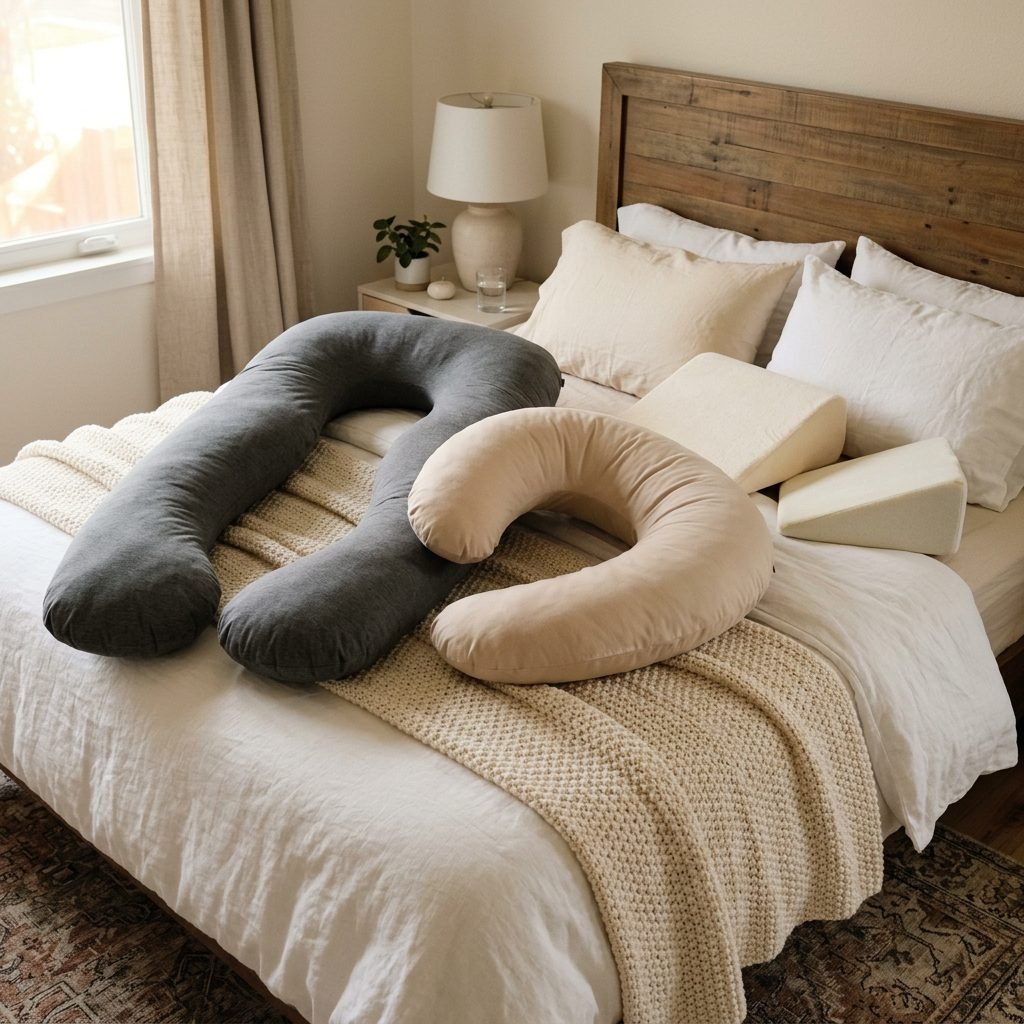
Now, simply lying on your side isn’t enough. If you just flop over, your top leg will slide forward, pulling your hip out of alignment and twisting your lower spine. This is where the ‘Pillow Fortress’ comes in. To achieve total spinal neutrality, you need three key points of support. First, you need a firm pillow between your knees and ankles. It is a common mistake to only put a pillow between the knees; by extending it down to your ankles, you keep your entire leg parallel to the bed, which keeps your hips ‘stacked’ and prevents SI joint pain. Second, you need a small, soft wedge or a rolled-up towel tucked right under the ‘dip’ of your waist or under your growing belly. This prevents the weight of the baby from pulling your spine into a lateral curve. Finally, place a long pillow behind your back. This isn’t just for comfort—it acts as a physical barrier to stop you from subconsciously rolling onto your back in the middle of the night. Whether you use a specialized U-shaped pregnancy pillow or a collection of standard pillows, the goal is to create a nest that holds your body in a straight line from your neck to your tailbone.
- The Knee Pillow: Keeps the pelvis level and prevents hip rotation.
- The Belly Wedge: Supports the uterine weight to reduce ‘pulling’ sensations.
- The Back Bolster: Prevents supine (back) sleeping and provides a sense of security.
- The Head Pillow: Should be thick enough to keep your neck aligned with your shoulders.
Pre-Sleep Rituals: Preparing Your Nervous System for Rest
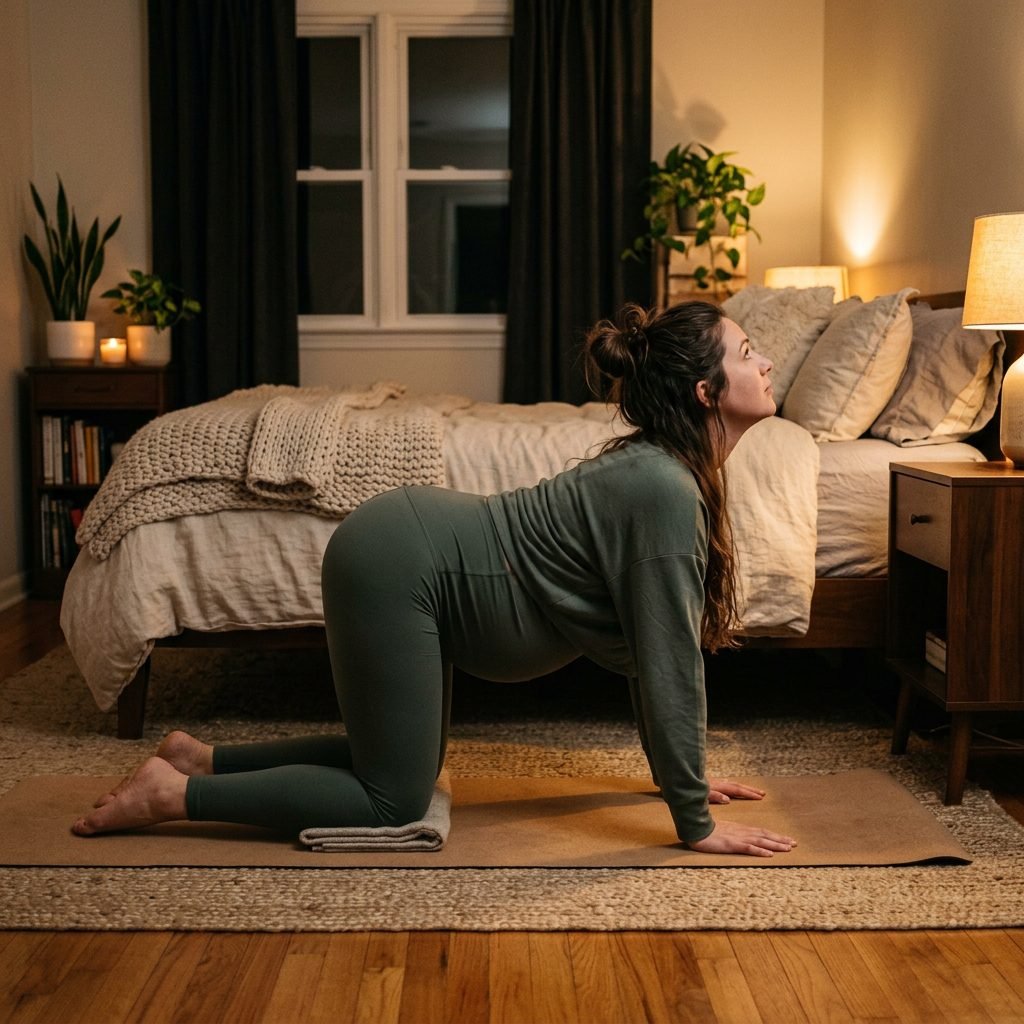
Curing back pain isn’t just about what you do once you’re in bed; it’s about how you prepare your body to get there. Your muscles are often ‘locked’ into a state of tension by the end of the day. A 10-minute prenatal stretching routine can signal to your nervous system that it is safe to let go. I always recommend the ‘Cat-Cow’ stretch. Get on all fours, inhale as you let your belly drop slightly (don’t over-arch!), and exhale as you round your back toward the ceiling like a stretching cat. This move specifically targets the lumbar spine and helps the baby move into an optimal position, which can reduce the pressure on your nerves. Follow this with a magnesium-rich snack or a warm (not hot!) bath with Epsom salts. Magnesium is a natural muscle relaxant that can help prevent those dreaded nighttime leg cramps and soothe the back muscles. When you finally climb into your ‘Pillow Fortress,’ your body will be physically and chemically primed for deep, restorative sleep.
- Cat-Cow Stretch: 10 repetitions to mobilize the spine.
- Child’s Pose (Wide Knee): Hold for 2 minutes to open the hips.
- Pelvic Tilts: 15 reps to strengthen the deep core and release the lower back.
When the Ache is More: Identifying SPD and PGP
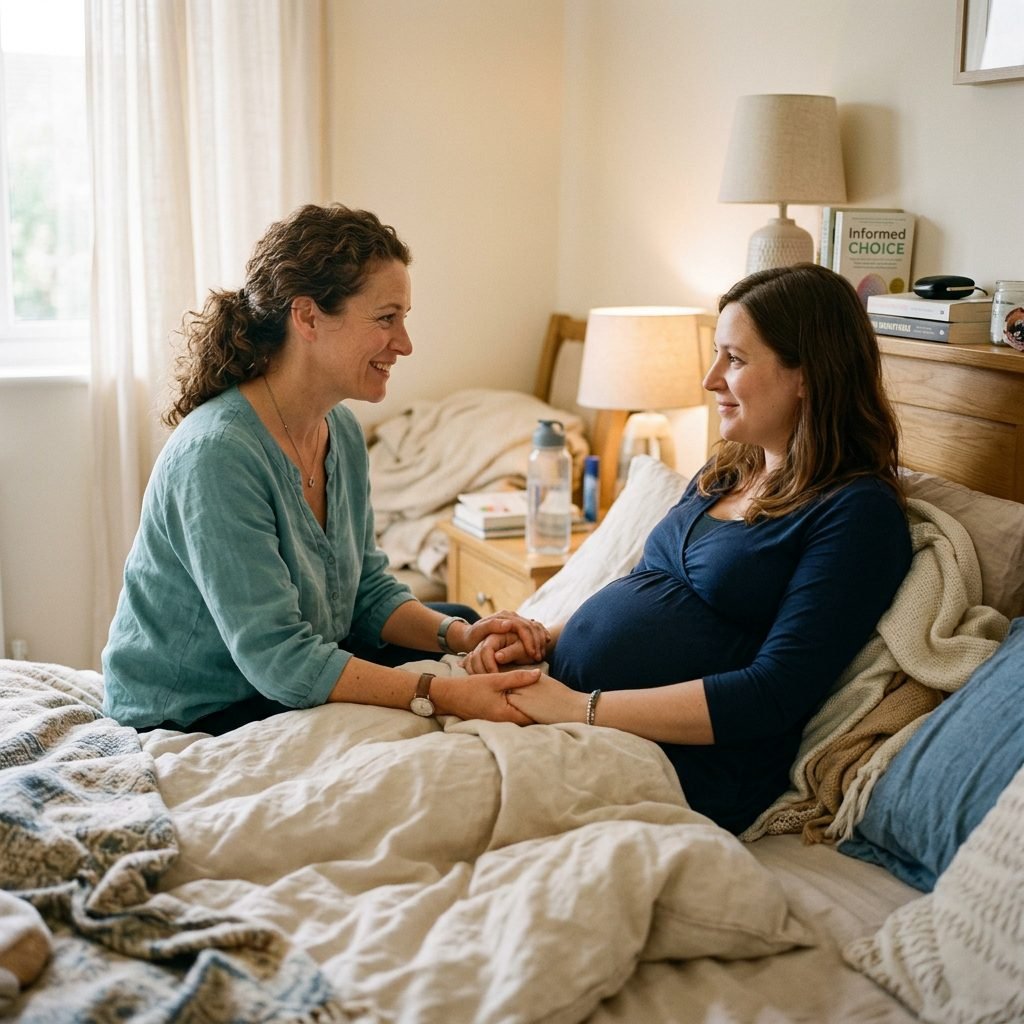
Sometimes, despite the perfect sleeping position, the pain persists. If you feel a sharp, grinding pain in your pubic bone, or if it feels like your pelvis is ‘clicking’ when you walk or roll over in bed, you might be dealing with Symphysis Pubis Dysfunction (SPD) or Pelvic Girdle Pain (PGP). This is more than just standard pregnancy back pain; it is a misalignment of the pelvic joints. In these cases, the SOS position is even more critical, but you must be extra careful when moving. When rolling over in bed, keep your knees squeezed together as if they are velcroed. Never ‘step’ out of bed one leg at a time; instead, swing both legs out together while using your arms to push your upper body up. If your pain is interfering with your ability to walk or sleep, please reach out to a Pelvic Floor Physical Therapist. They are the unsung heroes of pregnancy recovery and can provide manual adjustments and specific exercises that work wonders alongside your new sleeping habits.
Gentle Reminder: You do not have to be a martyr to your discomfort. Asking for help—whether from a PT, a chiropractor, or your doula—is a sign of strength and proactive parenting.
Conclusion
Mama, finding the ‘exact’ sleeping position isn’t just about physical comfort; it’s about reclaiming your energy so you can enjoy these final months of pregnancy. By adopting the left-side SOS position, building your Pillow Fortress, and practicing safe movement, you are giving your body the support it deserves. Remember that every body is unique, so don’t be afraid to micro-adjust your pillows until it feels ‘just right.’ You are doing the hard work of growing a human being, and you deserve a night of deep, uninterrupted rest. Sleep well, mama—the morning is coming, and you’ve got this.