The Best Montessori Toys for a 3 Month Old to Encourage Reaching and Grasping
Welcome to the Awakening: Your Baby’s Three-Month Milestone
Oh, sweet mama, welcome to one of the most magical transitions in your little one’s first year. If you’ve noticed your three-month-old moving away from those jerky, newborn reflexes and starting to gaze at their hands with wide-eyed wonder, you are witnessing the beautiful ‘awakening.’ At three months, the world is no longer a blur of needs; it is a laboratory of discovery. As a doula and developmental enthusiast, I’ve seen how this stage marks the beginning of intentionality. Your baby is realizing that those hands belong to them, and even more excitingly, those hands can do things.
The Montessori philosophy is perfectly suited for this stage because it respects the baby’s natural drive to master their environment. Instead of overstimulating plastic toys that light up and sing at the touch of a button, Montessori encourages passive toys for active babies. We want to provide materials that invite the baby to work, to concentrate, and to eventually succeed in the complex physical feat of reaching and grasping. In this guide, we’re going to dive deep into the best tools to support these milestones, ensuring your nursery is a sanctuary of purposeful play.
Understanding the Leap: Why Reaching and Grasping Matter Now
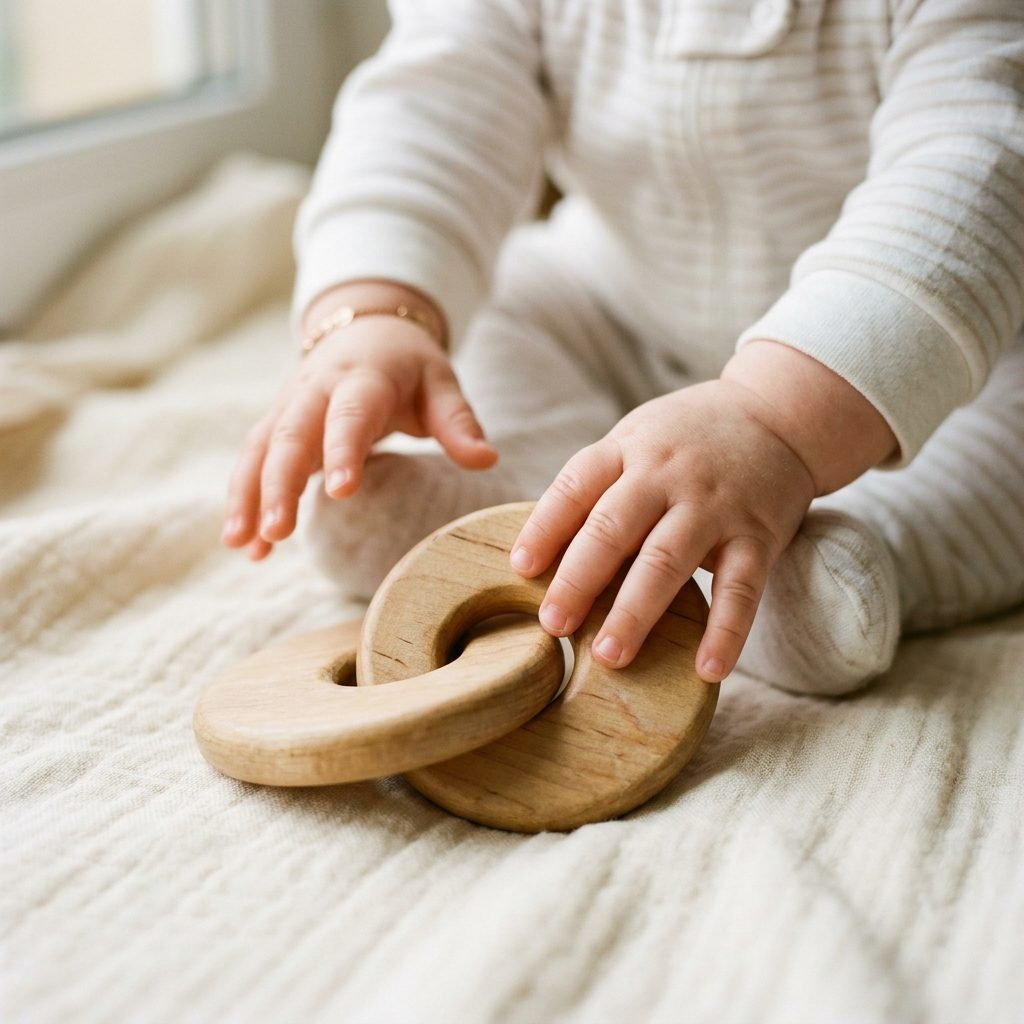
At around 12 weeks, the primitive grasp reflex (where they automatically curl their fingers around your pinky) begins to fade, making room for voluntary reaching. This is a massive neurological leap! It requires the coordination of the eyes (visual tracking), the brain (planning the movement), and the muscles (execution). This is the foundation of hand-eye coordination and fine motor development.
The Three Phases of Grasping
- Phase 1: The Swiping Stage – Your baby will start batting at objects hanging above them. They don’t always connect, but the effort is there!
- Phase 2: The Palmar Grasp – This is using the whole hand to wrap around an object. It’s not very precise yet, but it’s powerful.
- Phase 3: Hand-to-Hand Transfer – This usually comes a bit later, but the toys we introduce now prepare the neural pathways for passing an object from the left hand to the right.
Your baby’s hands are their primary tools for learning. By providing the right weight, texture, and shape, you are literally helping wire their brain for future problem-solving.
When we choose toys for this stage, we are looking for tactile feedback. A plastic rattle is light and often slippery; a wooden rattle has weight, a unique scent, and a temperature that changes with the baby’s touch. These sensory details provide the brain with ‘rich’ data.
The Montessori Essentials: Top Toys for Reaching and Grasping
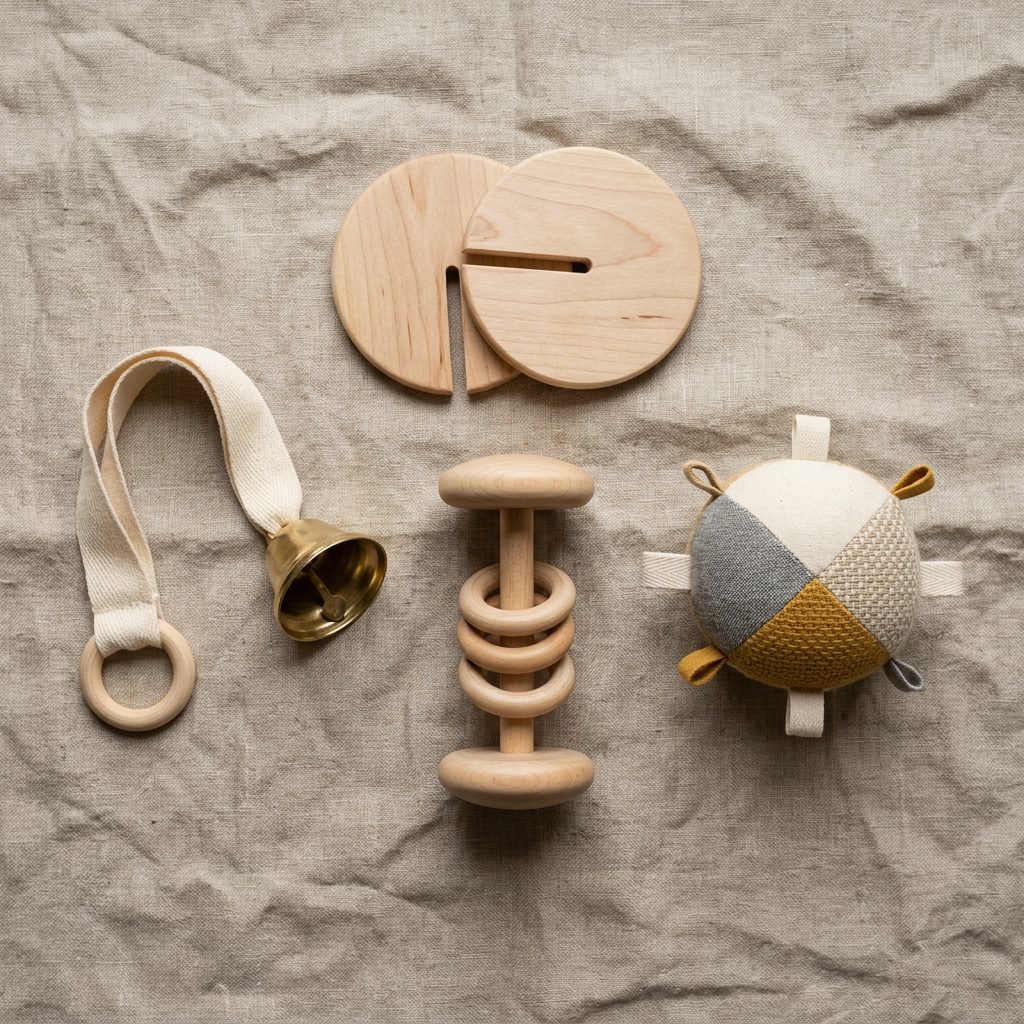
When selecting the best Montessori toys for a 3-month-old, we look for simplicity. We want the baby to focus on one skill at a time. If a toy is too loud, too bright, and has too many textures, the baby’s brain might get ‘noisy’ and lose focus on the physical act of grasping.
1. The Bell on a Ribbon
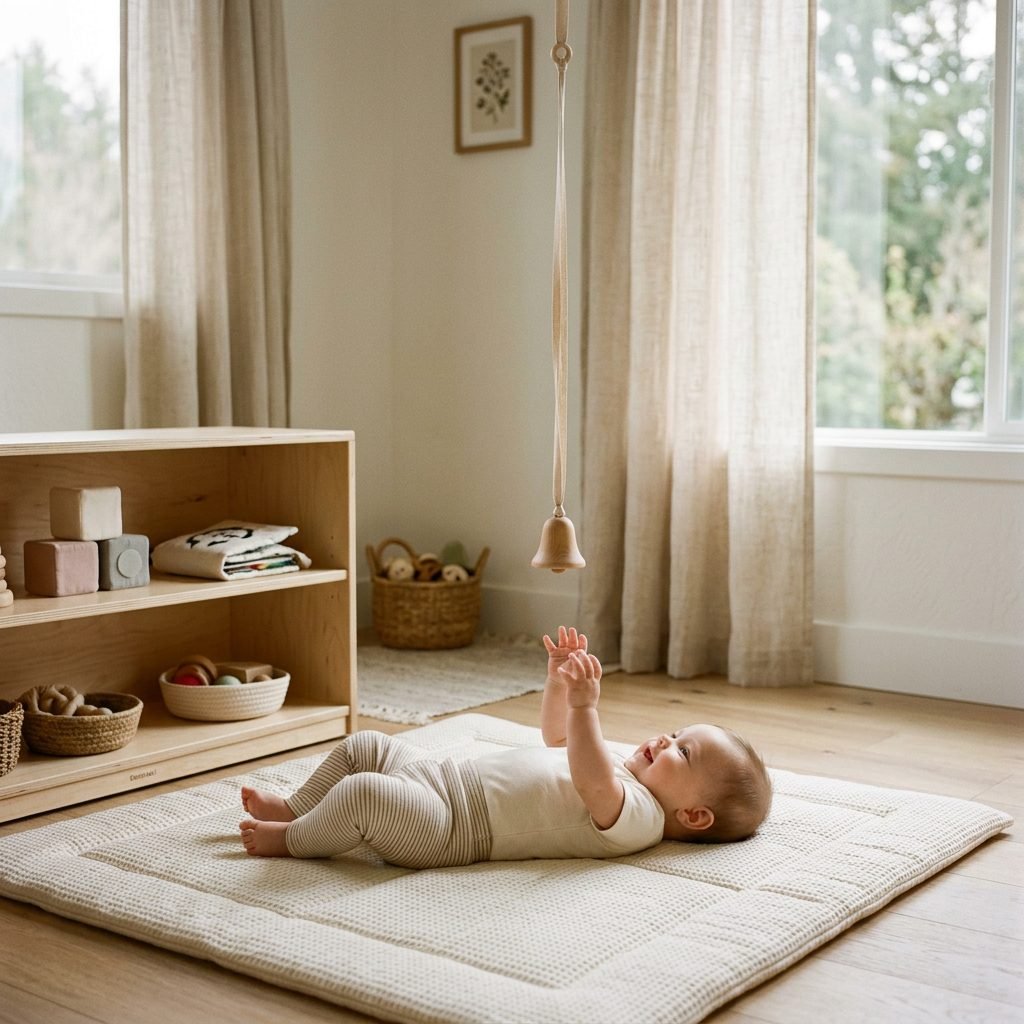
This is perhaps the most iconic Montessori material for this age. A simple silver or brass bell is hung from a soft elastic or cotton ribbon. When the baby swats at it, they are rewarded with a gentle, clear ‘ting.’ This teaches cause and effect. The baby thinks, ‘When I move my arm, that sound happens!’
2. The Interlocking Discs
These are two wooden discs joined at a 90-degree angle. They are specifically designed for the 3-to-4-month-old hand. Because of the angle, the baby can easily hook their fingers around one disc, and as they move it, it naturally encourages the hand-to-hand transfer. It is a masterpiece of ergonomic design for infants.
3. The Grasping Beads
Often called ‘Montessori beads,’ these are large wooden beads strung together on a durable cord. They are perfect for the palmar grasp. The different shapes of the beads provide varied tactile input, and the weight helps the baby develop wrist strength.
| Toy Type | Key Benefit | Material Recommendation |
|---|---|---|
| Bell on Ribbon | Cause & Effect / Auditory Feedback | Natural Silk Ribbon & Lead-free Bell |
| Interlocking Discs | Hand-to-Hand Transfer | Unfinished Beech or Maple Wood |
| The ‘Skwish’ Toy | Gross Motor / Grasping | Sustainable Wood & Elastic Ties |
| Soft Cotton Ball | Tactile Grip / Safe Throwing | Organic Cotton or Velvet |
The DIY Montessori Corner: Crafting Toys at Home
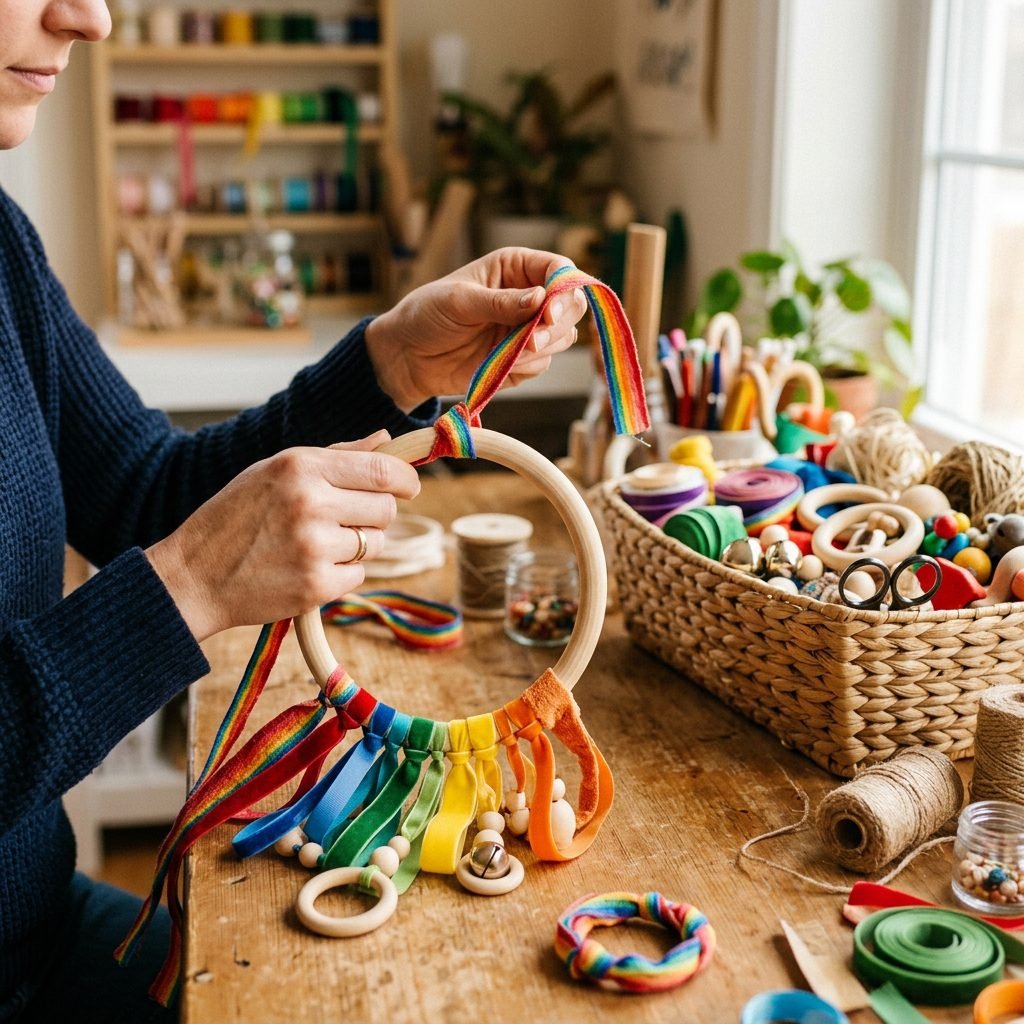
Mama, you don’t need a huge budget to be a Montessori parent! Some of the best reaching tools can be made with items you already have. The goal is to create high-contrast, easy-to-grab items that stimulate the senses without overwhelming them.
DIY Sensory Hoop
- Take a simple 6-inch wooden embroidery hoop.
- Tie various lengths of textured ribbons (satin, grosgrain, velvet) around the hoop.
- Ensure the ribbons are short enough to be safe (no more than 6 inches) but long enough for the baby to feel.
- Hang this from a play gym or hold it above your baby during floor time.
The ‘Bottle Rattle’
Take a small, clear travel-sized bottle and fill it with dried beans or colorful lentils. Seal the cap with non-toxic permanent glue (this is vital for safety!). The weight and the sound provide immediate feedback when the baby manages to grasp and shake it. It’s a wonderful way to recycle and provide a new sensory experience.
Remember, the ‘work’ of the baby is play. You are the facilitator, providing the environment where they can succeed on their own terms.
Setting the Stage: The Montessori Movement Area
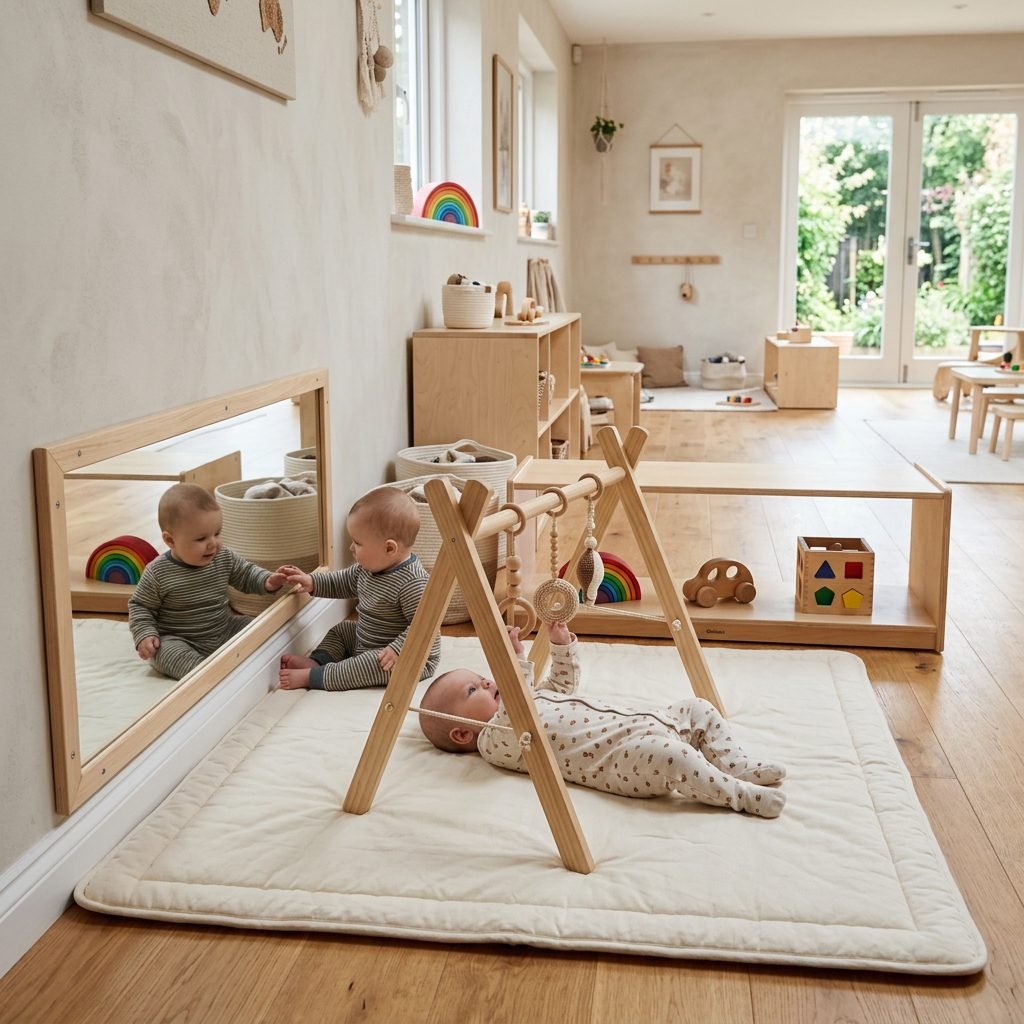
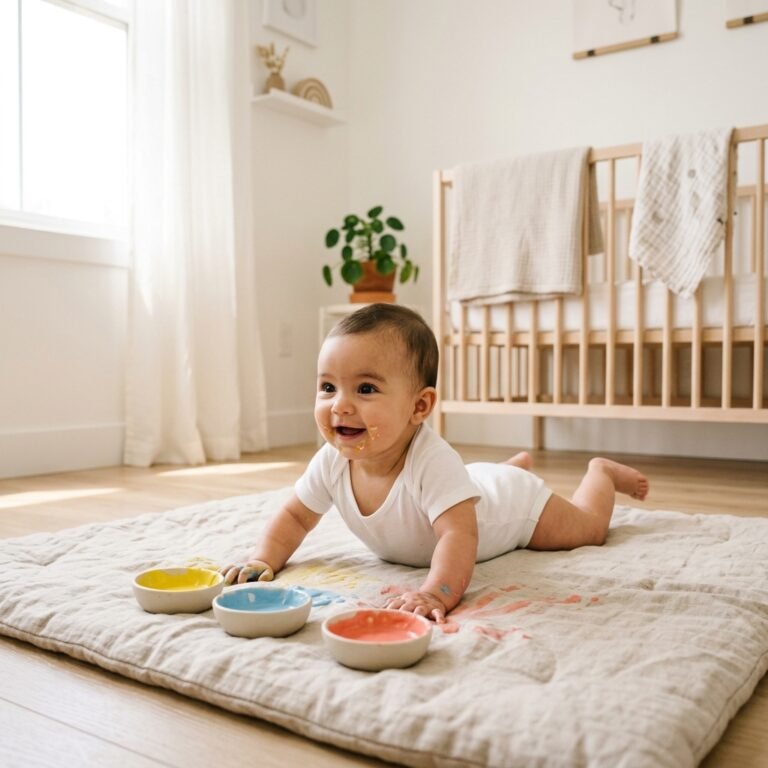
Where your baby plays is just as important as what they play with. In Montessori, we call this the Movement Area. For a 3-month-old, this doesn’t need to be a whole room; a dedicated corner of your living room or nursery is perfect.
Elements of a Perfect Movement Area
- A Firm Floor Mat: Avoid overly plush rugs. A firm surface (like a cotton quilt or a cork mat) provides the resistance a baby needs to push off and eventually roll.
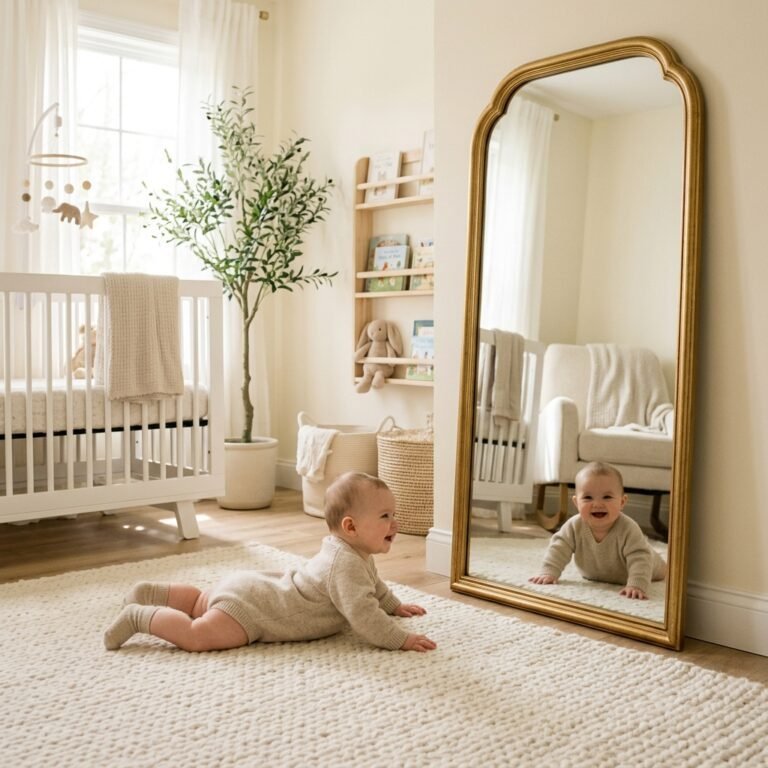
- The Low Mirror: Placing a long, horizontal mirror safely on the wall at floor level is a game-changer. Babies are fascinated by faces. Seeing their own reflection move as they reach for a toy provides incredible visual feedback.
- A Low Shelf: Even at 3 months, having a low, open shelf where 2 or 3 toys are neatly displayed helps create a sense of order. When you finish ‘playtime,’ return the toy to its spot on the shelf.
| Must-Have Element | Purpose | Placement Tip |
|---|---|---|
| Floor Mirror | Visual Self-Recognition | Parallel to the baby’s lying position |
| High-Contrast Cards | Visual Focus | Propped up 8-12 inches from face |
| Wooden Play Gym | Hanging Reaching Targets | Center of the mat area |
The ‘Observe, Don’t Interfere’ Method: How to Play with Your Baby

One of the hardest things for us as parents is to sit back and watch our babies struggle. However, in the Montessori world, that ‘struggle’ is where the learning happens. If your baby is trying to reach for the interlocking discs and keeps missing, your instinct might be to put the toy directly in their hand. Wait!
How to Facilitate Development
- Observe first: Watch your baby’s cues. Are they focused? Are they frustrated? If they are focused, do not interrupt, even with praise.
- Provide the ‘Just Right’ Challenge: Place the toy just an inch away from their hand. Close enough to be attainable, but far enough to require effort.
- Narrate the Action: Instead of saying ‘Good job!’, try describing what they did. ‘You reached out your hand and touched the smooth wood. You moved it!’ This builds vocabulary and connection without creating a ‘praise-junkie.’
- Respect the Concentration: If your baby is staring intensely at a hanging bell, they are working. Let them finish their ‘cycle of work’ before picking them up or changing their diaper.
By 3 months, babies can often concentrate for 5-10 minutes at a time. This focus is the seed of future academic success and emotional regulation. Respecting it now pays dividends later.
Conclusion
Growing Together in Purpose and Love
Mama, as you watch your three-month-old finally close their tiny fingers around a wooden ring for the first time, take a deep breath and soak in that victory. It’s more than just a ‘toy’; it’s a tool that respects their dignity and their drive to grow. By choosing Montessori-aligned materials, you are choosing to see your baby as a capable, curious individual from day one.
Don’t feel like you need to buy everything at once. Start with one or two items—perhaps the bell on a ribbon or the interlocking discs—and simply observe. You’ll be amazed at how much your little one can teach you about persistence and wonder. You are doing an incredible job, and your intentionality in these early months is building a beautiful foundation for your child’s lifelong love of learning. Enjoy this sweet, reaching, grasping season!