

Does Belly Binding Work? The Truth About Shrinking Your Waist After Birth
Welcome to the Fourth Trimester, Mama
Oh, sweet sister, if you are reading this while cradling a newborn or feeling the heavy, beautiful weight of your third-trimester bump, please take a deep breath. Your body has just performed the most magnificent miracle on Earth. It has stretched, shifted, and opened to bring forth life. It is only natural that you might look in the mirror and wonder, ‘Will my body ever feel like home again?’
The question of belly binding is one I hear in almost every postpartum visit. From the sleek, modern Velcro wraps seen on social media to the intricate, ancient art of Bengkung binding, the promise of ‘shrinking the waist’ is a powerful lure. But as your doula and sister in this journey, I want to peel back the layers of marketing and get to the heart of the matter. We aren’t just talking about fitting back into your pre-pregnancy jeans; we are talking about structural support, internal healing, and honoring the transition of your physical self.
In this guide, we are going to explore the truth about what belly binding can—and cannot—do for your postpartum body. We will look at the science of organ repositioning, the reality of diastasis recti, and why ‘shrinking’ is often the wrong word for the beautiful process of ‘closing’ the body after birth.
The Ancient Wisdom: Why We Bind the Belly
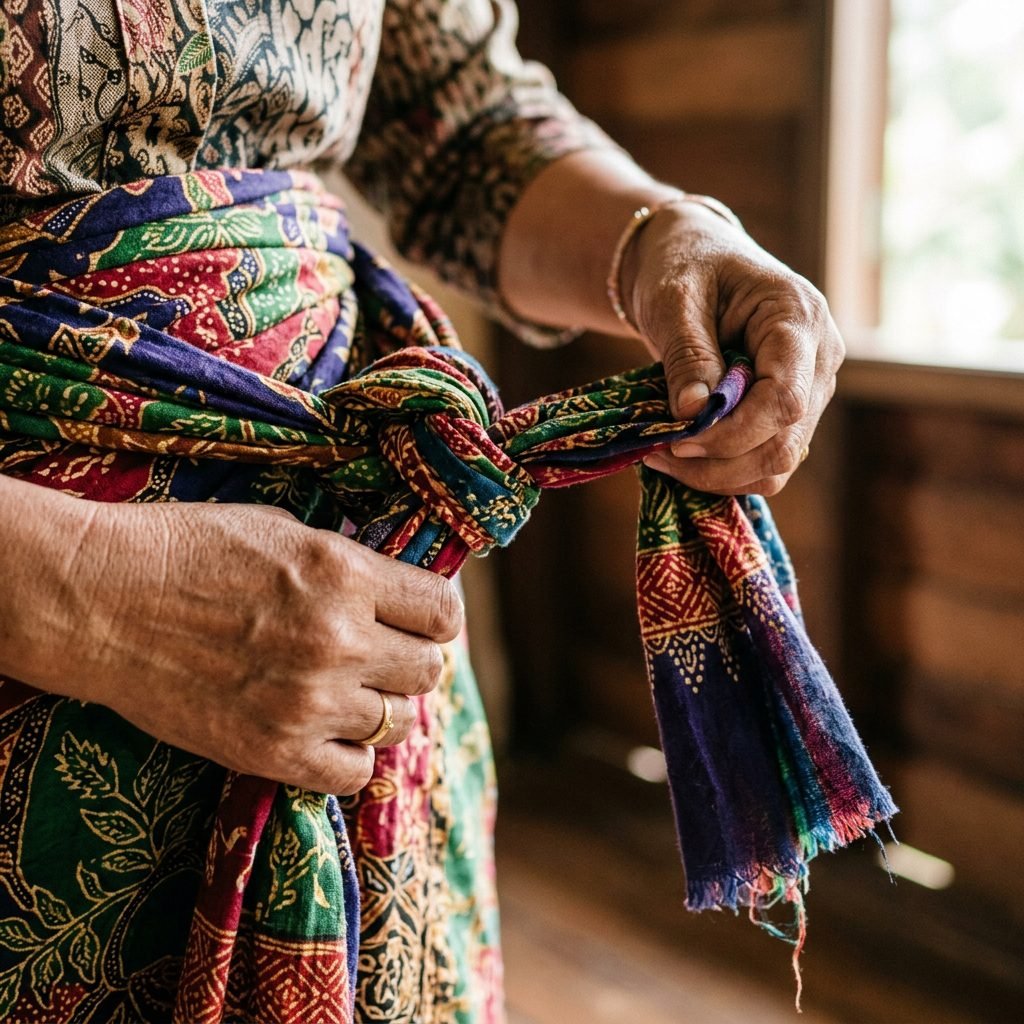
Belly binding is not a new ‘trend’ created by modern waist-trainer companies. It is a sacred tradition practiced for centuries across cultures—from the Malaysian Bengkung method to the Japanese Sarashi and the Latin American Faja. Traditionally, the purpose was never about vanity; it was about warmth, support, and containment.
The Physiological Shift
During pregnancy, your internal organs are literally pushed aside to make room for your growing uterus. Your lungs are compressed, your stomach is squished, and your intestines are moved to the periphery. Once the baby is born, there is a sudden, massive ’emptiness’ in the abdominal cavity. Binding provides a gentle pressure that helps:
- Support the Pelvic Floor: By providing abdominal compression, binding can reduce the downward pressure on a healing pelvic floor.
- Encourage Organ Realignment: It helps the organs find their way back to their original homes more comfortably.
- Postural Support: During those long hours of ‘nursing slouch’ or carrying a heavy car seat, a bind acts as a physical reminder to sit tall and engage the core.
- Emotional Security: Many mothers describe the feeling of being bound as ‘feeling held’ during a time when they feel physically vulnerable and ‘loose.’
“Belly binding is the physical act of gathering yourself back together after you have given your entire being to the world.”
The Truth About ‘Shrinking’: Science vs. Hype

Let’s get real for a moment, mama to mama. Can a piece of fabric melt away the fat cells gained during pregnancy? No. Can it permanently change your bone structure? No. If a product promises you a ‘six-pack by six weeks’ just by wearing a wrap, they are selling you a dream that doesn’t respect the biology of birth.
What Binding Actually Does for the Waistline
While binding doesn’t ‘shrink’ fat, it does assist in the reduction of postpartum swelling (edema). By applying gentle compression, it helps the body move excess fluids out of the tissues. Furthermore, it helps the uterus contract back to its pre-pregnancy size (a process called involution) by providing external support.
Understanding Diastasis Recti (DR)
One of the biggest reasons mothers turn to binding is to ‘fix’ the gap in their abdominal muscles. While a binder can provide proprioceptive feedback (helping you feel your muscles so you can engage them correctly), it is not a cure-all. Healing DR requires a combination of:
- Correct Breathing: Re-learning how to use the diaphragm.
- Pelvic Floor Coordination: Ensuring the ‘bottom’ of your core is working with the ‘front.’
- Safe Movement: Avoiding ‘doming’ or ‘coning’ during daily tasks.
Think of the binder as a splint—it holds the area stable so that you can do the internal work of healing. It is a tool, not the entire toolbox.
You Are Not Alone: This Is Normal

I want you to take a moment to look at your belly right now. It might be soft, it might have tiger stripes of silver or red, and it might feel like a stranger to you. This is normal. This is beautiful. This is the evidence of life.
In our ‘bounce-back’ culture, we are taught to hide the postpartum ‘pooch’ as quickly as possible. But that soft belly is a sacred space. It was the first home your child ever knew. If you choose to bind, do it because it makes you feel strong and supported, not because you are ashamed of the skin you are in.
The ‘Golden Month’ Reality
In many cultures, the first 40 days (The Golden Month) are reserved for rest. You are not meant to be running errands or hitting the gym. You are meant to be in bed, skin-to-skin with your baby, healing. Binding is part of this ‘slow’ medicine. It is a signal to the world and to yourself that you are in a state of active recovery.
| What You Feel | What is Actually Happening |
|---|---|
| The “Jelly Belly” sensation | Your abdominal muscles are recovering from being stretched 50% beyond their normal length. |
| Night Sweats | Your body is shedding the massive amount of extra blood and fluid volume from pregnancy. |
| Emotional Weeping | The “hormone dump” (estrogen and progesterone drop) occurring 3-5 days after birth. |
Choosing Your Wrap: A Comparison Guide
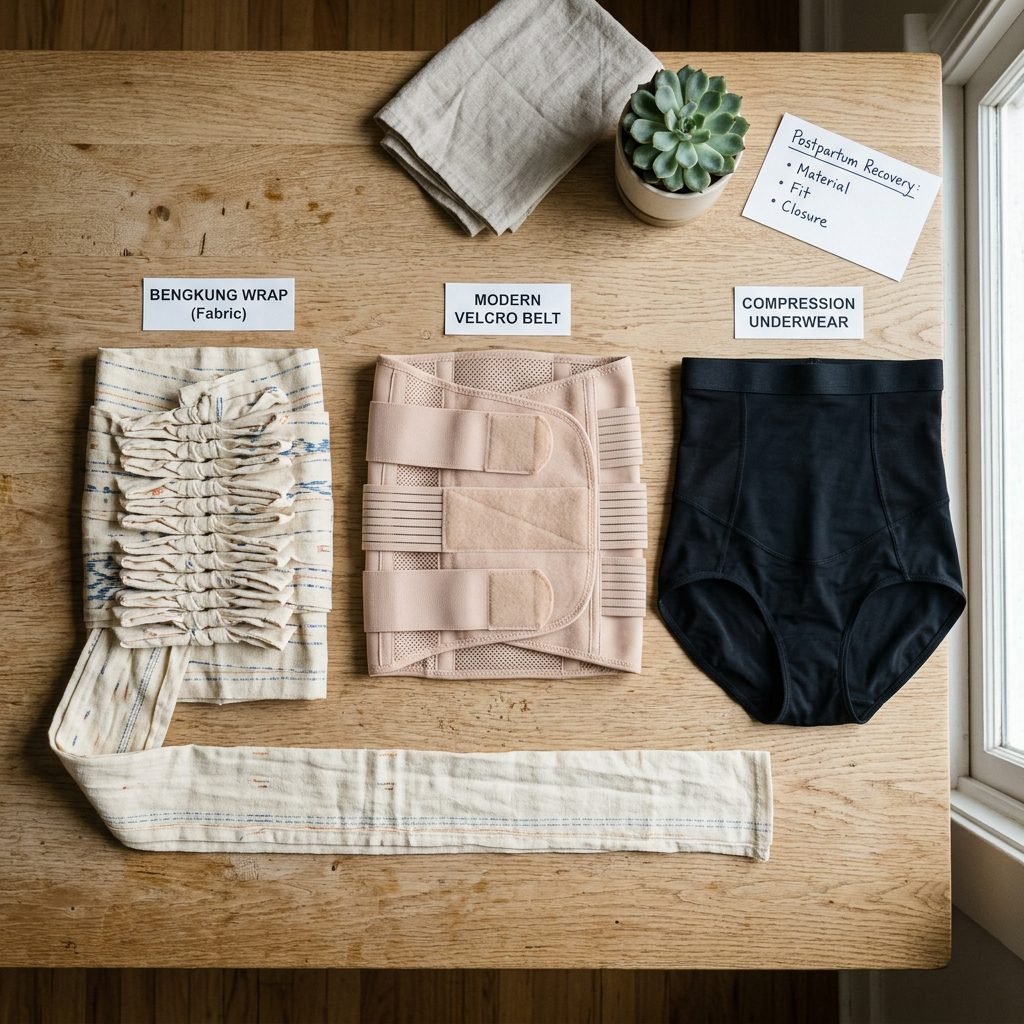
Not all binds are created equal. Depending on your birth experience (vaginal vs. cesarean) and your lifestyle, one style may suit you better than another. Here is a breakdown of the most common options available to modern mamas.
| Type of Bind | Best For… | Pros | Cons |
|---|---|---|---|
| Bengkung Wrap | Traditionalists & Ritual | Custom fit to every curve; very breathable; stays in place. | Takes 10-15 minutes to put on; requires a learning curve. |
| Velcro Support Belt | Ease of Use & Busy Days | Fast to put on; adjustable tension; easy to hide under clothes. | Can bunch up or ‘ride up’; less coverage of the hips. |
| Compression Panties | Discreet Everyday Wear | Seamless look; no bulk; supports the pelvic floor well. | Less targeted abdominal compression; can be hard to pull on/off for bathroom breaks. |
| C-Section Briefs | Surgical Recovery | Protects the incision site; gentle medical-grade compression. | May not provide enough upper-abdominal support. |
When to Start?
- Vaginal Birth: You can typically begin gentle binding within 24-48 hours after birth, provided you feel comfortable.
- Cesarean Birth: Wait until your incision is fully closed and you have the green light from your provider (usually 2-4 weeks). However, a very soft, light ‘abdominal binder’ provided by the hospital can often be worn sooner to protect the incision.
The Postpartum Recovery Kit: Essentials
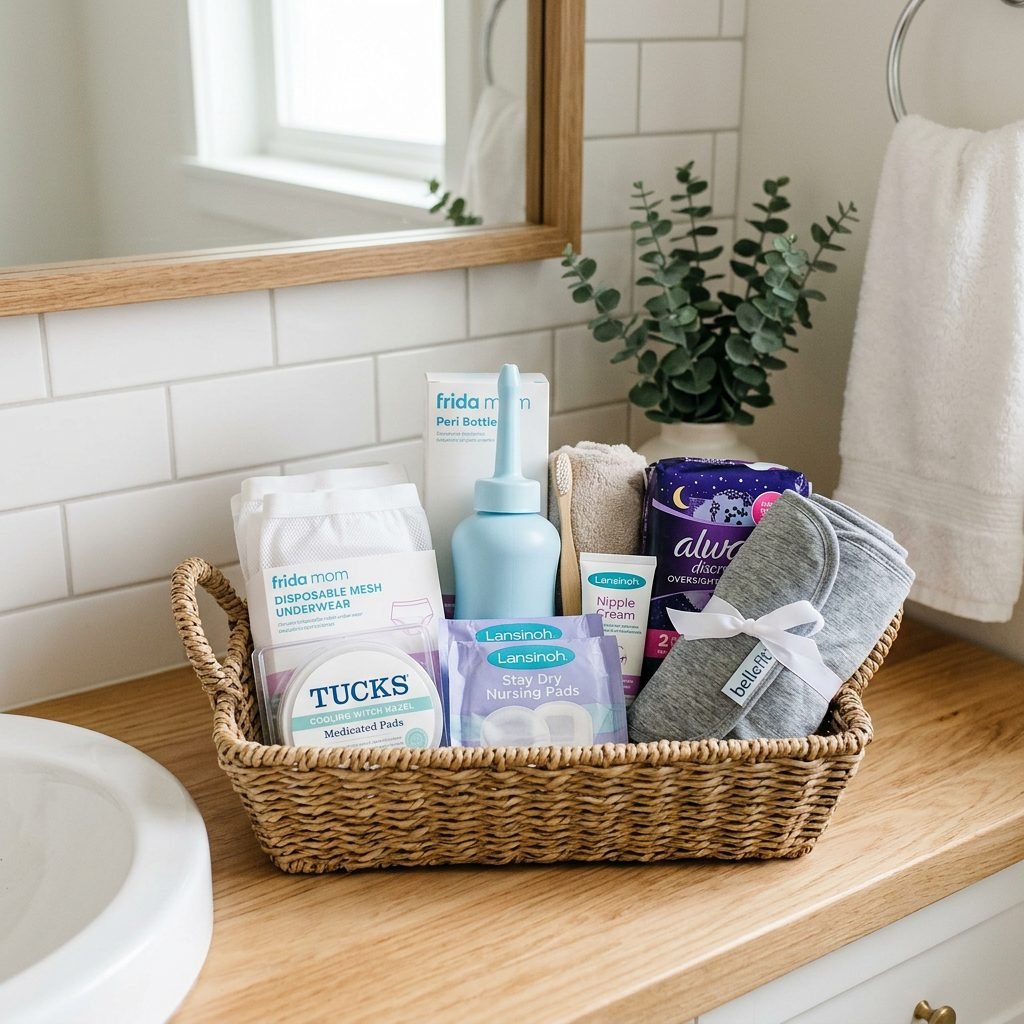
Belly binding is just one piece of the puzzle. To truly heal from the inside out, you need a toolkit that addresses your physical comfort and hygiene. Let’s talk about the ‘unglamorous’ but essential items for your first two weeks home.
Mesh Panties vs. Adult Diapers
The debate is real! Every mother has a preference, but here is the doula-approved breakdown:
| Feature | Hospital Mesh Panties | Disposable Adult Diapers |
|---|---|---|
| Comfort | Very breathable, ‘barely there’ feel. | Snug, secure, feels like a hug. |
| Absorbency | Requires adding a giant ‘surfboard’ pad. | All-in-one protection; no shifting pads. |
| Incision Safety | Excellent for C-sections (doesn’t rub). | Can be tight on some incisions; look for high-waist. |
| Convenience | Can be washed and reused a few times. | Easy ‘rip-away’ sides for quick changes. |
Your Daily Recovery Checklist
- Hydration: Drink 100oz of water minimum, especially if breastfeeding.
- Rest: Follow the 5-5-5 rule: 5 days in the bed, 5 days on the bed, 5 days near the bed.
- Nourishment: Warm, easy-to-digest foods (soups, stews, bone broth).
- Binding: Wear your wrap for 6-12 hours a day, but never sleep in a tight bind.
Conclusion
So, does belly binding work? Yes, but perhaps not in the way the glossy advertisements promise. It works as a support system for your aching back. It works as a container for your shifting organs. It works as a ritual to honor your transition into motherhood. It does not replace the need for rest, good nutrition, or gentle rehabilitative exercise.
Listen to your body, mama. If a bind feels too tight, if it makes you feel like you can’t breathe, or if it causes pressure on your pelvic floor, loosen it. Your body knows how to heal; the bind is simply there to hold the space while it does. You are doing an incredible job. Your waist may change, your hips may widen, but you are more powerful now than you have ever been.
Sending you so much love and a very tight (but comfortable!) virtual hug.