
The Brutal Truth About C-Section Recovery (And How to Heal Faster)
Listen to me, mama: you are a literal warrior. Whether your C-section was a planned event or a sudden pivot in your birth story, you have just undergone major abdominal surgery while simultaneously becoming responsible for a tiny, precious human. That is nothing short of heroic. But let’s be real for a second—the ‘brutal truth’ is that C-section recovery is often minimized. You might feel like you’ve been hit by a truck, and the pressure to ‘bounce back’ can feel overwhelming when you can barely sit up without help. As your doula and sister-in-healing, I am here to pull back the curtain. We aren’t just going to talk about the scar; we are going to talk about the gas pains, the emotional waves, and the practical, gritty steps you can take to reclaim your strength. You are not alone, this is normal, and your body knows how to heal. In this guide, we’re going to walk through the first few weeks together, giving you the exact tools you need to move from ‘surviving’ to ‘thriving’ in your postpartum skin.
The First 48 Hours: The ‘Ouch’ Phase and the First Stand

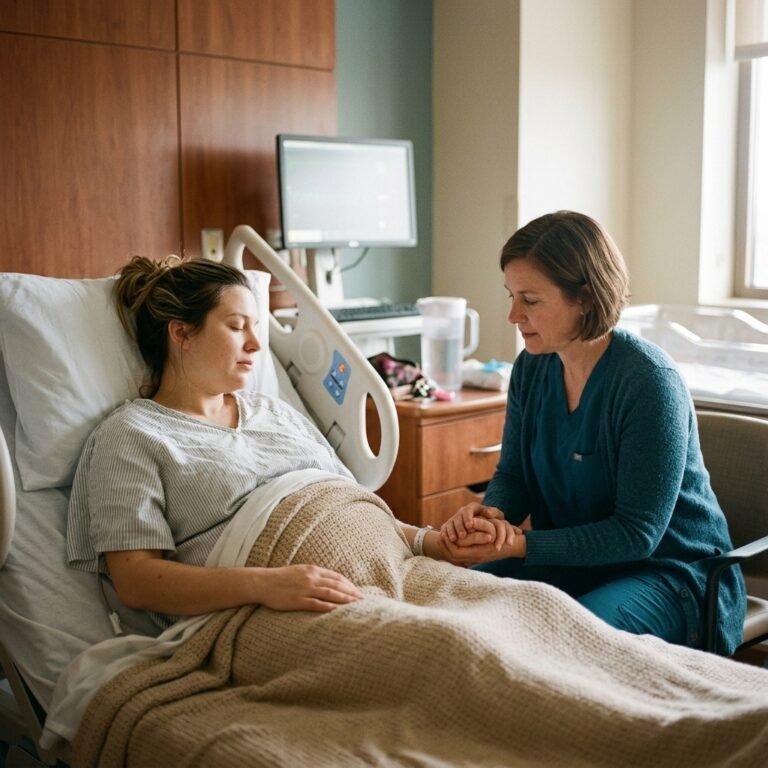
The first two days are, frankly, the most intense. Your anesthesia is wearing off, and your body is beginning to realize that seven layers of tissue were just navigated to bring your baby into the world. You might experience the ‘shakes’—uncontrollable shivering—which is a normal reaction to the shift in hormones and fluids. During this time, your primary job is to manage your pain before it manages you. Do not try to be a martyr; taking your prescribed pain medication on a strict schedule is vital for your mobility.
The First Walk
The nurses will likely ask you to stand up and shuffle a few steps within 12 to 24 hours. It sounds impossible, but it is the key to preventing blood clots and getting your bowels moving. Pro-tip: When you stand, use your hands to ‘splint’ your incision—hold a firm pillow against your belly to provide counter-pressure. It makes a world of difference.
“You aren’t just walking to the bathroom; you are walking back to yourself. Take it one inch at a time, mama.”
| Timeframe | Goal | Doula Tip |
|---|---|---|
| 0-6 Hours | Rest and Skin-to-Skin | Ask for help with breastfeeding latches to avoid straining your core. |
| 6-12 Hours | Wiggle Toes & Hydrate | Start sipping water and electrolytes to flush out the anesthesia. |
| 12-24 Hours | The First Stand | Use a ‘splinting pillow’ against your incision for every move. |
The Logistics of Movement: The Log Roll Technique
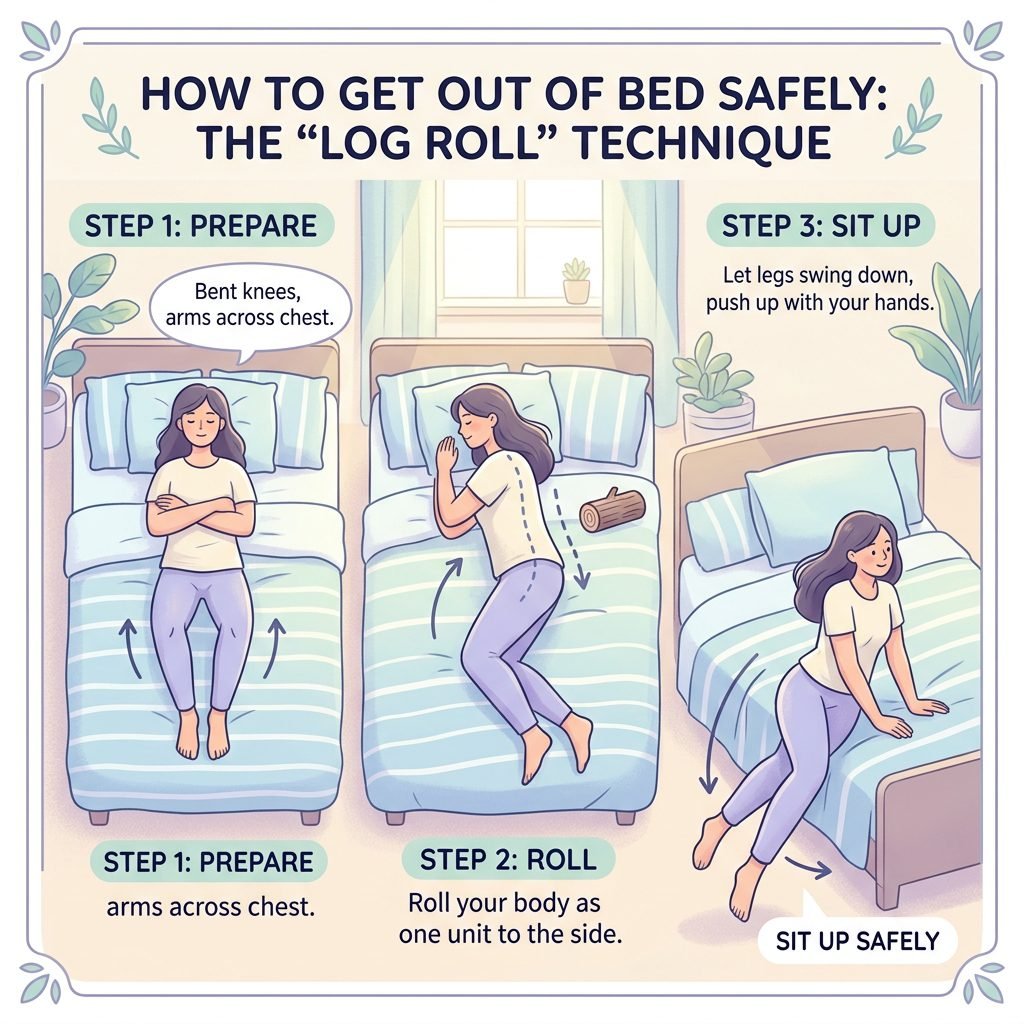
For the first few weeks, the standard way of sitting up—using your abdominal muscles—is strictly off-limits. To protect your incision and prevent long-term issues like diastasis recti, you must master the Log Roll. This technique allows you to get in and out of bed using your arms and legs rather than your core.
How to Log Roll Like a Pro
- While lying on your back, bend your knees and place your feet flat on the bed.
- Roll your entire body (shoulders, hips, and knees) as one solid unit onto your side.
- Drop your feet off the edge of the bed.
- Use your ‘down’ elbow and your ‘up’ hand to push your upper body into a seated position.
- Reverse the steps to lie back down.
Always remember to exhale on the exertion. When you push yourself up, blow out a breath. This reduces the internal pressure on your pelvic floor and your incision site.
The Brutal Truth About Gas and Bowels
No one tells you that the first post-op bowel movement can feel as intimidating as the birth itself. Surgery slows down your digestive tract, and trapped gas can cause sharp, stabbing pains that often radiate up to your right shoulder. This is referred pain from the phrenic nerve, and it is incredibly common after abdominal surgery.
- Stool Softeners: Start these immediately and don’t stop until you are moving regularly without straining.
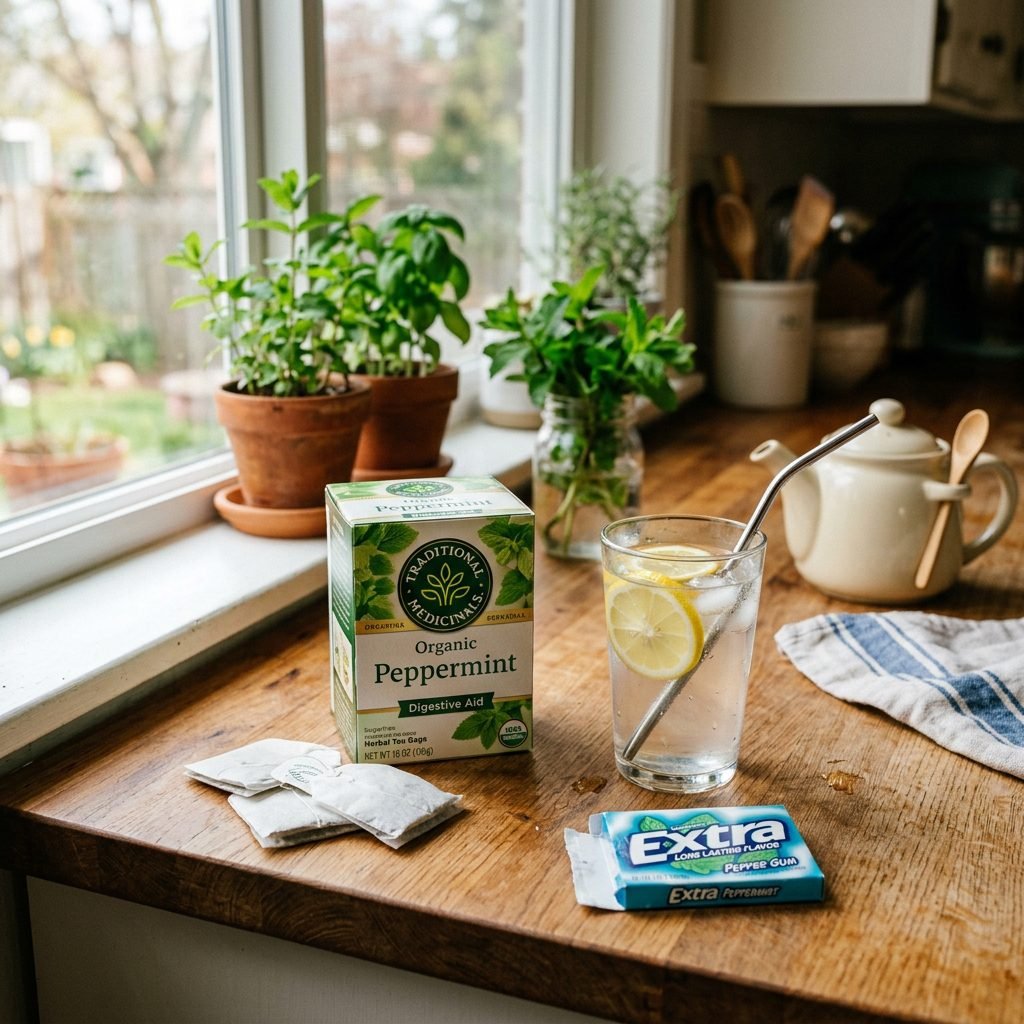
- Chewing Gum: Believe it or not, chewing gum can ‘trick’ your brain into jumpstarting your digestive system.
- The Squatty Potty: Using a stool to elevate your knees while on the toilet changes the angle of your rectum, making it much easier to go without using your abs.
Avoid straws for the first week, as they can cause you to swallow extra air, leading to more gas. Focus on warm liquids, peppermint tea, and gentle walking to keep things moving.
Incision Care and Scar Desensitization
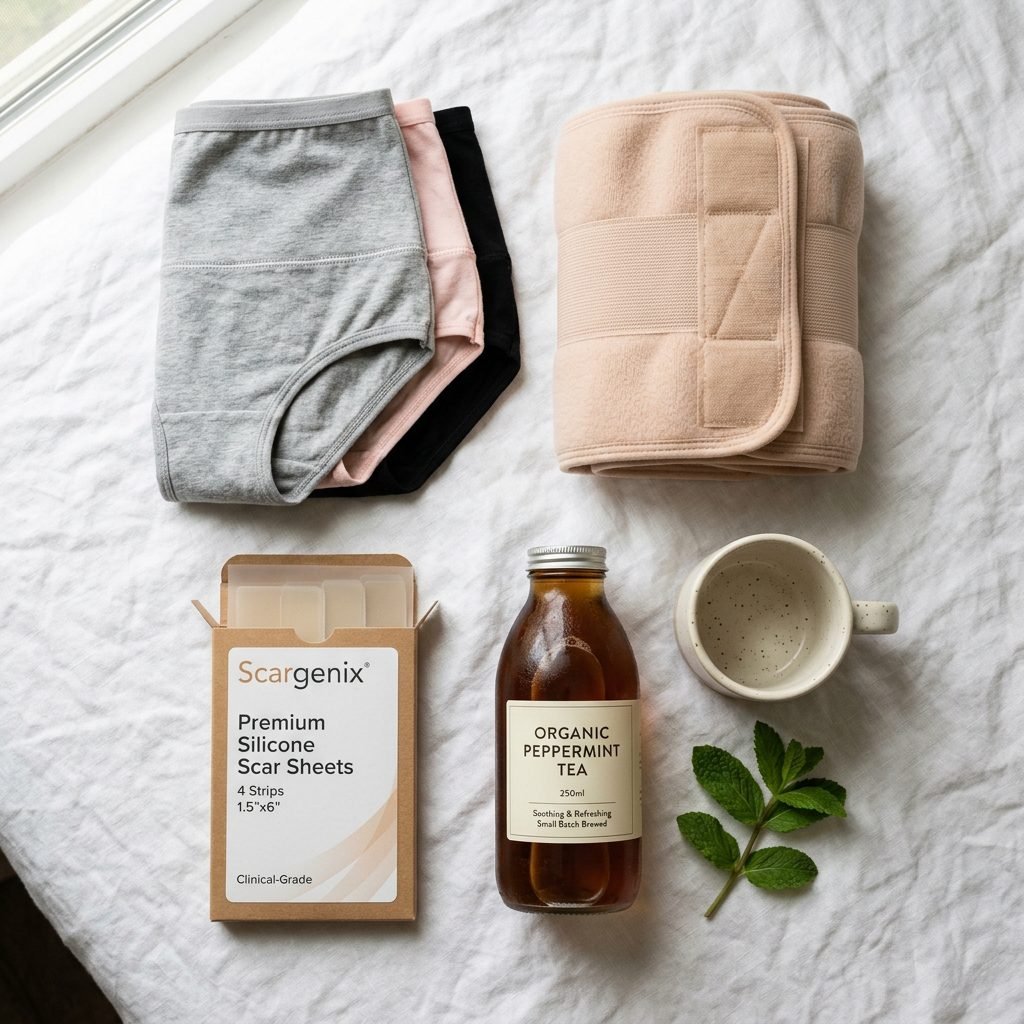
Your scar is a badge of honor, but it needs specific care to heal beautifully. The golden rule? Keep it clean and dry. Let soapy water run over it in the shower, but do not scrub it. Pat it dry with a clean towel or even use a hairdryer on the ‘cool’ setting to ensure no moisture is trapped in the fold of your skin.
The Recovery Kit: What You Actually Need
| Item | Purpose | Why It Wins |
|---|---|---|
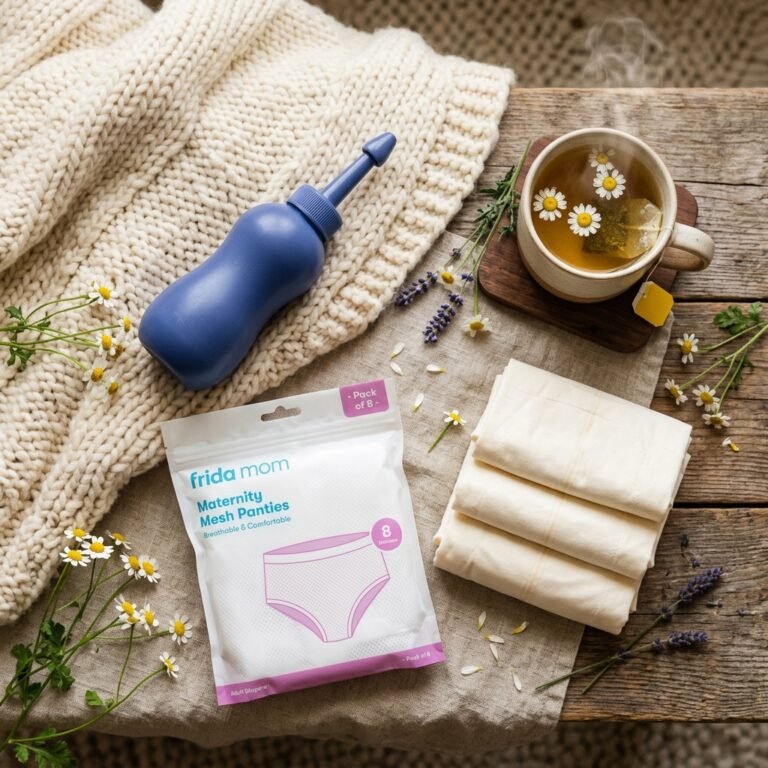
| High-Waist Briefs | Protection | Standard underwear elastic hits right at the incision. High-waist stays clear. |
| Silicone Scar Strips | Healing | Once the wound is closed, these help flatten and fade the scar. |
| Abdominal Binder | Support | Provides a ‘held-in’ feeling that reduces pain when walking or coughing. |
| Peri Bottle | Hygiene | Easier than reaching or twisting to clean yourself in the early days. |
Once your doctor clears you (usually around 6 weeks), you can begin scar massage. This involves gently moving the skin around the scar to prevent adhesions (where the internal layers of tissue stick together). It also helps ‘reconnect’ your brain to that area of your body, which can often feel numb or ‘alien’ after surgery.
The Emotional Landscape: Processing Your Birth

If your C-section wasn’t part of the plan, you might be feeling a complex mix of gratitude for a healthy baby and grief for the birth experience you didn’t have. This is birth trauma, and it is valid. Even if the surgery was planned, the hormonal crash on day 3 or 4 can make everything feel impossible.
“Your body didn’t fail. Your body navigated a different path to bring life into this world, and that is a profound success.”
Be gentle with yourself. If you find yourself crying over the ‘what ifs,’ let the tears come. Talk to your partner, your doula, or a therapist. Healing isn’t just about the skin closing; it’s about the heart mending. You are allowed to love your baby and still feel sad about the surgery. Those two things can exist at the same time.
The 6-Week Roadmap to Faster Healing

Recovery is a marathon, not a sprint. While the first two weeks are about survival, weeks three through six are about gradual reintegration. Do not lift anything heavier than your baby. This is the hardest rule to follow, especially if you have toddlers, but your internal stitches need time to gain strength.
Red Flags to Watch For
While healing has its ups and downs, keep an eye out for these signs that you need to call your provider immediately:
- Fever over 100.4°F.
- Redness, swelling, or foul-smelling discharge from the incision.
- Sudden, worsening pain that isn’t relieved by medication.
- Shortness of breath or pain in your calf (which could indicate a blood clot).
At your 6-week checkup, advocate for yourself. Ask for a referral to a Pelvic Floor Physical Therapist. Every C-section mom should see one! They can help you safely rebuild your core and ensure your pelvic floor is functioning correctly after carrying a baby for nine months.
Conclusion
Mama, the ‘brutal truth’ is that C-section recovery is a heavy lift, but you are more than capable. By honoring your body’s need for rest, mastering the log roll, and being patient with your emotional heart, you are setting the foundation for a strong recovery. Remember, the way you birthed is only one chapter in your mothering story. The scar will fade, the strength will return, and one day soon, you’ll realize you haven’t thought about the pain in days. Until then, take the help, take the naps, and take pride in the incredible thing you have done. You are doing a wonderful job.