
The Gym Ball Trick: How to Make Tummy Time Fun for Babies Who Cry Instantly
Mama, take a deep, grounding breath. If the mere thought of laying your sweet baby down on their play mat sends a wave of anxiety through your chest, I want you to know right now: you are not alone, and you are doing an incredible job. We have all been there. You carefully lower your little one onto that beautiful, aesthetically pleasing organic cotton mat, and within three seconds, their face is planted in the fabric, their little legs are kicking in frustration, and they are wailing as if you have just committed the ultimate betrayal. The guilt rushes in. The pediatrician said they need 15 to 30 minutes of tummy time a day, but how on earth are you supposed to achieve that when every session ends in tears for both of you? Welcome to the club. Tummy time is notoriously difficult for newborns, but as a doula and infant care specialist, I am here to share a game-changing secret that will transform your daily routine: The Gym Ball Trick.
Tummy time is essential. It builds the crucial neck, shoulder, and core muscles your baby needs to eventually roll, sit, crawl, and walk. It helps prevent flat spots on the back of their head (plagiocephaly) and encourages sensory and motor development. But the floor? The floor is flat, hard, and boring. It also forces your baby to fight directly against gravity with a head that currently makes up a third of their body weight. Enter the exercise ball—also known as a yoga ball, Swiss ball, or gym ball. This simple piece of equipment, which you might already have sitting in the corner from your pregnancy labor-prep days, is about to become your favorite nursery tool. By elevating your baby, introducing gentle movement, and allowing them to be closer to your comforting face, the gym ball trick turns a stressful chore into a beautiful bonding experience. Let us dive into exactly why this works, how to do it safely, and how to reclaim the joy in your baby’s developmental milestones.
Why Do Babies Hate Tummy Time So Much? (And Why You Are Not Failing)
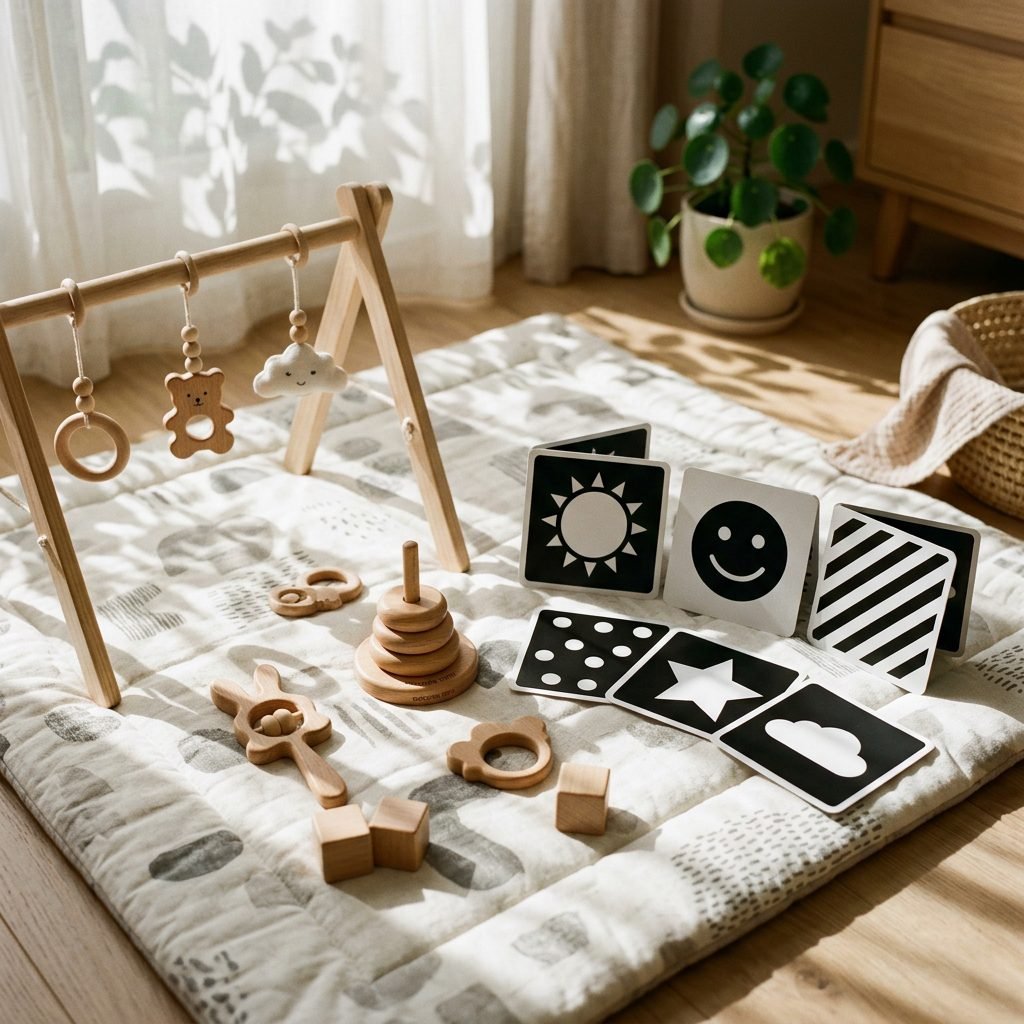
Before we get into the magic of the gym ball, we need to address the elephant in the nursery: why do babies hate tummy time with such a fiery passion? First and foremost, I need you to hear this: your baby’s crying does not mean you are a bad mother, nor does it mean your baby is uniquely difficult. It simply means they are doing a really, really hard workout. Imagine going to the gym after months of inactivity and being asked to deadlift twice your body weight while someone stares at you. That is what tummy time feels like for a newborn.
When a baby is born, their head is disproportionately large and heavy compared to the rest of their body. On the floor, they are fighting gravity with brand-new, underdeveloped neck muscles. It is exhausting. Furthermore, newborns have spent nine months curled up in a tight, cozy fetal position in the womb. Stretching out flat on their stomach goes against their natural physiological inclination to stay curled up. Add in the fact that many babies suffer from mild infant reflux or gas, and laying flat on a full tummy can actually be physically uncomfortable.
Mama, release the guilt. Your baby isn’t crying to manipulate you; they are crying because they are working hard and need your reassurance. Every minute counts, even if it happens in small, 2 to 3 minute bursts.
Understanding the root cause of their frustration can help you approach tummy time with more empathy and less anxiety. Here is a quick breakdown of what your baby’s cries might be telling you, and how we can address them.
| The Tummy Time Struggle | The Root Cause | The Gym Ball Solution |
|---|---|---|
| Immediate Face-Planting & Crying | Exhaustion and heavy head weight fighting gravity. | The curved surface of the ball reduces the gravitational pull, making it easier to lift the head. |
| Spitting Up or Arching Back | Pressure on the digestive tract or infant acid reflux. | The ball allows for an angled, inclined position rather than laying completely flat. |
| Frantic Kicking & Screaming | Lack of visual stimulation; feeling abandoned on the floor. | Elevates the baby to your eye level, allowing for constant eye contact and soothing interaction. |
| Stiffening Up | Dislike of the hard, unyielding surface of the floor mat. | The soft, slightly bouncy texture of the ball mimics the comfort of the womb and your arms. |
The Magic of the Gym Ball: Why This Trick Works Wonders
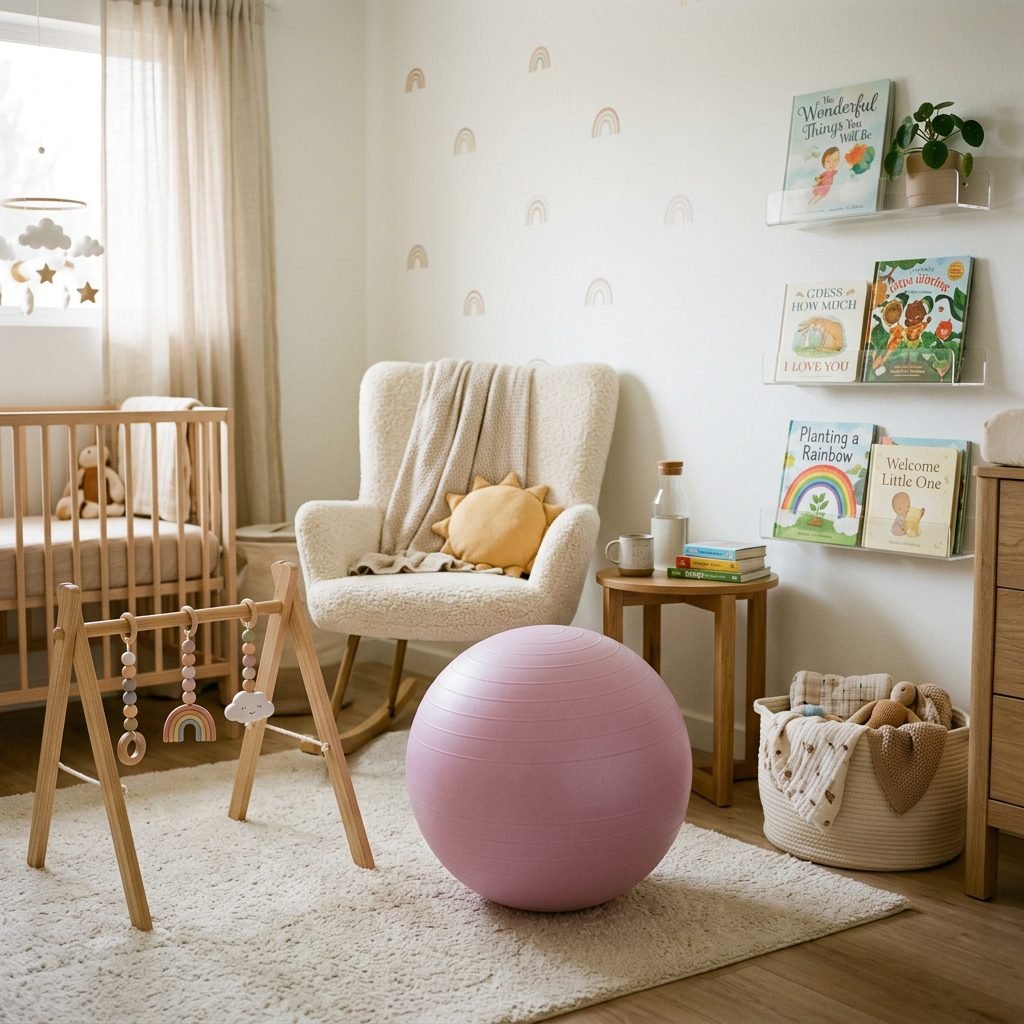
So, why is the gym ball the ultimate doula-approved hack for tummy time? It all comes down to physics, physiology, and sensory integration. When you place your baby on the curved surface of a gym ball, you are fundamentally changing the mechanics of the exercise. The gentle curve of the ball conforms to their little body, eliminating the harsh, flat plane of the floor. This curve allows their hips to drop slightly lower than their shoulders, naturally shifting their center of gravity and making it significantly easier for them to lift their heavy little heads.
But the real magic lies in movement. The vestibular system, located in the inner ear, is responsible for our sense of balance and spatial orientation. When your baby was in the womb, they were constantly rocked, swayed, and bounced as you moved through your day. The floor provides zero vestibular input, which can feel jarringly still and unnatural to a newborn. The gym ball, however, allows for gentle, rhythmic rocking. By slowly rolling the ball forward, backward, and side to side, you are stimulating their vestibular system, which is incredibly soothing. This movement distracts them from the muscular effort of lifting their head and turns the exercise into a dynamic, engaging activity.
The Power of Proximity
Another major reason the gym ball trick is so effective is proximity. When your baby is on the floor, you are usually hovering above them like a giant, which can be intimidating, or you are laying on the floor next to them, which isn’t always comfortable for a postpartum mother recovering from a vaginal delivery or a C-section! The gym ball elevates your baby right to your eye level (when you are kneeling or sitting in a low chair). You can easily sing to them, make silly faces, and offer constant physical touch. They feel safe because they can see, smell, and feel you right there with them.
- Vestibular Stimulation: Gentle rolling mimics the womb environment, calming the nervous system.
- Ergonomic Support: The curve of the ball supports the chest and stomach, reducing reflux pressure.
- Visual Engagement: Being higher up gives your baby a new, exciting vantage point of the room.
- Postpartum Comfort: Saves mama’s knees and back from hunching over a play mat on the hard floor.
Step-by-Step Guide: How to Execute the Gym Ball Trick Safely
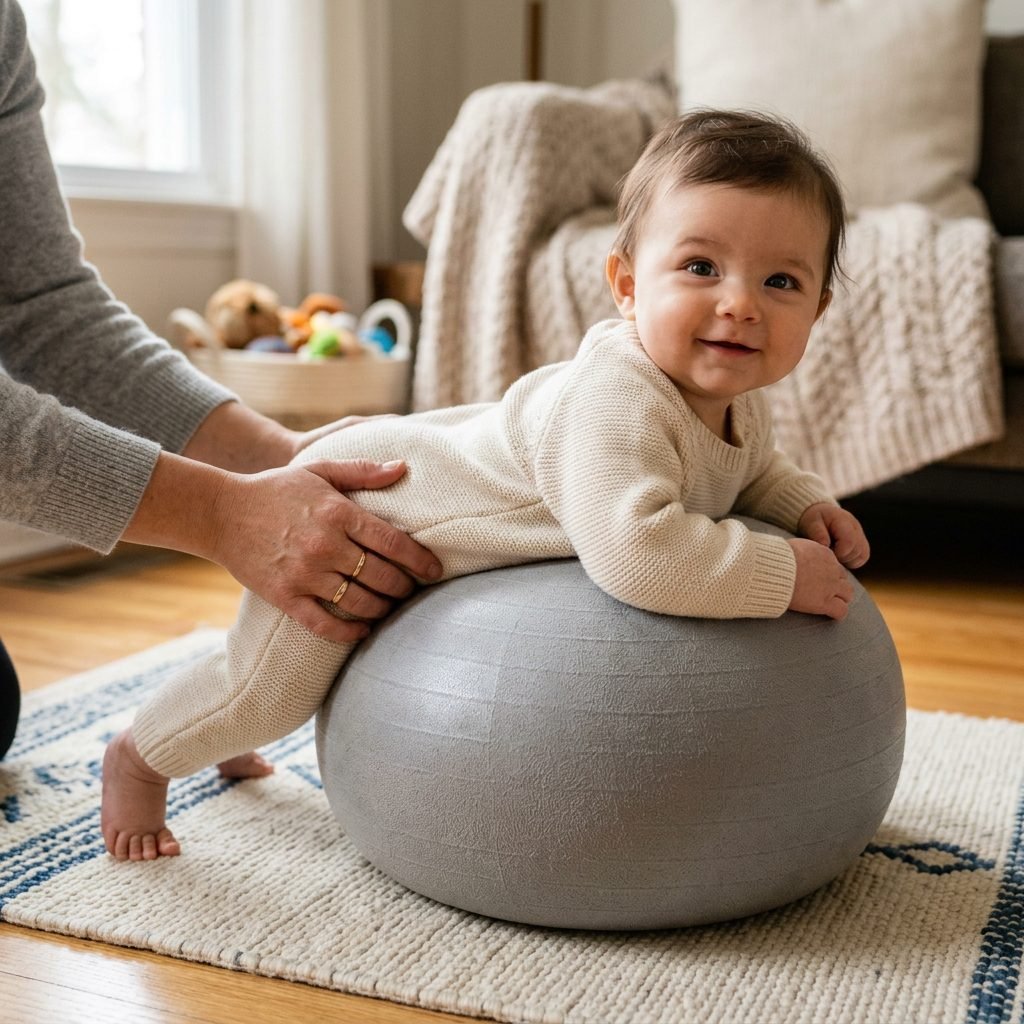
Now that we understand the “why,” let us get into the “how.” Safety is our absolute top priority here. Because your baby is elevated, you must have hands on them at all times. Never step away, not even for a second, while your baby is on the ball. If you are a postpartum mama still healing, make sure you are kneeling on a soft cushion or sitting on a low stool so you aren’t straining your own core or pelvic floor. Here is your step-by-step, evidence-based guide to mastering the gym ball trick.
Step 1: Prep Your Equipment and Environment
First, ensure you have the right ball. A standard 65cm or 75cm exercise ball works best. Crucial Tip: Do not use a fully inflated, rock-hard ball. You want the ball to be slightly deflated—around 85% to 90% capacity. This gives the ball a bit of “squish,” allowing your baby’s body to sink in slightly, providing lateral stability so they don’t roll off the sides.
Step 2: The Pre-Flight Check
Timing is everything. Do not attempt tummy time immediately after a full feed, as the pressure on their tummy will almost certainly cause spit-up. Wait at least 20 to 30 minutes after nursing or a bottle. Ensure they have a clean diaper and are in a calm, alert state (not overly tired). Strip them down to a onesie so their bare feet and knees can grip the ball slightly, rather than slipping in footie pajamas.
Step 3: The Gentle Roll-On
Sit or kneel in front of the ball. Hold your baby securely under their armpits and gently lower them onto the center of the ball, tummy down. Their chest should be near the top apex of the ball, with their arms draped over the front and their legs draped down the back.
Step 4: The Secure Grip
Immediately place your hands firmly over their lower back and hips. Your hands are their seatbelt. You want to apply gentle, grounding pressure downward. This anchoring technique gives them a sense of security; if they feel like they are floating or falling, the Moro (startle) reflex will kick in, and they will cry.
Step 5: The Magic Movement
Once they are anchored, begin to slowly roll the ball. Roll it forward slightly, which will prompt them to lift their head to look at you. Then roll it backward so their weight shifts to their hips, giving their neck a break. Try gentle side-to-side sways. Keep the movements small, slow, and rhythmic. Talk to them in a high, happy voice: “Look how strong you are! You are doing such a good job!”
- Use a 65cm-75cm ball, deflated to 90% for a softer surface.
- Wait 20 to 30 minutes after a feeding to prevent spit-up.
- Place baby tummy-down with arms forward and legs draped back.
- Keep both hands firmly anchored on baby’s hips and lower back at all times.
- Roll the ball slowly forward, backward, and side-to-side to engage the vestibular system.
Troubleshooting: What If They Still Cry on the Ball?

Even with the most magical doula tricks in the world, babies are still humans with their own opinions. What happens if you try the gym ball trick and your little one still lets out a wail? First, do not panic and do not force it. Tummy time should never be a battle of wills. If they are crying, pick them up, soothe them, and try again later. But before you give up on the ball entirely, let us troubleshoot some common issues that might be causing the tears.
Check the Angle
If your baby is crying immediately on the ball, they might be positioned too far forward. If their chest is too far over the front curve, they are working too hard to lift their head. Try pulling the ball back toward you so their hips are lower and their chest is higher. This incline makes it significantly easier for them to look around without straining their neck.
Address the Gas
Sometimes, the pressure of the ball on their abdomen highlights a hidden gas bubble. If they pull their knees up or arch their back, they might be dealing with trapped wind. In this case, the ball can actually be a therapeutic tool! Gently bounce the ball up and down (while holding them securely) or roll them in small circles. The gentle pressure can act as an abdominal massage, helping to work the gas out. Just be prepared for a burp or a blowout!
Alternative Tummy Time Positions
If the ball just isn’t their vibe today, that is perfectly okay. Tummy time does not just happen on the floor or on a ball. As a postpartum nurse, I always remind moms that any time your baby is not flat on their back, it counts! Here are some excellent, low-stress alternatives to mix into your daily routine.
| Alternative Method | How to Do It | Best For… |
|---|---|---|
| Chest-to-Chest (The Mother’s Hold) | Lie back on your bed or couch at a 45-degree angle. Place baby on your chest, facing you. | Newborns (0-8 weeks), fussy babies, and promoting skin-to-skin bonding. |
| The Tiger in the Tree (Football Hold) | Carry baby facedown along your forearm, with your hand supporting their chest and their legs straddling your elbow. | Colicky babies, gassy babies, and soothing while walking around the house. |
| The Lap Lay | Sit in a chair and lay baby face down across your lap, gently rubbing their back. | Quick burping sessions, post-feed digestion, and easy transition from holding. |
| The Incline Pillow (Boppy) | Prop baby’s chest up on a nursing pillow on the floor, keeping their arms forward. | Older babies (3+ months) who need a little extra support while playing with toys. |
Remember: 5 minutes of happy tummy time is vastly more beneficial than 15 minutes of screaming. Follow your baby’s cues. If they are done, they are done.
Incorporating Sensory Play and Bonding on the Ball
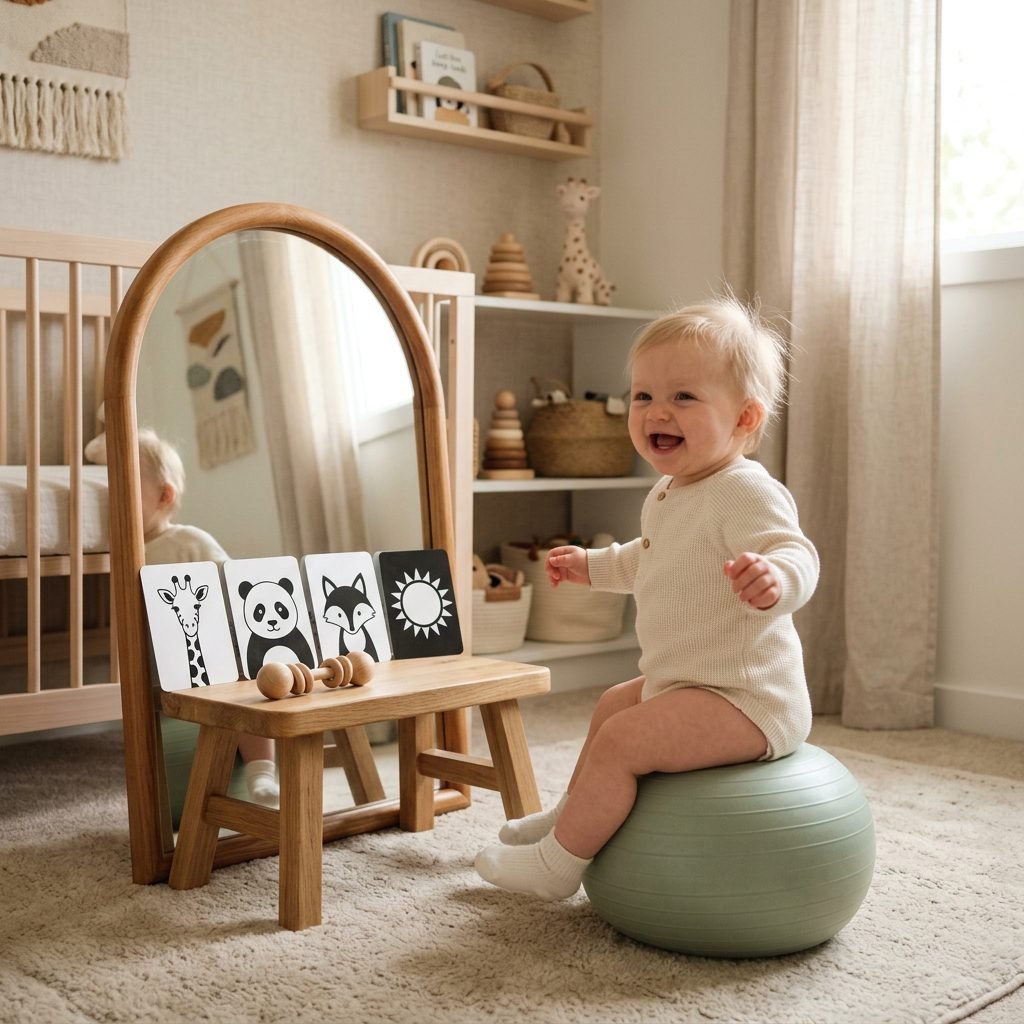
Once your baby is comfortable and secure on the gym ball, it is time to elevate the experience from a mere physical exercise to a rich, brain-building sensory activity. Tummy time is a prime opportunity for cognitive development, and because the ball keeps them happy and elevated, their brain is primed to absorb new information. As a nursery designer and crafty mom, I love finding beautiful, simple ways to integrate sensory play into these daily routines without overwhelming your space with garish plastic toys.
The Magic of Mirrors
Babies are naturally fascinated by faces, especially their own (even if they don’t realize it’s them yet!). Prop a baby-safe, shatterproof mirror on the floor or on a low stool just in front of the ball. As you roll them forward, they will catch their reflection. You will be amazed at how quickly they lift their head to coo and smile at the “other baby.” This encourages sustained head lifting and builds visual tracking skills.
High-Contrast Art and Cards
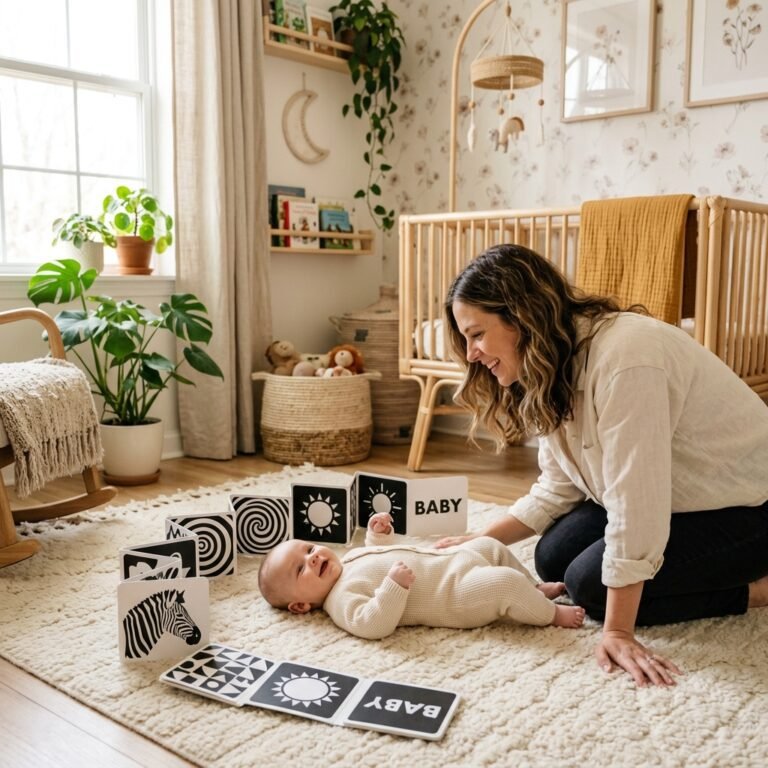
In the first few months of life, a baby’s vision is still developing, and they see high-contrast colors—specifically black, white, and red—most clearly. Instead of buying expensive toys, you can easily print out geometric black-and-white patterns or use beautifully illustrated high-contrast flashcards. Hold a card about 8 to 12 inches from their face while they are on the ball. Slowly move the card from left to right. As they track the card with their eyes, they will naturally turn their head, engaging the lateral neck muscles.
Auditory Engagement and Mama’s Voice
Never underestimate the power of your own voice. The gym ball setup puts you right in their line of sight. Sing songs, recite nursery rhymes, or simply narrate your day. “Look at you on the big blue ball! You are so strong!” The combination of the vestibular movement from the ball, the tactile sensation of your hands on their back, and the auditory input of your soothing voice creates a multi-sensory symphony that rapidly builds neural pathways in their developing brain.
- 0-2 Months: Focus on black-and-white cards and continuous eye contact.
- 3-4 Months: Introduce mirrors and soft crinkle toys that they can reach for as you roll them forward.
- 5-6 Months: Place a favorite toy just out of reach on a stool to encourage them to shift their weight and reach while balancing on the ball.
Conclusion: Embracing the Journey of Motherhood, One Roll at a Time

Motherhood is a profound, beautiful, and often messy journey filled with a million tiny worries. When your baby cries during tummy time, it is so easy to let the mom-guilt take over and feel like you are falling behind on some invisible developmental scoreboard. But I want you to take a step back and look at the bigger picture. You are researching, you are trying new methods, and you are deeply attuned to your baby’s needs. That makes you an incredible mother. The gym ball trick is a wonderful, practical tool to add to your motherhood toolkit, but the most important element of any developmental milestone is the love and connection you share with your child.
Try the gym ball trick tomorrow. Take it slow, keep your hands secure, and celebrate the small victories—even if it is just 60 seconds of a lifted head and a curious gaze. Over time, those seconds will turn into minutes, the neck muscles will strengthen, and before you know it, you will be baby-proofing the living room as they crawl at lightning speed toward the dog’s water bowl. Give yourself grace, give your baby time, and remember that you are both learning this dance together. You’ve got this, mama.
Conclusion
Motherhood is a profound, beautiful, and often messy journey filled with a million tiny worries. When your baby cries during tummy time, it is so easy to let the mom-guilt take over and feel like you are falling behind on some invisible developmental scoreboard. But I want you to take a step back and look at the bigger picture. You are researching, you are trying new methods, and you are deeply attuned to your baby’s needs. That makes you an incredible mother. The gym ball trick is a wonderful, practical tool to add to your motherhood toolkit, but the most important element of any developmental milestone is the love and connection you share with your child.
Try the gym ball trick tomorrow. Take it slow, keep your hands secure, and celebrate the small victories—even if it is just 60 seconds of a lifted head and a curious gaze. Over time, those seconds will turn into minutes, the neck muscles will strengthen, and before you know it, you will be baby-proofing the living room as they crawl at lightning speed toward the dog’s water bowl. Give yourself grace, give your baby time, and remember that you are both learning this dance together. You’ve got this, mama.