Safe and Splashy: The Pom Pom Water Scoop Sensory Bin Babies Love
Oh, mama. I see you. It is 3:00 PM, the baby is fussy, the nap was entirely too short, and bedtime feels like it is a lifetime away. We have all been there—staring at the clock, wondering how to fill the next few hours without turning on a screen or losing our minds. Take a deep, restorative breath. You are doing an incredible job.
Welcome to the magic of sensory play. As a doula, postpartum nurse, and fellow mother, I am constantly looking for activities that hit the sweet spot: deeply engaging for your baby, developmentally beneficial, and incredibly easy for you to set up using things you already have in your home. Enter the ultimate afternoon lifesaver: The Pom Pom Water Scoop Sensory Bin.
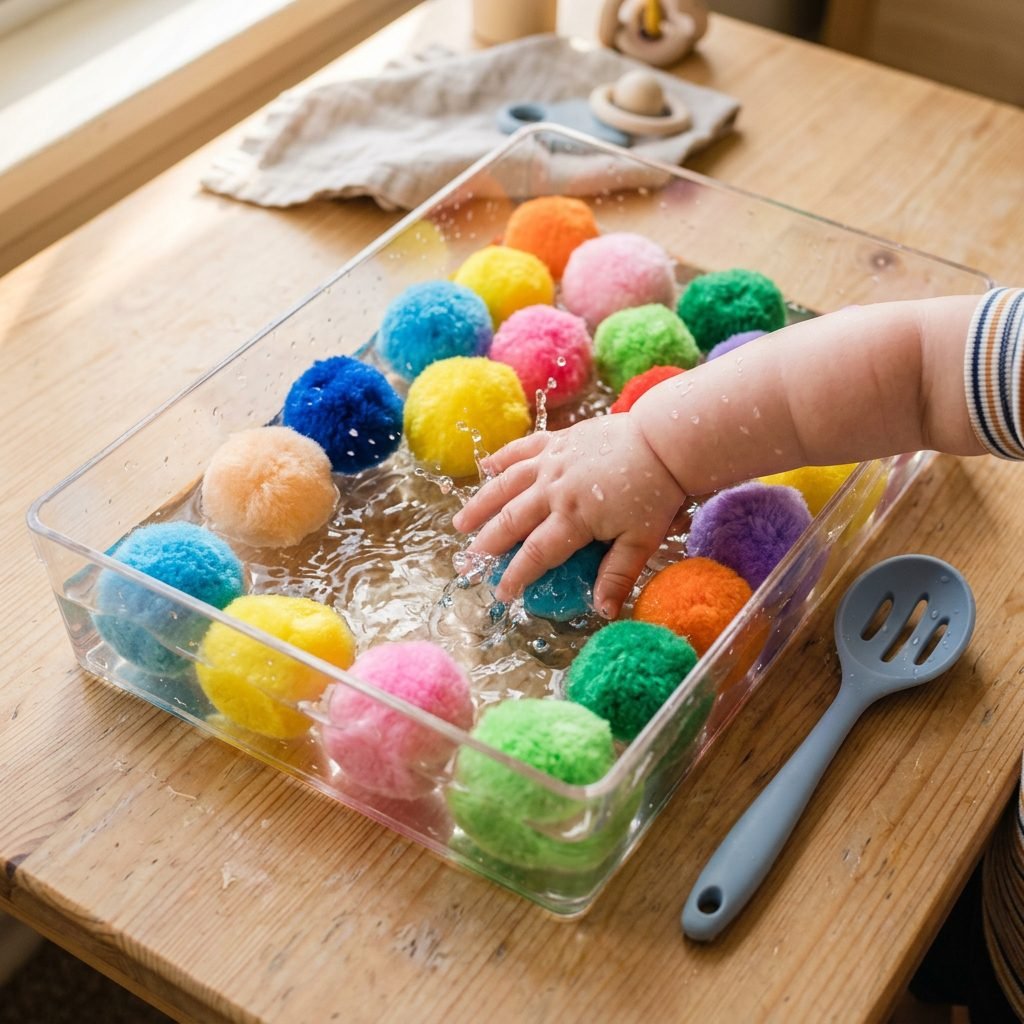
Water play is universally beloved by babies. It is soothing, dynamic, and offers a full-body sensory experience. By adding soft, squishy, colorful pom poms and a simple kitchen tool to scoop them with, you are instantly transforming a basic splash session into a masterclass in fine motor skill development, hand-eye coordination, and cause-and-effect learning.
In this comprehensive guide, we are going to walk through exactly how to set up this beautiful, safe, and splashy activity. We will cover the developmental milestones it supports, how to keep your baby safe during water play, age-appropriate modifications from sitting babies to busy toddlers, and—crucially for us tired moms—how to clean it up in under five minutes. Grab your coffee, and let us dive into creating a beautiful, enriching ‘yes space’ for your little one.
The Magic Behind the Splash: Developmental Benefits of Sensory Play
It is easy to look at a baby splashing in a plastic tub of water and just see a mess waiting to happen. But underneath those joyful giggles and splashing hands, your baby’s brain is firing on all cylinders. Sensory play is not just a trendy buzzword; it is the fundamental way your baby learns about the physical world.
Building Essential Fine Motor Skills
When your baby grasps a wet pom pom or attempts to maneuver a slotted spoon, they are actively developing the small muscles in their hands and wrists. This activity transitions them from a primitive palmar grasp (using the whole hand to rake items) to the more sophisticated pincer grasp (using the thumb and index finger), which is vital for later skills like self-feeding, holding a pencil, and buttoning clothes.
Cognitive Development and Cause-and-Effect
Every time your baby drops a pom pom into the water, it makes a tiny splash. When they push it down, it bobs back up. This is physics for babies! They are learning that their actions have direct consequences in their environment. Furthermore, as they use a tool (the scoop) to retrieve an object, they are engaging in complex problem-solving and spatial awareness.
Language Acquisition and Emotional Regulation
Water play is inherently calming. The tactile sensation of warm water and soft pom poms can help soothe a cranky or teething baby, lowering their cortisol levels. Additionally, this is a prime opportunity for you to narrate their play, which builds their receptive vocabulary.
Try using this script during play: “Wow! You scooped the blue pom pom! Splash, splash! Oh, it is wet and squishy. Can you find the red one?”
- Visual Tracking: Watching the pom poms float and move builds eye muscle coordination.
- Proprioception: Understanding where their body is in space as they reach across the bin.
- Tactile Stimulation: Experiencing the contrast between the smooth plastic bin, the wet water, and the fuzzy pom poms.
Gathering Your Supplies (Without Breaking the Bank)
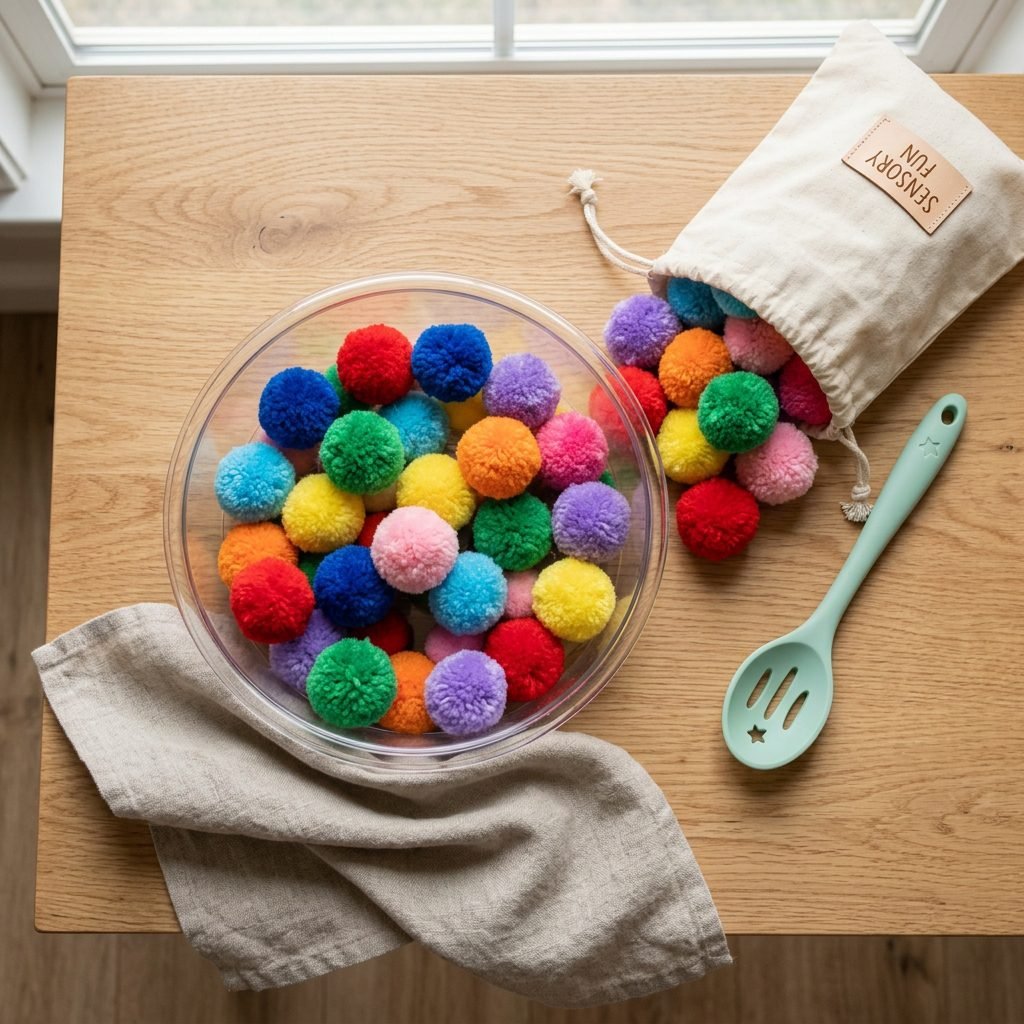
One of the most beautiful aspects of sensory play is that you do not need expensive, battery-operated toys to create a magical experience. In fact, the best sensory bins are usually cobbled together from items you already have in your kitchen cupboards and craft bins. Let us look at what you need to create this safe and splashy setup.
Choosing the Right Pom Poms
Safety is our absolute number one priority. When selecting pom poms for a baby or young toddler who still mouths objects, you must choose extra-large, jumbo pom poms. They should be significantly larger than a toilet paper tube opening (at least 2 to 3 inches in diameter) to eliminate any choking hazard. Avoid small craft pom poms entirely until your child is well past the mouthing stage.
Here is a practical breakdown of the materials you will need, where to find them, and an estimated budget to show just how accessible this activity is:
| Essential Item | What to Use / Where to Find It | Estimated Cost |
|---|---|---|
| The Sensory Bin | A shallow under-bed storage box, a large mixing bowl, or a dedicated acrylic sensory tray. | $0 – $15 |
| Jumbo Pom Poms | Craft store or online. Must be 2+ inches wide to prevent choking hazards. Ensure they are colorfast. | $5 – $8 |
| The Scooping Tool | Kitchen slotted spoon, small mesh strainer, or a baby-safe bath scoop. Look for easy-to-grip handles. | $0 (Use from kitchen) |
| Containment Mat | A waterproof splat mat, a large fluffy beach towel, or an old shower curtain liner. | $0 – $20 |
| The Water | Lukewarm tap water. Just enough to let the pom poms float (about 1 to 2 inches deep). | Free |
Pro-Tip for Stylish Mamas: If you are tired of primary colors clashing with your nursery or living room decor, look for neutral or pastel-toned pom poms online! You can create a beautiful, calming aesthetic using sage greens, dusty roses, and muted mustards that look lovely in photos and feel serene in your home.
Setting Up Your Safe Splash Zone
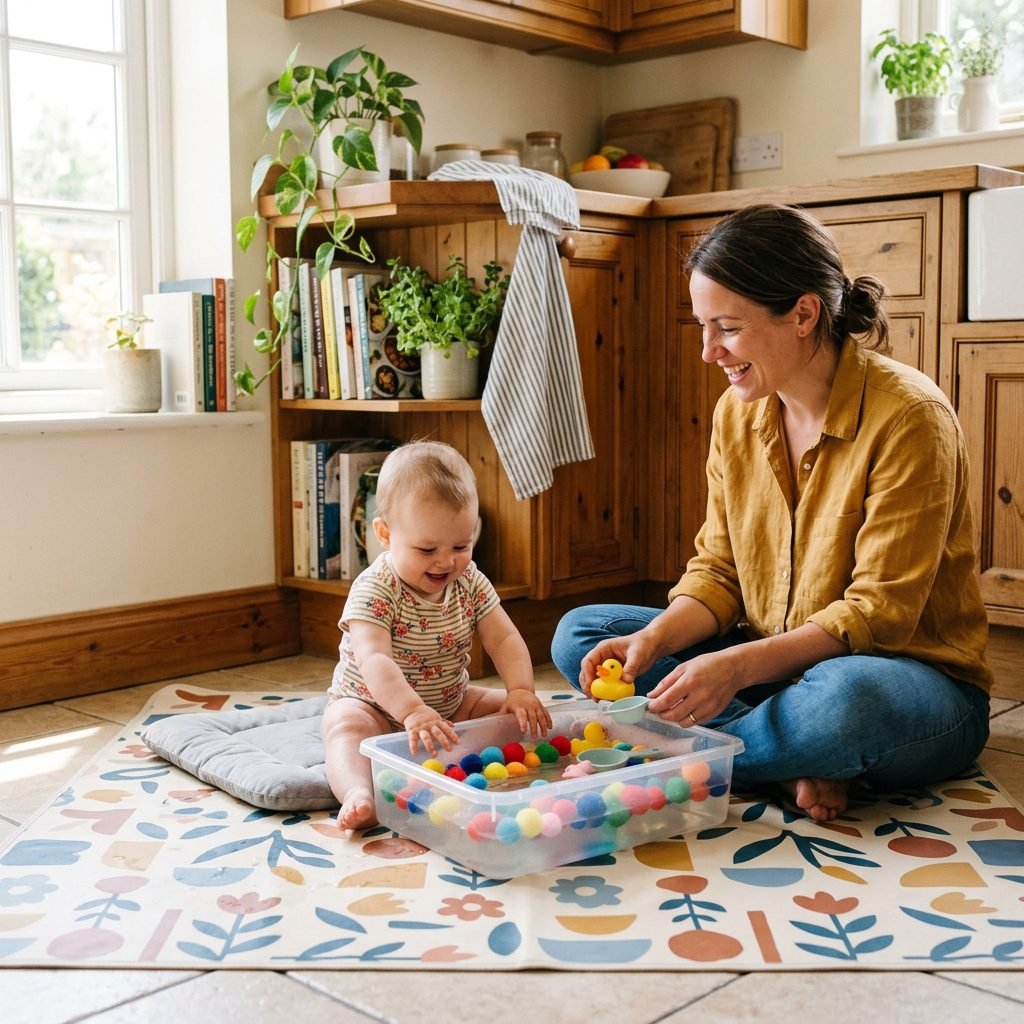
Now that we have our supplies, it is time to set the stage. The key to enjoying sensory play as a mother is to proactively manage the mess. If you are stressed about water getting on your hardwood floors, your baby will pick up on that anxiety, and the play will not be relaxing for either of you. Let us create a ‘yes space’ where your baby is free to splash, spill, and explore without you needing to constantly say ‘no.’
Location, Location, Location
- The Kitchen Floor: This is the classic sensory play location. Lay down a thick, absorbent beach towel or a waterproof splat mat. The hard floor is easy to wipe up afterward.
- The Dry Bathtub: For maximum containment and zero floor-stress, strip your baby down to their diaper and place the sensory bin directly inside the empty bathtub. When they are done, you simply dump the water down the drain!
- The Highchair: If your baby is still working on their independent sitting balance, the highchair is a fantastic, supportive option. Place a smaller, shallower container on the highchair tray.
- Outdoors: On a warm day, taking this activity onto the grass or patio is absolutely idyllic. The sun will naturally warm the water, and you will not have to wipe up a single drop.
Preparing the Water
Fill your bin with just about 1 to 2 inches of lukewarm water. You do not need a deep pool; you just need enough for the pom poms to float and bob around. Always test the water temperature on the inside of your wrist, just as you would a bottle, to ensure it is perfectly comfortable—neither too hot nor too cold.
A Gentle Safety Reminder: A baby can drown in less than an inch of water. Never, ever step away from a water sensory bin, even for a moment to check your phone or grab a towel. Your active, hands-on presence is required 100% of the time.
Step-by-Step: The Pom Pom Water Scoop Tutorial
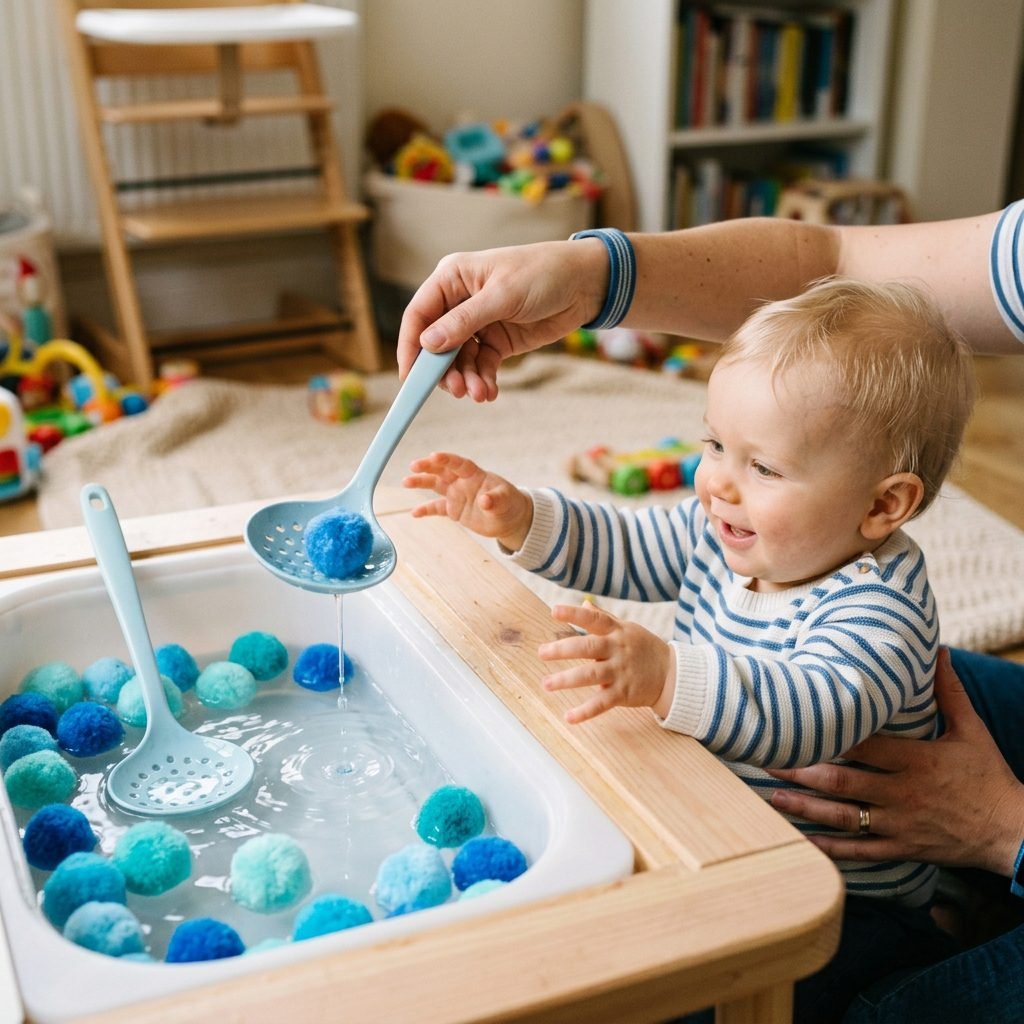
You have the supplies, you have the safe zone, and you have a baby who is ready to play. Here is the step-by-step guide to introducing this activity in a way that maximizes engagement and minimizes frustration.
- Lay the Groundwork: Spread out your splat mat or towels. Place the empty bin in the center. Dress your baby in a waterproof bib, a swim diaper, or just let them play in their regular diaper.
- Add the Elements: Pour the lukewarm water into the bin. Slowly drop the jumbo pom poms in one by one. Let your baby watch as they hit the water and absorb the liquid, slightly changing their texture and weight.
- Introduce the Hands First: Before introducing any tools, let your baby simply explore with their hands. Encourage them to squeeze the wet pom poms, splash the surface of the water, and feel the textures. This tactile grounding is crucial.
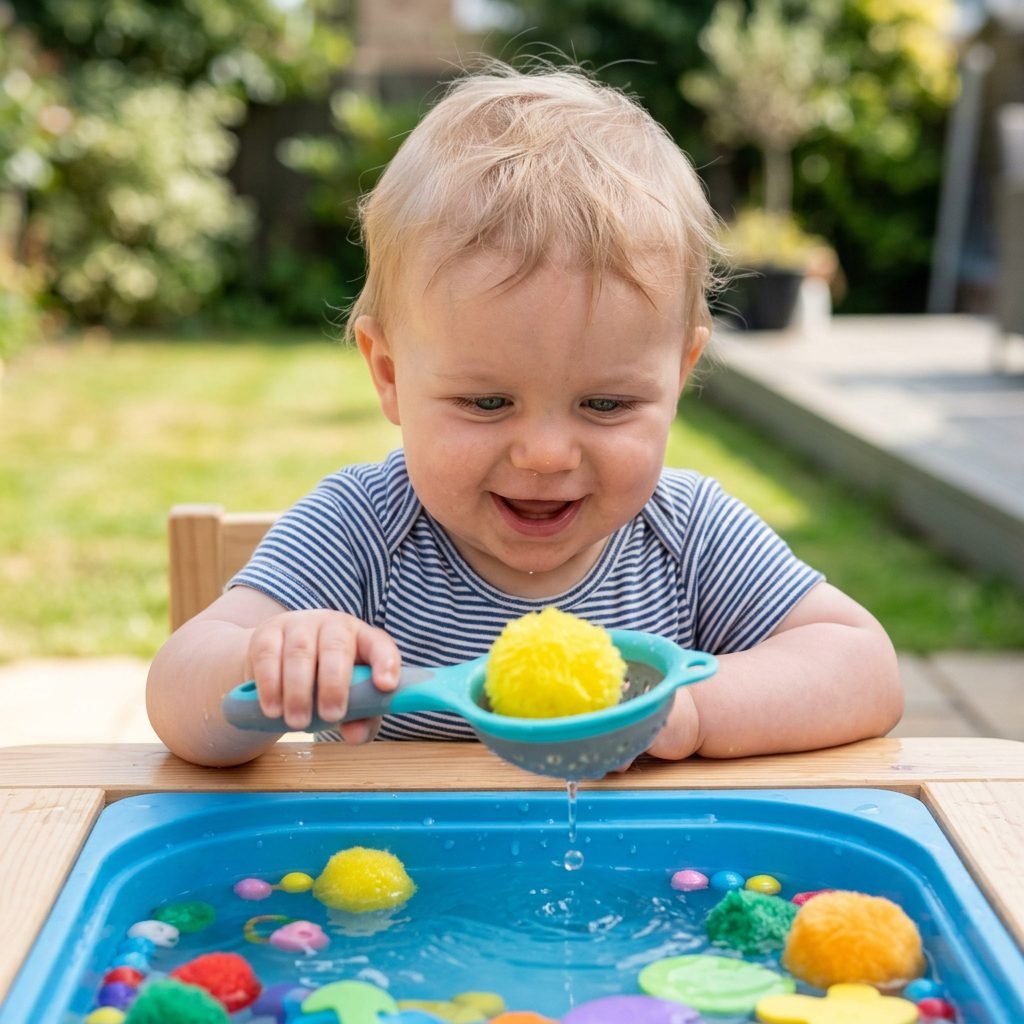
- Offer the Tool: Once they have explored with their hands, gently hand them the slotted spoon or strainer. Demonstrate the motion yourself first. Say, “Look! I am scooping the yellow pom pom. Up, up, up!” and let the water drain out of the spoon.
- Step Back and Observe: This is the most important step. Resist the urge to constantly correct how they are holding the spoon or “help” them catch the pom pom. Let them struggle a little bit; that productive struggle is where the motor planning and learning happens. Just sit close, smile, and narrate their victories.
Do not be surprised if they try to bring the wet pom poms to their mouth. This is a completely normal developmental urge! Because you have chosen jumbo pom poms, they are safe from choking, but you can gently redirect them by saying, “Pom poms are for our hands, not our mouths. Let’s scoop!”
Age-by-Age Modifications for Growing Babies
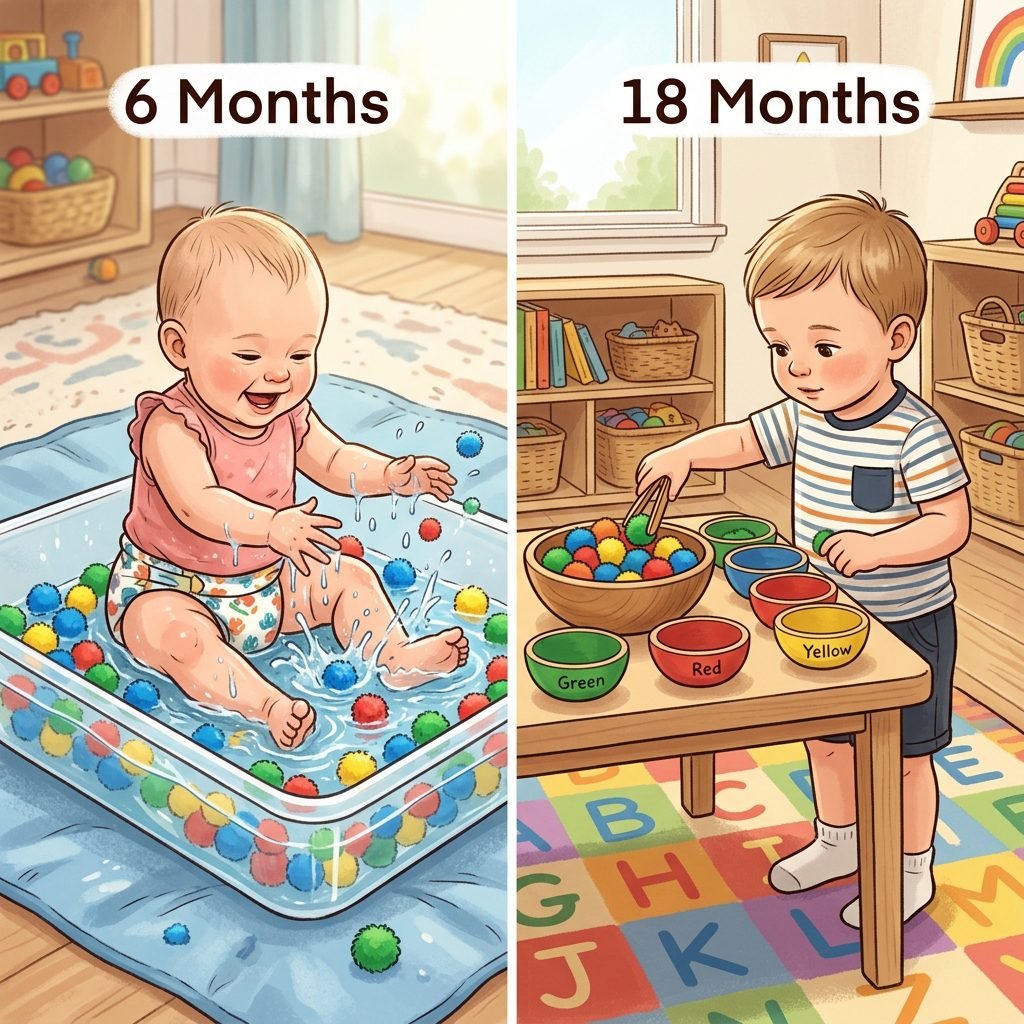
One of the best things about the Pom Pom Water Scoop is that it grows with your child. A six-month-old will interact with this bin completely differently than an eighteen-month-old. Here is how you can adapt the setup to meet your child exactly where they are developmentally.
6 to 9 Months: The Tactile Explorers
At this age, babies are working on independent sitting and basic reaching. They do not need tools yet. Focus purely on the sensory input. Use very large pom poms and let them use both hands to splash, grab, and squeeze. If your baby is a very heavy mouther and you are uncomfortable with pom poms, you can substitute them with large, colorful ice cubes (made with a drop of food coloring) for a taste-safe alternative.
9 to 12 Months: The Cause-and-Effect Scientists
This is the perfect age to introduce the slotted spoon or a small plastic cup. They are refining their pincer grasp and will love the challenge of trying to trap a floating pom pom. You can also introduce a secondary, empty bowl next to the water bin. Encourage them to scoop the pom pom out of the water and transfer it into the dry bowl. This crossing of the midline is fantastic for brain development!
12 to 18+ Months: The Sorters and Organizers
Toddlers thrive on tasks and organization. To upgrade this bin for a toddler, add a set of baby-safe plastic tongs instead of a spoon to really challenge those hand muscles. You can also introduce color sorting.
| Age Group | Primary Skill Focus | Tool Modification |
|---|---|---|
| 6 – 9 Months | Sitting balance, palmar grasp, tactile input | Hands only, very jumbo pom poms |
| 9 – 12 Months | Pincer grasp, transferring, cause-and-effect | Slotted kitchen spoon, small cups |
| 12 – 18+ Months | Hand strength, color sorting, fine motor precision | Child-safe tongs, multiple sorting bowls |
The Post-Play Cleanup (A Tired Mom’s Guide)
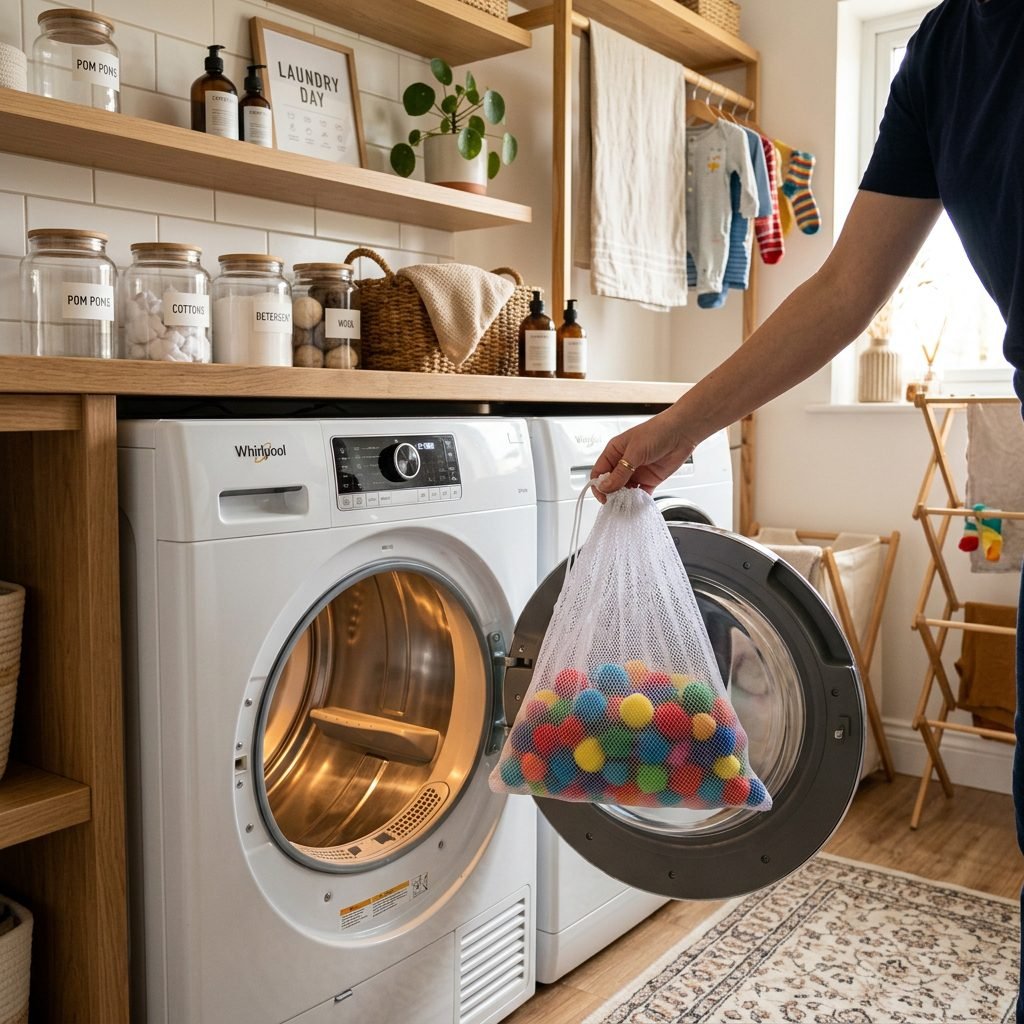
Alright, the play is done, the water is murky, and your baby is happily exhausted and ready for a nap. Now comes the part that usually deters moms from sensory play: the cleanup. But do not worry, I have a foolproof, five-minute cleanup system that will save your sanity and preserve your pom poms for next time.
Drying the Pom Poms
Wet pom poms can seem like a nightmare, but they are actually incredibly easy to dry. Do not leave them sitting in the bin, or they will develop a musty smell and mold.
- Step 1: Scoop all the wet pom poms into your hands or a large strainer and squeeze out as much excess water as you possibly can.
- Step 2: Toss the squeezed pom poms directly into a mesh laundry bag (the kind you use for delicates).
- Step 3: Zip the bag tightly and throw it into your clothes dryer on a low heat or delicate cycle for about 20-30 minutes. They will come out perfectly dry, fluffy, and completely sanitized!
Managing the Water and Towels
If you used a towel under the bin, simply roll the empty bin up inside the damp towel to carry it to the sink or bathtub without dripping water across the house. Dump the remaining water, give the bin a quick wipe with a dry cloth, and toss the towel into the washing machine. Done.
A Sisterly Reminder: Messes are temporary, but the neural pathways your baby built today are permanent. Do not stress if a little water got on the floor. You are fostering joy, curiosity, and development. You are doing wonderfully.
Once dry, store your fluffy pom poms and your slotted spoon inside the sensory bin, slide it onto a closet shelf or into an IKEA Kallax cube, and it is perfectly ready to go for the next rainy afternoon or fussy witching hour!
Conclusion

Motherhood is a beautiful, chaotic, and exhausting journey. Finding simple, joyful moments of connection with your baby does not have to require elaborate planning or expensive trips to indoor playgrounds. The Pom Pom Water Scoop sensory bin is proof that sometimes, the most profound learning happens right on the kitchen floor with a plastic tub and some fuzzy craft supplies.
By setting up this simple activity, you are not just passing the time; you are actively nurturing your baby’s cognitive growth, fine motor skills, and emotional well-being. So next time the afternoon stretches out before you and you need a gentle reset, turn on some soft music, fill up that shallow bin, and let the splashing begin. Enjoy these fleeting, water-soaked moments, mama.
Medical & Safety Disclaimer: The information provided in this article is for educational and informational purposes only and is not intended as medical advice. Always supervise your child actively and constantly during any water play or sensory activities. Babies can drown in less than an inch of water. Ensure all materials, including pom poms, are age-appropriate and large enough to not pose a choking hazard. If you have concerns about your child’s fine motor development or mouthing habits, please consult your pediatrician.
Conclusion
Motherhood is a beautiful, chaotic, and exhausting journey. Finding simple, joyful moments of connection with your baby does not have to require elaborate planning or expensive trips to indoor playgrounds. The Pom Pom Water Scoop sensory bin is proof that sometimes, the most profound learning happens right on the kitchen floor with a plastic tub and some fuzzy craft supplies.
By setting up this simple activity, you are not just passing the time; you are actively nurturing your baby’s cognitive growth, fine motor skills, and emotional well-being. So next time the afternoon stretches out before you and you need a gentle reset, turn on some soft music, fill up that shallow bin, and let the splashing begin. Enjoy these fleeting, water-soaked moments, mama.
Medical & Safety Disclaimer: The information provided in this article is for educational and informational purposes only and is not intended as medical advice. Always supervise your child actively and constantly during any water play or sensory activities. Babies can drown in less than an inch of water. Ensure all materials, including pom poms, are age-appropriate and large enough to not pose a choking hazard. If you have concerns about your child’s fine motor development or mouthing habits, please consult your pediatrician.