

Excessive Saliva During Pregnancy? Here’s How to Stop Drooling All Day
Oh, mama. If you clicked on this article, chances are you are dealing with one of the most unexpected, rarely talked about, and frankly annoying symptoms of pregnancy. You are reading all the books, preparing the nursery, and waiting for that famous pregnancy glow to arrive, but instead? You are carrying around a tissue, constantly swallowing, and waking up in a puddle of your own drool. First of all, take a deep breath.
You are not alone, this is entirely normal, and your body is doing exactly what it needs to do right now.
As a doula and maternal wellness expert, I hear about this symptom all the time behind closed doors. It is called ptyalism gravidarum, and while it might feel embarrassing or frustrating, it is a completely harmless physiological response to the incredible work your body is doing to grow a tiny human. When we think of pregnancy symptoms, we immediately picture morning sickness, fatigue, and weird food cravings. Nobody warns you about the excessive saliva! But today, we are pulling back the curtain on this unglamorous reality. We are going to dive deep into exactly why your mouth suddenly feels like a waterpark, how it connects to your fluctuating hormones, and most importantly, I am going to share my absolute best, tried-and-true doula secrets for stopping the drool, finding comfort, and getting your confidence back. Grab a cozy blanket, your favorite insulated water bottle, and let us navigate this bizarre but temporary chapter of your pregnancy journey together.
Understanding Ptyalism: Why Is My Mouth Suddenly a Waterpark?
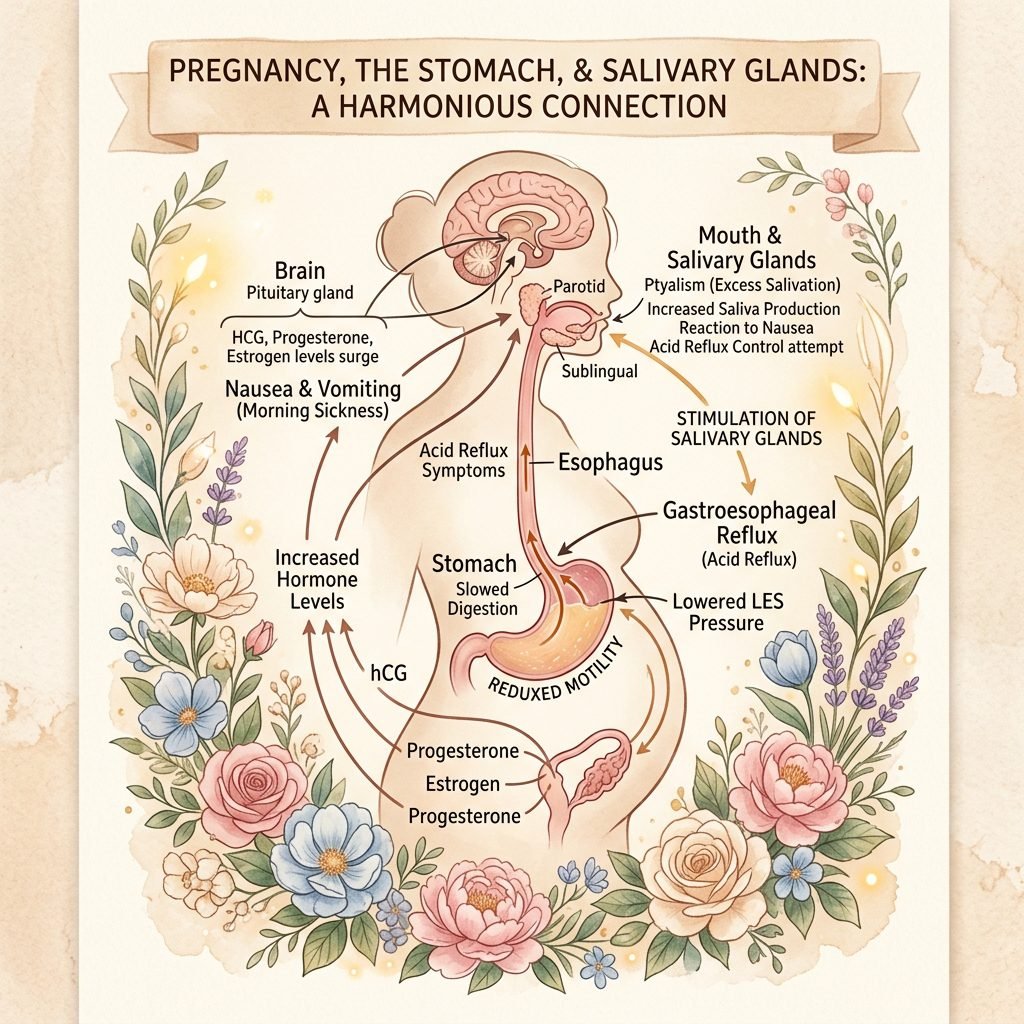
Before we can fix the problem, we need to understand the root cause. Knowledge is power, especially when it comes to your changing body. Ptyalism (pronounced tie-uh-liz-um) is the medical term for the overproduction of saliva. For most expectant mothers, this symptom rears its head during the first trimester, right alongside the peak of morning sickness, and usually begins to subside by the time you hit your second trimester. But why does it happen? There are three primary culprits at play here.
The Hormonal Shift
First and foremost, blame it on the pregnancy hormones. Your body is experiencing a massive surge in hCG (human chorionic gonadotropin) and progesterone. These hormones are essential for maintaining a healthy pregnancy, but they also relax smooth muscle tissue and increase blood flow to your mucous membranes, including your salivary glands. Your body is essentially working in overdrive, and your salivary glands are caught in the crossfire.
The Nausea Connection
There is a powerful link between excessive saliva and morning sickness. When you feel nauseous, your natural reflex is to swallow less frequently. Swallowing can trigger your gag reflex when you are already feeling queasy. Because you are not swallowing your saliva at a normal rate, it quickly pools in your mouth, creating the illusion that you are producing gallons of it. In reality, you might just be swallowing less. Furthermore, saliva production naturally increases when you are about to vomit, acting as a protective barrier for your teeth and throat against stomach acid.
Heartburn and Acid Reflux
As your baby grows and your uterus expands, it pushes upward against your stomach, often causing acid reflux or heartburn. Saliva is naturally alkaline, which means it neutralizes acid. Your brilliant, intuitive body senses the excess acid creeping up your esophagus and signals your salivary glands to produce more saliva to wash it down and protect your digestive tract.
Your body is not betraying you; it is actively trying to soothe and protect you from the inside out.
Actionable Relief: Doula-Approved Strategies to Manage the Flow

Now that we know why this is happening, let us talk about how to find relief. You cannot magically turn off your salivary glands, but you can absolutely manage the symptom so it does not disrupt your entire day. Here is a step-by-step physical guide to keeping your mouth comfortable and your mind at ease.
- Stay Hydrated with Ice-Cold Water: It sounds counterintuitive to add more liquid to your mouth, but taking frequent, tiny sips of ice-cold water actually helps thin out the saliva. Thick saliva is much harder to swallow and triggers the gag reflex. Keep an insulated tumbler with a straw nearby at all times. The cold temperature also naturally numbs the mouth slightly, reducing the sensation of pooling saliva.
- Chew Sugarless Gum or Mint: Chewing gum gives your mouth a job to do and naturally encourages you to swallow more frequently and discreetly. Peppermint or ginger-flavored gums are fantastic because they pull double duty by also settling your stomach and easing nausea.
- Suck on Tart or Sour Candies: Sour flavors stimulate a different type of saliva production that is often thinner and easier to manage. Keep a stash of pregnancy-safe sour drops, lemon wedges, or hard candies in your purse. Avoid overly sweet candies, as sugar can actually thicken your saliva and make the problem worse.
- Upgrade Your Oral Hygiene Routine: Brushing your teeth more frequently can provide temporary relief from the metallic or sour taste that often accompanies ptyalism. Use a soft-bristled toothbrush and a mild, minty toothpaste. If brushing triggers your gag reflex, try rinsing with an alcohol-free, pregnancy-safe mouthwash or a simple mixture of water and a pinch of baking soda to neutralize mouth acids.
- Embrace the ‘Spit Cup’ (With Zero Shame): Sometimes, swallowing is just not an option, especially if you are suffering from Hyperemesis Gravidarum (severe morning sickness). Many of my doula clients find immense relief in simply spitting the excess saliva out. Grab an opaque travel mug with a secure lid. It looks just like a coffee cup to the outside world, but it provides a safe, discreet place for you to empty your mouth without running to the bathroom every five minutes.
The Saliva Diet: What to Eat, Drink, and Avoid

Your diet plays a massive role in how your saliva behaves. Certain foods can trigger your glands to produce thick, ropey saliva, while others can help thin it out and soothe your stomach. As a maternal wellness companion, I always encourage my mamas to look at their diet as a tool for symptom management. Let us break down exactly what you should be reaching for in the pantry and what you should politely decline until after your beautiful baby arrives.
| What’s Safe & Helpful (Reduces Saliva/Thins it out) | What to Avoid (Triggers Excess/Thickens Saliva) |
|---|---|
| Ice chips and popsicles (numbing and hydrating) | Dairy products like heavy milk or cheese (thickens saliva) |
| Sour fruits like lemons, limes, and green apples | Excessively sugary treats (causes bacterial buildup and thickens mucus) |
| Small, frequent, bland meals (crackers, toast) | Large, heavy, or spicy meals (triggers acid reflux and saliva overproduction) |
| Ginger tea or peppermint tea (soothes nausea and reflux) | Starchy, dry carbohydrates without water (forces mouth to over-salivate to digest) |
| Sugar-free hard candies or mints | Acidic tomato-based sauces (can trigger severe heartburn) |
When planning your meals, focus on the strategy of grazing. Eating five to six small meals throughout the day rather than three large ones keeps your digestion moving smoothly, prevents your stomach from becoming overly empty (which triggers nausea), and stops acid from creeping up your esophagus. If you are struggling to keep food down, do not stress about perfectly balanced nutrition right now. In the thick of the first trimester, survival is key. If all you can stomach is a sleeve of saltine crackers and a green apple, you are doing a wonderful job.
Nighttime Survival: Keeping Your Pillows Dry and Getting Rest

Daytime drooling is annoying, but nighttime drooling can actually disrupt your much-needed sleep. Waking up to a cold, wet pillow is not the glamorous pregnancy experience you signed up for. Because you are relaxed and lying down, saliva can easily pool in your mouth or escape onto your bedding. Let us optimize your sleep setup to ensure you are getting the deep, restorative rest your body requires for postpartum recovery and baby-growing.
Elevate Your Head and Torso
Lying flat on your back or side allows acid to travel up your esophagus easily, which, as we learned, triggers more saliva. Use a pregnancy wedge pillow or stack two firm pillows to elevate your head and upper chest by about 30 to 45 degrees. This simple shift uses gravity to keep stomach acid down and encourages natural swallowing while you sleep.
Protecting Your Sleep Space
- The Towel Trick: Place a soft, absorbent microfiber towel over your pillowcase. It is much easier to swap out a towel in the middle of the night than to strip your entire pillowcase and bedsheets.
- Keep Supplies on Your Nightstand: Create a little bedside sanctuary. Keep a glass of ice water, some tissues, and your trusty opaque spittoon mug right next to your bed. If you wake up with a mouth full of saliva, you do not even have to get out of bed to find relief.
- Pre-Bedtime Routine: Avoid eating or drinking anything heavy at least two hours before bedtime. Finish your evening with a gentle, alcohol-free mouthwash rinse to ensure your mouth feels fresh and clean before your head hits the pillow.
Remember, sleep is vital right now. Do whatever it takes to make your bed feel like a safe, dry, and comfortable haven. If you need to sleep propped up in a recliner for a few weeks, give yourself the grace to do so.
The Mental Health Aspect: Overcoming Embarrassment

As a doula, I spend a lot of time holding space for the emotional toll of pregnancy. It is crucial that we address the mental health aspect of dealing with ptyalism. Many mothers feel isolated, embarrassed, or even ashamed of this symptom. You might find yourself avoiding social outings, skipping work meetings, or feeling self-conscious around your partner because you are constantly spitting or wiping your mouth.
Please hear me: Your worth is not diminished by the messy realities of pregnancy. You are performing a biological miracle, and sometimes miracles are a little bit gross.
It is so important to communicate openly with your partner and your support system. Tell them what you are experiencing. You will be surprised by how much lighter you feel when you do not have to hide your spit cup or pretend you are not uncomfortable. If you are at work, a simple, ‘I am dealing with a quirky pregnancy symptom right now, please excuse me if I need to step away or sip water constantly,’ is more than enough explanation. Give yourself radical permission to prioritize your comfort over societal expectations of how a pregnant woman should look or behave. You are a warrior, and a little extra saliva does not change that.
Looking Ahead: When Will This Stop, and When to Call Your Doctor

The light at the end of the tunnel is bright, mama. For the vast majority of women, excessive saliva significantly decreases or completely disappears by the end of the first trimester, right around weeks 12 to 14, as your hormone levels begin to stabilize and morning sickness fades. For a small percentage of women, it may linger a bit longer, but it almost always vanishes completely the moment you deliver your beautiful baby. Your postpartum recovery journey will bring its own unique set of changes, but thankfully, drooling is rarely one of them!
When to Bring It Up With Your Provider
While ptyalism is normal, it is always important to keep your OB-GYN or midwife in the loop about all your symptoms. You should explicitly mention your excessive saliva if it is accompanied by severe vomiting, an inability to keep any food or liquids down for more than 24 hours, or signs of dehydration (like dark urine, dizziness, or extreme fatigue). This could be a sign of Hyperemesis Gravidarum, which requires medical support, IV hydration, and prescription anti-nausea medication to keep both you and your baby safe and healthy.
Conclusion
Pregnancy is a wild, unpredictable, and profoundly transformative journey. From the moment you see those two pink lines, your body embarks on a mission that requires immense energy, shifting hormones, and yes, sometimes a few bizarre side effects like excessive saliva. As you navigate these weeks of ptyalism, I want you to lean heavily into self-compassion. Keep your ice water close, stock up on those sour candies, and do not be afraid to carry that spit cup with pride.
Every single day you manage these symptoms, you are one day closer to holding your sweet baby in your arms. You are incredibly strong, you are doing a beautiful job, and this too shall pass.
Take it one sip, one swallow, and one day at a time. You’ve got this, mama.