
On Your Feet All Day? Survival Guide For Pregnant Nurses and Retail Moms
Mama, I See You and I Feel You
Oh, sweet sister, I know that heavy-legged, lower-back-aching, ‘can I just sit down for five minutes’ feeling all too well. Whether you are navigating the high-intensity halls of a hospital as a nurse or managing the constant flow of a busy retail floor, being on your feet all day while growing a human is a feat of modern-day heroism. Your body is performing two full-time jobs at once: your professional role and the miraculous, energy-intensive labor of gestation.
As a doula and a nurse who has walked these same floors, I want to wrap you in a virtual hug and tell you that your discomfort is valid. But more importantly, I want to give you the tools to thrive, not just survive. This guide is your toolkit for managing the unique physical demands of your career while honoring the precious life inside you. We are going to talk about everything from the science of why your feet feel like they’ve doubled in size to the exact scripts you can use to ask for the support you deserve at work.
The Science of the Swell: Why Your Body Feels Different on the Shift
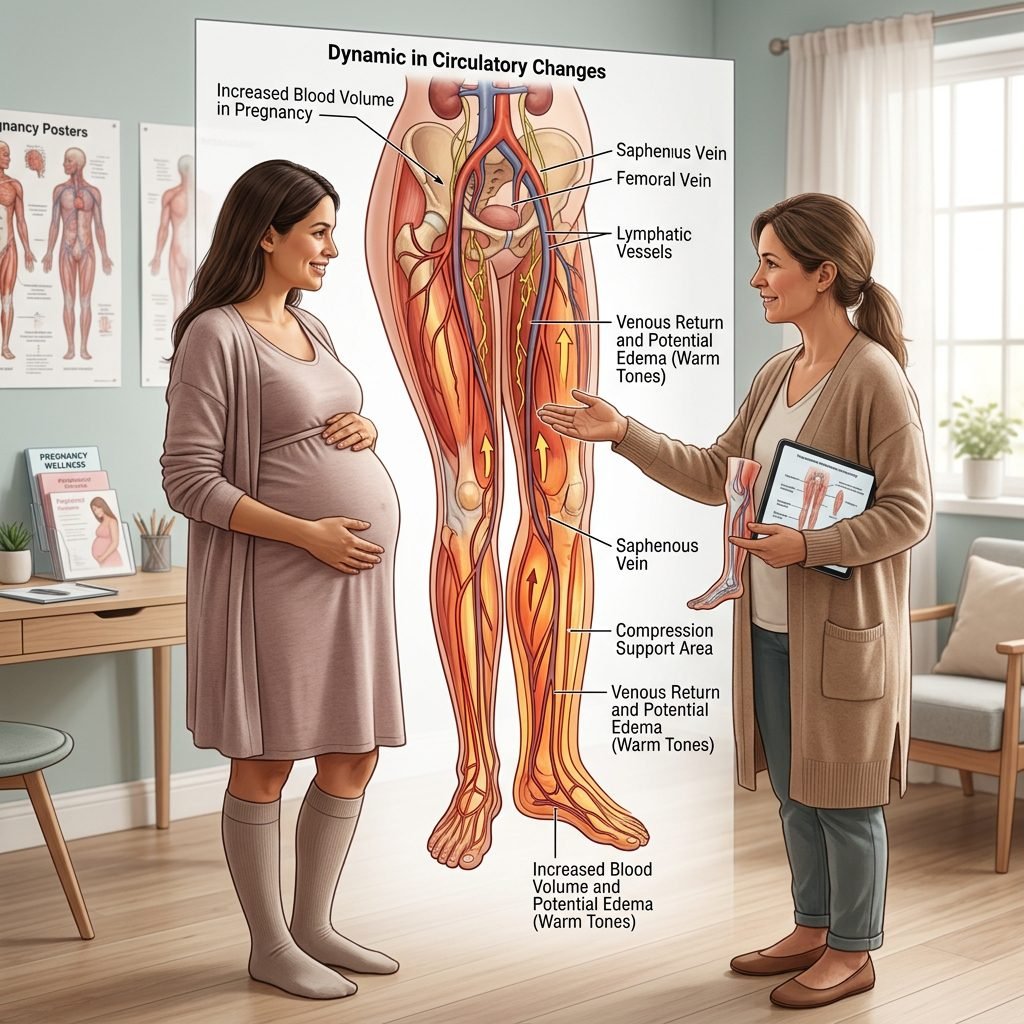
When you are pregnant, your body undergoes a physiological transformation that directly impacts your ability to stand for 8, 10, or 12 hours at a time. It isn’t just ‘pregnancy tiredness’; it is a complex shift in your circulatory and musculoskeletal systems. Understanding the ‘why’ helps us address the ‘how’ of relief.
Relaxin and Your Ligaments
Starting early in pregnancy, your body produces a hormone called relaxin. Its job is exactly what it sounds like: it relaxes your ligaments and joints to prepare your pelvis for birth. However, relaxin doesn’t just target your pelvis; it affects every joint, including the tiny bones in your feet. This is why many retail moms find their shoes feel too tight—your arches are literally flattening and spreading under the extra weight and loosened ligaments.
Blood Volume and Edema
By the third trimester, your blood volume has increased by nearly 50%. Your heart is working overtime to pump this extra fluid. When you stand still or walk for long periods, gravity pulls that fluid down into your lower extremities, leading to edema (swelling). This is why those compression socks aren’t just a suggestion; they are a medical necessity for the working mama.
The Shift in Gravity
As your bump grows, your center of gravity shifts forward. To compensate, most women tilt their pelvises, creating an exaggerated curve in the lower back (lordosis). For a nurse leaning over a patient bed or a retail worker reaching for high shelves, this puts immense strain on the lumbar spine and the sacroiliac (SI) joints.
| Symptom | The Root Cause | The Sisterly Solution |
|---|---|---|
| Swollen Ankles | Increased blood volume & gravity | Graduated compression socks (20-30 mmHg) |
| Lower Back Stabbing | Pelvic tilt & Relaxin | Supportive maternity belt/belly band |
| Foot Arch Pain | Ligament laxity & weight gain | Orthopedic inserts & wide-toe shoes |
| Varicose Veins | Pressure on the vena cava | Frequent movement & leg elevation |
The Ultimate Work Uniform: Gear That Saves Your Sole

Mama, now is not the time for fashion over function—though I promise we can find a middle ground! Your work gear is your primary defense against chronic pain. Think of these items as your professional equipment.
The Magic of Compression
If you take nothing else from this guide, let it be this: Wear. Your. Compression. Socks. You want graduated compression, which is tighter at the ankle and gradually loosens as it goes up the calf. This mimics the body’s natural pumping action to move blood back toward your heart.
Footwear: The Foundation
For my retail sisters, I know you might have a dress code, but many employers allow medical exceptions for pregnancy. For my nurses, your clogs are your best friends, but they might need an upgrade. Look for shoes with:
- Wide toe boxes to accommodate end-of-day swelling.
- Slip-resistant soles for hospital spills or polished retail floors.
- Excellent arch support to counteract the effects of relaxin.
Belly Support Bands
A high-quality maternity support belt acts like an external set of abdominal muscles. It lifts the weight of the baby off your pelvic floor and stabilizes your SI joints. This is a game-changer for those 12-hour shifts where the ‘heaviness’ becomes unbearable by hour six.
“You aren’t being ‘extra’ by wearing a brace or sitting whenever you can. You are being a steward of your body and your baby’s first home. Wear the gear, take the seat.”
Micro-Moments of Relief: Actionable On-the-Job Exercises
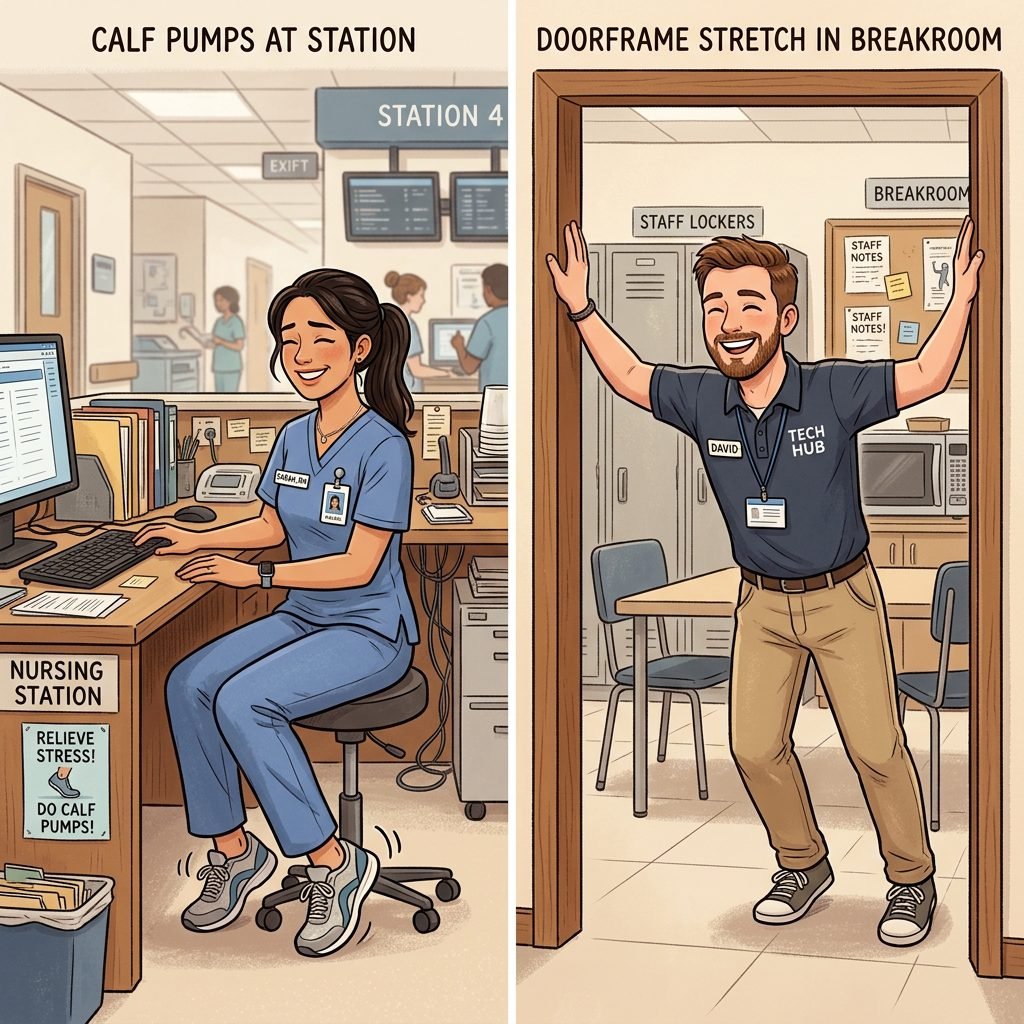
You don’t need a yoga studio to find relief. You can integrate these ‘micro-movements’ into your shift to reset your alignment and keep your blood flowing.
1. The ‘Bathroom Stall’ Pelvic Tilt
When you head to the restroom (which we know is often!), take 30 seconds to do standing pelvic tilts. Lean your back against the wall, feet slightly out, and flatten the small of your back against the wall. This ‘tucks’ the tailbone and releases the pressure on your lumbar spine.
2. The Calf Pump
Whenever you are standing at a nursing station or a cash register, do 20 heel-to-toe rolls. Lift your heels, then back onto your heels to lift your toes. This activates the ‘calf pump,’ which is essential for venous return.
3. The Doorframe Chest Stretch
Pregnancy often makes us slouch forward as we protect our bellies. Find a doorframe, place your forearms on the sides, and gently lean through. This opens the chest and helps you breathe deeper, which is vital when your diaphragm is already being crowded by your growing uterus.
The Hydration/Rest Matrix
| Frequency | Action Item | Why It Matters |
|---|---|---|
| Every 30 Minutes | Drink 8oz of water | Prevents Braxton Hicks and reduces swelling |
| Every Hour | 30-second calf pumps | Prevents blood pooling and DVT risk |
| Every 2 Hours | Sit for 5 minutes | Unloads the pelvic floor and SI joints |
| Lunch Break | Elevate feet above heart | Drains fluid from the lower extremities |
The After-Shift Recovery Ritual: Healing at Home

The work doesn’t stop when you clock out, but the recovery must begin the moment you walk through your front door. Your evening routine determines how you will feel when you wake up for the next shift.
The ‘Legs Up the Wall’ Pose (Viparita Karani)
This is the holy grail for pregnant professionals. Lay on the floor (or your bed if the floor is too hard to get up from!) and shimmy your bottom toward the wall, resting your legs vertically against it. Stay here for 10 to 15 minutes. This uses gravity to drain the lymphatic fluid from your feet and gives your heart a well-deserved break.
Magnesium and Epsom Salts
Magnesium is a natural muscle relaxant. A warm (not hot!) bath with 2 cups of Epsom salts can do wonders for restless legs and aching hips. If you don’t have time for a full bath, a foot soak is a great alternative. Note: Always ensure the water temperature is below 100°F to keep your core temperature safe for the baby.
Side-Lying with Body Pillows
When you finally hit the sheets, alignment is key. Place a pillow between your knees and another under your bump. This keeps your hips stacked and prevents the ‘pulling’ sensation on your round ligaments that can make a long day feel even longer.
“Rest is not a reward for your hard work; it is the fuel that allows you to continue. Tonight, your only job is to be still.”
Advocating for Your Bump: Workplace Scripts and Rights

Sister, I know it can be hard to ask for help, especially in ‘tough’ professions like nursing or retail where the culture is often ‘push through it.’ But you are not just asking for yourself; you are advocating for your baby. Under the Pregnant Workers Fairness Act (PWFA), many employers are required to provide ‘reasonable accommodations.’
How to Ask for Accommodations
Don’t wait until you are in tears from pain to speak up. Approach your manager with a solution-oriented mindset. Here are some scripts you can use:
Scenario 1: Asking for a chair (Retail)
“I am so committed to hitting our floor goals, but as my pregnancy progresses, I’m experiencing significant swelling. I’d like to have a stool behind the counter to use during lulls in foot traffic so I can stay productive for the full shift.”
Scenario 2: Asking for a lighter patient load or modified duties (Nursing)
“I love my team and want to pull my weight. However, my doctor has recommended I avoid heavy lifting or high-intensity bedside maneuvers for the time being. Can we look at the assignment board to ensure I’m in a lower-acuity zone today?”
What’s Safe vs. What to Avoid
| Safe & Encouraged | Use Caution / Avoid |
|---|---|
| Frequent 5-minute sitting breaks | Lifting more than 20-25 lbs (check with OB) |
| Using a rolling cart for supplies | Climbing tall ladders or unstable stools |
| Wearing a support belt 8+ hours | Exposure to harsh cleaning chemicals/chemo |
| Asking for help with patient turns | Skipping meals or hydration breaks |
Conclusion
You Are Doing a Beautiful Job
Mama, as you lace up your shoes for your next shift, remember that you are incredibly strong. Working on your feet while pregnant requires a level of grit and grace that is truly inspiring. By using compression, prioritizing your recovery, and speaking up for your needs, you are practicing the very first lessons of motherhood: nurturing and protection.
Listen to your body. If it screams, stop. If it whispers, pay attention. You are a nurse, a provider, a retail powerhouse—but first and foremost, you are the sacred vessel for a new life. Take care of those feet, sister. They are carrying the most precious cargo in the world.