
Gross Skin Tags Appearing? Why It Happens and How To Remove Them Safely
Welcome to the Unglamorous Side of the “Pregnancy Glow”
Oh, mama. Let’s have a real, sisterly chat. You are likely standing in front of your bathroom mirror right now, analyzing a tiny, fleshy little bump that seemingly appeared out of nowhere overnight. You might have found it on your neck, nestled in your armpit, or hiding right under your breasts. Your first thought was probably a mix of panic and annoyance: “What on earth is this, and how do I get rid of it?”
Take a deep, cleansing breath. Drop your shoulders. You are looking at a skin tag (medically known as an acrochordon), and I promise you, you are in excellent company. As a doula and maternal wellness expert, I hear about these little intruders from nearly every single expectant and postpartum mother I work with. We talk endlessly about the beautiful baby kicks, the sweet nursery preparations, and the magical “pregnancy glow,” but society often leaves out the gritty, deeply normal realities of what growing a human actually does to our skin.
Pregnancy is a wild, beautiful, and sometimes downright bizarre journey. Your body is currently performing the ultimate miracle—constructing a brand-new life from scratch—and to do that, it has to flood your system with a cocktail of hormones, increase your blood volume, and stretch in ways you never thought possible. Skin tags are simply a very common, very harmless side effect of all this magnificent biological hard work.
“Your body is not failing you, and it is certainly not turning against you. Every stretch mark, every hormonal shift, and yes, even every frustrating little skin tag, is proof of the incredible, life-sustaining work you are doing right now.”
In this comprehensive guide, we are going to demystify these pesky little bumps. We will explore exactly why your body is suddenly producing them, where they love to hide, and most importantly, how to manage and remove them safely without risking infection or harming your beautifully changing body. Grab a cup of red raspberry leaf tea, get cozy, and let’s dive into the fascinating world of pregnancy skincare.
The Root Cause: Why Is My Body Suddenly Making Skin Tags?
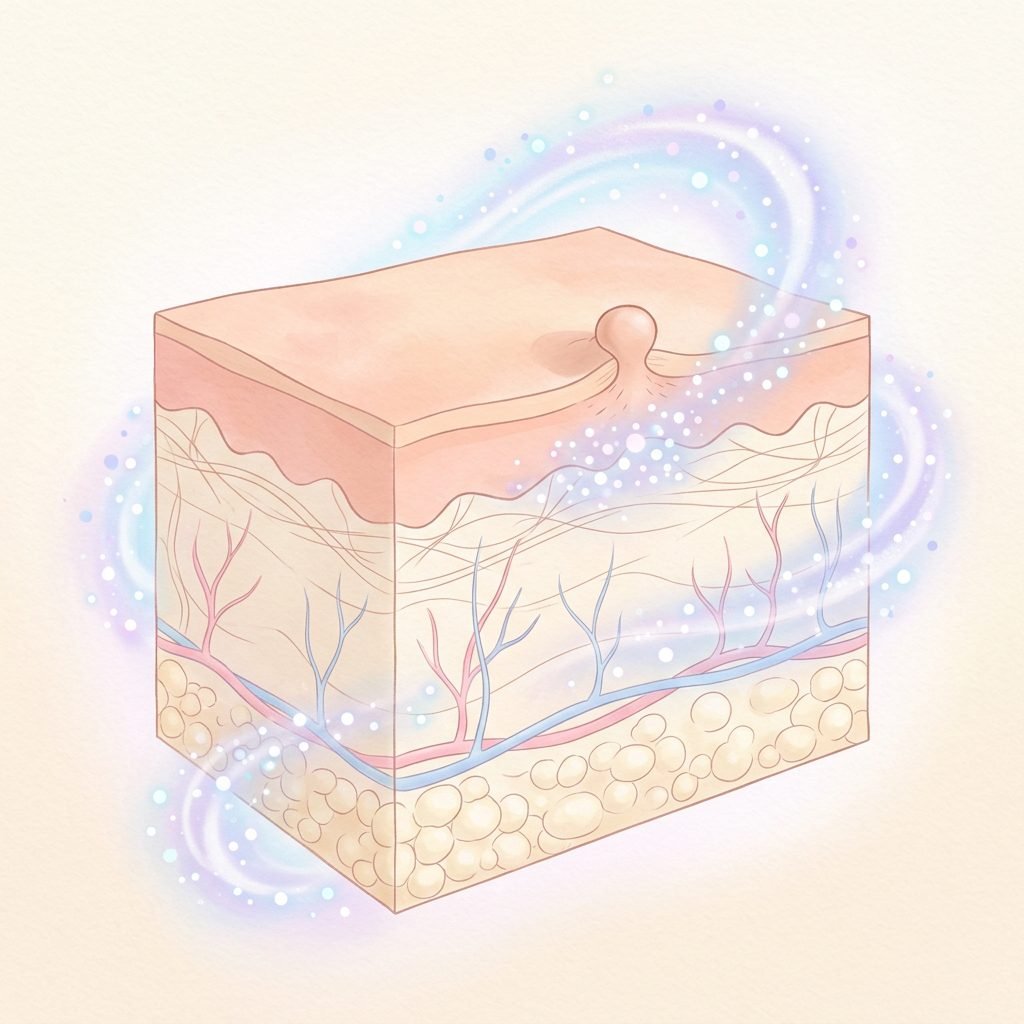
To understand how to deal with skin tags, we first need to understand why they have decided to crash your pregnancy party. The sudden appearance of skin tags—especially during the second and third trimesters—is a perfect storm of three major physiological changes happening inside your body right now.
1. The Hormonal Surge
Your hormones are the ultimate directors of this pregnancy show. Right now, your body is producing massive amounts of estrogen and progesterone. These hormones are absolutely vital for maintaining your pregnancy and helping your baby grow, but they also stimulate the growth of your skin’s superficial layers. This hyper-stimulation causes the skin cells to multiply rapidly, sometimes resulting in these tiny, benign overgrowths.
2. The Friction Factor
Skin tags absolutely love friction. They thrive in areas where skin rubs against skin, or where clothing rubs against your skin. As your baby grows, your body expands. You are gaining healthy, necessary weight, your breasts are enlarging in preparation for lactation, and your overall body shape is shifting. This creates new folds and creases in your skin that you didn’t have before. The constant, gentle rubbing in these new folds acts as a catalyst for skin tags to form.
3. Increased Blood Circulation
Did you know that during pregnancy, your blood volume increases by up to 50 percent? This incredible adaptation ensures your baby gets all the oxygen and nutrients they need. However, this extra blood flow also means more circulation to your skin, which can accelerate the growth of hyperplastic skin tissue (aka, skin tags).
- Common Hiding Spot 1: The Neck. Often caused by the friction of collars, necklaces, or simply the natural creases of your neck as your posture shifts.
- Common Hiding Spot 2: Under the Breasts. As your breasts grow and become heavier, the friction between the breast tissue and your ribcage increases dramatically.
- Common Hiding Spot 3: The Armpits and Groin. These areas naturally have more skin folds, and as you gain pregnancy weight, the friction here intensifies.
What’s Safe vs. What to Avoid: The Golden Rules of Pregnancy Skincare

When you spot a gross skin tag, your immediate instinct might be to rush to the pharmacy for a removal kit or, heaven forbid, reach for a pair of scissors. Stop right there, mama! Your immune system is naturally suppressed during pregnancy so that your body doesn’t reject your growing baby. This means you are far more susceptible to skin infections, scarring, and prolonged healing times.
As your doula, I cannot stress this enough: DIY surgical removals or harsh chemical treatments are strictly off-limits right now. Let’s break down exactly what is safe to try during pregnancy and what you absolutely must avoid.
| Removal / Management Method | Safety Status During Pregnancy | Doula’s Expert Notes & Warnings |
|---|---|---|
| Tying off with dental floss or thread | AVOID ENTIRELY | High risk of severe bacterial infection. Your immune system is suppressed; do not attempt DIY surgery. |
| Over-the-counter freezing kits (Cryotherapy) | AVOID ENTIRELY | These chemicals are not tested for pregnancy safety. They can cause permanent scarring on your hyper-sensitive skin. |
| Cutting off with scissors or clippers | AVOID ENTIRELY | Extreme infection and bleeding risk. Pregnancy increases blood flow, meaning even small cuts can bleed heavily. |
| Undiluted Essential Oils (e.g., Tea Tree) | PROCEED WITH CAUTION | Can cause severe contact dermatitis. If used, must be heavily diluted with a carrier oil and cleared by your OB/GYN. |
| Friction Reduction & Moisture Control | 100% SAFE & RECOMMENDED | The best way to prevent them from growing or becoming irritated. Keep the area dry and use pregnancy-safe balms. |
| Professional Removal by a Dermatologist | SAFE (But wait until Postpartum) | While safe if done by a pro, most doctors recommend waiting until 3 to 6 months postpartum as many tags vanish on their own! |
The golden rule of pregnancy skincare is patience and protection. The goal right now isn’t necessarily immediate eradication, but rather comfortable management until your hormones regulate postpartum.
Actionable Comfort: How to Manage Skin Tags Right Now
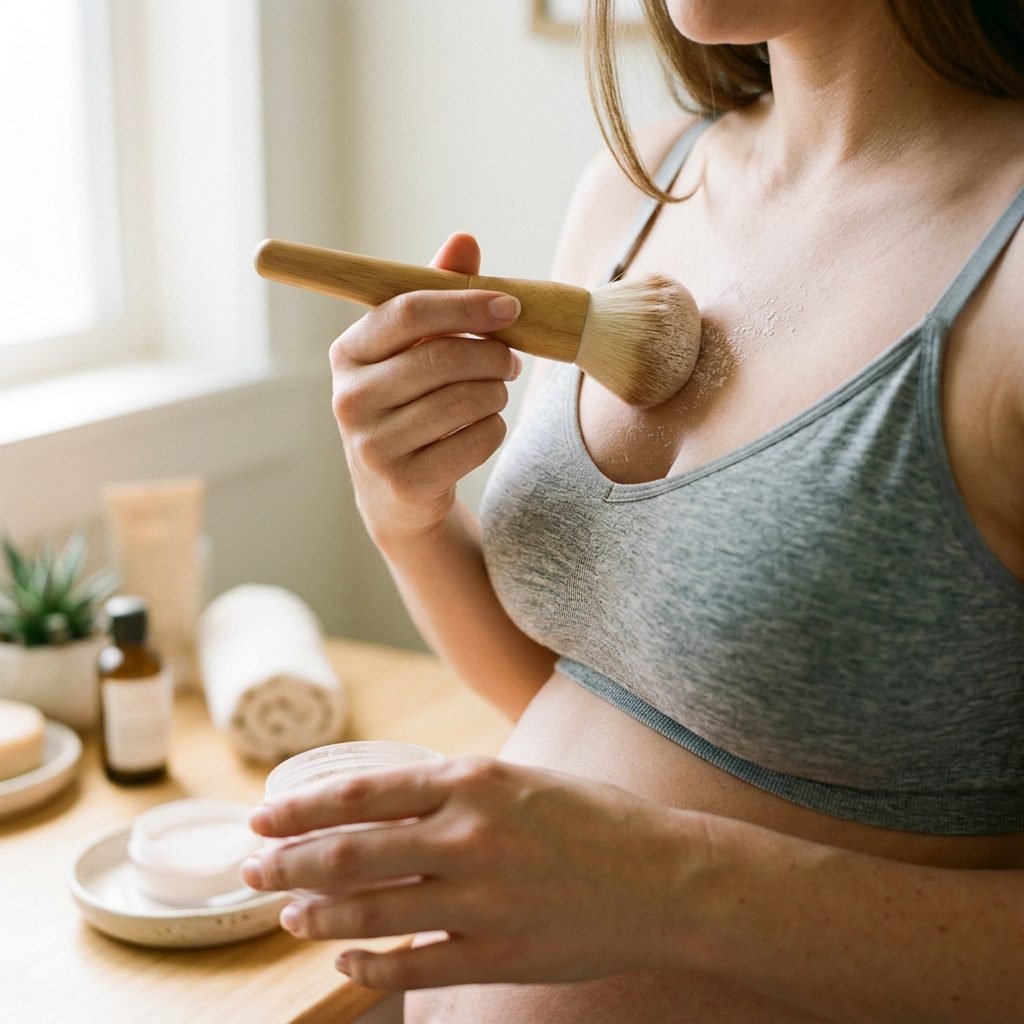
So, if we aren’t freezing them or snipping them, what can we do? As an expectant mother, your focus should be on reducing the friction that causes them to grow and preventing them from becoming inflamed, itchy, or snagged on your clothing. Here is a highly effective, doula-approved protocol for managing skin tags during your pregnancy.
Step-by-Step Daily Management Routine
- Keep the Area Meticulously Dry: Moisture breeds irritation. After your shower, gently pat your skin folds completely dry with a clean, soft towel. Do not rub vigorously, as this creates the exact friction we are trying to avoid.
- Apply a Barrier Powder or Balm: Once the skin is completely dry, apply a pregnancy-safe, talc-free dusting powder (like arrowroot powder or cornstarch) to areas like your armpits or under your breasts. Alternatively, a natural anti-chafe balm can create a smooth glide between skin folds.
- Audit Your Wardrobe: Ditch the tight, restrictive clothing. Opt for loose, breathable fabrics like organic cotton, bamboo, or linen. Pay special attention to your bras—if your underwire is digging into a skin tag under your breast, it is time to switch to a seamless, wireless maternity bra.
- Protect from Snagging: If you have a prominent skin tag on your neck that keeps catching on your necklaces or shirt collars, you can cover it with a small, breathable circular bandage during the day to prevent it from tearing.
“Self-Care Reminder: Swap out your tight, synthetic bras for ultra-soft, seamless maternity bralettes. Not only will this reduce the friction causing your skin tags, but it will also support your changing breast tissue and prepare you for a more comfortable postpartum nursing journey.”
If a skin tag becomes extremely painful, turns black, or starts bleeding on its own, do not try to treat it at home. Call your OB/GYN or midwife. While rare, they can sometimes become twisted and cut off their own blood supply, which may require a quick, sterile removal in the doctor’s office.
The Postpartum Timeline: Will They Go Away On Their Own?

Here is the incredibly reassuring news that I share with all my clients: for the vast majority of mothers, pregnancy-induced skin tags are temporary visitors! You do not need to resign yourself to a life covered in these little bumps.
Once you deliver your beautiful baby and the placenta is birthed, your hormone levels undergo a massive, rapid shift. The soaring levels of estrogen and progesterone that fueled the growth of your skin tags will plummet back to their pre-pregnancy baseline. As this happens, the hyper-stimulation of your skin cells halts.
Your Postpartum Skin Tag Recovery Timeline
- Weeks 1 to 6 Postpartum: Your hormones are crashing, and your body is shedding excess fluid. You likely won’t notice much change in the skin tags yet, as your body is focused on major healing (and you are focused on surviving newborn sleep schedules!).
- Months 2 to 3 Postpartum: As your weight begins to stabilize and your hormones level out, you may notice that the skin tags stop growing. Some of the smaller ones may even dry up and painlessly flake off in the shower without you even noticing.
- Months 4 to 6 Postpartum: This is the golden window. Most pregnancy-induced skin tags will have shrunk significantly or disappeared entirely by this point.
If you reach the 6-month postpartum mark and you still have stubborn skin tags that are bothering you, now is the time to take action. You can confidently book an appointment with a board-certified dermatologist. In a sterile, clinical setting, they can safely and quickly remove the remaining tags using professional cryotherapy (freezing), electrocautery (burning), or sterile surgical excision. The procedure takes mere minutes, is virtually painless with a local numbing cream, and carries a very low risk of infection when done by a medical professional.
Conclusion
Embracing the Journey, Bumps and All
Motherhood is a profound transformation, and it leaves its mark on us in so many ways—some beautiful, like the softness of our bellies that housed our babies, and some a little frustrating, like the sudden appearance of skin tags. But I want you to look in that mirror again, mama, and see the absolute strength radiating from your body.
Those little bumps are a testament to the surging hormones that are currently building a brain, a beating heart, and ten tiny fingers. They are proof of the magnificent, messy, and miraculous work of pregnancy. Manage them gently, protect your skin from friction, and give yourself the grace to know that this, too, is a temporary season.
You are doing an incredible job. Keep nurturing your body, keep wearing those comfortable, seamless fabrics, and remember that you have a whole community of mothers who have walked this exact path, skin tags and all, cheering you on.