

How To Set Boundaries With Toxic Family Members While Pregnant (Without Guilt)
Oh, sweet mama, I see you. You are growing a whole human being, navigating the wild waves of hormones, and trying to prepare your heart and home for a new arrival. This should be a season of soft blankets, gentle kicks, and nesting in peace. But instead, you are finding yourself bracing for the next phone call or dreading the next family gathering. If you have toxic family members in your life, pregnancy doesn’t always bring out the best in them; sometimes, it amplifies their need for control, their unsolicited opinions, and their ability to trigger your deepest anxieties.
As a doula, I often tell my clients that your most important job right now—besides nourishing your body—is protecting your peace. Your baby is marinating in your hormones, and while we can’t (and shouldn’t) be happy every second, we do want to minimize the chronic stress caused by toxic dynamics. Setting boundaries isn’t mean, it isn’t ‘hormonal,’ and it certainly isn’t something you should feel guilty about. It is an act of fierce motherhood. Let’s walk through how to build your protective bubble together, sister to sister.
Identifying the Toxic Shift: Why Pregnancy Changes the Dynamic
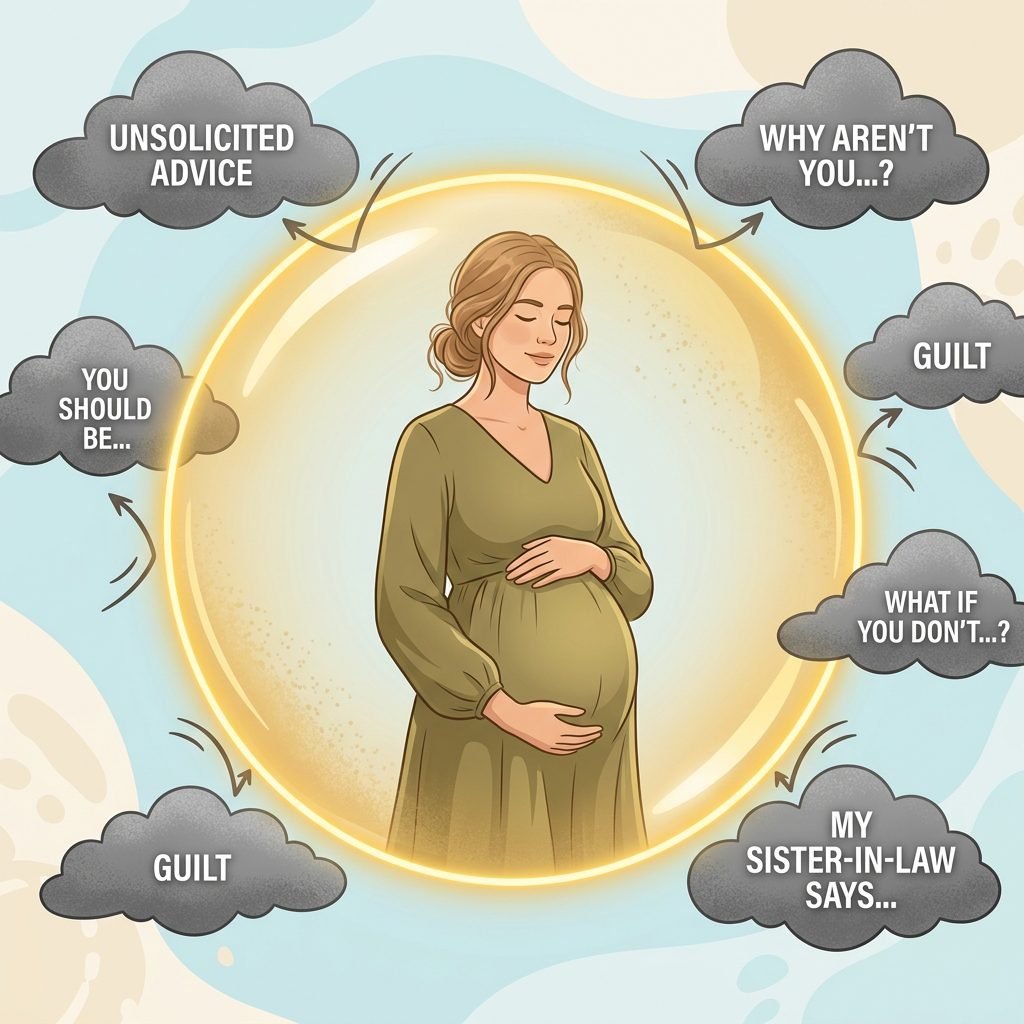
You might be wondering why a family member who was ‘just okay’ or ‘slightly annoying’ has suddenly become a source of major stress. Pregnancy shifts the power dynamic in families. You are no longer just a daughter, sister, or niece; you are now the gatekeeper to a new generation. For toxic individuals, this can trigger a desperate need to assert dominance or claim ‘ownership’ over your experience.
Common Red Flags to Watch For
- The Unsolicited Expert: They dismiss your birth plan or medical choices because ‘that’s not how we did it.’
- The Guilt-Tripper: They make your pregnancy about them, complaining that you aren’t visiting enough or sharing enough updates.
- The Boundary-Stomper: They touch your belly without asking or announce your private news on social media before you do.
- The Energy Vampire: They bring their drama to your doorstep, expecting you to manage their emotions while you are physically and emotionally taxed.
Understanding that these behaviors are about their lack of control and not your failure as a daughter or sister is the first step toward letting go of the guilt. You are not responsible for managing their reactions to your healthy boundaries.
The Science of Peace: Why Your Boundaries Matter for Baby
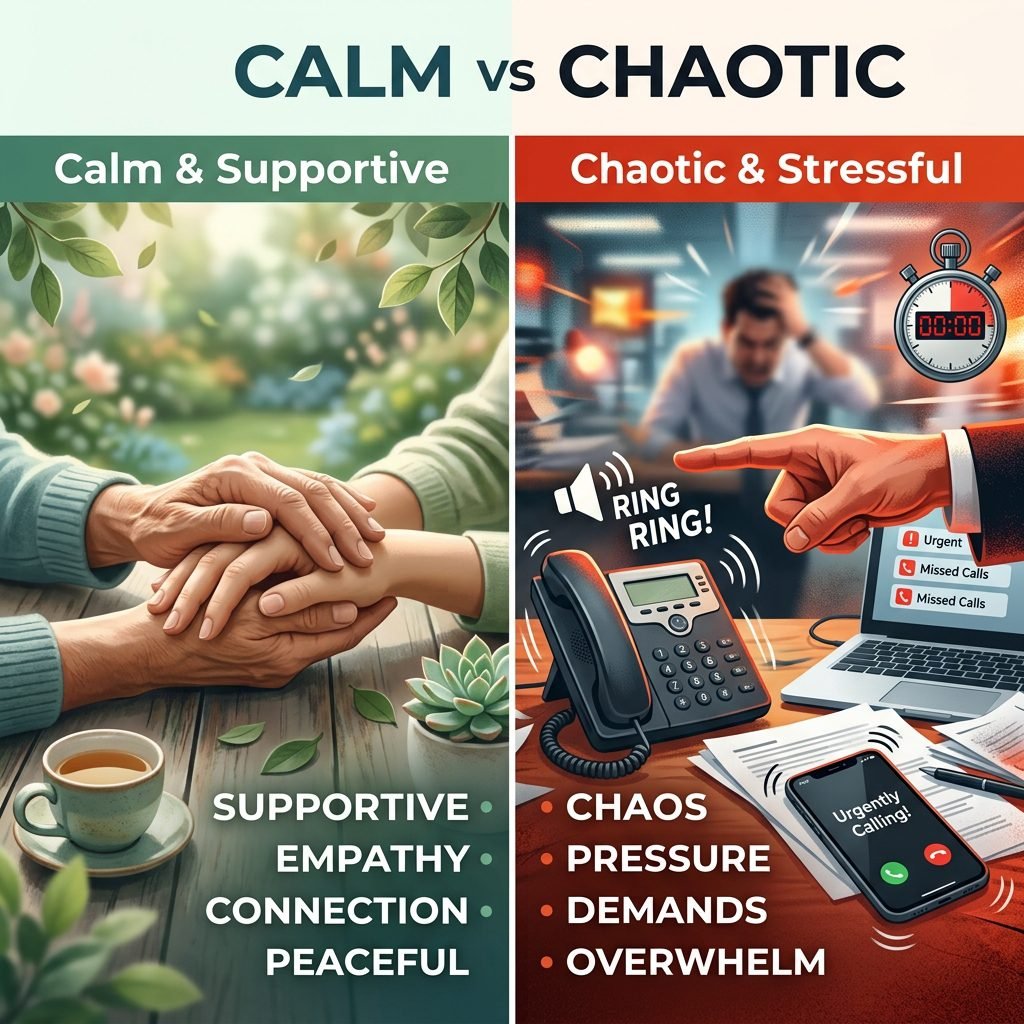
It’s not just ‘all in your head.’ When you deal with a toxic family member, your body enters a ‘fight or flight’ state. This triggers the release of cortisol and adrenaline. While occasional stress is a part of life, chronic stress from toxic relationships can cross the placental barrier. By setting boundaries, you are literally creating a healthier physiological environment for your little one.
Supportive vs. Toxic Interactions
| Interaction Type | Supportive Family | Toxic Family |
|---|---|---|
| Advice | Waits for you to ask or offers gently with ‘I found this helpful, but do what’s best for you.’ | Demands you follow their way and mocks your evidence-based choices. |
| Communication | Respects your ‘Do Not Disturb’ times and waits for replies. | Spam calls or texts and gets angry if you don’t respond immediately. |
| Visiting | Asks when is a good time and brings food or helps with chores. | Shows up unannounced and expects to be hosted and served. |
| Privacy | Asks before sharing photos or details with others. | Posts your ultrasound or birth details without consent for ‘likes’. |
Seeing it laid out like this helps you realize that your desire for space isn’t ‘dramatic’—it’s a logical response to a lack of respect. You are teaching people how to treat you before the baby arrives, which is the best gift you can give your future self.
The Scripting Guide: What to Say Without Sounding ‘Mean’

One of the hardest parts of setting boundaries is finding the words. When you’re put on the spot, it’s easy to freeze or over-explain. Remember: ‘No’ is a complete sentence. However, if you want to keep things ‘polite but firm,’ here are some doula-approved scripts you can copy and paste into your life.
Script for Unsolicited Advice
‘I appreciate that you’re sharing what worked for you! We’ve actually decided to follow the current safety guidelines and our midwife’s advice for this. I’m not looking for feedback on this topic right now, but I’d love to talk about [change the subject].’
Script for Unannounced Visits
‘We love seeing you, but right now I am prioritizing rest and nesting. From now on, please check with us at least 24 hours in advance before stopping by. If we aren’t up for visitors, we’ll let you know, and we appreciate you respecting our space!’
Script for Social Media Overstepping
‘We are being very private about the baby’s details and photos. Please do not post anything about my pregnancy or the baby without asking us first. If this isn’t respected, we won’t be able to share updates with you anymore.’
Pro Tip: Practice these out loud with your partner or a friend. The more you say them, the less your voice will shake when the time comes to use them for real.
Creating Digital and Physical Distance

Sometimes, talking isn’t enough. Toxic family members often view boundaries as a challenge rather than a request. In these cases, you need to implement structural boundaries. This means changing the way you interact so they physically cannot overstep.
Practical Steps for Your Environment
- The ‘Do Not Disturb’ Feature: Set your phone to DND during your nap times and after 8:00 PM. You do not owe anyone an instant response.
- Information Diet: If a family member uses information as a weapon or a way to judge you, stop giving them information. They don’t need to know your cervix dilation, your baby name choices, or your exact due date. Give them a ‘season’ instead of a date (e.g., ‘Baby is coming in late October’).
- The Gatekeeper Strategy: If your partner is supportive, make them the ‘Bad Cop.’ All requests for visits or ‘helpful’ advice go through them first. This allows you to stay in your ‘oxytocin bubble.’
- Meeting on Neutral Ground: If you must see toxic family, meet at a park or a restaurant. It is much easier to leave a public place when you’ve had enough than it is to kick people out of your own home.
By controlling the where and when, you regain the power over your own energy levels. You are the CEO of your pregnancy, mama!
The Guilt-Free Mindset: Reframing the Narrative

Guilt is the primary tool used by toxic family members. They will call you ‘selfish,’ ‘ungrateful,’ or ‘difficult.’ Here is the truth: You are not being difficult; you are being a mother. Your primary loyalty has shifted. It is no longer your job to be a ‘good daughter’ at the expense of your mental health; it is your job to be a ‘healthy mother’ for your child.
Affirmations for the Boundary-Setting Mama
‘I am not responsible for the emotions of adults. I am responsible for the safety and peace of my baby.’
‘Setting a boundary is an act of love for my child. I am protecting their mother.’
‘I do not need to justify my needs. My peace is a priority, not a luxury.’
When the guilt creeps in, imagine your baby in your arms. Would you let someone treat your baby the way this person treats you? Probably not. By setting boundaries now, you are protecting your baby’s mother, and that is the most selfless thing you can do.
Preparing for the Postpartum ‘Fourth Trimester’

The boundaries you set now are the ‘training wheels’ for when the baby arrives. The postpartum period—the Fourth Trimester—is a time of extreme vulnerability. You will be healing, learning to breastfeed (if that’s your path), and navigating sleep deprivation. You cannot have toxic energy in your space during this time.
The Postpartum Protection Plan
- The Hospital Guest List: Decide now if you want visitors at the hospital. Tell the nurses who is allowed in. They are excellent at being the ‘heavies’ for you!
- The ‘First Two Weeks’ Rule: Many families find peace in declaring the first 14 days a ‘No Visitor Zone.’ This allows for bonding and healing without the pressure of entertaining.
- The Chore Entry Fee: If people do visit, they must contribute. Have a list of chores on the fridge (laundry, dishes, walking the dog). Toxic people often want to ‘hold the baby’ while you do the work; a boundary flips this.
- The ‘Time’s Up’ Signal: Have a code word with your partner (like ‘the baby needs a nap’ or ‘I need to lie down’) that means the visit is over immediately.
Setting these expectations before you are in the thick of postpartum recovery ensures that your home remains a sanctuary rather than a source of stress.
Conclusion
Mama, setting boundaries with toxic family members is one of the hardest parts of the transition to motherhood, but it is also one of the most rewarding. You are breaking cycles. You are choosing a different path for your child—one where their mother is respected, calm, and empowered. Remember that you don’t need anyone’s permission to protect your mental health. You are doing a beautiful job, and your ‘village’ should be a source of strength, not a drain on your spirit. Trust your gut, hold your ground, and enjoy this precious time. You’ve got this!