
The Reverse Cradle Burping Technique for Releasing Trapped Newborn Gas Instantly
Welcome to the Circle of Support, Mama
There is a specific kind of heartbreak that only a mother knows: the sound of your tiny, precious newborn crying in pain from trapped gas, and the feeling of helplessness that washes over you when the standard ‘over-the-shoulder’ patting just isn’t working. I want you to take a deep breath right now. You are doing an incredible job, and that little soul in your arms knows they are safe with you. As a doula, I have sat on many beds in the middle of the night, helping mamas just like you navigate the ‘witching hour.’ The truth is, a newborn’s digestive system is a work in progress. Their little sphincters are tight, their guts are learning to process milk, and they often swallow air like it is going out of style. When that air gets trapped, it creates pressure that feels like a mountain to a five-pound baby. But today, I am going to share one of the most effective ‘secret weapons’ in my doula bag: The Reverse Cradle Burping Technique. This isn’t just a position; it is a mechanical solution to a biological problem. By the time you finish this guide, you will have the confidence to move that gas and bring back those sweet, milky smiles.
Remember, Mama: You are the expert on your baby. If something feels off, trust your gut. But for those standard gas bubbles, this technique is your new best friend.
Understanding the Gassy Baby Struggle: Why Standard Methods Fail
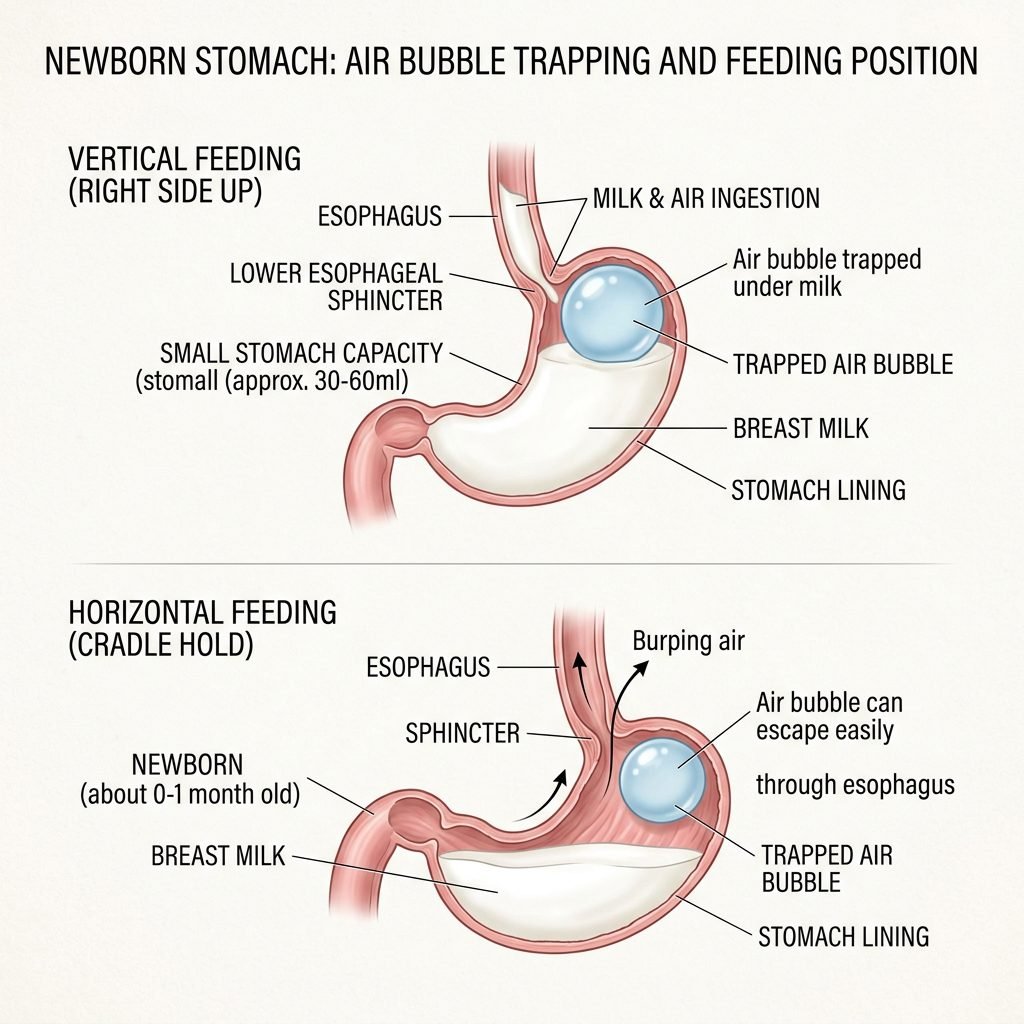
We have all been taught the traditional way to burp a baby: prop them up against your shoulder and pat their back. While this works for many, it often fails for babies with persistent gas or those who have a slightly more sensitive ‘gas reflex.’ The problem with the shoulder position is that it relies almost entirely on gravity and a bit of luck. If the air bubble is trapped beneath a pocket of milk, or if the baby is arching their back in pain, the vertical position can actually make it harder for the gas to escape the stomach’s curvature.
The Anatomy of a Trapped Bubble
A newborn’s stomach is roughly the size of a large marble or a walnut in the first weeks. When they swallow air during a feeding—whether from a bottle or the breast—that air forms a bubble. If the baby is tense, the muscles around the stomach tighten, locking that bubble in place. The Reverse Cradle works because it uses gentle abdominal pressure combined with a specific angle to encourage the bubble to move toward the esophagus.
| Method | Mechanism | Best For |
|---|---|---|
| Over-the-Shoulder | Vertical Gravity | Light burpers, easy feeders |
| Sitting Up (C-Hold) | Upper Chest Support | Babies with good head control |
| Reverse Cradle | Abdominal Pressure + Gravity | Colicky babies, heavy gas, screaming fits |
Step-by-Step: Mastering the Reverse Cradle Technique

Now, let’s get into the physical mechanics. I want you to find a comfortable place to sit, perhaps your nursing chair or the edge of your bed. Make sure your feet are flat on the floor so you feel grounded.
- The Setup: Sit with your back supported. Take your non-dominant arm and lay it across your lap or slightly elevated.
- The Transition: Gently pick up your baby and turn them so they are facing downward. You are going to lay their chest and tummy directly along the length of your forearm.
- The Head Support: Your baby’s head should rest safely in the crook of your elbow. Ensure their nose and mouth are completely clear and they are turned slightly to the side so they can breathe easily. This is vital for safety.
- The Crotch Support: Your hand (at the end of that same forearm) should reach down and securely hold the baby’s thigh or crotch area. This creates a ‘saddle’ effect, making the baby feel secure and contained.
- The Magic Pat: Use your free hand to pat the baby’s back. But here is the secret: don’t just pat. Use a firm, rhythmic cupping motion. Think of it like you are trying to move a bubble of air up a tube. Stroke upward from the lower back toward the shoulder blades, followed by three firm pats.
The goal is not to hit the baby, but to create a vibration that shakes the gas bubble loose from the stomach lining.
The Science of Pressure: Why This Technique Works Instantly
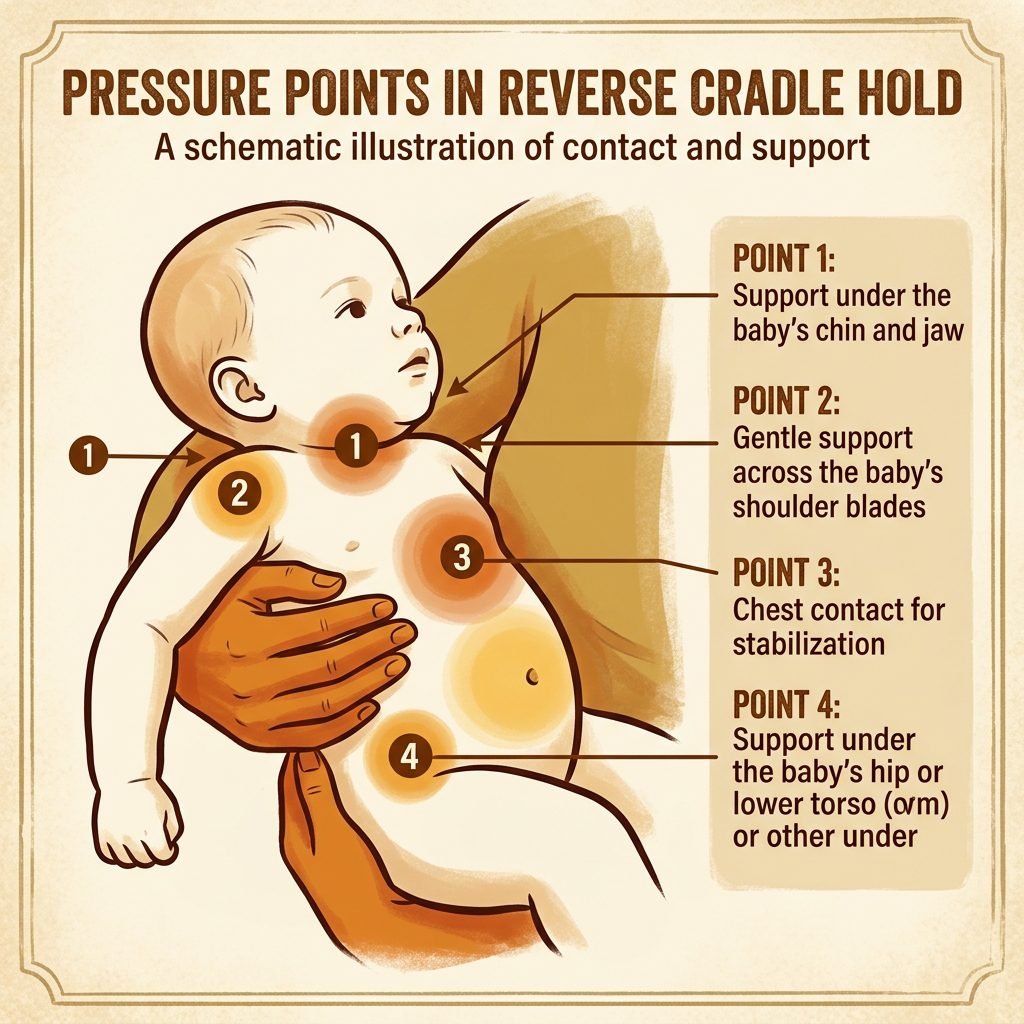
You might be wondering why this position is so much more effective than others. It comes down to intra-abdominal pressure. When the baby is lying face down on your arm, the weight of their own body creates a gentle, consistent pressure against their tummy. This is essentially a ‘tummy time’ session with the added benefit of your warmth and movement.
The Role of the Forearm
Your forearm is firm but padded with muscle and skin. As the baby rests there, your arm acts as a compress. If you notice your baby is particularly fussy, you can even gently ‘jiggle’ your arm up and down. This micro-movement helps to break up large gas bubbles into smaller ones that are easier to pass. Studies show that gentle pressure on the abdomen can stimulate the vagus nerve, which helps the digestive system relax and function more efficiently.
| Feature | Benefit for Baby |
|---|---|
| Body Warmth | Relaxes abdominal muscles |
| Forearm Pressure | Physically pushes gas toward the exit |
| Downward Angle | Prevents reflux from rising too quickly |
| Rhythmic Patting | Provides sensory distraction from pain |
Troubleshooting the ‘Stubborn’ Burp: What to Do if it Takes Time

Sometimes, even with the best technique, that burp just won’t come. Don’t panic, Mama. This doesn’t mean you are doing it wrong. It just means the gas is a bit deeper in the digestive tract. If you have been in the Reverse Cradle for 5 to 10 minutes with no luck, it’s time to switch things up.
The ‘Bicycle’ Intermission
If the gas isn’t coming up, it might need to go down. Lay the baby on their back for a moment and perform bicycle legs. Gently cycle their legs toward their tummy. This can help move lower intestinal gas. After a minute of this, transition back into the Reverse Cradle. Often, the change in position is exactly what is needed to shift the bubble into the right spot for a massive, satisfying burp.
- Check your hand: Are you cupping your hand? A flat palm pat is less effective than a cupped hand pat.
- Check the angle: Is the baby’s bottom slightly higher than their head? Sometimes a very slight ‘decline’ can help, though always prioritize airway safety.
- Stay Calm: Your baby feels your cortisol. If you are tensing up, they will too. Take three deep breaths into your belly.
Preventative Care: Reducing Gas Before it Starts

While the Reverse Cradle is a miracle worker for active gas, we also want to look at how we can prevent that buildup in the first place. As a doula, I look at the entire feeding ecosystem. Are we rushing? Is the latch tight? Is the bottle nipple the right flow?
Feeding Tips for Less Gas
If you are breastfeeding, ensure a deep latch where the baby’s chin is buried in the breast and their nose is ‘sniffing’ the air. This prevents them from sucking in air at the corners of the mouth. If you are bottle-feeding, consider a paced feeding approach. Keep the bottle horizontal so the baby has to work a little for the milk, rather than being ‘fire-hosed’ by gravity. This slower pace allows them to swallow more effectively and recognize fullness before they overeat and create excess gas.
| Prevention Strategy | How it Helps |
|---|---|
| Paced Feeding | Reduces air intake during swallows |
| Upright Feeding | Uses gravity to keep milk down and air up |
| Frequent Burp Breaks | Clears gas before it becomes a ‘giant’ bubble |
| Probiotics (Consult MD) | Supports gut flora development |
The Doula’s Reassurance: Your Emotional Well-being Matters

I want to take a moment to talk to you, the woman holding the baby. Postpartum is a vulnerable time. When your baby is screaming and you are trying every technique in the book, it is easy to feel like you are failing. You are not failing. You are learning a new person, and they are learning a new world. The ‘gassy stage’ is a temporary developmental milestone. It usually peaks around 6 to 8 weeks and drastically improves by 3 to 4 months.
A Mantra for the Hard Moments
When the crying feels like too much, I want you to repeat this to yourself:
‘This is a moment of struggle, not a lifetime of struggle. My baby is safe, I am safe, and this too shall pass.’
If you find yourself getting angry or feeling like you might shake the baby, put them down in a safe place like their crib. Walk out of the room, close the door, and count to ten. Drink a glass of water. A baby crying in a crib for five minutes while you regain your composure is much safer than a baby being held by a parent at their breaking point. You are a human being, not a robot. Be as gentle with yourself as you are with your newborn.
Conclusion
The Light at the End of the Tunnel
The Reverse Cradle Burping Technique is more than just a ‘hack’—it is a way to deeply connect with and soothe your baby during their most uncomfortable moments. By understanding the mechanics of their little bodies and approaching the situation with a calm, expert hand, you are providing the best care possible. Practice this move when the baby is calm so that it becomes second nature when the gas pains strike. Before you know it, your little one’s digestive system will mature, the ‘witching hours’ will fade into memory, and you will be experts in each other’s needs. You’ve got this, Mama. We are all rooting for you.