7 Fun and Easy Tummy Time Activities for Your 2-Month-Old Baby
Embracing the Tummy Time Journey with Love
Hello, sweet mama. If you are reading this, you are likely in the thick of those beautiful, blurry, and occasionally exhausting early months of motherhood. At two months old, your little one is starting to wake up to the world, finding their voice, and—perhaps most importantly for their physical growth—embarking on the essential journey of tummy time. I know, I know. For many of us, the mere mention of tummy time can feel a bit daunting. You might have experienced the ‘tummy time protest’—that immediate fussiness the moment their little belly touches the mat. As a doula and fellow mom, I want you to take a deep breath and know that this is completely normal.
Tummy time isn’t just a physical exercise; it is a vital building block for your baby’s motor skills, sensory processing, and even their future cognitive development. It strengthens the neck, back, and shoulder muscles, which are the very foundations for rolling, sitting, and eventually crawling. But beyond the logistics, it is also a beautiful opportunity for connection and play. In this guide, we are going to move away from the idea of tummy time as a ‘chore’ and transform it into a series of joyful, bonding moments that both you and your baby will look forward to. Let’s dive into seven easy, evidence-based activities designed specifically for your 2-month-old’s developing body and curious mind.
Why Tummy Time Matters: The Heart and Science
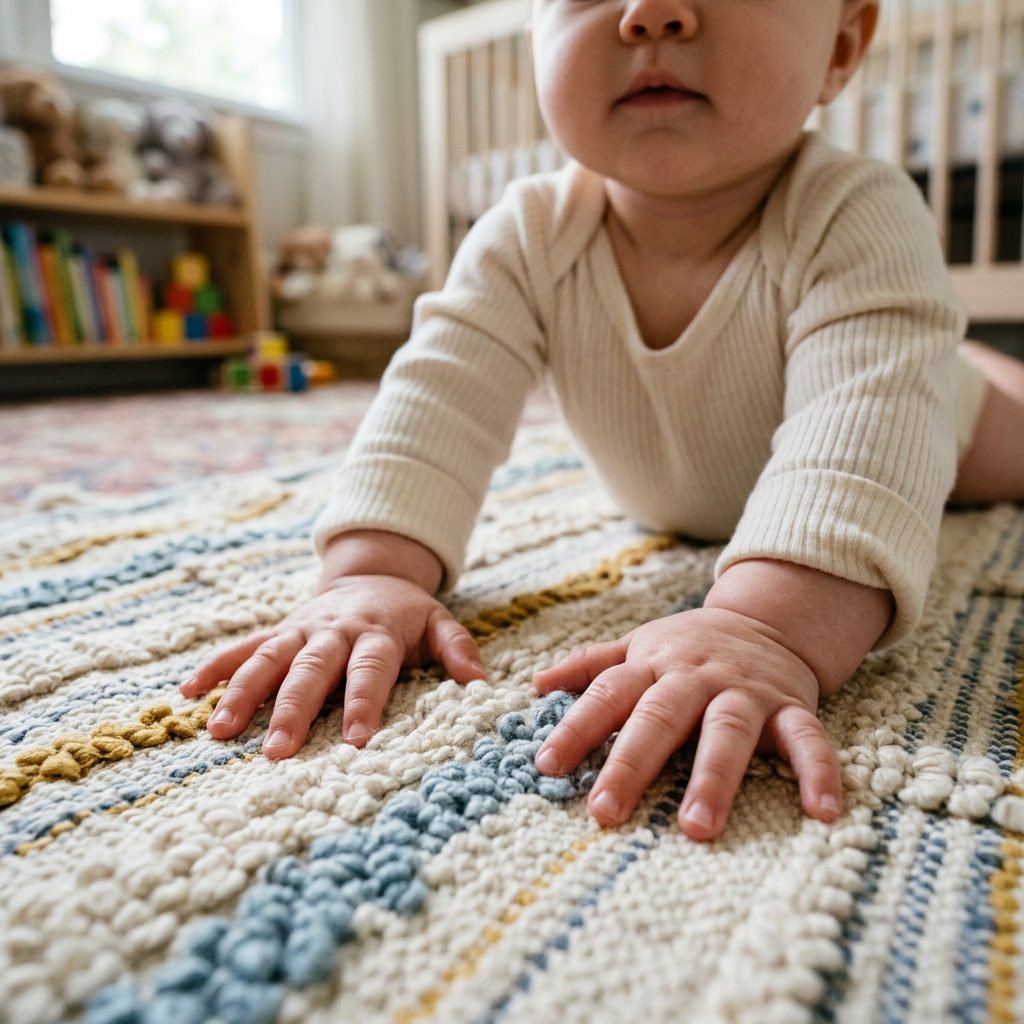
Before we get into the ‘how,’ let’s talk about the ‘why.’ At two months, your baby’s brain is rapidly forming connections. When they are on their tummy, they are forced to look at the world from a different perspective, which stimulates their vestibular (balance) and proprioceptive (body awareness) systems. This isn’t just about ‘neck strength’; it’s about preventing positional plagiocephaly (flat spots on the head) and helping them gain the trunk control needed for every major milestone ahead.
Remember, mama: Every minute counts. Even if they only tolerate 3 to 5 minutes at a time, you are doing a wonderful job supporting their growth.
To help you prepare, here is a quick look at the materials we will be using for our activities. Most of these are items you likely already have around the house!
| Activity Material | Purpose | Estimated Cost |
|---|---|---|
| High-Contrast Cards | Visual stimulation & focus | $0 – $15 |
| Unbreakable Floor Mirror | Self-recognition & curiosity | $10 – $20 |
| Boppy or Rolled Towel | Gentle chest elevation | $0 (if using towel) |
| Sensory Water Mat | Tactile & visual engagement | $15 – $25 |
| Your Own Face! | Emotional bonding & comfort | Priceless |
Activity 1: The Chest-to-Chest Snuggle

The Ultimate Bonding Position
For a 2-month-old, the floor can feel like a very big, very lonely place. The most natural way to start tummy time is actually on you. This activity is perfect for babies who are still building up their tolerance for being away from your arms. By reclining on a nursing pillow or a sofa at a 45-degree angle, you provide a safe, familiar ‘mat’ for your baby.
- Step 1: Recline comfortably on your couch or bed with plenty of pillows supporting your back.
- Step 2: Place your baby chest-to-chest on you, so you are face-to-face.
- Step 3: Talk softly, sing, or make gentle ‘cooing’ sounds. Your voice will encourage them to lift their head to look at you.
This position is incredibly reassuring because they can smell your scent and hear your heartbeat, which regulates their nervous system while they do the hard work of lifting their head.
Activity 2: Mirror Magic on the Floor
Reflecting Joy and Curiosity
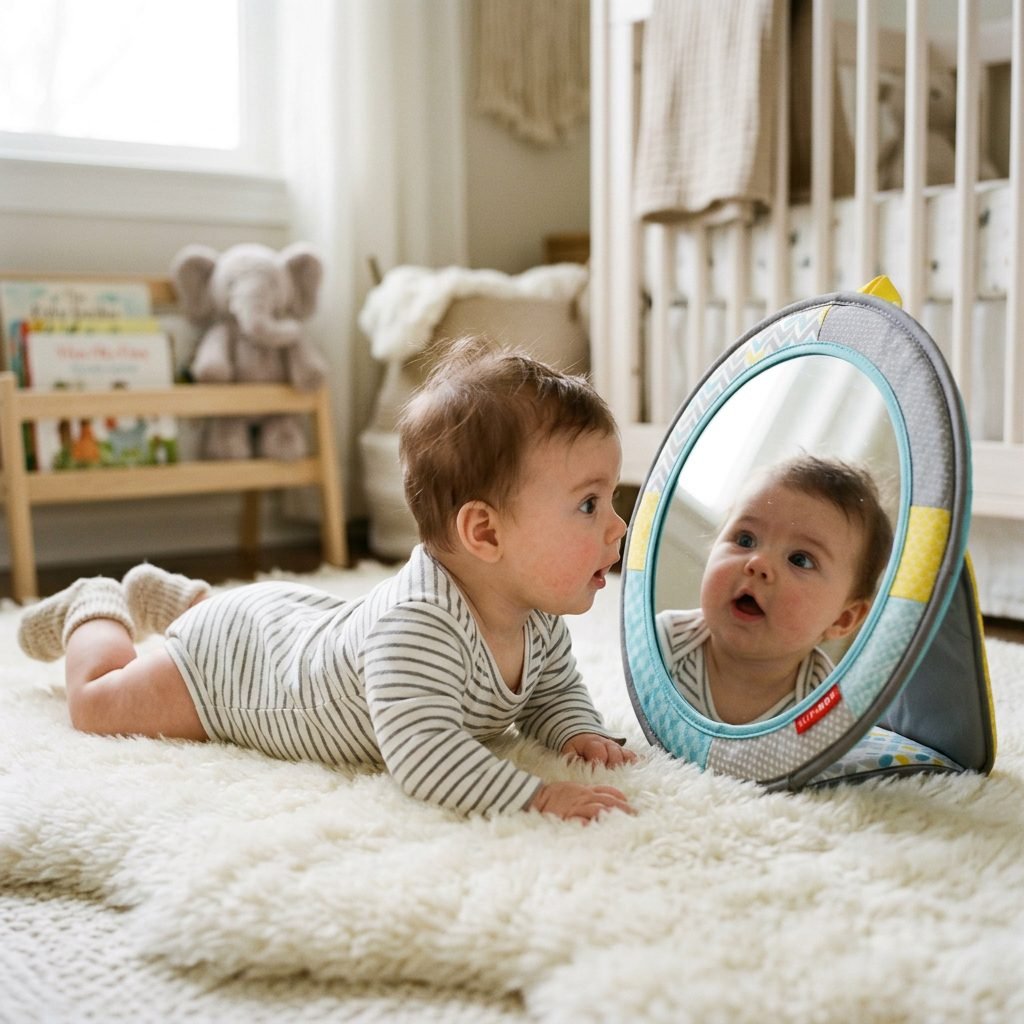
At two months, babies are fascinated by faces—even their own! While they don’t yet realize that the reflection in the mirror is ‘them,’ they are captivated by the movement and the high-contrast features of a human face. Using an unbreakable floor mirror is one of the most effective ways to extend tummy time duration.
- Place a baby-safe mirror directly in front of them while they are on their tummy.
- Angle it so they can see their own eyes and mouth.
- Watch as they try to ‘talk’ to the baby in the mirror. This encourages prolonged head lifting and visual tracking.
Pro Tip: If your baby starts to flag, get down on the floor next to them so your reflection appears in the mirror too. Seeing you right there provides an extra layer of security.
Activity 3: High-Contrast Visual Tracking
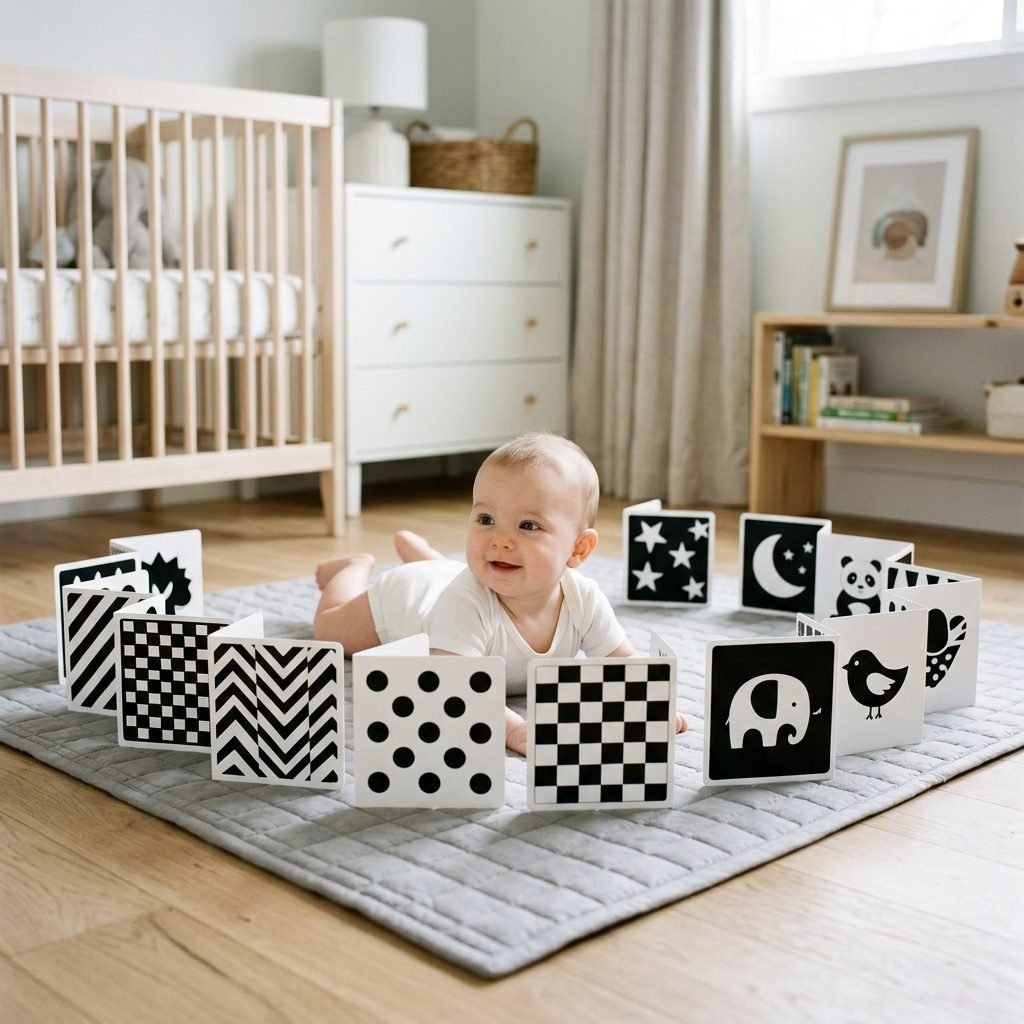
Stimulating the Developing Eyes
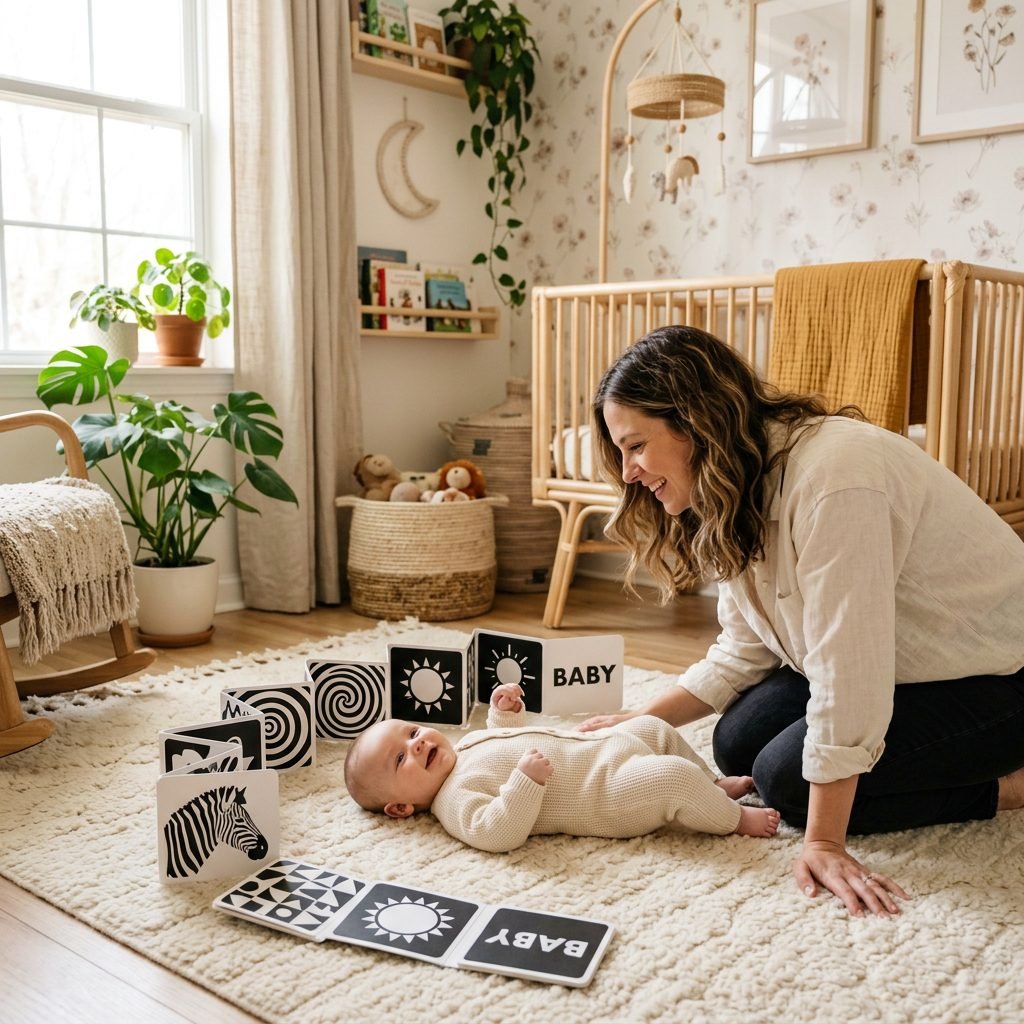
A 2-month-old’s vision is still developing, and they respond best to high-contrast images, specifically black and white patterns. This activity helps with cognitive focus and strengthens the eye muscles along with the neck.
- Lay your baby on a flat, firm surface (a play mat is perfect).
- Place high-contrast cards (stripes, polka dots, or simple animal shapes) about 8 to 12 inches away from their face.
- Slowly move the card from left to right to encourage them to turn their head.
This ‘tracking’ exercise is essential for brain development. It turns a physical workout into a visual game, making the time pass much faster for your little one.
Activity 4: The Airplane Fly-Over (Football Hold)
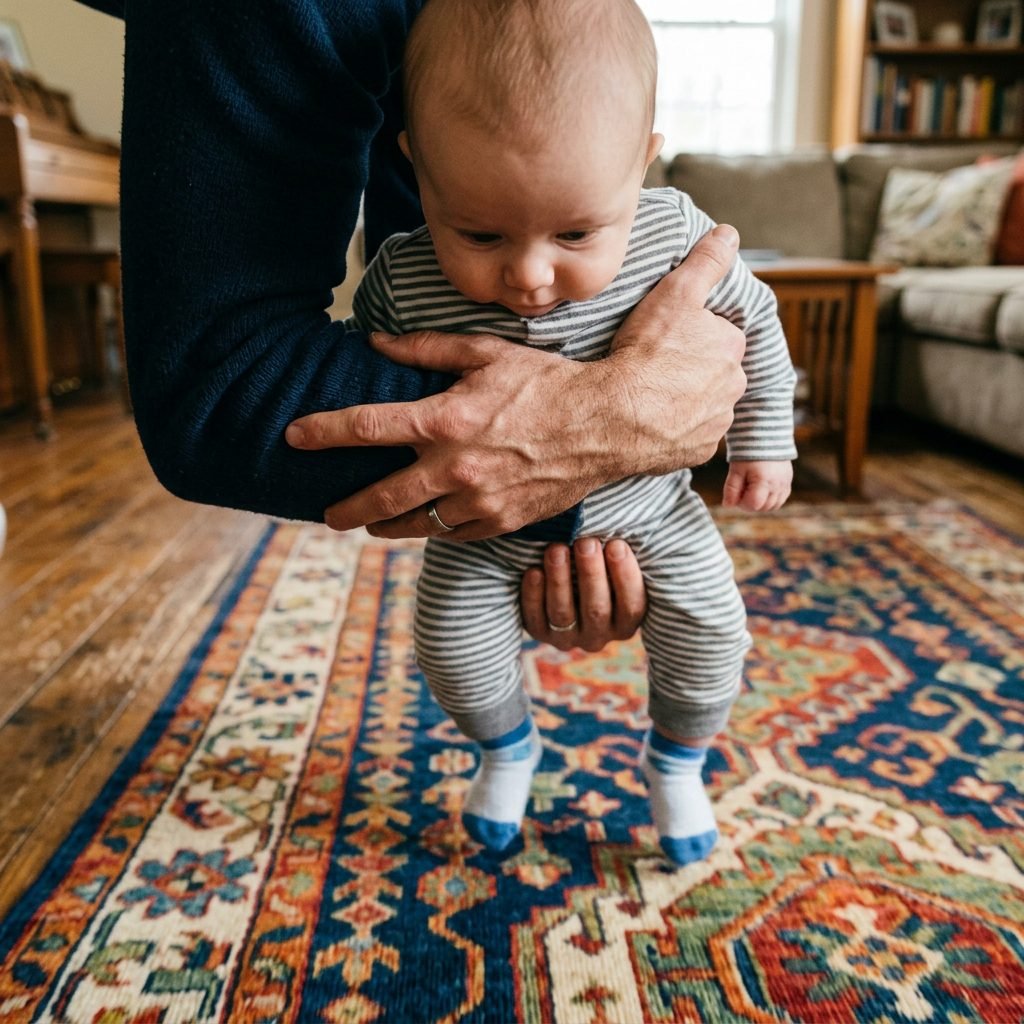
Tummy Time on the Move
Who says tummy time has to happen on the floor? If your baby is having a fussy afternoon, try the ‘Airplane’ or ‘Football’ hold. This provides the same benefits of strengthening the back and neck but in a way that feels like a ride.
- The Technique: Place your baby face-down along your forearm, with their head near your elbow and their legs straddling your hand.
- The Action: Use your other hand to secure their back and gently ‘fly’ them around the room.
- The Benefit: This position is also fantastic for relieving gas! The gentle pressure on their tummy helps move air bubbles through their system.
“Fly high, little one! The world looks so much better when you’re soaring through the living room in mama’s arms.”
Activity 5: The Sensory Water Mat Experience

Tactile Play and Visual Wonder
If you want to see your baby’s eyes light up, introduce a sensory water mat. These are typically inflatable mats filled with water and small floating foam toys. The movement of the water under their chest provides a unique sensory feedback that a regular mat cannot offer.
| Feature | Developmental Benefit |
|---|---|
| Squishy Texture | Develops tactile sensitivity and hand strength |
| Floating Toys | Encourages reaching and grasping motions |
| Cool Temperature | Provides a new sensory input to keep baby alert |
Always ensure the mat is placed on a flat surface and that you are right there to supervise. The ‘squish’ factor often distracts babies from the fact that they are actually working out their muscles!
Activity 6: The Gentle Prop-Up
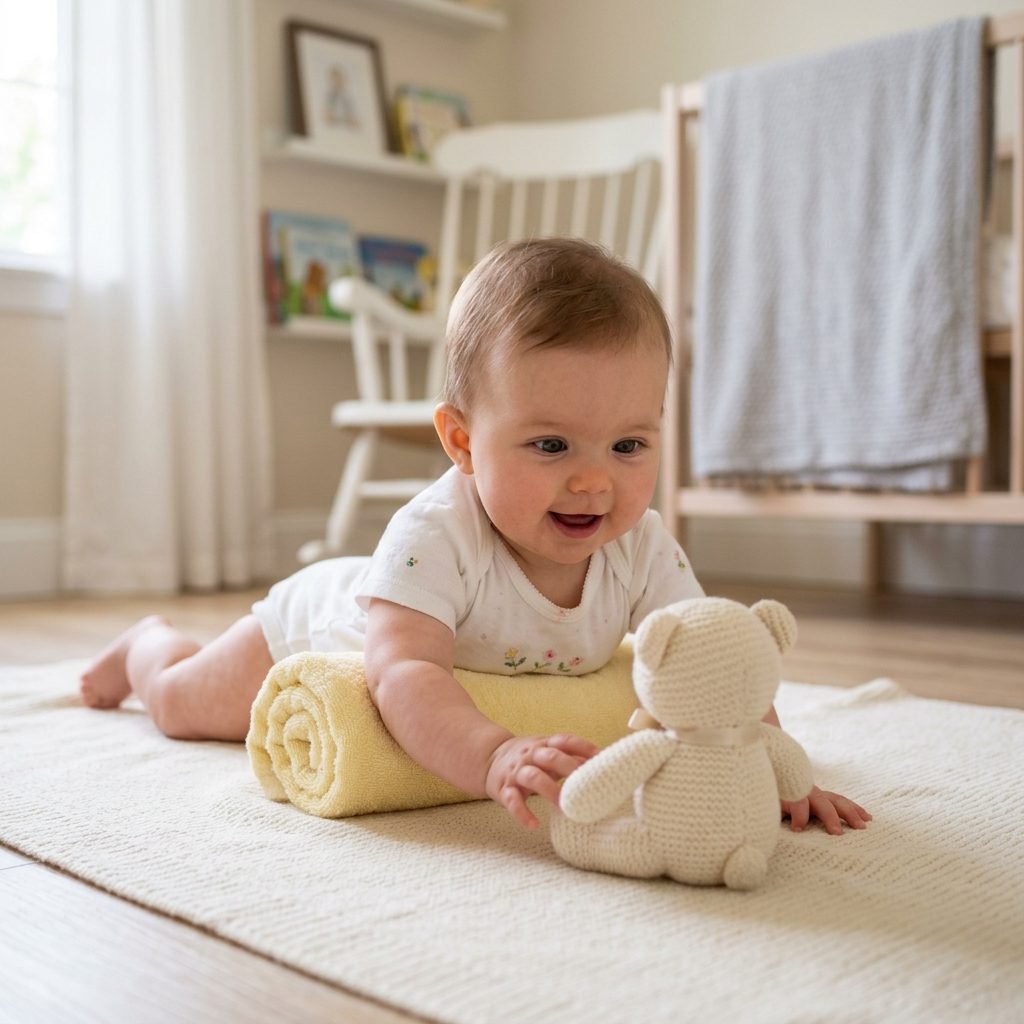
A Little Help for Little Shoulders
Sometimes, the world is just too heavy for a 2-month-old to lift. If your baby struggles to get their chest off the ground, a little assistance goes a long way. Using a Boppy pillow or a small, tightly rolled receiving towel can act as a ‘kickstand’ for their upper body.
- Place the roll or pillow under their armpits and chest.
- Ensure their arms are forward, draped over the roll.
- This slight elevation makes it much easier for them to lift their head and see the toys (or you!) in front of them.
As they get stronger over the next few weeks, you can gradually reduce the size of the towel roll until they are doing it all on their own.
Activity 7: The ‘Follow the Leader’ Sing-Along

Musical Motivation
Your voice is your baby’s favorite sound in the whole world. Use it! For this activity, you are going to get down on your belly, face-to-face with your baby. Start singing a rhythmic song like ‘The Itsy Bitsy Spider’ or ‘Twinkle Twinkle Little Star.’
As you sing, move your head up and down or side to side. Your baby will naturally try to mimic your movements. This social interaction triggers the release of oxytocin for both of you, making tummy time a happy, bonded experience rather than a stressful one.
Tummy Time Troubleshooting Guide
| If Baby… | Try This… |
|---|---|
| Cries immediately | Shorten the session to 30 seconds and use the chest-to-chest hold. |
| Face-plants | Use a towel roll for elevation or try the ‘Airplane’ hold. |
| Gets bored | Introduce a new high-contrast toy or a different room in the house. |
| Has reflux | Wait at least 20-30 minutes after feeding before starting tummy time. |
Conclusion
You’re Doing Amazing, Mama
Tummy time is a marathon, not a sprint. At two months old, your baby is just beginning to understand what their body can do. Some days will be filled with successful 10-minute stretches, and other days will be met with 30 seconds of fussing—and both are okay. The key is consistency and keeping the atmosphere light and loving. By incorporating these seven activities, you aren’t just ‘doing exercises’; you are building your baby’s confidence, curiosity, and physical strength. Trust your instincts, follow your baby’s cues, and remember that every little lift of that precious head is a huge victory. You’ve got this!