Taste-Safe Tapioca Pearl Sensory Bin: An Easy DIY Activity for 6-Month-Olds
Welcome to the Magic of Sensory Discovery
Hello there, sweet mama! If you are reading this, you likely have a curious 6-month-old who has recently discovered the wonders of their own hands—and, quite possibly, the fact that everything in the world seems to belong in their mouth. As a doula and a fellow mom, I know exactly how precious this stage is. It is a season of rapid-fire brain development, where every squish, splash, and poke is a new neural connection being formed. At six months, your little one is likely sitting up (perhaps with a bit of support) and is ready to move beyond simple rattles to something more immersive.
Sensory play is often called the ‘work’ of childhood, but for us, it is about creating a safe, beautiful space for our babies to explore. However, the biggest hurdle for many of us is the safety factor. We see those beautiful Pinterest bins filled with dyed rice or water beads and think, ‘That looks amazing, but my baby will eat it in two seconds!’ That is exactly why I am so excited to share this Taste-Safe Tapioca Pearl Sensory Bin with you today. It is squishy, colorful, completely non-toxic, and specifically designed for those tiny explorers who learn with their tongues as much as their fingers.
Remember, mama: You are your baby’s first and best teacher. This activity isn’t about the ‘perfect’ setup; it’s about the connection and the wonder in those little eyes.
The Developmental Magic: Why Sensory Play Matters at 6 Months
Building Brains Through Play
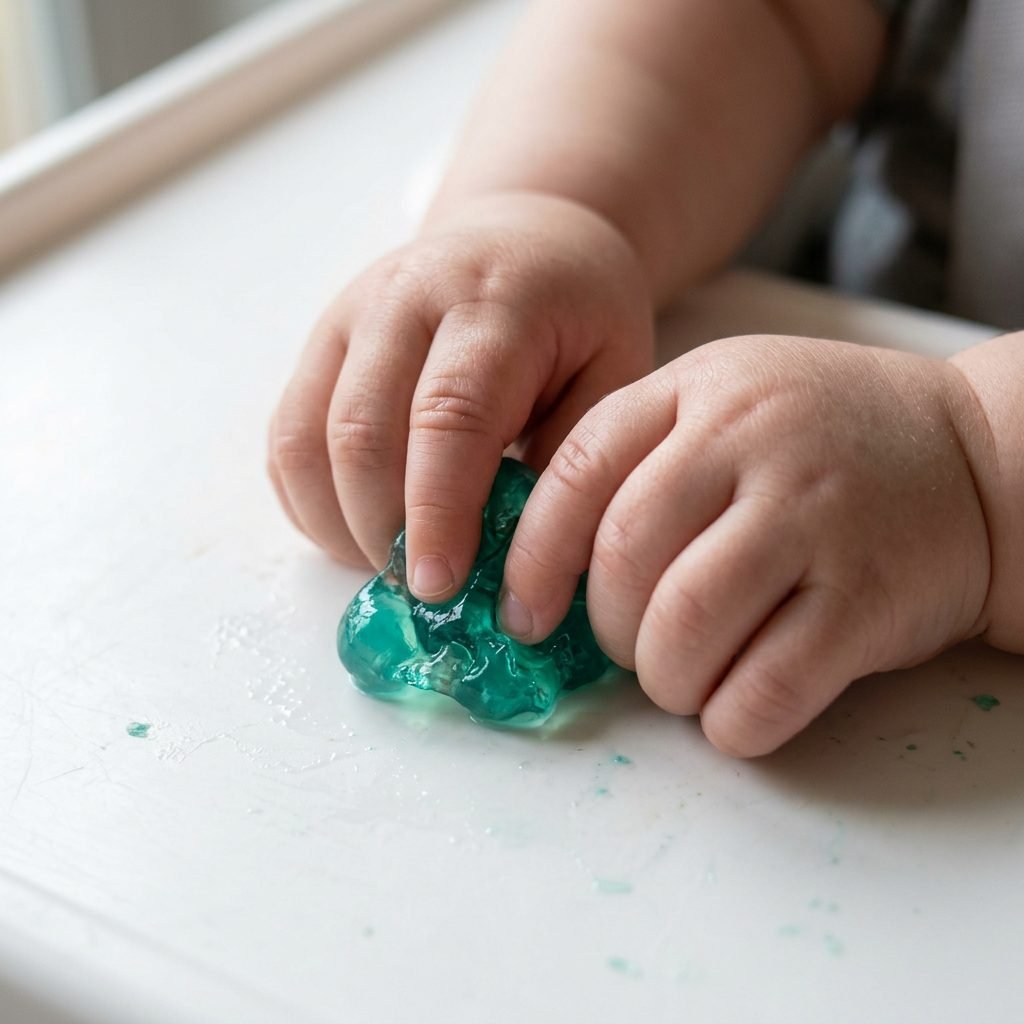
At the 6-month mark, your baby is undergoing a massive cognitive shift. They are moving from reflexive movements to intentional exploration. Sensory play—specifically tactile play like this tapioca bin—targets several key developmental areas simultaneously. When your baby reaches into a bin of cool, squishy pearls, they aren’t just playing; they are conducting a scientific experiment.
1. Fine Motor Skills and the Pincer Grasp
While the full pincer grasp (using the thumb and forefinger) usually matures a bit later, 6-month-olds are practicing their ‘palmar grasp’—using the whole hand to scoop and move objects. The slippery nature of tapioca pearls provides the perfect challenge. They have to work those tiny hand muscles to keep the pearls from sliding away, which is the foundational work for self-feeding and later writing.
2. Cognitive Mapping and Cause and Effect
When your baby drops a pearl and watches it bounce, or squishes one and feels it flatten, they are learning about cause and effect. They are beginning to understand that their actions have a direct impact on the physical world. This is a huge milestone in cognitive development! Using taste-safe materials like tapioca allows them to explore the ‘mouthing’ phase without interruption, which is vital because the mouth is actually more sensitive than the fingers at this age.
3. Language Development and Sensory Vocabulary
Even though your baby isn’t talking yet, they are absorbing every word you say. As they play, you can narrate their experience: ‘Is that squishy? It feels cold! Look at the blue pearl.’ This exposure to descriptive language during a high-engagement activity helps build their receptive language skills, connecting physical sensations to words.
Gathering Your Materials: A Budget-Friendly Guide
Everything You Need for a Rainbow Bin
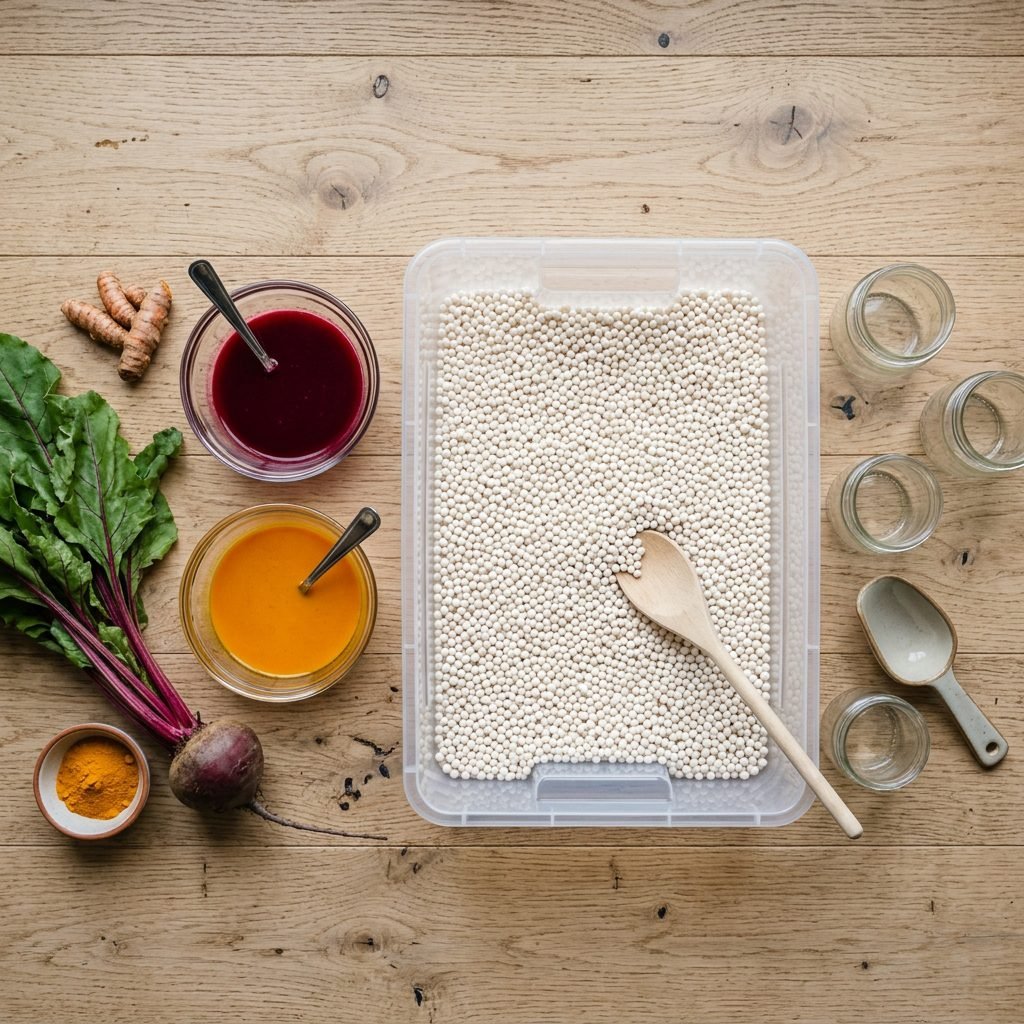
Creating this sensory experience doesn’t require a trip to an expensive toy store. In fact, most of these items are likely already in your pantry or can be found at your local grocery store for just a few dollars. My goal is always to keep things practical and stylish without breaking the bank. We want high-impact play on a low-impact budget.
The star of the show is, of course, the tapioca pearl. You want to look for ‘small’ or ‘mini’ tapioca pearls (often found in the baking aisle or Asian grocery stores). These are much safer for 6-month-olds than the large ‘boba’ style pearls, as they pose less of a choking risk if swallowed. However, constant supervision is always required.
| Item | Purpose | Estimated Cost |
|---|---|---|
| Mini Tapioca Pearls | The sensory base (the ‘squish’ factor) | $3.00 – $5.00 |
| Natural Food Coloring | Visual stimulation and color recognition | $5.00 – $8.00 |
| Shallow Plastic Bin | The ‘containment’ zone | $2.00 – $10.00 |
| Water | For boiling and hydrating the pearls | Free |
| Large Silicone Mat | Mess management and easy cleanup | $10.00 – $15.00 |
Why Tapioca Over Water Beads?
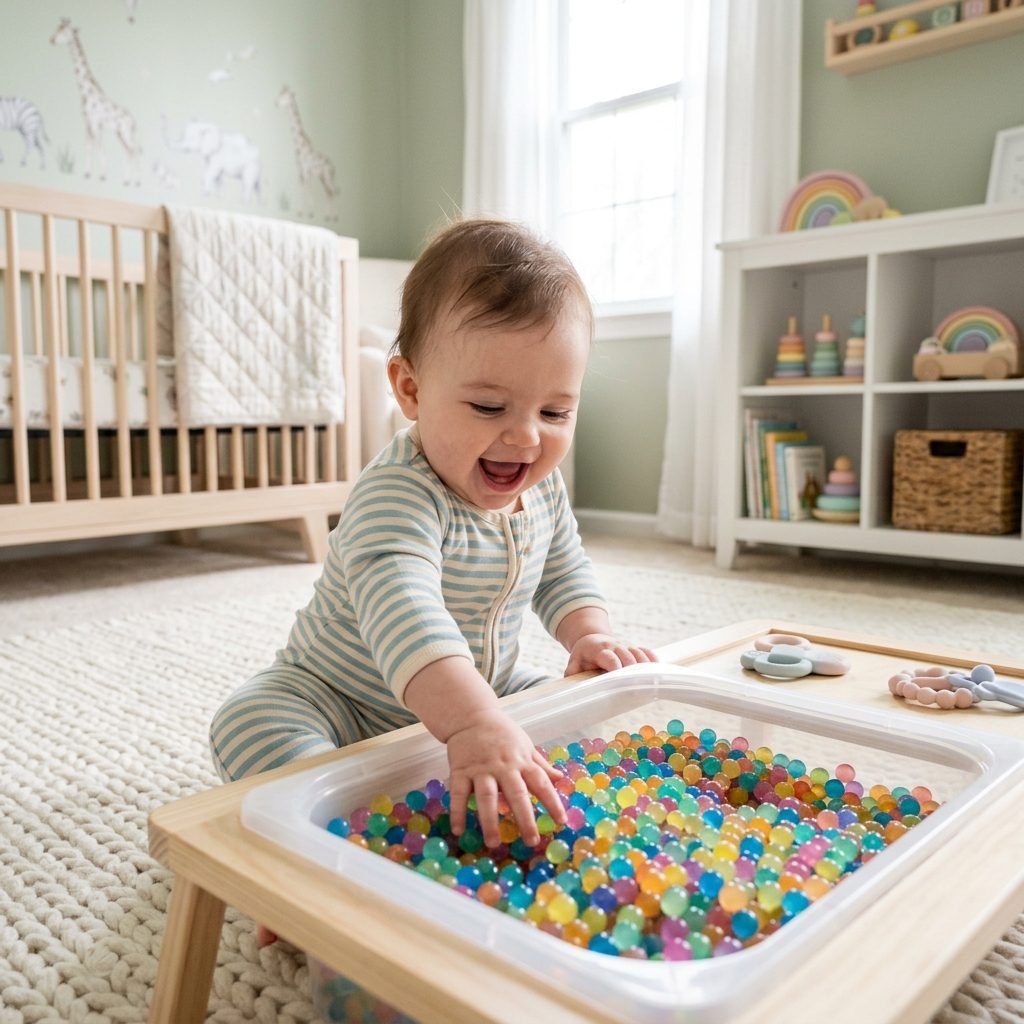
Many parents love the look of water beads, but as a doula and safety advocate, I always recommend avoiding them for babies. Water beads are made of super-absorbent polymers that can be extremely dangerous if ingested. Tapioca pearls, on the other hand, are a food product. While they shouldn’t be a meal, if a curious 6-month-old swallows a few, they will simply digest like any other starch. This peace of mind is worth the extra 10 minutes of prep time!
Step-by-Step Tutorial: Prepping Your Rainbow Pearls
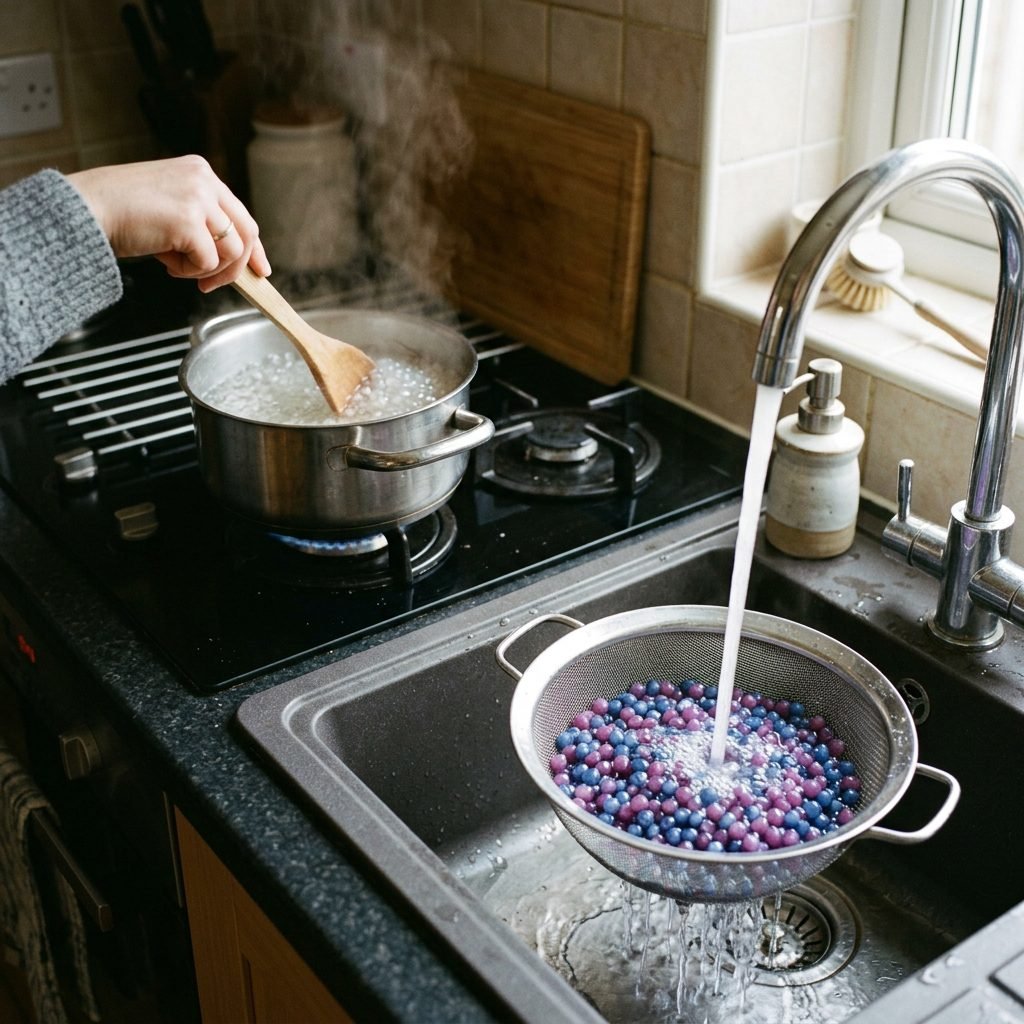
The ‘Recipe’ for Success
Preparing the pearls is quite simple, but there are a few tricks to ensure they have that perfect, non-sticky, squishy texture that babies love. Follow these steps to create a vibrant, inviting bin.
- Boil the Water: Bring a large pot of water to a rolling boil. You want plenty of room for the pearls to dance around so they don’t clump together.
- Add the Pearls: Slowly pour in 1 cup of mini tapioca pearls. Stir immediately to prevent them from sticking to the bottom of the pot.
- Simmer: Reduce the heat to medium and let them simmer for about 10 to 15 minutes. You want them to be translucent on the outside but still have a tiny white dot in the center—this keeps them firm enough for play.
- Drain and Rinse: This is the most important step! Drain the pearls in a fine-mesh colander and rinse them thoroughly with cold water. This removes the excess starch and stops the cooking process, ensuring they aren’t a sticky mess.
- Coloring (Optional but Fun): Divide the pearls into small bowls. Add a few drops of food coloring (or natural dyes like beet juice for pink or turmeric for yellow) to each bowl. Let them sit for 5 minutes, then rinse again briefly.
- The Final Touch: Place the pearls back in a bowl with a tiny splash of vegetable oil. Toss them gently; this keeps them shiny and prevents them from sticking together during play.
Pro-Tip: If the pearls get a bit sticky during play, just add a tablespoon of water to the bin and give them a quick toss. It refreshes the texture instantly!
The Interior Organizer’s Guide: Mess-Free Setup
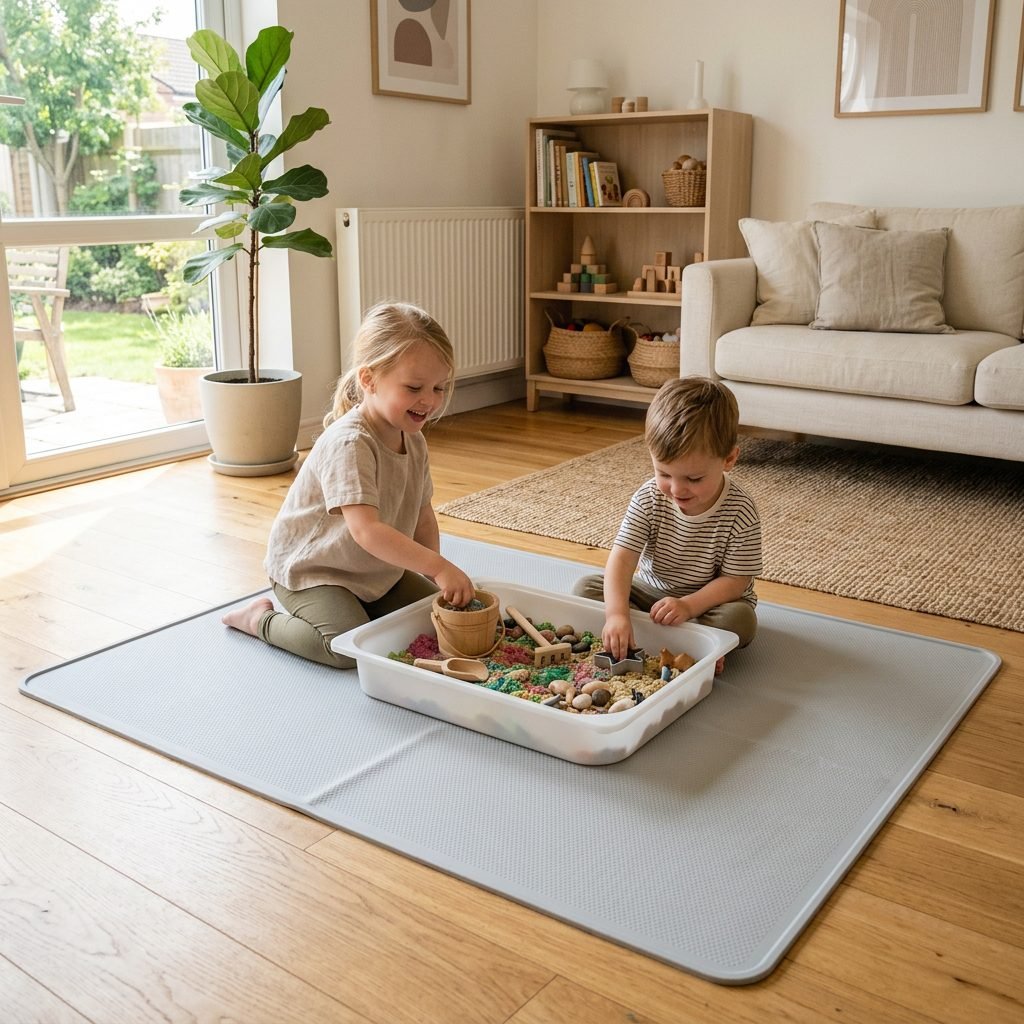
Containing the Fun
I know what you’re thinking: ‘This looks like a nightmare to clean up.’ As an interior organizer, I believe that play should be beautiful and functional, not a source of stress for the parent. The key to enjoying sensory play is a proactive mess-management strategy. If you set the stage correctly, cleanup will take less than two minutes.
1. The ‘Zone’ Strategy
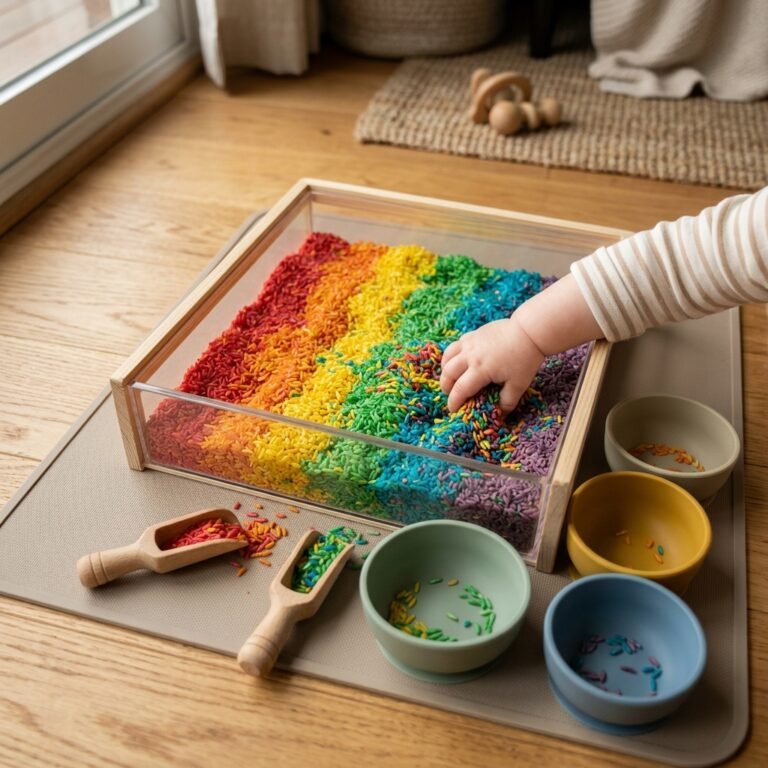
Define the play area. I love using a large silicone splat mat or even a cheap shower curtain liner spread out on the floor. This creates a clear boundary. If a pearl escapes the bin, it stays on the mat, not your rug. For 6-month-olds who are still a bit wobbly, you can even place the bin inside an empty bathtub for the ultimate ‘contained’ experience.
2. The Bin Choice
Use a shallow, wide bin rather than a deep one. At 6 months, babies have shorter arms and are often sitting on their bottoms. A bin with 2-inch sides is perfect because they can easily reach over the edge without toppling forward. Look for ‘under-bed’ storage containers—they are the gold standard for sensory play.
3. Wardrobe Selection
Let’s be real: this is a ‘diaper-only’ or ‘old-onesie’ activity. While the food coloring is diluted, some colors (like red or blue) can occasionally stain light fabrics. Plus, there is something so sweet and tactile about a baby feeling the pearls against their legs and tummy, not just their hands!
Engagement & Milestones: How to Play Together
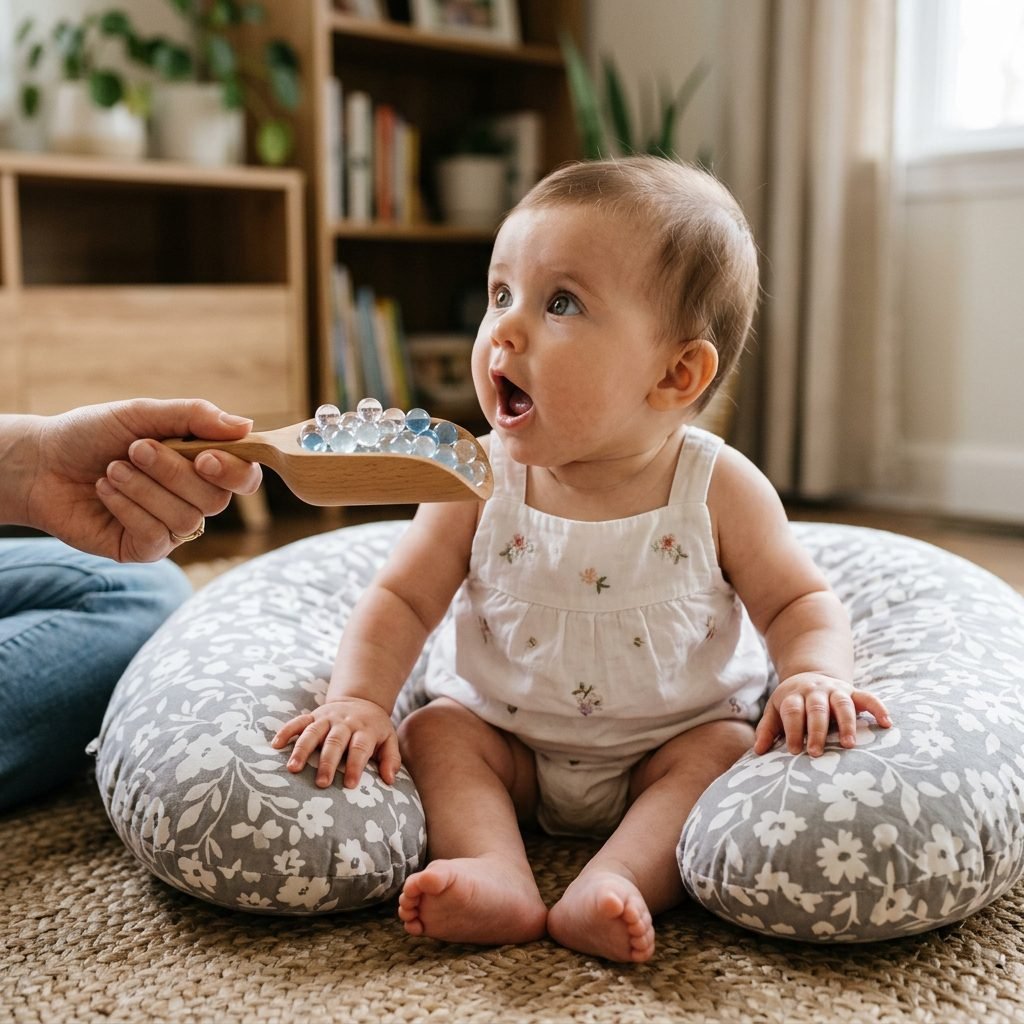
Guiding Your Little Explorer
Once the bin is ready and the mat is down, it’s time for the best part! But what do you actually do? At 6 months, your baby doesn’t need complex instructions. They need your presence and a few gentle prompts. Here is how you can facilitate play that hits those developmental milestones.
The Initial Introduction
Place your baby in front of the bin. Don’t be surprised if they just stare at it for a minute. They are processing the colors and the new sight. Gently pick up a handful of pearls and let them slowly fall back into the bin. The sound and movement will likely pique their interest. If they are hesitant, try placing a favorite waterproof toy (like a plastic duck or a large teething ring) right on top of the pearls.
Encouraging the ‘Transfer’
A major milestone around 6 months is the ability to transfer an object from one hand to the other. You can encourage this by handing them a single, larger pearl or a small scoop and encouraging them to move it. Use reassuring affirmations as they play:
‘You found a green one! You’re so curious, sweet girl. Feel how squishy that is!’
Sensory Variations
- Temperature Play: Try chilling the pearls in the fridge for 20 minutes before play. The cold sensation is incredibly soothing for teething babies!
- Water Play: Add an inch of water to the bin. The pearls will swirl and bob, adding a whole new level of visual and tactile interest.
- Scoops and Cups: Introduce a large wooden spoon or a silicone cupcake liner. Your baby will love the ‘clink’ of the pearls hitting the containers.
Safety, Storage, and Cleanup: The Doula’s Final Checklist
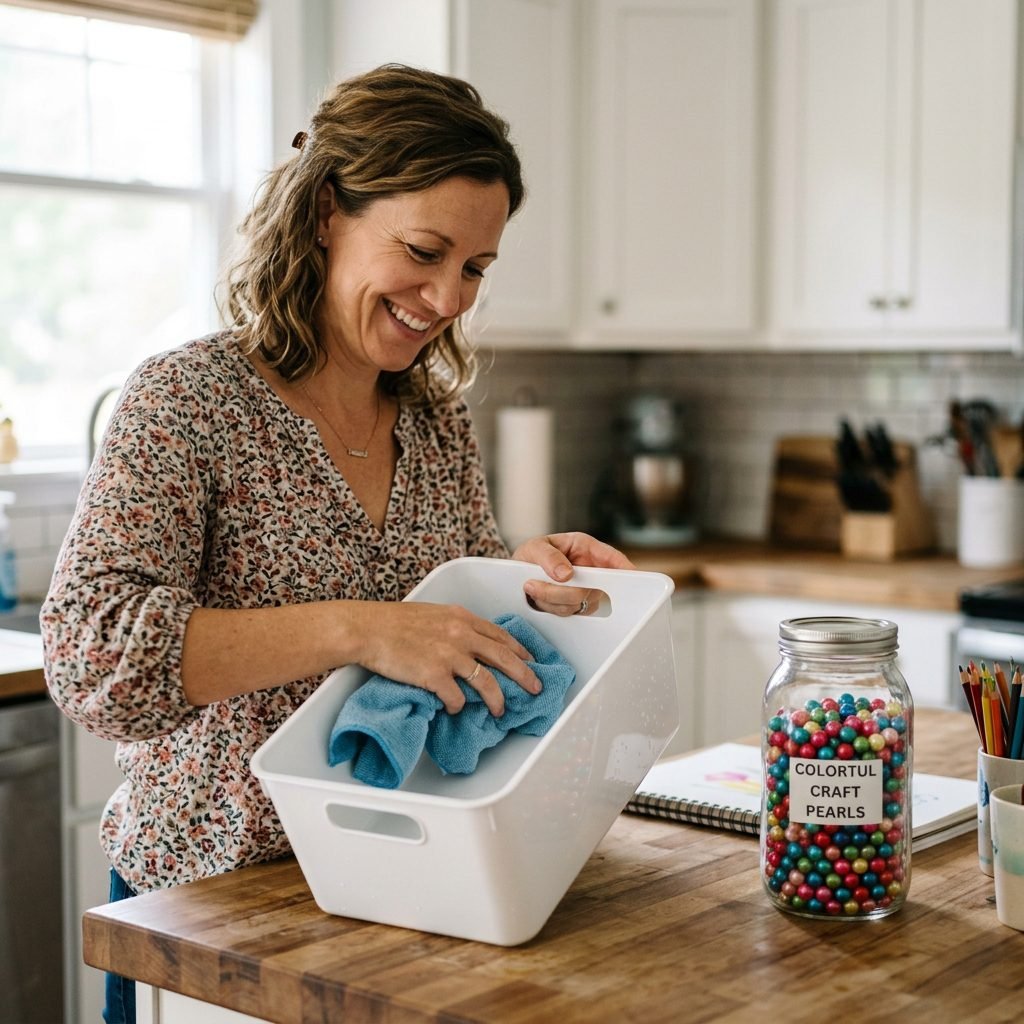
Ending the Session on a High Note
When play is over, the way we clean up matters just as much as the setup. We want to transition our babies gently from high-stimulation play to a calmer state, perhaps leading into a nap or a feeding. But first, let’s talk about the practicalities of safety and storage.
Safety First, Always
While this activity is ‘taste-safe,’ it is not ‘choking-proof.’ Small objects, even soft ones like tapioca, require 100% active supervision. Never leave your baby alone with the sensory bin, not even for a second to grab your phone. If your baby starts shoving large handfuls into their mouth, it’s a sign they might be overstimulated or hungry—it might be time to transition to a different activity.
Can You Reuse the Pearls?
Since these are a food product and have been handled by baby hands (and mouths!), they don’t have a long shelf life. You can store them in a sealed container in the fridge for 24 to 48 hours. Any longer than that, and they may start to grow bacteria or lose their texture. To reuse, just rinse them under cold water to refresh the ‘slip.’
Disposal Made Easy
When it’s time to say goodbye to the bin, do not pour the pearls down the drain! They are pure starch and can easily clog your plumbing. Instead, simply scoop them into the trash. If you used natural food coloring and no oil, they are even compostable!
Conclusion
You’re Doing an Amazing Job, Mama
There you have it—a simple, beautiful, and deeply enriching activity for your 6-month-old. In a world that often feels rushed and digital, taking 20 minutes to sit on the floor and watch your baby discover the texture of a squishy pearl is a form of mindfulness for you both. You are providing the sensory input their growing brain craves, and you are doing it with love and intention. Don’t worry if the first time only lasts five minutes; every second of exploration counts. You are building a foundation of curiosity that will last a lifetime. Enjoy these squishy, messy, wonderful moments!