

5 Simple Doula-Approved Physical Support Moves for Birth Partners in Labor
Welcome to the Sacred Space of Birth Support
Hello, sweet mama, and hello to the dedicated partner standing by her side. As a doula, I have witnessed the transformative power of a supportive touch. Birth is not just a physical marathon; it is a spiritual and emotional rite of passage. While the birthing person does the hard work of bringing life into the world, the partner’s role is vital. You are the anchor, the steady breath, and the physical strength she leans on when the waves of labor grow intense. Many partners feel helpless when they see their loved one in discomfort, but I am here to tell you that your hands are one of the most powerful tools in the room. By applying intentional, doula-approved physical support, you can actually help shorten labor, reduce the perception of pain, and create an environment where oxytocin—the hormone of love and labor—can flow freely. In this guide, we will walk through five foundational moves that every birth partner should have in their toolkit. These aren’t just ‘massages’; they are strategic biomechanical adjustments and comfort measures designed to open the pelvis and soothe the nervous system. Let’s prepare you to be the ultimate birth warrior companion.
The Power of the Double Hip Squeeze: Creating Space for Baby
Why It Works: The Biomechanics of the Pelvis
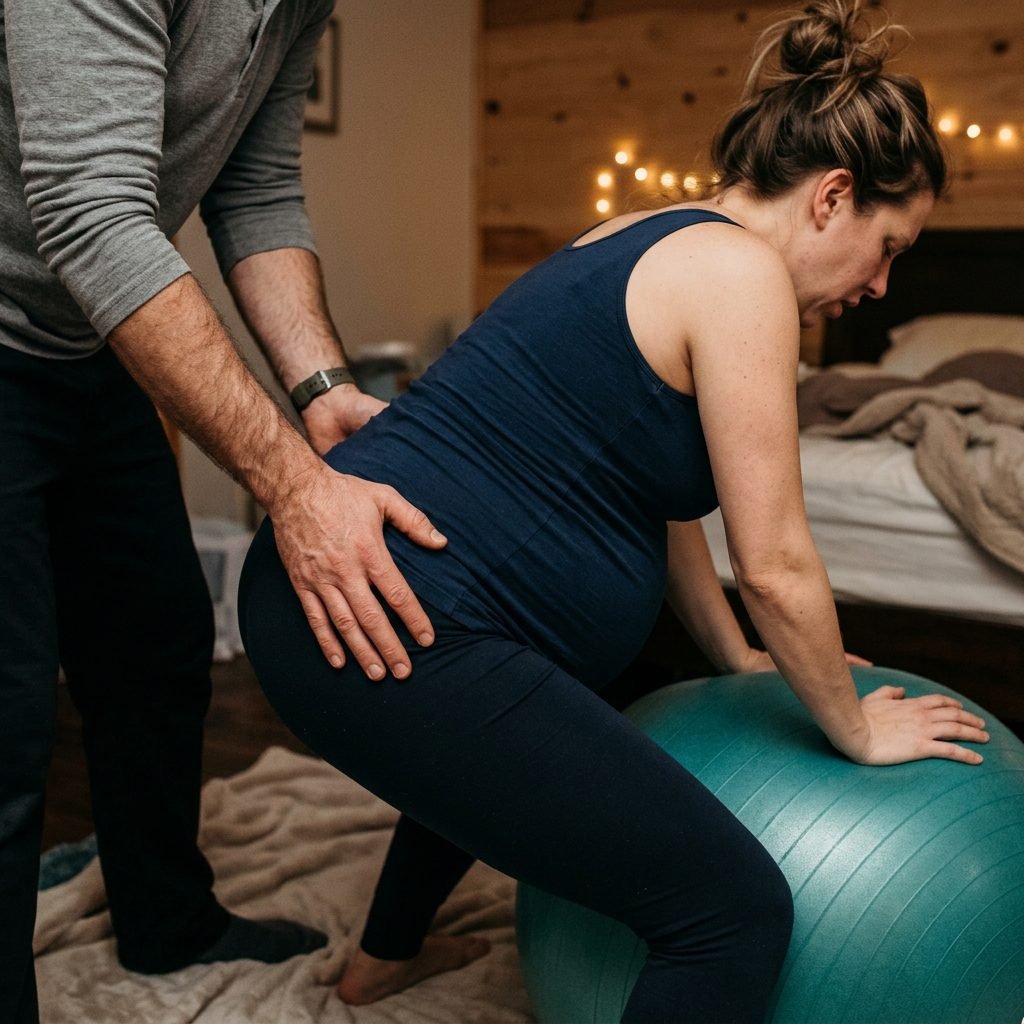
The double hip squeeze is arguably the most famous doula move for a reason—it works wonders during active labor. When a contraction hits, the pressure on the pelvis can feel overwhelming. By applying firm pressure to the hips, you are actually helping to open the pelvic outlet, giving the baby more room to rotate and descend. This move is particularly helpful if the birthing person is experiencing intense pressure in their lower back or hips.
Step-by-Step Instructions for the Partner
- Positioning: Have the birthing person lean forward. This could be over a birthing ball, a hospital bed raised to chest height, or even leaning against you.
- Hand Placement: Stand behind them and place your hands on the fleshy part of their hips (the glutes), just below the iliac crest (the hip bone). Your fingers should point toward their spine, and the heels of your hands should be firmly planted on the sides of the pelvis.
- The Squeeze: As a contraction begins, apply firm, inward, and slightly upward pressure. Think of ‘squeezing’ the two halves of the pelvis together at the back, which causes the front of the pelvis to flare open.
- Communication: Always ask, ‘Do you want more or less pressure?’ Every body is different, and the intensity she needs may change with every contraction.
‘I am right here. Let my strength hold you while you open up for our baby.’
Partner Tip: Protect Your Own Back
Birth can be long! To avoid getting tired, stand with a wide, stable base and use your body weight to lean into the squeeze rather than just using your arm muscles. Keep your shoulders relaxed and breathe with her.
The Sacral Press: Melting Away Back Labor

Targeting the ‘Back Labor’ Hotspot
If the baby is in an ‘occiput posterior’ position (sunny-side up), the birthing person may experience what we call ‘back labor.’ This is a deep, aching pressure in the lower back that often persists even between contractions. The sacral press provides a counter-pressure that can significantly dull this sensation.
How to Execute the Perfect Sacral Press
- Identify the Sacrum: The sacrum is the flat, triangular bone at the very base of the spine, right above the tailbone.
- Technique: Use the heel of your hand, a tennis ball, or even a warm compress. Apply steady, firm pressure directly onto that flat bone.
- Movement: Some people prefer a static, firm press, while others find relief with small, circular motions. Ask her what feels best in the moment.
- Rhythm: Start the pressure as soon as you see her body tense for a contraction and maintain it until the wave has completely passed.
| Labor Phase | Move Suggested | Primary Goal |
|---|---|---|
| Early Labor | The Slow Dance | Oxytocin boost and gentle movement |
| Active Labor | Double Hip Squeeze | Opening the pelvic outlet |
| Transition | Sacral Press | Managing intense back pressure |
| Pushing | Cool Compresses & Grounding | Focus and temperature regulation |
Rebozo Sifting: Shaking Out the Tension

The Ancient Wisdom of the Rebozo
The Rebozo is a traditional Mexican shawl that has been used by midwives for centuries. ‘Sifting’ or ‘jiggling’ with a Rebozo is a gentle way to help relax the abdominal muscles and the ligaments supporting the uterus, such as the round ligaments. This relaxation can help the baby find an optimal position for birth.
How to Sift Safely
- The Setup: Have the birthing person get on hands and knees (all fours) on a soft surface like a yoga mat or a bed.
- The Wrap: Drape a long, non-stretchy scarf or a specific Rebozo cloth under their belly, holding the two ends in your hands.
- The Motion: Lift the cloth slightly so it takes the weight of the belly. Begin a very gentle, rhythmic ‘sifting’ motion—as if you are sifting flour. It should be a tiny, vibrating jiggle, not a large sway.
- The Goal: The goal is to make the birthing person feel like their belly is a ‘bowl of jelly.’ This release of tension is incredibly soothing between contractions.
‘Let your belly go heavy. I have you. Just breathe and let go.’
The Counter-Pressure Lean: Gravity and Grounding

Using Gravity to Your Advantage
During the transition phase of labor, the intensity is at its peak. Often, the birthing person feels a need to be upright but also needs a place to collapse their weight. The counter-pressure lean combines the benefits of gravity with the emotional grounding of physical contact.
Step-by-Step Guide
- The Lean: Have the birthing person stand and face a wall or the back of a sturdy chair. They should lean forward, resting their head on their folded arms.
- The Partner’s Role: Stand behind them. Place your hands on their lower back or shoulders. If they are leaning against a wall, you can apply pressure to their lower back with your hands or even your forearms.
- Grounding Touch: Sometimes, instead of a squeeze, they just need a ‘heavy hand.’ Placing a firm, still hand on their upper back or sacrum can help them feel grounded and less ‘floaty’ during the intensity of transition.
- The ‘C’ Curve: Encourage them to keep their back in a soft ‘C’ curve rather than arching, which helps the baby’s head engage with the cervix.
Physical Support Checklist for Partners
- Hydration: Offer a sip of water or an electrolyte drink after every few contractions.
- Temperature: Keep a cool washcloth for her forehead and warm socks for her feet.
- Environment: Dim the lights and keep the room quiet and private.
- Praise: Use low-toned, affirmative words.
The Oxytocin Sway: Rhythmic Movement and Intimacy

The ‘Slow Dance’ of Labor
Movement is medicine in labor. A stationary body often feels pain more acutely than a moving one. The ‘Slow Dance’ is a classic move that encourages the pelvis to shift and sway, helping the baby wiggle through the birth canal, while the close proximity boosts oxytocin levels.
How to Do the Slow Dance
- The Embrace: Have the birthing person wrap their arms around your neck or waist. You wrap your arms around their waist or lower back.
- The Sway: Begin to sway slowly from side to side, just like you are dancing to a slow song. Encourage her to let her hips be loose and heavy.
- The Weight Shift: Encourage her to take wide steps or shift her weight fully from one foot to the other. This asymmetrical movement of the pelvis is key to helping a baby descend.
- Intimacy: Rest your head against hers. Whisper encouragements. This closeness signals to her brain that she is safe, which is the number one requirement for labor to progress.
‘You are doing the most important work in the world. I am so proud of you.’
Why Rhythm Matters
Finding a rhythm—whether it is through swaying, breathing, or vocalizing—helps the birthing person enter an ‘inner world’ or ‘labor land.’ As the partner, your job is to help her find that rhythm and hold it with her. If she starts to lose her rhythm, bring her back by swaying with her and breathing loudly enough for her to follow your lead.
Conclusion
You Are the Perfect Support for This Birth
As we wrap up this guide, remember that the most important ‘move’ you can make is to be present. While these five doula-approved techniques—the Double Hip Squeeze, Sacral Press, Rebozo Sifting, Counter-Pressure Lean, and Oxytocin Sway—are incredible tools, your intuition and love are your greatest assets. Watch her body language. Listen to her breath. If she pulls away from touch, don’t take it personally; labor is a fluid process, and what felt good ten minutes ago might feel irritating now. Simply ‘holding space’ and being a calm, non-anxious presence is a gift in itself. You are not just a spectator; you are an active participant in the birth of your child and the birth of a mother. Trust the process, trust her body, and trust your hands. You’ve got this, birth partner!