10 Mess-Free Sensory Bag Ideas for Babies to Explore Without the Clean Up
Welcome to the Magic of Mess-Free Exploration
As a doula and a mama who has spent many hours cleaning mashed sweet potatoes out of floorboards, I know that the word sensory often triggers a little bit of internal panic. We want our babies to explore, to feel, and to learn, but we don’t always have the bandwidth for a flour-covered kitchen or a dyed-rice disaster. That is where the genius of the sensory bag (or ‘squish bag’) comes in. These little pockets of wonder provide all the tactile stimulation your baby craves—the squishing, the sliding, the cold, and the colorful—all while being safely contained behind a double-sealed layer of plastic.
Sensory play is more than just a way to keep your little one occupied while you finish a warm cup of coffee (though that is a massive win!). It is a vital part of their neurological development. When your baby presses their fingers into a gel-filled bag to move a sequin, they are building synaptic connections, practicing fine motor control, and learning about cause and effect. In this guide, we are going to walk through 10 of my favorite, tried-and-true sensory bag recipes that are easy on your wallet and even easier on your cleaning schedule.
“Play is the work of the child, and through these mess-free windows, they are discovering the laws of their universe one squish at a time.”
The Science Behind the Squish: Why Sensory Play Matters
Before we dive into the ‘how-to,’ let’s talk about the ‘why.’ Between birth and age three, a child’s brain is growing at an explosive rate. Every time a baby experiences a new texture or watches how two liquids interact, their brain is literally wiring itself. Sensory bags are particularly effective because they isolate specific senses—primarily touch and sight—without overwhelming a baby with too many stimuli at once.
Key Developmental Benefits
- Fine Motor Skills: Pushing small objects around inside a bag encourages the ‘pincer grasp’ and finger isolation.
- Visual Tracking: Watching glitter or oil bubbles move helps develop the eye muscles and focus.
- Language Development: Even if they aren’t talking yet, describing what they see (‘Look at the blue water! Is it cold?’) builds their receptive vocabulary.
- Emotional Regulation: The repetitive, rhythmic nature of squishing gel is incredibly soothing for many infants, acting as a form of ‘heavy work’ for their little hands.
By providing these opportunities, you are acting as your baby’s first teacher and their most supportive doula, guiding them through the big, wide world in a way that feels safe and manageable.
The Essential No-Leak Toolkit
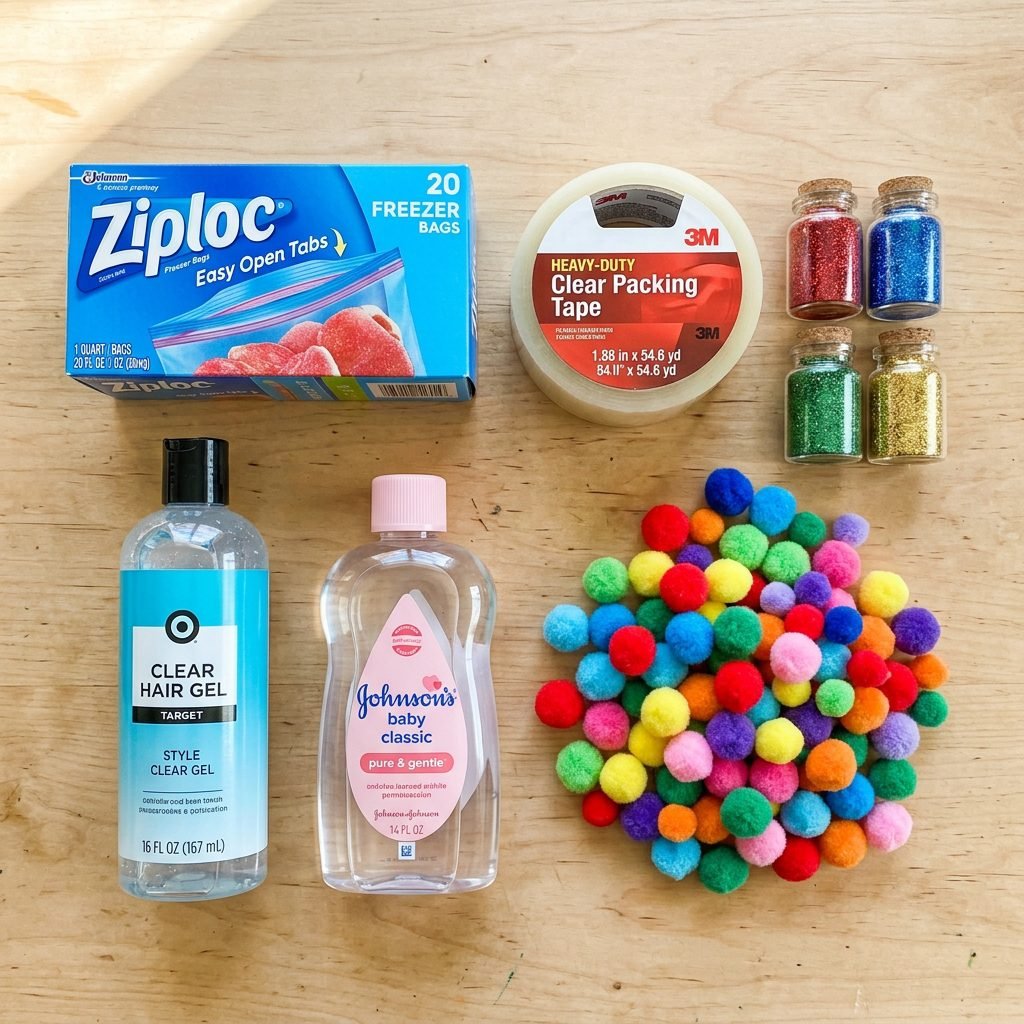
The secret to a successful sensory bag experience lies in the structural integrity of the bag. Nothing ruins a relaxing morning like a bag of blue hair gel exploding on a white rug. To keep things truly mess-free, you need the right supplies.
| Item | Purpose | Expert Tip |
|---|---|---|
| Heavy-Duty Freezer Bags | The primary container | Use Ziploc Freezer bags; they are thicker and less likely to puncture. |
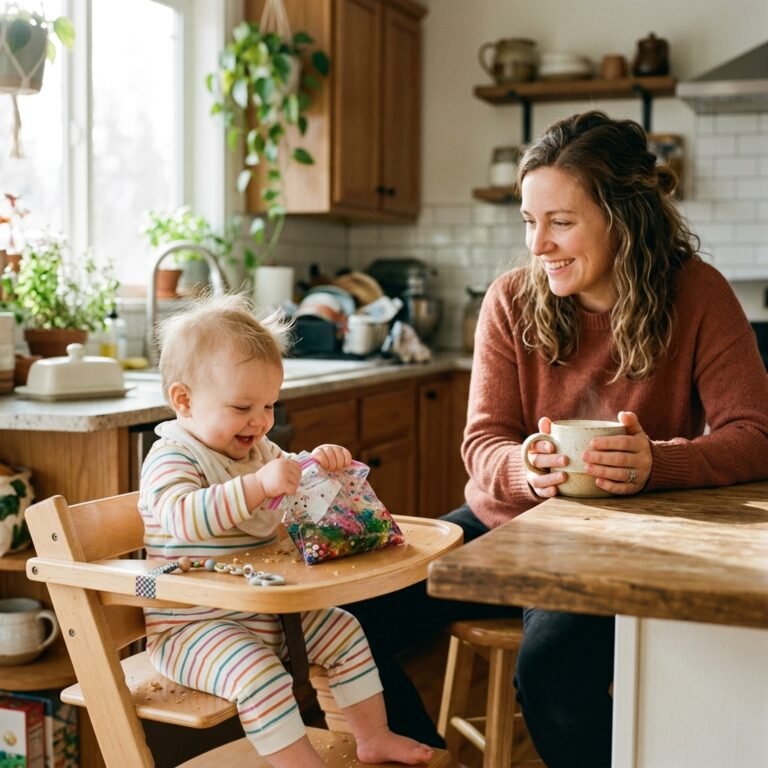
| Clear Packing Tape | Sealing and securing | Tape all four edges to the floor or a high-chair tray to prevent the baby from picking it up and biting the seal. |
| Clear Hair Gel | The ‘suspension’ fluid | Buy the cheapest, most basic clear gel from the dollar store. |
| Duct Tape | Reinforcement | Use stylish patterned duct tape to create a ‘frame’ around the bag for extra durability. |
Always remember to double-bag if you are using liquids like water or oil. Simply place the first finished bag inside a second bag and seal both with tape. This provides an extra layer of insurance for your sanity.
10 Creative Sensory Bag Ideas for Little Explorers
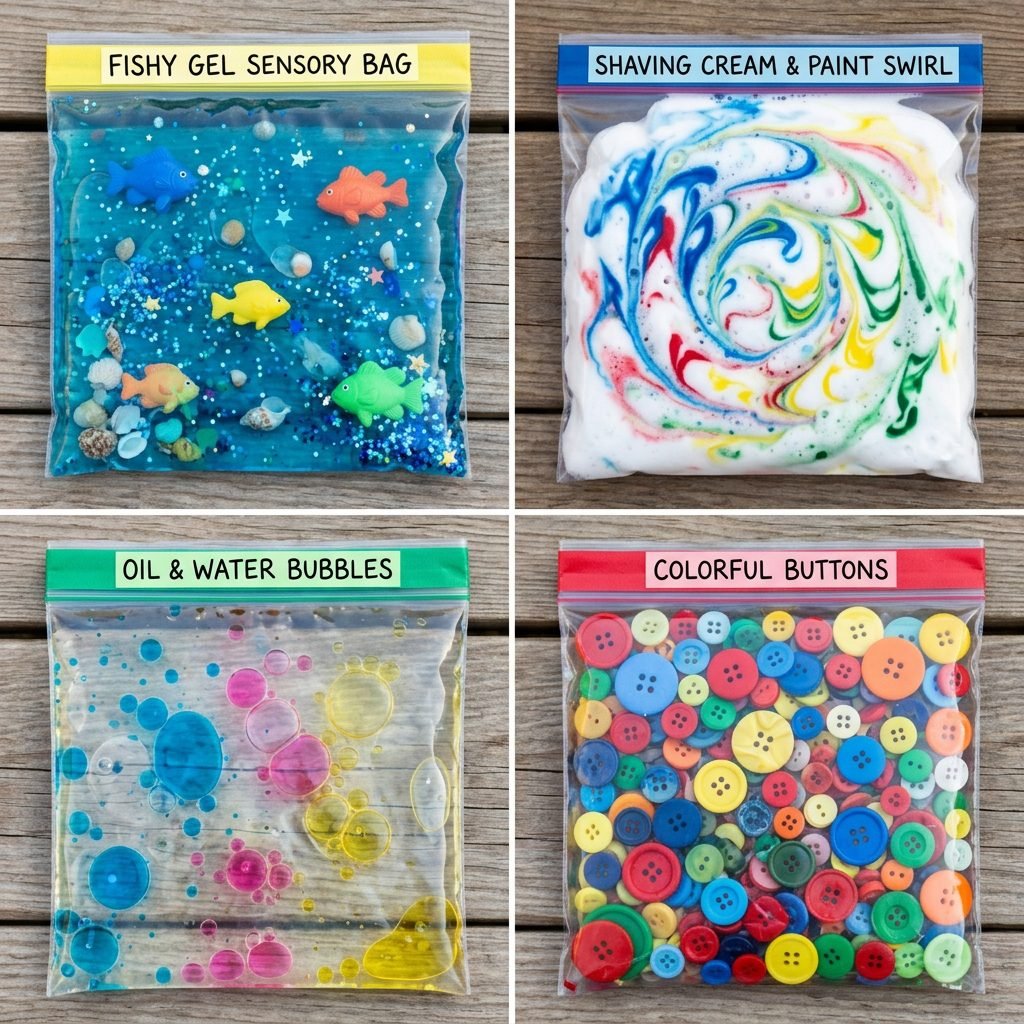
1. The Deep Blue Sea
Fill a bag with 1 cup of clear hair gel, a few drops of blue food coloring, and a handful of silver glitter. Add small plastic fish or sea creature toys. It looks like a miniature ocean, and babies love ‘swimming’ the fish through the gel.
2. The Rainbow Shaving Cream Melt
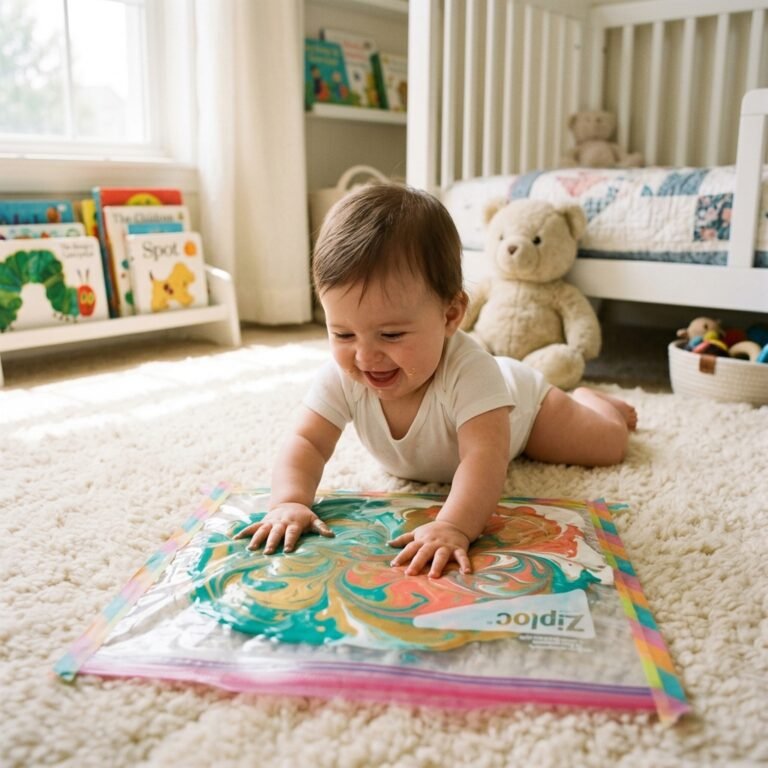
Squirt a generous amount of white shaving cream into a bag. Drop 3-4 different colors of washable paint in different corners. As your baby squishes the bag, the colors marble together, creating a beautiful, mess-free painting experience.
3. The Nature Walk Bag
Perfect for a sensory experience that connects them to the outdoors. Fill a bag with water and add flat leaves, flower petals, and blades of grass. The items float and dance, allowing the baby to ‘touch’ nature without the risk of them putting a leaf in their mouth.
4. The Oil and Water ‘Lava’ Bag
Mix 1/2 cup of baby oil with 1/2 cup of water tinted with food coloring. Because oil and water don’t mix, the colored bubbles will bounce and slide around each other, mimicking a lava lamp.
5. The Pom-Pom Push
This is a ‘dry’ sensory bag. Fill a bag with various sizes and colors of soft pom-poms. The sensation of the soft puffs through the plastic is unique, and it’s very lightweight for younger babies to manipulate.
6. The Monster Eye Squish
Fill a bag with clear hair gel and 20-30 googly eyes of different sizes. It’s silly, high-contrast, and great for visual tracking as the eyes ‘look’ back at the baby.
7. The Frozen Pea Chill
Perfect for a teething baby! Fill a bag with frozen peas. The cold temperature provides relief to sore gums (if they lean their face on it), and the round shape of the peas makes for a great ‘bumpy’ texture.
8. Alphabet Soup
For older babies (10+ months), fill a bag with hair gel and colorful plastic alphabet letters. Ask them to find the ‘A’ or the ‘red letter’ to begin introducing early literacy concepts.
9. The Button Sorting Bag
Use hair gel and a variety of large, colorful buttons. You can draw circles on the outside of the bag with a permanent marker, and your baby can try to ‘push’ the buttons into the matching colored circles.
10. The Holiday Sparkle Bag
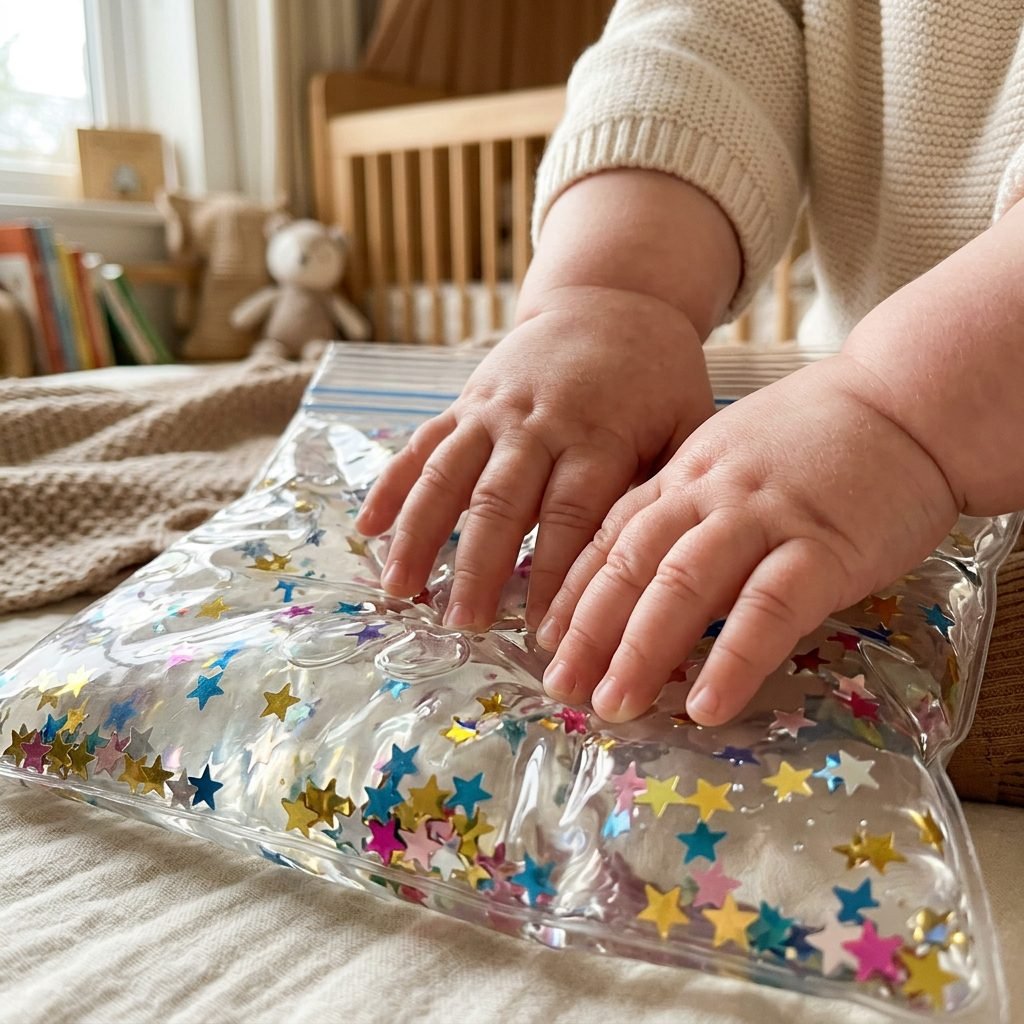
Fill a bag with clear gel and seasonal confetti—stars for the new year, hearts for Valentine’s, or snowflakes for winter. It’s a festive way to celebrate the seasons safely.
Step-by-Step Assembly & Safety Protocols
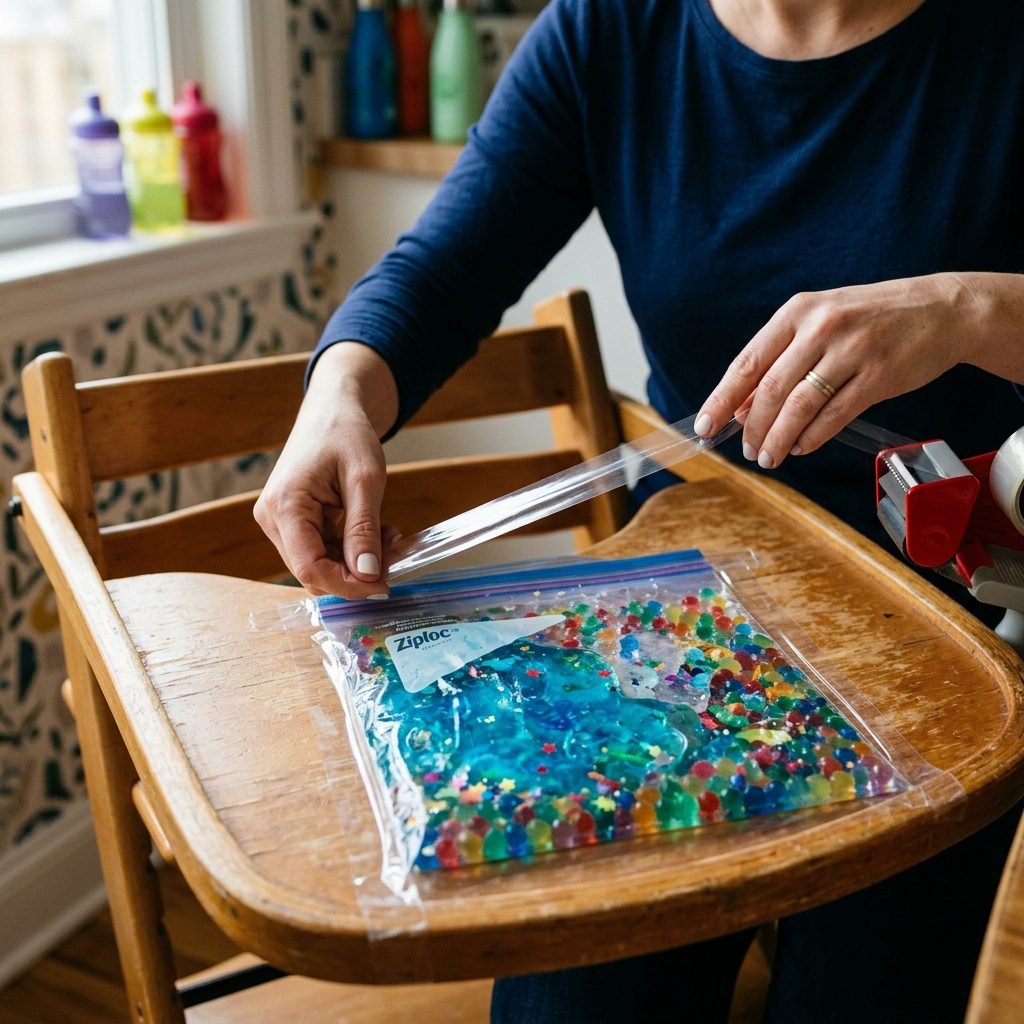
To ensure these bags remain a joy and not a chore, follow these specific assembly steps. Your role as the ‘Chief Play Officer’ is to ensure the environment is both stimulating and secure.
- Prep the Fillers: Ensure no items have sharp edges that could pierce the plastic.
- Fill Sparingly: Do not overfill the bag. It should be able to lay flat with about 1/2 inch of thickness. If there is too much air or liquid, the pressure from a baby’s palm might pop the seal.
- Remove Excess Air: Before sealing, lay the bag flat and gently push the air out. A vacuum seal is your best friend here.
- The Double-Tape Method: Seal the ‘zipper’ part of the bag with packing tape first. Then, flip the bag over and tape it to a flat surface (floor, table, or window) using tape on all four sides.
“Safety Reminder: Always supervise sensory bag play. Even the strongest tape can be peeled by a determined toddler, and the small items inside can become choking hazards if the bag is breached.”
Tailoring the Experience to Your Baby’s Age
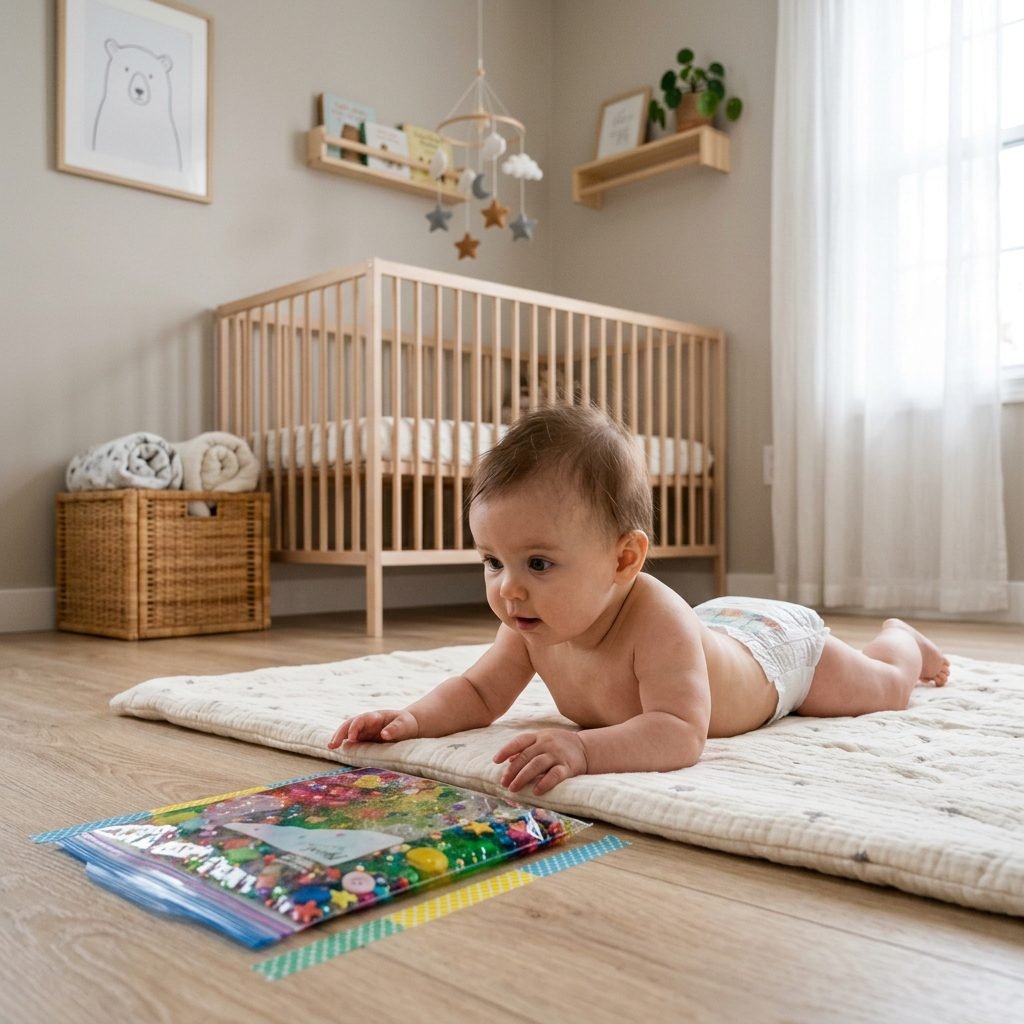
Not every sensory bag is right for every stage. As a doula, I recommend matching the complexity of the bag to your baby’s current developmental milestones.
| Age Range | Focus | Best Bag Type |
|---|---|---|
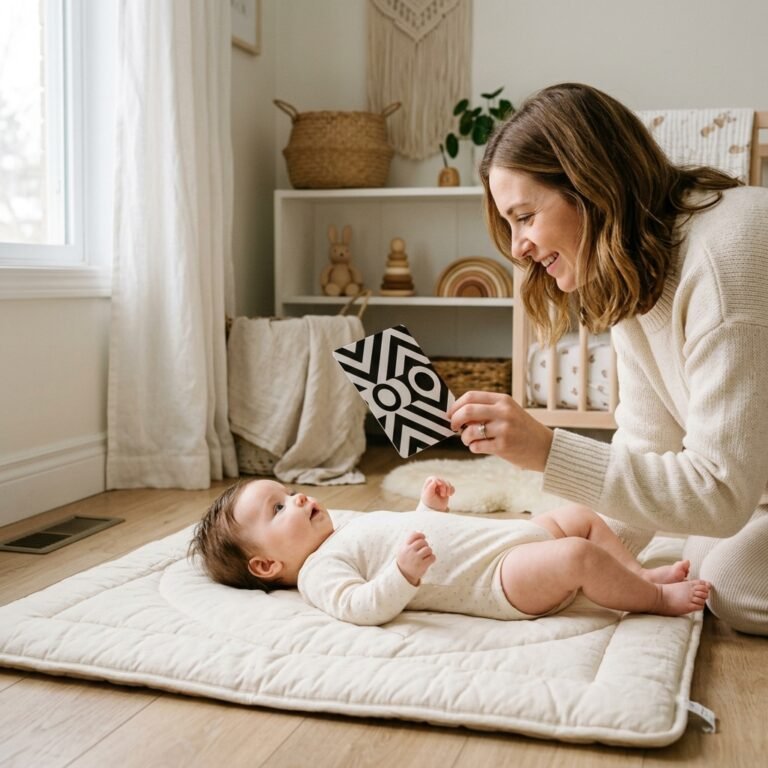
| 3-6 Months (Tummy Time) | High Contrast & Visuals | Black and white sequins or high-contrast gel colors. Tape these to the floor during tummy time. |
| 6-9 Months (Sitting Up) | Tactile & Cause/Effect | Heavy gels, shaving cream, or ‘lava’ bags that react to their touch. |
| 9-12 Months (Pincer Grasp) | Precision & Sorting | Small items like buttons or beads that require ‘pushing’ with a single finger. |
| 12+ Months (Toddlerhood) | Concepts & Language | Alphabet letters, color sorting, or ‘I-Spy’ bags with hidden small toys. |
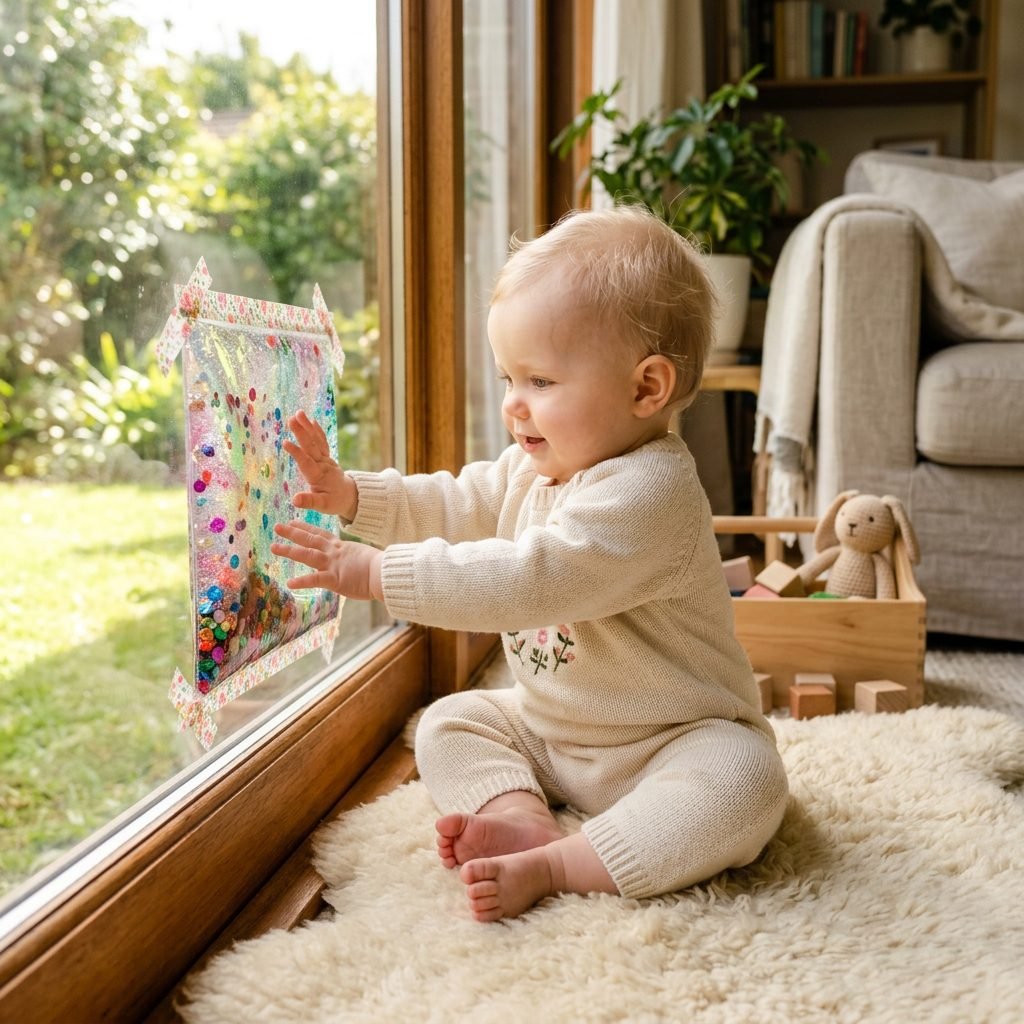
For younger babies, taping the bags to a low window is a game-changer. The light shining through the gel makes the colors glow, which is mesmerizing for a baby who is just learning to support their own head and trunk.
Conclusion
Nurturing Wonder, One Squish at a Time
Mama, you are doing an incredible job. In a world that often feels rushed and messy, creating these little ‘windows of wonder’ for your baby is a beautiful act of love. These 10 mess-free sensory bag ideas prove that you don’t need a massive budget or a professional cleaning crew to provide your child with a rich, stimulating environment. Whether it’s the calming blue of the ‘ocean bag’ or the bright excitement of the ‘alphabet soup,’ you are giving your little one the tools they need to explore their world safely.
Remember to take a moment to sit down with them. Watch their eyes light up when they move a sequin. Feel the coolness of the gel yourself. These are the small, quiet moments of connection that build a lifetime of trust and curiosity. Happy squishing!