

Why Cold Washcloths Are a Lifesaver During the Transition Phase of Labor
The Magic of the Humble Washcloth
Oh, mama, if there is one thing I want to tuck into your hospital bag right next to your nursing pads and that cute first outfit for the baby, it is a stack of high-quality, 100% cotton washcloths. You might be thinking, ‘Really? A washcloth?’ But trust me, your sister-doula is here to tell you that when you hit the transition phase of labor, that simple piece of fabric dipped in ice-cold water will feel like a gift from the heavens. Transition is the shortest but most intense part of your journey to meeting your little one, and it is the moment when your body is working at its absolute peak. In this guide, we are going to dive deep into why cooling relief is a game-changer, how it affects your nervous system, and exactly how your birth partner can use this simple tool to help you cross the finish line with strength and grace.
Understanding the Transition Phase: The ‘I Can’t Do This’ Moment

Transition is the final stretch of the first stage of labor, typically when you are dilated from 7 to 10 centimeters. It is fast, it is furious, and it is often where the emotional ‘wall’ happens. This is the stage where many mamas say, ‘I’m done, I can’t do this anymore,’ or even ask to go home! It is a sign that you are almost there. Physically, your body is flooded with hormones, and your internal thermostat often goes haywire. You might experience intense shivering one minute and feel like you are standing on the surface of the sun the next.
Common Symptoms of Transition
- Intense Nausea: As the baby descends, the pressure on your digestive system can cause sudden vomiting or waves of nausea.
- The Shakes: Uncontrollable trembling in the legs and arms is a normal response to the massive hormonal shift.
- Sensory Overload: You may become suddenly sensitive to light, noise, or even the touch of your partner.
- Extreme Heat: The sheer physical exertion of laboring at this intensity causes your core temperature to rise significantly.
This is where the cold washcloth comes in. It acts as a grounding wire. When the world feels like it is spinning and the contractions are coming back-to-back, the sharp, crisp sensation of cold on your skin pulls your focus back to the present and tells your nervous system, ‘We are okay. We are cooling down.’
The Physiology of Cooling: Why Cold Works for Pain
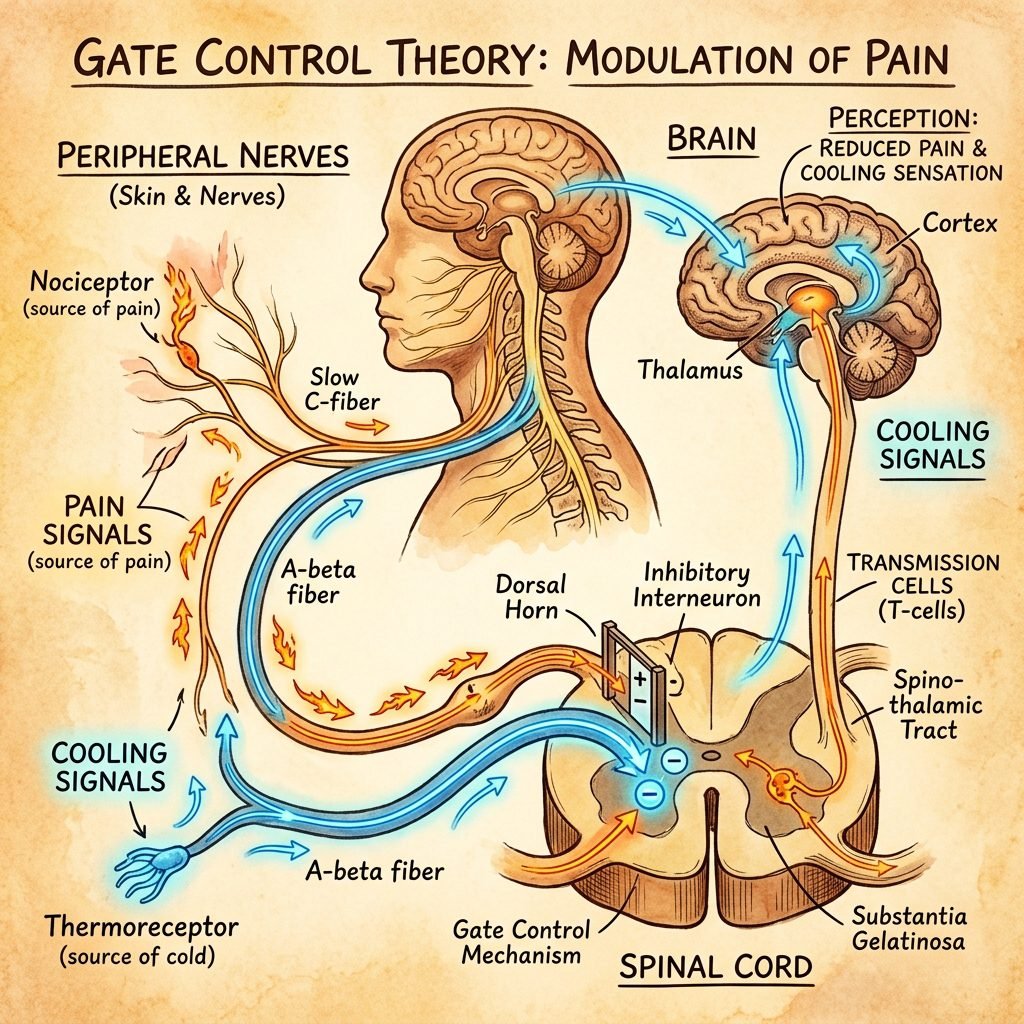
There is actually some pretty cool science (pun intended!) behind why a cold compress feels so good during labor. It’s called the Gate Control Theory of Pain. Essentially, your brain can only process a certain amount of sensory information at once. When we apply a cold stimulus to the skin, those ‘cold’ signals travel to the brain faster than the ‘pain’ signals from your uterus. This effectively ‘closes the gate’ on some of the pain, providing a natural form of analgesia.
| Phase of Labor | Body Temperature State | Role of Cold Washcloth |
|---|---|---|
| Early Labor | Normal to slightly elevated | Comfort and relaxation. |
| Active Labor | Rising core heat | Regulating temperature and stamina. |
| Transition | Peak heat / Hot flashes | Emergency cooling and sensory grounding. |
| Pushing | High physical exertion | Wiping away sweat and maintaining focus. |
Furthermore, cooling the skin helps to vasoconstrict the blood vessels slightly, which can reduce that ‘puffy’ or ‘inflamed’ feeling that comes with the intense pressure of transition. It also helps manage the nausea; a cold cloth on the back of the neck or the bridge of the nose is a classic doula trick to settle a rolling stomach. Remember, mama: your body is doing a marathon, and every athlete needs a way to cool down.
The Art of the Labor Washcloth: Preparation and Essential Oils

Don’t just grab any old rag! To make this a true ‘lifesaver,’ we want to prepare these with intention. If you are birthing in a hospital, ask your partner to get a ‘basin of ice and water’ from the nurse’s station. If you are at home, have a dedicated bowl ready.
Step-by-Step Preparation Guide
- Choose Your Cloth: Use small, plush 100% cotton washcloths. They hold water better than thin ones.
- The Ice Bath: Fill a bowl with 50% ice and 50% water. You want it ‘shiver-cold.’
- The Scent Factor: If you aren’t sensitive to smells, add one single drop of Peppermint or Lavender essential oil to the water. Peppermint is incredibly cooling and helps with nausea, while Lavender promotes a sense of peace. Warning: Only use a tiny amount, as your sense of smell is heightened during labor!
- The Wring-Out: Your partner should wring the cloth out so it is damp but not dripping all over your gown or bedding.
- The Rotation: Have at least 3 cloths in the bowl. As soon as the cloth on your skin starts to feel warm (which happens fast!), swap it for a fresh, icy one.
“The cold washcloth was the only thing that kept me in my body when I felt like I was floating away in the pain. My husband just kept them coming, and that rhythm became my lifeline.” — A Birth Affirmation from a Second-Time Mama
High-Impact Cooling Zones: Where to Apply for Maximum Relief

Knowing where to put the cloth is just as important as having it. During transition, you might not be able to articulate where you want it, so partners, pay attention! There are four ‘magic zones’ that provide the most relief.
The Magic Zones
- The Forehead: This is the classic spot. It helps clear the ‘brain fog’ and provides immediate relief from the heat of exertion.
- The Back of the Neck: This is the body’s thermostat. Cooling the brainstem area helps regulate your entire body temperature and is the best spot for fighting nausea.
- The Upper Chest: If you are feeling ‘smothered’ or like you can’t catch your breath, a cold cloth on the chest can help you feel more open and refreshed.
- The Lower Back: If you are experiencing ‘back labor,’ a cold compress can sometimes feel better than heat, especially if the area feels inflamed or ‘hot’ to the touch.
| Target Area | Benefit | Partner Technique |
|---|---|---|
| Forehead | Mental Clarity | Gentle, steady pressure. |
| Back of Neck | Nausea Relief | Wrap the cloth like a collar. |
| Inner Wrists | Quick Cooling | Hold the cloth over the pulse points. |
| Cheeks/Face | Sensory Grounding | Light dabbing during contractions. |
The Partner’s Role: How to Be the Hero of Transition
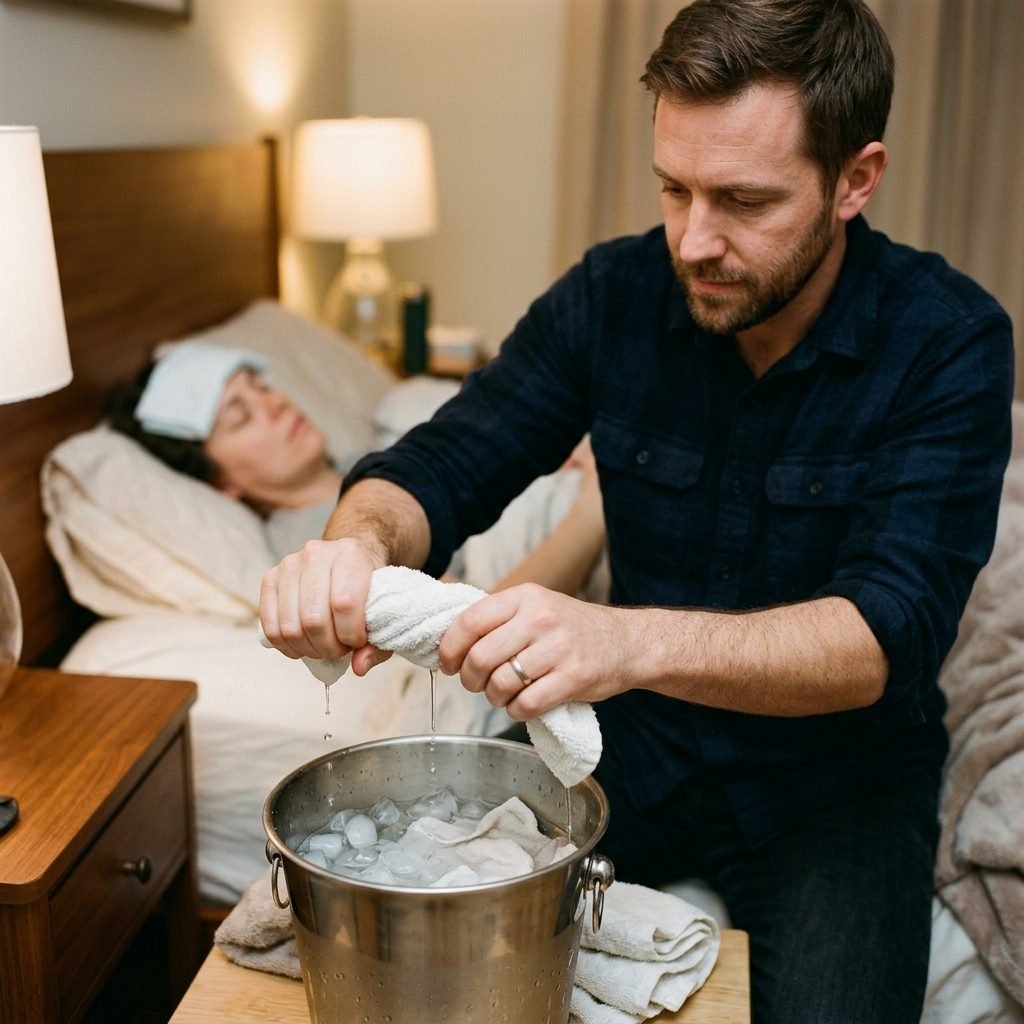
Partner, this is your time to shine. During transition, the laboring mama might not want to be touched or talked to, but she will almost always appreciate a cold washcloth. However, you must be a mind-reader (don’t worry, I’ll help you!).
Partner Do’s and Don’ts
- DO: Watch her face. If she is grimacing and sweating, get that cloth ready.
- DON’T: Ask ‘Do you want a washcloth?’ every 30 seconds. In transition, making decisions is hard. Just gently apply it. If she pushes it away, she doesn’t want it. If she leans into it, keep them coming.
- DO: Keep the ‘rotation’ going. A washcloth stays cold for about 2 minutes in a warm labor room. Be ready with the next one.
- DON’T: Let the water drip into her eyes or ears. Wring it out well!
- DO: Use the cloth to wipe her face between contractions to help her reset.
Pro-Tip for Partners: If she is in a birth pool or shower, you can still use cold washcloths! The contrast between the warm water on her belly and the cold cloth on her neck is often exactly what she needs to stay focused.
What to Pack: The Ultimate Cooling Kit
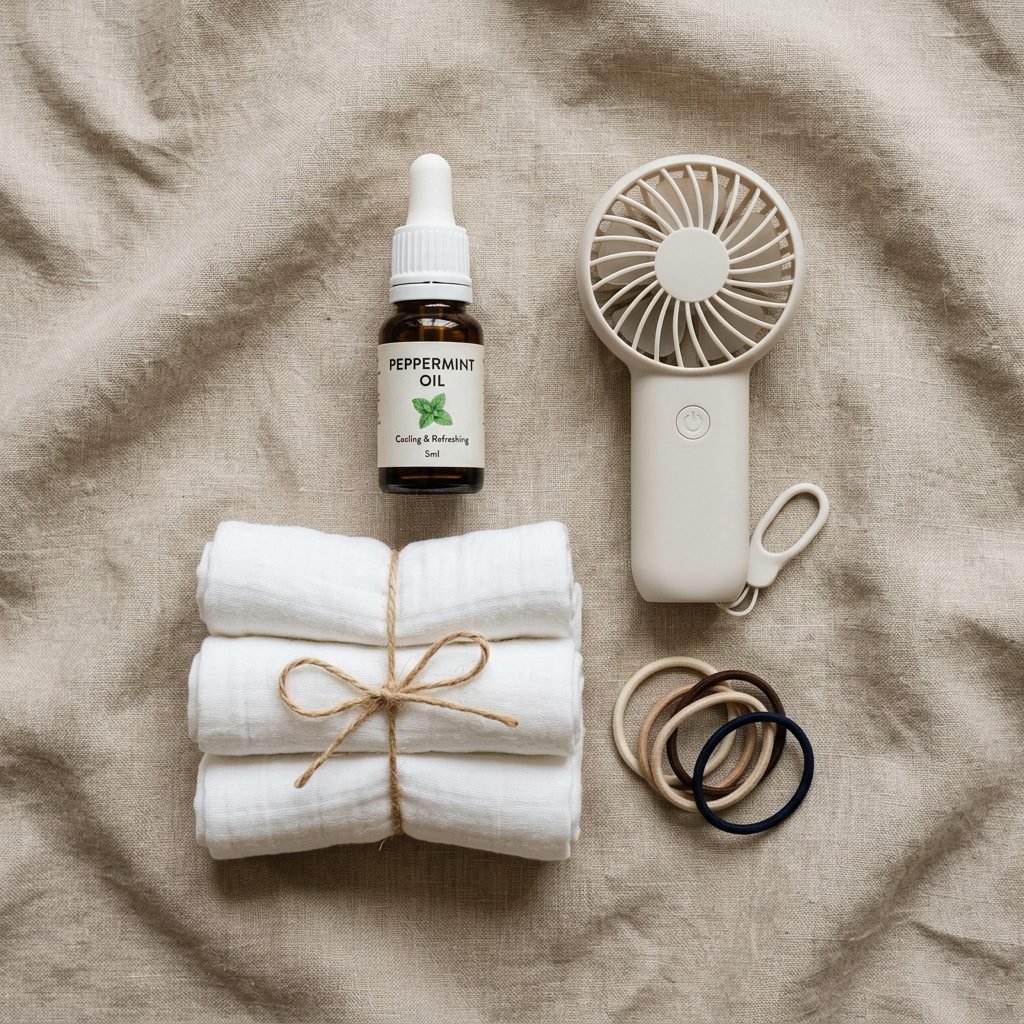
To make sure you are fully prepared for the transition phase, here is a quick checklist of what to include in your ‘Cooling Kit’ for your birth bag.
- 6-8 Soft Washcloths: You want enough to keep a constant rotation going without having to wash them immediately.
- A Small Portable Fan: Sometimes the combination of a wet cloth and a fan creates a ‘super-cooling’ effect.
- Peppermint Essential Oil: Ensure it is high quality and therapeutic grade.
- A Thermos or Insulated Bowl: To keep your ice from melting too fast if you are at a birth center or hospital.
- Hair Ties: Get that hair off the neck so the washcloth can do its job!
Having these items organized in a specific ‘comfort’ pouch makes it easy for your doula or partner to find them when things get intense. You don’t want them digging through a suitcase for a washcloth while you are in the middle of a 9cm contraction!
Conclusion
You’ve Got This, Mama
Transition is the threshold. It is the moment right before you meet the love of your life. While it is undeniably intense, remember that every sensation is a sign of progress. The cold washcloth isn’t just about temperature; it’s a tool for mindfulness, a way for your partner to show physical support, and a simple, natural way to manage the incredible power of your body. When you feel like you can’t go on, feel the cold on your skin, take one deep breath, and know that you are stronger than you ever imagined. You are doing it, mama. One contraction—and one cold washcloth—at a time.