The Complete Baby Nursery Temperature Guide for Safe and Cozier Sleep Year-Round
Welcome to the Sweet Dreams Sanctuary
Mama, if you find yourself standing over your baby’s crib at 2:00 AM, wondering if they are too hot, too cold, or just right—you are not alone. As a doula and a mama myself, I know that ‘nursery temperature anxiety’ is a very real thing. We want our babies to be as cozy as a bug in a rug, but we are also hyper-aware of the safety guidelines surrounding SIDS and overheating. Creating the perfect microclimate in your nursery isn’t just about comfort; it is one of the most vital steps in practicing safe sleep.
In this guide, we are going to walk through the science of infant thermoregulation with a big dose of sisterly reassurance. We’ll break down the ‘Goldilocks’ temperature range, demystify those confusing TOG ratings on sleep sacks, and give you practical, stylish solutions for every season. Grab a cup of tea, take a deep breath, and let’s turn that nursery into a safe, temperature-controlled haven for your little treasure.
“Your baby’s sleep environment is the foundation of their rest—and yours. When they are comfortable, the whole house breathes easier.”
The Goldilocks Zone: Finding the Ideal Temperature
Setting the Stage for Safety
Infants are not as efficient at regulating their body temperature as adults are. They don’t sweat the way we do to cool down, and they don’t have the muscle mass to shiver effectively to warm up. This makes the ambient temperature of the room incredibly important. Most pediatric experts and safe sleep organizations, including the AAP, suggest a specific range that balances comfort with safety.
The Magic Number Range
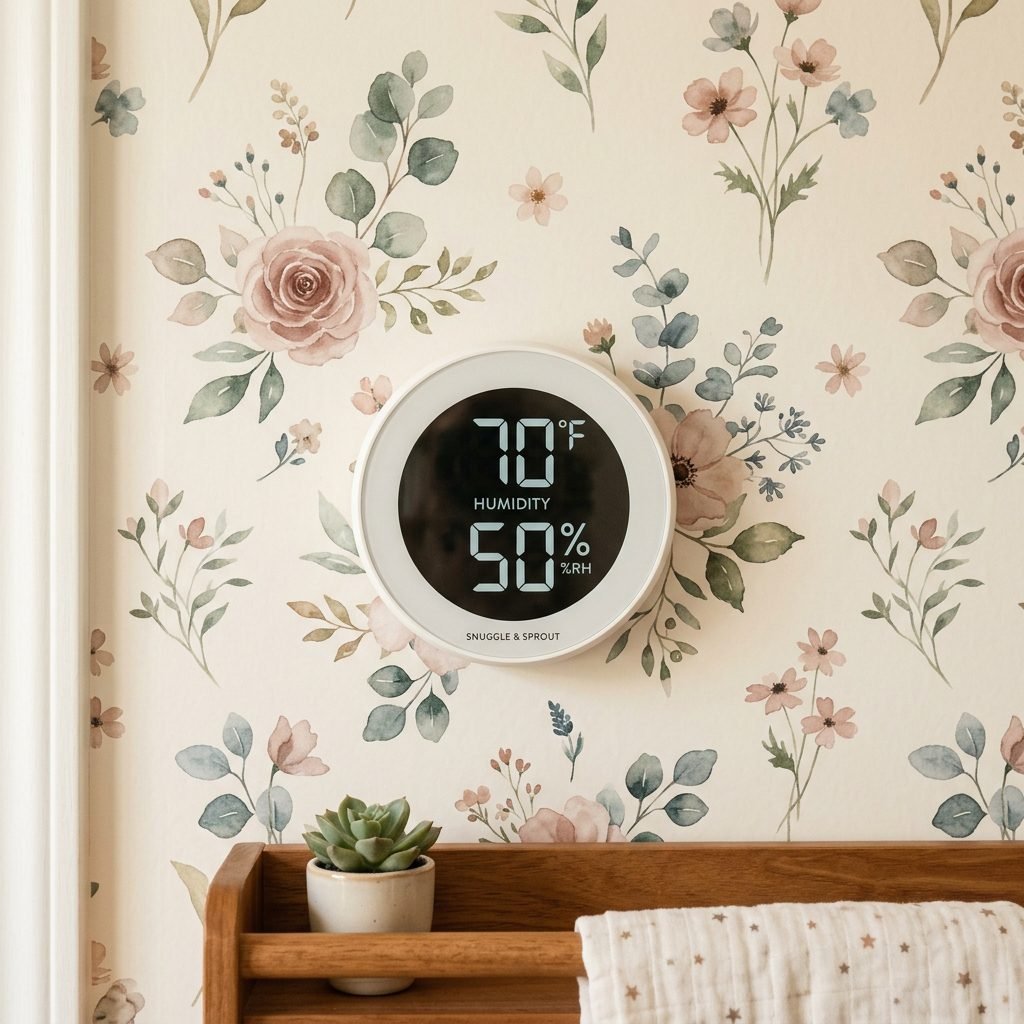
The ideal nursery temperature is generally considered to be between 68°F and 72°F (20°C to 22°C). This range is cool enough to prevent overheating—which is a known risk factor for SIDS—but warm enough that your baby won’t wake up from a chill.
| Temperature Status | Range (°F / °C) | Sleep Quality Impact |
|---|---|---|
| Too Cold | Below 65°F / 18°C | Frequent wakings, restless movement, cold extremities. |
| The Ideal Zone | 68°F – 72°F / 20°C – 22°C | Deep REM sleep, stable heart rate, optimal safety. |
| Too Warm | Above 75°F / 24°C | Increased SIDS risk, sweating, lethargy, dehydration. |
Why Cooler is Often Better
It might feel counterintuitive to keep a tiny baby in a room that feels ‘brisk’ to you, but a cooler room promotes deeper, more restful sleep. Overheating can lead to a baby falling into a sleep that is too deep, making it harder for them to wake up if they experience a respiratory issue. Think of it as creating a ‘cool head, warm body’ environment.
Demystifying TOG: How to Dress Your Baby for the Room
What on Earth is a TOG?
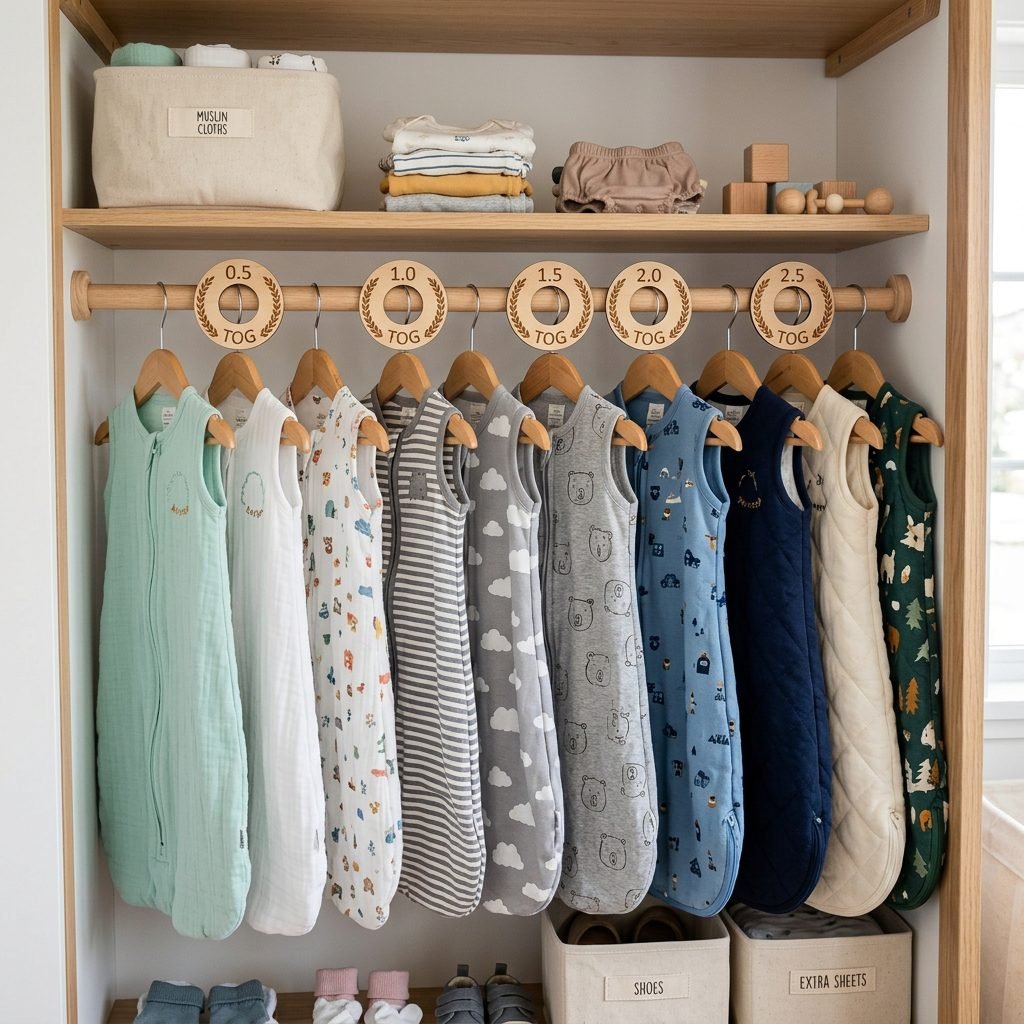
If you’ve been shopping for sleep sacks or swaddles, you’ve likely seen the term ‘TOG.’ It stands for Thermal Overall Grade, and it is a unit of measurement used to calculate the thermal insulation of a product. The higher the TOG, the warmer the garment. Understanding this is your secret weapon for year-round sleep success.
The TOG Translation Guide
Choosing the right TOG depends entirely on the temperature of the nursery, not the weather outside. Use this guide to layer your baby like a pro:
- 0.5 TOG: Extra light. Best for hot summer nights or rooms above 75°F. Usually just a thin layer of muslin or cotton.
- 1.0 TOG: The ‘Year-Round’ weight. Perfect for the standard 68-72°F range.
- 2.5 TOG: Padded and warm. Best for chilly rooms (61-68°F) during winter months.
- 3.5 TOG: Heavy-duty. Only for very cold climates where the room drops below 60°F.
| Room Temp | Recommended TOG | Suggested Clothing Layers |
|---|---|---|
| 75°F+ | 0.5 TOG | Short-sleeved bodysuit or diaper only. |
| 70°F – 74°F | 1.0 TOG | Long-sleeved cotton bodysuit. |
| 65°F – 69°F | 2.5 TOG | Long-sleeved footie pajamas. |
| Below 64°F | 3.5 TOG | Thermal base layer + footie pajamas. |
The Golden Rule of Layering
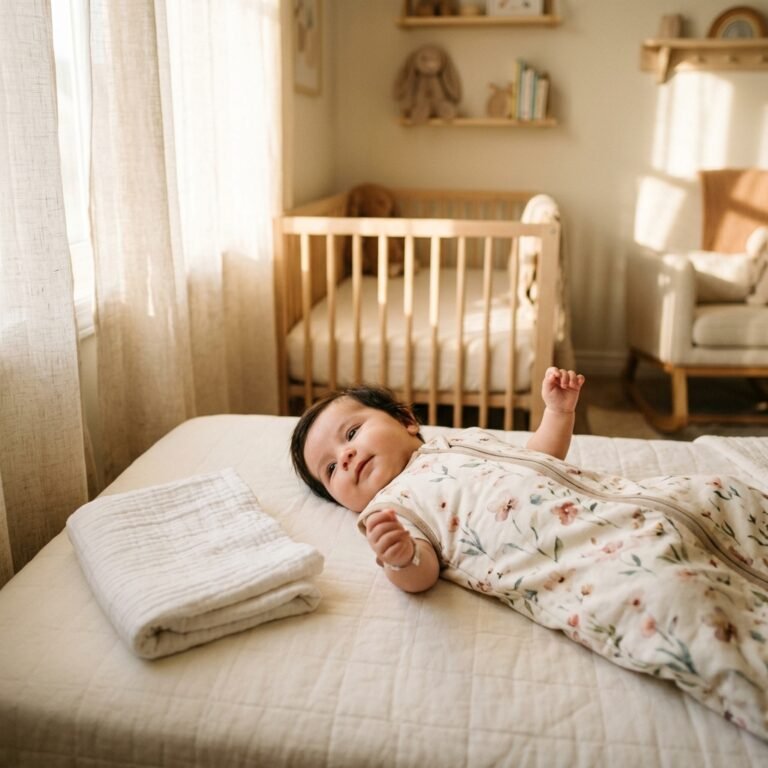
Always remember: Baby should wear one more layer than you are comfortable in. If you are wearing a t-shirt and feel fine, baby likely needs a t-shirt plus a light sleep sack. Never use loose blankets, as these pose a suffocation risk. The sleep sack is your ‘wearable blanket’ that stays in place all night.
Seasonal Shifts: Summer Cooling & Winter Warming
Adapting to the Great Outdoors
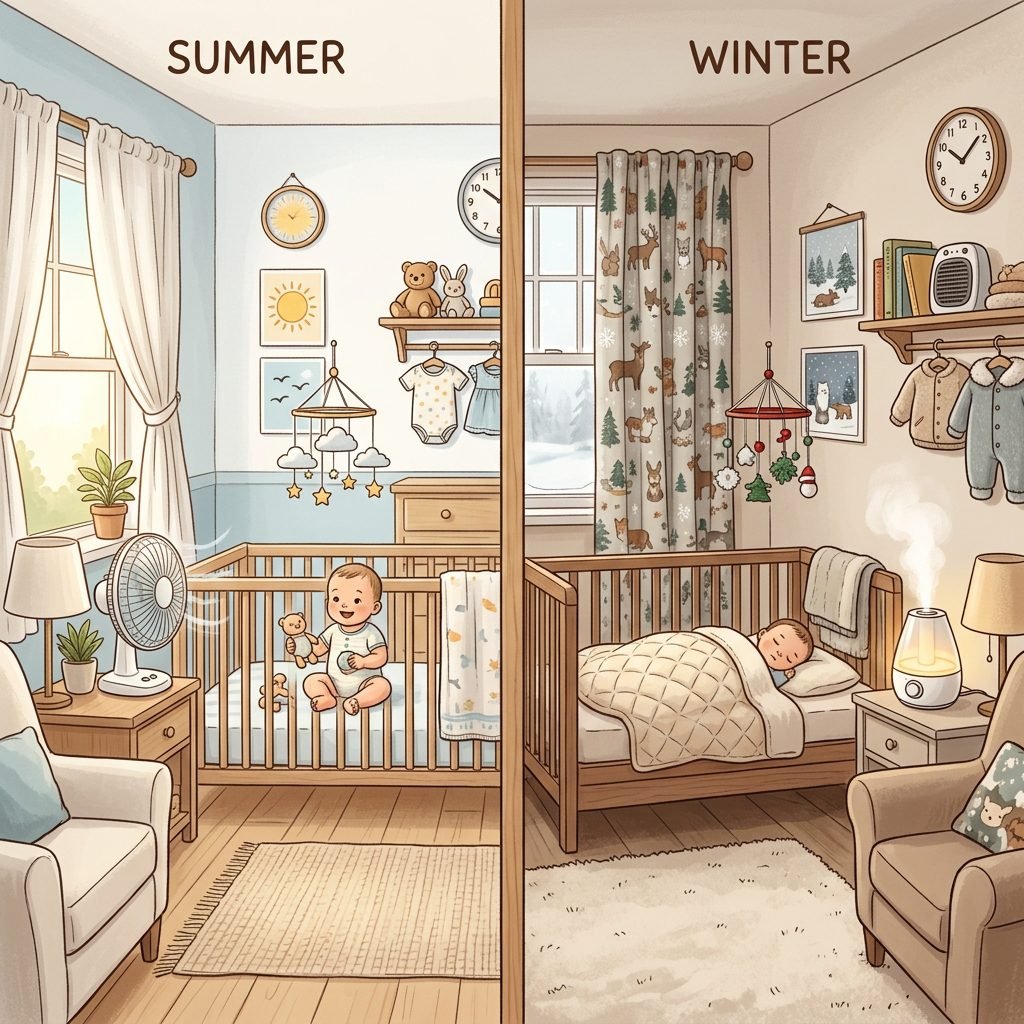
While we try to keep the nursery consistent, the seasons often have other plans. Whether you’re dealing with a heatwave or a polar vortex, your strategy needs to shift to keep that ‘Goldilocks’ zone intact.
Summer Sleep Strategies
When the sun is blazing, the nursery can quickly become an oven. Here is how to keep it chill:
- Blackout Curtains: Keep them closed during the heat of the day to prevent the ‘greenhouse effect’ in the nursery.
- Air Circulation: Use a ceiling fan or a floor fan. Pro Tip: Ensure the fan is not blowing directly onto the baby, but rather circulating the air in the room. This has been shown to reduce SIDS risk by up to 72%!
- Natural Fibers: Stick to 100% organic cotton, bamboo, or linen. These fabrics breathe and wick moisture away from baby’s skin.
Winter Warmth Without the Risk
In the winter, the temptation is to bundle baby up in thick fleece and heavy quilts. Resist the urge!
- Pre-warm the Space: Use a space heater to warm the room before putting baby down, then turn it off or ensure it has an automatic thermostat and tip-over protection.
- Check the Humidity: Heaters dry out the air, which can irritate baby’s sensitive airways. A cool-mist humidifier is a winter essential.
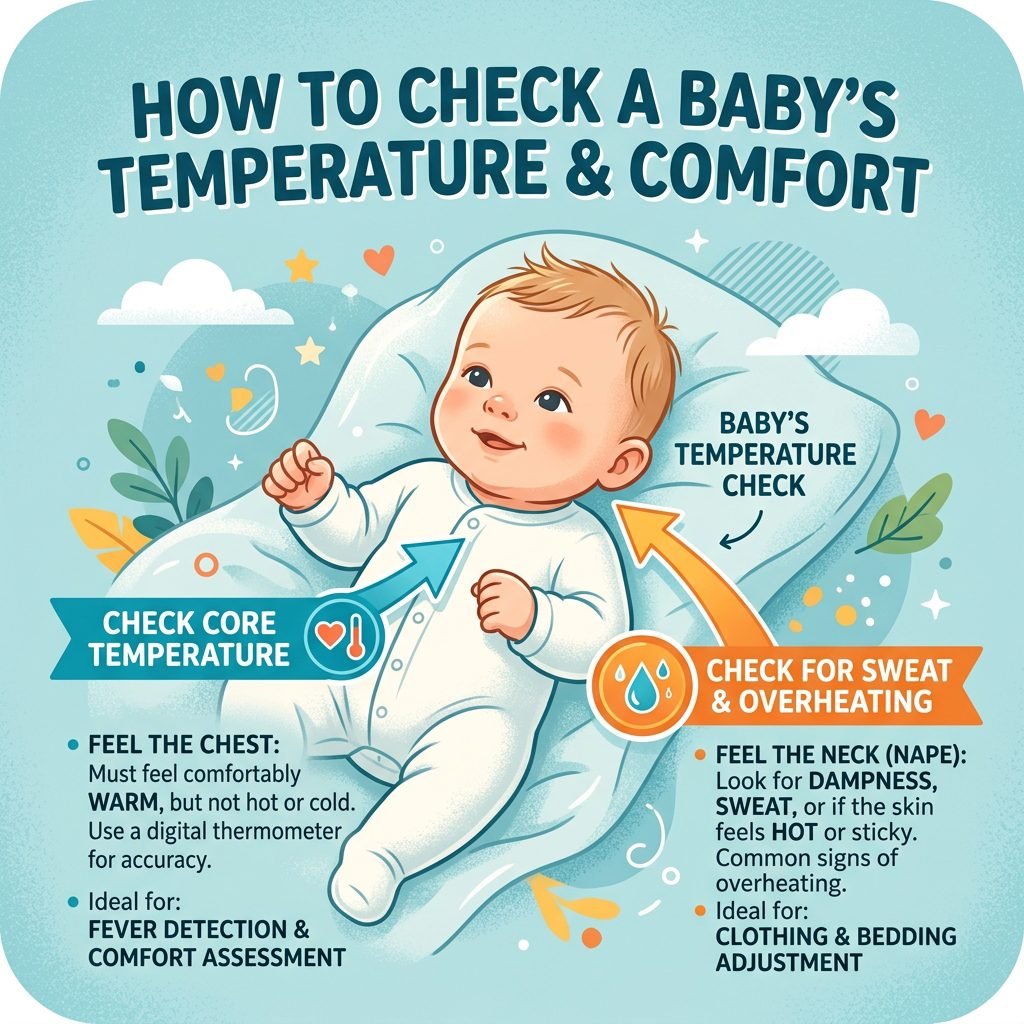
- The ‘Back’ Check: Always check baby’s chest or back for warmth. Cold hands and feet are normal (as blood flow is concentrated in the core), but a cold chest means they need another layer.
The Physical Check: Signs Your Baby is Overheating
Trusting Your Intuition and Your Touch
Technology is great, but nothing beats a mother’s touch. Sometimes the monitor says 70 degrees, but baby is still struggling. Learning the physical cues of temperature distress is vital for your peace of mind.
Red Flags for Overheating
If you notice these signs, take immediate action to cool your baby down by removing a layer or adjusting the AC:
- Damp Hair or Sweaty Neck: This is a primary indicator that baby is working too hard to stay cool.
- Flush Cheeks: If they look like they’ve just run a marathon, they are too hot.
- Rapid Breathing: Panting or heavy chest movements.
- Heat Rash: Small red bumps usually found in skin folds or on the chest.
- Lethargy: If baby is unusually difficult to wake for a feeding.
“Remember, mama: A cold baby cries, but a hot baby dies. It sounds harsh, but it’s the mantra doulas use to remind parents that being slightly under-dressed is always safer than being over-dressed.”
Signs Baby is Too Cold
While less dangerous than overheating, a cold baby won’t sleep well. Look for:
- A chest or tummy that feels cool to the touch.
- Fussiness or frequent waking.
- Slightly blue-ish tint to the hands or feet (though some ‘acrocyanosis’ is normal in newborns, it shouldn’t be extreme).
Nursery Layout & Tech: Optimizing the Environment
Smart Design for Temperature Control
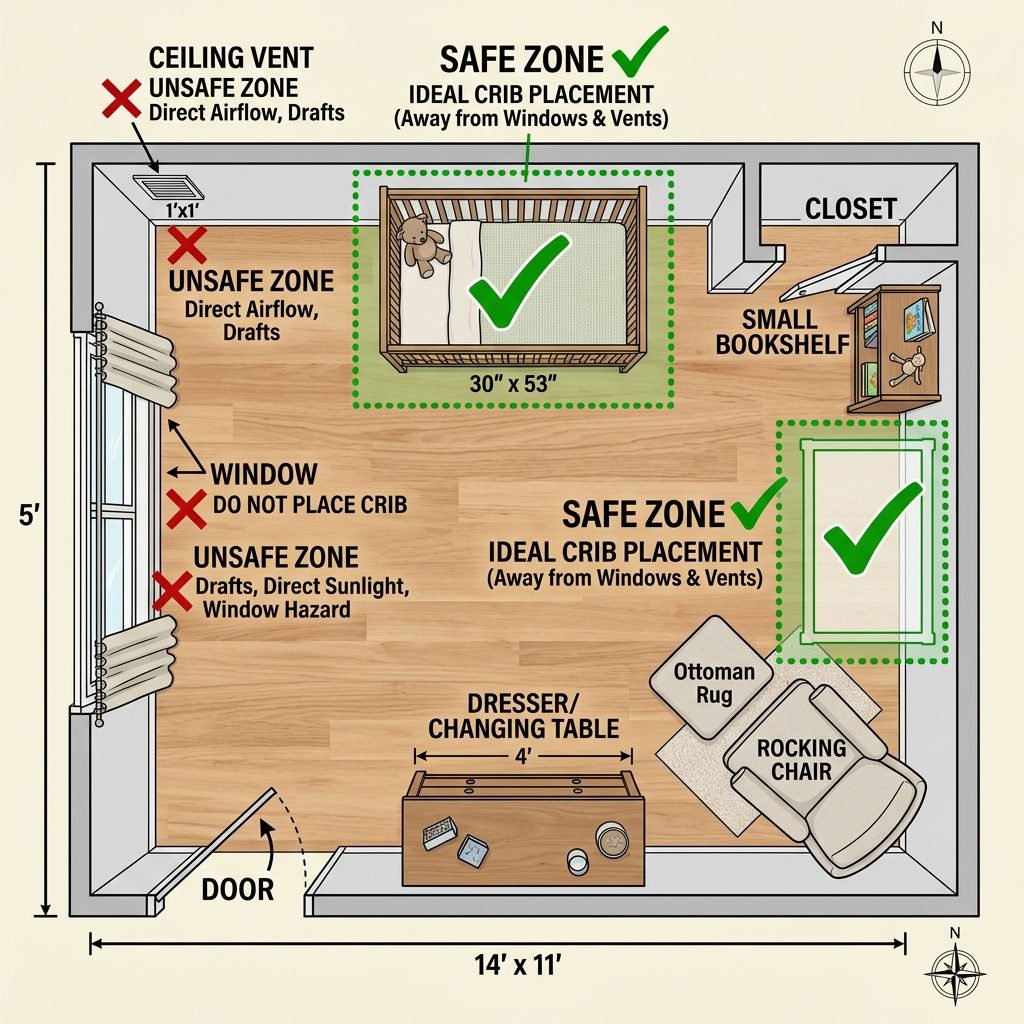
Where you place the crib in the room matters just as much as what the thermostat says. As an interior organizer and nurse, I look for ‘micro-drafts’ and ‘heat pockets’ that can disrupt sleep.
Crib Placement Dos and Don’ts
| Avoid These Spots | Why? |
|---|---|
| Directly under a window | Drafts in winter, direct sun/heat in summer. |
| Right next to a radiator | Risk of localized overheating and burns. |
| Directly under an AC vent | Blasts of cold air can cause baby to startle and wake. |
Tech Tools Every Nursery Needs
To take the guesswork out of the equation, consider these nursery essentials:
- Smart Baby Monitors: Many modern monitors (like the Nanit or Owlet Cam) have built-in temperature and humidity sensors that alert your phone if the room goes out of range.
- Remote Thermostats: If your home has central air, place a remote sensor in the nursery so the HVAC system responds to the baby’s room rather than the hallway.
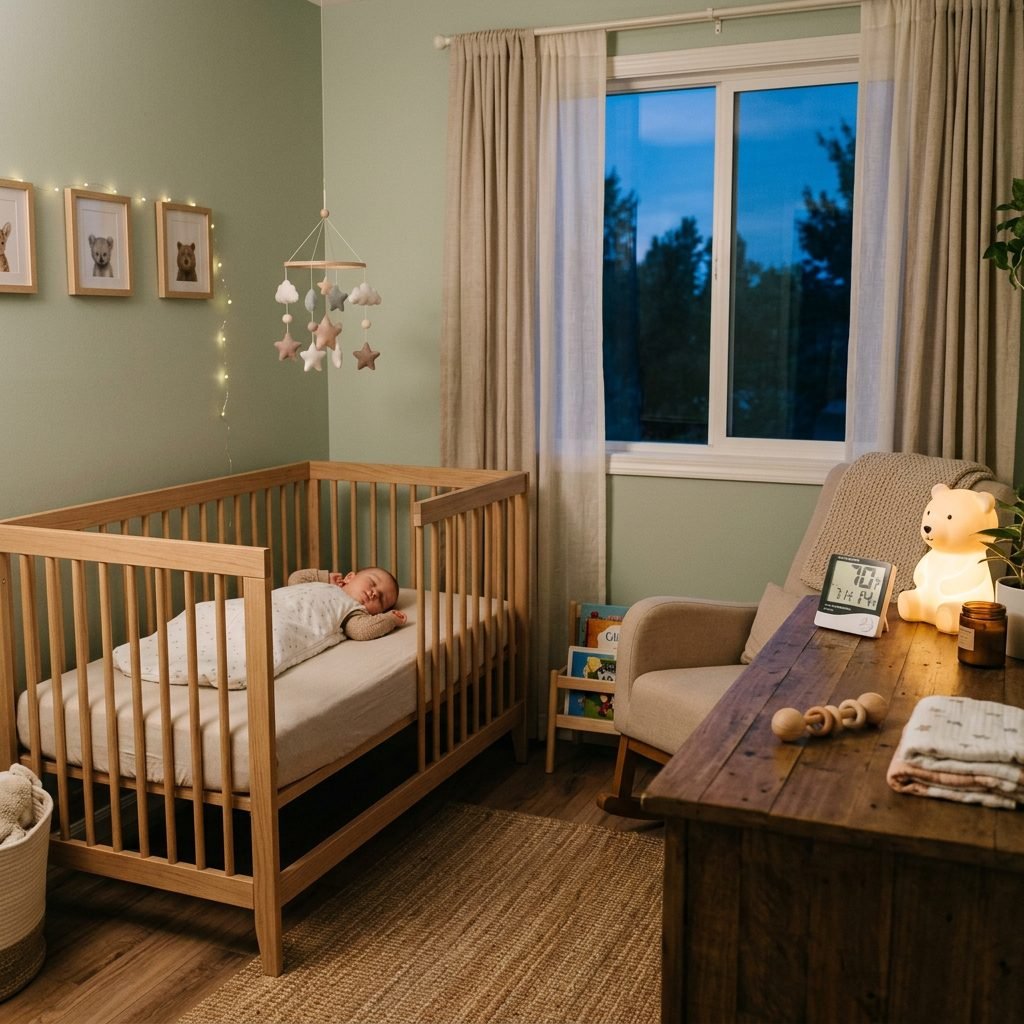
- Low-Tech Backup: A simple, $10 digital hygrometer/thermometer on the dresser is often the most reliable way to get an accurate reading at crib-level.
Conclusion
Sleep Soundly, Mama
Creating the perfect nursery temperature is a blend of science, safety, and a little bit of seasonal styling. By keeping the room between 68-72°F, utilizing the TOG rating system, and keeping a close eye on your baby’s physical cues, you are providing the safest possible environment for your little one to grow and thrive.
Don’t let the numbers stress you out too much. You are doing an incredible job, and your intuition is your greatest tool. If baby feels cozy to the touch and is sleeping peacefully, you’ve hit the jackpot. Here is to many nights of safe, sweet, and perfectly temperate dreams for your whole family. You’ve got this!