
Can You Whiten Teeth While Pregnant? The Truth and Safe Alternatives
Welcome to the Journey, Mama
Hello there, beautiful mama-to-be. If you are reading this, you are likely navigating the beautiful, exhausting, and sometimes downright confusing season of pregnancy. Between the endless lists of what you can and cannot eat, the changes happening to your body, and the anticipation of meeting your little one, you might have looked in the mirror recently and thought, ‘Wait, where is this magical pregnancy glow everyone talks about?’ It is incredibly common to want to indulge in a little self-care and pamper yourself during these nine months. For many of us, feeling confident starts with our smile. If you have noticed your teeth looking a little less vibrant lately, you are absolutely not alone. But before you reach for those familiar whitening strips or book a bleaching session at your dentist, a very important question arises: Can you whiten teeth while pregnant?
As a doula and maternal wellness expert, I hear this question all the time. We want to feel like ourselves, but we also want to fiercely protect the tiny life growing inside us. The world of pregnancy safety can feel like a minefield, especially when it comes to cosmetic treatments. Today, we are going to sit down together—virtually, with a warm cup of red raspberry leaf tea—and unpack the absolute truth about teeth whitening during pregnancy. We will explore exactly why your teeth might be changing color right now, the science behind traditional whitening ingredients, and, most importantly, provide you with a comprehensive, doula-approved guide to safe, natural alternatives that will help you reclaim your bright smile without compromising your peace of mind.
“Your body is currently performing the most miraculous task on earth. It is okay to want to feel beautiful, but remember that your safety and your baby’s development will always be the ultimate priority. Give yourself grace as your body shifts and changes.”
Let us dive deeply into your oral health during pregnancy, demystify the unglamorous realities of pregnancy hormones, and set you up with a routine that leaves you feeling confident, radiant, and deeply reassured.
The Science of Smiles: Why Your Teeth Might Look Different During Pregnancy

Before we talk about how to whiten your teeth, we need to understand exactly why they might be losing their luster in the first place. Pregnancy is a full-body experience, and your mouth is absolutely not exempt from the wild ride of hormonal shifts. Many first-time moms are shocked to discover that pregnancy directly impacts their dental health and the appearance of their smile.
1. The Morning Sickness Factor
If you have been battling the dreaded first-trimester nausea and vomiting, your teeth have been on the front lines. Stomach acid is incredibly harsh—it is designed to break down food, after all. When you experience morning sickness, this acidic environment washes over your teeth, temporarily softening the hard, protective outer layer known as enamel. When enamel is weakened and thinned, the yellowish layer underneath (called dentin) becomes more visible. Furthermore, softened enamel is highly porous, meaning it easily absorbs stains from your morning coffee, tea, or dark berries.
2. Hormonal Gingivitis and Increased Blood Flow
During pregnancy, your body ramps up the production of estrogen and progesterone. These hormones are essential for your baby’s development, but they also increase the blood flow to all of your body’s mucous membranes—including your gums. This surge can cause your gums to become swollen, tender, and prone to bleeding, a condition affectionately (or not so affectionately) known as pregnancy gingivitis. When your gums are inflamed and puffy, they can cast tiny shadows on your teeth, making your overall smile appear darker and less vibrant than usual. The inflammation also makes it harder to brush effectively, leading to faster plaque buildup.
3. Dietary Cravings and Aversions
Let us be honest: pregnancy cravings rarely involve celery sticks and water. You might find yourself reaching for highly pigmented comfort foods, acidic citrus fruits, or relying heavily on carbohydrates to keep the nausea at bay. An increase in carbohydrate and sugar intake feeds the bacteria in your mouth, which produce acids that lead to plaque and tartar buildup. Tartar has a naturally yellowish tint that cannot be brushed away at home, instantly dulling your smile.
Understanding these root causes is the first step in giving yourself a massive dose of self-compassion. Your teeth are not yellowing because you are doing something wrong; they are changing because your body is working overtime to build a human being.
The Big Question: Are Traditional Teeth Whitening Treatments Safe?

Now, let us tackle the elephant in the room: traditional teeth whitening treatments. Whether it is a professional laser treatment at the dentist’s office, over-the-counter whitening strips, or custom bleach trays, the active ingredients in these products are almost always hydrogen peroxide or carbamide peroxide. These chemicals work by penetrating the porous enamel of your teeth and breaking down the complex molecules that cause deep stains through an oxidation process.
The Stance of Medical Professionals
So, are these peroxide-based treatments safe for your growing baby? The short, honest answer from both the American Dental Association (ADA) and the American College of Obstetricians and Gynecologists (ACOG) is: We do not know for sure, so it is best to avoid them.
Because it is highly unethical to test non-essential cosmetic chemicals on pregnant women, there are no definitive clinical studies proving that high-concentration peroxide is 100% safe during pregnancy. While the amount of peroxide you might accidentally swallow during a whitening treatment is relatively small, the chemicals can enter your bloodstream through the soft, highly vascular tissues of your mouth—especially if you are already dealing with bleeding gums from pregnancy gingivitis.
Potential Risks and Discomforts
- Tissue Irritation: Pregnancy hormones make your gums incredibly sensitive. Applying harsh bleaching agents can cause severe burning, blistering, and extreme discomfort in an already tender area.
- Enamel Sensitivity: Whitening treatments notoriously cause tooth sensitivity. With your enamel potentially already weakened by morning sickness, introducing a chemical bleach can result in sharp, shooting pains when you consume hot or cold foods.
- The Unknown Factor: The golden rule of pregnancy is that if a cosmetic procedure is not medically necessary and lacks safety data, it is always best to postpone it until after your baby is born and you have finished breastfeeding.
“As a doula, my advice is always to lean into caution. Your peace of mind is worth far more than a temporarily brighter smile. Save the professional whitening sessions as a special ‘push present’ to treat yourself during your postpartum recovery!”
What’s Safe vs. What to Avoid: Your Pregnancy Dental Cheat Sheet
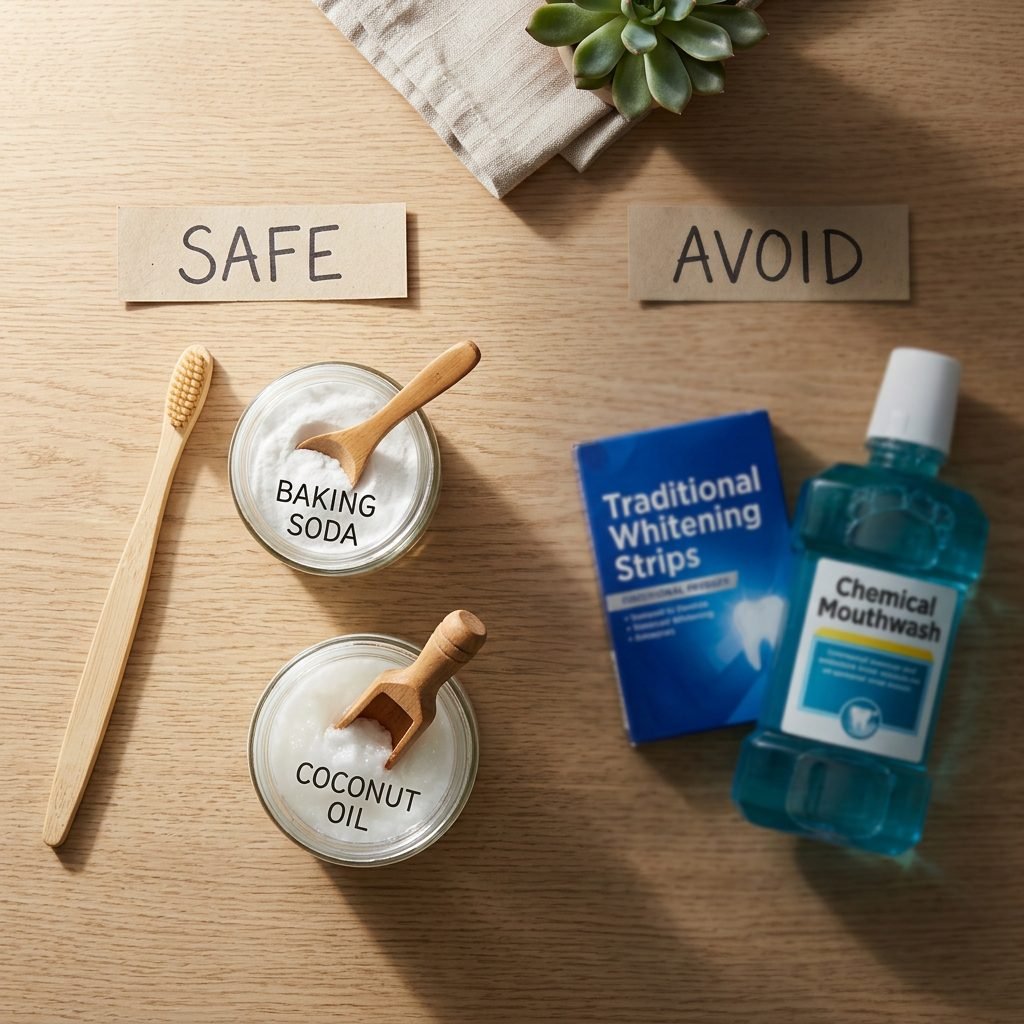
Navigating the aisles of the pharmacy can be overwhelming when you are scrutinizing every single label for pregnancy safety. To make your life infinitely easier, I have compiled a clear, no-nonsense comparison of what dental care practices you should embrace and which ones you need to leave on the shelf until next year.
| Treatment / Product | Safety Status During Pregnancy | The Doula’s Reasoning |
|---|---|---|
| Routine Dental Cleanings | Highly Recommended | Professional cleanings remove tartar (which causes yellowing) and prevent pregnancy gingivitis. Safe in all trimesters! |
| Over-The-Counter Whitening Strips | Avoid | Contains high levels of hydrogen peroxide. Risk of swallowing chemicals and severe gum irritation. |
| Professional Laser Whitening | Avoid | Uses potent bleaching agents and UV lights. Lacks safety data for fetal development. |
| Baking Soda Toothpaste | Safe (in moderation) | A gentle, natural abrasive that removes surface stains without harsh chemical penetration. |
| Charcoal Toothpaste | Use with Caution | While chemical-free, it can be too abrasive for enamel softened by morning sickness. Ask your dentist first. |
| Coconut Oil Pulling | Safe | An excellent, natural way to reduce plaque-causing bacteria and promote a healthier, brighter oral environment. |
| Whitening Mouthwashes | Avoid | Often contain alcohol and peroxide. Stick to alcohol-free, fluoride mouthwashes instead. |
Keep this chart handy or take a screenshot on your phone for your next trip to the store. Remember, maintaining your baseline oral hygiene is the most powerful tool you have right now.
Pregnancy-Safe Alternatives for a Brighter, Healthier Smile
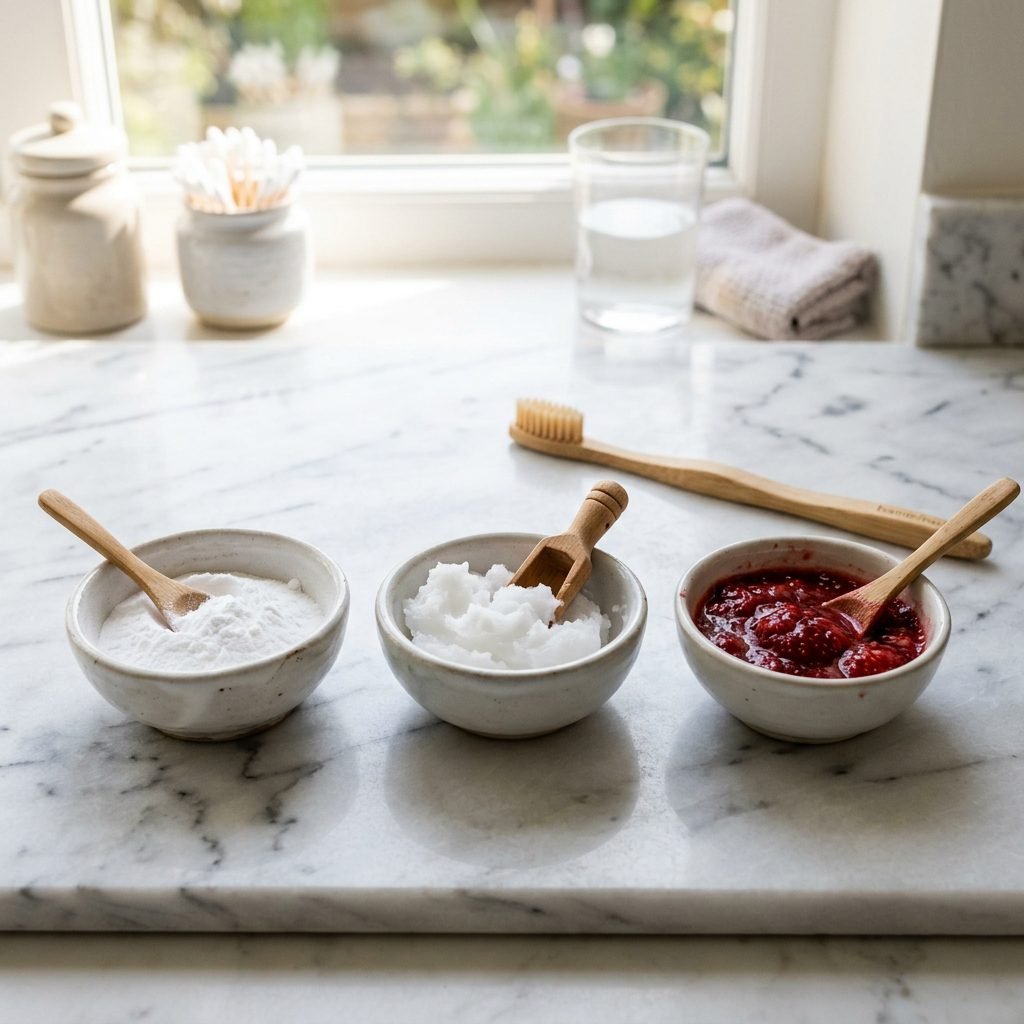
Just because you are pausing the chemical bleach does not mean you have to resign yourself to a dull smile for the next nine months. There are several highly effective, gentle, and completely pregnancy-safe methods to naturally brighten your teeth and maintain that beautiful glow. Here are my favorite doula-approved, holistic hacks for a radiant smile.
1. The Magic of Baking Soda (Sodium Bicarbonate)
Baking soda is a miracle worker in the home, and it is just as effective for your teeth. It acts as a very mild abrasive, gently scrubbing away surface stains caused by tea, coffee, and food. Furthermore, baking soda creates an alkaline environment in your mouth, which helps neutralize the harmful acids from morning sickness and prevents bacteria from thriving. How to use it: Wet your toothbrush, dip it into a small amount of plain baking soda, and brush gently for two minutes. Do this only 1 to 2 times a week to ensure you are not over-exfoliating your enamel.
2. Ayurvedic Coconut Oil Pulling
Oil pulling is an ancient practice that involves swishing oil in your mouth to remove bacteria and promote oral hygiene. While it does not ‘bleach’ your teeth, it aggressively reduces plaque buildup. Because plaque has a yellowish tint, removing it naturally makes your teeth look whiter and brighter. How to use it: Take 1 tablespoon of organic, cold-pressed coconut oil and swish it around your mouth for 10 to 15 minutes (perfect to do while in the shower!). Spit the oil into the trash can (not the sink, as it can clog pipes), and rinse thoroughly with warm water before brushing normally.
3. The Strawberry and Enzyme Trick
Strawberries contain malic acid, a natural enzyme that can help break down surface stains on your teeth. It is a sweet, completely safe, and natural way to brighten your smile. How to use it: Mash up one ripe strawberry and mix it with a tiny pinch of baking soda to create a paste. Apply the mixture to your teeth using a soft toothbrush and let it sit for exactly 5 minutes. Rinse thoroughly and follow up with regular toothpaste to ensure no natural fruit sugars are left behind.
4. Upgrade Your Mechanical Cleaning
Sometimes, the best way to whiten teeth is simply to clean them more effectively. If you are still using a manual toothbrush, pregnancy is the perfect time to upgrade to a high-quality electric toothbrush (like a Sonicare or Oral-B). Electric toothbrushes provide thousands of brush strokes per minute, effectively vibrating surface stains away far better than manual brushing. Pair this with a water flosser to blast away plaque between your teeth, and you will notice a visibly brighter smile in just a few weeks.
The “Morning Sickness” Protocol: Protecting Your Enamel
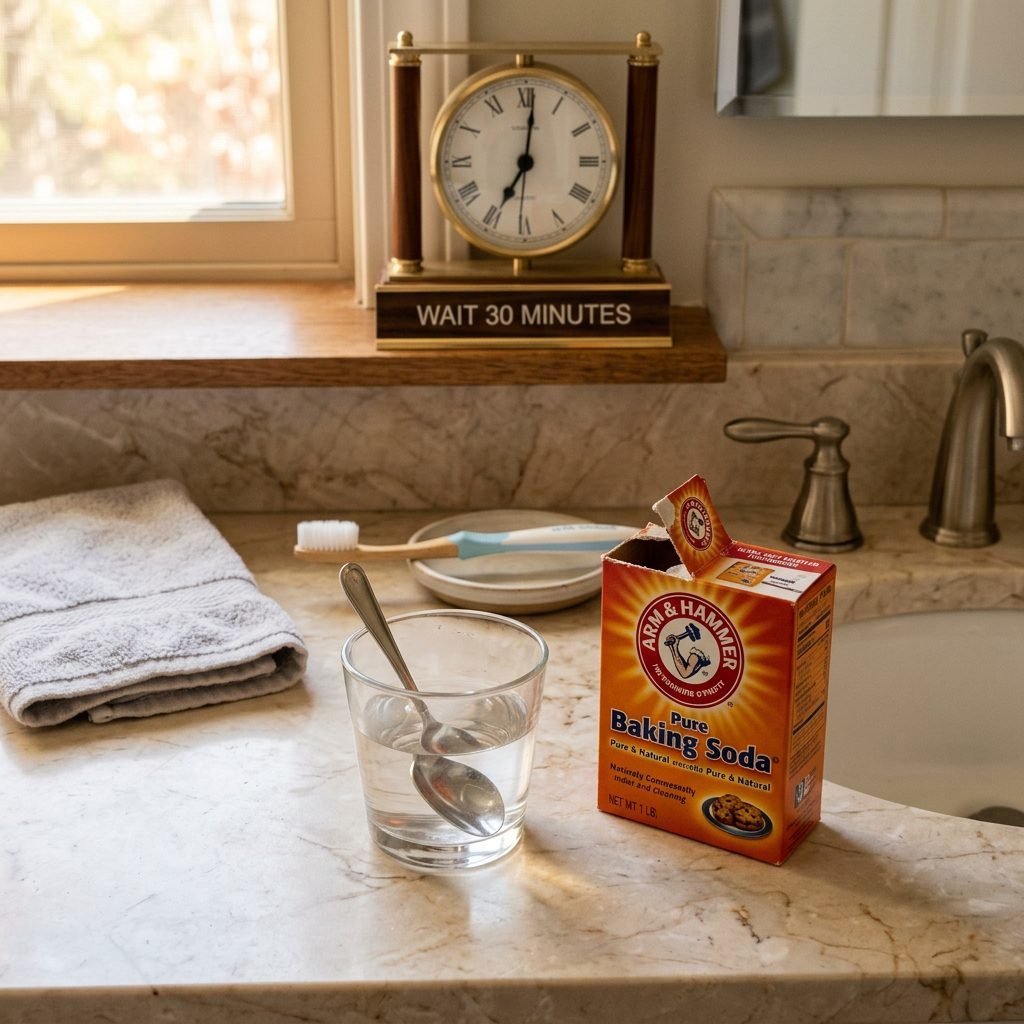
We cannot talk about oral care during pregnancy without addressing the reality of morning sickness. How you handle your mouth immediately after vomiting plays a massive role in the color and health of your teeth. Your instinct might be to immediately grab your toothbrush and aggressively scrub away the taste and smell. Please do not do this!
When you vomit, your mouth is flooded with severe stomach acid. This acid temporarily softens your tooth enamel. If you brush immediately with a stiff bristled brush and abrasive toothpaste, you are literally scrubbing away your weakened enamel. Once enamel is gone, it does not grow back, and the yellow dentin underneath becomes permanently exposed.
Your Post-Vomiting Oral Care Script:
- Rinse Immediately: As soon as you are finished getting sick, vigorously swish your mouth with plain water to flush out the bulk of the acid.
- Neutralize the Acid: Mix 1 teaspoon of baking soda into a glass of warm water. Swish this mixture in your mouth and spit it out. The alkalinity of the baking soda immediately neutralizes the stomach acid and stops the enamel erosion in its tracks.
- Wait it Out: Wait a minimum of 30 to 60 minutes before you actually brush your teeth. This gives your saliva enough time to naturally remineralize and re-harden your enamel.
- Use a Soft Touch: When it is time to brush, use an ultra-soft bristled toothbrush and a gentle, fluoride-based toothpaste to protect your teeth.
Implementing this simple protocol will save your teeth from irreversible damage and keep your smile looking bright and healthy long after your baby arrives.
The Vital Connection Between Oral Health and Your Baby
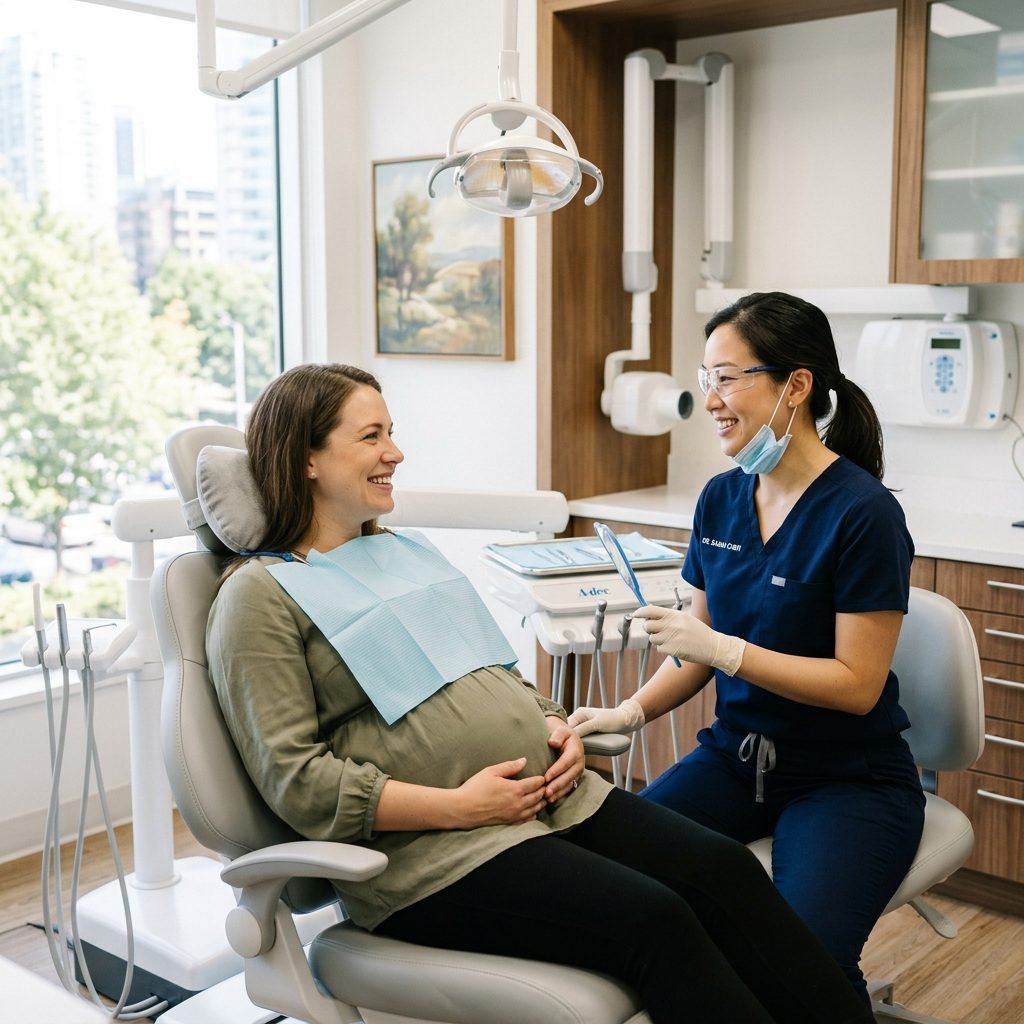
As we wrap up our discussion on whitening, I want to put on my doula and maternal health educator hat for a moment to talk about the deeper importance of your oral health right now. Caring for your teeth during pregnancy is not just about aesthetics and getting a white smile for your maternity photoshoot; it is a critical component of your overall prenatal care.
Did you know that there is a scientifically proven link between severe gum disease (periodontitis) and pregnancy complications? Bacteria from chronic gum inflammation can enter the bloodstream and travel to the uterus, triggering the production of prostaglandins—chemicals that can induce premature labor. Poor oral health has been linked to an increased risk of preterm birth and low birth weight in infants.
Do Not Skip the Dentist!
Many expectant mothers mistakenly believe they need to avoid the dentist during pregnancy. This is a dangerous myth! The second trimester is the absolute perfect time to schedule a routine dental cleaning. Your dentist can safely remove hardened tartar, check for cavities, and monitor your gums for pregnancy tumors (pyogenic granulomas—which sound scary but are simply benign, hormone-induced swellings on the gums that usually disappear after birth).
Be sure to inform your dentist that you are pregnant and how far along you are. They will adjust their care, perhaps keep you slightly elevated in the chair to prevent pressure on your vena cava, and skip routine X-rays unless absolutely necessary for an emergency.
Embracing Your Changing Body with Grace

Mama, as you navigate the physical changes of pregnancy, please remember to give yourself an abundance of grace. Your body is reallocating its resources to build a heart, lungs, and tiny little fingers and toes. If your teeth are a little less white, or your hair is acting differently, or you are carrying extra weight, it is all part of the profound, messy, beautiful sacrifice of motherhood.
Focus on the safe, holistic alternatives we discussed today. Hydrate constantly, keep up with your gentle brushing and flossing routine, and try the strawberry or baking soda tricks when you need a little confidence boost. Save the professional whitening treatments for a well-deserved postpartum pampering session when your baby is safely in your arms.
You are doing an incredible job. Your smile, no matter the shade, is the very first thing your baby is going to look up and fall in love with. And that, truly, is the most beautiful glow of all.
Conclusion
Thank you for letting me walk alongside you in this small part of your pregnancy journey. By choosing safe, natural alternatives to teeth whitening, you are already making powerful, protective choices for your little one. Keep up your routine dental visits, be mindful of how you handle morning sickness, and remember that this season of physical changes is temporary, but the beautiful baby you are growing is forever. Stay hydrated, keep smiling, and trust that you are exactly the mother your baby needs.