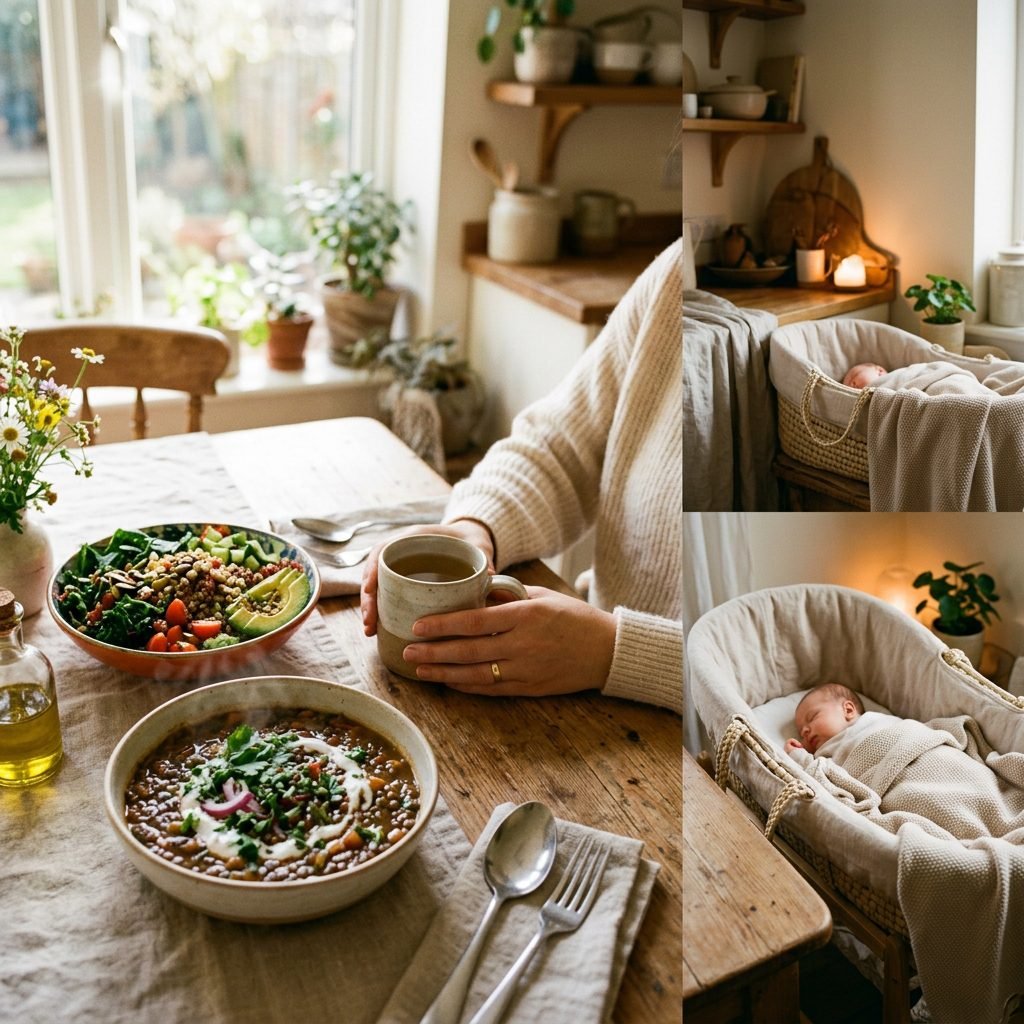
The Ultimate Vegan Postpartum Recovery Menu: High Iron Meals for Healing
Welcome to Your Fourth Trimester, Mama
Take a deep, slow breath. You did it. Whether your birth was a whirlwind, a planned cesarean, or a marathon of labor, you have crossed the threshold into motherhood. As a doula and postpartum recovery specialist, I want to wrap you in a warm, virtual hug and tell you something crucial: right now, your only jobs are to heal, to bond with your beautiful baby, and to let yourself be deeply nourished.
In the weeks following birth, your body is doing monumental work. You are recovering from the physical exertion of labor, your uterus is shrinking back to its pre-pregnancy size, you are establishing a milk supply (if you are choosing to body-feed), and you are navigating the beautiful, chaotic hormonal shifts of the fourth trimester. One of the most vital components of this healing journey is replenishing your iron stores.
Many mothers wonder if it is truly possible to heal effectively and rebuild iron levels on a fully plant-based diet. Let me reassure you: Yes, it is absolutely possible, and it can be incredibly delicious. Plant-based foods are abundant in healing macro and micronutrients, fiber for that daunting first postpartum bathroom trip, and the complex carbohydrates you need for sustained energy.
This guide is your sisterly, doula-approved roadmap to vegan postpartum nutrition. We are going to dive into the science of plant-based iron absorption, explore a mouth-watering, high-iron vegan postpartum menu, and give you the tools you need to thrive. Let’s nourish that beautiful body of yours, mama.
Honoring Your Healing Body: Why Iron is Your Best Friend

The Reality of Postpartum Blood Loss
Let’s have a gentle, honest conversation about what is happening in your body right now. When the placenta detaches from the uterine wall, it leaves behind a wound the size of a dinner plate. Healing this internal space requires time, rest, and incredible nutritional support. Furthermore, postpartum bleeding (called lochia) can last anywhere from 4 to 6 weeks. This continuous loss of blood means a continuous loss of iron.
Sisterly Reminder: You are not alone, and the sheer, bone-deep exhaustion you might be feeling right now is completely normal. Your body is doing the equivalent of running a marathon while simultaneously building a new hormonal landscape. Give yourself grace. The laundry can wait. The dishes can wait. Your healing cannot.
The Symptoms of Postpartum Iron Depletion
Iron is responsible for creating hemoglobin, the protein in red blood cells that carries oxygen throughout your body. When your iron is low, your cells literally aren’t getting enough oxygen. This can manifest in ways that are often mistakenly brushed off as ‘just normal new-mom tired’. Look out for these signs:
- Extreme, unshakeable fatigue that doesn’t improve even after a stretch of sleep.
- Dizziness or lightheadedness when standing up from nursing or rocking the baby.
- Shortness of breath after minor exertion, like walking up the stairs.
- Pale skin, lips, or inner eyelids.
- Postpartum anxiety or low mood, which studies show can be exacerbated by low ferritin (stored iron) levels.
If you are experiencing these, please reach out to your midwife or OBGYN for a simple blood panel. But in the meantime, we can focus on aggressively replenishing your iron stores through your daily vegan meals.
The Secret to Plant-Based Iron: Absorption is Everything
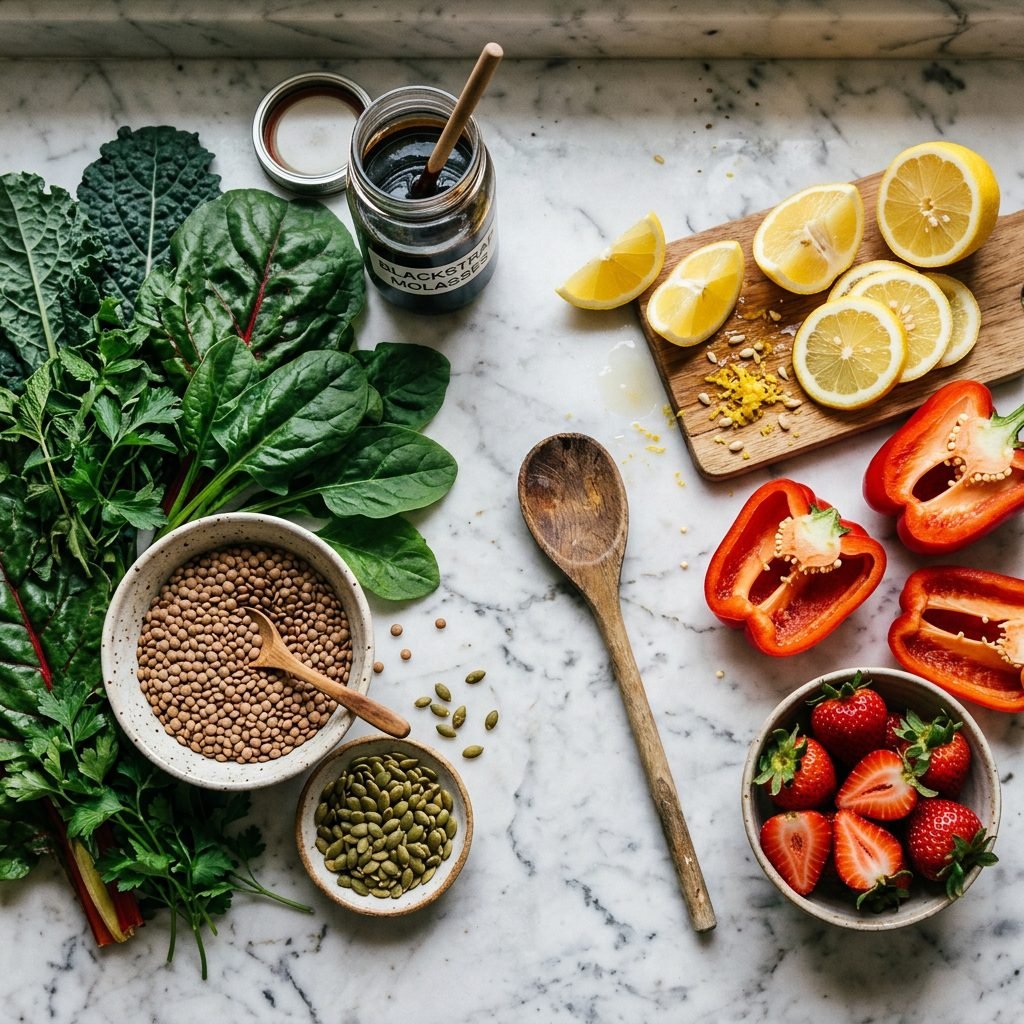
Heme vs. Non-Heme Iron
As a vegan mama, you are consuming non-heme iron. While animal products contain heme iron (which the body absorbs easily), plant-based non-heme iron is slightly more sensitive. It needs a little ‘helper’ to unlock its full potential and cross the intestinal barrier into your bloodstream. That helper is Vitamin C.
The Golden Rule: Always Pair Iron with Vitamin C
By simply adding a source of Vitamin C to your high-iron vegan meals, you can increase your iron absorption by up to 300% to 400%! This is a non-negotiable doula tip for postpartum healing.
What to Avoid: The Iron Blockers
Just as Vitamin C helps iron, certain compounds block it. Tannins (found in coffee and black tea) and Calcium (found in fortified plant milks or tofu) can inhibit iron absorption. Try to consume your coffee, tea, and heavy calcium meals at least 1 to 2 hours apart from your iron-rich meals.
| High-Iron Vegan Foods | Vitamin C Enhancers (Pair With These!) | Iron Blockers (Avoid During Meals) |
|---|---|---|
| Lentils, Chickpeas, Black Beans | Squeeze of fresh lemon or lime juice | Coffee (even decaf) |
| Spinach, Kale, Swiss Chard | Red bell peppers, tomatoes | Black tea, green tea |
| Pumpkin seeds, Hemp hearts | Strawberries, citrus fruits | Calcium-fortified plant milks |
| Quinoa, Amaranth, Oats | Broccoli, Brussels sprouts | High-dose calcium supplements |
| Blackstrap Molasses | Kiwi, Mango, Pineapple | Red wine (not recommended anyway!) |
Your Ultimate 7-Day Vegan Postpartum Menu
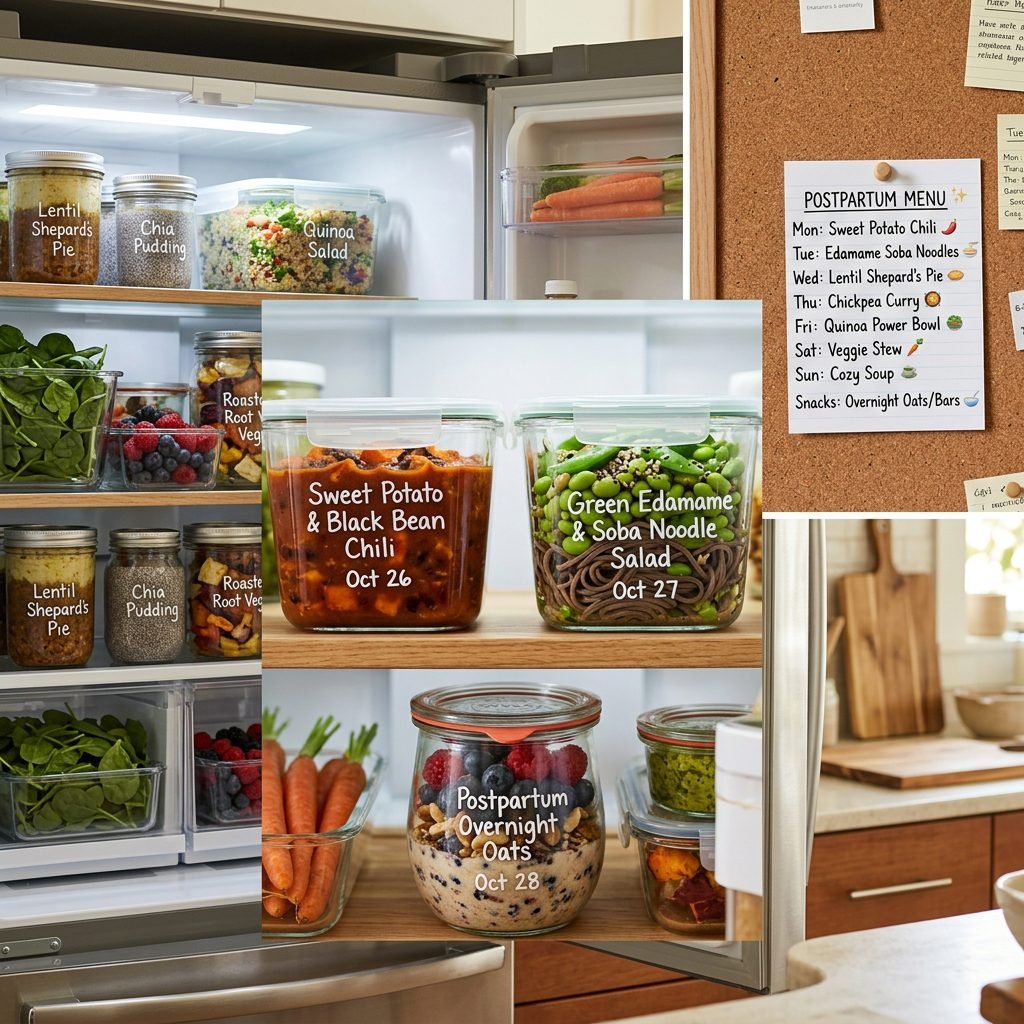
Nourishing the Fourth Trimester
When designing a postpartum menu, I focus on warm, easily digestible, and deeply hydrating foods. According to traditional postpartum care practices (like Ayurveda and Traditional Chinese Medicine), the postpartum body is ‘cold’ and needs to be warmed up. Think soups, stews, warm porridges, and cooked vegetables rather than raw salads and ice-cold smoothies.
Here is a comprehensive, doula-designed 7-day meal plan that maximizes iron, incorporates lactation-supporting ingredients (galactagogues like oats and flax), and provides the comfort you crave.
| Day | Breakfast (Warm & Grounding) | Lunch (Sustaining & Iron-Rich) | Dinner (Deeply Healing) | Snacks & Hydration |
|---|---|---|---|---|
| Day 1 | Warm oatmeal with blackstrap molasses, hemp seeds, and a side of fresh strawberries. | Creamy tomato soup with a hearty lentil and spinach wrap. | Sweet potato, black bean, and quinoa chili topped with avocado and lime juice. | Pumpkin seed butter on apple slices; Red Raspberry Leaf Tea. |
| Day 2 | Tofu scramble (iron) cooked with red bell peppers (Vit C) and nutritional yeast. | Leftover sweet potato and black bean chili. | Coconut curry with chickpeas, kale, and broccoli served over brown rice. | Lactation energy bites (oats, flax, chia, dates); Coconut water. |
| Day 3 | Quinoa porridge cooked in coconut milk, topped with stewed berries and chia seeds. | Mashed chickpea salad sandwich on sourdough with a side of sliced kiwi. | Lentil shepherd’s pie with a root vegetable mash (carrots, potatoes). | Handful of walnuts and dried apricots; Nettle leaf tea (high iron). |
| Day 4 | Buckwheat pancakes topped with warm apple compote and pumpkin seeds. | Leftover lentil shepherd’s pie. | Soba noodle bowl with edamame, steamed bok choy, and a sesame-ginger-lime dressing. | Hummus with sliced red bell peppers; Warm oat milk. |
| Day 5 | Smoothie bowl (room temp): Spinach, mango, hemp hearts, and pea protein. | Hearty minestrone soup with kidney beans, tomatoes, and dark leafy greens. | Stuffed bell peppers (Vit C) filled with black beans, corn, and quinoa (Iron). | Roasted roasted edamame; Oat straw infusion. |
| Day 6 | Savory oatmeal with sautéed mushrooms, spinach, and a sprinkle of dulse flakes. | Leftover stuffed bell peppers. | Creamy white bean and kale soup with a slice of toasted sourdough bread. | Dates stuffed with almond butter; Red Raspberry Leaf Tea. |
| Day 7 | Chia seed pudding made with soy milk, topped with fresh oranges and walnuts. | Leftover white bean and kale soup. | Mushroom and lentil stroganoff over whole wheat pasta with a side of steamed broccoli. | Dark chocolate (70%+ cacao) and a handful of almonds; Water with lemon. |
Doula Tip for the Menu
Print this table out and stick it on your fridge! When friends or family ask, ‘How can I help?’, point them to this menu. Ask them to pick a dinner, buy the ingredients, and cook it for you. You are the queen of your postpartum nest; let your village serve you.
Doula-Approved Freezer Stash: Prepping Before Baby Arrives
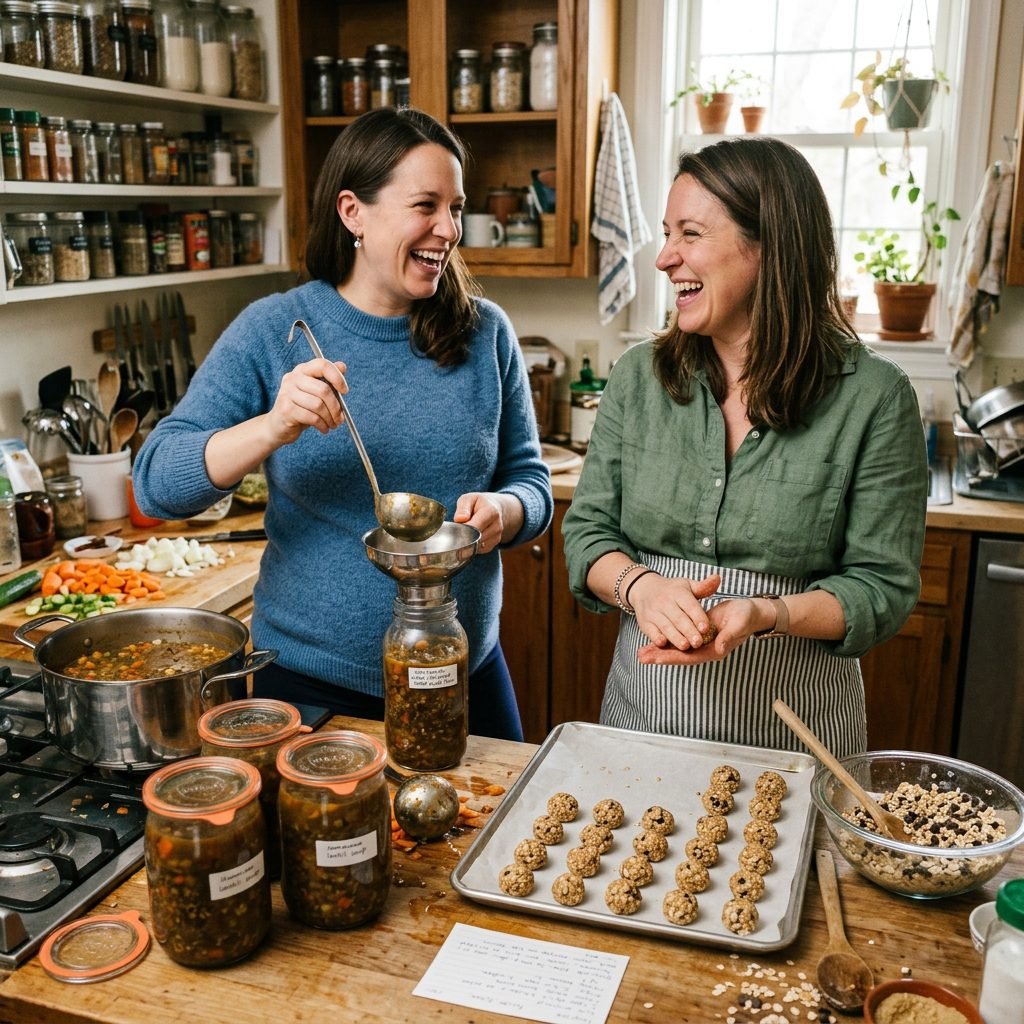
The Magic of the Third Trimester Prep
If you are reading this while still pregnant, congratulations! You have the perfect opportunity to gift your future self the greatest present of all: a fully stocked freezer. Once baby arrives, your hands will be full, and your energy will be focused on healing and soothing. Cooking from scratch will be the last thing on your mind.
What Freezes Beautifully for a Vegan Postpartum?
- Soups and Stews: Lentil soups, black bean chilis, and pureed butternut squash soups freeze perfectly in silicone cubes or glass jars (leave an inch of space at the top so the glass doesn’t break!).
- Lactation Bites: Mix rolled oats, ground flaxseed, peanut butter, maple syrup, and dark chocolate chips. Roll into balls and freeze on a baking sheet before transferring to a freezer bag. These are perfect for 3 AM nursing sessions.
- Pre-Chopped Smoothie Packs: In reusable freezer bags, combine spinach, frozen mango, hemp seeds, and a date. Postpartum, just dump the bag into a blender, add soy milk, and press blend.
- Breakfast Burritos: Tofu scramble, black beans, and roasted potatoes wrapped in a tortilla. Wrap individually in parchment paper and foil.
Script to send to your friends for a ‘Meal Prep Baby Shower’:
“Hi ladies! Instead of traditional baby shower games, I would love to host a ‘Nest & Prep’ party. I’ll provide the snacks and drinks, and I’d love for us to spend an hour assembling vegan freezer meals for my postpartum recovery. Your hands and help are the best gifts I could ask for!”
Beyond the Plate: Essential Supplements and Recognizing Red Flags
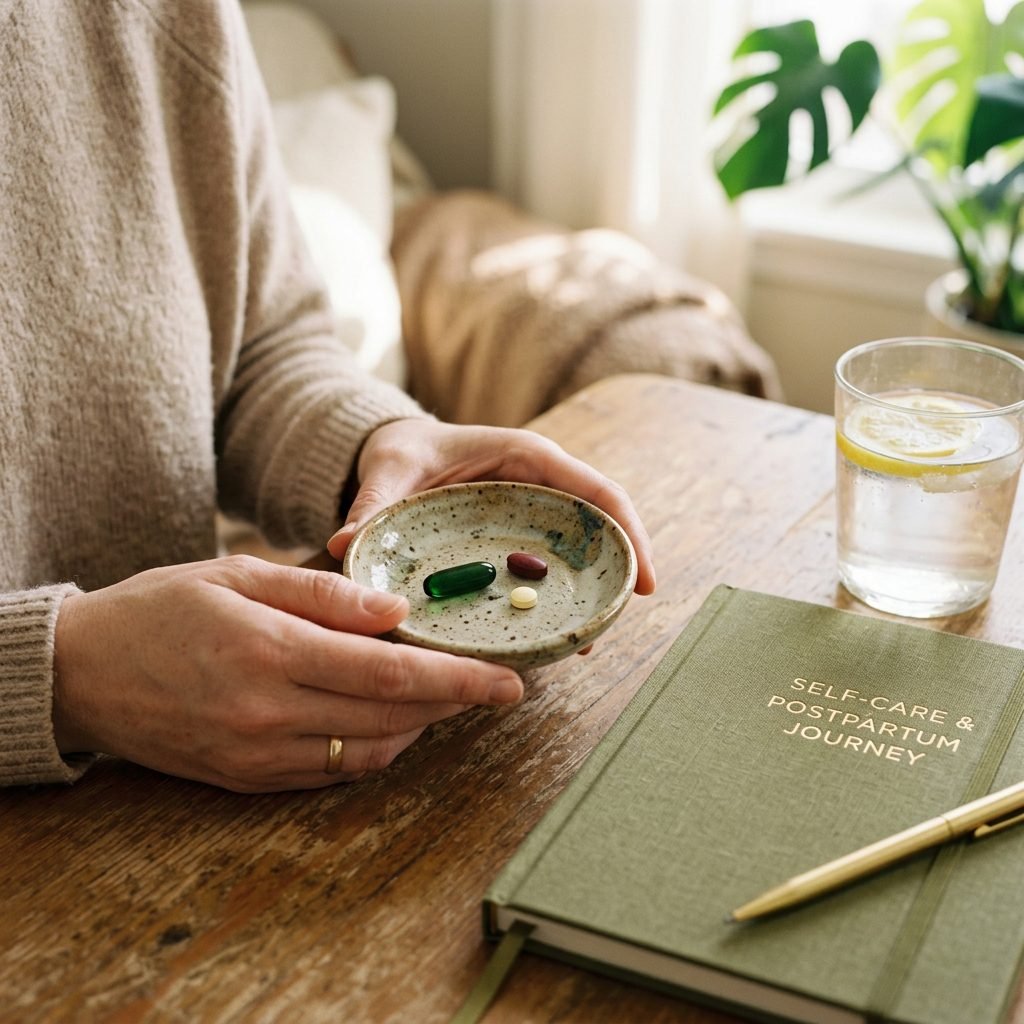
Supplementing Your Plant-Based Diet
Even with the most meticulously planned vegan postpartum menu, your body has just been through a massive physiological event. Supplements are not a sign of a failing diet; they are a bridge to ensure you and your baby (if nursing) are getting optimal nutrition.
| Nutrient | Why You Need It Postpartum | Vegan Supplement Source |
|---|---|---|
| Vitamin B12 | Crucial for nerve function and preventing anemia. If nursing, baby relies entirely on your supply. | Sublingual cyanocobalamin or methylcobalamin spray. |
| Iron | To rebuild hemoglobin after blood loss. | Liquid iron (like Floradix) or gentle iron bisglycinate (less constipating). |
| Omega-3 DHA/EPA | Supports postpartum mood stabilization and baby’s brain development. | Algae oil capsules (the vegan source of DHA). |
| Vitamin D3 | Bone health, immune function, and mood regulation. | Vegan D3 derived from lichen (often paired with K2). |
When to Ask for Help: Red Flags
As your virtual doula, I need you to promise me you will listen to your body. While fatigue is normal, certain symptoms indicate that diet and supplements are not enough, and medical intervention is required. Please call your healthcare provider immediately if you experience:
- Bleeding that suddenly becomes much heavier (soaking a maxi pad in less than an hour) or passing clots larger than a golf ball.
- A sudden, severe headache that does not go away with water and rest, accompanied by visual changes (spots or blurriness).
- Foul-smelling lochia (vaginal discharge), which can indicate an infection.
- Feelings of utter hopelessness, rage, or thoughts of harming yourself or your baby. Postpartum Mood and Anxiety Disorders (PMADs) are common, treatable, and nothing to be ashamed of.
Conclusion
Embracing Your Plant-Based Postpartum Journey
Mama, as you navigate these beautiful, messy, exhausting, and extraordinary first forty days, remember that healing is not a race. Your body grew a human being from scratch—a miracle fueled entirely by the plants you consumed and the strength of your spirit. Now, it is time to turn that nurturing energy inward.
By focusing on high-iron vegan meals, pairing them smartly with Vitamin C, and allowing your village to support you, you are setting the foundation for a vibrant, energized motherhood. Eat the warm stews, drink the soothing teas, take your supplements, and most importantly, rest. You are doing a magnificent job.
Medical Disclaimer: The content provided in this article is for informational and educational purposes only and is not intended as medical advice. I am a doula and maternal wellness advocate, but I am not your personal doctor. Always consult with your OBGYN, midwife, or a registered dietitian before making significant changes to your diet or starting new supplements, especially during pregnancy and the postpartum period. If you are experiencing severe symptoms, please seek emergency medical care immediately.