Timeless & Calm: How to Design a Modern Classic Neutral Nursery
Welcome home, mama. There is something truly magical about the nesting phase, isn’t there? That deep-seated, biological urge to prepare a safe, soft, and beautiful landing pad for your little one is one of the most powerful parts of the pregnancy journey. As a doula, I have walked into hundreds of nurseries, and I can tell you that the most successful spaces aren’t necessarily the most expensive—they are the ones that feel like a deep exhale. In a world that can often feel chaotic and overstimulating, choosing a Modern Classic Neutral aesthetic for your nursery isn’t just a design choice; it is a gift of calm for both you and your baby.
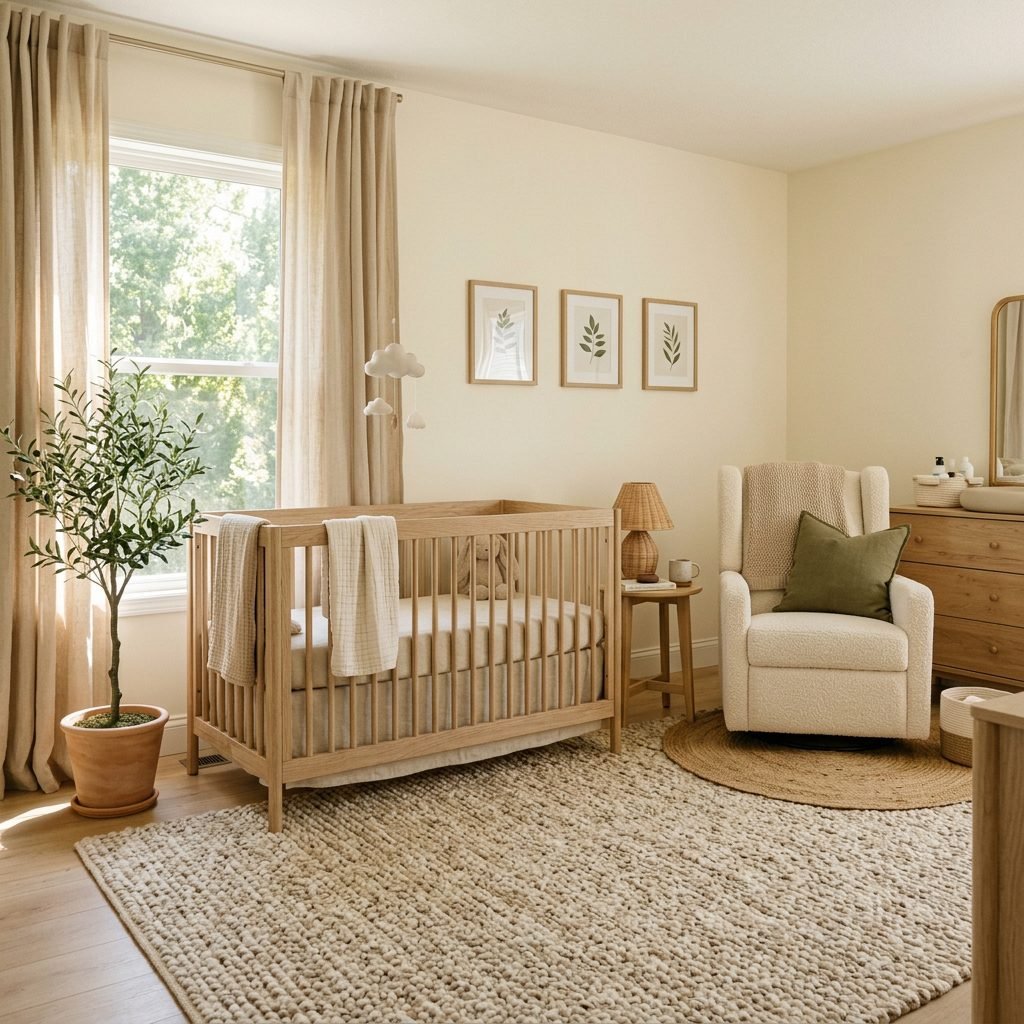
A neutral nursery provides a ‘blank slate’ for your baby’s developing senses, preventing the overstimulation that can come with bright, neon colors or busy patterns. It creates a ‘sensory-neutral’ environment that supports better sleep hygiene and a more peaceful feeding experience. But let’s be clear: neutral doesn’t mean boring. By layering textures, mixing wood tones, and choosing ‘living’ finishes, we can create a space that feels sophisticated, timeless, and incredibly cozy. Whether you are working with a sprawling master suite or a tiny closet-turned-nursery, this guide will walk you through every step of the process with the warmth of a sister and the expertise of a professional organizer.
“Your nursery is the first sanctuary your baby will know. Let it be a place where the air feels lighter and the heart feels fuller.”
The Foundation of Serenity: Selecting Your Perfect Neutral Palette
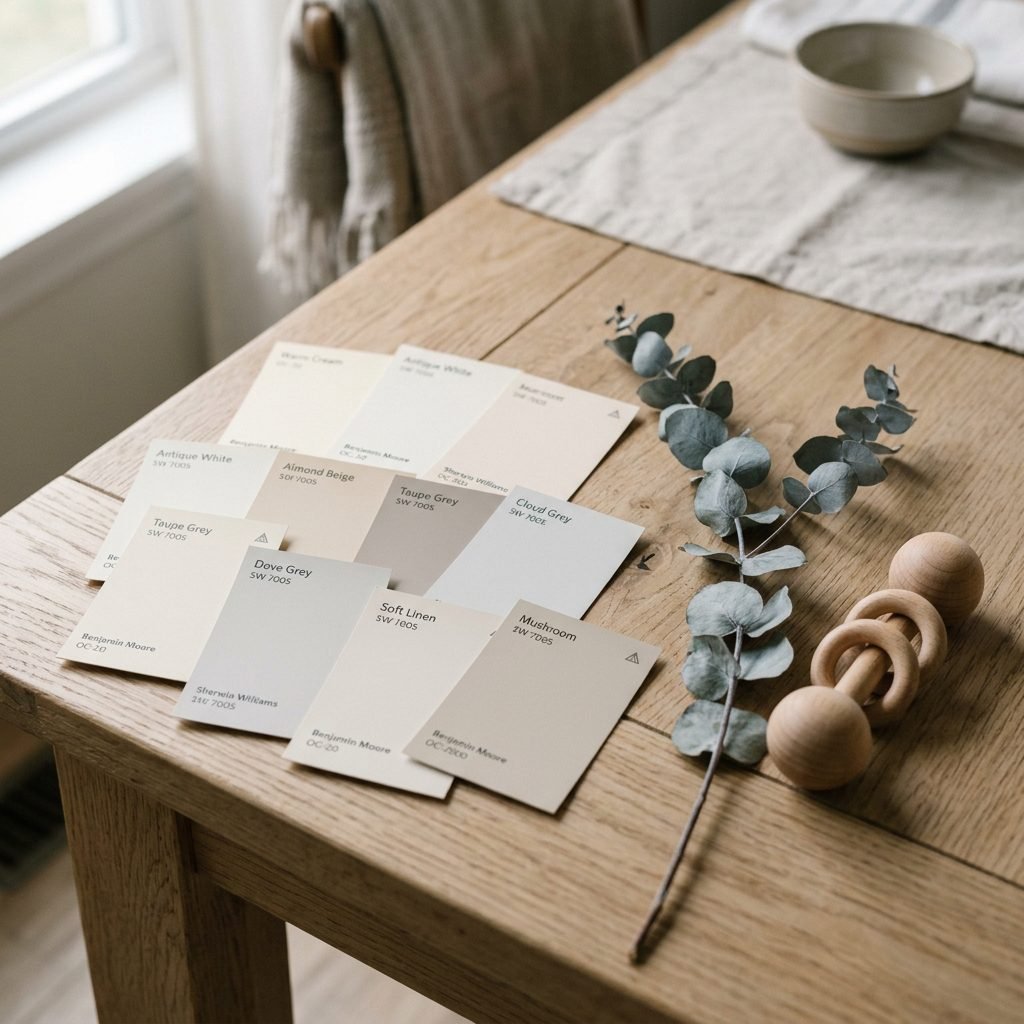
When we talk about a ‘neutral’ nursery, we aren’t just talking about white walls. We are talking about a sophisticated spectrum of tones including cream, oatmeal, greige, sand, and soft mushroom. The key to a modern classic look is understanding undertones. If your room faces north, it will receive cooler, bluer light, meaning you’ll want a warmer paint to prevent the room from feeling clinical. If it faces south, you have that golden, warm glow, and can pull off cooler greiges beautifully.
Top Doula-Approved Paint Picks
- Benjamin Moore Swiss Coffee: The ultimate warm white. It’s creamy without being yellow.
- Sherwin Williams Revere Pewter: A classic greige that changes beautifully with the light of the day.
- Farrow & Ball Skimming Stone: A sophisticated, stony neutral that feels incredibly high-end.
Remember to always use Zero-VOC or Low-VOC paint. Your baby’s lungs are delicate, and ‘off-gassing’ is something we want to avoid entirely during the nesting process. I recommend painting the room at least 4 to 6 weeks before the baby arrives to ensure the space is fully aired out. Don’t forget the ceiling! Painting the ceiling a shade lighter than the walls can make a small nursery feel much loftier and more open.
The Doula’s Guide to Nursery Flow: Organizing for Real Life
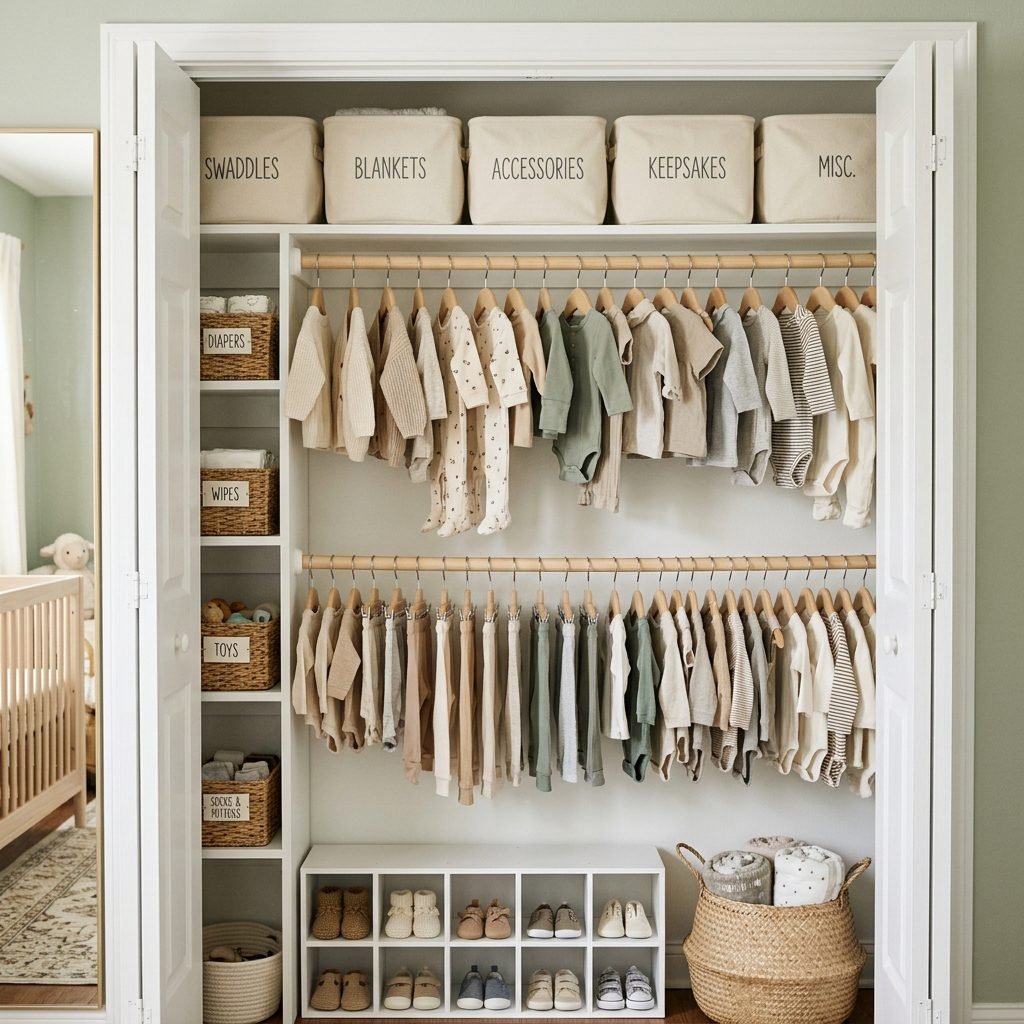
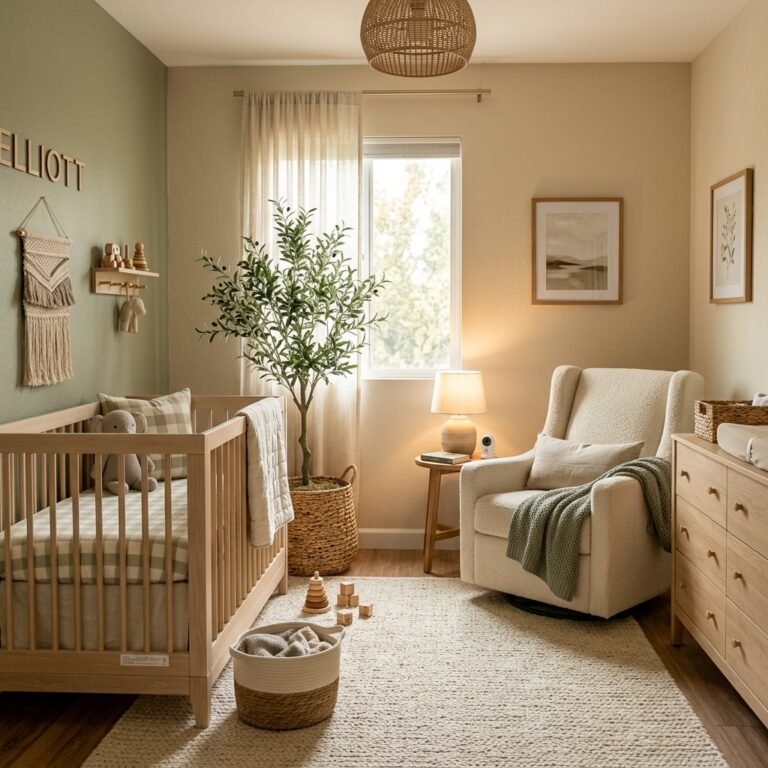
As a doula, I look at a nursery through the lens of functionality and safety. We want to minimize the number of steps you have to take in the middle of the night. I teach my clients the ‘Nursery Triangle’ method, which focuses on the three main zones: The Sleep Zone, The Feeding/Soothing Zone, and The Diapering Zone.
The Three Essential Zones
- The Sleep Zone: Centered around the crib. Keep this area clear of heavy hanging art above the baby’s head. Ensure the crib is away from windows with cords or drafty vents.
- The Feeding/Soothing Zone: This is your ‘command center.’ You need a high-quality glider with lumbar support, a small side table for your water bottle (hydration is key for nursing mamas!), and a dimmable lamp.
- The Diapering Zone: This should be stocked and ready. You want everything within arm’s reach so you never have to take a hand off the baby.
To help you visualize the organization, I’ve put together this comparison of how to optimize your storage space:
| Storage Area | Standard Setup | Optimized Modern Classic Setup |
|---|---|---|
| Closet | Single hanging rod with wasted floor space. | Double rods with acrylic shelf dividers and woven baskets for ‘next size up’ clothes. |
| Dresser Top | Cluttered with lotions and loose diapers. | A seagrass changing basket with a dedicated caddy for wipes, creams, and burp cloths. |
| Under-Crib | Dust bunnies and empty space. | Low-profile linen rolling bins for extra sets of crib sheets and sleep sacks. |
Furniture with Longevity: The Modern Classic Essentials
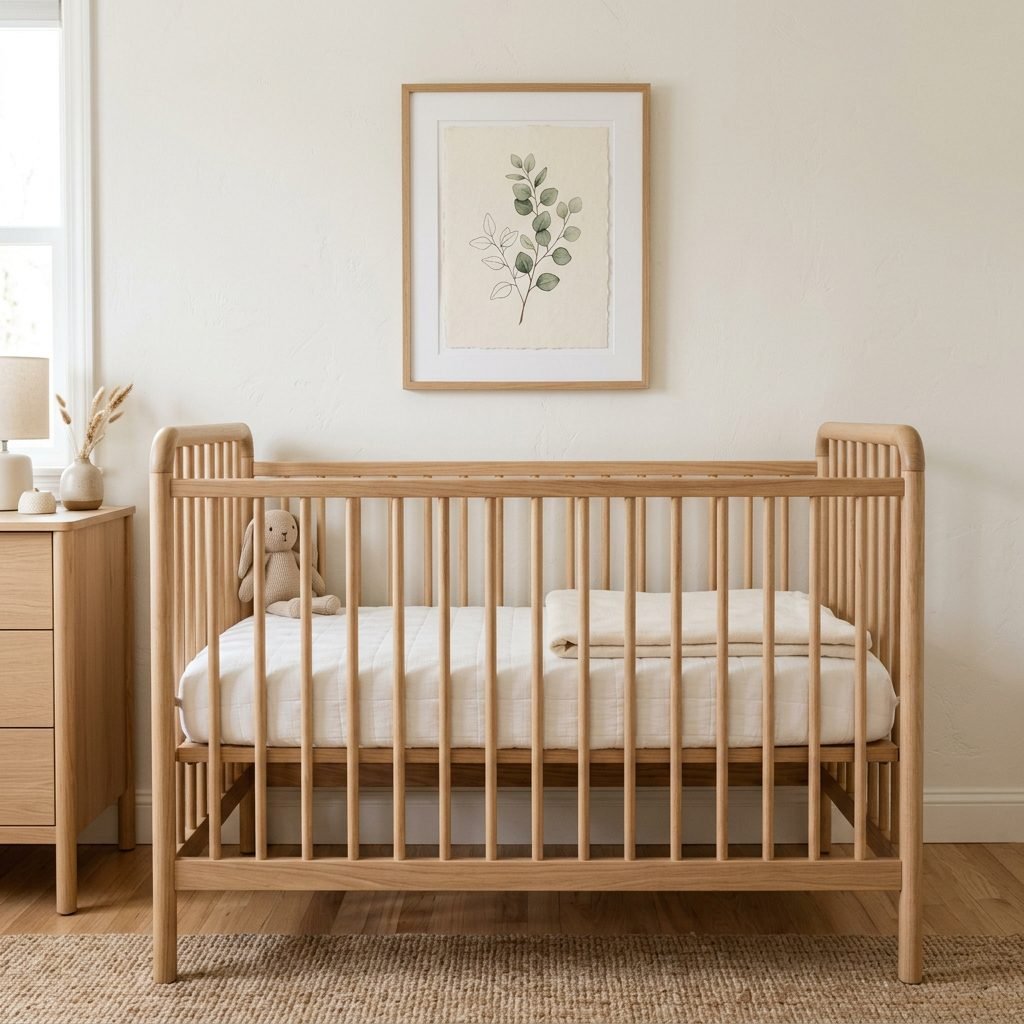
In a modern classic nursery, we aim for pieces that don’t just last for the infancy stage, but grow with your child. This is where ‘Investment Pieces’ come in. Instead of buying a ‘baby’ dresser, buy a high-quality six-drawer dresser that you can add a removable changing topper to. When the diaper days are over, you still have a beautiful piece of furniture.
Choosing Your Crib
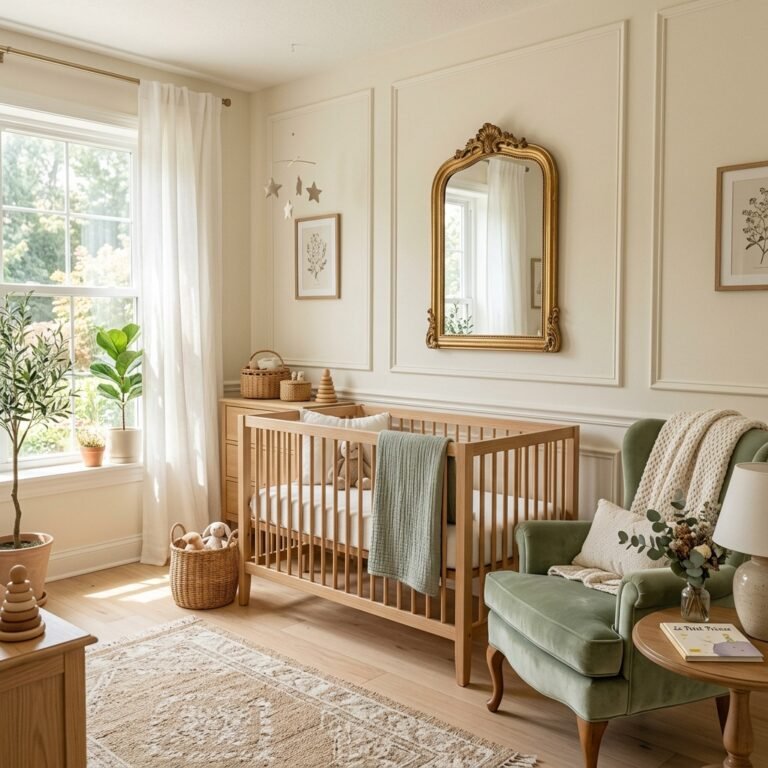
The crib is the focal point. For a modern classic look, look for clean lines and natural materials. Light oak, spindle-style cribs are very ‘in’ right now because they feel airy and don’t visually crowd a room. Safety Tip: Ensure the crib meets all current CPSC safety standards and that the slats are no more than 2 and 3/8 inches apart. Avoid drop-side cribs or vintage cribs that may have lead paint or unsafe spacing.
The Glider: Your Best Friend
You will spend hundreds of hours in this chair. Do not skimp on comfort! Look for a performance fabric (like a crypton or a treated linen) in a neutral tone. Performance fabrics are moisture-wicking and stain-resistant—essential for those inevitable spit-ups. A swivel-glide motion is often more soothing for babies than a traditional back-and-forth rock.
The Designer’s Secret: High-End IKEA Hacks for Every Budget
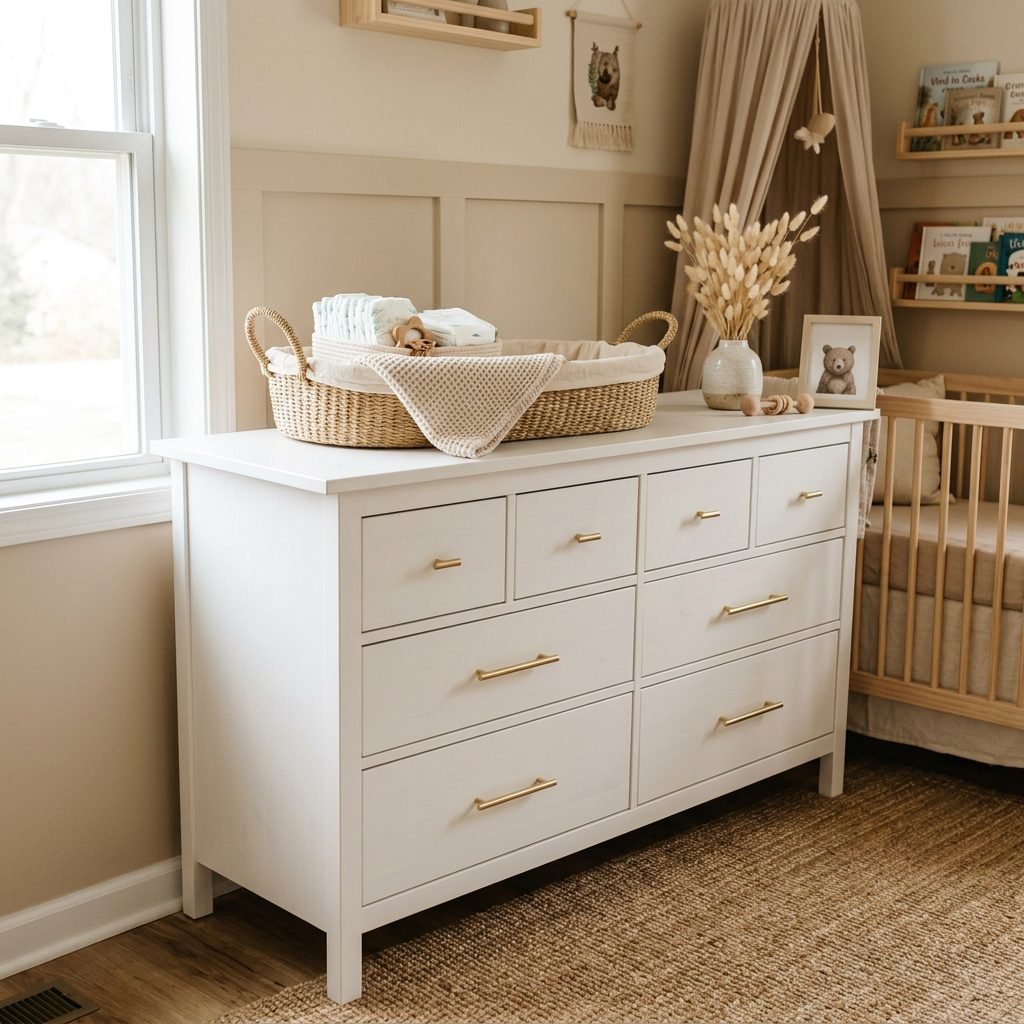
You don’t need a designer budget to get a designer look. Some of the most beautiful neutral nurseries I’ve seen are built on the back of clever IKEA hacks. The IKEA Hemnes Dresser is a staple in the nursery world because of its solid wood construction and perfect height for a changing station.
The ‘Modern Classic’ Hemnes Transformation
- Swap the Hardware: Replace the standard black knobs with solid brass pulls or leather tabs. This instantly elevates the look.
- Sand and Stain: If you buy the unfinished wood version, a light ‘pickled’ or ‘white-wash’ stain can give it that high-end white oak appearance.
- Add a Topper: Use a secure changing station topper that matches the wood tone perfectly.
“Budget doesn’t define beauty. Intentionality does. A few coats of paint and the right hardware can turn a basic piece into an heirloom.”
Another favorite is the IKEA Kallax. Instead of leaving it as a cubby, add woven water hyacinth baskets to hide the colorful toys and clutter. This keeps the visual ‘noise’ low and maintains that calm, neutral aesthetic we are striving for.
Elevating the Aesthetic: Textures, Layers, and Soft Finishes
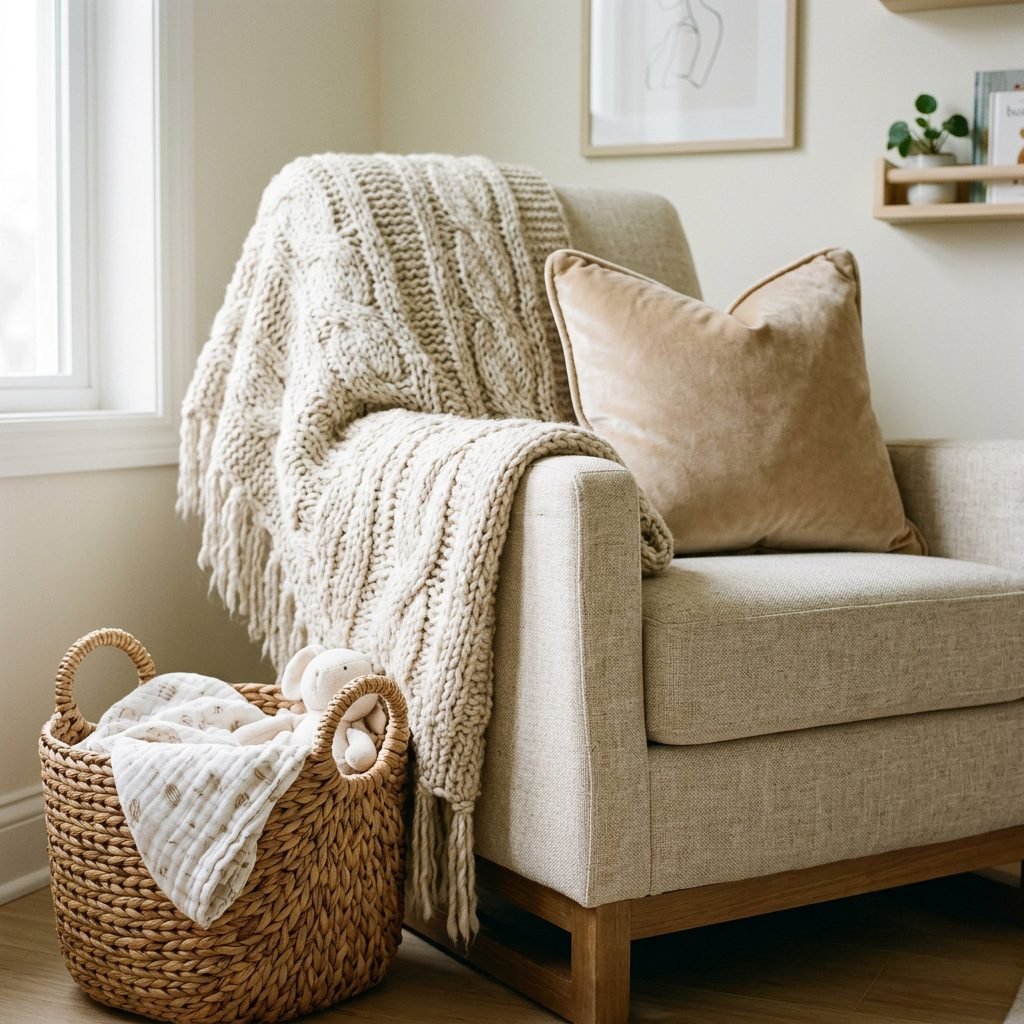
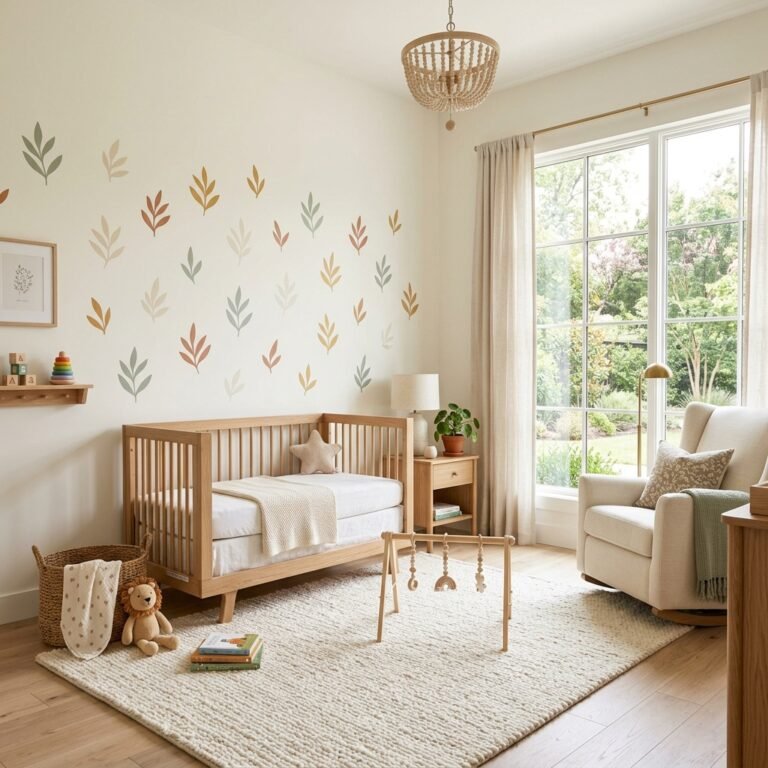
If you remove color from a room, you must add texture to keep it from feeling flat. This is the ‘secret sauce’ of professional nursery designers. Think of it like dressing an outfit—you need layers! Start with a large, soft rug. A high-pile wool rug or a washable cotton rug in a Moroccan-inspired trellis pattern adds visual interest without being loud.
Layering Your Textiles
- Curtains: Choose blackout linen curtains. The linen provides a beautiful organic texture during the day, while the blackout lining ensures your baby’s circadian rhythm stays on track for naps.
- Bedding: Stick to 100% organic cotton or bamboo. It’s breathable and soft against a newborn’s sensitive skin. In a neutral nursery, a subtle waffle knit or a tiny pinstripe can add just enough detail.
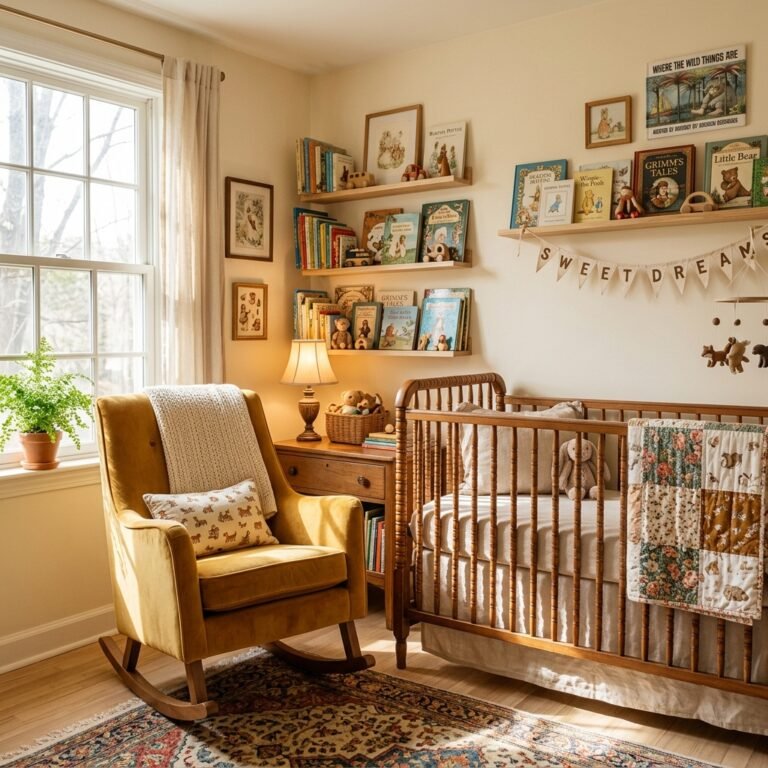
- Wall Decor: Instead of plastic frames, try wooden gallery rails or a large-scale textile wall hanging. Macramé or a framed piece of vintage-inspired linen map can add warmth and soul to the space.
Don’t forget the ‘greenery.’ A faux (or real, if you have the light!) olive tree or fiddle leaf fig adds a pop of ‘nature’s neutral’—green. It breaks up the beige and brings life into the room.
Creating a Sleep Sanctuary: Lighting and Sensory Details
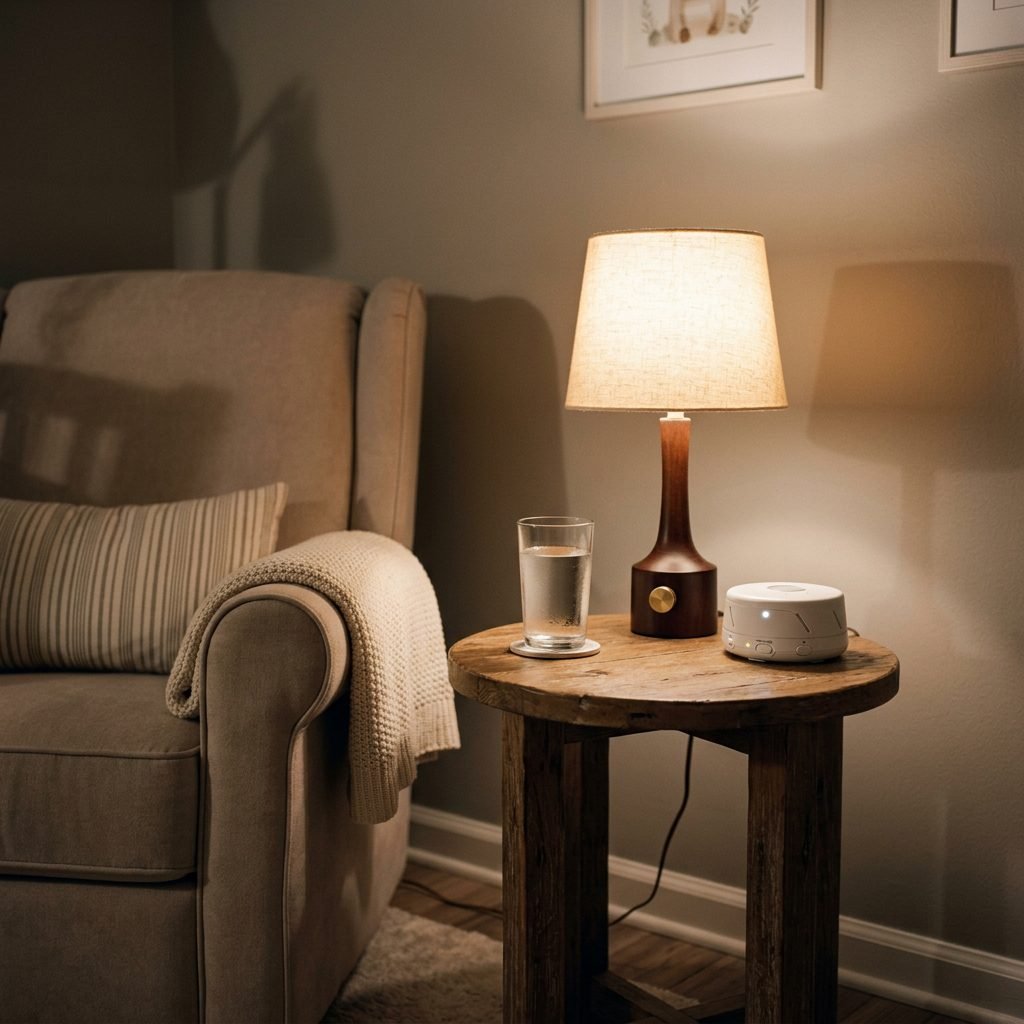
As a sleep consultant and doula, I cannot emphasize enough how important lighting is in your nursery design. A modern classic nursery should transition seamlessly from a bright, happy playroom to a dark, cozy sleep cave. Avoid harsh overhead ‘boob’ lights. Instead, install a dimmer switch—it’s a life-changer for those 3 AM diaper changes.
The Sensory Checklist
- Warm Light: Use bulbs with a 2700K color temperature. This mimics the setting sun and doesn’t inhibit melatonin production.
- Red Light: For night feedings, use a small red-light nightlight. Red light is the only spectrum that doesn’t disrupt the sleep-wake cycle.
- Sound: While not a ‘visual’ design element, a sleek, white-noise machine that blends into your shelving is a must-have for a calm environment.
Lastly, consider the scent. Avoid synthetic air fresheners or candles. If you want a signature nursery scent, use a high-quality diffuser with a drop of lavender or Roman chamomile essential oil (ensure these are safe for your baby’s age). A calm-smelling room reinforces the ‘sleep association’ for your little one.
Conclusion
Designing your nursery is one of the first acts of motherhood, a beautiful labor of love that sets the stage for the years to come. By choosing a Modern Classic Neutral style, you are creating a versatile, calming, and timeless space that will evolve as your baby grows from a tiny newborn into a curious toddler. Remember, mama, while the furniture and the paint are lovely, the most important element in that room is you. Your presence, your scent, and your love are what truly make it a home. Take a deep breath, enjoy the process of folding those tiny onesies, and know that you are doing an incredible job. Your sanctuary is almost ready.