Invisible Library: Modern Ways to Style Acrylic Floating Bookshelves in a Nursery
Welcome to Your Serene Sanctuary, Mama
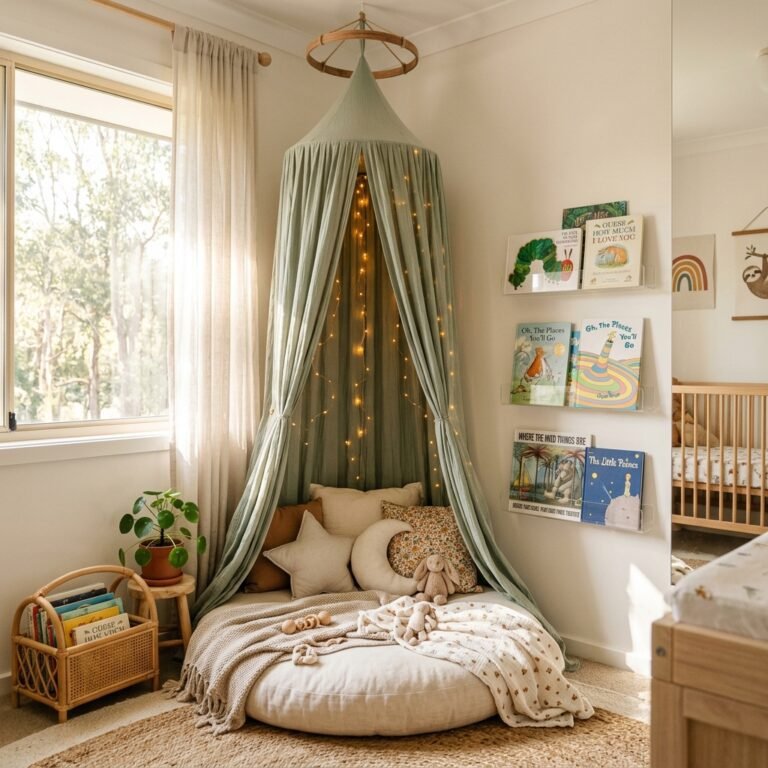
Oh, sweet mama, I know that feeling all too well. You are standing in the middle of what will soon be your little one’s first world, and the ‘nesting’ instinct is hitting you in the most beautiful, slightly overwhelming way. You want a space that feels like a warm hug, but you also want it to be functional, modern, and—let’s be honest—Pinterest-perfect. That is where the magic of the Invisible Library comes in. Using acrylic floating bookshelves isn’t just a design trend; it is a way to clear the visual clutter while putting the beautiful stories you will soon read to your baby front and center. As a doula, I have seen how a calm, organized environment can actually lower your stress levels during those late-night feedings. When your environment feels light and airy, your mind follows suit. In this guide, we are going to walk through every step of choosing, installing, and styling these gorgeous clear ledges to create a nursery that feels as light as a lullaby.
‘A room without books is like a body without a soul, and a nursery with an invisible library is like a dream taking flight.’
Whether you are working with a tiny apartment nook or a spacious master suite conversion, acrylic shelves are your secret weapon. They take up zero visual floor space, which is a total game-changer for smaller rooms. Today, we are going to dive deep into the practicalities and the aesthetics of these modern marvels, ensuring your nursery is as safe as it is stylish.
The Psychology of an Airy Space: Why Acrylic Wins
Creating Visual Breathing Room
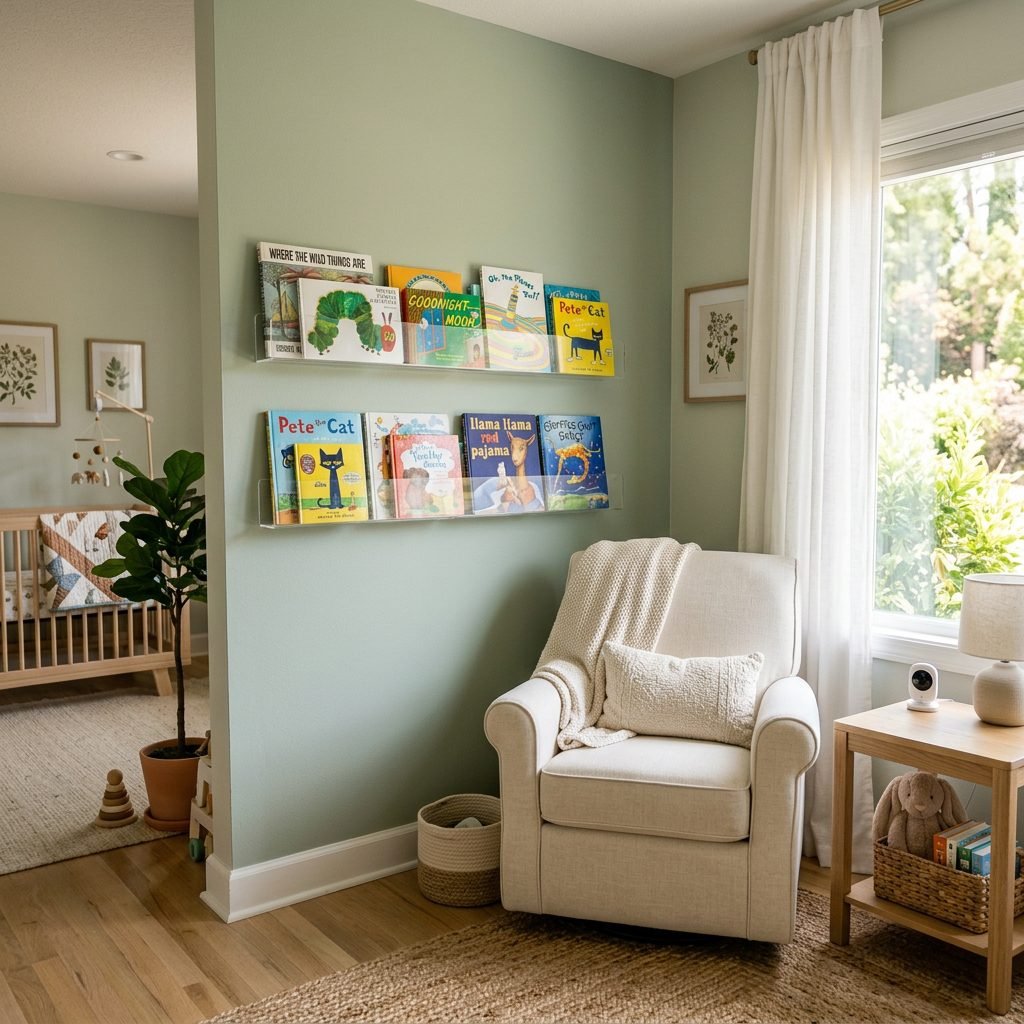
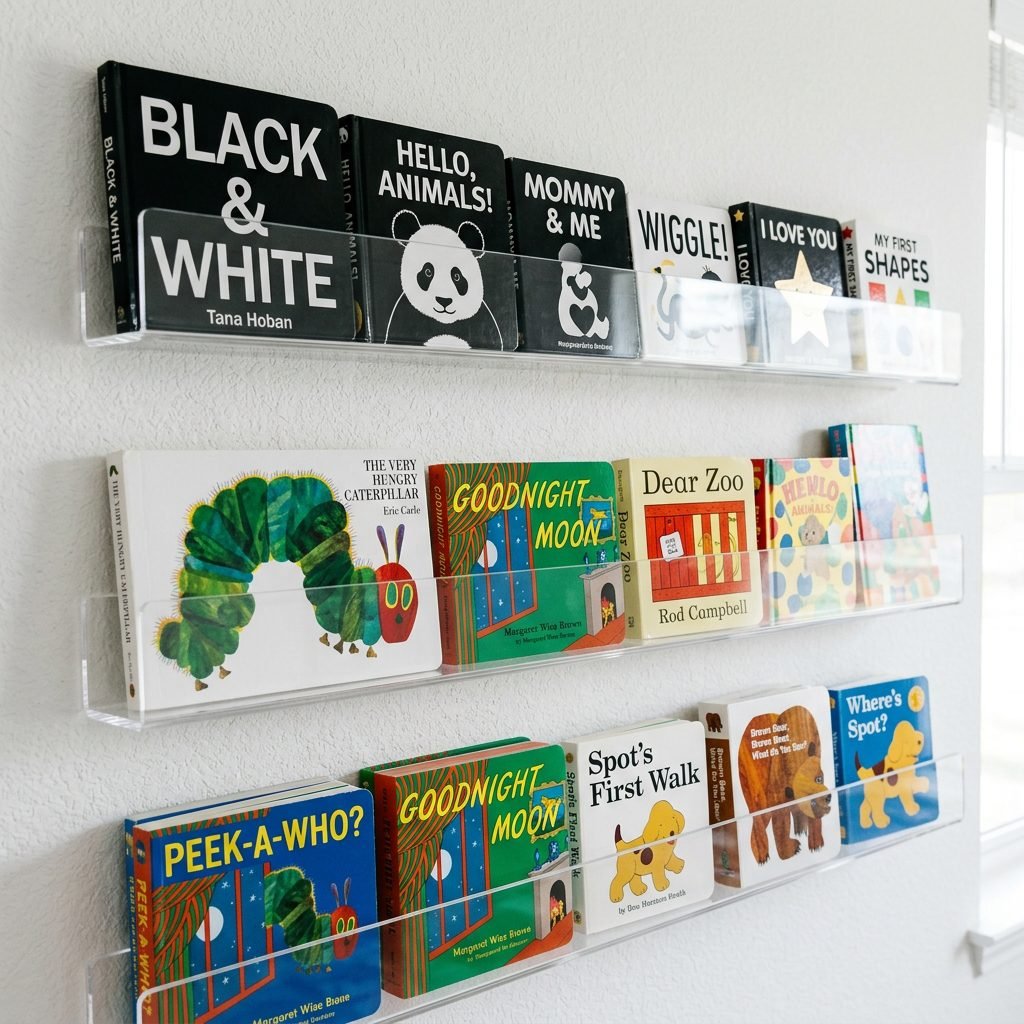
In the world of nursery design, we often talk about ‘visual weight.’ Heavy wooden bookshelves can sometimes make a small room feel cramped and heavy, which is the last thing you want when you are already feeling the physical weight of pregnancy or the mental load of early motherhood. Acrylic bookshelves are essentially ‘invisible,’ allowing the colors of the book covers to become the art itself. This creates visual breathing room, a concept I always advocate for in postpartum spaces. When your eyes can move freely across a room without hitting heavy obstacles, it promotes a sense of calm and order.
The Benefits of Face-Out Storage
Traditional bookshelves hide the covers and only show the spines. For a baby or a toddler, the cover is the invitation to read. By using acrylic ledges, you are creating a ‘face-out’ display. This has several benefits:
- Early Literacy: Babies are drawn to high-contrast images and bright colors. Seeing their favorite books displayed like art encourages them to engage with literature earlier.
- Easy Cleanup: You can see exactly where each book goes, making those 2:00 AM tidy-ups much faster.
- Rotating Collections: You can easily swap out books for different seasons or developmental stages without rearranging an entire heavy unit.
As your doula-expert, I want you to think of these shelves as a tool for maternal wellness. A clear space leads to a clear head, and these shelves are the ultimate minimalist hack for the maximalist joy of children’s books.
Safety First: Anchoring Your Library with Confidence
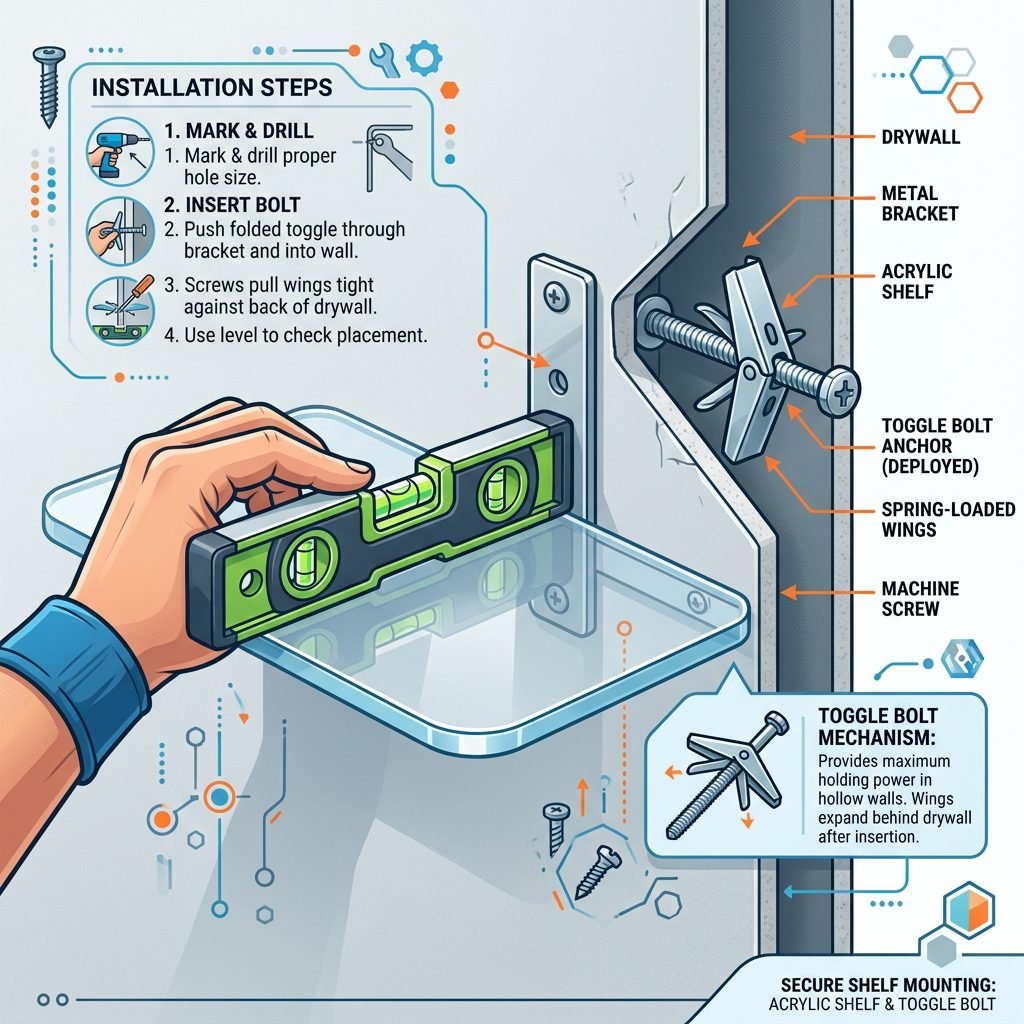
The Golden Rules of Nursery Installation
Mama, we need to talk about the ‘boring’ stuff for a moment, because your peace of mind is my top priority. When we are mounting anything in a nursery, especially something that will hold weight, we have to be safety-obsessed. Acrylic is lightweight, but books are surprisingly heavy. A single foot of books can weigh between 20 to 30 pounds. We must ensure those shelves aren’t going anywhere.
Finding the Studs and Using the Right Anchors
Before you even think about picking up a drill, you need to know what is behind your paint. If you can mount your shelves directly into the wooden studs of your wall, that is the gold standard. However, in modern homes, studs aren’t always where we want the shelves to be. If you are mounting into drywall, you must use high-quality toggle bolts or heavy-duty drywall anchors. Do not rely on the tiny plastic plugs that sometimes come in the box; invest in the good stuff from the hardware store.
- Measure Twice, Drill Once: Use a level to ensure your shelves aren’t slanted. A crooked shelf is a visual irritant you don’t need!
- Height Matters: Install the lowest shelf at least 36 to 40 inches off the floor if you want them out of reach of a crawling baby, or lower if you want to create a Montessori-style accessible nook.
- Weight Limits: Always check the manufacturer’s weight rating. Typically, a 24-inch acrylic shelf should not exceed 15-20 pounds of books.
| Installation Component | Requirement | Why It Matters |
|---|---|---|
| Wall Studs | Ideal Anchor Point | Provides maximum weight support. |
| Toggle Bolts | Best for Drywall | Flips open behind the wall for a secure hold. |
| Level Tool | Mandatory | Prevents books from sliding and ensures aesthetic perfection. |
| Weight Check | Max 15-20 lbs | Prevents the acrylic from bowing or snapping over time. |
‘Safety is the foundation upon which all nursery beauty is built. Anchor your shelves as firmly as you anchor your love.’
Styling Techniques: The Art of the Curated Shelf
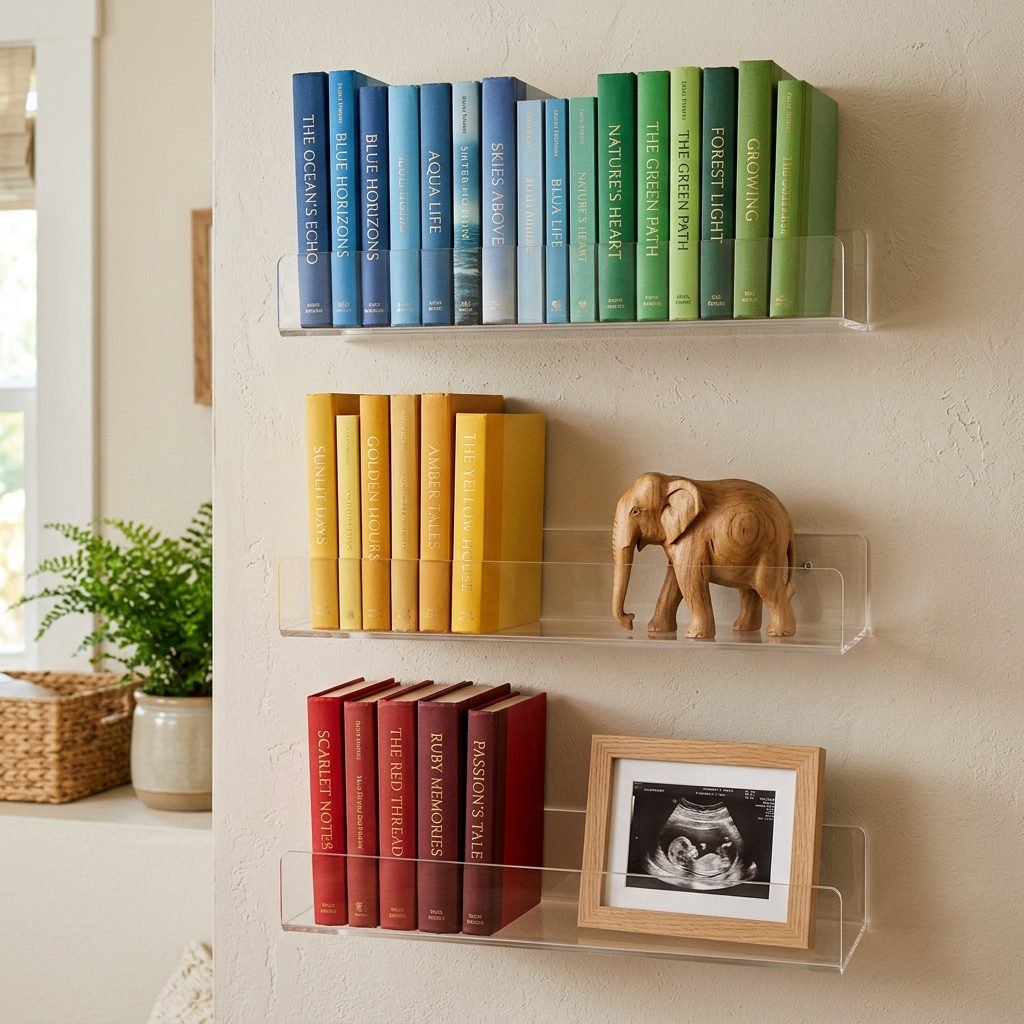
The 70/20/10 Rule for Nursery Shelves
Now for the fun part! How do we make these shelves look like they belong in a designer magazine while still being functional? I like to use a modified styling formula I call the 70/20/10 Rule for nursery ledges:
- 70% Books: These are your workhorses. Group them by color for a ‘rainbow’ look, or by size for a more structured feel.
- 20% Heirlooms & Decor: Think of a vintage silver rattle, a small framed sonogram photo, or a beautiful wooden toy. These add soul to the ‘invisible’ shelf.
- 10% Greenery or Texture: A small (shatterproof!) pot with a faux succulent or a soft fabric bunting draped across the corner adds a layer of warmth.
Color Coding vs. Story Themes
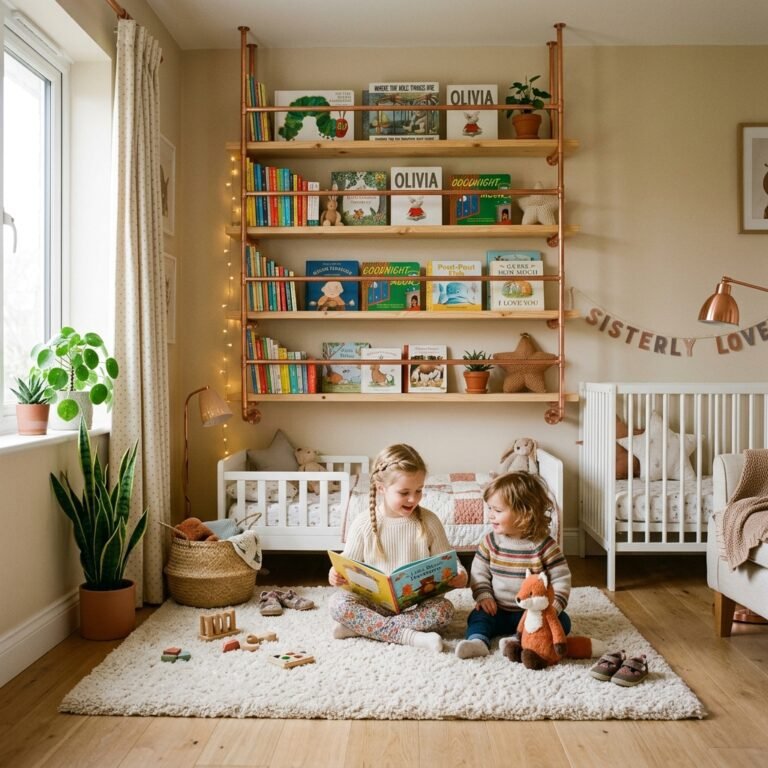
Many moms love the rainbow-ordered library. It is visually stunning and actually makes it easier to find a book if you remember the cover color. Start with reds on the top shelf and work your way down to violets. Alternatively, you can style by theme. Are you doing a woodland nursery? Fill your acrylic shelves with books about bears, foxes, and trees, interspersed with little felt forest creatures. The beauty of acrylic is that it doesn’t compete with these themes; it lets them shine.
Pro-Tip: Layering for Depth
Don’t just line the books up side-by-side. Overlap them slightly. Place a larger picture book in the back and a smaller board book tucked slightly in front. This creates depth and makes the shelf feel ‘full’ without looking cluttered. Remember, mama, this is your creative outlet! There is no wrong way to display the stories you’ll read to your sweet babe.
Small Space Hacks: Maximizing Every Square Inch
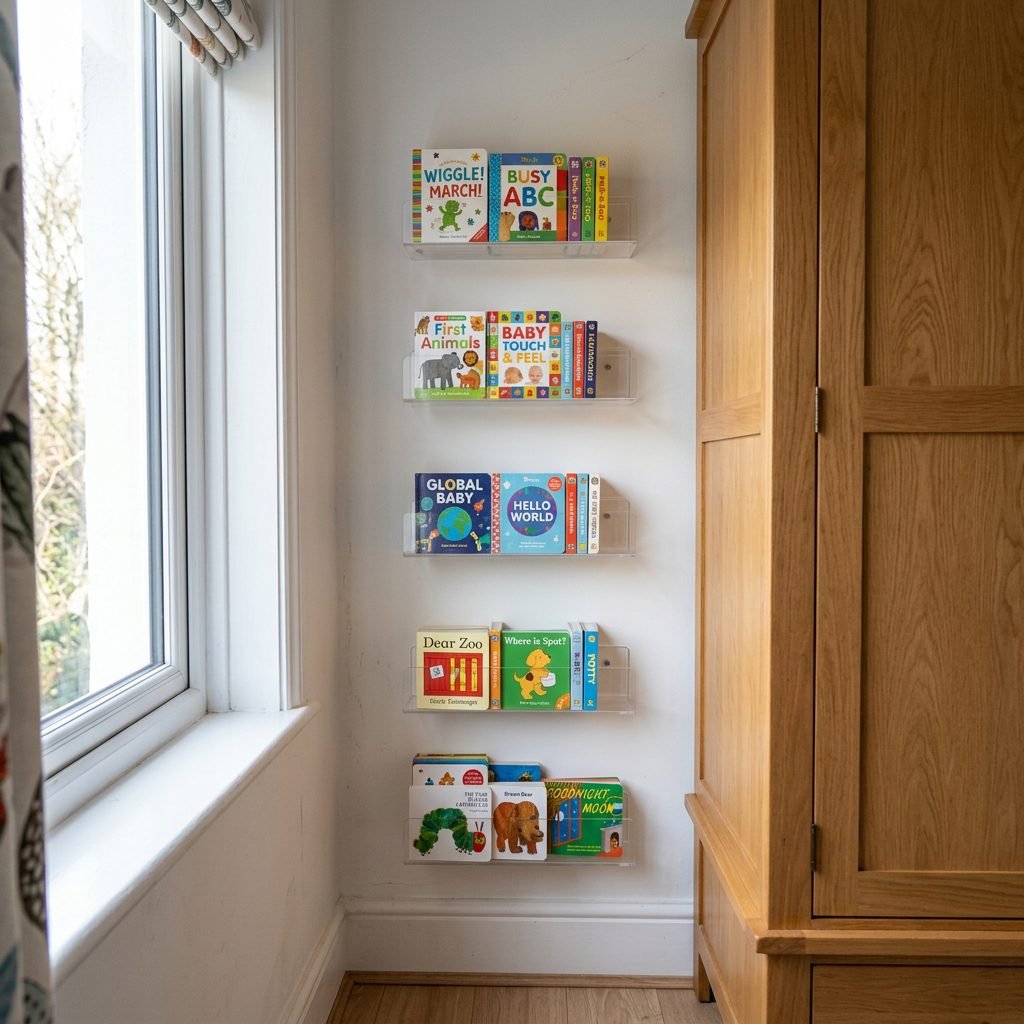
The ‘Dead Space’ Savior
If you are working with a small nursery, or perhaps just a corner of your own bedroom, you have to be a bit of a space-ninja. Acrylic floating bookshelves are the ultimate hack for ‘dead space.’ Think about those narrow strips of wall behind a door, the space above a changing table, or that awkward corner between the closet and the window. Because these shelves are typically only 3 to 4 inches deep, they can fit almost anywhere without interfering with foot traffic.
The Changing Table Library
One of my favorite doula tips is to install a single acrylic ledge right above the changing table (out of reach of baby’s kicking feet, of course!). Why? Because a distracted baby is a much easier baby to change! Having a bright, colorful book right there to grab and show them can turn a fussy diaper change into a bonding moment.
The Vertical Column
Instead of one long shelf, try stacking four or five short 12-inch acrylic ledges vertically in a narrow corner. This creates a ‘book tower’ effect that draws the eye upward, making the ceilings feel higher and the room feel larger. It is a classic interior design trick that works wonders in tiny nurseries.
| Storage Solution | Traditional Bookshelf | Acrylic Floating Ledge |
|---|---|---|
| Floor Footprint | Large (2-4 sq ft) | Zero (Wall-mounted) |
| Visual Impact | Heavy/Dominant | Light/Invisible |
| Narrow Wall Friendly | No | Yes (Perfect for corners) |
| Cost | $100 – $500 | $20 – $60 |
A Library That Grows: Adapting Through the Milestones
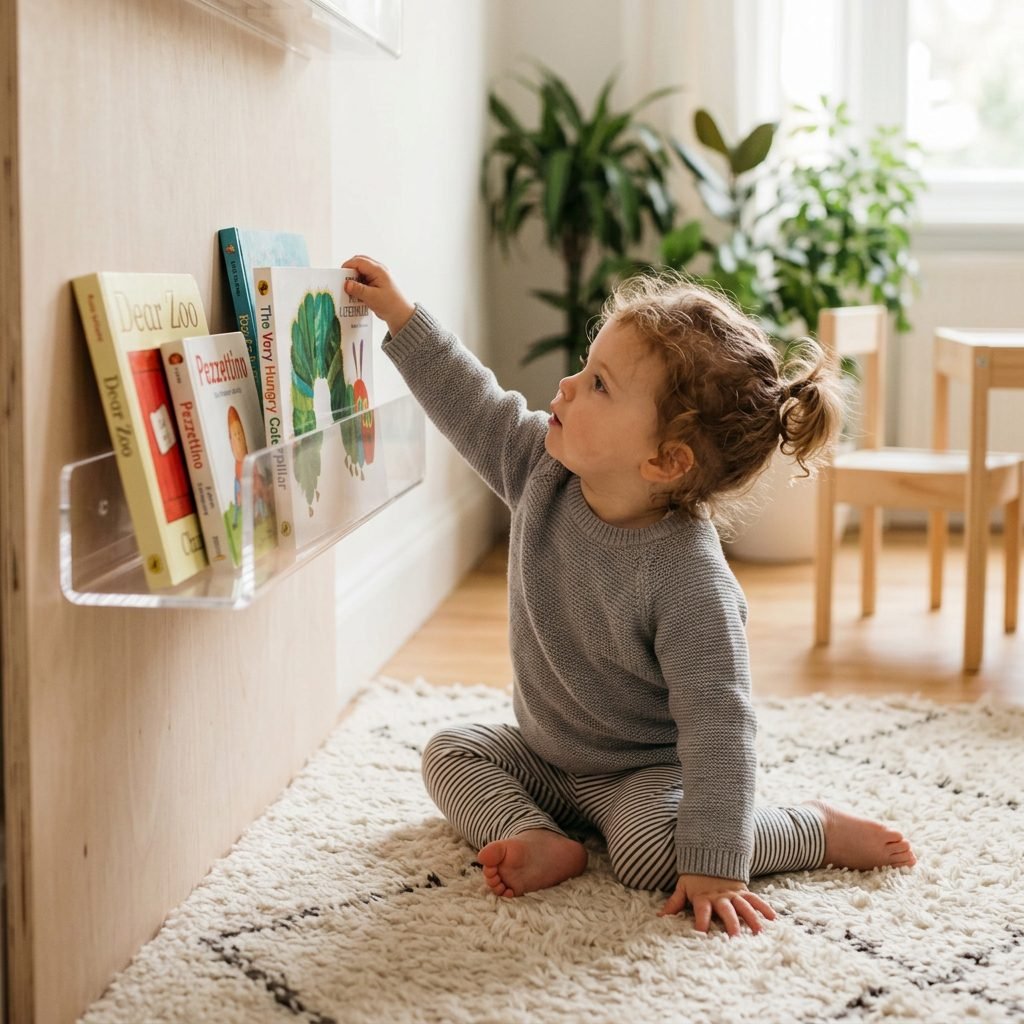
From Newborn Sight to Toddler Reach
Your nursery won’t stay a ‘newborn’ room for long. Before you know it, that little bundle will be scooting, crawling, and eventually reaching for everything in sight. The beauty of acrylic bookshelves is their adaptability. Unlike a heavy piece of furniture, these ledges can be moved or repurposed as your child grows.
The Montessori Approach
As your baby transitions into the toddler years (around 12-18 months), you might want to lower one or two of your acrylic shelves to toddler-height. In Montessori philosophy, giving a child access to their own environment fosters independence. Having a clear shelf where they can see and choose their own ‘bedtime story’ empowers them. And because the shelves are clear, they can see the whole book, which helps them make a choice without pulling every single book onto the floor!
Transitioning to Big Kid Decor
When the ‘nursery’ eventually becomes a ‘big kid room,’ these shelves don’t have to go. They are perfect for displaying:
- Award Ribbons & Trophies: The clear plastic makes the awards look like they are floating.
- Action Figures or Collectibles: A great way to keep ‘special’ toys off the floor but still on display.
- Art Projects: Use the ledges to prop up framed masterpieces from preschool.
Mama, you are building a foundation for a lifetime of learning. These shelves are just the beginning of your child’s relationship with books.
Maintenance and Longevity: Keeping the ‘Invisible’ Look Clear
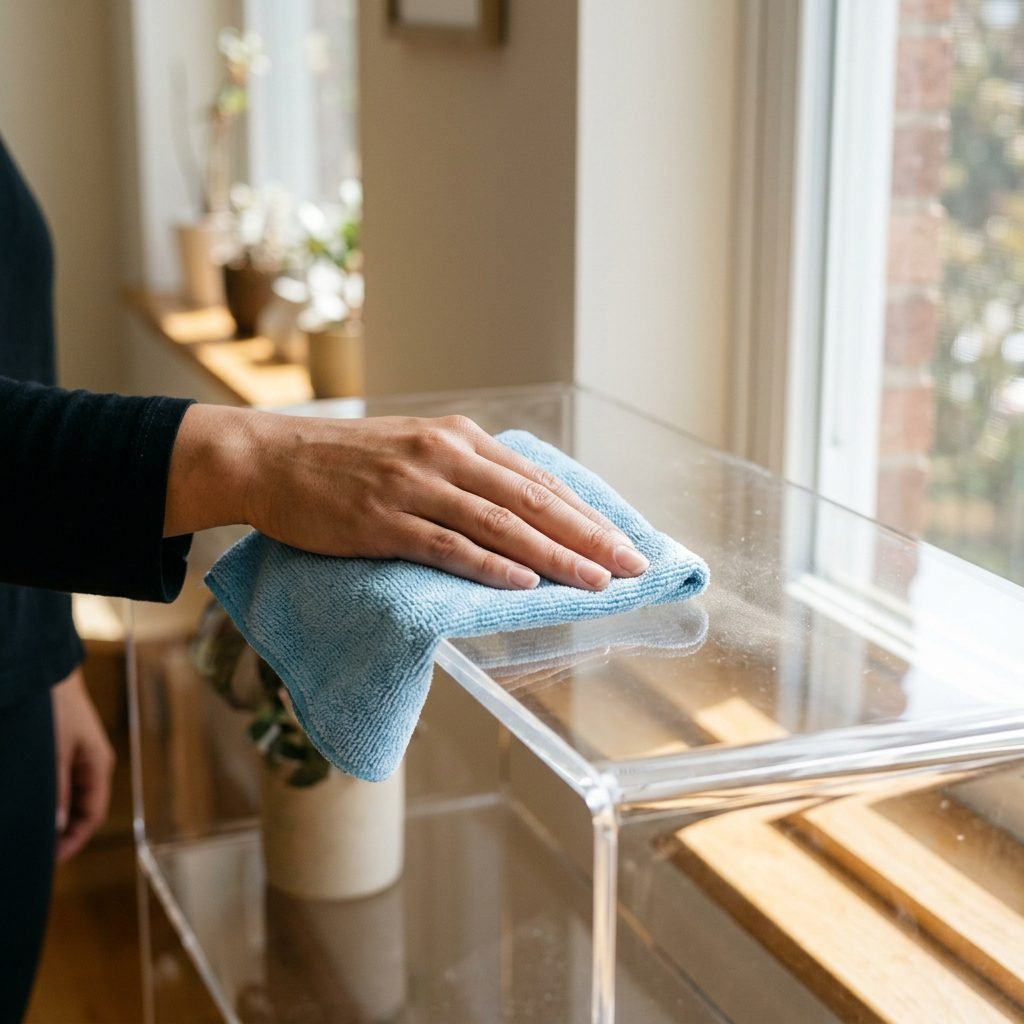
How to Clean Acrylic Without Scratches
I want your nursery to stay beautiful, mama, but acrylic does require a little specific care to keep that crystal-clear ‘invisible’ look. The most important rule? Never use window cleaner or ammonia-based products. These can cause the acrylic to ‘craze’ or develop tiny micro-cracks that make it look cloudy over time.
The Gentle Cleaning Routine
- Dust Regularly: Use a soft microfiber cloth to gently wipe away dust. Dust can actually be abrasive, so don’t press hard.
- Mild Soap Only: If there are sticky fingerprints (and there will be!), use a drop of mild dish soap mixed with warm water.
- The Magic of Plastic Polish: If you do get a small scratch, there are specialized acrylic polishes (like Novus) that can buff them right out.
Sustainability and Quality
When shopping, look for thick-cast acrylic (at least 4mm to 5mm). Cheaper, thinner versions can yellow in the sun or bow under the weight of heavier books. Investing an extra $10 in a high-quality set of shelves ensures they will last through multiple children and many years of use. As a doula, I’m all about things that last and make your life easier, not harder!
‘Care for your home as you care for your heart—with gentleness, clarity, and a little bit of shine.’
Conclusion
Your Story Starts Here
Creating an Invisible Library in your nursery is about more than just home decor; it is about creating a space where stories come to life and where you feel a sense of peace every time you walk through the door. By choosing acrylic floating bookshelves, you are embracing a modern, clean aesthetic that prioritizes your baby’s development and your own mental well-being. Remember, mama, the most important thing in that room isn’t the shelves or even the books—it is the time you will spend there, rocking your little one and whispering the words of these stories into their ears. You have done a beautiful job preparing this space. Now, take a deep breath, sit in that nursery chair, and imagine the wonderful chapters ahead. You’ve got this, and your nursery looks absolutely stunning!