Buying A House While Pregnant? Don’t Skip This Inspection Checklist
Welcome to the Great Nesting Adventure, Mama!
Oh, sweet friend, I see you. You are currently navigating one of life’s most beautiful—and let’s be honest, most exhausting—double-whammies: growing a human and buying a home at the exact same time. The ‘nesting instinct’ is a powerful force, isn’t it? It’s that biological drive that makes you want to scrub every baseboard and ensure every corner of your environment is perfectly safe for your little one’s arrival. But when you’re buying a house, that instinct needs to be paired with some serious, practical expertise. As your doula and home-organization sister, I want to make sure that your new sanctuary isn’t just beautiful, but truly safe and functional for the postpartum days ahead.
Standard home inspections are great for checking if the roof is leaking or if the furnace is old, but they don’t always look through the lens of a mother. They aren’t thinking about the VOC levels in the nursery paint, the steepness of the stairs when you’re carrying a sleeping infant, or the quality of the air that your newborn’s brand-new lungs will be breathing. That is why we are going beyond the basics. We are creating a ‘Mother’s Inspection’—a deep dive into the health and ergonomics of your future home.
Moving is one of the top three most stressful life events, and pregnancy is a time of massive transition. Be gentle with yourself, take frequent hydration breaks, and remember: you aren’t just buying a house; you are choosing the backdrop for your child’s first memories.
The Invisible Hazards: Environmental Safety First
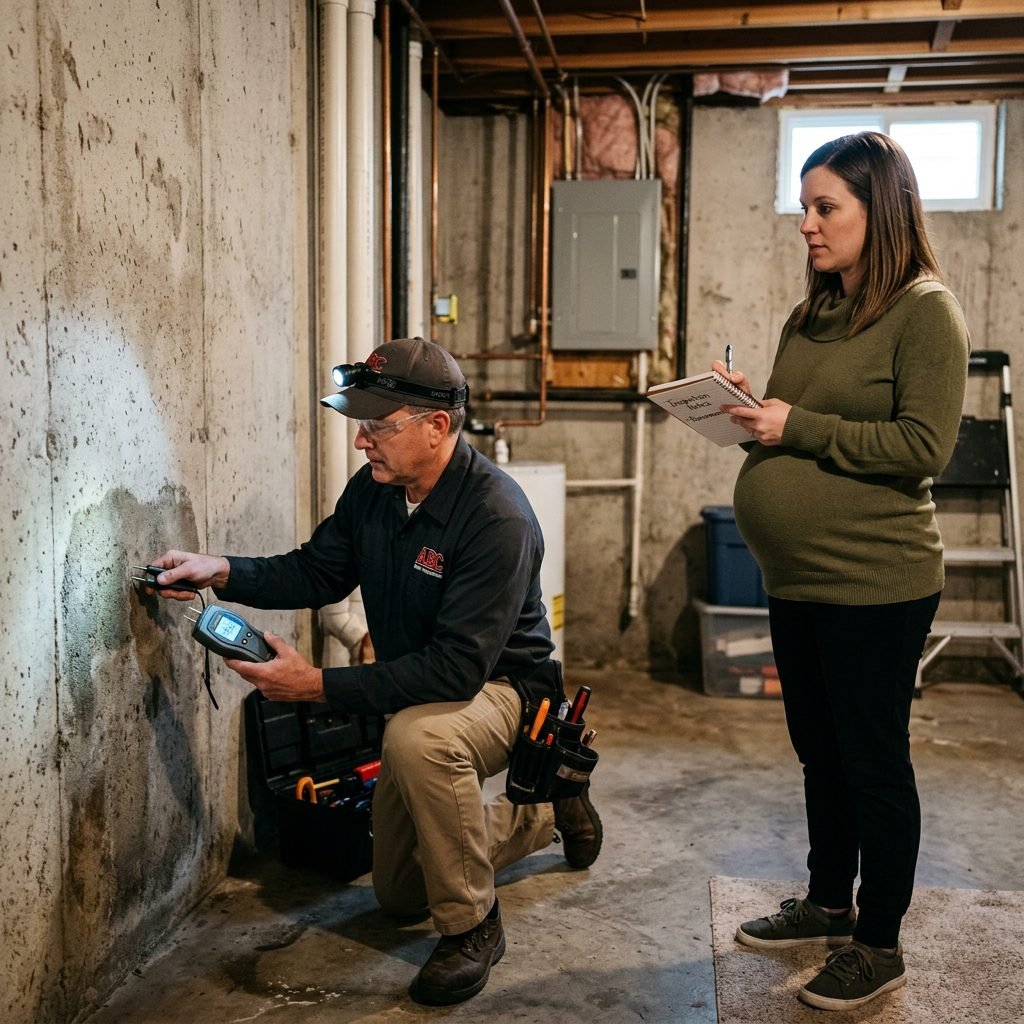
When you are pregnant, your body is more sensitive to environmental toxins, and your developing baby is even more so. A standard inspection might note that a house has ‘older paint,’ but as a mother-to-be, you need to know if that paint contains lead. Before you sign those closing papers, we need to look at the invisible elements that can impact your health and the health of your baby.
Lead, Asbestos, and Radon
If the home was built before 1978, there is a high likelihood of lead-based paint. While it is often encapsulated under newer layers, any chipping or sanding during renovations can release toxic dust. Similarly, asbestos in old floor tiles or pipe insulation is a ‘don’t touch’ zone for pregnant women. Radon gas, an odorless, colorless gas that can seep into basements, is the second leading cause of lung cancer. Ensure your inspector performs a 48-hour radon test.
Mold and Moisture
Your respiratory system is already working overtime during pregnancy. Mold spores can trigger allergies and asthma, and certain ‘black molds’ can be dangerous. Look for water stains on ceilings and sniff for a musty odor in the basement. A damp house is not a healthy place for a postpartum recovery period where you’ll be spending 90% of your time indoors.
| Environmental Risk | Standard Inspection Focus | The ‘Mom-to-Be’ Priority |
|---|---|---|
| Lead Paint | General condition of walls. | Testing any peeling paint; checking window sills. |
| Radon Gas | Often an optional add-on. | Mandatory for basement or ground-level nurseries. |
| Water Quality | Checks if water runs. | Testing for lead, nitrates, and bacteria. |
| Mold | Visible growth only. | Checking HVAC ducts and hidden moisture behind walls. |
The Postpartum Flow: Ergonomics and Layout
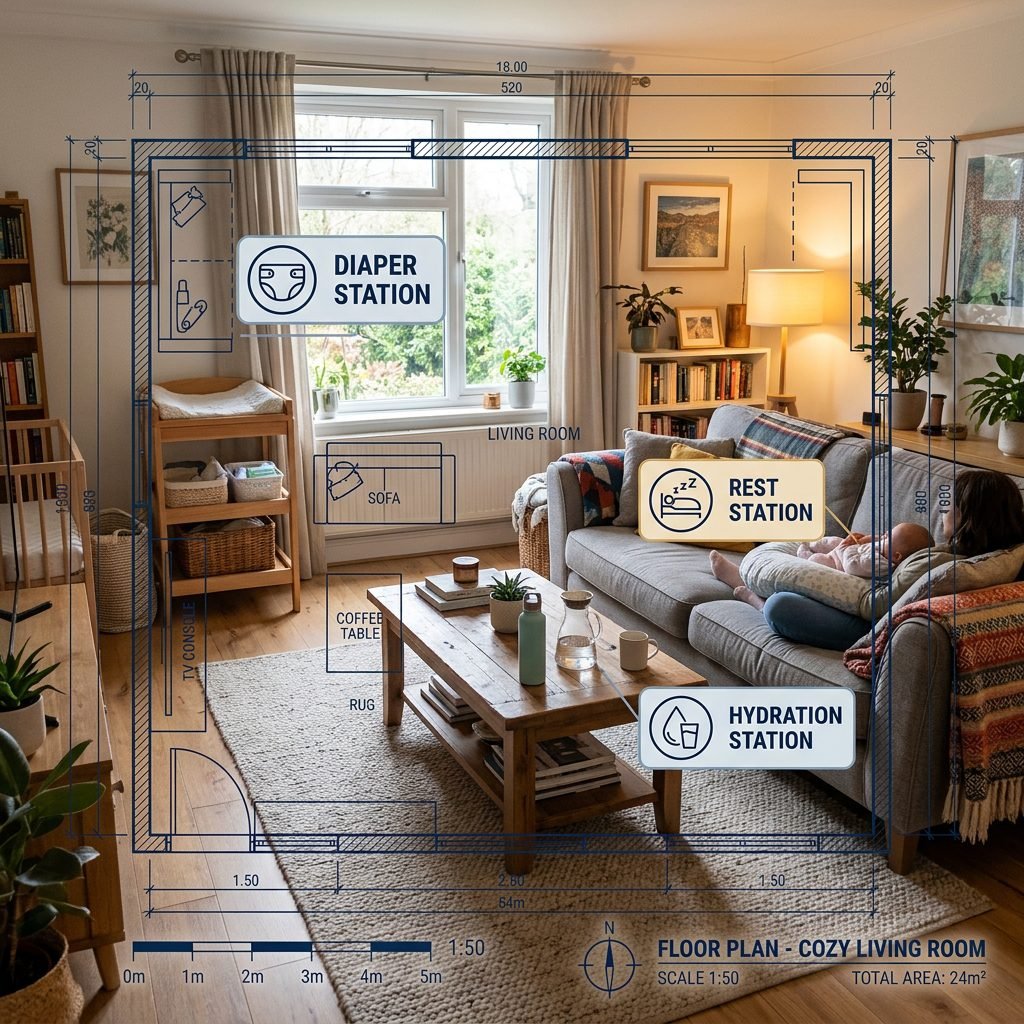
I want you to close your eyes and imagine yourself two weeks postpartum. You might be healing from a C-section or a vaginal birth; you’ll likely be sleep-deprived, and you’ll definitely be carrying a 10-pound baby (plus a 15-pound diaper bag). Does this house support that version of you? The layout of a home can either be your best friend or your biggest obstacle during recovery.
The ‘Stair’ Factor
Check the stairs. Are they steep? Are the handrails sturdy? If the master bedroom is on the third floor and the kitchen is on the first, that is a lot of vertical travel for a healing body. Consider where the primary recovery zone will be and if you can access a bathroom and snacks without climbing stairs every hour.
Laundry and Kitchen Ergonomics
You will be doing more laundry than you ever thought possible. If the laundry room is in a dark, creepy crawlspace or a detached garage, it’s going to be a major stressor. Look for a main-floor laundry or at least a well-lit, accessible area. In the kitchen, check the height of the counters and the ease of the ‘work triangle.’ You want a space where you can prep a bottle or a snack while potentially wearing a baby in a wrap.
Affirmation: My home is a tool for my healing. I choose a space that serves my body’s needs.
The Nursery Environment: Air and Light

The room you’ve earmarked for the nursery needs a special kind of inspection. We aren’t just looking at the cute crown molding; we are looking at air quality and light control. Newborns have sensitive skin and even more sensitive circadian rhythms.
HVAC and Air Filtration
Ask when the air ducts were last cleaned. If the previous owners had four long-haired cats and smoked on the patio, those allergens are still in the system. Check the HVAC filters; you’ll want to upgrade to a HEPA-rated filter before the baby arrives to keep the air pristine. Also, ensure the nursery has a functioning return vent to keep air from becoming stagnant.
Window Safety and Insulation
Is the nursery drafty? Poor insulation can make it hard to maintain the ideal sleep temperature (68-72°F). Check the windows for ‘blown seals’ (fogging between the glass). Also, look at the window treatments. If there are old-fashioned corded blinds, those are a major safety hazard and should be replaced immediately with cordless options.
Electrical Outlets and Safety
In an older home, you might find only one or two outlets in a bedroom. Between the baby monitor, the sound machine, the nightlight, and the humidifier, you’re going to need power. Ensure the outlets are grounded (three-prong) and not overloaded. This is also the time to check if the home has GFCI outlets in the bathrooms and kitchen.
The Yard and Exterior: Safety for the Toddler Years
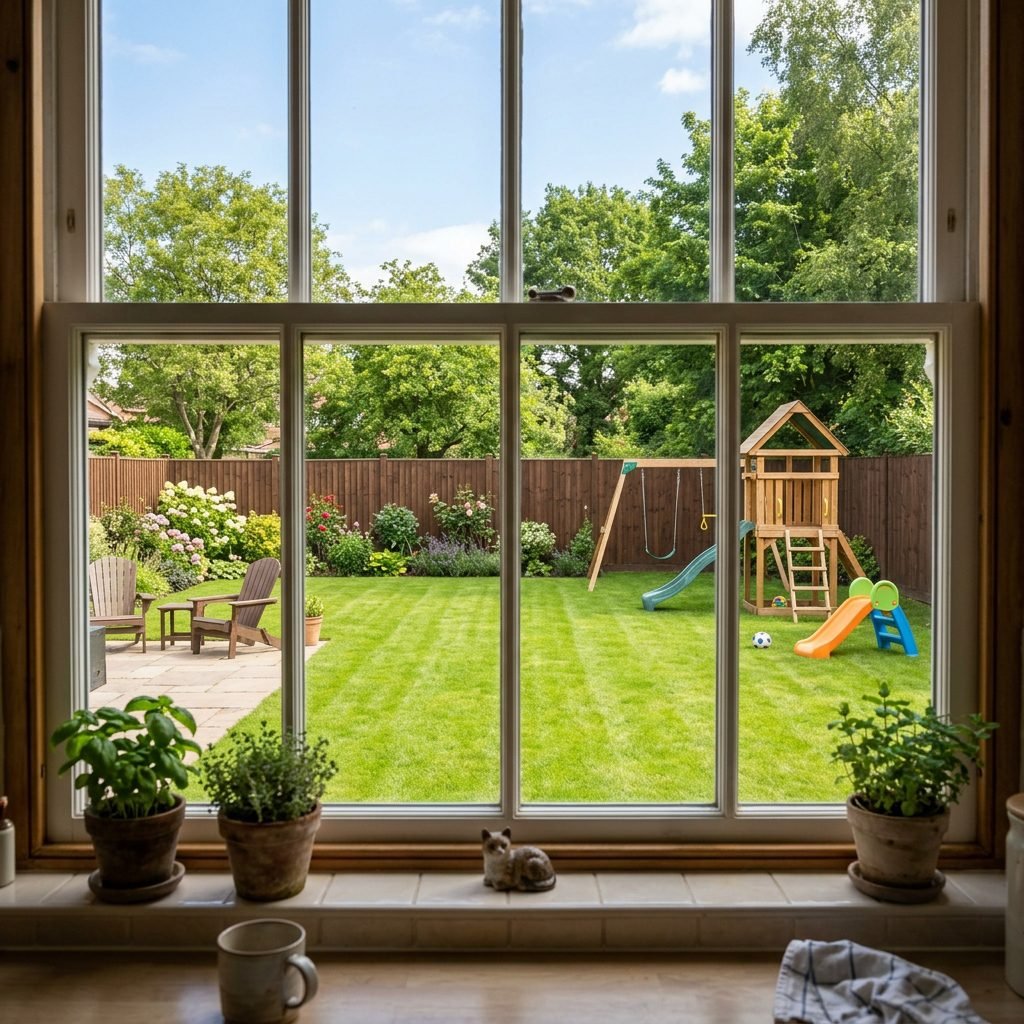
I know, I know—you’re focused on the ‘potato phase’ right now where they just lay there. But I promise you, in the blink of an eye, that baby will be a speedy toddler. When you inspect the exterior, you are looking for future-proofing.
Fencing and Water Features
Is there a pool? If so, is it protected by a four-sided fence with a self-closing, self-latching gate? This is non-negotiable for mama-peace-of-mind. Check the perimeter fence of the yard for gaps or rotting wood where a curious toddler could squeeze through. If the house has a beautiful pond, consider the cost and logistics of fencing it off or filling it in.
Driveway and Sightlines
Is the house on a busy street? Is the driveway ‘blind’ (meaning you can’t see the sidewalk when backing out)? These are things that don’t seem like a big deal until you have a toddler who loves to run. Also, check for poisonous landscaping. Some common garden plants (like Oleander or Foxglove) are highly toxic if a little one decides to have a ‘nature snack.’
| Exterior Feature | Safety Checkpoint | Action Item |
|---|---|---|
| Pool/Pond | Barrier integrity. | Install 4-foot fence if missing. |
| Deck/Balcony | Baluster spacing (max 4 inches). | Add mesh or netting if gaps are too wide. |
| Driveway | Visibility for backing out. | Install convex mirrors or backup cameras. |
| Garden | Plant toxicity. | Identify and remove toxic flora. |
The Moving Timeline: Managing Your Energy
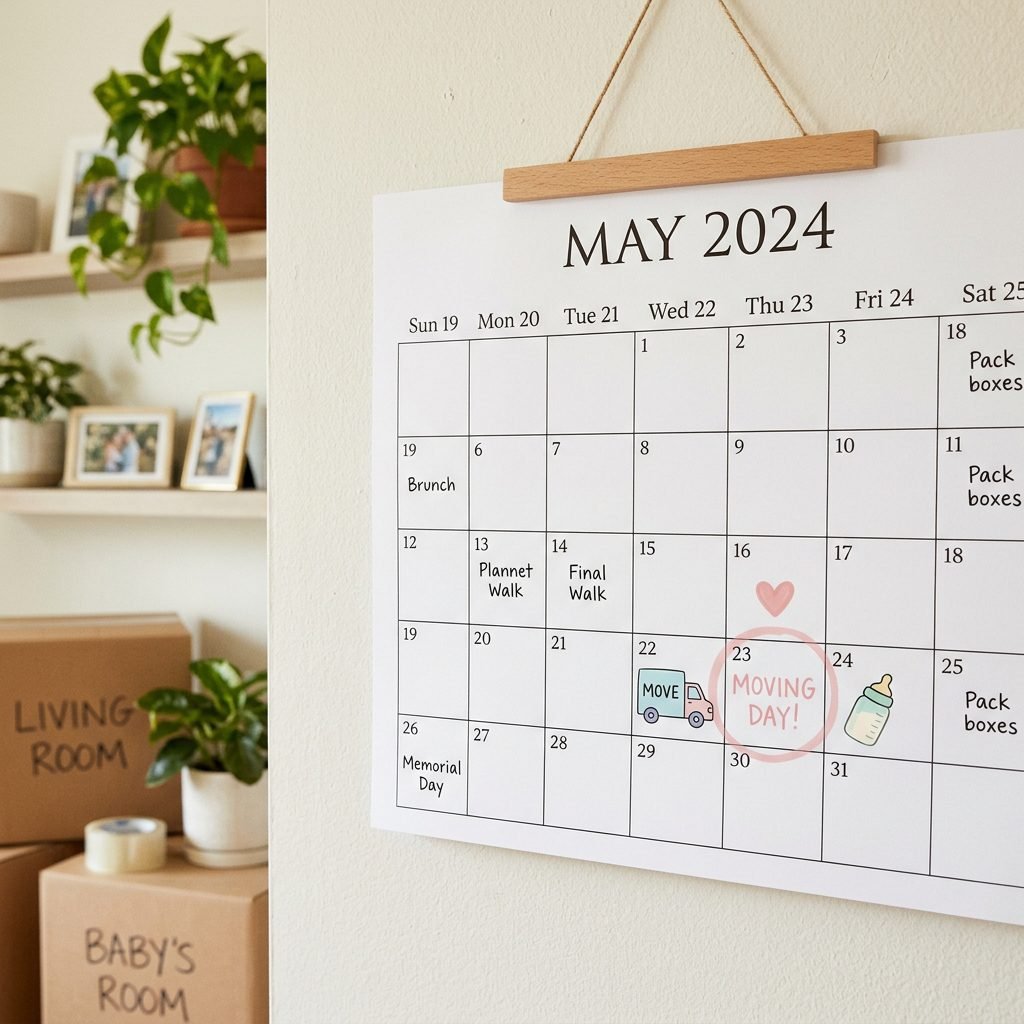
Moving while pregnant is a marathon, not a sprint. Your energy levels will fluctuate wildly depending on which trimester you are in. As your doula, I’m giving you permission to delegate everything. This is not the time to be a hero and carry boxes.
Trimester-Based Moving Strategy
If you are in your first trimester, the nausea and fatigue are real. Focus on the paperwork and the ‘sorting’ phase from the comfort of your couch. If you are in your second trimester, this is your ‘golden window.’ Use this burst of energy for the actual move and the heavy organizing. If you are in your third trimester, your job is ‘The Director.’ Sit in a comfortable chair and point to where the boxes should go.
- Hire Professional Packers: If it is in the budget, do it. The physical strain of packing 200 boxes is not worth the risk of Braxton Hicks or back strain.
- The ‘First Night’ Bag: Pack a bag with your prenatal vitamins, comfortable maternity pajamas, your nursing pillow, and basic toiletries. You shouldn’t have to hunt through 10 boxes to find your magnesium supplements.
- Deep Clean Service: Hire a professional crew to deep clean the new house before you move in. This ensures that all the dust, dander, and ‘old house smell’ are gone before you start your new life there.
The ‘Mama-Ready’ Inspection Checklist Summary

To make this easy for you, here is a quick-reference list to take with you to your walkthrough. Don’t be afraid to ask the ‘silly’ questions. Your Realtor and Inspector work for you.
- Foundation & Structure: Any signs of shifting that could lead to mold-inviting cracks?
- Roof & Gutters: Are they diverting water away from the house to prevent basement dampness?
- Electrical: Are there enough outlets for the ‘baby tech’ in the nursery?
- Plumbing: Is the water pressure sufficient for those long, postpartum recovery showers?
- Lead/Asbestos: Has the age of the home been verified and testing performed?
- HVAC: Are the filters clean and is the airflow balanced between rooms?
- Security: Are the locks sturdy? Is there a place for a security camera/baby monitor setup?
- Ergonomics: Can I navigate this house with a stroller or while healing from surgery?
Conclusion
Your New Chapter Starts Here
Buying a home while pregnant is a massive undertaking, but it is also a beautiful act of love. You are quite literally building the nest where your child will take their first steps and say their first words. By being diligent with your inspection checklist now, you are gifting yourself a postpartum period that is focused on bonding and healing, rather than repairs and safety concerns. Trust your gut, Mama. If a house feels ‘off’ or ‘unhealthy,’ listen to that motherly intuition. Your perfect sanctuary is out there, and you are doing an amazing job preparing for it. Take a deep breath, have a glass of water, and let’s get those keys!