Why Tape-Down High Chair Sensory Bags are a Lifesaver for Busy Moms
The Quiet Magic of a Squishy Bag
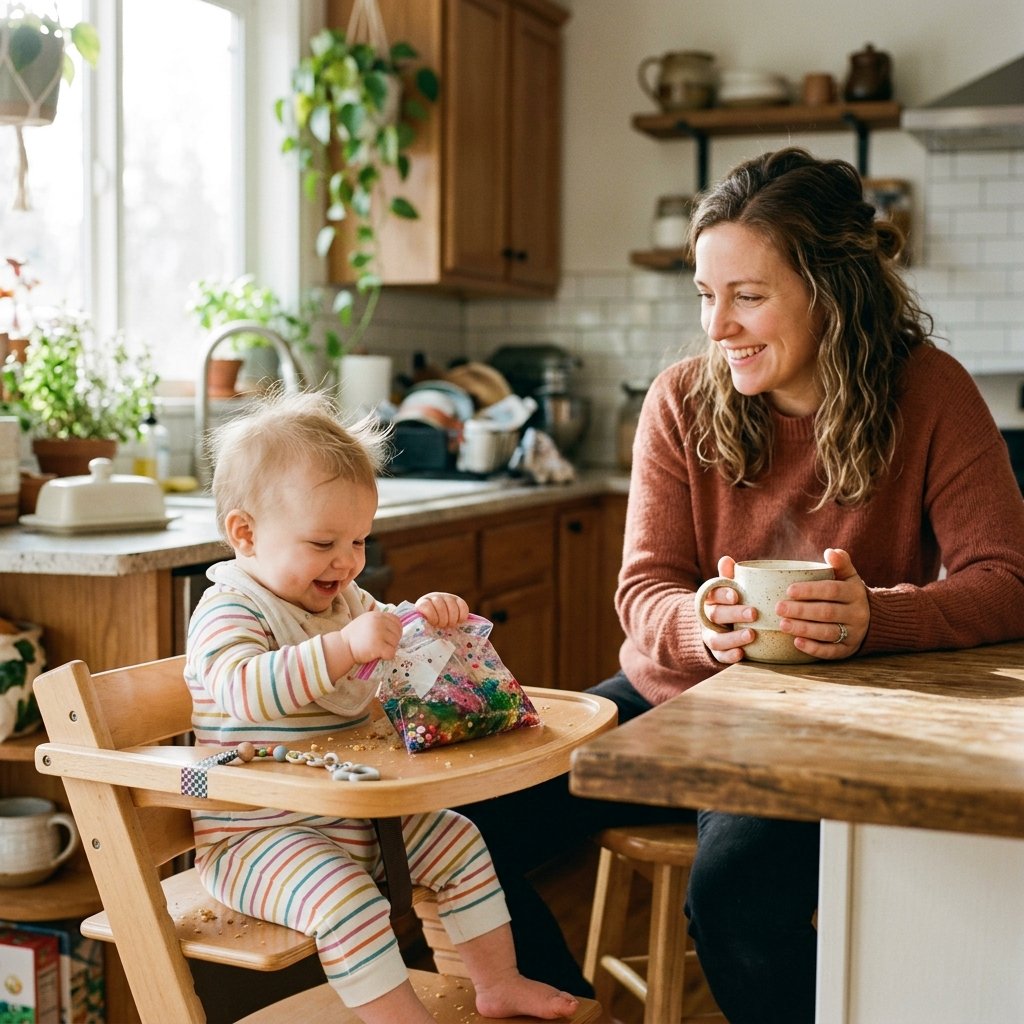
Mama, I see you. It is 5:30 PM, the ‘witching hour’ is descending, and you are trying to navigate the delicate dance of boiling pasta while keeping a curious, wiggly baby entertained. You want to foster their development, but the thought of cleaning up one more glitter explosion or yogurt-smeared tray makes you want to retreat into your postpartum robe forever. This is where the tape-down sensory bag enters the chat. As a doula and a fellow mom, I have seen these simple DIY wonders transform the high chair from a place of frustration into a laboratory of learning. These bags aren’t just toys; they are a bridge to fifteen minutes of much-needed peace, allowing you to finish a task—or simply breathe—while your little one explores textures, colors, and cause-and-effect without a single drop of mess on your clean floors.
Remember, sweet mama: providing a safe space for your baby to explore is not just ‘distracting’ them; it is an act of love that builds their brain and preserves your sanity.
The Developmental Power of Tactile Exploration
Why Squishing is Secretly Learning
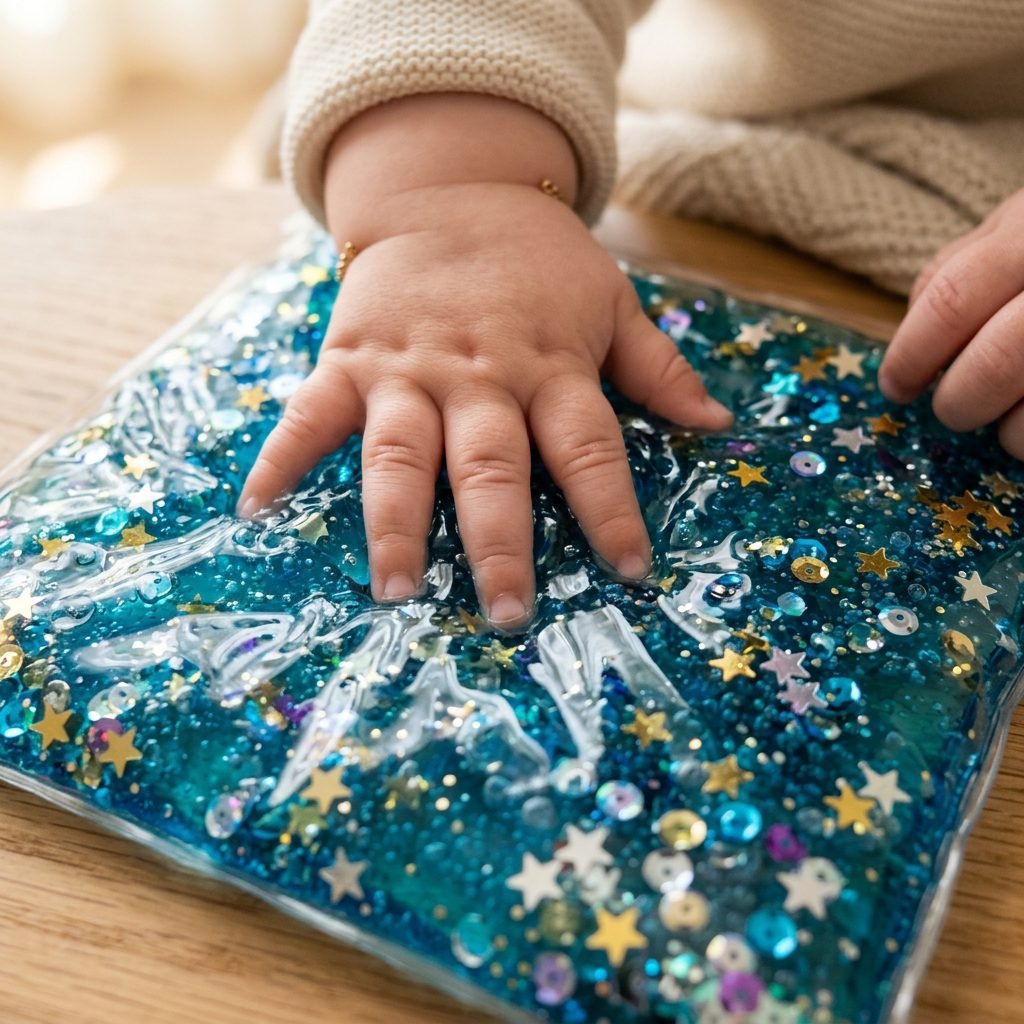
From a doula-expert perspective, sensory play is the ‘work’ of the infant. When your baby presses their tiny fingers against a gel-filled bag, they are engaging in tactile stimulation that sends a rush of information to their developing brain. This isn’t just about fun; it is about building neural pathways. By observing how a sequin moves from one side of the bag to the other, they are learning about object permanence and spatial awareness. Unlike loose sensory bins that require a ‘containment strategy,’ the tape-down bag allows for high-intensity sensory input with zero cleanup. This is particularly beneficial for babies who are just starting to sit up in their high chairs, as it encourages them to use their core muscles and fine motor skills to reach and prod at the fascinating world beneath their fingertips.
Benefits for Fine Motor Development
- Pincer Grasp Practice: Trying to ‘catch’ a floating bead inside the bag.
- Hand-Eye Coordination: Moving objects to specific corners of the bag.
- Bilateral Integration: Using both hands to squish and move the filler.
| Developmental Milestone | Sensory Bag Activity | Benefit |
|---|---|---|
| Fine Motor Skills | Poking small beads | Strengthens finger muscles |
| Visual Tracking | Following moving glitter | Improves eye-muscle coordination |
| Cognitive Cause/Effect | Squishing gel to move items | Teaches that actions have results |
Budget-Friendly Bliss: Your Sensory Bag Shopping List
Creating Magic with Kitchen Staples
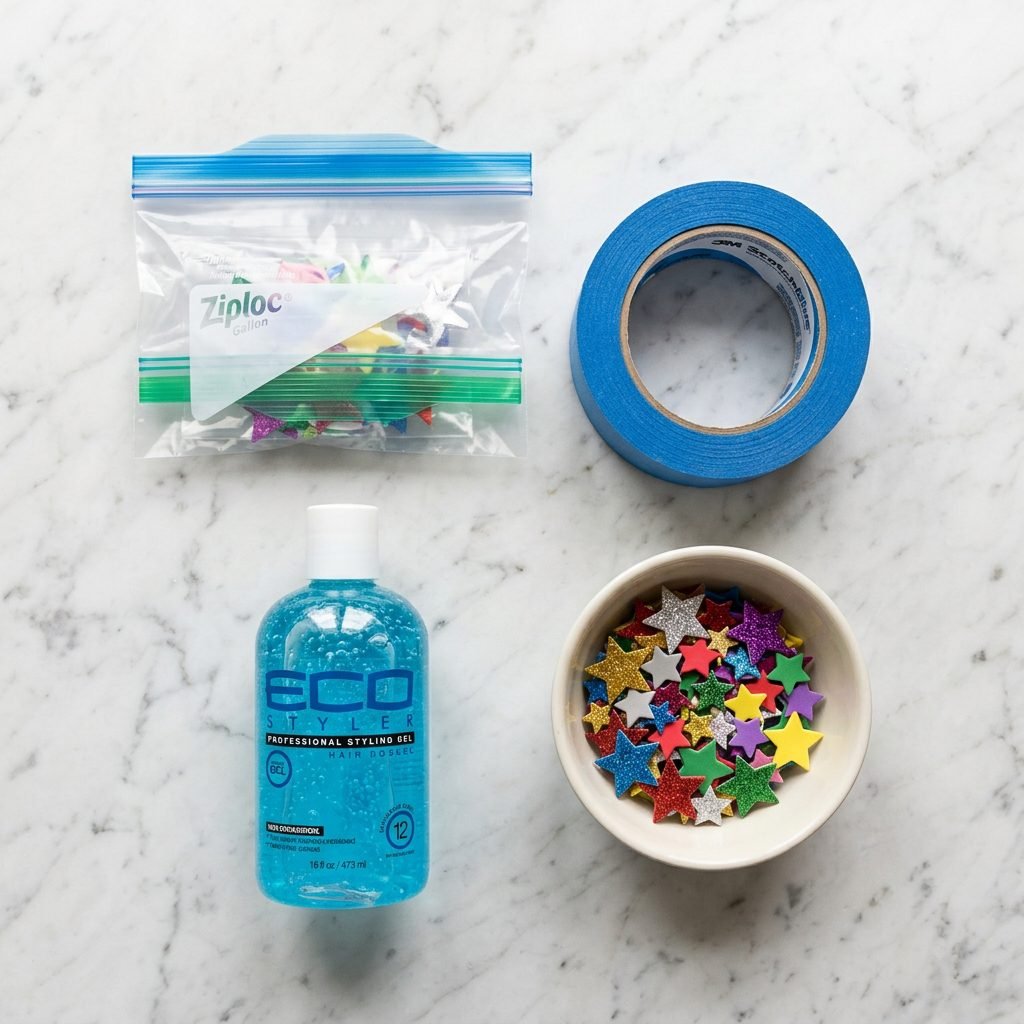
One of the reasons I advocate for these sensory bags is that you likely already have 90% of the ingredients in your pantry or junk drawer. There is no need for expensive, battery-operated plastic toys that lose their charm in five minutes. We are looking for high-contrast, high-interest items that provide visual and physical feedback. The ‘tape-down’ element is the most critical part—it ensures the bag stays exactly where it should, preventing the classic ‘baby-drops-toy-mom-picks-it-up’ game that we all know too well. Here is a breakdown of what you will need to create a variety of bags on a budget.
| Item | Purpose | Estimated Cost |
|---|---|---|
| Heavy-Duty Freezer Bags | The ‘container’ (Use Double-Zip) | $0.50 per bag |
| Clear Hair Gel or Water | The sensory medium (filler) | $2.00 per bottle |
| Painters Tape or Washi Tape | Securing the bag to the tray | $3.00 per roll |
| Glitter, Beads, or Sequins | Visual interest and ‘treasure’ | $1.00 (or free from craft bin) |
| Food Coloring | Changing the theme/mood | $0.25 per drop |
Pro Tip: Always use freezer-grade bags. They are significantly thicker and more resistant to those sharp little fingernails than standard sandwich bags.
The Master Class: How to Create a Leak-Proof Tape-Down Bag
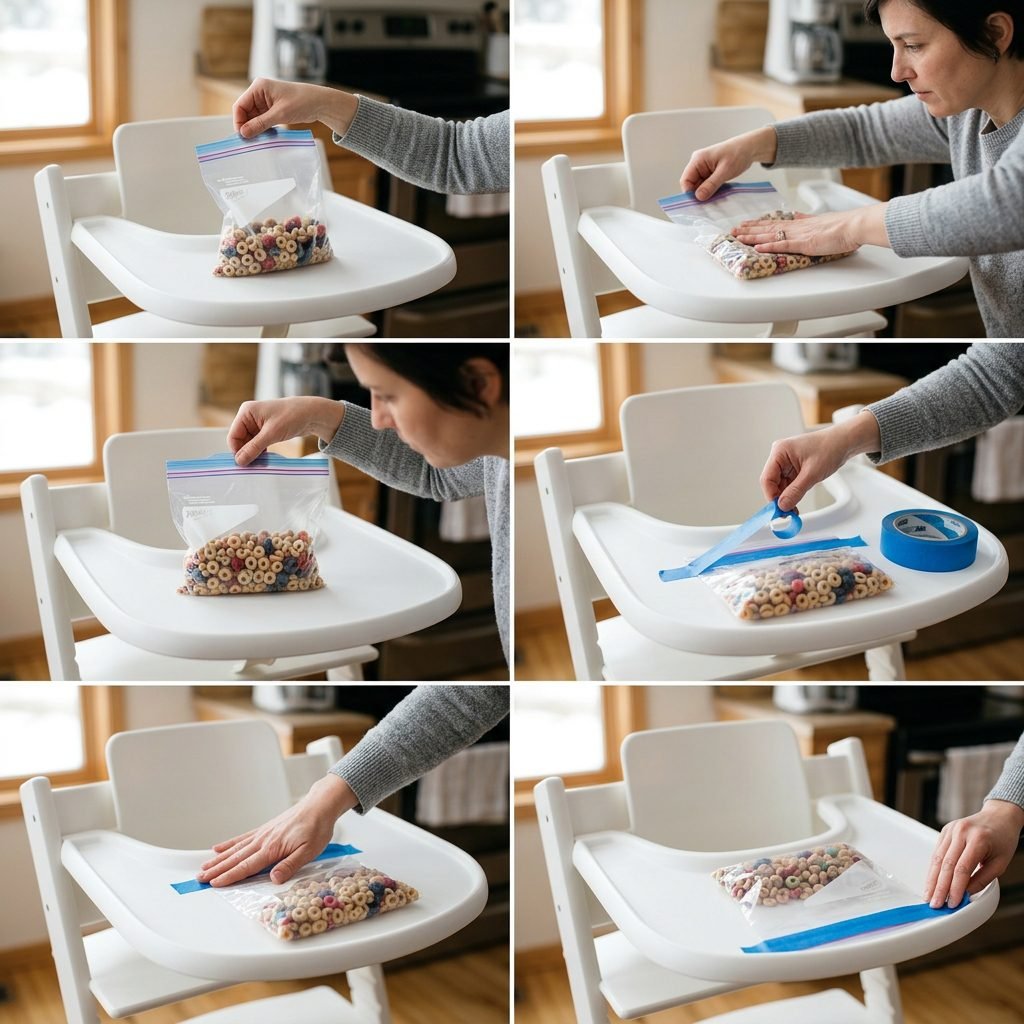
Step-by-Step to Mess-Free Success
The fear of a ‘gel-splosion’ is real, but if you follow this method, your bags will be virtually indestructible. The secret lies in the air-removal process and the reinforcement of the seal. Follow these steps to ensure your kitchen stays clean and your baby stays engaged.
- Fill the Bag: Squeeze about half a bottle of clear hair gel into the freezer bag. Add your ‘treasures’ like sequins, flat glass beads, or a few drops of food coloring.
- The Air Purge: This is the most important step! Lay the bag flat on the counter and gently push all the air toward the opening. If there is air left inside, the bag is more likely to pop under the pressure of baby’s hands.
- Seal and Double-Seal: Zip the bag shut. For extra security, run a strip of clear packing tape over the zipper seal itself.
- The Tape-Down: Place the bag on the high chair tray. Use Painters Tape to tape down all four sides. Using painters tape ensures that you won’t leave a sticky residue on your high chair once the play session is over.
- The Test: Give it a firm press yourself to ensure no gel escapes.
Why the Tape-Down Method Wins
When you tape the bag to the tray, you are creating a stable ‘screen’ for the baby. It prevents them from picking up the bag and chewing on the plastic, which is a common safety concern. It also forces them to use their poking and sliding motions rather than just gripping, which targets different muscle groups in the hands.
Sensory Recipes: Themes for Every Developmental Stage
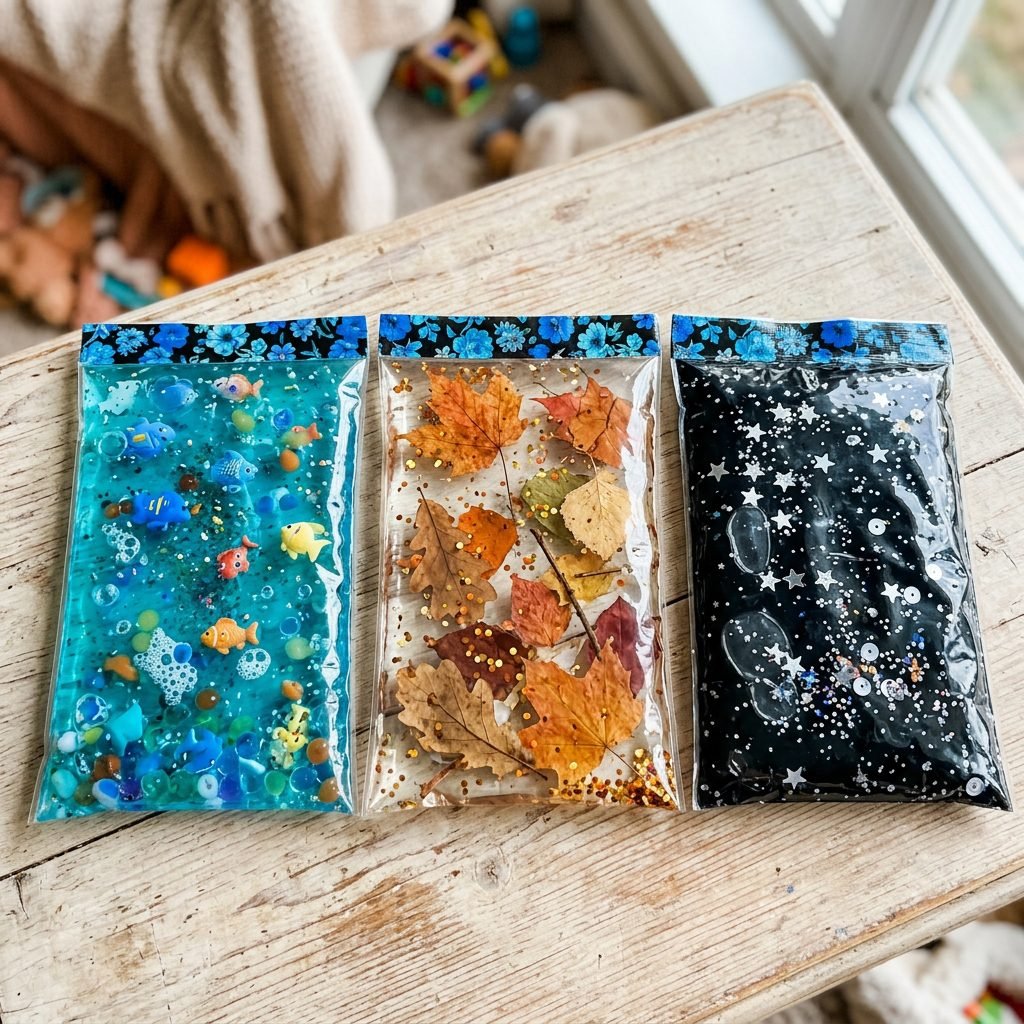
Customizing the Experience
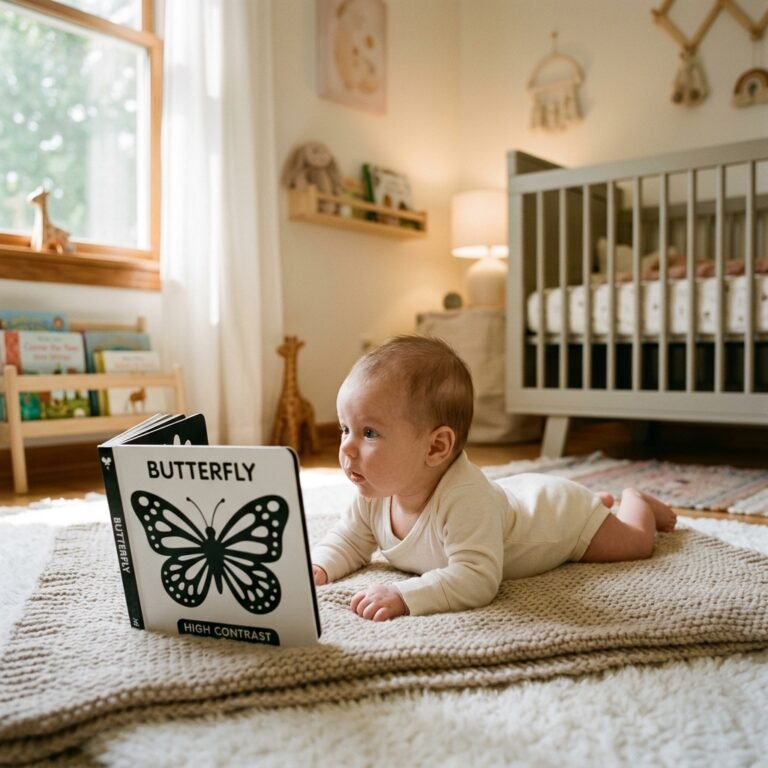
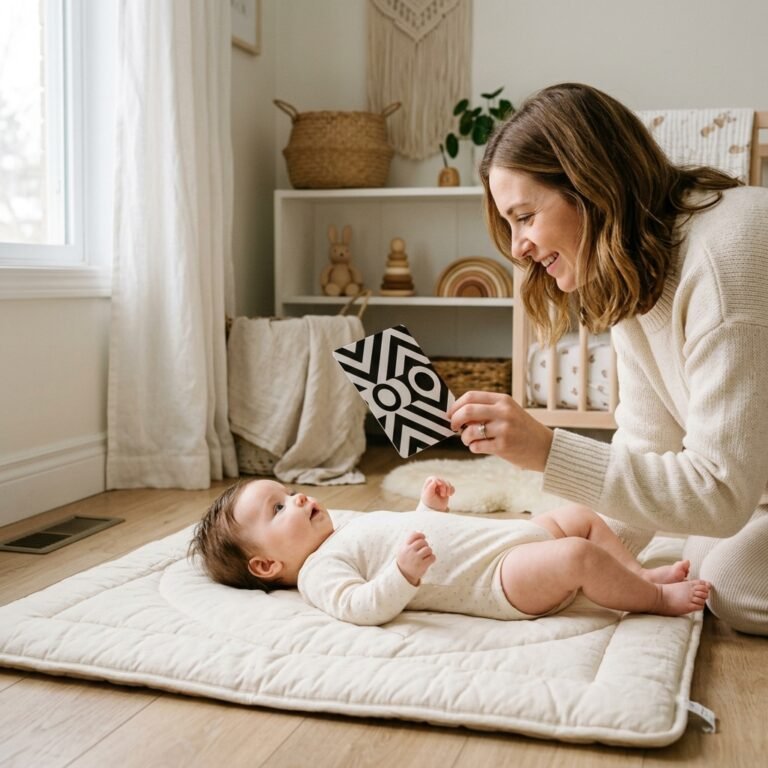
Just like we change our wardrobe with the seasons, you can change your sensory bags to keep your baby’s interest piqued. Depending on your baby’s age and visual development, different ‘recipes’ will be more effective. For newborns (using this during supervised tummy time on the floor), high-contrast black and white is king. For older babies in high chairs, vibrant colors and ‘I-Spy’ elements are wonderful.
The ‘Ocean Discovery’ Bag
- Base: Blue hair gel or water with blue food coloring.
- Add-ins: Plastic fish toys, glitter, and small smooth shells.
- Goal: Encourage the baby to ‘push’ the fish through the ‘water.’
The ‘High-Contrast’ Bag (Best for 3-6 Months)
- Base: Clear hair gel.
- Add-ins: Black and white large buttons or laminated paper circles.
- Goal: Visual stimulation and focus.
The ‘Nature Walk’ Bag
- Base: Just a little bit of water and baby oil (creates cool bubbles).
- Add-ins: Pressed leaves, flower petals, or flat seeds.
- Goal: Exploring natural textures safely.
| Theme | Primary Color | Best For |
|---|---|---|
| Ocean | Blue | Toddlers (I-Spy) |
| Galaxy | Black/Purple | Visual Tracking |
| Autumn | Orange/Red | Texture exploration |
| Spring | Clear/Green | Color Recognition |
The ‘Golden Hour’ Hack: Why This is a Mental Health Win for Moms
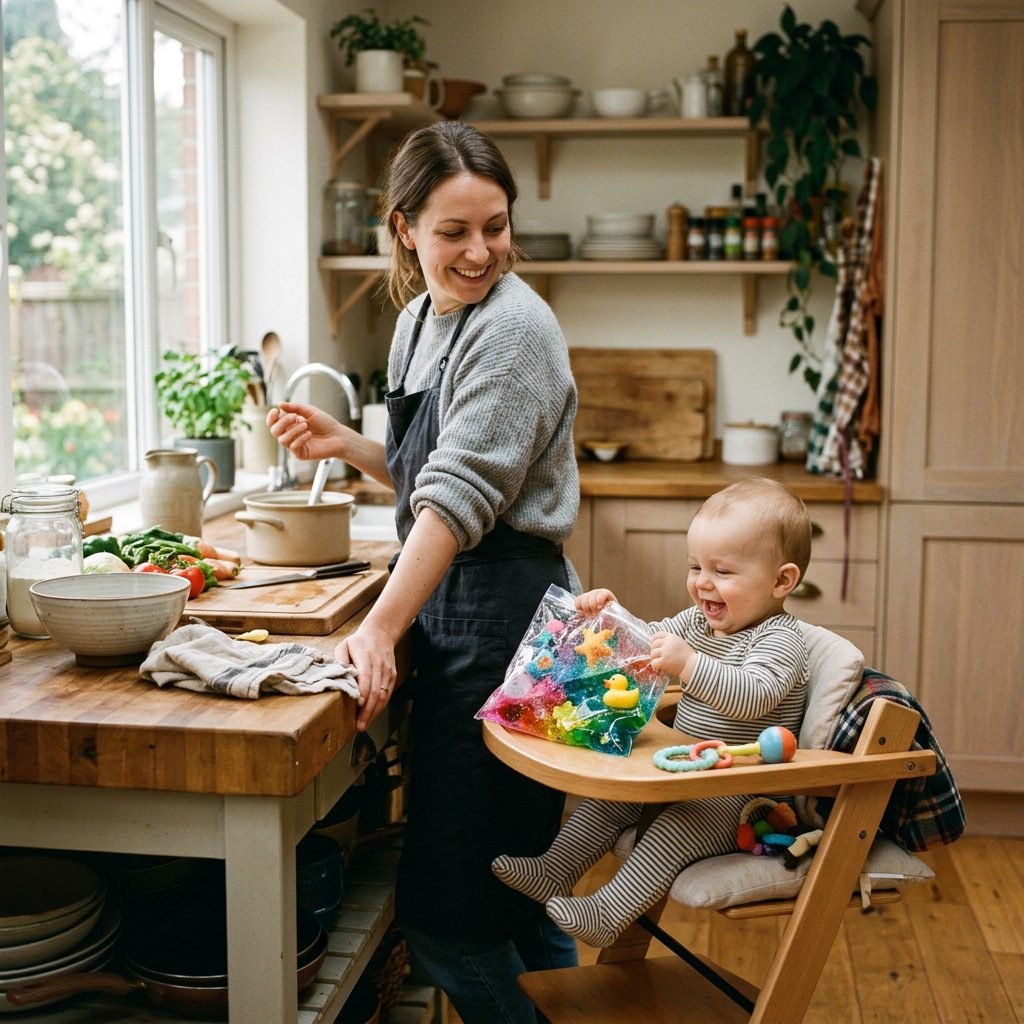
Reclaiming Your Kitchen Time
Mama, we need to talk about your mental health. The transition from the workday (or the all-day-mom-work) to the evening routine is often the most stressful time of day. We often feel guilty for ‘placing’ the baby in a high chair, but when you provide a Tape-Down Sensory Bag, you aren’t just placing them; you are positioning them for success. This activity is what we call ‘independent play’ in the pediatric world. It allows the baby to enter a ‘flow state’—that beautiful moment where they are so focused on a task that the rest of the world fades away.
What You Can Do in 15 Minutes:
- Drink a cup of coffee while it is still actually hot.
- Prep dinner without a baby attached to your hip or pulling at your pant legs.
- Take five deep breaths and listen to a podcast or your favorite song.
- Unpack the dishwasher in peace (the ultimate luxury!).
You cannot pour from an empty cup. If a sensory bag gives you the space to breathe, it is the most valuable tool in your nursery.
By integrating this into your daily rhythm, you teach your baby that they are capable of entertaining themselves, which is a foundational skill for toddlerhood and beyond. It reduces the ‘overstimulation’ that often leads to evening meltdowns for both mom and baby.
Safety Standards for Your Little Explorer
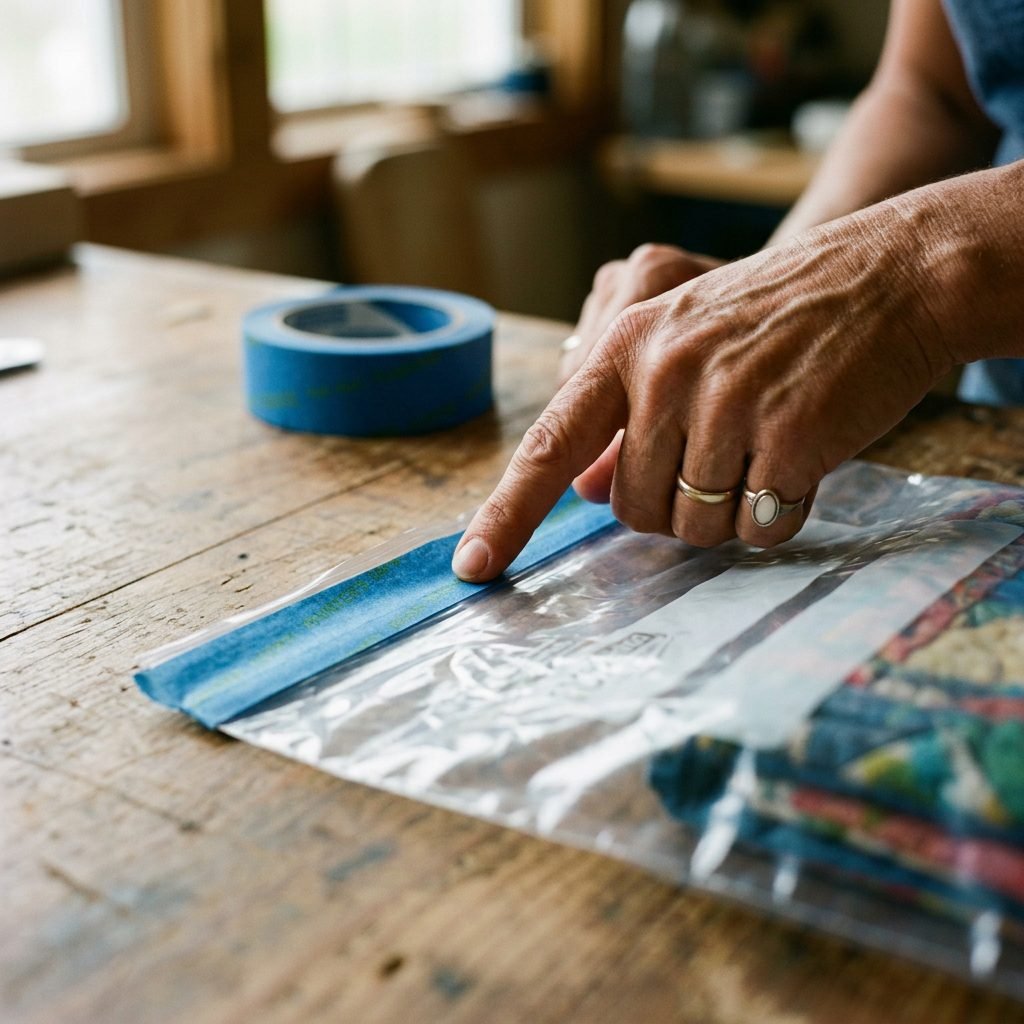
Keeping Playtime Secure
As a doula, safety is always my top priority. While sensory bags are generally very safe, they do require active supervision. Plastic bags and small beads can become hazards if a bag were to break. Here is my ‘Safe Play’ checklist to keep in your back pocket.
- Check for Wear and Tear: Before every play session, inspect the bag for thinning plastic or leaks. If it looks cloudy or stretched, toss it and make a new one.
- Temperature Matters: If you store your bags in the fridge (which can be a lovely cooling sensation for teething babies!), ensure they aren’t *too* cold for sensitive skin.
- Non-Toxic Fillers: Always use non-toxic hair gel and food-grade dyes just in case of an accidental leak.
- Tape Security: Ensure the tape is pressed down firmly so there are no loose edges that the baby could peel up and put in their mouth.
By following these simple guidelines, you create a ‘Yes Space’—an environment where you don’t have to keep saying ‘no’ or ‘don’t touch that.’ In a ‘Yes Space,’ your baby is free to explore, and you are free to relax.
Conclusion
Your New Favorite Routine
The beauty of the tape-down high chair sensory bag lies in its simplicity. It is a low-cost, high-reward solution to one of motherhood’s most common challenges: finding a moment of peace while nourishing your child’s growth. Whether you are a first-time mom or a seasoned pro, adding this to your ‘tool kit’ of activities will save your sanity during those long afternoons. So, the next time you feel the stress rising, grab a bag, some gel, and your favorite tape. You’ve got this, Mama. You are providing a world of wonder for your little one, one squish at a time.