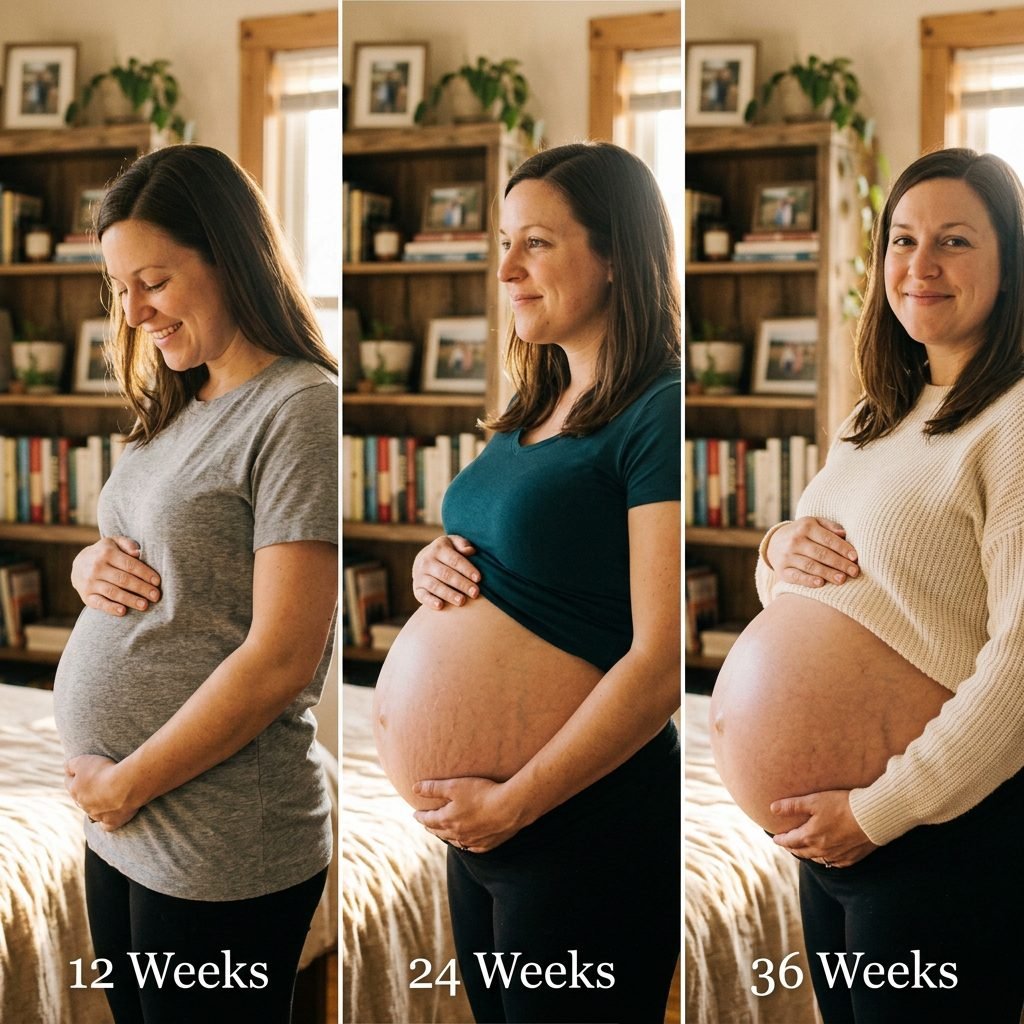
Double Trouble: Watch This Incredible Twin Belly Progression (Photos)
Welcome to the Incredible World of Multiples, Mama!
There is something undeniably magical—and, let’s be honest, a little bit daunting—about finding out you are carrying two tiny souls instead of one. When I first sit down with my twin-expecting mamas as their doula, the first thing we often talk about isn’t the nursery or the car seats; it’s the incredible transformation their bodies are about to undergo. A twin pregnancy is not just a ‘double’ version of a singleton pregnancy; it is its own unique, powerful, and demanding journey.
Seeing a twin belly progression is more than just a visual treat; it is a roadmap of strength. Your body is expanding in ways that defy logic to provide a home for two growing humans. In this guide, we are going to walk through the week-by-week changes you can expect, the physical realities of carrying ‘double trouble,’ and the doula-approved secrets to staying comfortable when your center of gravity starts to feel like a distant memory. Grab a glass of water, put your feet up, and let’s celebrate the miracle of your growing bump.
The First Trimester: The Secret Expansion and Early Pop

In those early weeks, while the world might not see a bump yet, you certainly feel it. For twin mamas, the ‘pop’ often happens much earlier than with a singleton. This is due to higher levels of HCG (Human Chorionic Gonadotropin) and the fact that your uterus is already working overtime to accommodate two gestational sacs.
What’s Happening Inside
By week 10 to 12, your uterus is already the size of a large grapefruit, whereas a singleton mama might still have a uterus the size of an orange. You might notice your favorite jeans feeling snug by week 8. This isn’t just ‘bloat’ (though progesterone certainly brings plenty of that); it is your body prioritizing space for your duo.
- Increased Blood Volume: Your body is producing nearly 50% more blood to support two placentas.
- Early Round Ligament Pain: Because the uterus expands faster, those supporting ligaments may pull and stretch earlier, causing sharp, quick pains when you sneeze or roll over.
- The Fatigue Factor: Carrying twins is like running a marathon every day while sitting still. Your metabolic rate is soaring.
Sweet mama, if you are feeling exhausted at week 9, listen to your body. You aren’t ‘lazy’—you are literally building two nervous systems simultaneously.
| Metric | Singleton Pregnancy (Avg) | Twin Pregnancy (Avg) |
|---|---|---|
| Uterine Size at 12 Weeks | Small Grapefruit | Large Cantaloupe equivalent |
| Weight Gain Goal (1st Tri) | 1-5 lbs | 4-6 lbs |
| HCG Levels | Standard Range | Significantly Elevated |
The Second Trimester: The Golden Era of the Twin Bump
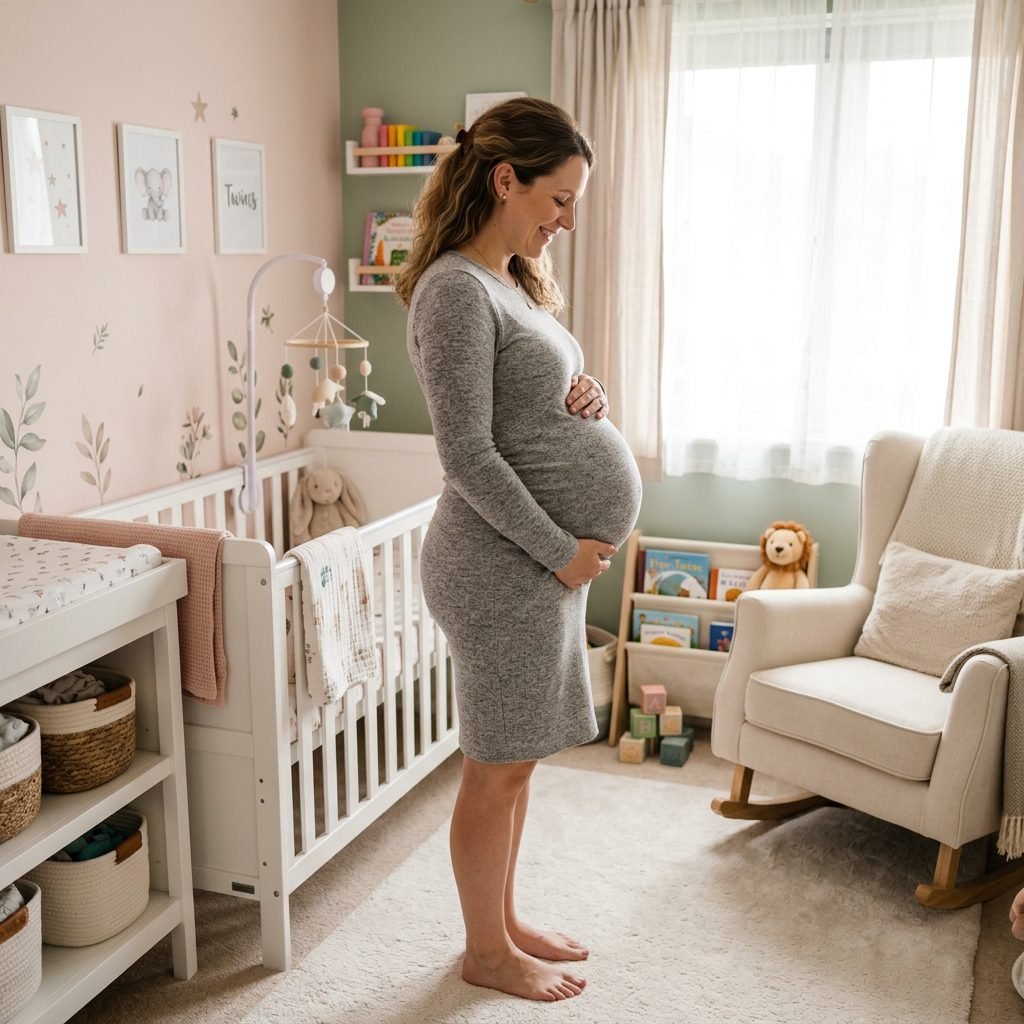
Weeks 14 through 27 are often referred to as the ‘Golden Era.’ For many twin mamas, the morning sickness begins to fade, and the bump truly takes center stage. This is when the progression becomes visually stunning. By week 20, many twin mamas measure the size of a full-term singleton pregnancy (roughly 38-40 weeks).
Managing the Rapid Growth
As your belly moves upward and outward, your skin will begin to feel the tension. This is the time to start a dedicated hydration and moisture ritual. While ‘stretch marks’ are largely genetic, keeping the skin supple can help with the intense itching (pruritus) that comes with rapid expansion.
- Focus on Protein: You need an extra 25-30 grams of protein per day compared to a singleton pregnancy to support muscle and tissue growth for two.
- The ‘B-Belly’ vs. ‘D-Belly’: Many mamas worry about the shape of their bump. Whether it’s high, low, or has a slight indentation in the middle (the B-shape), it is all perfectly normal for multiples.
- Sleep Adjustments: This is the time to invest in a high-quality U-shaped pregnancy pillow. Supporting the bump from both sides is crucial as the weight shifts.
| Week Milestone | Visual Progression Description | Doula Tip |
|---|---|---|
| Week 16 | The ‘Unmistakable’ Bump | Start wearing a light support camisole. |
| Week 20 | Navel begins to flatten or ‘pop’ | Use a belly oil twice daily. |
| Week 24 | Belly reaches the ribcage | Eat smaller, more frequent meals. |
The Third Trimester: Maximum Occupancy and Physical Resilience

Welcome to the home stretch! In a twin pregnancy, the third trimester usually starts ‘early’ in terms of physical sensation. By week 28, you are carrying the equivalent weight of a very large single baby, but you still have weeks to go. This is when the progression looks truly ‘incredible’—the belly is often so large that it seems to defy gravity.
The Physical Reality of 30+ Weeks
Your organs are being squished into the upper corners of your torso. Heartburn, shortness of breath, and frequent urination are the ‘triple threats’ of the twin third trimester. Your fundal height (the measurement from pubic bone to top of uterus) will likely exceed 40 centimeters well before your due date.
- Pelvic Floor Pressure: The weight of two babies, two placentas, and double the amniotic fluid puts immense pressure on your pelvic floor. Gentle pelvic tilts and ‘lifting’ the bump can offer relief.
- Braxton Hicks: These practice contractions are very common with twins as the uterine muscle is stretched to its limit. Always stay hydrated, as dehydration is a leading cause of irritable uterus.
- The ‘Waddle’: Your center of gravity has shifted significantly forward. Wear supportive, flat shoes to prevent falls and back strain.
Affirmation: My body is expansive. My body is a wide, welcoming home. I am capable of carrying this beautiful weight.
| Comfort Strategy | What it Helps With | How to Do It |
|---|---|---|
| The Rebozo Sifting | Back pain & Belly weight | Have a partner use a long scarf to gently lift and jiggle the belly. |
| Symphysis Pubis Relief | Pelvic pain | Keep knees together when getting out of the car or bed. |
| Inverted Breathing | Shortness of breath | Sit upright and breathe into your back ribs rather than your chest. |
Doula Secrets: How to Stay Comfortable While Carrying Multiples

As a doula, my goal is to help you navigate the ‘discomforts’ so you can enjoy the ‘wonders.’ Carrying twins requires a proactive approach to body mechanics. You cannot ‘power through’ a twin pregnancy the same way you might a singleton; you must move with intention.
The Support Kit for Twin Mamas
Don’t wait until you are in pain to seek support. I recommend my twin mamas start using support tools as early as week 20.
- The Maternity Support Belt: Look for a heavy-duty, multi-strap belt that offers ‘lift’ from the bottom and ‘support’ across the back. This takes the pressure off your round ligaments and cervix.
- KT Tape (Kinesiology Tape): This is a game-changer for twin bumps. You can apply strips of tape in a ‘basket weave’ pattern under the belly to provide a constant, gentle lift that doesn’t feel bulky under clothes.
- Hydrotherapy: Getting into a pool is the only time a twin mama feels weightless. The buoyancy of the water takes 100% of the pressure off your joints and spine.
- Chiropractic Care: See a Webster-certified chiropractor. Keeping your pelvis aligned is essential for making sure both babies have optimal room to move and grow.
| Support Type | Pros | Cons |
|---|---|---|
| Belly Band | Easy to put on, seamless under clothes. | Light support only. |
| Rigid Support Belt | Excellent weight distribution. | Can be bulky and hot. |
| KT Taping | 24/7 support, can wear in shower. | Skin can get irritated by adhesive. |
Capturing the Magic: Tips for Your Twin Progression Photos
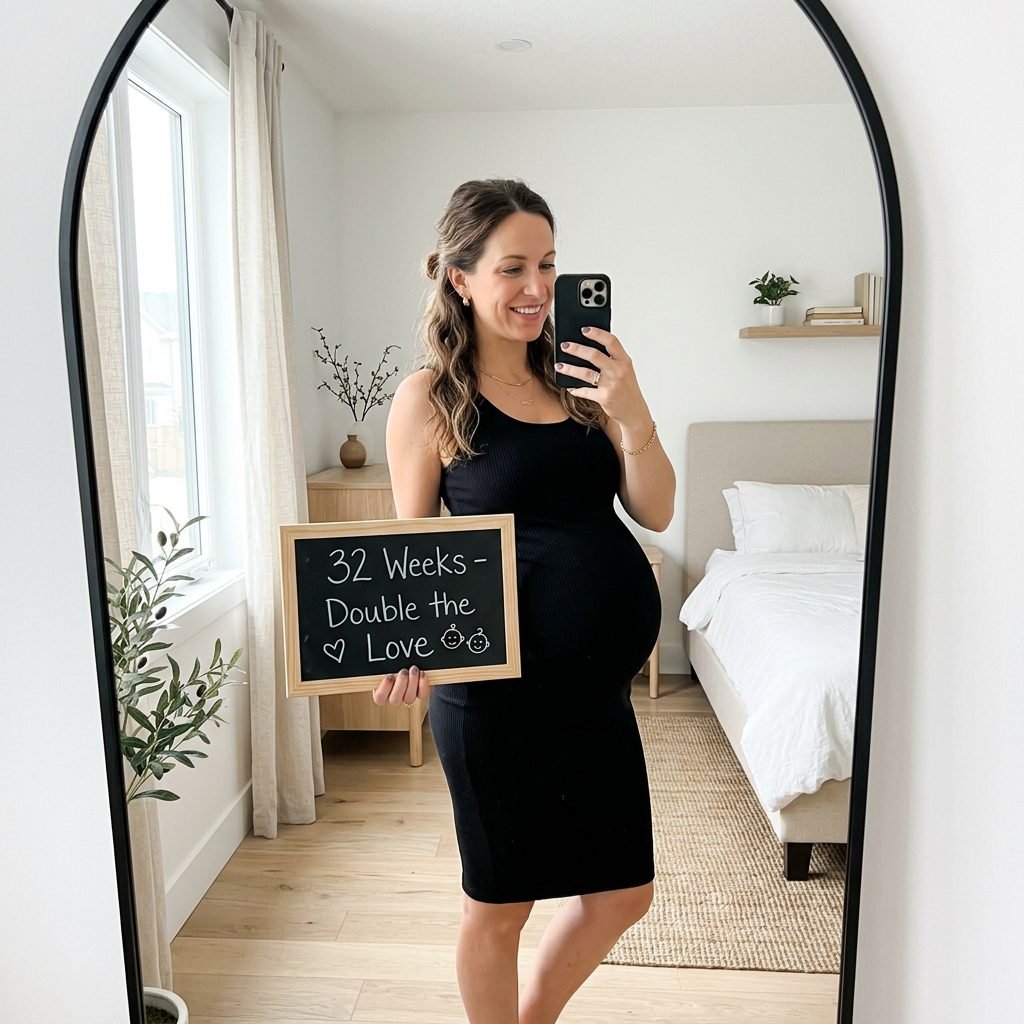
You will want to remember this! Even if you feel ‘huge’ or tired, these photos will be a testament to your body’s power. Because twin pregnancies often end earlier than singleton ones (the average twin birth is at 36-37 weeks), you need to start your photo series early and take them frequently.
Photography Best Practices
- Consistency is Key: Wear the same outfit for every photo. A simple black maternity bodycon dress or a sports bra and leggings work best to show the true growth of the bump.
- The Side Profile: This is the most dramatic angle for twins. Stand in the same spot, with the same lighting, every time.
- Include Scale: Hold a fruit that represents the babies’ size (e.g., two limes, two grapefruits, two pineapples) or simply use a chalkboard to mark the weeks.
- Don’t Forget the ‘Front View’: While the side view shows the ‘out,’ the front view shows the ‘wide.’ Twin bumps often extend far past the hips!
Pro-Tip: Take your ‘final’ photos around week 32 or 33. Many twin mamas find that by week 35, they are too uncomfortable for a formal photoshoot, or the babies decide to make an early appearance!
Conclusion
You Are Doing Something Heroic
Watching a twin belly progression is a visual reminder that the female body is capable of extraordinary feats. From that first tiny bulge to the magnificent, skin-stretched-to-the-limit bump of the third trimester, every inch gained is a testament to your love for your babies. Yes, it is heavy. Yes, it is exhausting. But mama, you are literally a living miracle.
As you prepare for the arrival of your two little ones, remember to be as gentle with yourself as you are with them. Your body is doing the work of two, and it deserves double the grace, double the rest, and double the celebration. You’ve got this, sister!