Walking Hurts? How to Manage SPD Pain and Finally Get Some Sleep Tonight
Oh Mama, I Feel You.
If you are reading this while gingerly shifting your weight from one hip to the other, or if you just spent the last ten minutes trying to get out of bed without feeling like your pelvis was being pulled apart by wild horses, please know one thing first: you are not imagining this pain, and you are certainly not alone.
That sharp, stabbing, or grinding sensation in your pubic area is often referred to as Symphysis Pubis Dysfunction (SPD), or more broadly, Pelvic Girdle Pain (PGP). As a doula, I’ve sat on the edge of many beds with mothers who felt like their bodies were betraying them in the home stretch. It’s a special kind of exhausting when even a trip to the bathroom feels like a marathon. But here is the good news: while we might not be able to make it disappear entirely until your sweet baby is in your arms, there are proven, practical, and deeply comforting ways to manage the ache and—most importantly—get you some restorative sleep tonight.
In this guide, we are going to dive deep into why this is happening, how to move your body like a ‘mermaid’ to avoid the sting, and the exact pillow fortress setup that will change your nights. Let’s get you some relief, sister.
Understanding the ‘Why’: Relaxin and Your Pelvic Bridge
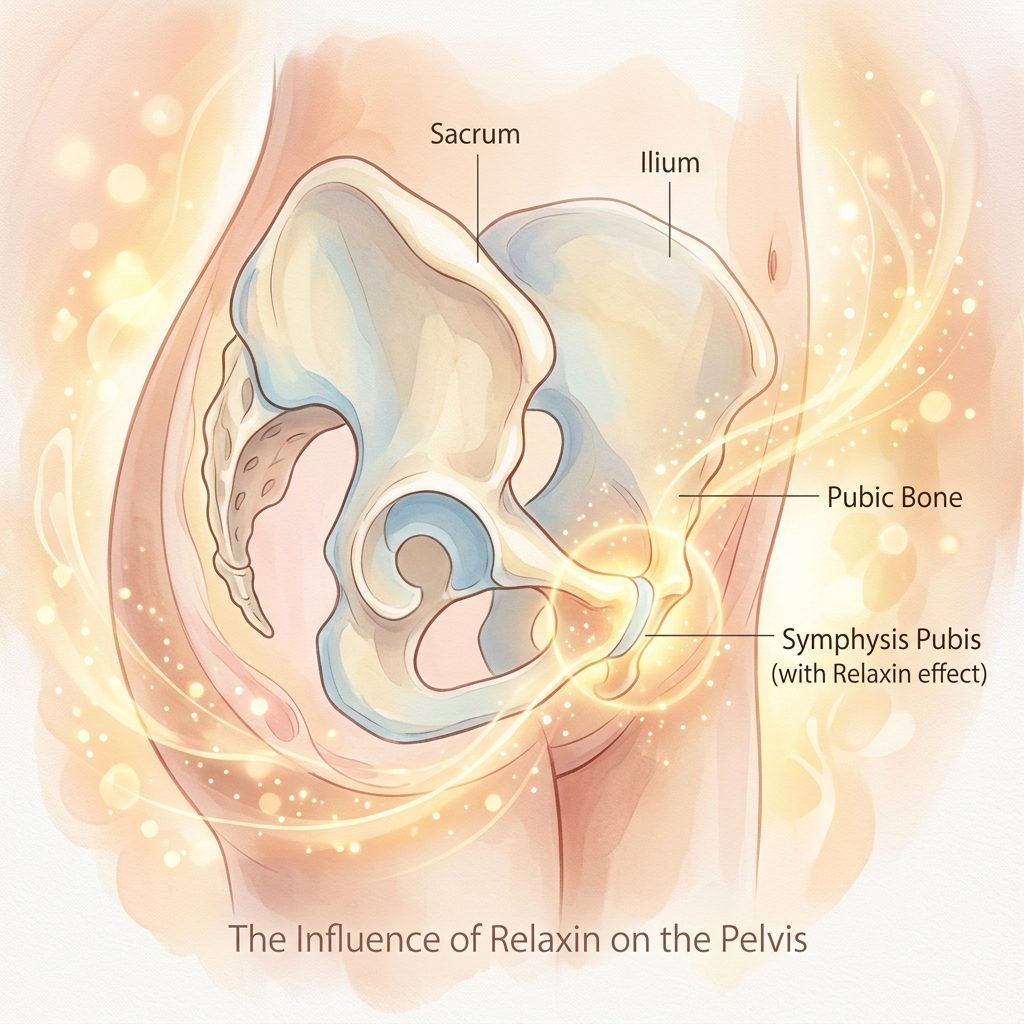
To manage the pain, we first have to understand what’s happening in that beautiful body of yours. Your pelvis isn’t one solid bone; it’s a cradle made of several parts held together by incredibly strong ligaments. The symphysis pubis is the joint right at the front, where the two halves of your pubic bone meet. Normally, this joint has a tiny gap of about 4-5mm.
The Role of Relaxin
During pregnancy, your body produces a hormone called Relaxin. Its job is exactly what it sounds like: it relaxes your ligaments to allow your pelvis to open up for birth. However, sometimes Relaxin does its job a little too well or a little too early. When those ligaments get too stretchy, the joint becomes unstable, leading to inflammation and that ‘grinding’ sensation you’re feeling.
Why It Hurts More Now
As your baby grows and their head moves lower into the pelvis, the pressure on this unstable joint increases. This is why asymmetrical movements—like lifting one leg at a time to put on pants or stepping out of a car—trigger that lightning-bolt pain. Your pelvic ‘bridge’ is swaying too much, and the nerves are sending out an SOS.
The Golden Rule: Keep Your Knees Together
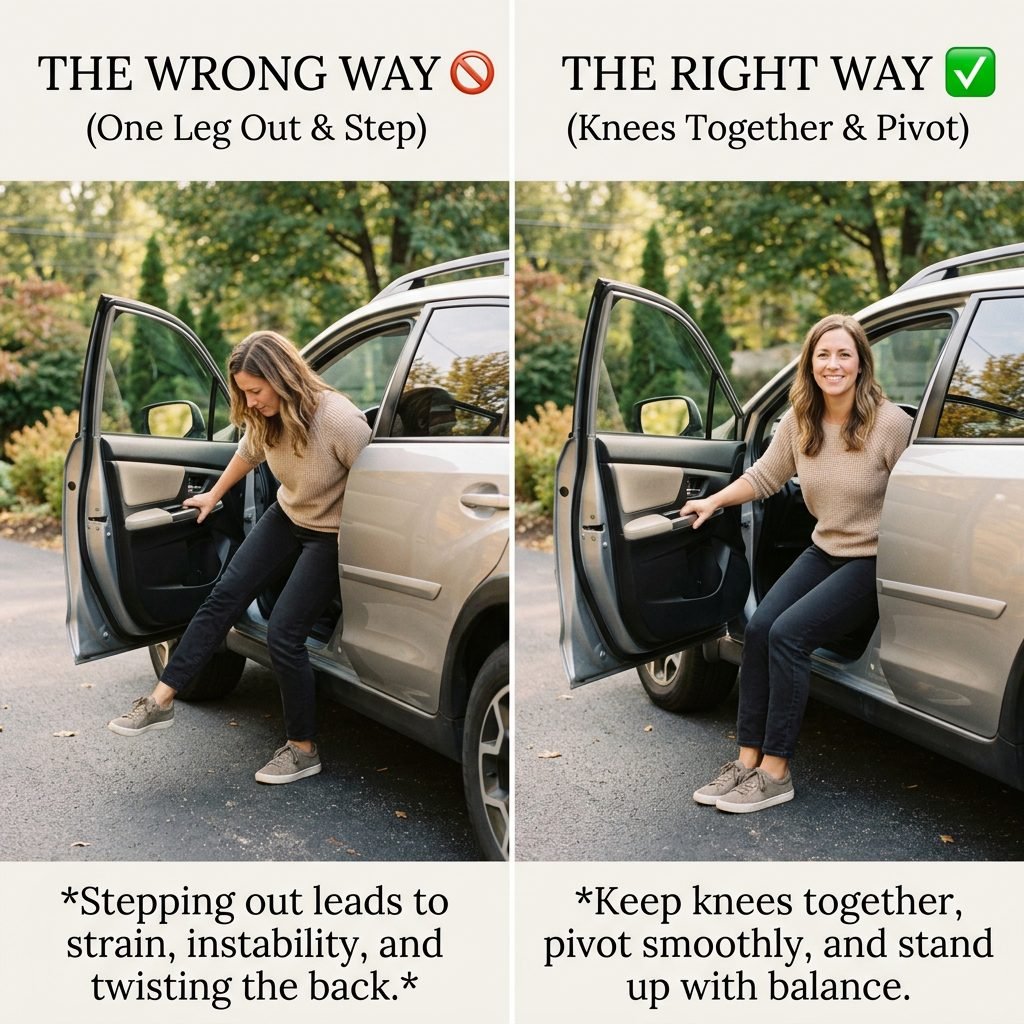
If I could give you one piece of advice to take through your day, it’s this: imagine you are wearing a very tight pencil skirt or that you are a mermaid. Asymmetrical movements are the enemy of SPD. When you spread your legs wide or put all your weight on one side, you are shearing that pubic joint.
Daily Movement Modifications
We need to change how you approach basic tasks to protect your pelvis. Use the following table to audit your daily habits:
| Action | What to Avoid (The Trigger) | What to Do (The Relief) |
|---|---|---|
| Getting Dressed | Standing on one leg to pull on leggings or underwear. | Sit down on the bed or a chair for every step of dressing. |
| Getting Out of Bed | Swinging one leg out at a time. | The ‘Log Roll’: Roll onto your side, keep knees glued together, and push up with your arms. |
| Getting In/Out of Car | Stepping out one foot at a time. | Sit on the seat first, then pivot both legs together like a swivel chair. |
| Walking | Taking long, purposeful strides. | Take short, small steps. Channel your inner penguin or geisha. |
| Stairs | Taking steps normally (one foot per step). | Take them one at a time. Lead with your ‘good’ leg going up, and the ‘aching’ leg going down. |
“Your body is asking for stability. By keeping your knees aligned, you are acting as the physical support your ligaments currently cannot provide. Move slowly, move mindfully.”
The Sleep Sanctuary: Building Your Pillow Fortress
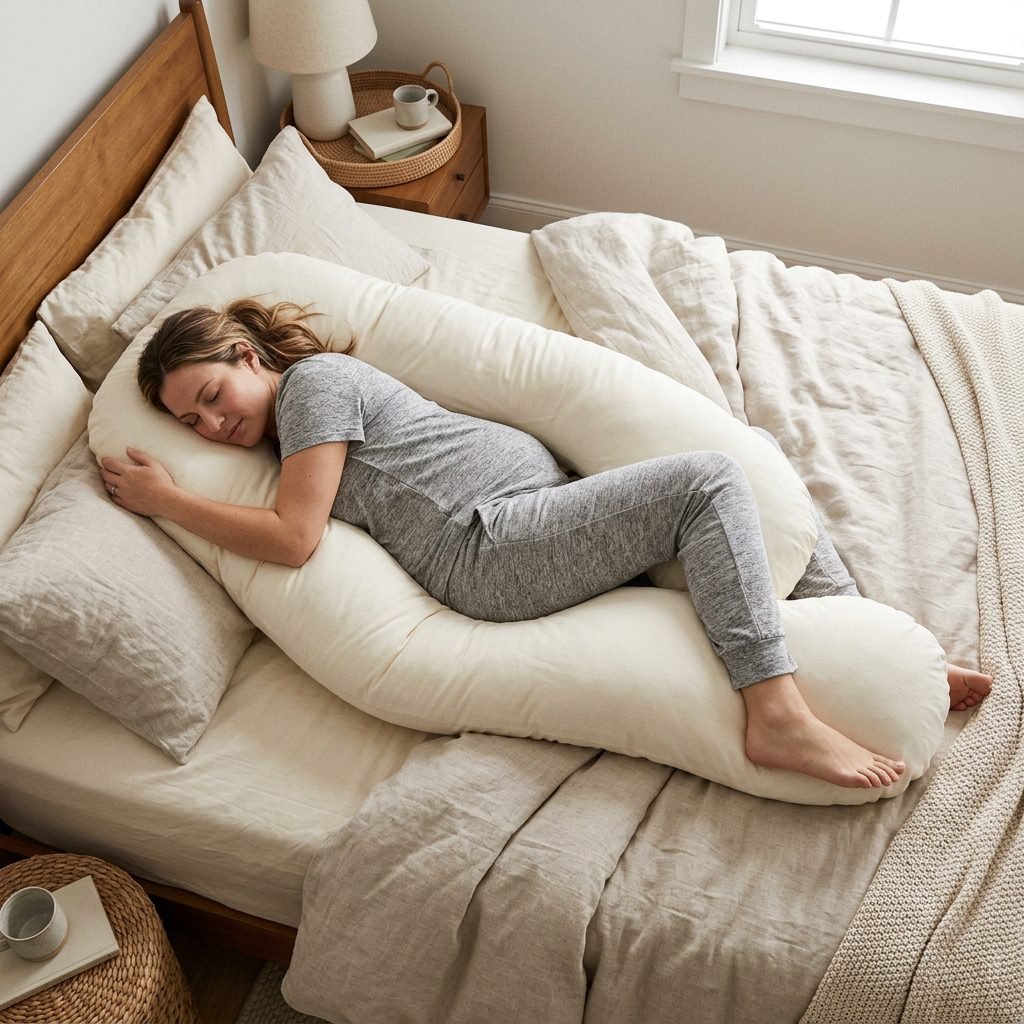
Sleep is when your body heals, but for an SPD sufferer, the night can be a cycle of painful tossing and turning. The goal for sleep is neutral pelvic alignment. If your top leg falls forward while you sleep on your side, it pulls on your hip and twists the pubic joint all night long.
The Ultimate SPD Sleep Setup
- The Knee-to-Ankle Support: Do not just put a small pillow between your knees. You need a long pillow (or two) that goes from your knees all the way down to your ankles. This keeps your entire leg parallel to the bed.
- The Belly Wedge: Use a small, firm wedge pillow tucked right under the ‘bump.’ This prevents the weight of the baby from pulling your torso forward and twisting your spine.
- The Back Stop: Place a long body pillow behind you. This prevents you from rolling onto your back (which can increase pelvic pressure) and provides a sense of ‘cradling’ security.
- Satin Sheets: This is a pro-doula secret! If you have trouble turning over, satin or silk pajamas/sheets reduce friction. You can slide into a new position rather than having to lift your hips and ‘heave’ your body over.
The ‘Log Roll’ Reset
If you must wake up to use the bathroom (and we know you will!), do not twist. Squeeze a pillow between your knees, roll your entire body as one solid unit (the log roll), and use your arms to walk yourself into a sitting position.
Physical Relief: Exercises and Support Tools
While rest is vital, we also want to gently engage the muscles that can support your pelvis: your deep core and pelvic floor. However, we must be careful not to overstretch.
Safe Movements for SPD
- Pelvic Tilts (Cat-Cow Lite): On all fours, gently tuck your tailbone and then return to neutral. Do not drop your belly too far down; focus on the ‘tuck’ to create space in the lower back.
- Deep Core Breathing: Inhale into your ribs, and as you exhale, gently ‘zip up’ your lower abdominal muscles as if you are giving your baby a firm hug.
- Avoid: Lunges, wide squats, butterfly stretches, or any yoga pose that requires a wide stance.
Support Tools That Actually Work
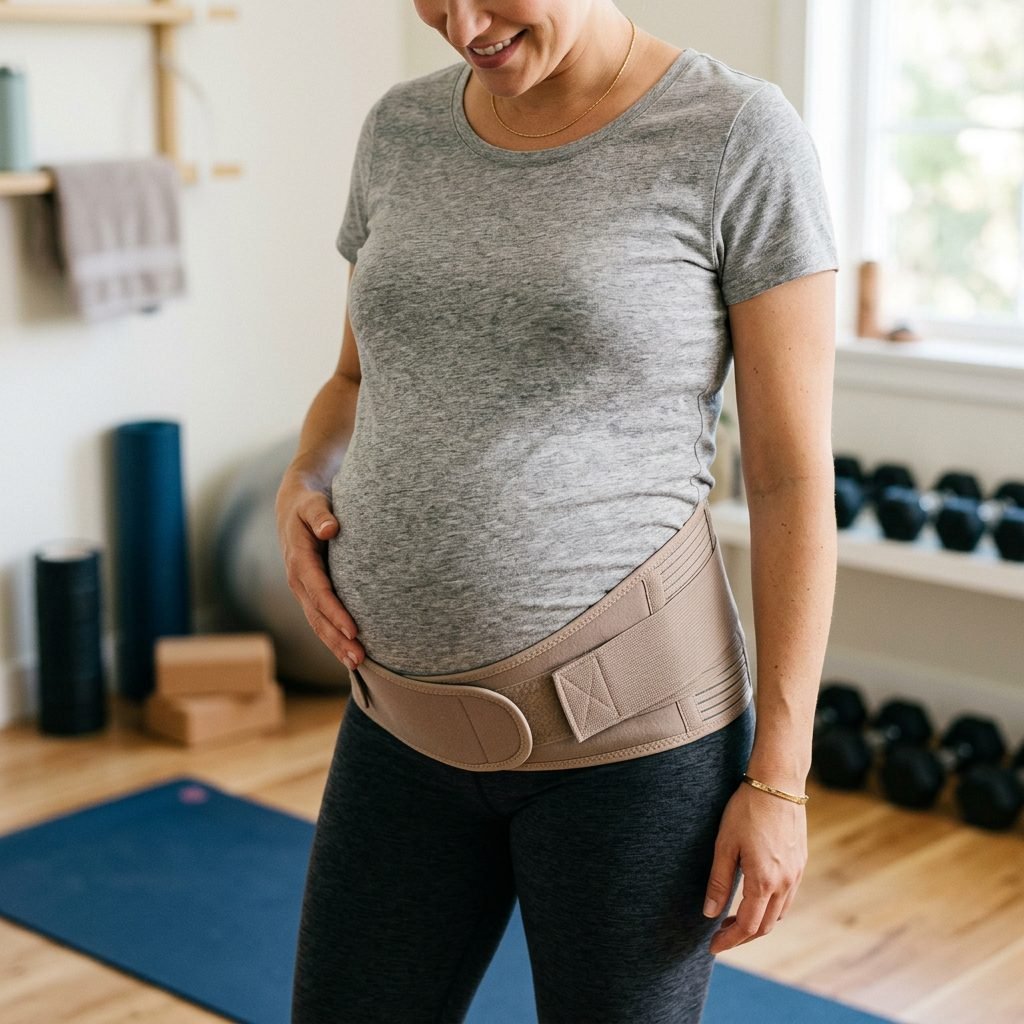
Sometimes you need a little external help to hold things together. Many of my clients find immense relief using a Sacroiliac (SI) Belt or a maternity support binder. These belts wrap low around the hips (not the waist!) and provide a firm squeeze that mimics the job of your ligaments. Kinesiology Tape (KT Tape) can also be applied by a professional to create a ‘sling’ for the belly, taking the direct weight off the pubic bone.
When to Call the Professionals
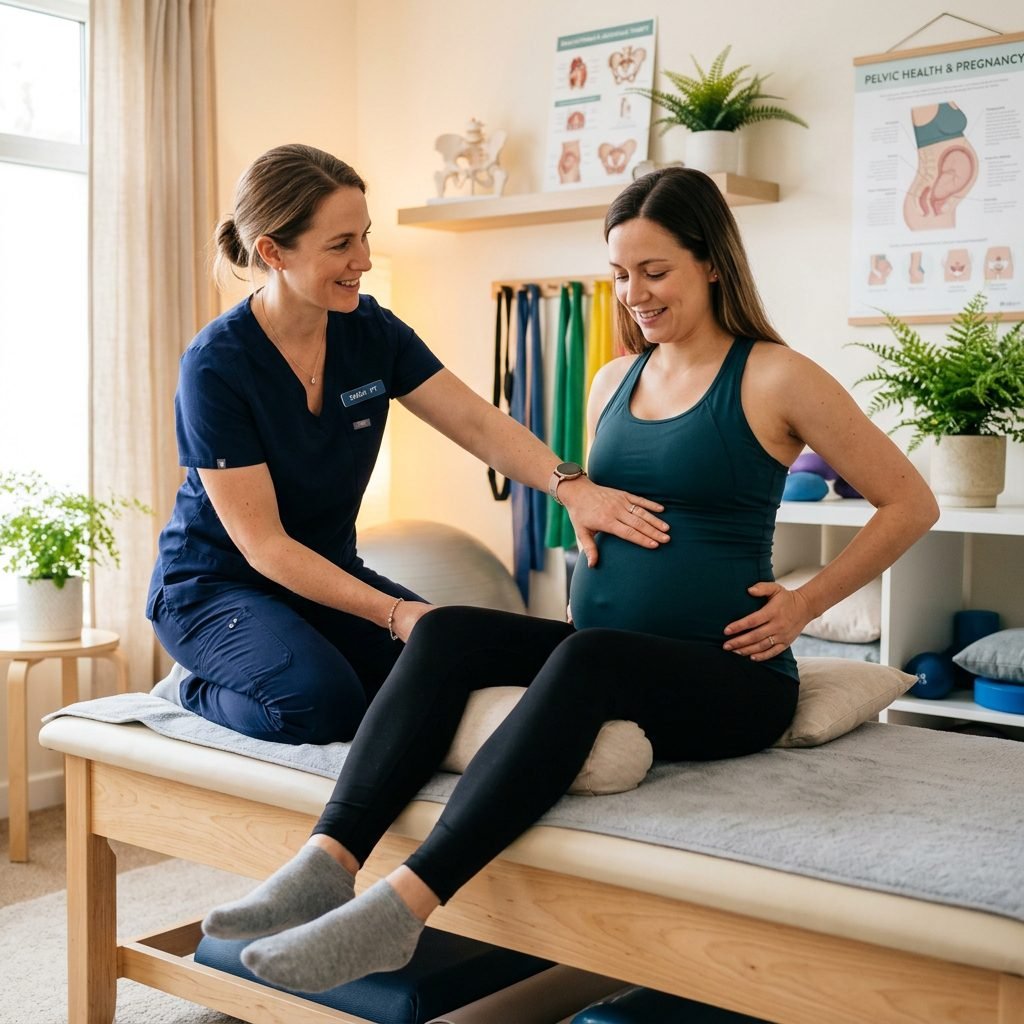
Mama, you don’t have to ‘white knuckle’ your way through this. SPD is a recognized medical condition, and there are specialists who can help. If your pain is preventing you from performing basic daily tasks or is causing significant distress, it’s time to build your support team.
The Pelvic Floor Physical Therapist (PFPT)
A PFPT is the gold standard for SPD care. They can perform manual releases on tight muscles (like your inner thighs, which often overcompensate) and give you a tailored plan to stabilize your joints. Even one or two sessions can be life-changing.
Osteopaths and Chiropractors
An osteopath or a Webster-certified chiropractor can help ensure your pelvis is aligned. If one side of your pelvis is ‘hitched’ higher than the other, it will worsen the SPD pain. Gentle adjustments can bring the ‘bridge’ back into balance.
“Asking for help isn’t a sign of weakness; it’s a sign of a mother who is prioritizing her health so she can be ready for the marathon of birth and postpartum.”
Conclusion
The Finish Line is in Sight
I know it feels like you’ve been ‘waddling’ forever, and the thought of another few weeks of this pain feels daunting. But I want to remind you of something vital: for the vast majority of women, SPD pain begins to fade almost immediately after birth as the Relaxin leaves your system and the pressure is removed. You are doing the hard work of carrying life, and your body is making incredible sacrifices to make that happen.
Tonight, I want you to try the pillow fortress. I want you to move like a mermaid. I want you to be so very gentle with yourself. You are not ‘broken’; you are just very, very flexible right now. Take it one short step at a time, and remember that you are a total warrior.
Sending you so much love and a very restful night’s sleep.