

Exhausted or Sick? 5 Silent Signs of Postpartum Thyroiditis Every Mom Should Know
Welcome Home, Mama: Let’s Talk About That ‘Fog’
Oh, sweet mama, I see you. You are navigating the most beautiful, chaotic, and transformative season of your life. Between the midnight feedings, the endless diaper changes, and the overwhelming love you feel for that tiny human, it is completely normal to feel tired. But sometimes, there is a kind of exhaustion that feels different—a heaviness that doesn’t lift after a nap, or a jittery energy that keeps your heart racing even when the house is finally quiet. If you have been whispering to yourself, ‘Is this just motherhood, or is something wrong?’ I want you to know that your intuition is a gift, and it is worth listening to.
Postpartum Thyroiditis (PPT) is a condition that affects roughly 5% to 10% of women within the first year after giving birth. Because its symptoms so closely mimic the ‘standard’ postpartum experience—fatigue, mood swings, and weight changes—it often goes undiagnosed, leaving mothers feeling like they are failing when they are actually dealing with a significant hormonal imbalance. As your doula and sister in this journey, I am here to help you peel back the layers of the ‘new mom fog’ and look at what your body might be trying to tell you.
You are not failing, and you are not ‘just’ tired. You are navigating a biological shift that is real, valid, and manageable. You deserve to feel like yourself again.
The Great Mimicker: Why Thyroiditis Stays Hidden
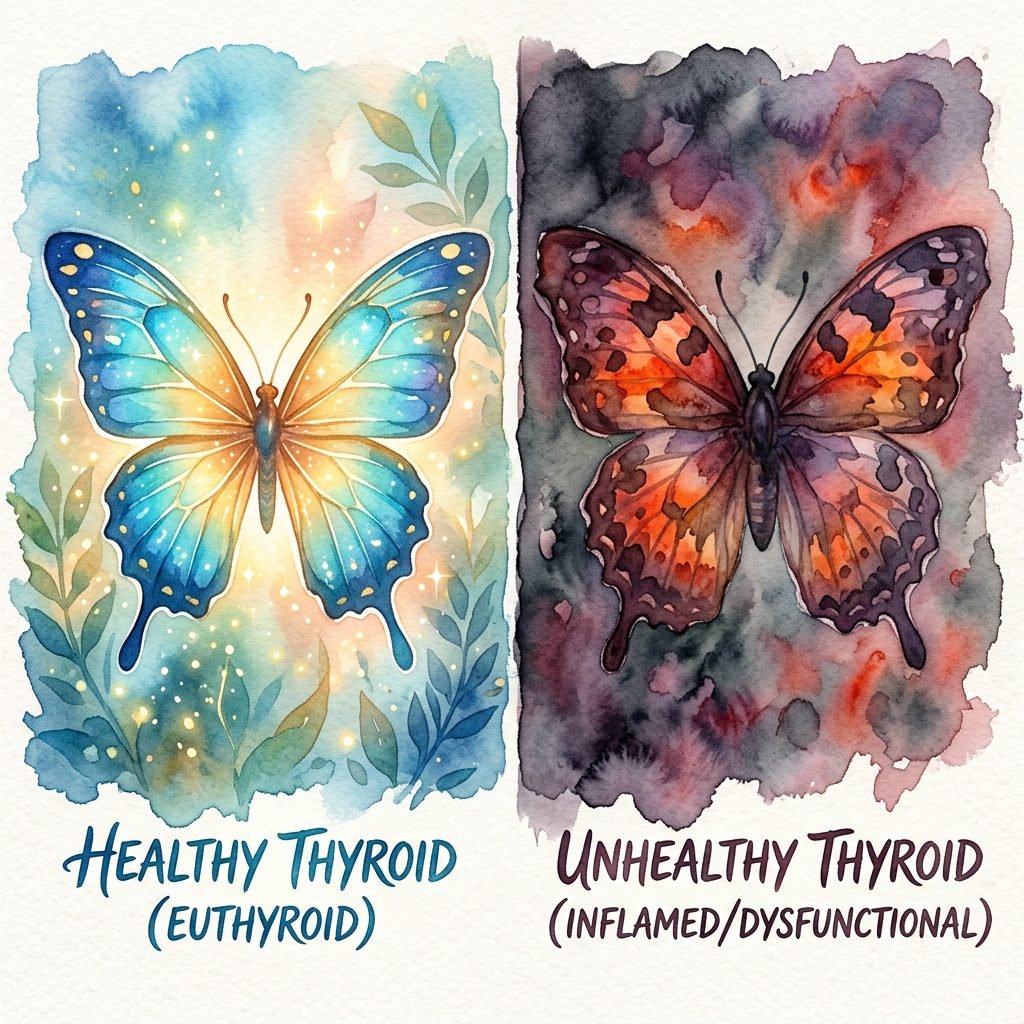
Postpartum Thyroiditis is often called ‘The Great Mimicker’ because it wears the mask of common postpartum struggles. The thyroid gland—that butterfly-shaped powerhouse in your neck—regulates your metabolism, energy, and mood. After pregnancy, the immune system, which was slightly suppressed to protect the baby, ‘wakes up’ with a vengeance. For some of us, this causes the immune system to attack the thyroid, leading to inflammation.
The Two-Phase Rollercoaster
What makes this condition so tricky is its two-phase nature. It usually begins with a hyperthyroid phase (too much hormone), often occurring 1 to 4 months postpartum, followed by a hypothyroid phase (too little hormone) that can last for several months. Understanding this timeline is crucial for identifying why you might feel ‘wired’ one month and ‘completely depleted’ the next.
| Feature | Normal Postpartum Adjustment | Postpartum Thyroiditis Warning |
|---|---|---|
| Fatigue Level | Improves after a 4-hour sleep stretch. | Bone-deep exhaustion despite rest. |
| Heart Rate | Stable, varies with activity. | Palpitations or racing heart while resting. |
| Mood | Occasional ‘Baby Blues’ (days 3-10). | Intense anxiety or deep, lasting apathy. |
| Weight | Gradual loss over 6-12 months. | Rapid loss followed by sudden, unexplained gain. |
Sign 1: The ‘Wired but Tired’ Anxiety

During the initial hyperthyroid phase, your thyroid leaks excess hormones into your bloodstream. This can create a sensation I call the ‘Wired but Tired’ phenomenon. You are physically exhausted, yet your mind is racing, your hands might have a slight tremor, and you feel an inner sense of jitteriness that makes it impossible to rest even when the baby is sleeping.
- Heart Palpitations: Feeling like your heart skipped a beat or is thumping against your ribs.
- Irritability: A ‘short fuse’ that feels out of character for you.
- Insomnia: Not just being woken by the baby, but being unable to fall back asleep due to a racing mind.
If you find yourself feeling like you’ve had ten cups of coffee when you’ve had none, your thyroid might be working overtime.
Sign 2: The Unexplained Temperature Shift

We expect night sweats in the first few weeks after birth as our bodies shed excess fluid. However, if you are 4 to 6 months postpartum and suddenly find yourself shivering under three blankets while everyone else is comfortable, or if you feel an intense intolerance to heat, take note. The thyroid is your body’s internal thermostat. When it malfunctions, your ability to regulate temperature goes out the window.
What to Look For:
- Cold Intolerance: Feeling a deep chill in your bones that a hot shower won’t fix.
- Heat Sensitivity: Feeling overheated or sweaty in mild temperatures.
- Dry Skin: Not just standard dryness, but skin that feels parched and flaky despite moisturizing.
Sign 3: The ‘Muscle Melt’ and Physical Weakness

Postpartum recovery involves some aches and pains, but Postpartum Thyroiditis often brings a specific type of proximal muscle weakness. This means you might find it unusually difficult to climb stairs, lift the car seat, or even brush your hair. It’s not just ‘soreness’ from labor; it’s a feeling that your muscles have lost their ‘oomph.’
This often hits during the hypothyroid phase (the ‘low’ phase). Your metabolism slows down so much that your muscles aren’t getting the energy they need to function optimally. You might also notice joint pain or carpal tunnel-like symptoms in your wrists that seem to appear out of nowhere.
Sign 4: The Brain Fog Fortress

We joke about ‘Mom Brain,’ but the cognitive impairment associated with thyroiditis can feel like living inside a thick, grey cloud. This is more than just forgetting where you put your keys. It’s a struggle to follow a conversation, an inability to make simple decisions (like what to have for lunch), and a profound sense of mental slowness.
Mama, if the world feels like it’s moving in slow motion and you can’t quite catch up, please know this is a physiological symptom, not a personal failing.
In the hypothyroid phase, your brain literally lacks the thyroid hormone required for quick synaptic firing. This is often accompanied by a low, depressed mood that can be mistaken for Postpartum Depression (PPD). In fact, all women screened for PPD should also have their thyroid checked, as the symptoms overlap significantly.
Sign 5: The Hair Loss ‘Plus’

Postpartum hair loss (telogen effluvium) is a rite of passage for many, usually peaking around 3 to 4 months. However, if your hair is falling out in very large clumps, or if you notice your eyebrows thinning at the outer edges, this is a classic ‘silent sign’ of thyroid dysfunction. Thyroid hormones are essential for the development and maintenance of hair follicles. When they are out of balance, the hair growth cycle is disrupted more severely than standard postpartum shedding.
Other Physical Clues:
- Brittle Nails: Nails that crack or peel easily.
- Puffy Face: Noted especially around the eyes and jawline.
- Goiter: A slight, visible swelling at the base of your neck.
The Doula’s Guide to Advocating for Yourself

If these signs resonate with you, the next step is to speak with your healthcare provider. Sometimes, doctors are quick to dismiss these symptoms as ‘just being a new mom.’ I want you to be prepared to advocate for your health. Use the script below to start the conversation.
‘I have been tracking my symptoms, and they go beyond typical postpartum fatigue. I am experiencing [list symptoms like palpitations or extreme cold], and I would like a full thyroid panel, including TSH, Free T4, and TPO antibodies, to rule out Postpartum Thyroiditis.’
| Step | Action Item |
|---|---|
| 1. Track | Keep a 7-day log of energy, mood, and physical symptoms. |
| 2. Test | Request a blood test (TSH is the gold standard). |
| 3. Retest | Since PPT is phasic, one ‘normal’ test might not tell the whole story. |
| 4. Support | Discuss thyroid hormone replacement if you are in the hypo phase. |
Most cases of Postpartum Thyroiditis resolve on their own within 12 to 18 months, but that doesn’t mean you have to suffer in silence until then. Medication can help bridge the gap and help you feel like the vibrant mother you want to be.
Conclusion
You Are Your Own Best Advocate
Mama, your body has just performed the most incredible miracle—it grew, birthed, and is now sustaining a human life. It is okay if that process has left your internal systems a little bit out of sync. Recognizing the silent signs of Postpartum Thyroiditis isn’t about finding something ‘wrong’ with you; it’s about giving your body the support it needs to heal. You are doing an amazing job, and taking care of your health is the best gift you can give to your baby. Keep listening to that inner voice, keep asking questions, and remember: you are never alone on this path.