
Can’t Breathe? 5 Sleeping Positions to Catch Your Breath While Pregnant
Welcome to the Midnight Breathless Club, Mama
Oh, sweet mama, I see you. You are lying in bed at 2:00 AM, staring at the ceiling, feeling like you just ran a marathon when all you did was roll over. Your heart is racing, your chest feels tight, and no matter how deeply you try to inhale, it feels like there simply isn’t enough room in your body for both your lungs and your beautiful, growing baby. If you are reading this in the middle of the night, take a slow, gentle sip of air. You are not alone, you are not failing at sleep, and what you are experiencing is incredibly common.
As a doula and maternal wellness expert, I hear this complaint from almost every single expectant mother as she crosses the threshold into her second and third trimesters. It is a terrifying sensation to feel like you cannot catch your breath, especially when you are exhausted and desperately need to rest. But here is the reassuring truth: your body is doing exactly what it is designed to do, and your baby is getting plenty of oxygen, even when you feel like you are gasping for air.
During pregnancy, your body undergoes massive structural and hormonal shifts. By the third trimester, your growing uterus pushes your diaphragm up by as much as 4 centimeters! Combine that with a surge in progesterone—which actually increases your respiratory rate and makes you hyper-aware of your breathing—and it is no wonder you feel like a winded athlete just trying to get some shut-eye.
“My body is making perfect space for my baby. Even when I feel breathless, my baby is safe, oxygenated, and deeply loved. I surrender to the rest my body needs.”
But just because it is normal does not mean you have to suffer through it. Sleep is vital for your physical and emotional well-being as you prepare for labor and postpartum recovery. Today, we are going back to basics. I am going to walk you through five incredibly effective, doula-approved sleeping positions specifically designed to open your chest cavity, relieve the pressure on your diaphragm, and help you finally catch your breath. Let’s build your perfect sleep sanctuary.
Position 1: The Classic Left-Side Lie with a Strategic Pillow Prop
Why the Left Side is Your Best Friend
You have probably heard that sleeping on your left side is the “gold standard” of pregnancy sleep, but when you are struggling to breathe, simply rolling onto your left side is not enough. You need strategic elevation. The left side is optimal because it prevents your heavy uterus from compressing the inferior vena cava (the large vein that carries blood from your lower body back to your heart) and your liver, which sits on the right side. Maximum blood flow means maximum oxygen delivery to both you and your baby.
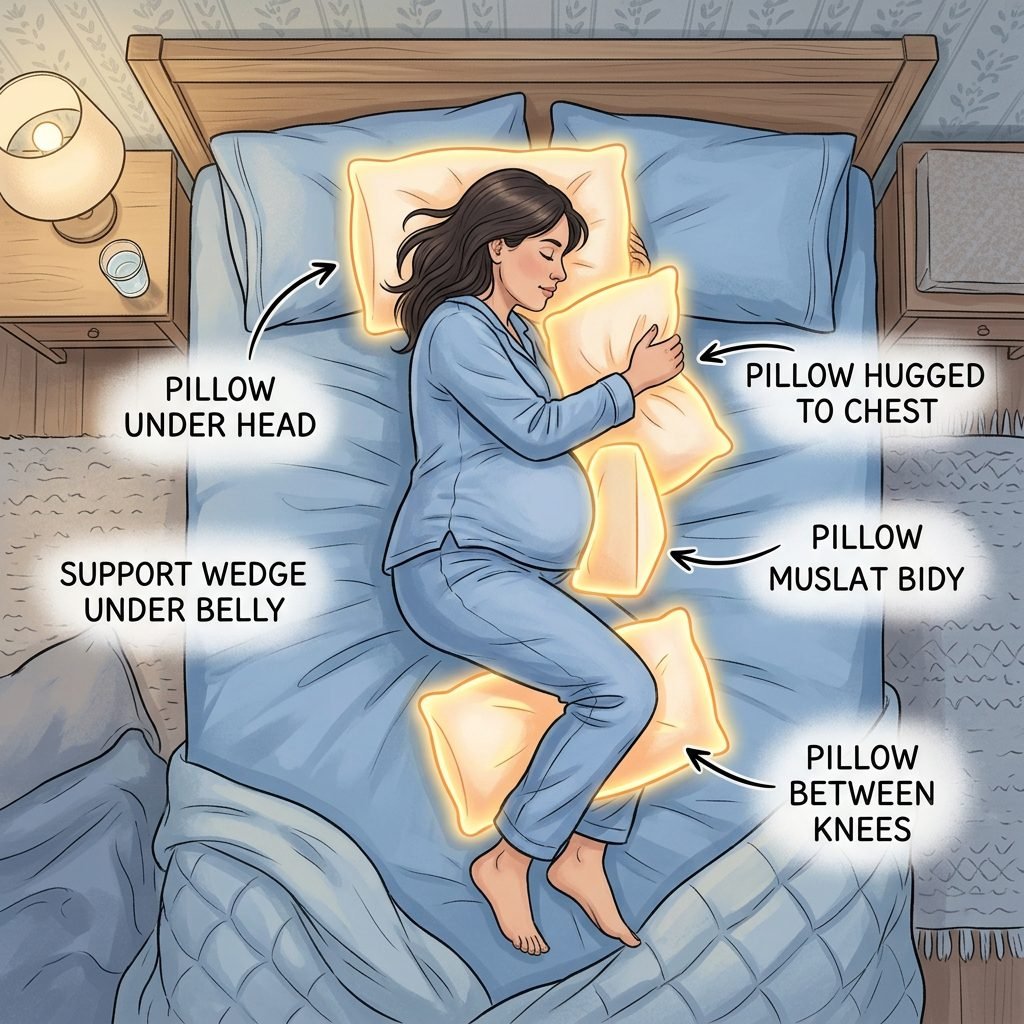
How to Build the Perfect Left-Side Prop:
- Start with your head: Use a medium-firm pillow that fills the gap between your ear and your shoulder, keeping your cervical spine completely neutral. If your chin is tucked to your chest, your airway is restricted.
- Support the belly: Slide a thin, wedge pillow directly under your beautiful bump. This prevents the weight of your uterus from pulling your spine out of alignment and dragging your diaphragm downward.
- Align the hips: Place a thick, firm pillow between your knees and your ankles. This keeps your pelvis stacked, which prevents your lower back from twisting and compressing your lower lung lobes.
- Open the chest: Hug a soft pillow to your chest. This prevents your top shoulder from collapsing inward and crushing your ribcage.
By lifting the bump and opening the shoulders, you create a physical “hammock” for your baby, taking the weight completely off your respiratory muscles. If you wake up on your back, do not panic! Simply roll back over to your left side and rebuild your pillow fort.
Position 2: The Elevated Incline (The Recliner Hack)

Defeating Gravity and Heartburn
Sometimes, lying flat is simply not an option. If your baby has wedged themselves high up under your ribs, or if you are battling the dreaded third-trimester acid reflux (which can actually trigger asthma-like shortness of breath), gravity is your greatest ally. The Elevated Incline position mimics the angle of a hospital bed or a living room recliner, pulling the weight of the uterus down and away from your diaphragm.
Step-by-Step Setup for the Elevated Incline:
- Find your angle: You want to aim for a 30 to 45-degree angle. Being too upright will strain your lower back, while being too flat will defeat the purpose.
- Use a structured wedge: Ditch the stack of mushy bed pillows—they will slide apart and leave your neck cricked. Invest in a solid foam pregnancy wedge or a reading pillow with armrests.
- Secure your base: Place a rolled-up towel or a long cylindrical pillow directly under your knees. This prevents you from sliding down the bed during the night and takes the strain off your lumbar spine.
- Support your neck: Add a small travel pillow or a rolled hand towel behind your neck to keep your airway wide open.
This position is a lifesaver during weeks 34 to 38, right before the baby “drops” (engages in the pelvis). As a bonus, this incline drastically reduces nighttime heartburn by keeping stomach acids safely where they belong.
Position 3: The Three-Quarter Roll (Supported Stomach/Side)

For the Mama Who Misses Sleeping on Her Stomach
If you were a dedicated stomach sleeper before pregnancy, the side-lying positions might feel unnatural, leading to tossing, turning, and heightened anxiety—which only makes breathing harder! The Three-Quarter Roll is a doula secret that tricks your brain into feeling like you are sleeping on your stomach, without putting any dangerous pressure on your baby or your lungs.
How to Master the Three-Quarter Roll:
- Get your U-shaped pillow: You will need a large, full-body pregnancy pillow for this. Lay it out in an upside-down “U” shape on your bed.
- Position your body: Lie on your side, inside the “U”.
- The magic leg hook: Take your top leg and throw it entirely over the front side of the pillow, bending your knee at a 90-degree angle. Your bottom leg stays relatively straight behind the pillow.
- The chest tilt: Lean your upper body forward so your chest and bump are resting against the plush side of the pillow, rather than flat on the mattress.
By tilting forward onto the pillow, gravity pulls the uterus away from your major blood vessels and your diaphragm. The pillow absorbs your weight, creating a safe, hollow space for your belly. This position brilliantly expands the back of your ribcage, allowing for deep, expansive breaths into your lower lung lobes.
Position 4: The Seated Slump (For Severe Late-Night Breathlessness)
When Lying Down is Impossible
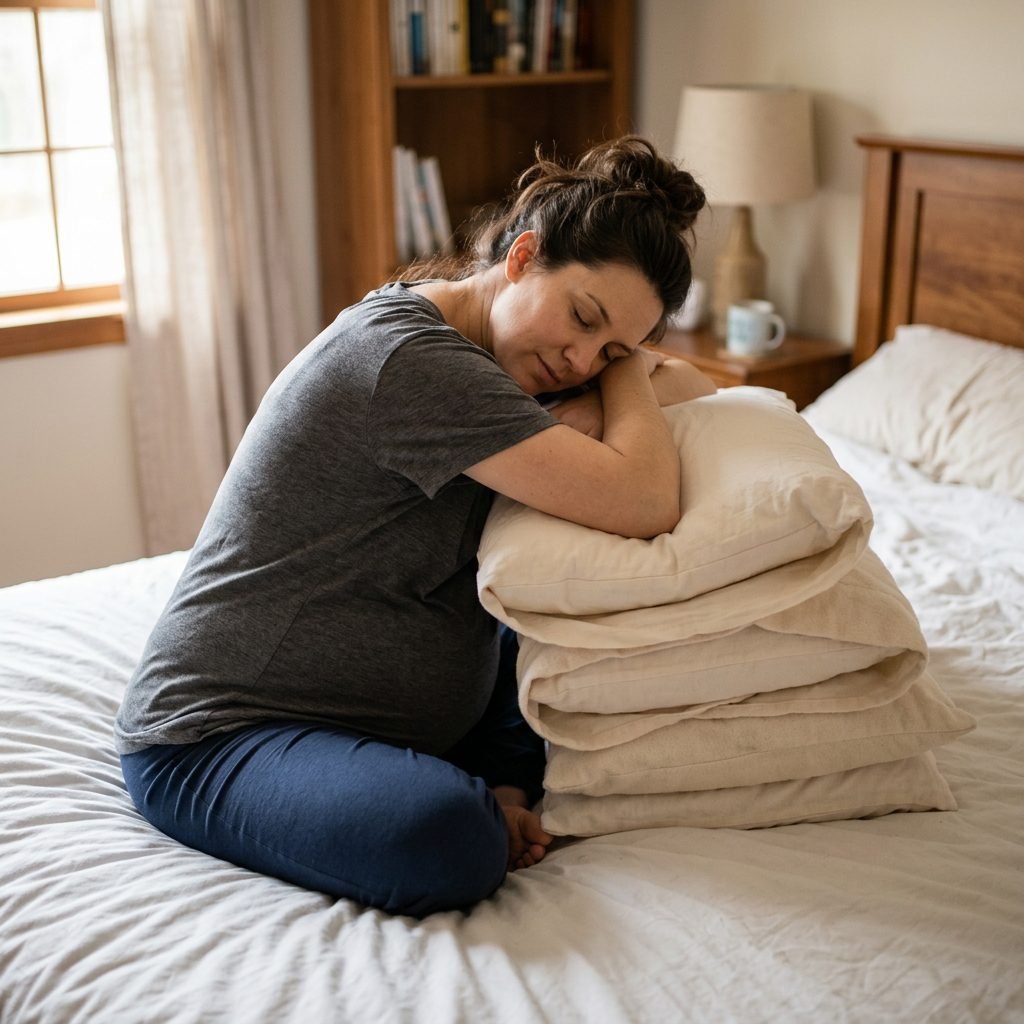
There will be nights—usually right around week 36—where lying down in any capacity feels like you are suffocating. This is often the peak of uterine expansion before the baby drops into the pelvis. When panic sets in and you are gasping for air, the Seated Slump is your emergency rescue position. It is highly effective for immediate relief, though you may only sleep in this position for a few hours at a time.
How to Execute the Seated Slump Safely:
- Sit cross-legged or with legs wide: Sit in the middle of your bed. Open your hips by sitting cross-legged (tailor style) or with your legs stretched out wide. This opens the pelvic outlet and gives the baby room to settle lower.
- Build a mountain: Stack 3 to 4 firm pillows in your lap, or use a large exercise ball (birthing ball) if you are comfortable bringing it onto the bed.
- Lean forward: Drape your upper body, arms, and head over the mountain of pillows or the ball. Let your head turn to one side.
- Release the belly: Allow your belly to hang completely free between your legs.
Why does this work? By leaning forward, you are utilizing the exact same mechanics we teach for active labor. The uterus drops forward, completely un-weighting the diaphragm and the spine. The back of your ribcage opens up like a pair of wings, giving your lungs massive amounts of space to expand. Breathe deeply into your back.
“Inhale peace, exhale tension. My lungs are strong, my baby is safe.”
Position 5: The ‘Hug the Pillow’ Chest Opener

Correcting Posture While You Sleep
One of the hidden culprits of pregnancy breathlessness is daytime posture. As your breasts grow heavier and your bump pulls your center of gravity forward, your shoulders naturally round inward. This hunched posture physically compresses your chest cavity, giving your lungs even less room to work with. If you sleep curled up in a tight fetal position, you are locking that compression in for 8 hours a night.
How to Open the Chest Cavity:
- Lie on your side: Choose either the left or right side (left is preferred, but right is perfectly safe if your hips need a break).
- Extend the spine: Instead of curling your knees up to your chin, lengthen your body. Keep a gentle, natural curve in your spine.
- The crucial hug: Take a thick, firm pillow (a king-size pillow works great) and hug it tightly to your chest. Your top arm should drape over the pillow, and your bottom arm can rest under your head.
- Pull the shoulders back: Actively pull your top shoulder back slightly, letting the pillow support the weight of your arm.
By keeping the shoulders stacked and open, your ribcage can expand laterally (side-to-side) with every breath. You will be amazed at how much deeper you can inhale when your shoulders aren’t collapsing into your chest.
Doula Secrets: Before-Bed Habits to Maximize Lung Capacity
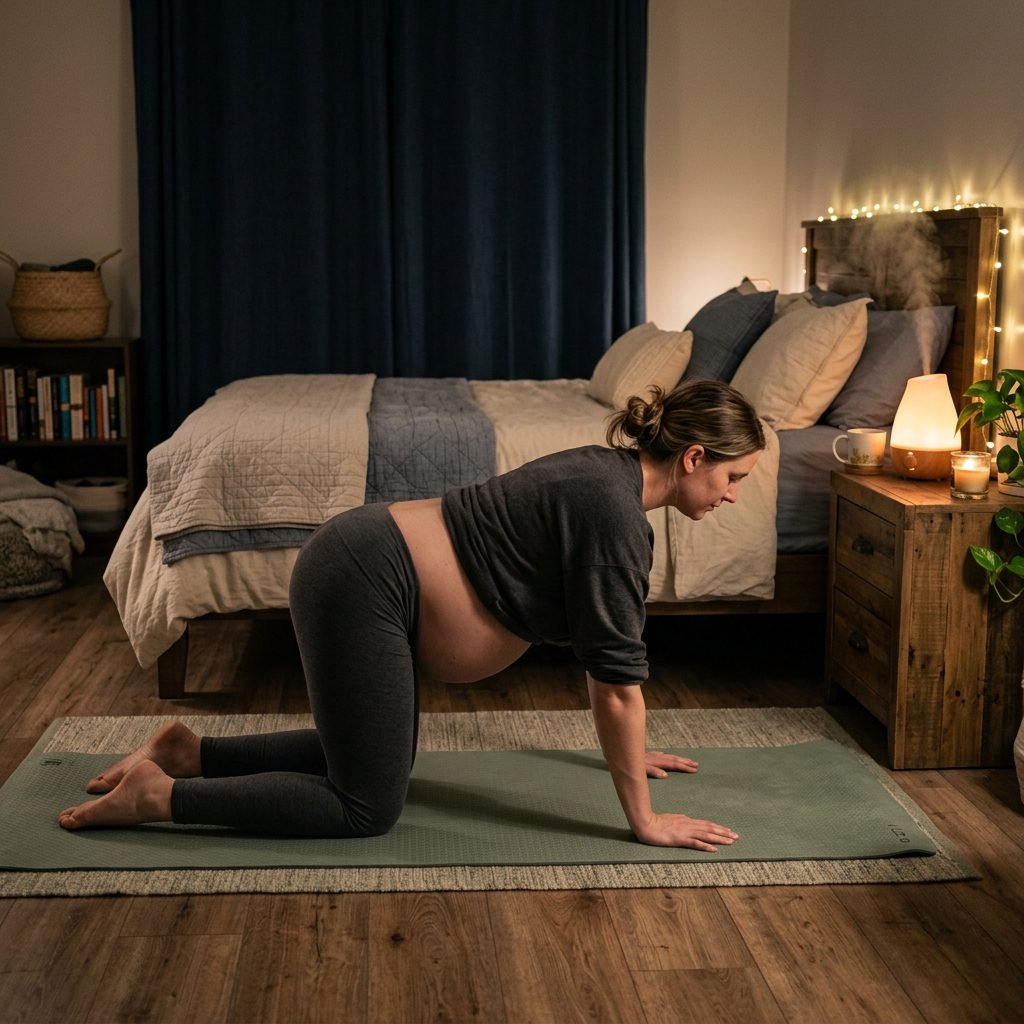
Preparing Your Body for Restful Breathing
Finding the right sleeping position is only half the battle. As a doula, I always tell my clients that a good night’s sleep begins three hours before your head hits the pillow. Your daily habits, hydration, and stretching routines play a massive role in how much space your lungs have at night.
Before bed, try practicing “Ribcage Breathing” (also known as lateral breathing). Sit up straight, place your hands on the sides of your lower ribs, and take a deep breath in through your nose. Focus on making your ribs push your hands outward, rather than letting your chest rise upward. Do this for 5 minutes before settling into your sleep position. This stretches the intercostal muscles between your ribs, making nighttime breathing significantly easier.
Pregnancy Breathing & Comfort: What’s Safe vs. What to Avoid
| Category | Safe & Recommended | To Avoid | Doula’s Rationale |
|---|---|---|---|
| Sleeping Position | Left side, elevated incline, supported forward lean. | Lying flat on your back (supine) after 20 weeks. | Lying flat compresses the vena cava, reducing blood flow and oxygen to you and baby, worsening breathlessness. |
| Pre-Bed Meals | Small, protein-rich snacks (e.g., Greek yogurt, almonds) 1 hour before bed. | Heavy, spicy, or highly acidic meals within 3 hours of sleeping. | A full stomach pushes up against the diaphragm and triggers acid reflux, which restricts the airway and mimics shortness of breath. |
| Room Environment | Cool room (65-68°F), running a cool-mist humidifier, using an air purifier. | Stuffy, overheated rooms; sleeping under heavy, restrictive blankets. | Pregnancy hormones increase your core temperature. Cool, humidified air keeps nasal passages open and prevents hyperventilation. |
| Evening Movement | Gentle prenatal yoga, cat-cow stretches, gentle walks. | High-intensity cardio or heavy lifting right before bed. | Gentle stretching opens the pelvic and chest cavities, whereas intense exercise spikes your heart rate and respiratory demand. |
Remember, sweet mama, this intense breathlessness usually peaks right before your baby “drops” (lightening), which typically happens between weeks 36 and 38 for first-time moms. Once baby settles into the pelvis, you will suddenly feel a glorious release of pressure in your ribs, and taking a deep breath will become so much easier. You are almost there!
Conclusion
You Are Doing Beautifully, Mama
Navigating the physical discomforts of the third trimester is no small feat. When you are lying in the dark, struggling to catch your breath, it is so easy to feel overwhelmed and anxious. But please remember: your body is a magnificent, capable vessel. It is shifting, stretching, and adapting in miraculous ways to sustain the life growing inside you. By implementing these supportive sleeping positions—whether it is the classic left-side prop, the elevated incline, or the comforting chest-opener—you are actively partnering with your body to find comfort.
Take it one night at a time. Experiment with your pillow fort until you find the exact combination that makes you sigh with relief. Give yourself grace on the nights when sleep is elusive, and know that this phase is temporary. Soon, your baby will be in your arms, and you will have your lungs all to yourself again. Until then, breathe deeply, rest safely, and know that you are supported, loved, and doing an absolutely incredible job.