Why a Chic Postpartum Kimono Robe is the Ultimate Hospital Going Home Outfit
Oh, sweet mama, you are about to embark on the most transformative journey of your life. As a doula, I have seen hundreds of women navigate those first few days of motherhood, and if there is one thing I wish I could whisper into every expectant mother’s ear, it is this: how you feel in your body during those first 72 hours matters deeply.
The moment you prepare to leave the hospital is a milestone. You are transitioning from the protected cocoon of the delivery ward to the reality of life at home. While it is tempting to reach for your pre-pregnancy leggings or a pair of baggy sweatpants, I am here to tell you that a chic postpartum kimono robe is the absolute gold standard for your ‘going home’ outfit. It is not just about looking ‘put together’ for those inevitable front-door photos; it is about physical healing, hormonal shifts, and the practical demands of a newborn.
In this guide, we are going to dive deep into why this single garment will be the hardest-working item in your hospital bag, how to style it so you feel like a goddess even when you are exhausted, and the specific features you need to look for to ensure maximum comfort for your healing body.
The Physical Reality: Why Comfort Must Be Your North Star
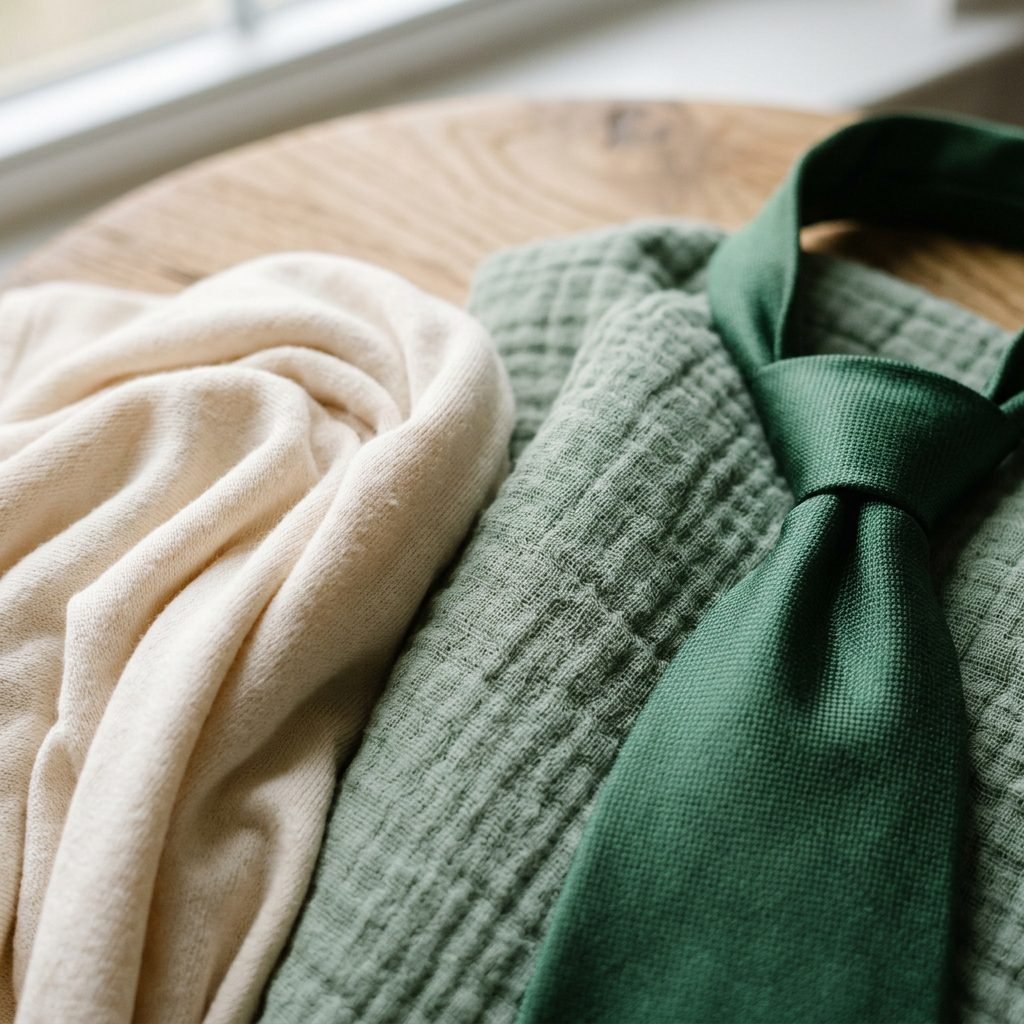
Let’s have a real sister-to-sister talk about what your body feels like when you are discharged. Whether you had a vaginal birth or a C-section, your midsection is going to feel very different than it did even 24 hours ago. You are likely dealing with postpartum swelling (edema), the discomfort of heavy-duty maternity pads, and a uterus that is still actively contracting back to size.
The C-Section Factor
If you have a surgical incision, the last thing you want is a waistband—no matter how ‘soft’ it claims to be—resting anywhere near that site. A kimono robe provides a completely pressure-free environment. It allows for airflow, which is vital for incision healing, and doesn’t tug when you move from sitting to standing.
The Vaginal Recovery Reality
For those recovering from a vaginal birth, the ‘downstairs’ area is often tender and inflamed. Traditional pants can feel restrictive and heat-trapping. A robe allows you to wear those glorious mesh hospital panties and ice packs with total discretion and zero constriction.
| Feature | Kimono Robe Benefit | Traditional Sweatpants Drawback |
|---|---|---|
| Waistband | None/Adjustable tie | Elastic pressure on uterus/incision |
| Breathability | High (Airflow for healing) | Low (Can trap moisture) |
| Ease of Use | Simple wrap-and-go | Difficult to pull up/down with soreness |
| Space for Pads | Ample room for bulkier protection | Can feel tight or ‘show’ through fabric |
Mama, remember: Your body just ran a marathon while growing a human. It deserves the softest landing possible. Do not rush back into ‘real’ clothes.
The Nursing & Bonding Advantage: Accessibility is Everything
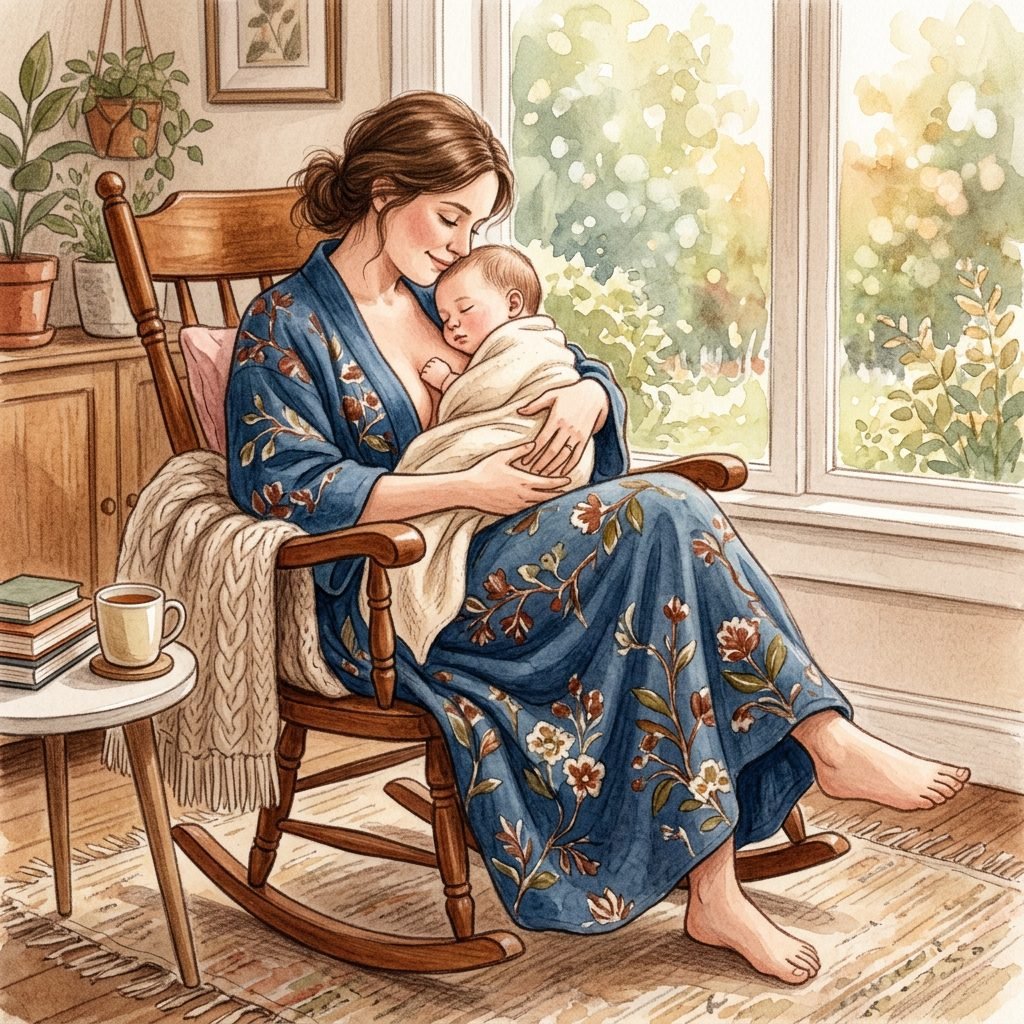
In those first few days, you and your baby are learning a complex new dance: breastfeeding and skin-to-skin bonding. If you choose an outfit with buttons, zippers, or a tight neckline, you are adding an unnecessary barrier to that connection.
Instant Access for Feeding
When baby wakes up hungry, every second counts. A kimono robe allows you to simply loosen the tie and begin nursing immediately. There is no fumbling with nursing clips in the dark or pulling a shirt up over your head while trying to support a newborn’s neck.
The Power of Skin-to-Skin
Skin-to-skin contact is the ‘magic pill’ of the postpartum period. It regulates baby’s temperature, stabilizes their heart rate, and boosts your oxytocin levels (the love hormone). A robe is the ultimate tool for this; you can tuck baby right against your chest and wrap the robe around both of you, keeping you both warm and connected.
- Oxytocin Boost: The ease of skin-to-skin in a robe helps milk let-down.
- Temperature Regulation: You can easily open or close the robe as your postpartum night sweats come and go.
- Privacy: If a nurse or visitor walks in, you can quickly pull the lapels together without disrupting the baby.
Psychological Wellness: Looking Good to Feel Better
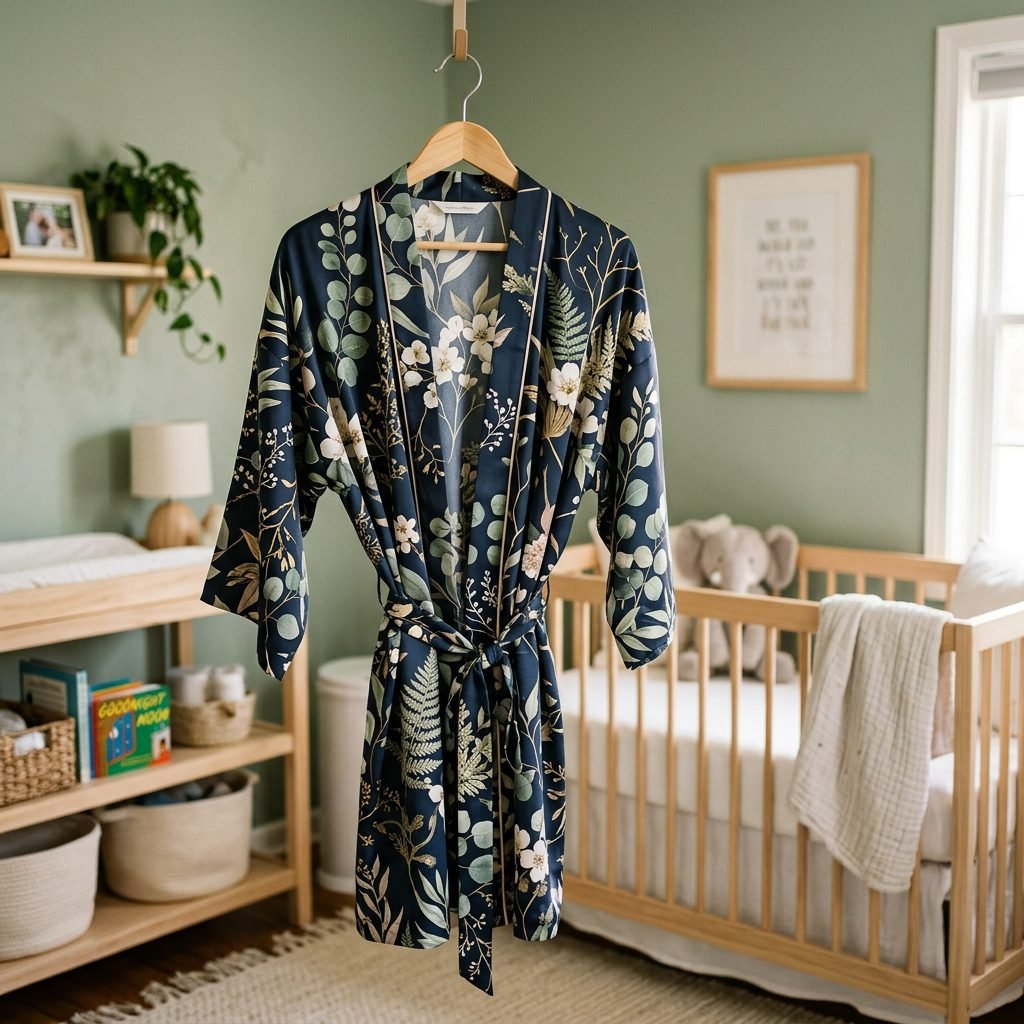
We cannot overlook the ‘Baby Blues.’ Around day three postpartum, your estrogen and progesterone levels take a sharp dive. This can lead to feeling overwhelmed, tearful, and unlike yourself. While a robe isn’t a cure for hormonal shifts, there is a documented psychological phenomenon called enclothed cognition—the idea that the clothes we wear affect our mental state.
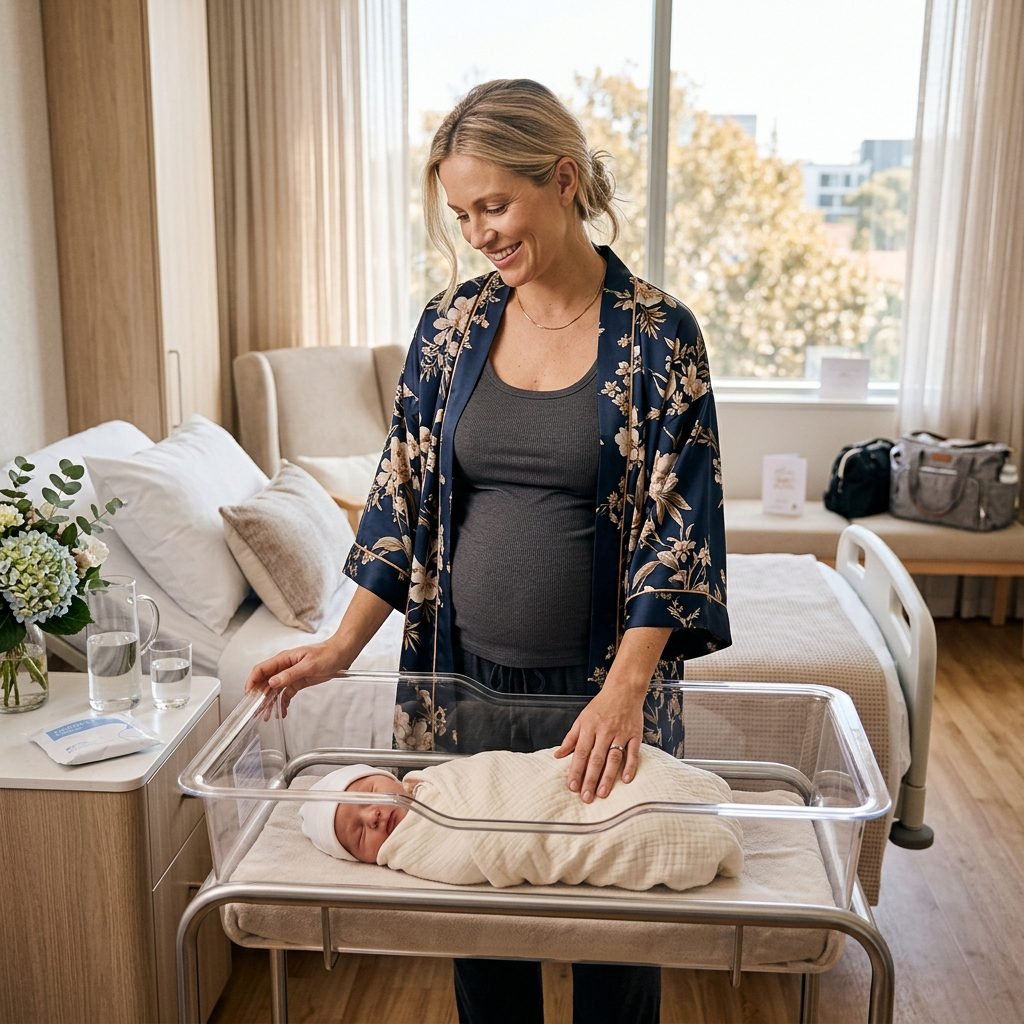
When you look in the hospital mirror before heading home, seeing a woman in a beautiful, flowing kimono with a stunning print can give you a much-needed boost of dignity. It signals to your brain: ‘I am still me. I am a woman, a mother, and I am capable.’
“I felt like a swamp creature after 36 hours of labor. Putting on my floral kimono to leave the hospital made me feel like a human being again. It was the first time I felt ‘pretty’ in months.” — Sarah, Mom of Two
The Ultimate Postpartum Capsule Matrix: How to Style Your Robe
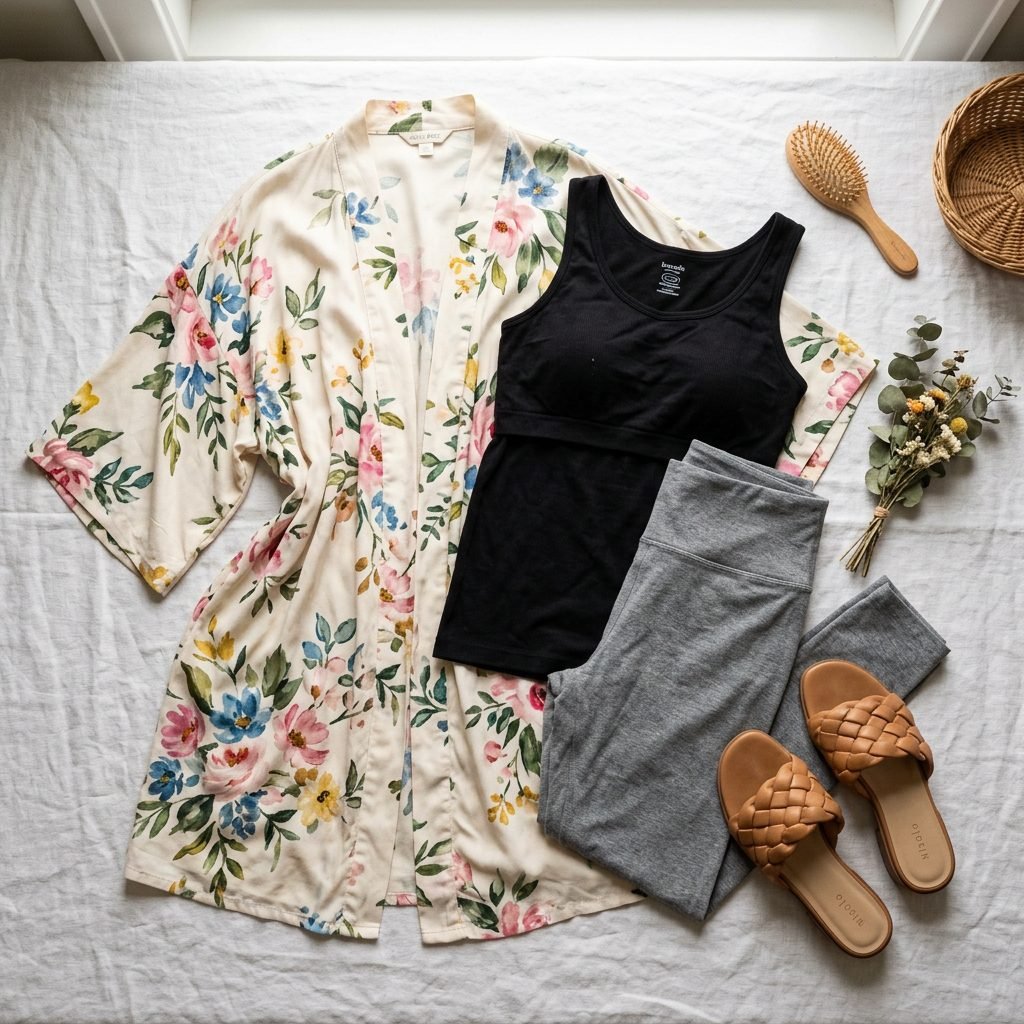
To make the kimono robe work as a ‘going home’ outfit, you need a few base layers. This ensures you are comfortable, modest, and ready for the car ride home. Here is my tried-and-true styling formula for the perfect postpartum capsule.
| Outfit Component | The ‘Comfort First’ Option | The ‘Chic & Polished’ Option |
|---|---|---|
| Base Layer | High-waist bamboo leggings | Loose modal nursing nightgown |
| Top | Nursing tank with built-in bra | Stretchy wrap top |
| The Hero Piece | Mid-length Kimono Robe | Floor-length Silk-blend Kimono |
| Footwear | Grippy hospital socks | Slip-on leather mules or slides |
| Accessory | Soft headband | Dainty ‘Mama’ necklace |
Pro Tip: The Car Seat Hack
When you are ready to get into the car, simply ensure your robe is untied at the bottom so the seatbelt can sit securely across your hips and chest. The robe acts as a soft barrier between the belt and your sensitive tummy.
What to Look For: The Doula’s Buying Checklist
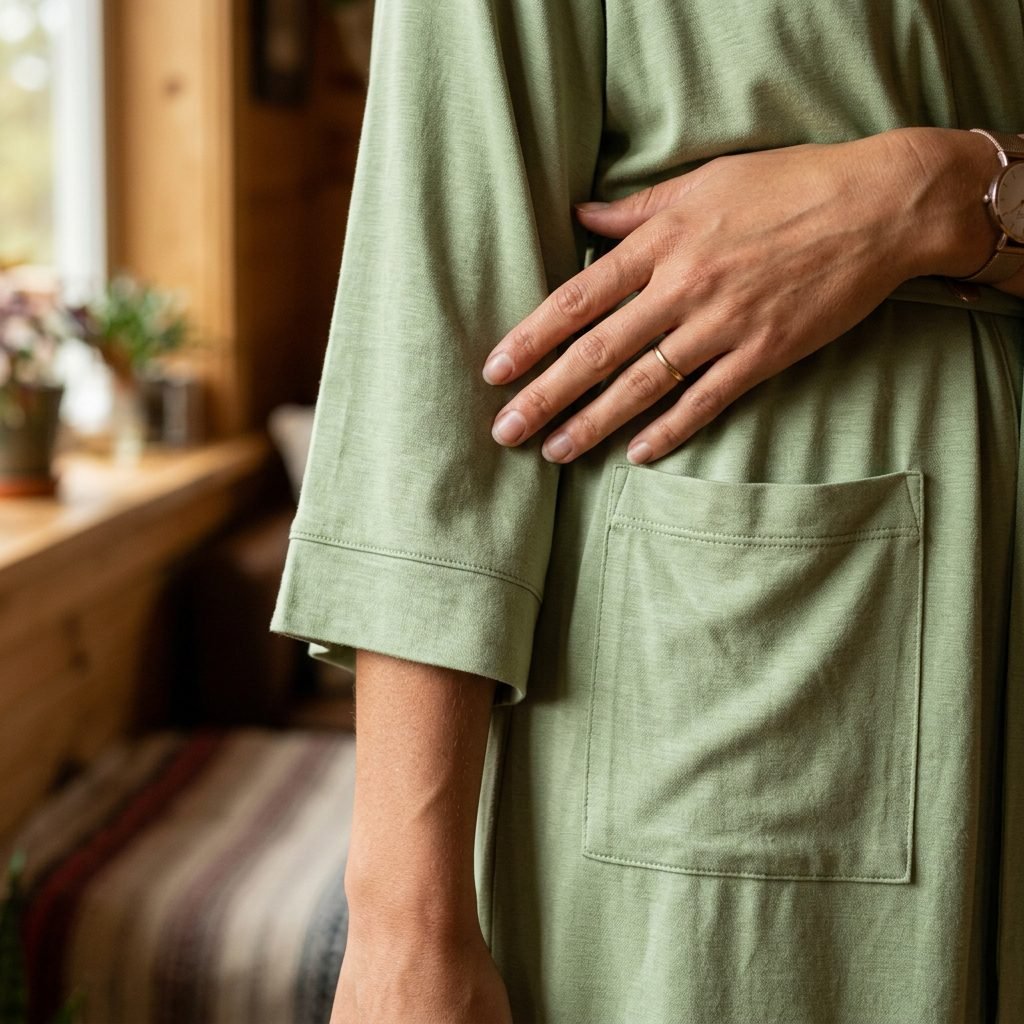
Not all robes are created equal, mama. If you are shopping for your hospital bag, you need to look for specific features that cater to a postpartum body. Don’t just go for the cheapest option; look for longevity and function.
- Deep Pockets: You will need a place for your phone, a pacifier, or a nipple cream as you move around the house.
- Attached Belt: There is nothing more frustrating than losing your robe tie behind the bed or in the wash. Look for a ‘sewn-on’ back tie.
- Mid-Sleeve Length: Look for 3/4 sleeves. Full-length sleeves often get wet when you are washing your hands (which you will do a lot) or during baby’s first bath.
- Darker Colors or Busy Prints: Let’s be honest—leaks happen. Breast milk, lochia, and baby spit-up are part of the deal. A busy floral print or a deep jewel tone hides these much better than a pale pink or white.
Fabric Guide
Bamboo/Modal: Best for night sweats. It is moisture-wicking and incredibly soft.
Cotton Gauze: Best for summer babies. It’s lightweight and gets softer with every wash.
Silk/Satin: Best for the ‘glam’ factor, but ensure it is machine washable!
The Hospital Bag: When to Pack and How to Prep
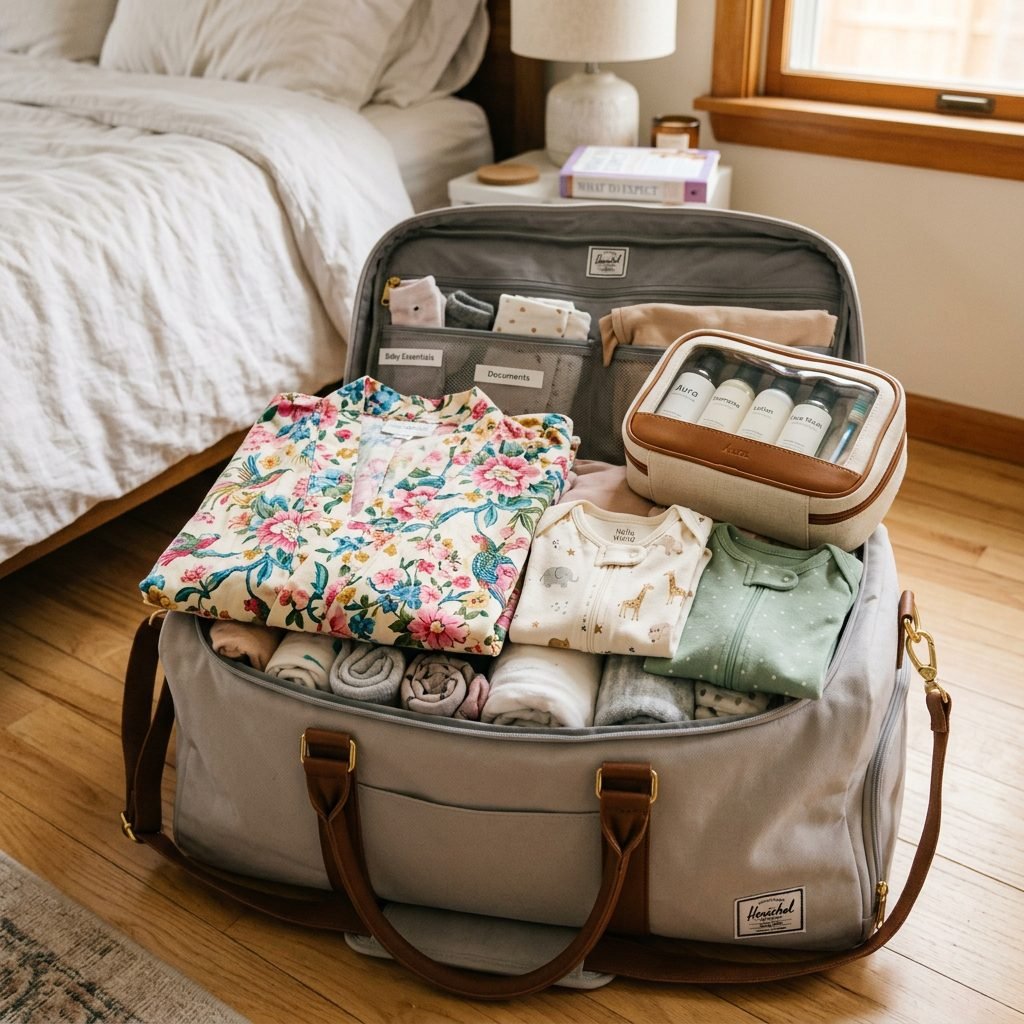
I recommend having your ‘Going Home’ outfit packed by week 36. Your kimono robe should be washed in a baby-safe, fragrance-free detergent beforehand, as baby’s sensitive skin will be pressed right against it during those first cuddles.
The ‘Transition’ Bag Checklist
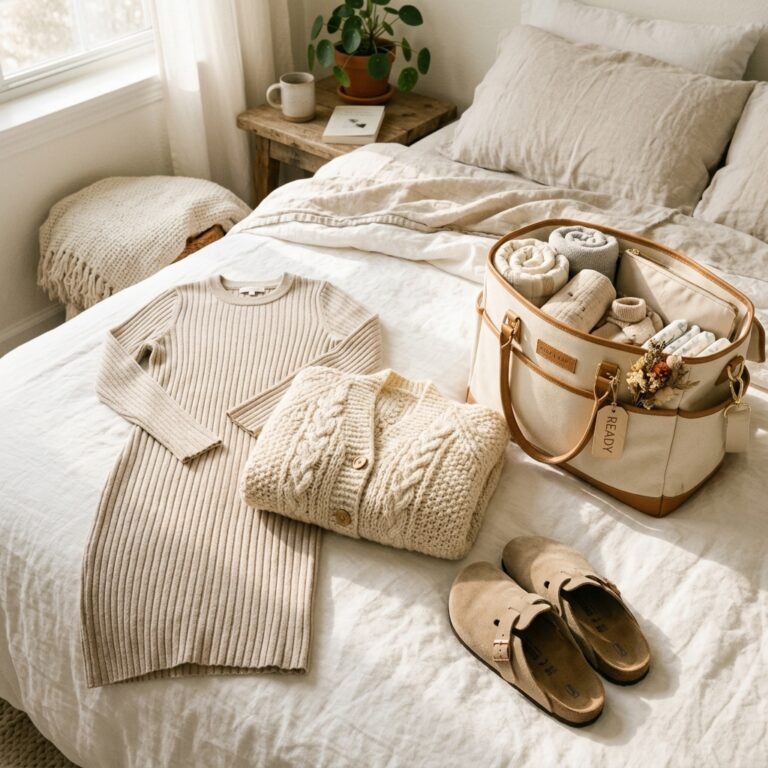
- The Kimono: Your primary layer.
- Nursing Pads: Even if your milk hasn’t fully come in, colostrum can leak.
- Belly Wrap: If your doctor approves, a soft belly binder can be worn under the robe for support.
- Dry Shampoo: To freshen up those roots for the ‘leaving the hospital’ photo.
You aren’t just packing clothes; you are packing your first memories of motherhood. Choose something that makes you feel like the queen you are.
Conclusion
Choosing a chic postpartum kimono robe as your hospital going-home outfit is more than a fashion statement; it is a profound act of self-care. It honors your body’s need for space and softness while providing the practical functionality needed to care for your new little one. As you walk out those hospital doors, baby in the car seat and robe fluttering in the breeze, you aren’t just a woman who just gave birth—you are a powerful, stylish, and prepared mother ready to take on the world.
Pack the robe, mama. You’ve earned the right to feel beautiful and comfortable all at once. Welcome to the sisterhood of motherhood—we are so glad you’re here.