
Low Fluid? 9 Hydrating Foods That Help Boost Amniotic Levels Naturally
Oh, sweet mama, I can hear the worry in your heart. Finding out during a routine ultrasound that your amniotic fluid levels—what we doulas often call your baby’s ‘liquid gold’—are a bit on the lower side can feel incredibly overwhelming. First, take a deep, cleansing breath. You are doing an amazing job, and your body is a miraculous vessel. While medical conditions like oligohydramnios (the clinical term for low amniotic fluid) always require the close supervision of your OB-GYN or midwife, there is so much power in what you put on your plate and in your cup. As your sister-in-wellness and doula, I want to walk you through how we can use nature’s bounty to support your hydration from the inside out. Amniotic fluid isn’t just water; it is a dynamic environment that cushions your little one, helps their lungs develop, and keeps the umbilical cord floating freely. When we focus on high-water-content foods, we aren’t just ‘drinking water’; we are consuming ‘structured water’ packed with electrolytes and vitamins that help your body absorb that moisture more effectively. Let’s explore nine incredible foods that can help you boost those levels naturally while keeping you feeling refreshed and nurtured.
Understanding Your Liquid Gold: Why Amniotic Fluid Matters
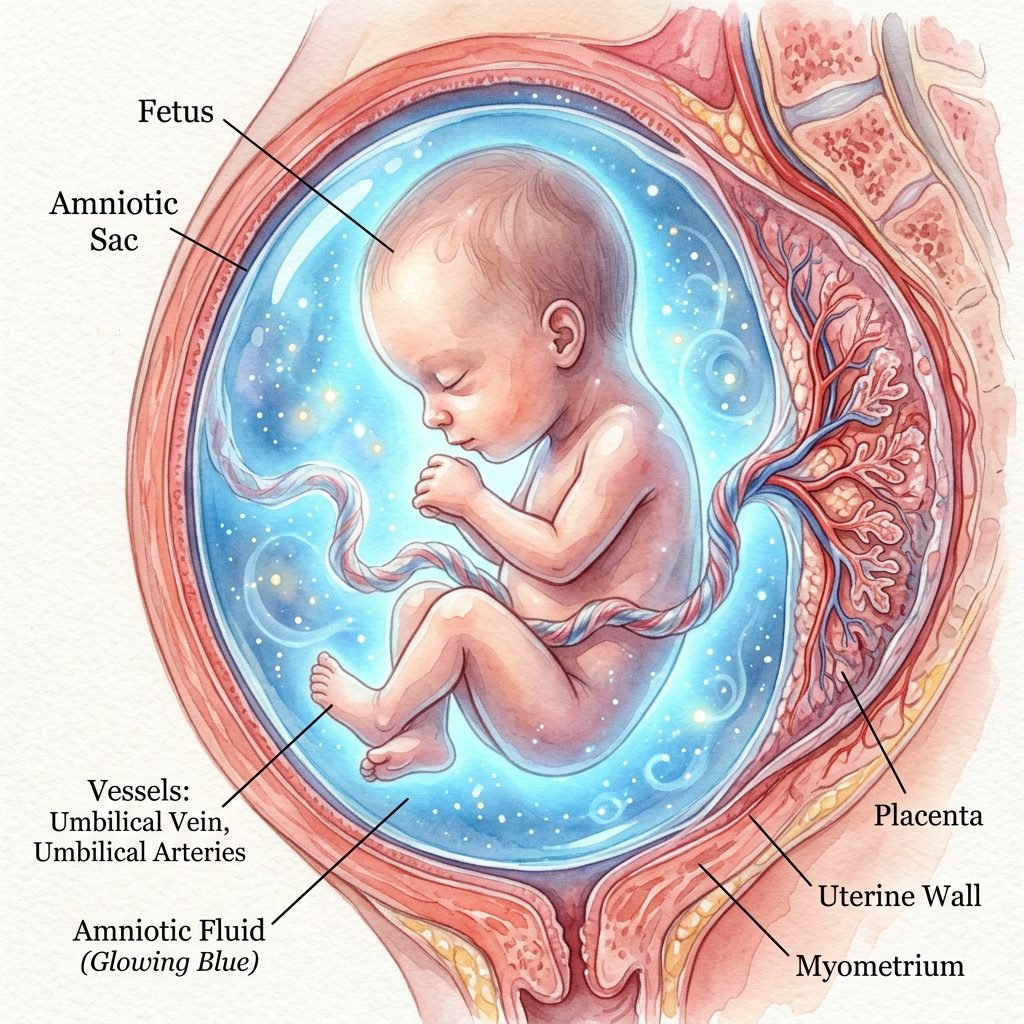
Before we dive into the grocery list, let’s talk about why we’re focusing on this. Amniotic fluid is primarily composed of your baby’s urine (yes, really!) and water from your own circulation. By the second trimester, your baby starts swallowing this fluid and excreting it, creating a beautiful, continuous cycle. When your fluid levels are low, it can sometimes be a sign of dehydration in the mother’s body or a need for better placental perfusion.
The Role of Maternal Hydration
Studies have shown that increasing maternal fluid intake can directly impact the amniotic fluid index (AFI). When you are well-hydrated, your blood volume increases, which improves the blood flow to the placenta and, subsequently, to your baby’s kidneys. More blood flow to the baby’s kidneys means more baby pee, which means more amniotic fluid! It is a simple yet profound connection. However, just chugging plain water can sometimes feel like a chore, especially if you’re dealing with pregnancy reflux or a squished stomach. That’s where hydrating foods come into play. These foods offer ‘slow-release’ hydration because the water is trapped inside cellular structures, allowing your body to absorb it over a longer period.
Remember, mama: Your body is working 24/7 to create a home for your baby. Adding these foods isn’t just about a number on an ultrasound; it’s about nourishing the environment where your baby grows.
The 9 Hydrating Superfoods to Boost Your Levels
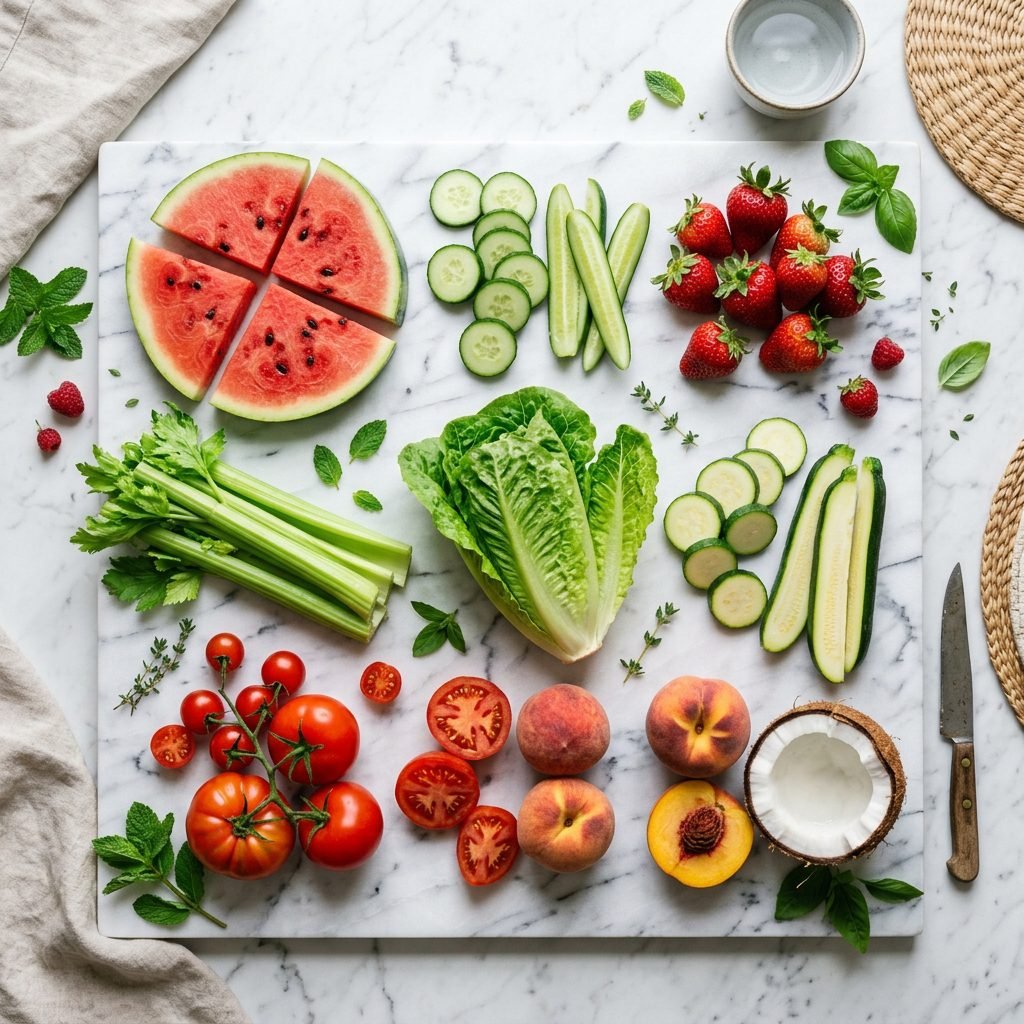
Let’s fill your pantry and fridge with these hydration heroes. These aren’t just snacks; they are functional tools for your pregnancy wellness kit.
- 1. Watermelon (92% Water): True to its name, watermelon is a hydration powerhouse. It is also rich in lycopene and potassium, which helps regulate fluid balance in your cells. Try it chilled with a squeeze of lime to help with morning sickness.
- 2. Cucumbers (96% Water): Cucumbers have the highest water content of any solid food. They are cooling and contain silica, which is great for your stretching skin. Slice them thin and add them to your water for a ‘spa-water’ feel.
- 3. Strawberries (91% Water): These berries are not only hydrating but are packed with Vitamin C, which helps with iron absorption—a huge plus during pregnancy!
- 4. Celery (95% Water): Celery is like a natural straw. It contains essential mineral salts that act as electrolytes, helping the water actually get into your cells rather than just passing through you.
- 5. Lettuce (96% Water): Specifically Romaine and Iceberg. While we often think of them as ‘just water,’ that’s exactly why they are perfect right now. Use large lettuce leaves as wraps for your protein to sneak in extra hydration.
- 6. Zucchini (94% Water): When cooked lightly or eaten raw in ‘zoodle’ form, zucchini provides a nutrient-dense way to stay hydrated. It’s also very gentle on a sensitive pregnancy stomach.
- 7. Tomatoes (94% Water): Whether in a salad or a fresh sauce, tomatoes provide a burst of hydration along with antioxidants that support vascular health.
- 8. Peaches and Nectarines (89% Water): These stone fruits are wonderful for satisfying a sweet craving while providing potassium, which helps prevent the leg cramps often associated with dehydration.
- 9. Coconut Water (The Natural IV): While technically a liquid, I include it here because it is a whole-food resource. It is bio-identical to the electrolytes in our blood, making it the ultimate way to ‘super-charge’ your fluid levels.
Hydration Strategy: What’s Safe vs. What to Avoid
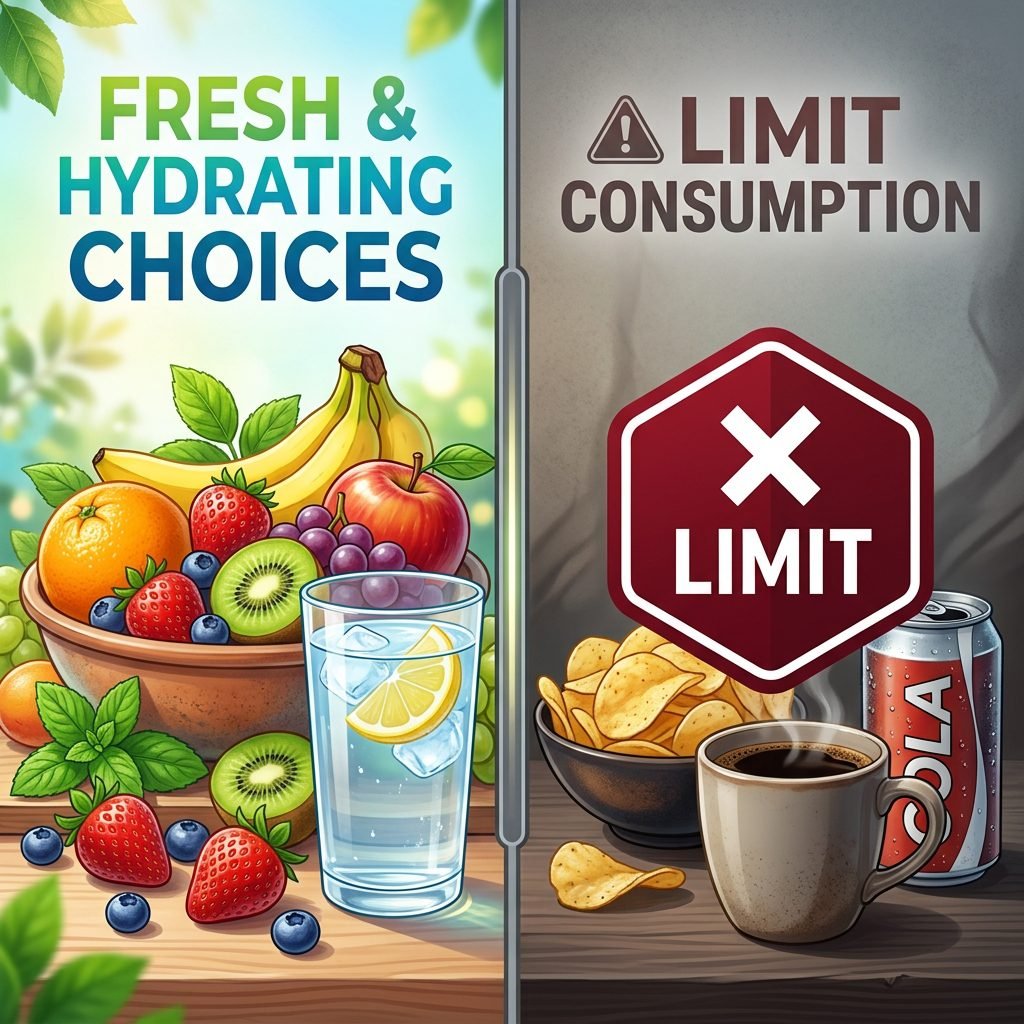
It’s not just about what you add; it’s also about being mindful of what might be working against your hydration goals. Some foods and drinks act as diuretics, which can actually pull fluid away from your baby’s sac.
| Choose These (Hydration Boosters) | Limit or Avoid These (Dehydrators) |
|---|---|
| Infused Water: Cucumber, mint, or lemon slices to make sipping easier. | Excessive Caffeine: Coffee and strong black teas can increase urination. |
| Electrolyte-Rich Fruits: Bananas, oranges, and coconut water. | High-Sodium Processed Foods: Canned soups and salty snacks that cause fluid retention in tissues rather than the sac. |
| Herbal Infusions: Red raspberry leaf or ginger tea (check with your midwife first). | Sugary Sodas: These can cause blood sugar spikes and don’t hydrate effectively. |
| Broth-Based Soups: Warm, nourishing, and easy to digest. | Artificial Sweeteners: Some can irritate the bladder, leading to more frequent bathroom trips. |
How to Track Your Success
I always tell my clients to look at their ‘liquid output.’ You want your urine to be a very pale straw color. If it’s dark yellow, your body is screaming for more of those hydrating foods we just discussed! Aim for 8-10 glasses of total fluid daily, but remember that about 20% of that can come directly from the high-water-content foods listed above.
The Doula’s Routine for Maximizing Fluid Absorption

Sometimes, it’s not just about *what* you eat, but *how* you live. To help your body direct that fluid to the amniotic sac, we need to think about your physical positioning and daily habits.
- The Left-Side Lie Down: I cannot stress this enough! Lying on your left side for 30-60 minutes after a meal or a big glass of water improves blood flow to the uterus. This is the ‘golden hour’ for placental perfusion.
- Salt with Intention: Don’t cut out salt entirely! Your body needs high-quality sea salt (like Celtic or Himalayan) to hold onto the water you’re drinking. A tiny pinch in your water can help with absorption.
- Small Sips, All Day: Chugging a liter of water at once just sends a signal to your kidneys to flush it out. Sip consistently throughout the day to keep your levels stable.
- The ‘Wet’ Snack Rule: Never have a dry snack (like crackers) without a hydrating companion (like cucumber slices or a peach). This ensures your body doesn’t use its own internal water stores to digest the dry food.
“Mama, take a moment to rest. When you lie down, you are literally opening the floodgates of nourishment to your baby. This is productive rest.”
When to Call Your Care Provider

While eating watermelon and cucumbers is a wonderful way to support your body, we must always keep our medical team in the loop. Low amniotic fluid can sometimes be caused by things that food alone cannot fix, such as a small tear in the amniotic sac (PROM) or placental issues.
Watch for These Red Flags:
- Leaking Fluid: If you feel a constant trickle or a sudden gush of fluid that doesn’t smell like urine, call your provider immediately.
- Decreased Fetal Movement: If your baby is less active than usual, do a ‘kick count’ and call your midwife if you don’t reach 10 movements in two hours.
- Sudden Weight Loss: While rare in pregnancy, a sudden drop can indicate a loss of fluid.
- High Blood Pressure: Hypertension can affect the placenta’s ability to produce fluid.
Your doctor may recommend a ‘re-check’ ultrasound in a week or two. Use that time to flood your body with these hydrating foods and rest. Many mamas find that their levels have bounced back beautifully by the next appointment just by focusing on these natural steps!
Conclusion
Sweet mama, please know that you are doing everything right. Facing a ‘low fluid’ diagnosis is scary, but your body is incredibly responsive to the care and nourishment you provide. By incorporating these 9 hydrating foods—from the crisp cucumber to the electrolyte-rich coconut water—you are actively participating in your baby’s growth and comfort. Think of every bite of watermelon and every sip of water as a love letter to your little one, helping to fill their world with the ‘liquid gold’ they need to thrive. Stay hydrated, stay rested, and most importantly, stay gentle with yourself. You’ve got this, and your doula sister is cheering you on every step of the way.