Must-Have Touch and Feel Books to Build Your Baby’s First Library
Welcome to the Magic of Your Baby’s First Library
Hello, beautiful mama! Whether you are nesting in your third trimester, navigating the tender, sleepy days of postpartum recovery, or planning the ultimate storybook-themed baby shower, there is something undeniably magical about building your baby’s first library. As a doula and pediatric sleep consultant, I often get asked what the absolute best items are for a baby’s developmental growth. While fancy swings and high-tech gadgets have their place, nothing—and I mean nothing—beats the simple, profound power of a good book. But not just any book! For our tiny, curious explorers, touch and feel books are the ultimate gateway to learning, bonding, and sensory development.
When your baby is born, their vision is still quite blurry, but their sense of touch is incredibly sharp. In fact, touch is the very first sense to develop in the womb! By introducing tactile, textured books into your daily routine, you are doing so much more than just reading a story. You are literally helping to wire your baby’s brain, building neural pathways, encouraging fine motor skills, and creating a safe, comforting space for them to connect with your voice. Plus, let’s be honest—curating a beautiful, aesthetic bookshelf in the nursery is one of the most satisfying nesting projects you can do!
In this comprehensive guide, we are going to dive deep into the evidence-based benefits of sensory reading. We will explore the absolute must-have touch and feel books to add to your registry, clever and stylish ways to organize them in small nursery spaces, and even a fun, crafty DIY project for you to make your own sensory book at home. Grab a cup of warm tea, get cozy, and let’s start building that dream library for your little one!
The Science of Sensory Play: Why Textured Books Matter
The Science of Sensory Play: Why Textured Books Matter
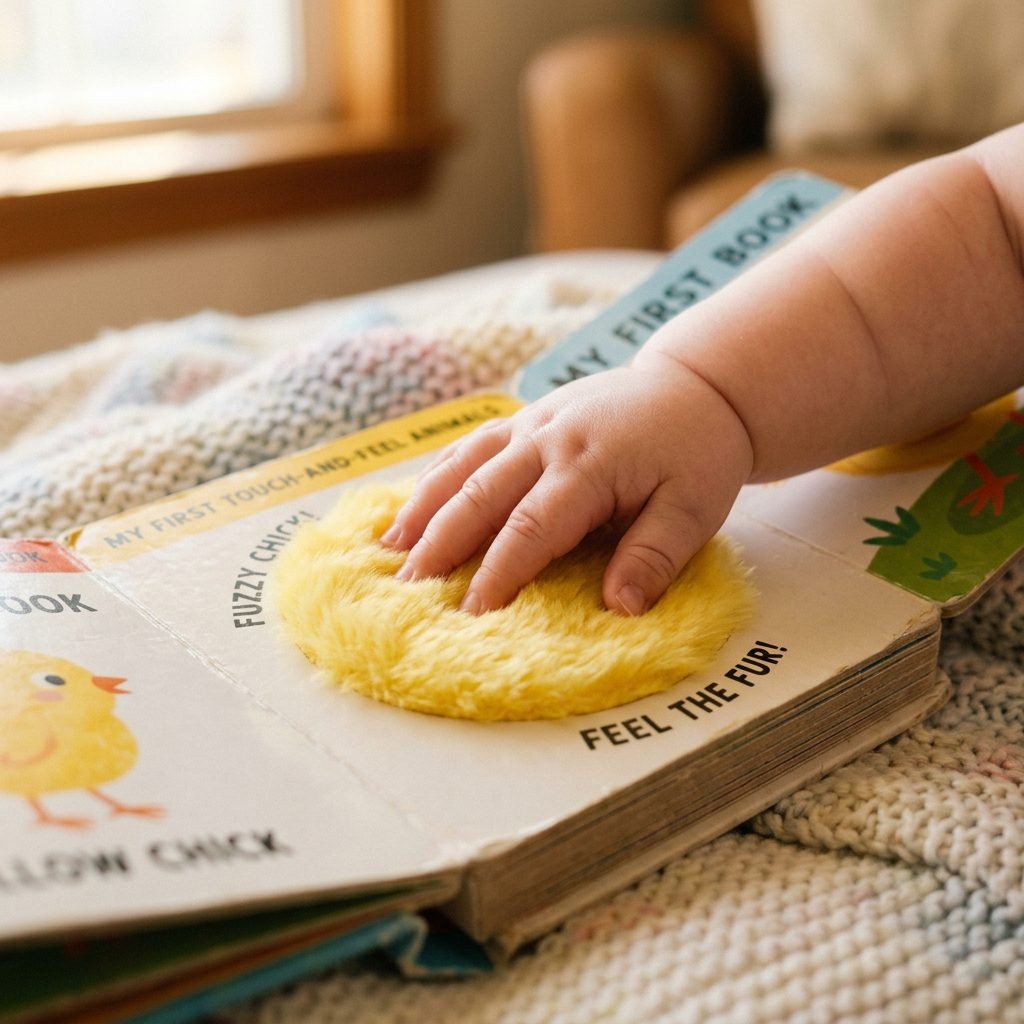
It is easy to look at a board book with a patch of faux fur and think, ‘Oh, that’s cute!’ But from a developmental perspective, that little patch of fur is an absolute powerhouse. During the first year of life, your baby’s brain is growing at an astonishing rate, doubling in size by their first birthday. Every time they touch a new texture, hear a new sound, or see a high-contrast image, synapses are firing and connecting.
Building Neural Pathways Through Tactile Exploration
Babies learn about the world through their senses, and their hands (and mouths!) are their primary tools for investigation. When you guide your baby’s tiny fingers over a bumpy, corrugated piece of cardboard or a smooth, shiny mirror in a book, you are stimulating their somatosensory cortex. This helps them begin to categorize the world: what is soft, what is rough, what is sticky, and what is squishy. By 4 to 5 months of age, babies begin to reach out and grab objects deliberately. Having a touch-and-feel book during tummy time can be the perfect motivation for them to stretch, reach, and build those crucial core and neck muscles.
“Mama reminder: You do not need to ‘read’ the words on the page to a newborn. Simply guiding their hand over the textures, describing what it feels like, and letting them hear the soothing rhythm of your voice is the perfect way to read to a baby.”
Language Development and Auditory Processing
Even before your baby can babble, they are absorbing the cadence and vocabulary of your speech. Sensory books often feature repetitive, rhythmic text and encourage onomatopoeia (like ‘moo,’ ‘baa,’ ‘beep’). When you pair the physical sensation of touching a fluffy chick with the sound of the word ‘fluffy’ and a ‘cheep cheep’ noise, you are providing multi-sensory language mapping. This makes the vocabulary much ‘stickier’ in their developing brains.
| Sensory Feature | Developmental Benefit |
|---|---|
| Faux Fur / Fleece | Provides comfort, teaches the concept of ‘soft’, encourages gentle touch. |
| Corrugated / Bumpy Surfaces | Stimulates nerve endings in fingertips, teaches ‘rough’ or ‘bumpy’. |
| Crinkle Pages | Links tactile action (grabbing) with auditory reward (crinkle sound), teaching cause and effect. |
| Baby-Safe Mirrors | Promotes visual tracking, self-recognition, and social-emotional development. |
| Silicone / Rubber Textures | Excellent for teething babies; provides a firm, satisfying tactile resistance. |
Curating the Collection: The Ultimate Touch-and-Feel Book List
Curating the Collection: The Ultimate Touch-and-Feel Book List
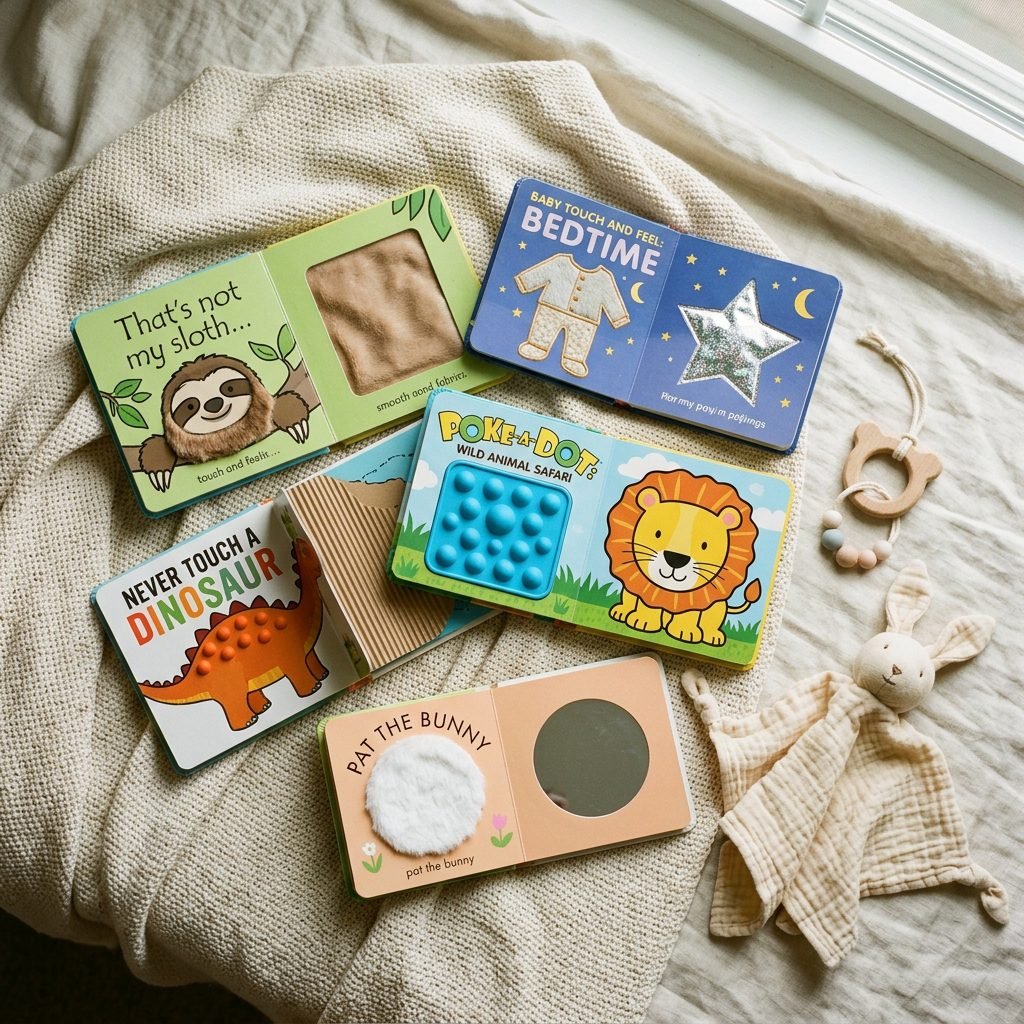
Now that we know the incredible benefits, let’s talk about the books themselves! When curating your baby’s first library, you want a mix of high-contrast books for the newborn days, sturdy interactive books for the grabby 6-month stage, and engaging, story-driven sensory books for the toddler years. Here is a doula-approved, highly recommended list of the absolute must-haves for your nursery shelf or baby registry.
1. The Newborn Stage (0-3 Months): High Contrast & Simple Textures
- Baby Touch and Feel: Animals (by DK): DK books are famous for their incredibly realistic photography paired with simple textures. In the early days, babies respond best to real faces and real animals rather than illustrations. The textures here are subtle but perfect for tiny fingers.
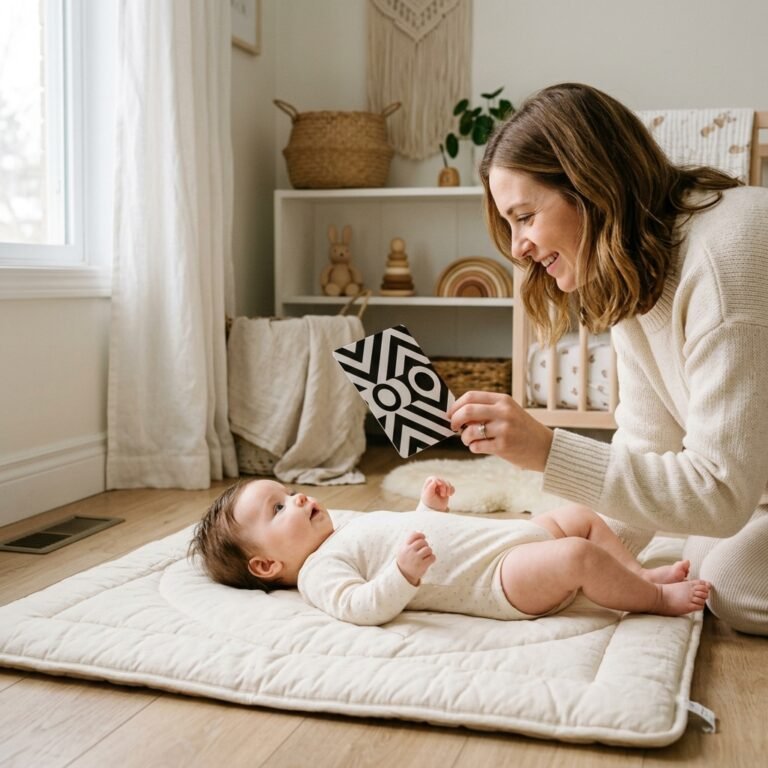
- Look, Look! (by Peter Linenthal): While not strictly a touch-and-feel book, this high-contrast black-and-white board book is a mandatory addition to your first library. You can easily modify it by gluing a small piece of felt or smooth ribbon to the pages for a DIY sensory upgrade!
2. The Explorer Stage (4-8 Months): Crinkles, Flaps, and Mirrors
- Tails (by Matthew Van Fleet): This is a masterpiece of sensory engineering! It features fluffy tails, scratchy tails, and even a scratch-and-sniff skunk tail. It is highly interactive and perfect for babies who are sitting up and learning to turn pages.
- Where’s Spot? (by Eric Hill): The ultimate lift-the-flap book. Lifting flaps builds fine motor skills and teaches the concept of object permanence—the idea that something still exists even when you can’t see it (which is also crucial for easing separation anxiety later on!).
- Pat the Bunny (by Dorothy Kunhardt): You cannot build a baby library without this classic. First published in 1940, its simple interactive elements (feeling daddy’s scratchy face, playing peek-a-boo, looking in the mirror) are still gold standards for infant engagement.
3. The Active Stage (9-12+ Months): Silicone and Sturdy Boards
- The ‘Never Touch A…’ Series (by Rosie Greening): (e.g., Never Touch a Dinosaur, Never Touch a Shark). These books are phenomenal. Instead of fabric, they use brightly colored, heavily textured silicone molds on every page. They are incredibly durable, drool-proof, and provide a very satisfying sensory feedback for babies who love to scratch and rub surfaces.
- The ‘That’s Not My…’ Series (by Fiona Watt, Usborne): (e.g., That’s Not My Puppy, That’s Not My Unicorn). With over 50 titles in the series, these books feature thick, black outlines (great for visual tracking), repetitive text (great for language), and large, distinct texture patches on every single page.
| What to Look For | What to Avoid |
|---|---|
| Thick, chew-resistant board pages | Flimsy paper pages that can tear and become choking hazards |
| Securely glued textures (silicone, short fur) | Long, shedding faux fur or loose strings |
| High-contrast, distinct illustrations | Overly cluttered pages with muted, hard-to-see colors |
| Rounded, soft corners | Sharp, pointed book edges that can poke eyes during tummy time |
Nursery Design: Stylish Storage & Organization Hacks for Books
Nursery Design: Stylish Storage & Organization Hacks for Books
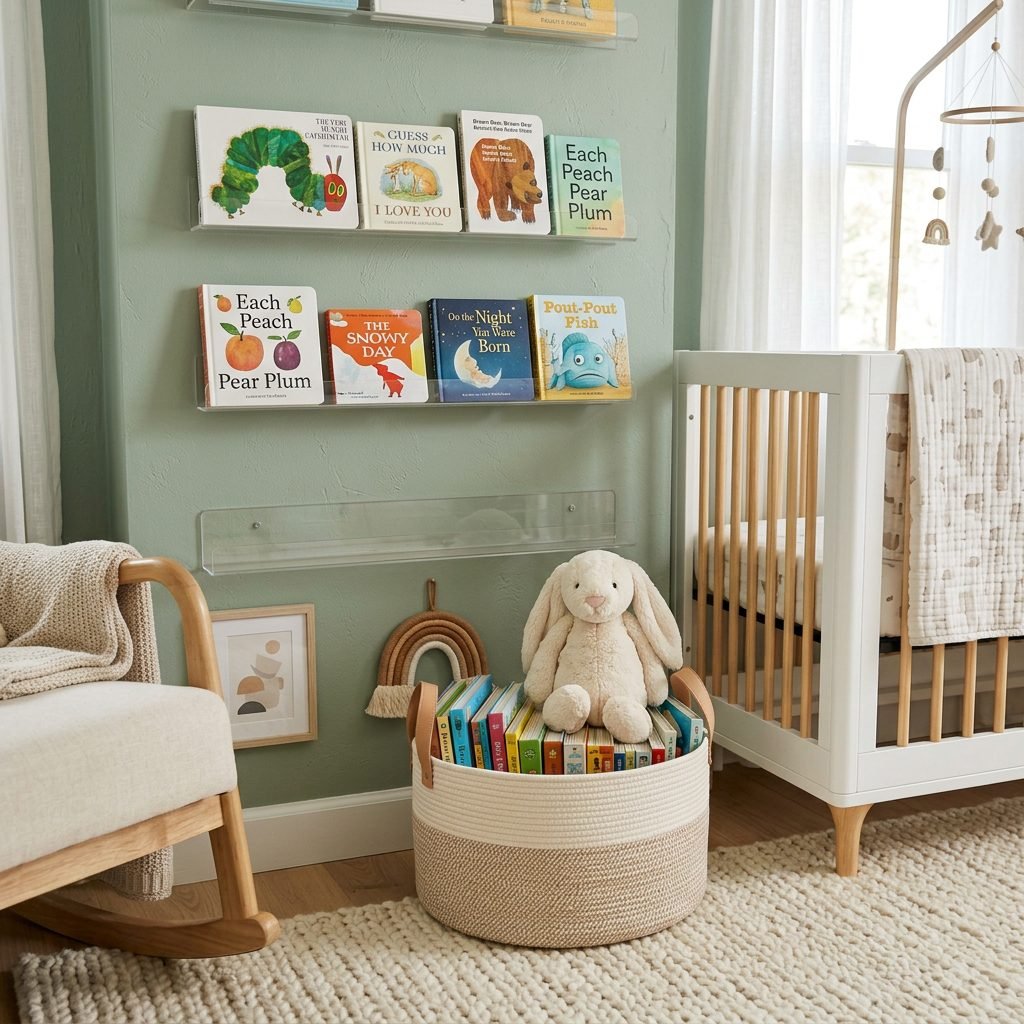
Alright, nesting mamas and nursery designers, this section is for you! You have collected all these beautiful, beneficial books, but how do you store them? Board books come in all shapes and sizes, which can make them notoriously difficult to organize. Furthermore, a traditional bookshelf where only the spine is visible isn’t developmentally appropriate for a baby. Babies judge books by their covers! We want forward-facing storage that invites them to crawl over and pull a book out.
The Magic of Acrylic Floating Shelves
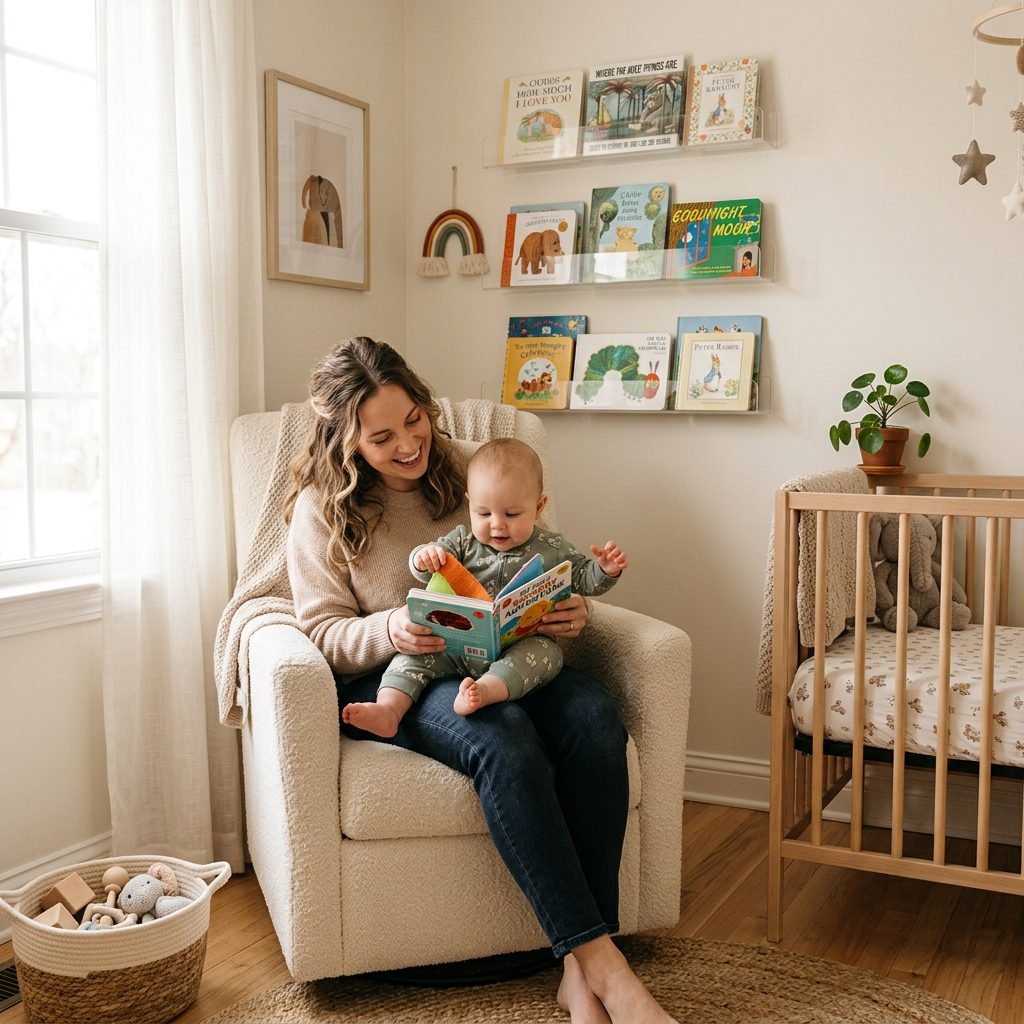
If you are working with a small nursery, vertical wall space is your best friend. Clear acrylic floating shelves are incredibly popular right now, and for good reason. They are visually lightweight, making the room feel larger, and they allow the colorful covers of the books to act as the primary artwork in the room! Pro tip: Mount the bottom two shelves very low to the ground (about 10 to 12 inches off the floor) so your baby can independently reach their touch-and-feel books once they are crawling.
The IKEA Kallax Hack for Book Nooks
If you have a bit more floor space, the IKEA Kallax cube organizer is a staple. To make it book-friendly, turn the Kallax on its side so it sits horizontally like a bench. Use the top surface to display books forward-facing using small wooden plate stands or acrylic book easels. Inside the cubbies, use soft, textured rope baskets to store the overflow of board books. This keeps the room looking tidy while keeping the books highly accessible.
Montessori Floor Baskets
For a truly comfort-first, baby-led approach, skip the shelves altogether for the daily reads. Place a beautiful, soft cotton rope basket right next to your nursing chair or tummy time mat. Fill it with 5 to 7 touch-and-feel books and rotate them every Sunday. This concept of ‘toy rotation’ prevents your baby from getting overwhelmed and makes old books feel brand new again!
| Storage Solution | Best For… | Budget Estimate |
|---|---|---|
| Clear Acrylic Floating Shelves (Set of 4) | Small spaces, creating a focal wall, modern aesthetics | $30 – $50 |
| IKEA Kallax (Horizontal) + Rope Baskets | Large collections, doubling as a window seat or bench | $80 – $120 |
| Montessori Canvas Floor Basket | Portability, rotating books, minimalist nurseries | $15 – $25 |
| Wooden Spice Racks (IKEA Bekväm) | DIYers (can be painted to match nursery), tight budgets | $6 per rack |
Crafty Mom Corner: DIY Touch-and-Feel Sensory Book
Crafty Mom Corner: DIY Touch-and-Feel Sensory Book
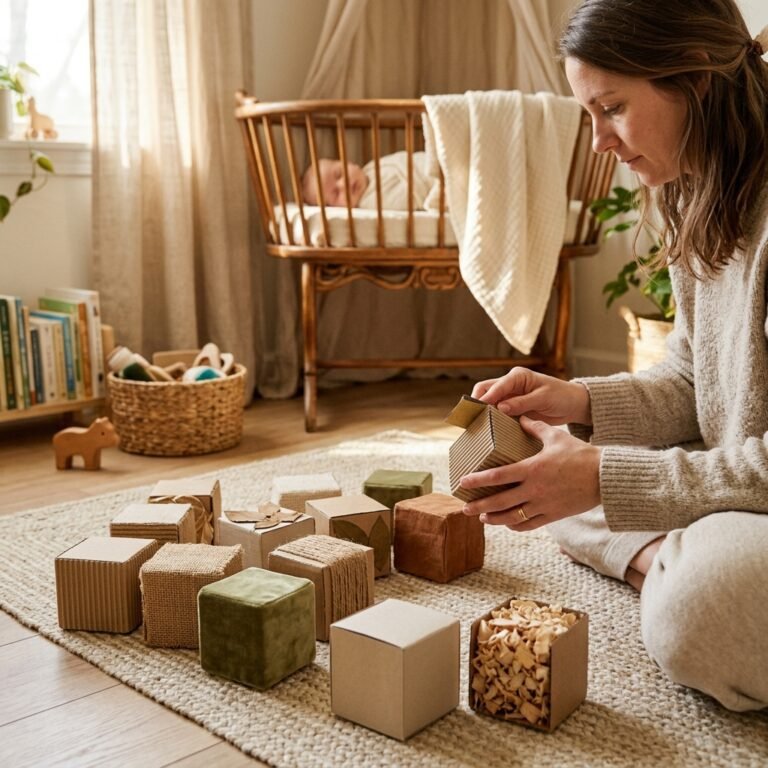
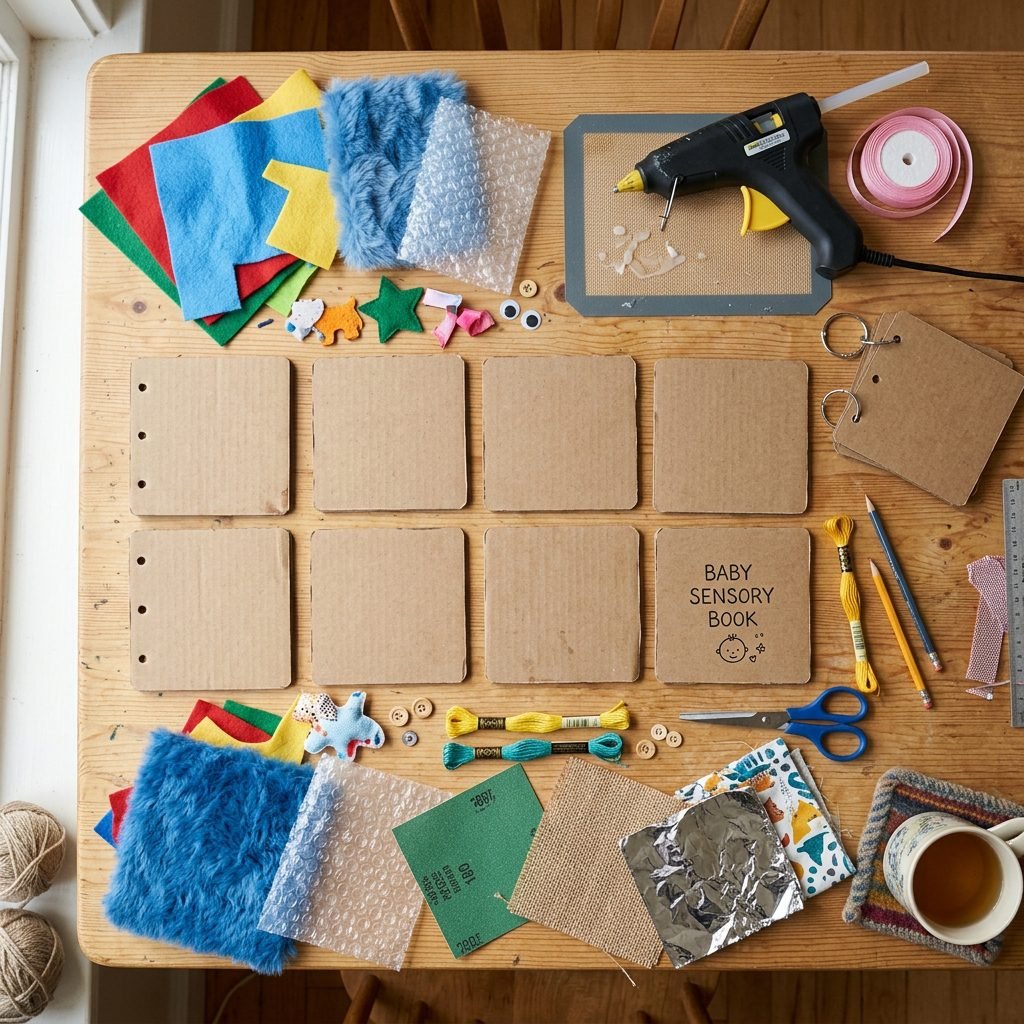
For my crafty mamas, hostesses planning a baby shower activity, or moms on a budget, making your own touch-and-feel book is an incredibly rewarding project. Not only is it cost-effective, but it allows you to customize the book with fabrics and textures from your own life—perhaps a piece of the blanket you used to bring them home, or a swatch from dad’s favorite flannel shirt. It makes for a deeply sentimental keepsake.
Materials You Will Need:
- 6 squares of thick, sturdy cardboard (cut to 6×6 inches)
- Non-toxic craft glue or a hot glue gun (ensure all pieces are secured tightly!)
- A hole punch and 2 binder rings (or thick ribbon) to bind the book
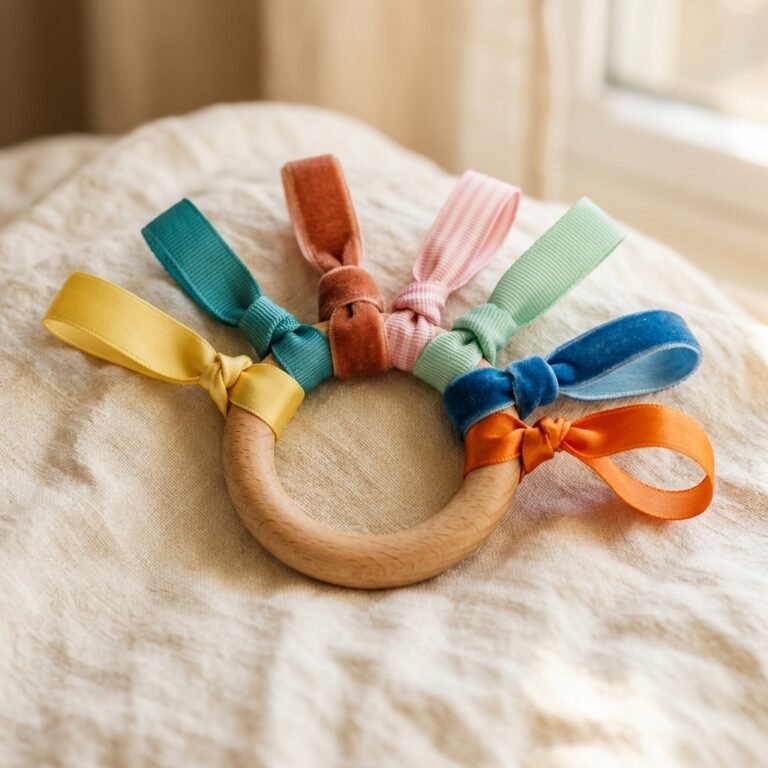
- Various textured materials: corrugated cardboard, felt, sandpaper (fine grit), bubble wrap, minky fabric, faux leather, and wide velvet ribbon.
Step-by-Step Instructions:
- Prep the Pages: Take your 6×6 inch cardboard squares. If you want a more polished look, you can cover each square in a neutral, solid-colored cotton fabric or heavy cardstock using a spray adhesive.
- Punch the Holes: Punch two holes on the left side of every cardboard square. Make sure they align perfectly so the book will turn easily. Measure 1.5 inches from the top and bottom for the best placement.
- Design the Sensory Patches: Cut your textured materials into fun shapes (e.g., a felt heart, a sandpaper star, a fluffy minky cloud).
- Secure the Textures: Using your hot glue gun, generously apply glue to the back of your textured shapes and press them firmly onto the center of each page. Safety check: Tug firmly on the edges once dry to ensure nothing can be peeled off and put into a baby’s mouth.
- Bind the Book: Stack your pages in order, thread the binder rings or a thick, soft ribbon through the holes, and tie securely.
“Baby Shower Idea: Set up a ‘Make a Page’ station! Pre-cut the cardboard and textures, and have each guest design and sign one page of the sensory book. It is a beautiful, screen-free activity that leaves the mom-to-be with a priceless, handmade library addition!”
| Texture Idea | Household Item to Use |
|---|---|
| Sticky / Bumpy | A clean square of bubble wrap |
| Rough / Scratchy | Clean kitchen sponge (scrubby side) or fine sandpaper |
| Soft / Fluffy | Cotton balls (glued flat) or an old fleece sock |
| Smooth / Shiny | Aluminum foil (glued flat to thick cardstock) or wide satin ribbon |
| Ridged | The inside layers of a cardboard Amazon box |
Postpartum Bonding: Making Reading a Comforting Ritual

Postpartum Bonding: Making Reading a Comforting Ritual
Mama, as we wrap up this guide, I want to take a moment to talk to you—the woman holding the book. The postpartum period is a beautiful, messy, and often overwhelming season. Between the sleep deprivation, the physical recovery, and the hormonal shifts, it is so easy to feel like you aren’t doing ‘enough’ developmentally for your baby. Please hear me: you are doing beautifully.
Reading a touch-and-feel book to your baby is not a chore to check off a developmental to-do list. It is a tool for connection. On the days when you are too tired to get off the sofa, or when you are recovering from a c-section and mobility is limited, simply laying a sensory book on your chest and letting your baby explore the textures while they rest on you is perfect. The warmth of your body, the steady beat of your heart, and the gentle sound of you describing a ‘fluffy bunny’ or a ‘bumpy dinosaur’ is the ultimate sensory experience for them.
Establishing a Sleep-Friendly Reading Routine
As a pediatric sleep consultant, I highly recommend incorporating a short, sensory reading session into your baby’s bedtime routine right from the start. Around 3 to 4 months of age, babies begin to recognize patterns. A routine of bath, feeding, a short touch-and-feel book, and then sleep cues signals to their brain that it is time to wind down. Choose books with softer, darker colors and gentler textures for nighttime, and save the loud crinkle books and bright silicone textures for active daytime play.
Remember, the goal is not to have a baby who reads early; the goal is to have a baby who associates books with safety, comfort, and the soothing presence of their parents. So build that library, style those shelves, get crafty if you feel like it, but most importantly, enjoy the sweet, quiet moments of discovery with your little one.
Conclusion
Final Thoughts on Building Your Baby’s First Library
Building your baby’s first library with touch-and-feel books is a beautiful investment in their cognitive development, fine motor skills, and your lifelong bond. From curating the perfect registry items to styling those gorgeous acrylic shelves, and even crafting your own sentimental sensory pages, you are laying the foundation for a love of reading that will last a lifetime. Take it one page, one texture, and one snuggle at a time. You’ve got this, mama!