7 Pregnancy Safe Dry Shampoos That Actually Clean Grease (No Benzene)
Mama, let us have a very real, very honest talk about pregnancy exhaustion. There are days when the sheer act of standing in the shower to wash, condition, and detangle your hair feels like an Olympic sport. Between the first-trimester nausea, the third-trimester pelvic pressure, and the general fatigue of growing an entire human being from scratch, sometimes washing your hair simply does not make the daily to-do list. And as your doula and maternal wellness advocate, I am here to tell you: that is completely okay.
Enter the ultimate motherhood survival tool: dry shampoo. It is the secret weapon in every pregnant and postpartum mama’s bathroom cabinet. However, the haircare landscape has shifted dramatically over the last few years. With massive recalls of popular aerosol dry shampoos due to hidden, dangerous chemicals like benzene, many expecting mothers are left staring at their bathroom shelves in a panic, wondering what is actually safe to use.
When you are pregnant, your body is hyper-absorbent, and you are naturally more protective of the environment you are creating for your little one. You do not want to spray endocrine disruptors or known carcinogens near your face, especially when you are already dealing with a heightened sense of smell and pregnancy-induced nausea. But you also do not want to walk around with hair that feels heavy, greasy, and unwashed.
“You are doing an incredible job protecting your baby, but remember: perfection is impossible. We aim for better, safer choices, not perfect ones. Give yourself the grace to rest, and let clean beauty do the heavy lifting for you.”
In this comprehensive guide, we are going to dive deep into why your hair might suddenly feel oilier than usual, demystify the scary ingredients hiding in conventional aerosols, and reveal the 7 absolute best pregnancy-safe dry shampoos that actually work. These benzene-free, clean-beauty alternatives will soak up grease, add beautiful volume, and give you that fresh-hair feeling without compromising your peace of mind.
Why Your Hair is Suddenly So Greasy (Blame the Hormones!)
If you have noticed that your hair is suddenly getting greasy within 24 hours of washing, you are not imagining things, and you are certainly not alone. Pregnancy is a wild hormonal ride, and those invisible chemical messengers affect every single inch of your body, right down to your hair follicles.
The Estrogen and Androgen Shift
During your first trimester and moving into your second trimester, your body experiences a massive surge in hormones, particularly estrogen and androgens (male sex hormones that both men and women produce). While estrogen is famous for giving some women that thick, luscious “pregnancy hair” by keeping hair in the resting phase longer, androgens can send your sebaceous glands into overdrive. Your sebaceous glands are responsible for producing sebum, the natural oil that coats your skin and scalp. When these glands are overstimulated, your scalp produces significantly more oil than you are used to.
Night Sweats and Basal Body Temperature
Another major culprit for greasy pregnancy hair is your basal body temperature. Thanks to the increased blood volume (your body produces up to 50 percent more blood during pregnancy) and the hard work of your metabolism, you run hotter. This leads to increased sweating, particularly at night. Waking up with a damp, sweaty scalp means your hair is going to look flat and oily much faster. This is incredibly common in the third trimester and continues heavily into the early postpartum days as your body flushes out excess fluids.
Fatigue and Altered Wash Schedules
Let us not forget the most practical reason: you are simply washing your hair less. When you are battling round ligament pain, sciatica, or morning sickness, standing under hot water might feel overwhelming. Extending your wash days from every 2 days to every 4 or 5 days naturally allows oils to build up. This is exactly why finding a high-quality, pregnancy-safe dry shampoo is essential for your comfort and confidence.
The Benzene Problem & Ingredients to Avoid During Pregnancy
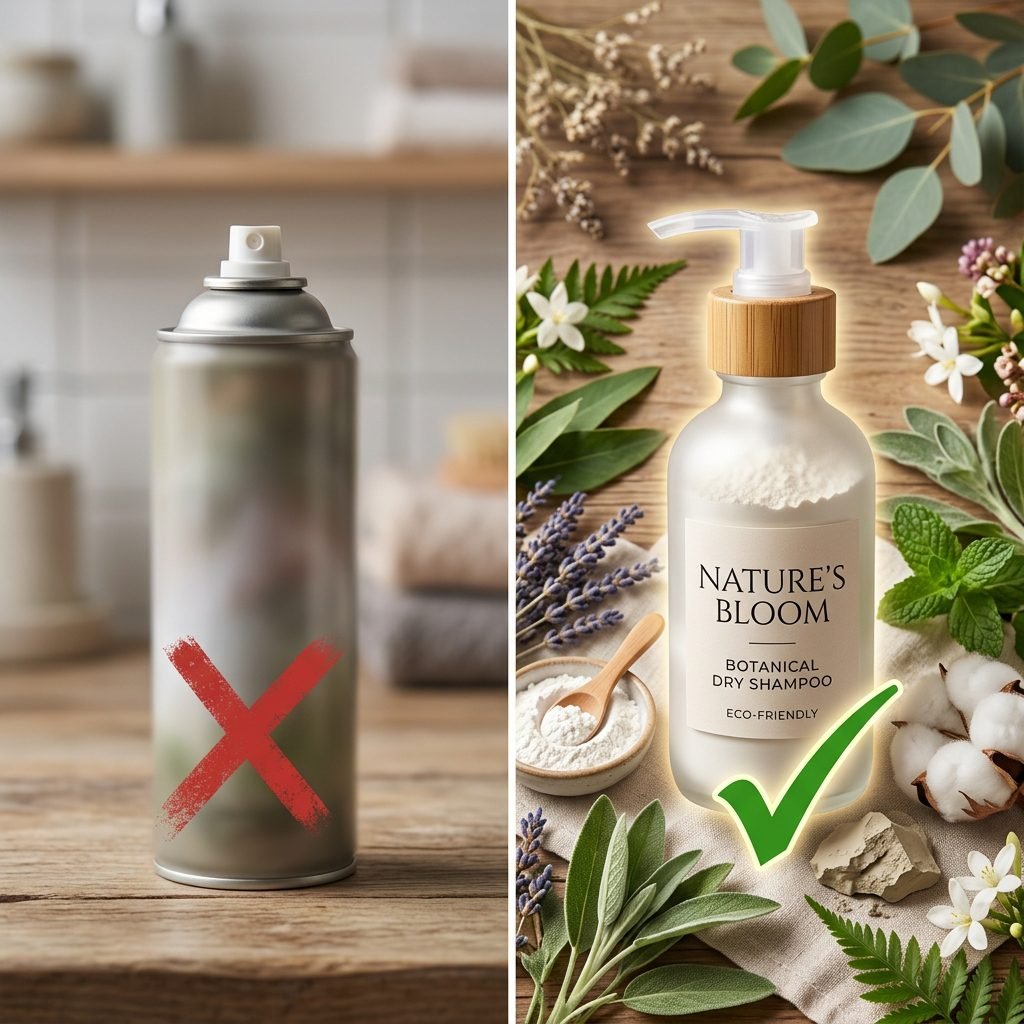
Before we look at what to buy, we need to understand what to avoid. The beauty industry had a major wake-up call recently when independent testing laboratories discovered high levels of benzene in dozens of popular aerosol dry shampoos, leading to massive FDA recalls. But what exactly is benzene, and why is it so dangerous, especially for expecting mothers?
Understanding Benzene
Benzene is a highly flammable, sweet-smelling chemical typically used in manufacturing plastics, resins, and synthetic fibers. It is also a known human carcinogen (cancer-causing agent). Benzene is not an intentional ingredient in dry shampoo; rather, it is a dangerous byproduct and contaminant found in the propellants (like butane, isobutane, and propane) used to spray the product out of aerosol cans. When you spray an aerosol dry shampoo, you create a cloud of invisible particles that you inevitably inhale. For a pregnant mother, inhaling a known carcinogen is a hard boundary to draw.
Other Endocrine Disruptors to Watch Out For
Beyond benzene, conventional dry shampoos often harbor a cocktail of chemicals that are best avoided when you are growing a baby. Endocrine disruptors are chemicals that can cross the placenta and mimic or interfere with your body’s natural hormones. During critical windows of fetal development, keeping your exposure to these chemicals as low as possible is a wise, protective choice.
| Ingredient to Avoid | Why It Is Unsafe During Pregnancy | Pregnancy-Safe Alternative |
|---|---|---|
| Benzene (via Aerosol Propellants) | Known carcinogen; respiratory hazard when inhaled in aerosol clouds. | Non-aerosol powder pumps, loose powders, or shaker bottles. |
| Phthalates | Endocrine disruptors linked to developmental and reproductive toxicity. | Clean beauty certifications; plant-based formulas. |
| Synthetic Fragrance (Parfum) | Can hide hundreds of undisclosed chemicals; strongly triggers pregnancy nausea. | Essential oils in safe dilutions, or 100% unscented options. |
| Talc (Talcum Powder) | High risk of asbestos contamination; severe respiratory irritant. | Arrowroot powder, organic cornstarch, kaolin clay, tapioca starch. |
| Parabens | Preservatives that mimic estrogen in the body, disrupting hormone balance. | Natural preservatives, waterless powder formulas (which don’t need parabens). |
The easiest way to bypass almost all of these risks is to make a simple switch: ditch the aerosol can entirely. By choosing loose powders, pump-action powders, or paste formulas, you eliminate the need for chemical propellants, completely removing the risk of benzene contamination.
The 7 Best Pregnancy-Safe Dry Shampoos (That Actually Work)
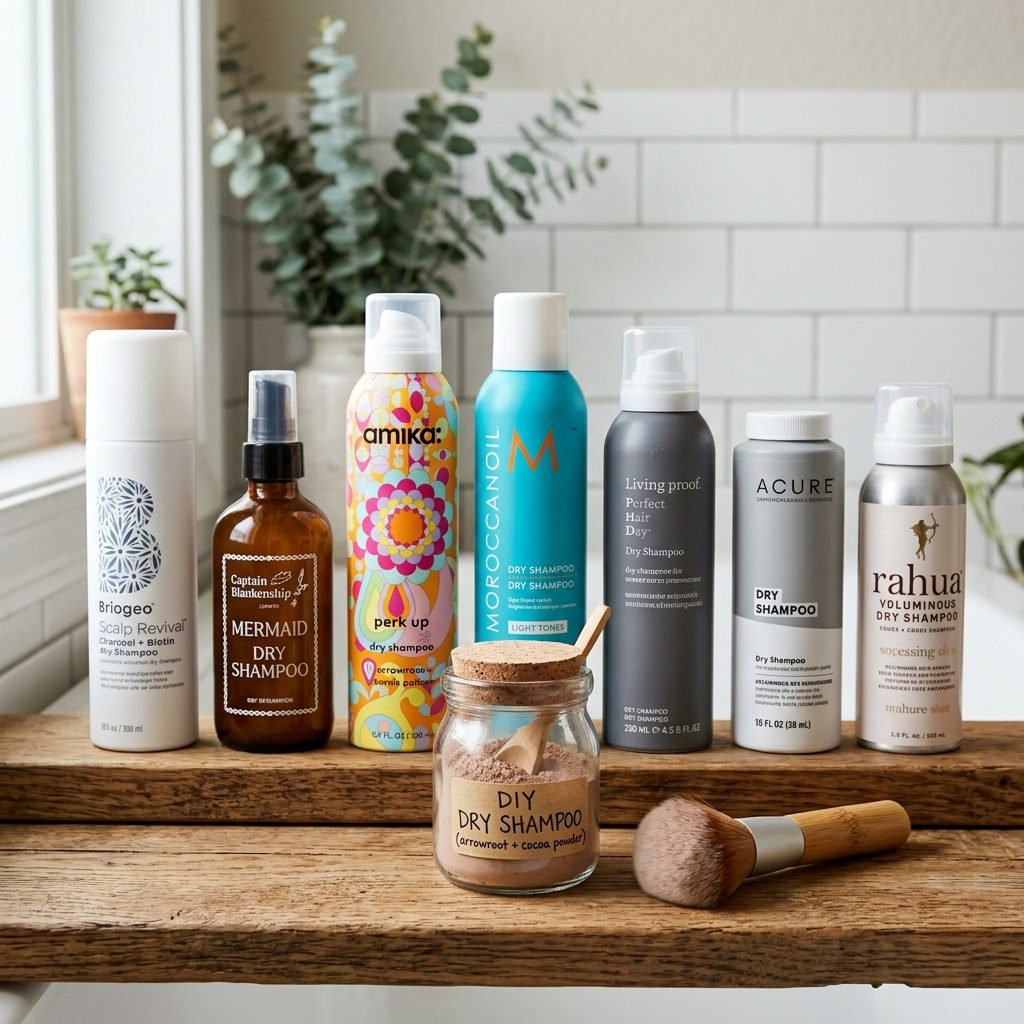
Now for the fun part! As a doula and maternal wellness expert, I have vetted these products for safety, efficacy, and ease of use. These 7 pregnancy-safe dry shampoos rely on powerful, earth-derived starches and clays to absorb oil, soothe itchy scalps, and give you that fresh blowout look without a drop of benzene.
1. Acure Dry Shampoo (Rosemary & Peppermint)
This is a holy grail product for expecting mamas, especially during the first trimester. Formulated with organic cornstarch and French white clay (kaolin), it acts like a sponge for excess sebum. What makes it truly special for pregnancy is the inclusion of rosemary and peppermint essential oils. The cooling sensation of peppermint soothes an itchy, inflamed scalp, while the crisp, minty scent is a known natural remedy for easing pregnancy nausea. It comes in a simple squeeze bottle, making it easy to puff directly into your roots.
2. Briogeo Scalp Revival Charcoal + Biotin Dry Shampoo
If you are dealing with intense third-trimester night sweats, this is your match. Briogeo utilizes Binchotan charcoal, which is famous for drawing out impurities and detoxifying the scalp. It also features a complex of clay and tapioca starch to absorb heavy oils. The addition of biotin is a brilliant bonus; while it won’t stop postpartum hair loss (which is hormonally driven), it does help support the overall health of the hair follicle as you prepare for the postpartum shedding phase. The non-aerosol pump delivers a fine, targeted mist of powder.
3. Billie Floof Dry Shampoo
Billie’s Floof dry shampoo is a minimalist mama’s dream. It comes in two shades (light and dark), which is a massive relief for brunettes who are tired of looking like they have powdered sugar in their hair. The formula is incredibly clean, relying on baking soda and arrowroot powder to cut through grease. It is vegan, cruelty-free, and completely free of synthetic fragrances, making it incredibly gentle on a sensitive pregnancy nose.
4. Klorane Non-Aerosol Dry Shampoo with Oat Milk
Klorane has been a French pharmacy staple for decades, and their eco-friendly, non-aerosol version is perfect for pregnancy. The star ingredient here is organically harvested oat milk. Pregnancy can make your skin and scalp highly reactive and prone to eczema or dry patches. Oat milk is naturally anti-inflammatory and incredibly soothing. The powder is ultra-fine, blends seamlessly, and leaves the hair feeling soft rather than gritty or stiff.
5. Rahua Voluminous Dry Shampoo
For the mama who wants a touch of luxury in her hospital bag, Rahua is a spectacular choice. This organic, plant-based dry shampoo uses cassava root (tapioca) and cosmetic clay to absorb oil, sweat, and debris. It also contains star anise, which provides a very subtle, warm, and calming scent. The packaging is an environmentally friendly aerosol-alternative dispenser that puffs the perfect amount of product into the hair, providing massive volume at the roots—perfect for when you have visitors coming to meet the baby but haven’t showered in 3 days.
6. Act+Acre Plant Based Dry Shampoo
Act+Acre approaches haircare from a scalp-health perspective, which is exactly what a hormonally shifting body needs. Their dry shampoo is formulated with fulvic acid, an organic compound that delivers over 65 minerals directly to the scalp to restore the microbiome. It uses rice and tapioca powders to absorb oil without clogging the hair follicles. Keeping the follicles unclogged is vital during pregnancy to ensure healthy hair growth and minimize irritation.
7. The Ultimate Clean Option: DIY Arrowroot & Cocoa Powder Blend
If you want 100 percent control over what goes on your body, making your own dry shampoo is incredibly easy, budget-friendly, and completely non-toxic. Plus, it takes less than 5 minutes to whip up.
- For Light Hair: Mix 3 tablespoons of organic arrowroot powder with 1 tablespoon of kaolin clay.
- For Dark Hair: Mix 2 tablespoons of organic arrowroot powder with 2 tablespoons of unsweetened, organic cocoa powder (which also smells amazing!).
- Application: Store in a glass jar and use a clean, fluffy makeup brush to tap the powder directly onto your greasy roots.
Pro-Doula Tips for Applying Non-Aerosol Dry Shampoo Like a Pro
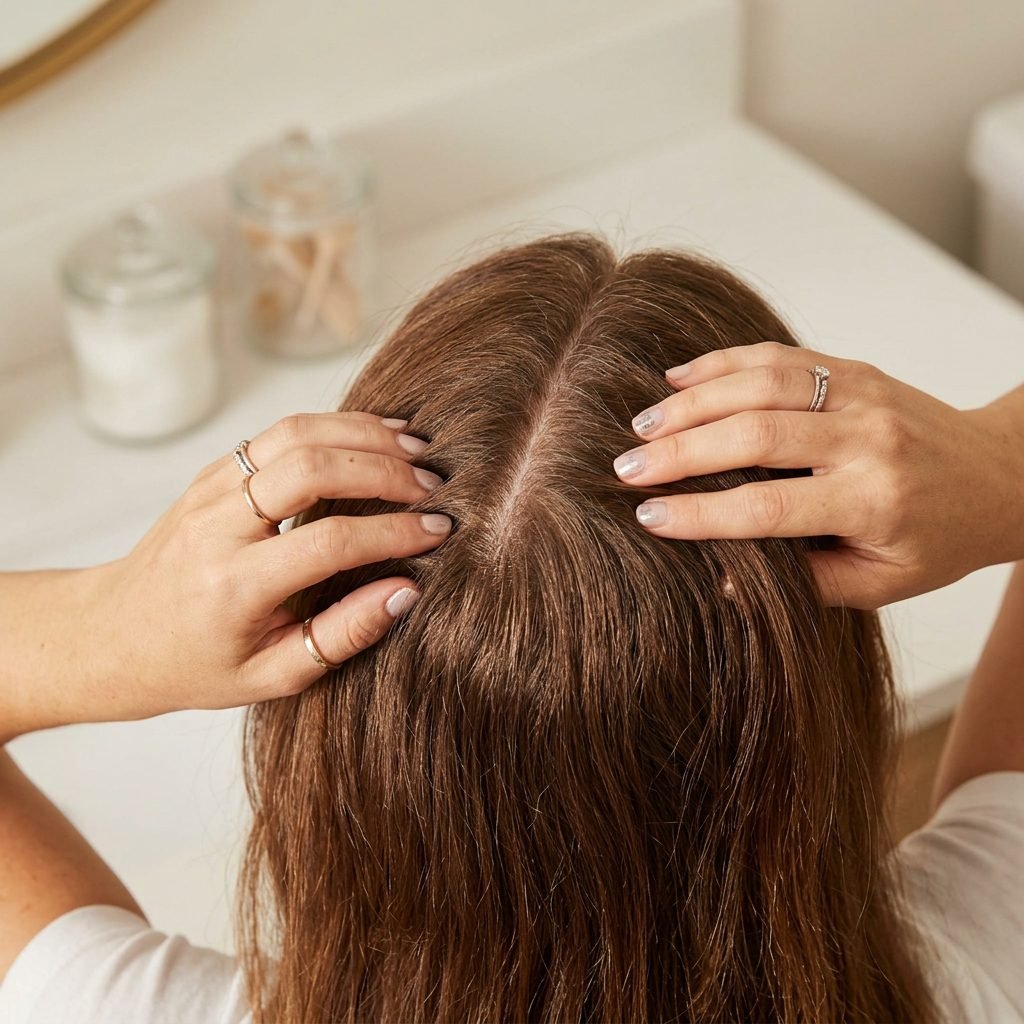
Switching from an aerosol spray to a loose powder can feel a bit clunky at first. If you just dump the powder on your head, you will end up with a chalky, concentrated mess. To get that flawless, freshly-washed blowout look, you need a specific technique. Here is my step-by-step method for applying non-aerosol dry shampoo perfectly every single time.
- Section Your Hair: Do not just apply the powder to your part. Use your fingers or a comb to lift sections of your hair, starting from the bottom near your ears and working your way up to the crown of your head. You want to target the roots underneath the top layer of hair.
- Apply Sparingly to the Roots: If using a squeeze bottle, gently puff the powder onto the roots from about 3 to 4 inches away. If using a loose DIY powder, dip a large, clean makeup brush (like a blush or powder brush) into the jar, tap off the excess, and stipple it directly onto the greasy roots.
- The Magic Step: Let It Bake! Do not immediately rub it in. This is the biggest mistake people make. Let the powder sit on your roots for at least 3 to 5 minutes. This gives the starches and clays time to actually absorb the sebum and sweat. Pro tip: Apply it before you brush your teeth or do your skincare routine.
- Massage and Activate: After the resting time, use your fingertips to vigorously massage your scalp. The warmth from your fingers helps the powder blend into the hair shaft and activates the volumizing properties.
- Brush It Out: Finally, take a high-quality boar bristle brush (or a vegan alternative) and brush your hair thoroughly from root to tip. This distributes any remaining powder down the hair shaft, adding texture and removing any white cast.
“Doula Secret: The absolute best time to apply dry shampoo is right before you go to sleep! As you toss and turn, the friction works the powder into your hair, and it absorbs night sweats as they happen. You will wake up with massive volume and zero grease.”
Navigating Haircare in the Fourth Trimester (Postpartum)

As we look ahead to your postpartum journey, establishing a clean, easy dry shampoo routine now will pay massive dividends once your baby arrives. The fourth trimester is a time of profound physical healing, sleep deprivation, and adjusting to your new identity as a mother. During those first few weeks, taking a full “everything shower” might feel impossible.
Furthermore, around 3 to 4 months postpartum, the dramatic drop in estrogen will likely trigger postpartum hair shedding (telogen effluvium). During this phase, your scalp can feel tender, and seeing hair fall out in the shower can be emotionally taxing. Using a gentle, non-aerosol dry shampoo allows you to stretch the time between wet washes, reducing the mechanical stress of detangling wet hair. It also provides much-needed volume to hair that might be feeling a bit thinner than usual.
By choosing clean, benzene-free products today, you are not only protecting your baby in utero, but you are also curating a safe, non-toxic environment for all those precious skin-to-skin snuggles once your little one is earthside. You are setting yourself up for success, mama.
Conclusion
Pregnancy is a season of profound change, and watching your body transform—including dealing with sudden greasy hair or night sweats—can sometimes feel overwhelming. But remember, every single hormonal shift is your body doing the incredible work of sustaining life. You do not need to sacrifice your health or your baby’s safety just to feel put-together. By swapping out dangerous aerosols for these beautiful, effective, pregnancy-safe dry shampoos, you are taking one more step toward a holistic, empowered motherhood.
Take a deep breath, puff some organic powder into your roots, throw that hair into a messy bun, and know that you are doing an absolutely beautiful job. You’ve got this, mama.